Every year, billions of animals embark on migrations so massive they can be seen from space. From oceans filled with moving fish to skies crowded with butterflies and plains covered in wildebeest, these journeys are among the most spectacular events in nature.
Scientists even use satellites to track their movements, revealing just how enormous and important these migrations truly are. These 13 animal migrations showcase nature at its most dramatic and awe-inspiring.
1. Wildebeest Migration, Serengeti National Park, Tanzania and Maasai Mara, Kenya
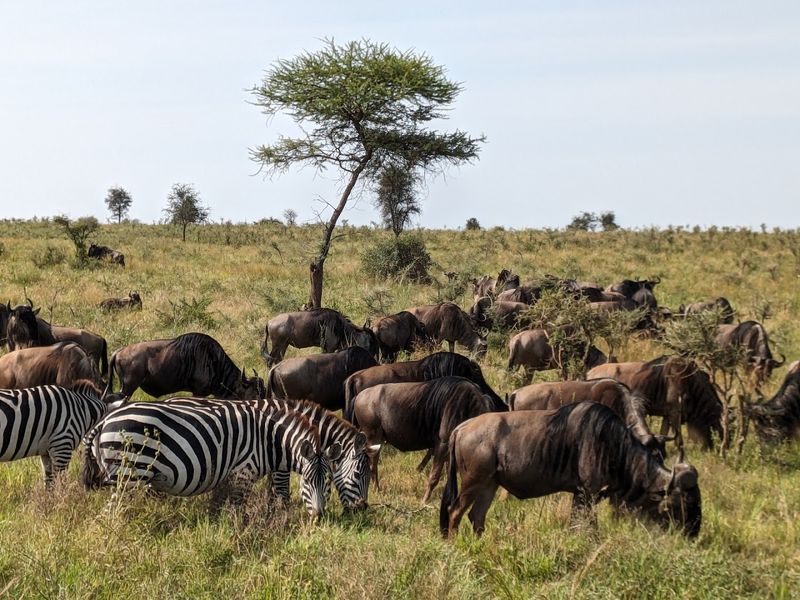
Nearly two million animals on the move at once is not a wildlife event, it is a spectacle that rewrites your understanding of the word “large.” The Great Wildebeest Migration is the biggest herd movement of land animals on the planet, with wildebeest, zebras, and gazelles completing a continuous circular journey of roughly 1,000 kilometers across Tanzania and Kenya every single year.
Satellite images captured from 400 miles above Earth have been used alongside artificial intelligence to count individual wildebeest, with densities reaching up to 1,000 animals per square kilometer at peak times. That means researchers can literally sit in a lab and count a million animals from space.
The migration follows seasonal rains, so the herds are always chasing fresh grass across the Serengeti plains and the Maasai Mara. River crossings during the journey are among the most dramatic wildlife moments recorded anywhere on Earth.
2. Monarch Butterfly Migration, North America
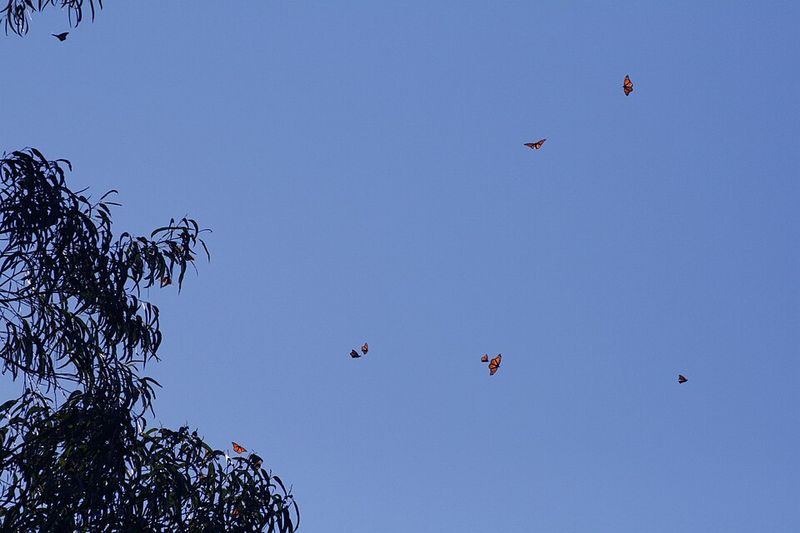
Up to one billion monarch butterflies leave Canada and the United States every autumn and travel as far as 2,500 miles to reach a small cluster of oyamel fir forests in central Mexico. That is a long-haul flight for an insect that weighs less than a paperclip.
When the butterflies arrive at their overwintering sites in Michoacan, the trees become so densely covered in orange and black wings that the branches bend under the weight. Aerial surveys and satellite-linked transmitters now allow researchers to track individual butterflies and map the full migration route in real time.
What makes this migration even more remarkable is that no single butterfly completes the full round trip. The return journey north in spring is handled by the next generation, which means millions of butterflies navigate back to places they have never been before.
Scientists are still working out exactly how they manage it.
3. Caribou Migration, Arctic Canada and Alaska
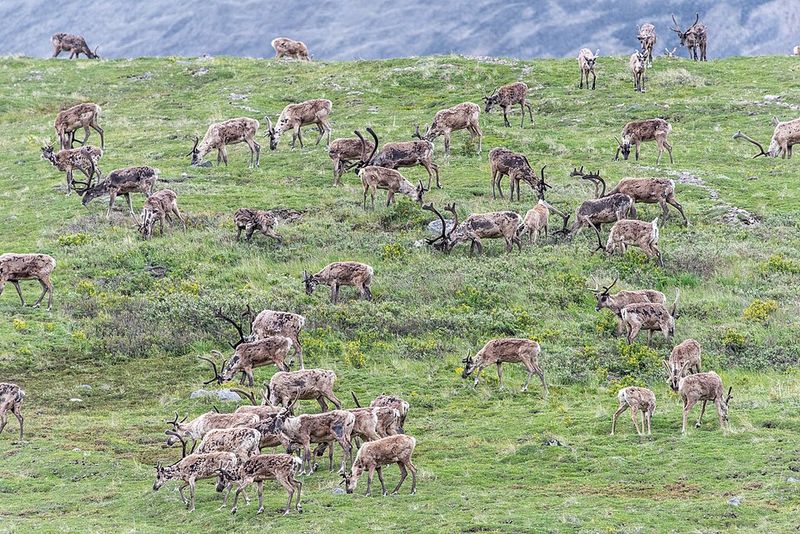
Few migrations on land come close to matching the distance covered by Arctic caribou, with some herds traveling between 1,600 and 4,000 kilometers annually across the tundra of northern Canada and Alaska. That is roughly the distance from New York to Los Angeles, done on four legs and without GPS.
Satellite data has been central to understanding what triggers their departure each spring. Researchers discovered a direct link between the start of the migration and the onset of snowmelt, which they can monitor from hundreds of miles above Earth.
The herds move toward northern coastal calving grounds, following cues that scientists are still fully mapping.
From the air, the movement of hundreds of thousands of caribou across open tundra creates sweeping, river-like patterns across the landscape. Their tracks and trails remain visible long after the herd has passed, leaving a kind of natural record written directly into the ground.
4. Sardine Run, Eastern Cape and KwaZulu-Natal, South Africa
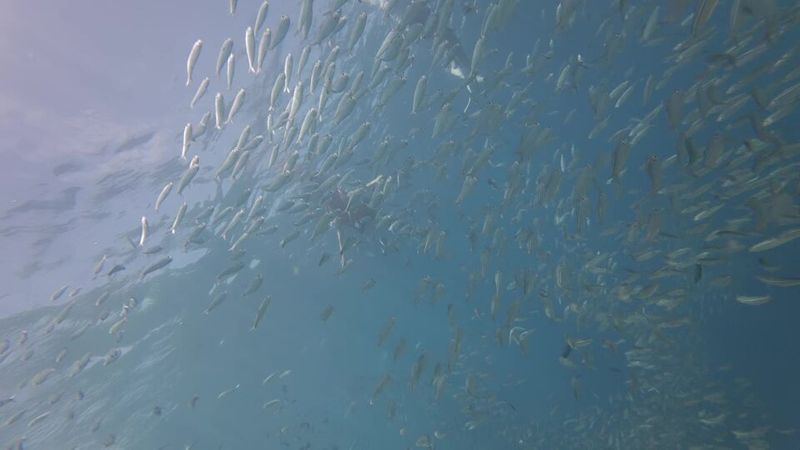
Every year between May and July, billions of sardines move northward along the eastern coast of South Africa in a migration so large it rivals the wildebeest migration in terms of raw biomass. Individual shoals can stretch 15 kilometers long, 4 kilometers wide, and 40 meters deep, which is a lot of fish by any measure.
The dark, dense masses of sardines are visible from satellites as they create distinct patches in the coastal waters. Dolphins, sharks, whales, and seabirds all converge on the event, turning the ocean surface into a frenzy of activity that researchers monitor from both boats and aircraft.
The migration is triggered when a cold-water current drops ocean temperatures below 21 degrees Celsius, essentially sending a starting signal to billions of fish at once. Marine biologists consider the sardine run one of the most important ecological events in the Southern Hemisphere, as it feeds an enormous chain of marine predators in a very short window.
5. Snow Goose Migration, Central North America
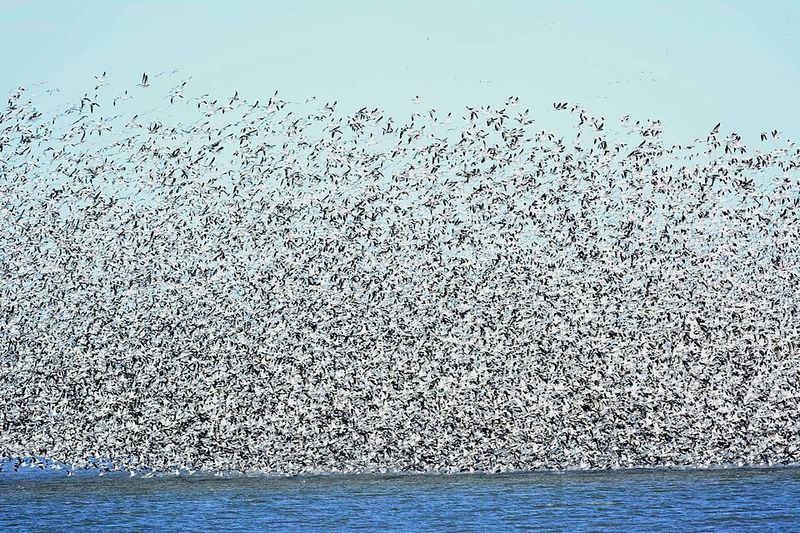
When millions of snow geese descend on a wetland or agricultural field, the ground disappears under a layer of white birds so thick it looks like a snowstorm landed and decided to stay. These birds migrate in enormous flocks across Canada and the United States each year, following established flyways between Arctic breeding grounds and warmer wintering areas.
During peak migration, the concentrations of birds are so dramatic that they create visible patterns from aircraft and satellite imagery. Entire fields can be covered edge to edge, and the noise and movement of such large flocks has made their arrival a seasonal landmark in many communities along the migration routes.
Snow geese populations have actually grown substantially over recent decades, which means the migration is getting bigger rather than smaller. Conservationists monitor the flocks carefully because the sheer number of birds can strip vegetation from wetlands, creating challenges for land managers across multiple states and provinces.
6. Bat Emergence Migration, Bracken Cave, Texas, United States
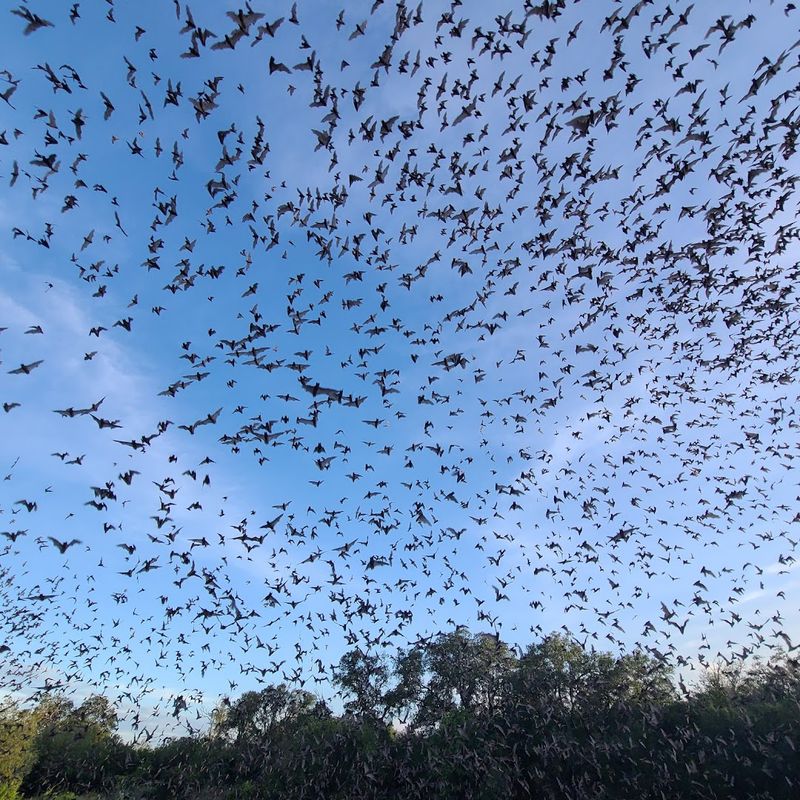
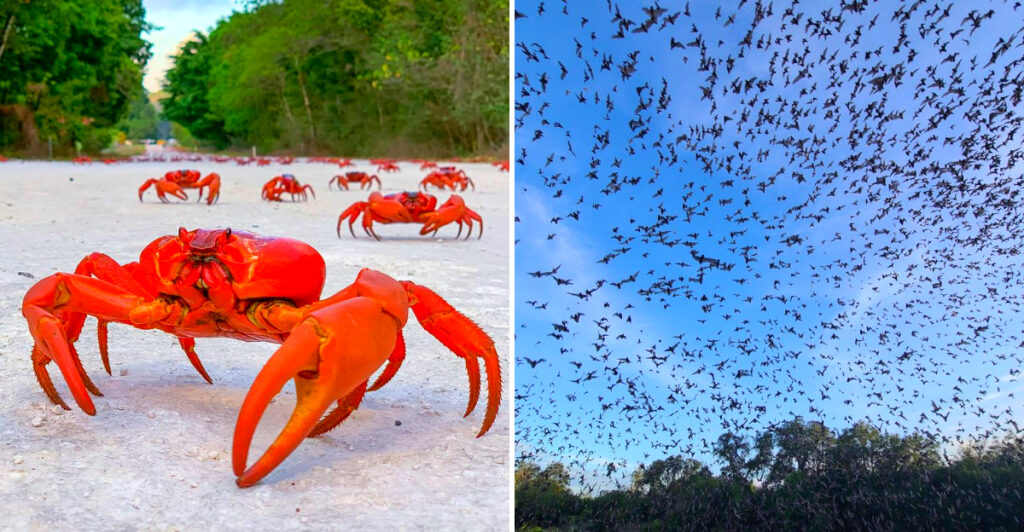
Bracken Cave near San Antonio, Texas holds the title of the world’s largest known bat colony, with estimates of up to 20 million Mexican free-tailed bats roosting inside during summer months. Each evening, the bats emerge in a spiraling column so enormous it has been detected on National Weather Service radar, showing up as a mysterious rotating mass on weather maps.
Space-based imaging systems have also captured the emergence under the right conditions, making this one of the few bat events on record with confirmed visibility from above the atmosphere. The column can rise thousands of feet into the air and stretch for miles downwind as the bats fan out to feed.
The colony consumes an estimated 140 tons of insects every single night during peak season, making Bracken Cave one of the most ecologically valuable spots in North America. Bat Conservation International manages the site and runs guided observation nights for visitors who want to witness the emergence firsthand.
7. Red Crab Migration, Christmas Island, Australia
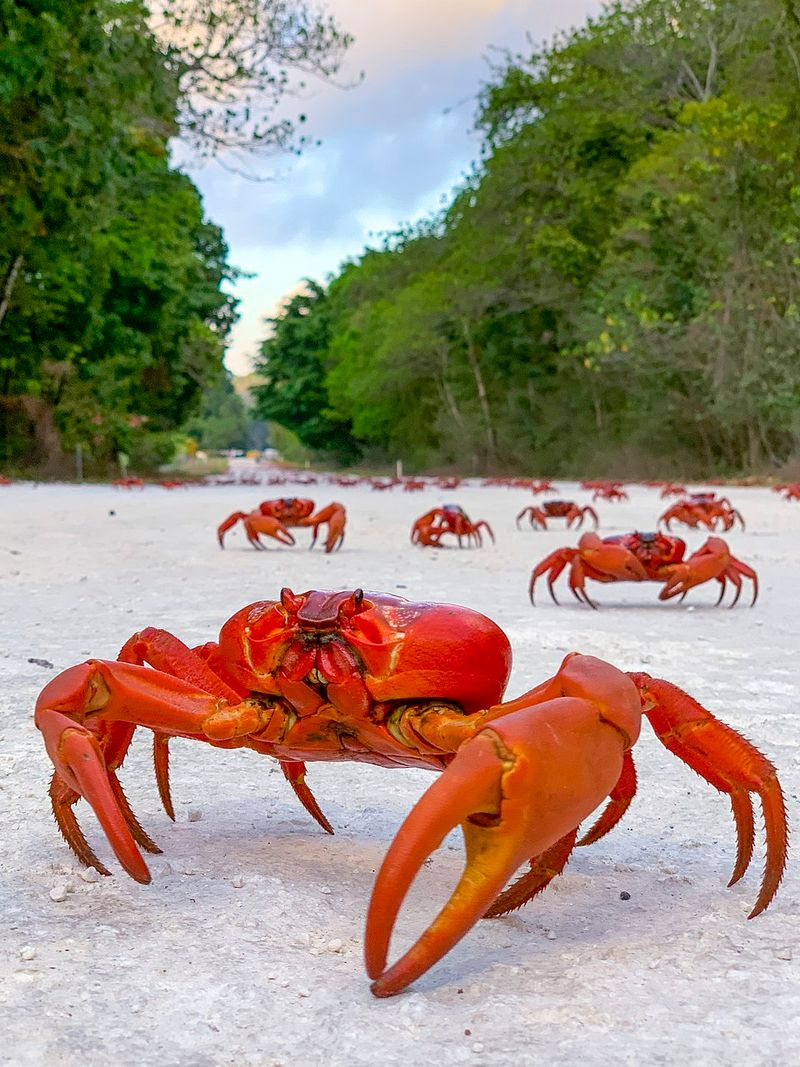
Between 40 and 50 million adult red crabs emerge from the forests of Christmas Island every year and march together toward the sea in one of the most visually striking migrations on the planet. The roads, beaches, and jungle floors turn into a moving carpet of red so dense that Google Street View has actually documented the event.
The timing is precise and almost poetic. The migration begins with the first heavy rains of the wet season, usually in October or November, and the crabs synchronize their spawning with specific phases of the moon.
Nature, it turns out, runs a very tight schedule.
From the air, the sheer volume of crabs transforms the landscape into something that looks more like a special effect than reality. Sir David Attenborough has called it one of the most remarkable natural events in the world, and it is genuinely hard to argue with that assessment.
8. Zebra Migration, Botswana and Namibia
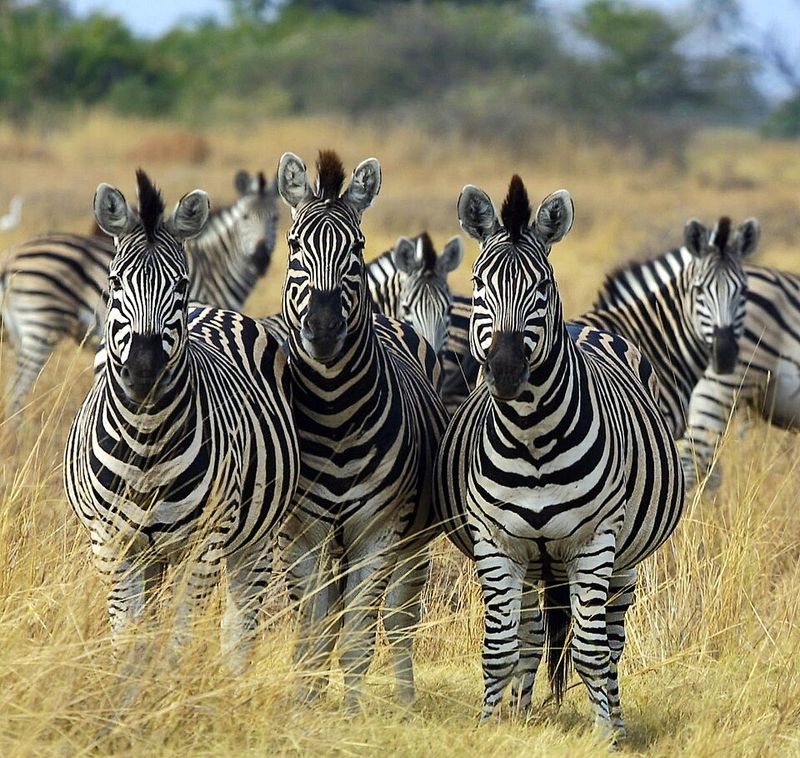
Africa’s zebra migration does not always get the headlines of the wildebeest spectacle, but it absolutely deserves a spot on this list. The migration between Botswana’s Okavango Delta and the Makgadikgadi Salt Pans is considered the second longest terrestrial migration on Earth, covering a round trip of approximately 580 kilometers.
A separate migration involving 5,000 to 10,000 plains zebras also takes place between Namibia and Botswana annually, triggered by the arrival of November rains after the dry southern winter. Researchers use NASA satellite data on rainfall and vegetation coverage to predict exactly when and where the zebras will move.
From orbit, the dense columns of black-and-white striped animals crossing open floodplains create patterns that stand out clearly against the landscape. Earth-orbiting satellites have captured images of their movements, helping conservation teams track herd sizes and monitor the health of ecosystems that depend on the annual migration for ecological renewal.
9. Locust Swarms, East Africa and the Middle East
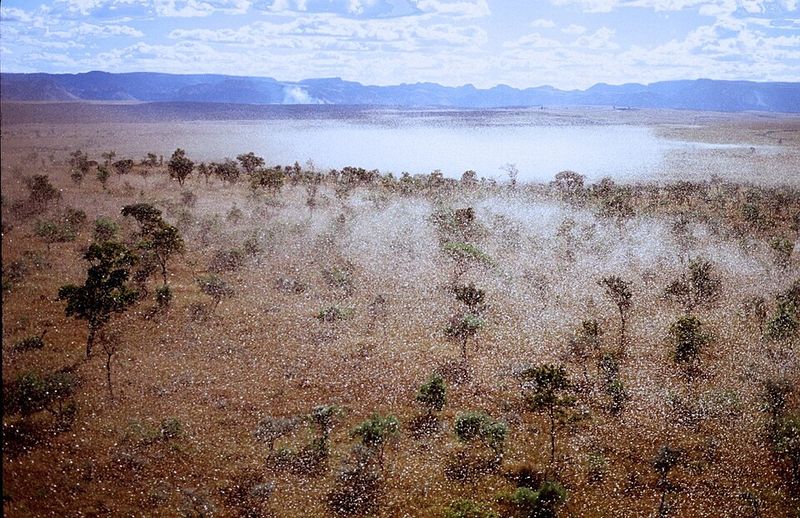
Desert locust swarms are technically a migration, and they are one of the most destructive forces in the natural world. A single large swarm can cover hundreds of square miles and contain billions of individual insects, moving with wind patterns across East Africa and the Middle East in unpredictable directions.
Satellite monitoring is the primary tool used to track these swarms because they are simply too large and fast-moving to follow any other way. The United Nations Food and Agriculture Organization uses satellite imagery in real time to alert governments when a swarm is approaching, giving farmers limited time to prepare.
The 2020 locust crisis in East Africa produced swarms large enough to alter the visible appearance of entire regions from space, covering areas the size of major cities. A swarm of just one square kilometer can contain up to 80 million locusts and consume the same amount of food in a day as 35,000 people.
10. Humpback Whale Migration, Pacific and Atlantic Oceans
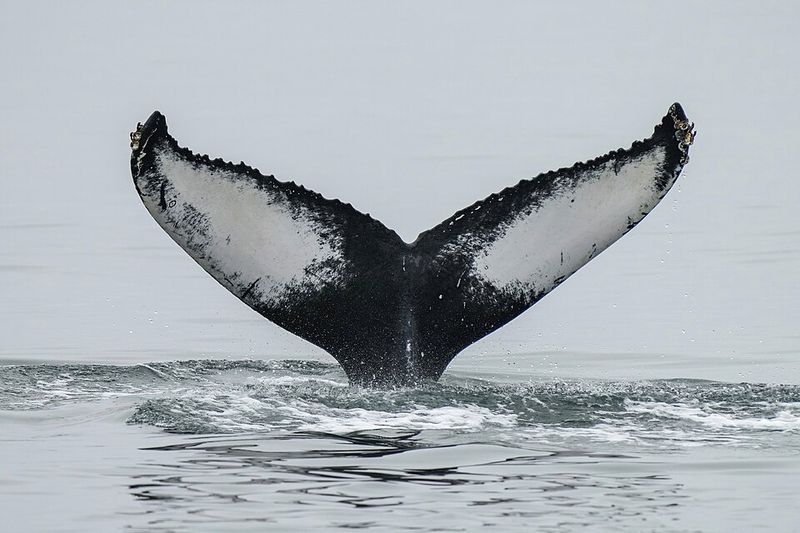
Humpback whales hold the record for the longest migration of any mammal on Earth, with some individuals traveling more than 16,000 kilometers round trip between Antarctic feeding grounds and tropical breeding waters near Hawaii, Australia, or Central America. That is a serious commute, even by whale standards.
Near Australia and Hawaii, the seasonal concentration of humpbacks becomes dense enough that researchers rely on aerial surveys and satellite-linked tags to monitor population movements and estimate numbers. The whales follow ancient routes that have been used for thousands of years, and scientists are still discovering new details about how they navigate such vast distances.
Humpback populations were severely reduced by commercial hunting in the 20th century, but many populations have recovered significantly following international protections. Today, whale-watching tourism in migration corridors contributes millions of dollars to coastal economies each year, making the whales economically as well as ecologically valuable to the regions they pass through.
11. Flamingo Migration, Lake Natron and East African Rift Valley, Tanzania and Kenya
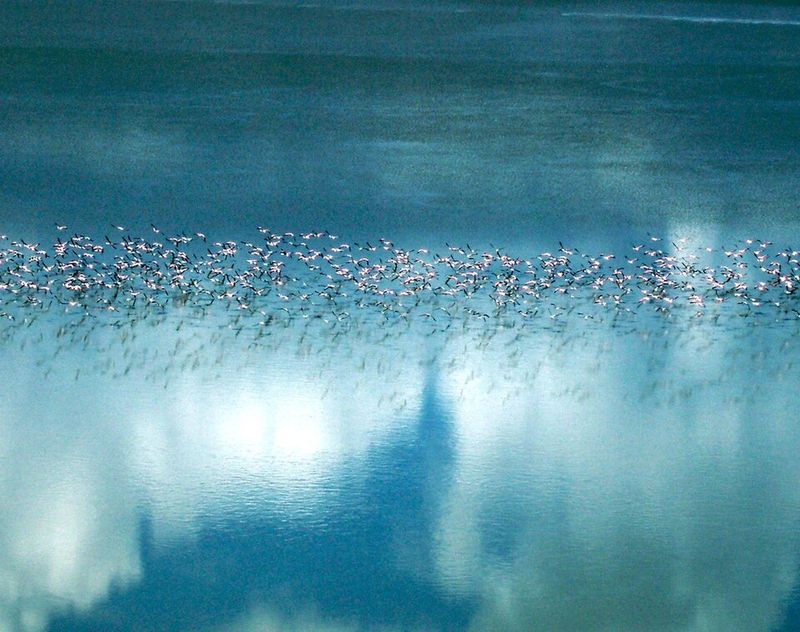
Seeing a single flamingo is memorable. Seeing hundreds of thousands of them packed along the edge of an alkaline lake in East Africa is something else entirely.
Lesser flamingos gather around lakes like Natron in Tanzania and Nakuru in Kenya in concentrations so large that the pink coloration along the shoreline can be detected in satellite imagery.
The flamingos are drawn to these harsh, highly alkaline environments because the conditions support massive blooms of cyanobacteria, which is their primary food source. Most other animals cannot survive in these lakes at all, which gives the flamingos an exclusive dining arrangement with very little competition.
Their movements across the East African Rift Valley are opportunistic and driven by water levels, salinity, and food availability rather than fixed seasonal timing. Satellite tracking has revealed that flamingos can travel enormous distances overnight, moving between lakes that are hundreds of kilometers apart in response to changing conditions.
12. Reindeer Migration, Norway, Sweden, Finland, and Russia
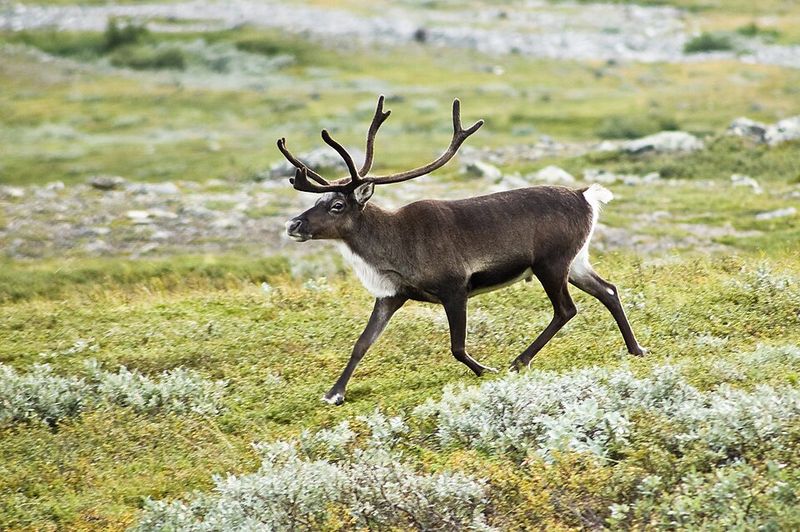
Reindeer migrations across northern Scandinavia and Russia have been happening for centuries, following routes that Indigenous Sami communities have guided and depended on for their entire way of life. The herds move between coastal winter pastures and inland or mountain summer grazing grounds, covering hundreds of kilometers in each direction.
From the air, the sight of thousands of reindeer crossing open tundra or frozen lakes creates sweeping, organic patterns that satellite imagery can capture clearly. These are not random wanderings but structured, culturally embedded journeys that connect Arctic communities to landscapes they have managed across generations.
Climate change is now disrupting traditional migration timing, as earlier snowmelt and unpredictable ice conditions affect both the routes and the grazing availability at journey’s end. Researchers across Norway, Sweden, Finland, and Russia are using satellite tracking data in collaboration with Sami herders to document how the migrations are shifting and what adaptations are being made in response.
13. African Elephant Migration, Botswana
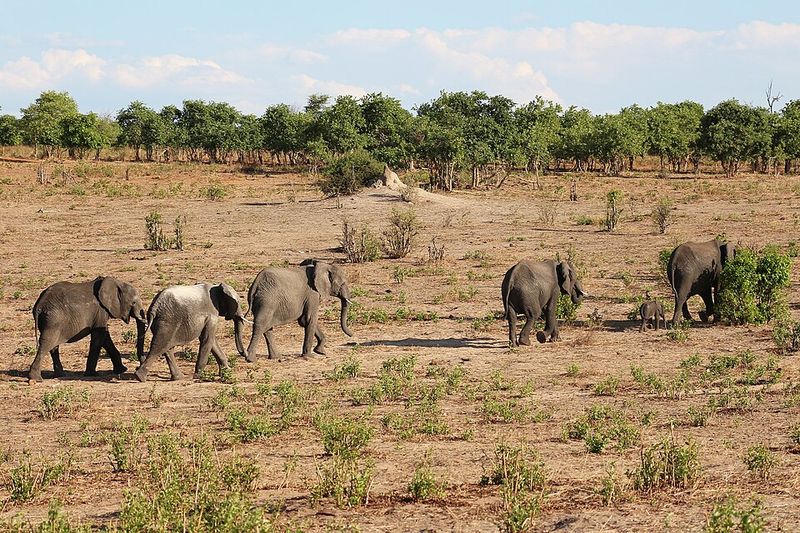
Botswana is home to the largest elephant population on Earth, with an estimated 130,000 animals, and their seasonal movements between water sources and feeding grounds are among the most ecologically significant migrations on the continent. During the dry season, herds converge on permanent water sources in patterns that create clearly visible trails across the landscape.
Conservation researchers use satellite tracking collars to follow individual elephants across vast distances, building detailed maps of how herds navigate between the Okavango Delta, Chobe National Park, and surrounding areas. The trails worn into the ground by decades of elephant movement are visible in satellite imagery as distinct lines crossing open terrain.
Elephants are considered a keystone species, meaning their migration routes shape entire ecosystems. They dig waterholes used by other animals, disperse seeds across enormous areas, and knock down trees that open up habitat for smaller species.
Protecting their migration corridors is considered one of the highest conservation priorities in southern Africa.
Share this story