America’s past isn’t locked away in textbooks. It lives and breathes in cobblestone streets, centuries-old buildings, and towns that refused to let history fade away.
From Spanish colonial forts to Wild West saloons, these remarkable places have held onto their stories with extraordinary care. Pack your curiosity and get ready to explore fifteen American old towns that make history feel thrillingly real.
St. Augustine, Florida
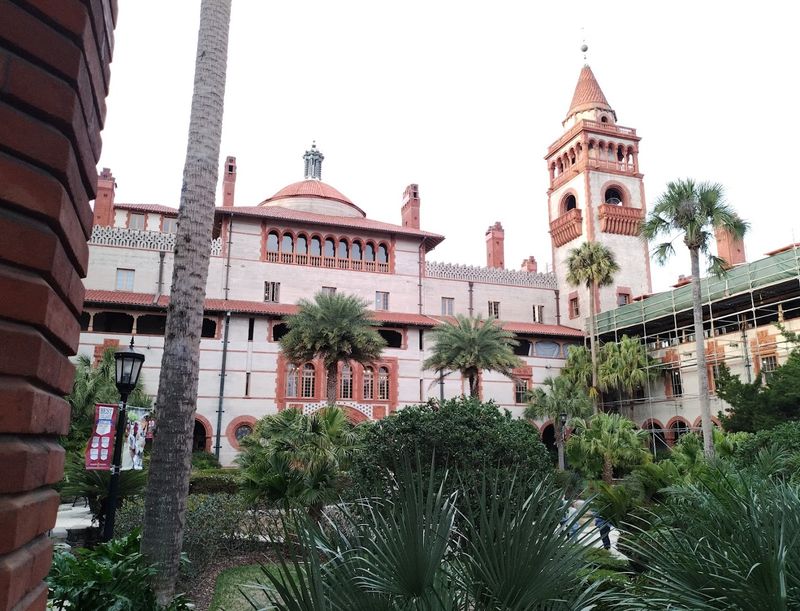
Step onto St. Augustine’s cobblestone streets and you are essentially walking through a timeline that stretches back to 1565. Founded by Spanish explorers, this Florida city holds the remarkable title of oldest continuously inhabited European-established city in the continental United States.
That is nearly 460 years of unbroken history packed into one walkable downtown.
The Castillo de San Marcos, a massive coquina stone fort, has stood watch over the harbor for over three centuries. Its thick walls absorbed cannon fire from British attackers and still stand today without a single crack of surrender.
Wandering through its chambers gives you a powerful sense of just how serious colonial defense really was.
Beyond the fort, narrow streets reveal Spanish colonial buildings, centuries-old Catholic churches, and charming plazas buzzing with visitors. The historic district feels genuinely alive rather than frozen in a museum display.
St. Augustine rewards slow walkers who peek into doorways, read historical markers, and let themselves get wonderfully lost in the oldest corners of American history.
Colonial Williamsburg, Virginia
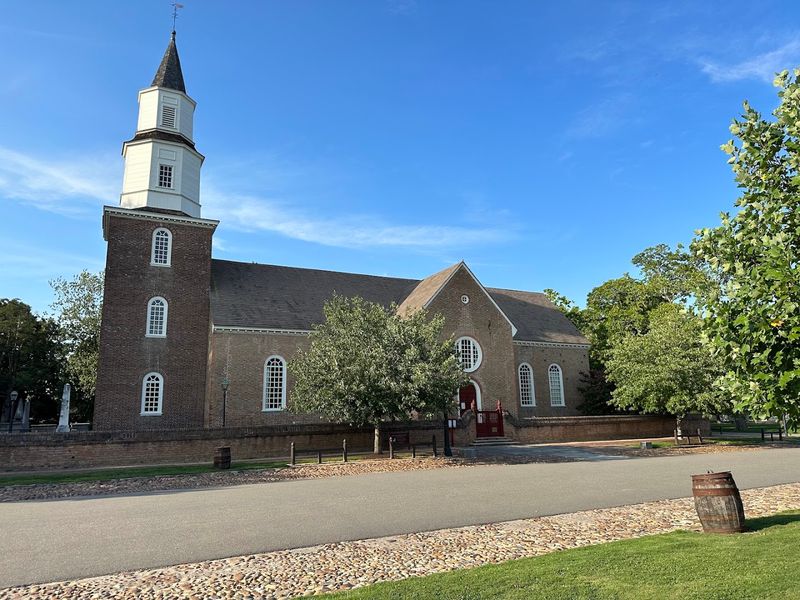
Nowhere else in America can you watch a blacksmith hammer hot iron, share a tavern meal with a costumed colonist, and tour the Governor’s Palace all in the same afternoon. Colonial Williamsburg is not just a museum.
It is an entire eighteenth-century city brought back to life with extraordinary attention to detail.
The restoration project began in the 1920s when Reverend W.A.R. Goodwin convinced John D.
Rockefeller Jr. to fund the preservation of Virginia’s colonial capital. Hundreds of buildings were painstakingly restored or reconstructed using period-accurate materials and techniques.
Today the historic area covers nearly 300 acres of genuine Revolutionary-era atmosphere.
Costumed interpreters portray everyone from merchants and craftspeople to enslaved individuals, ensuring the full complexity of colonial life gets told honestly. Kids especially love the interactive demonstrations, but adults consistently leave feeling genuinely moved.
Williamsburg manages the rare trick of making history feel urgent and personal rather than distant and dusty. Plan at least two full days because one is never, ever enough to absorb everything this extraordinary living-history city has carefully preserved.
Santa Fe, New Mexico
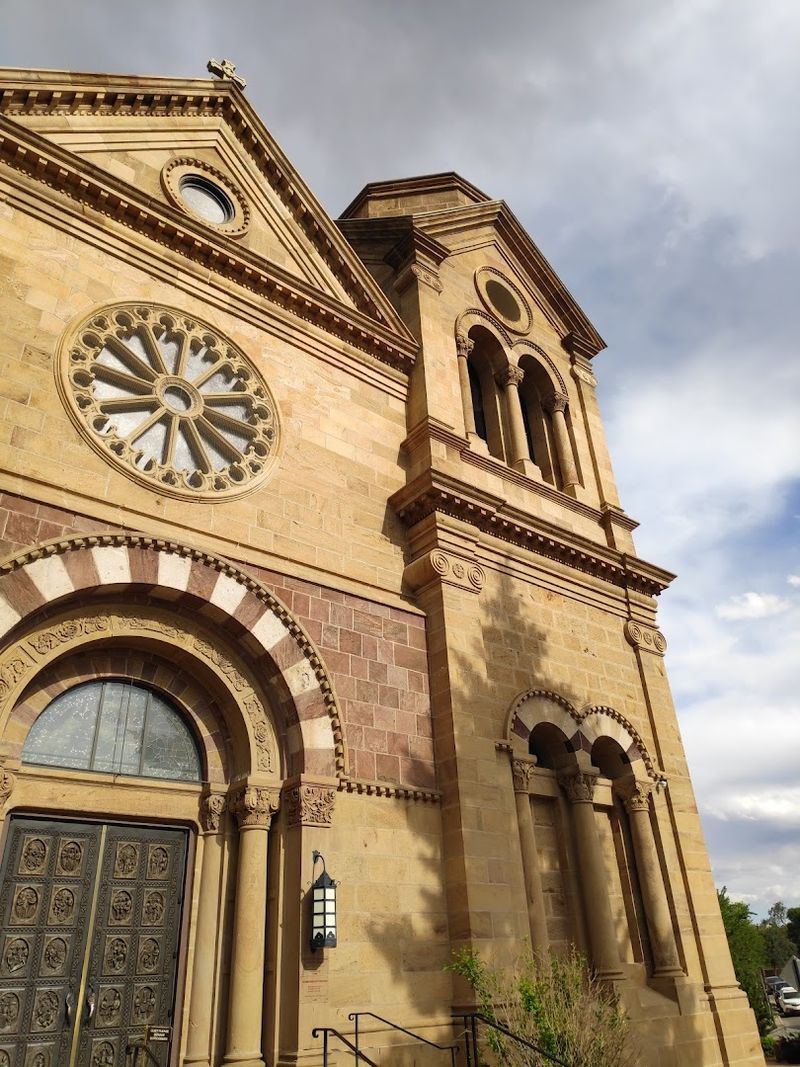
Santa Fe carries a color palette unlike any other American city. Earthy adobe walls, turquoise jewelry, and terracotta rooftops create a visual identity so distinctive that strict building codes protect it to this day.
The city has been continuously inhabited for over 400 years, making it one of the oldest and most layered historic destinations in the country.
Founded by Spanish colonizers around 1610, Santa Fe served as a colonial capital long before the United States existed as a nation. The Palace of the Governors on the central plaza is the oldest continuously occupied public building in the country, and Indigenous artisans still sell handmade jewelry beneath its portal every single day.
That unbroken tradition alone makes the plaza worth visiting.
Native American, Spanish, Mexican, and Anglo American cultures have all left permanent marks on Santa Fe’s architecture, food, art, and festivals. The city’s historic canyon roads, mission churches, and adobe neighborhoods feel genuinely ancient in the best possible way.
Whether you are browsing galleries on Canyon Road or attending a traditional feast day at a nearby pueblo, Santa Fe offers cultural depth that rewards every curious visitor who shows up ready to listen.
Charleston, South Carolina
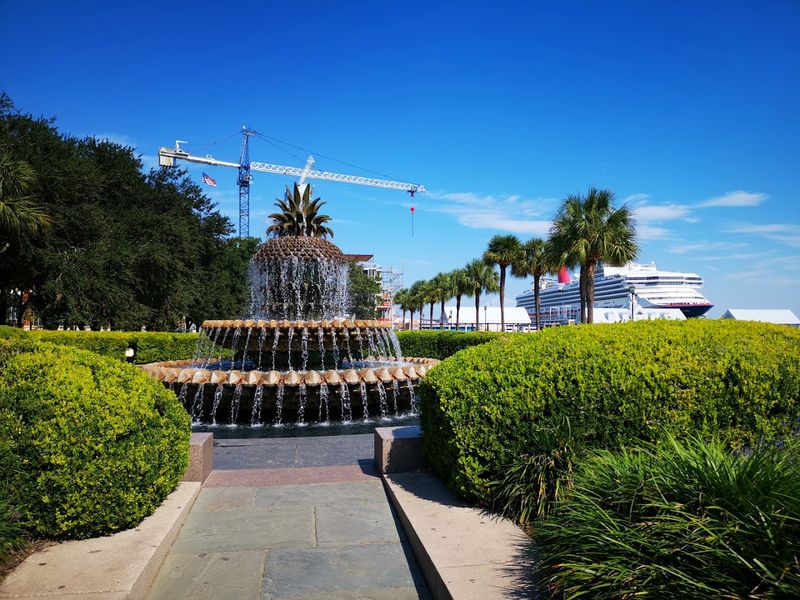
Rainbow Row might be the most photographed street in the American South, and honestly, it earns every single snapshot. Charleston’s pastel-painted Georgian row houses have stood along East Bay Street since the 1700s, surviving wars, earthquakes, hurricanes, and the relentless march of modern development.
The fact that they still stand is something close to a miracle.
Charleston was founded in 1670 and grew wealthy through trade, agriculture, and tragically through the labor of enslaved people. The city does not shy away from that difficult history today.
Historic sites like the International African American Museum and preserved slave markets ensure that the full story gets told with honesty and respect.
Church steeples pierce the skyline in every direction, earning Charleston its nickname as the Holy City. Horse-drawn carriage tours wind through streets lined with antebellum mansions, walled gardens bursting with magnolias, and centuries-old cemeteries.
The food scene is equally historic, with she-crab soup and shrimp and grits keeping Lowcountry culinary traditions deliciously alive. Charleston rewards visitors who walk slowly, eat generously, and take time to appreciate just how much extraordinary history is packed into every beautifully preserved block.
Savannah, Georgia
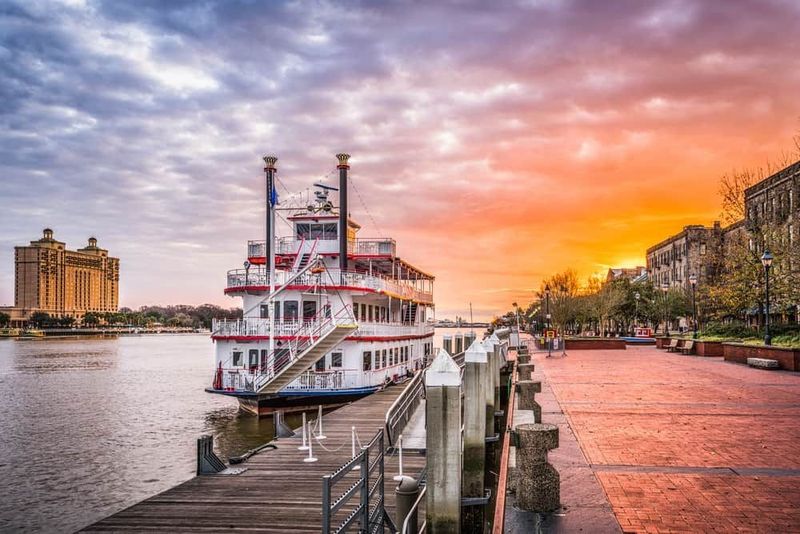
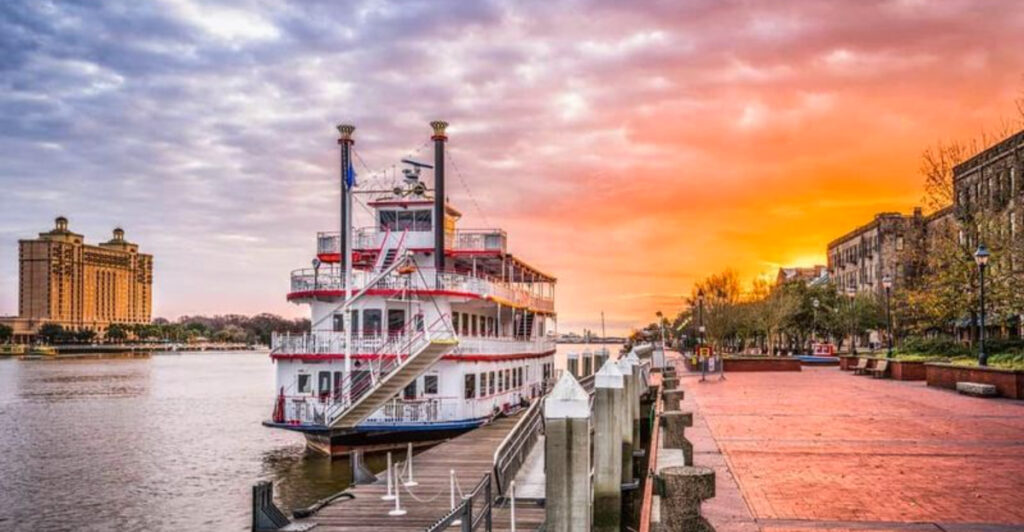
Spanish moss hangs from ancient oak trees like nature’s own curtains, and beneath them, Savannah’s famous squares feel like outdoor living rooms frozen somewhere in the nineteenth century. General James Oglethorpe designed the city’s grid of twenty-two squares in 1733, and remarkably, most of them still exist exactly as planned.
Urban planners study Savannah’s layout to this day.
The historic district contains over 1,000 architecturally significant buildings, a concentration so dense that the entire area earned National Historic Landmark status. Walking from square to square reveals Federal, Regency, Gothic Revival, and Italianate architecture packed side by side in a way that feels almost too beautiful to be real.
Forsyth Park, with its iconic white fountain, anchors the southern end of the district perfectly.
Savannah’s Civil War history adds another layer to every stroll. General Sherman famously spared the city during his March to the Sea, gifting it to President Lincoln as a Christmas present in 1864.
That decision preserved everything visitors admire today. Ghost tours, riverfront warehouses converted into restaurants, and the lively City Market keep the atmosphere energetic after dark.
Savannah is the kind of city that sneaks up on you and refuses to let go.
Annapolis, Maryland
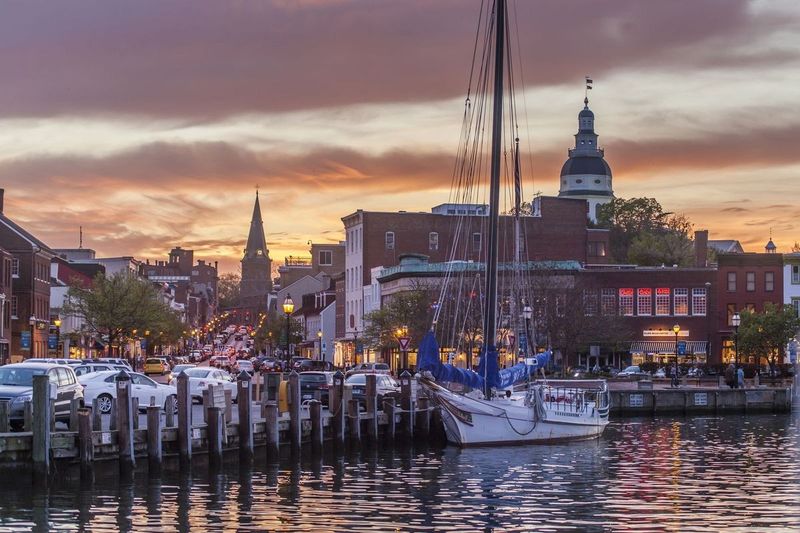
Annapolis has been Maryland’s capital since 1694, making it one of the longest continuously serving state capitals in the entire country. The city’s compact historic district is a genuine treasure chest of colonial American architecture, with more eighteenth-century buildings surviving here per square block than almost anywhere else in the nation.
Brick sidewalks lead past Georgian townhouses, colonial taverns, and the Maryland State House, which holds another remarkable distinction: it briefly served as the capital of the entire United States from 1783 to 1784. George Washington resigned his military commission here, and the Treaty of Paris was ratified within these same walls.
History genuinely happened on this ground.
The city’s maritime identity is equally impossible to ignore. Chesapeake Bay sailing culture runs so deep that Annapolis earned the nickname Sailing Capital of the United States.
The Naval Academy campus, open to visitors, adds a striking military presence alongside the colonial streetscapes. Fresh Maryland crab from a waterfront restaurant while watching sailboats glide past might be one of the most satisfying afternoon experiences the East Coast can offer.
Annapolis blends early American political history with saltwater charm in a combination that feels completely effortless.
Old Quebec City, Quebec
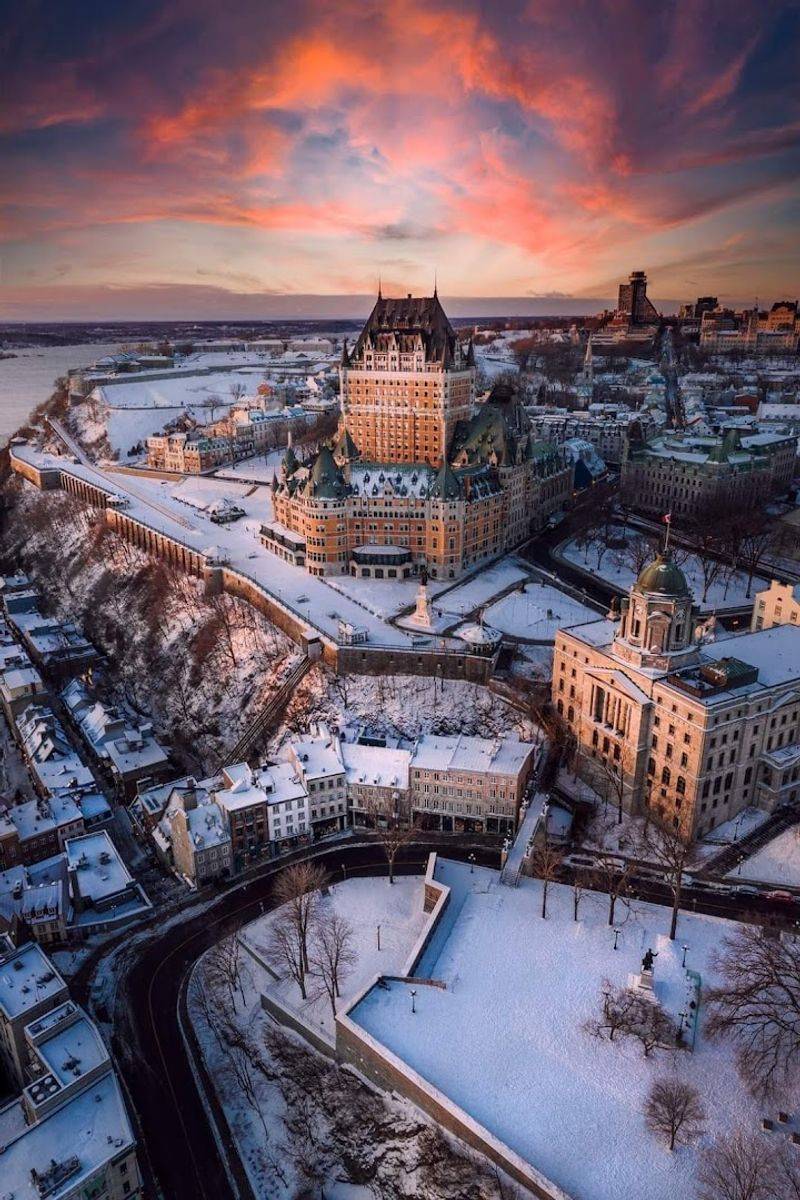
Technically just across the Canadian border, Old Quebec City earns its place on any serious list of North American historic destinations. The only remaining fortified city north of Mexico, its massive stone walls, steep streets, and French colonial architecture create an atmosphere so European that visitors regularly feel they have been teleported to the French countryside without buying a plane ticket.
UNESCO granted Old Quebec World Heritage Site status in 1985, recognizing its extraordinary state of preservation. The Chateau Frontenac hotel, perched dramatically above the St. Lawrence River, has dominated the skyline since 1893 and remains one of the most photographed hotels on the entire continent.
The lower town district, called Petit-Champlain, dates back to the 1600s and is considered the oldest commercial district in North America.
French remains the primary language here, and the cultural identity feels fiercely and proudly maintained. Summer brings outdoor festivals, street performers, and cafe terraces spilling onto cobblestone lanes.
Winter transforms the city into a snow-globe fantasy with the famous Winter Carnival drawing visitors from around the world. Old Quebec is the kind of place where history and daily life are so thoroughly intertwined that even a simple morning croissant feels like a small act of cultural preservation.
Mystic, Connecticut
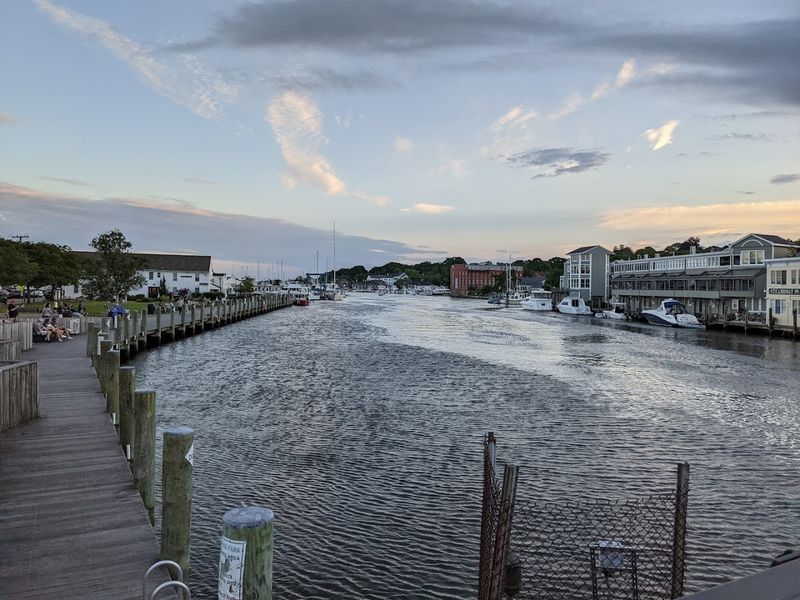
Before railroads changed everything, American wealth sailed in on wooden ships, and Mystic was one of the busiest shipbuilding towns on the entire Atlantic coast. At its peak in the 1800s, this small Connecticut village launched whaling ships and clipper ships that traveled every ocean on earth.
The sea was Mystic’s economy, its identity, and its obsession.
Mystic Seaport Museum preserves that maritime world with stunning authenticity. The outdoor museum covers nineteen acres and includes restored nineteenth-century village buildings, working craftspeople demonstrating traditional boat-building techniques, and a remarkable collection of historic vessels.
The Charles W. Morgan, the last surviving wooden whaling ship in the world, floats at the dock and welcomes visitors aboard.
Beyond the museum, downtown Mystic charms visitors with its Victorian-era drawbridge, cozy restaurants, and independent shops lining both banks of the Mystic River. The town inspired the fictional setting in the movie Mystic Pizza, which brought the village unexpected Hollywood fame back in 1988.
Whether you are passionate about maritime history or simply enjoy beautiful New England scenery, Mystic delivers a genuinely satisfying combination of education, atmosphere, and small-town character that never feels forced or overly touristy.
Deadwood, South Dakota
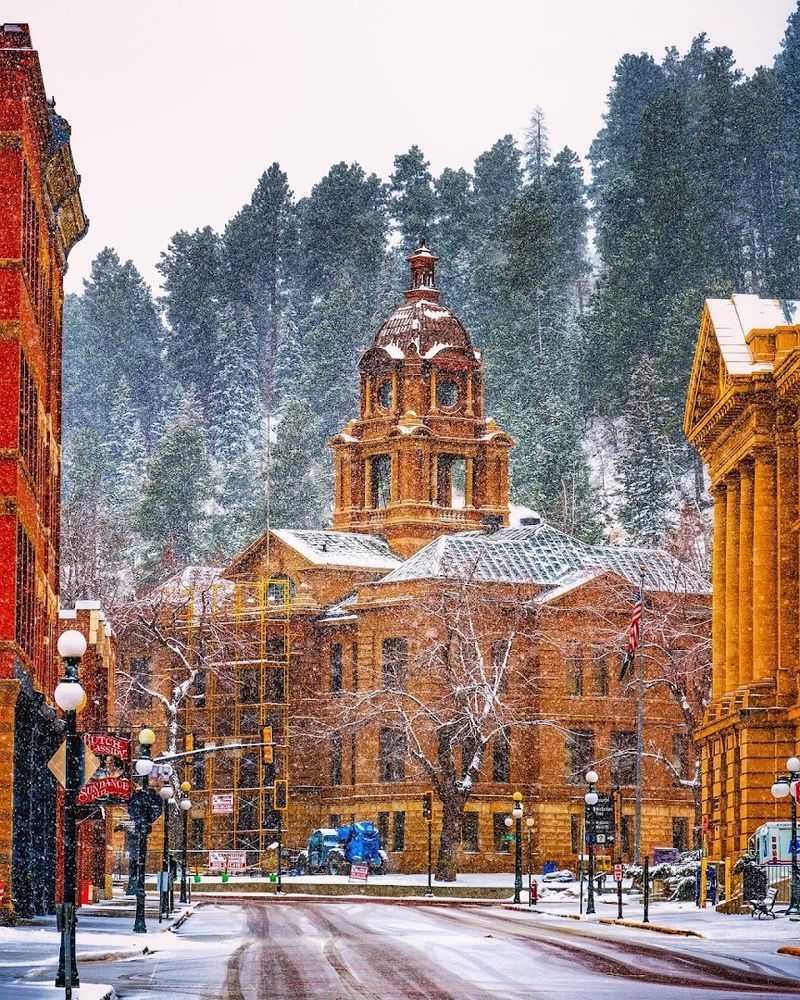
Wild Bill Hickok was shot in the back of the head here while holding a poker hand of aces and eights, and Deadwood has been dining out on that story ever since. Not in a cheap way though.
The town genuinely earned its legendary reputation during the 1876 gold rush when thousands of fortune-seekers flooded the Black Hills and created one of the most lawless, chaotic, and fascinating boomtowns in American frontier history.
Deadwood’s entire historic district is a National Historic Landmark, and the preservation of its Victorian-era commercial buildings is remarkably thorough. Saloons, hotels, and gambling halls that operated during the Wild West era have been carefully restored and many remain active businesses today.
You can still legally gamble in Deadwood, which creates an entertainingly authentic connection to the town’s rowdy original character.
Mount Moriah Cemetery on the hill above town holds the graves of Wild Bill Hickok and Calamity Jane, both of whom specifically requested burial side by side. The cemetery draws thousands of visitors annually and feels genuinely moving rather than gimmicky.
Deadwood stages regular reenactments of famous shootouts in the streets, and the annual Days of ’76 rodeo keeps frontier traditions very much alive and kicking.
Taos, New Mexico
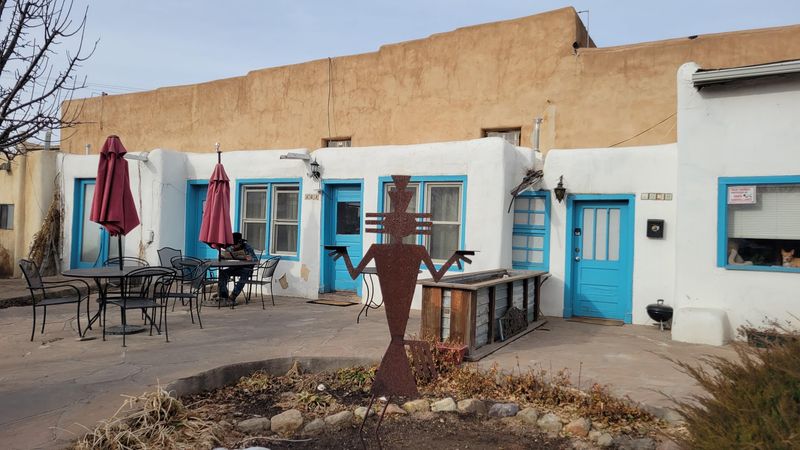
Roughly a thousand years ago, the ancestors of today’s Taos Pueblo people began building the multi-story adobe community that still stands at the edge of town. Taos Pueblo is one of the oldest continuously inhabited communities in the entire United States, and visiting feels like encountering something genuinely ancient in the most respectful and humbling sense of the word.
The town of Taos itself carries layers of Spanish colonial history alongside Indigenous heritage. The historic plaza dates to the early 1600s, and the San Francisco de Asis Mission Church, with its massive adobe buttresses, has inspired artists from Georgia O’Keeffe to Ansel Adams.
The artistic community that took root here in the early twentieth century added yet another fascinating chapter to an already extraordinary story.
High desert light in Taos has a quality that photographers and painters chase obsessively. The surrounding mountains, the Rio Grande Gorge just west of town, and the earthen architecture all seem to glow differently depending on the hour.
Taos is also refreshingly unhurried compared to larger tourist destinations, giving visitors actual room to absorb the atmosphere slowly. Come for the history, stay for the red chile, and leave with a deep appreciation for how beautifully old and new can coexist here.
New Castle, Delaware
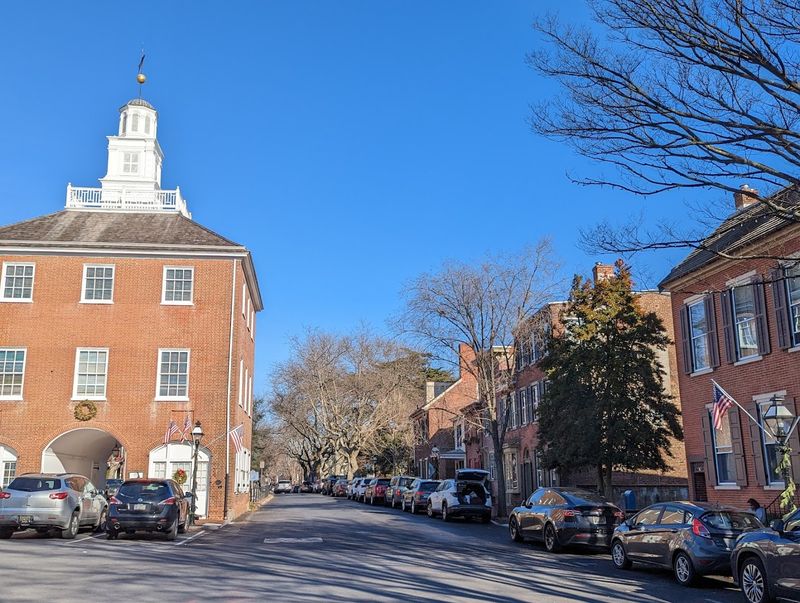
Most people drive straight through Delaware without stopping, which means most people have never discovered New Castle, one of the most perfectly preserved colonial towns in the entire country. Founded by the Dutch in 1651, later seized by the Swedes, then the Dutch again, then the British, New Castle changed hands more times than a hot potato before becoming part of the newly independent United States.
The historic district surrounding the town green looks almost exactly as it did in the eighteenth century. Georgian brick homes, the Old Court House, the Immanuel Episcopal Church, and the old jail cluster around a central green in an arrangement that colonial residents would recognize immediately.
Cobblestone streets add to the authenticity without feeling artificially maintained.
New Castle served as Delaware’s colonial capital and the first state capital after independence, giving it a historical significance that its small size tends to disguise. William Penn first set foot in America right here on the New Castle wharf in 1682, a fact commemorated by a modest but meaningful historic marker.
The town hosts an annual A Day in Old New Castle event each May when residents open their private historic homes to visitors, offering an intimate glimpse inside buildings that rarely welcome the public otherwise.
Fernandina Beach, Florida
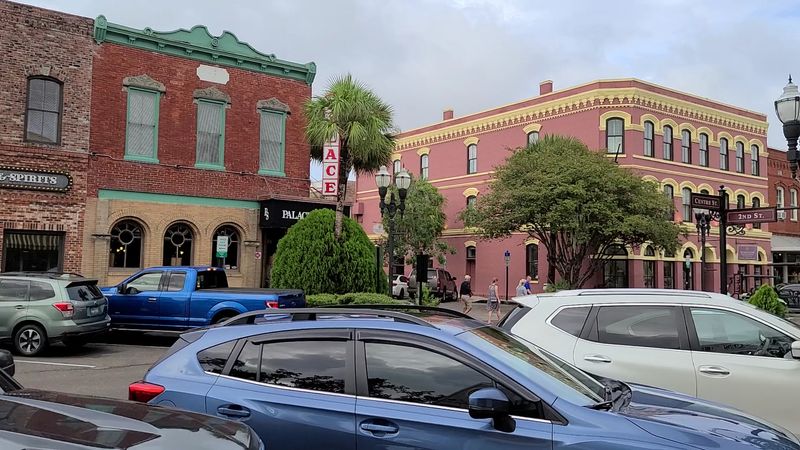
Fernandina Beach holds a genuinely unusual distinction: it is the only American city to have flown eight different flags over its soil, including those of France, Spain, Britain, the Patriots, the Green Cross of Florida, Mexico, the Confederacy, and the United States. That kind of history does not happen quietly, and the town on Amelia Island has the architecture to prove every chapter of it.
The Centre Street historic district contains over 50 buildings listed on the National Register of Historic Places, most of them dating from the post-Civil War Victorian boom era when Fernandina Beach served as a thriving shrimping and railroad hub. Ornate Queen Anne cottages, Italianate commercial buildings, and a beautifully preserved late nineteenth-century streetscape make strolling the main street genuinely delightful.
Fort Clinch State Park on the northern tip of the island adds a Civil War-era brick fortress to the historical lineup, with costumed rangers bringing 1860s garrison life to life on select weekends. The local shrimping fleet still operates from the harbor, maintaining a working maritime tradition that stretches back generations.
Fernandina Beach rewards visitors who appreciate history without crowds, with a laid-back island atmosphere that makes the whole experience feel like a wonderful accidental discovery.
St. Mary’s City, Maryland
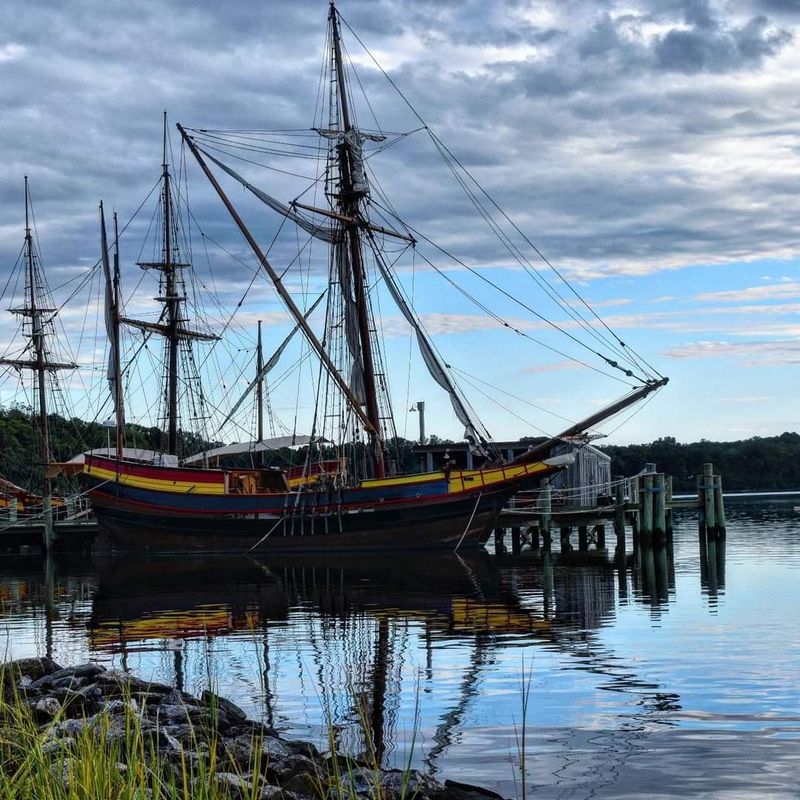
Maryland’s first colonists arrived at St. Mary’s City in 1634 with a bold plan: build a settlement that would practice religious tolerance at a time when such an idea was genuinely radical. The colony became Maryland’s first capital and one of the earliest examples of religious freedom in the Western world.
The fact that most people have never heard of it makes the place even more fascinating to discover.
Unlike Williamsburg or Plymouth, St. Mary’s City is primarily an active archaeological site where researchers continue uncovering seventeenth-century artifacts and foundations. Visitors can watch real archaeology happening in the ground while exploring reconstructed buildings, a replica of the original Maryland Dove sailing ship, and a working tobacco plantation that demonstrates colonial agricultural life with honest complexity.
The site’s scale is intimate and unhurried, which creates a genuinely different experience from larger living-history museums. Costumed interpreters engage visitors in actual conversation rather than scripted presentations, making interactions feel refreshingly natural.
The surrounding tidewater landscape, with its quiet rivers and open fields, has changed remarkably little since the 1600s, adding an atmospheric authenticity that no amount of reconstruction could manufacture. St. Mary’s City is the kind of hidden gem that history enthusiasts tell each other about in hushed, excited tones.
Old Town Albuquerque, New Mexico
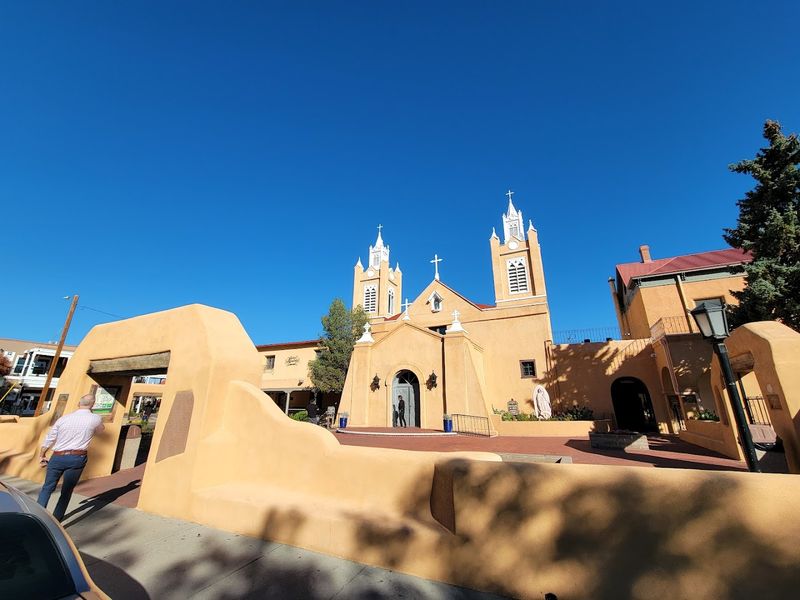
Founded in 1706 by Spanish Governor Francisco Cuervo y Valdes, Old Town Albuquerque has been the cultural heart of New Mexico’s largest city for over three centuries. The original Spanish colonial plaza design, with a central square surrounded by a church and government buildings, survives here in remarkably intact form, quietly outlasting every wave of American development that expanded around it.
The San Felipe de Neri Church anchors the plaza’s northern edge and has been in continuous operation since 1793, making it one of the oldest active parishes in the American Southwest. Adobe walls, hand-carved wooden doors, and a simple interior decorated with folk art create a spiritual atmosphere that feels genuinely timeless.
Sunday Mass still draws local worshippers just as it has for centuries.
Surrounding the plaza, galleries, jewelry shops, and restaurants occupy historic adobe buildings where vendors sell traditional Southwestern crafts, turquoise jewelry, and hand-woven textiles. The nearby Albuquerque Museum provides excellent context for the neighborhood’s history.
Old Town sits just minutes from the modern city, which creates a pleasantly jarring contrast when you step from quiet colonial streets back onto busy Central Avenue. That collision between past and present is exactly what makes Old Town Albuquerque so genuinely interesting to explore.
Newport, Rhode Island
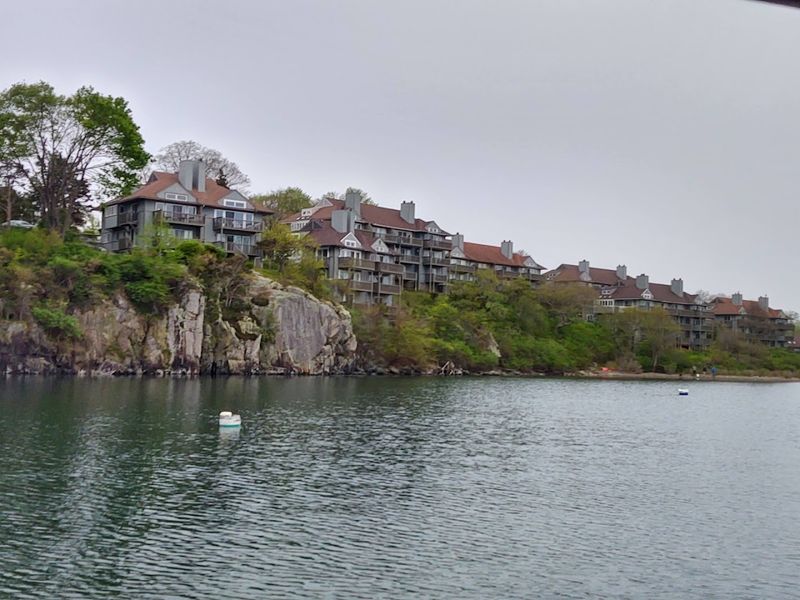
Newport somehow managed to pack four completely different historical eras into one small Rhode Island city, and each one is worth exploring on its own terms. Colonial-era streets, Revolutionary War history, a golden age of yachting, and the jaw-dropping Gilded Age mansions of the Vanderbilts and Astors all coexist within walking distance of the same harbor.
Very few American cities can make that claim.
The colonial district along Thames Street and Benefit Street contains some of the finest surviving eighteenth-century architecture in New England. Trinity Church, built in 1726, and the Touro Synagogue, completed in 1763 as the oldest surviving Jewish house of worship in the United States, both stand as extraordinary monuments to Newport’s early history.
George Washington himself wrote a famous letter to the Touro congregation affirming religious freedom as a founding American value.
The Cliff Walk along the oceanfront dramatically showcases the Gilded Age mansions built by America’s wealthiest families in the late 1800s. The Breakers, the Marble House, and Rosecliff are open for tours and feel genuinely staggering in their scale and opulence.
Newport’s combination of humble colonial origins and extravagant nineteenth-century excess tells a uniquely American story about ambition, freedom, and the fascinating ways wealth reshapes history over time.
Share this story