Some places on Earth are so high, steep, or dizzying that they almost seem impossible to believe until you see them in person. From glass skywalks above canyons to mountain peaks towering over the clouds, these extreme heights deliver unforgettable views and serious adrenaline for anyone brave enough to look down.
Whether you dream of standing on top of the world or prefer admiring these jaw-dropping spots from a safe distance, each location on this list will leave you speechless. Get ready to discover 15 of the most extreme heights our planet has to offer.
Mount Everest — Nepal and China
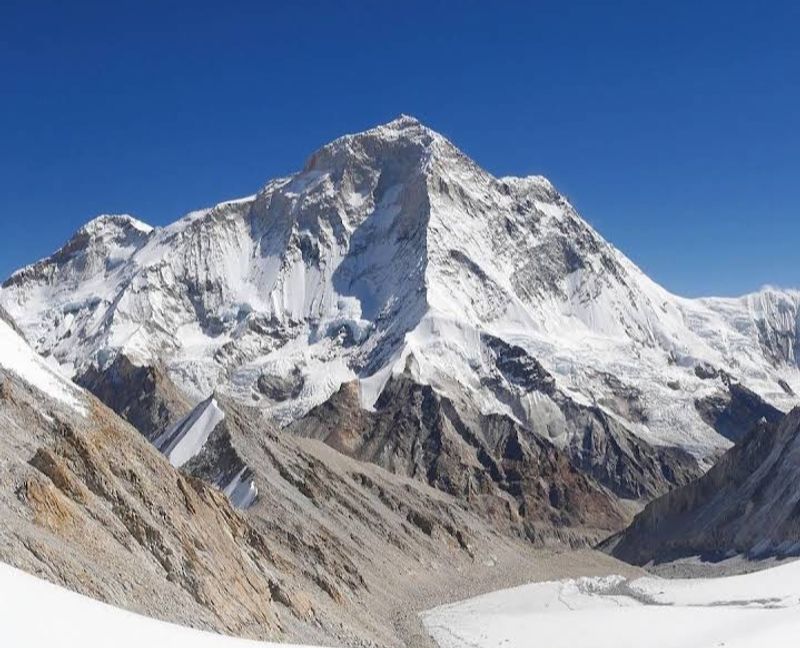
At 29,031 feet above sea level, Mount Everest does not just touch the sky — it practically owns it. This legendary peak sits on the border of Nepal and China, and it has been the ultimate goal for climbers since Sir Edmund Hillary and Tenzing Norgay first reached the summit in 1953.
The mountain is so tall that weather systems form around it like a crown.
Reaching the top is not a weekend trip. Climbers typically spend weeks at base camp letting their bodies adjust to the dangerously thin air before attempting the final push.
Altitude sickness, frostbite, and brutal storms claim lives every year, making every successful summit a remarkable human achievement.
You do not need to climb to feel the magic, though. From viewpoints in Nepal’s Sagarmatha National Park, travelers can witness Everest rising dramatically above surrounding peaks.
The sheer scale of the mountain from ground level is already enough to make your jaw drop. Fun fact: Everest grows about 2 millimeters taller every year due to tectonic activity, so the record keeps getting broken naturally.
Burj Khalifa Observation Deck — Dubai, United Arab Emirates
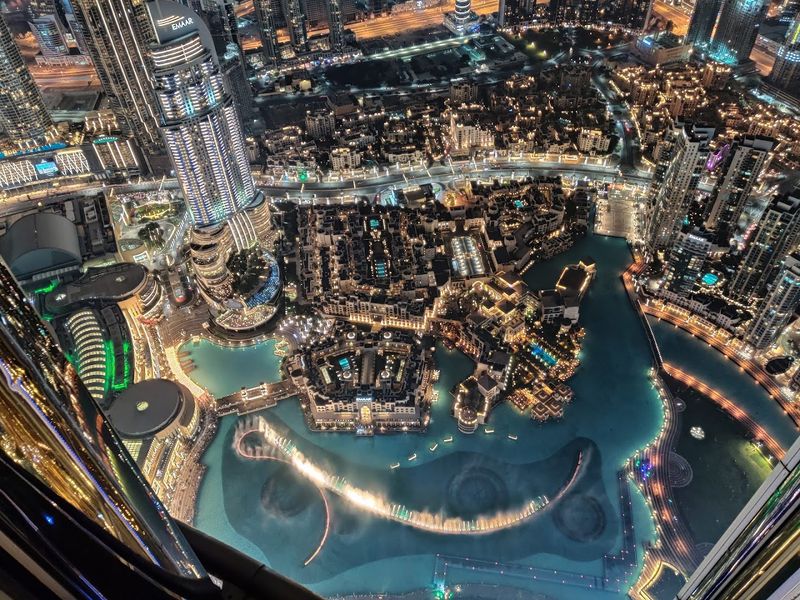
Nobody warned visitors that looking down from the world’s tallest building would feel like hovering inside a plane. The Burj Khalifa’s observation decks, located at levels 124, 125, and 148, place you hundreds of meters above Dubai’s glittering skyline.
The building stretches 2,717 feet into the sky, making every other structure nearby look like a toy.
Sunset from the upper deck is a full sensory experience. Highways curve through the desert below like silver ribbons, and the Persian Gulf shimmers in the far distance.
On especially clear evenings, the horizon seems to bend with the curve of the Earth, giving you a rare glimpse of just how round this planet really is.
The high-speed elevators travel at roughly 22 miles per hour, whisking visitors from ground level to the clouds in under a minute. First-timers often describe a strange floating feeling in their stomachs during the ascent.
Booking tickets in advance is strongly recommended because the observation deck draws massive crowds year-round. The At the Top experience also includes interactive displays about Dubai’s rapid transformation from a small fishing village into a futuristic global city.
Tianmen Mountain Glass Skywalk — Zhangjiajie, China
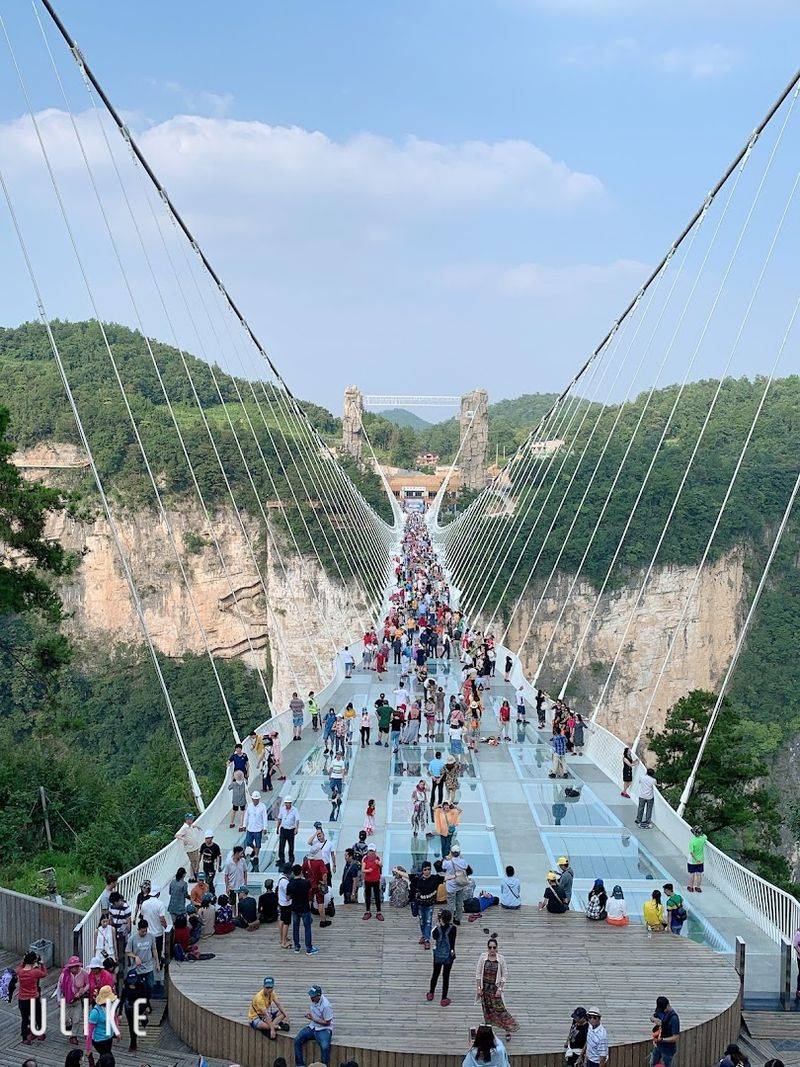
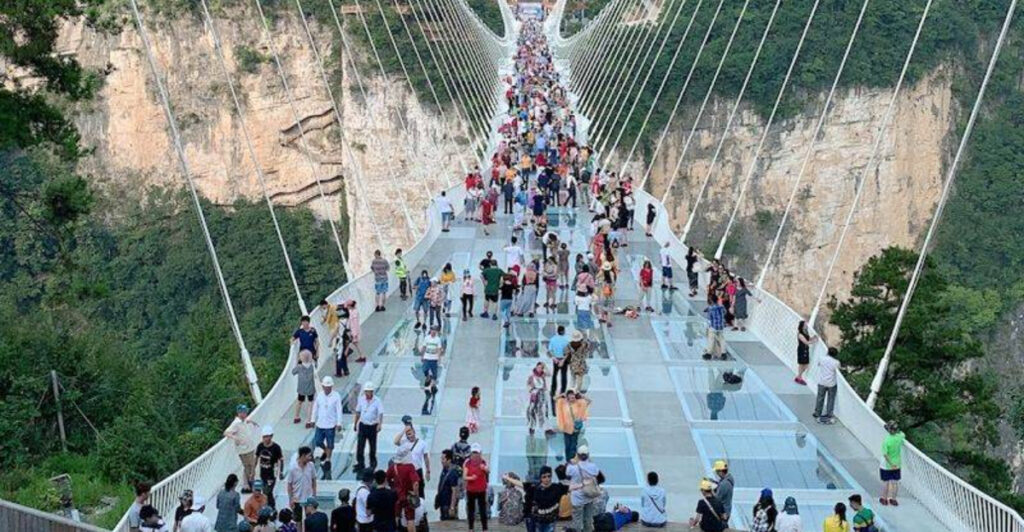
Imagine walking on a sheet of glass with nothing beneath your feet but a 4,600-foot drop into a valley of ancient forests. That is exactly what greets visitors on the Tianmen Mountain Glass Skywalk in Zhangjiajie, China.
The transparent walkway is bolted directly into the side of a sheer cliff, and the views through the floor are absolutely wild.
Tianmen Mountain is famous for its dramatic rock formations, misty peaks, and the iconic Heaven’s Gate arch — a natural hole carved through the mountain summit. The glass path curves around the cliff edge, offering unobstructed views of steep gorges and dense woodland that inspired the floating mountains in the movie Avatar.
First-time visitors often shuffle cautiously along the walkway, white-knuckled and wide-eyed, while bolder guests crouch down to photograph straight through the glass floor. Skid-proof shoe covers are provided at the entrance, which somehow makes the whole experience feel both safer and funnier at the same time.
The cable car ride up the mountain is itself a thrilling adventure, climbing steeply through low clouds before the mountain’s dramatic landscape comes into full view. It is one of the most theatrical arrivals in all of China.
Mount Thor — Nunavut, Canada
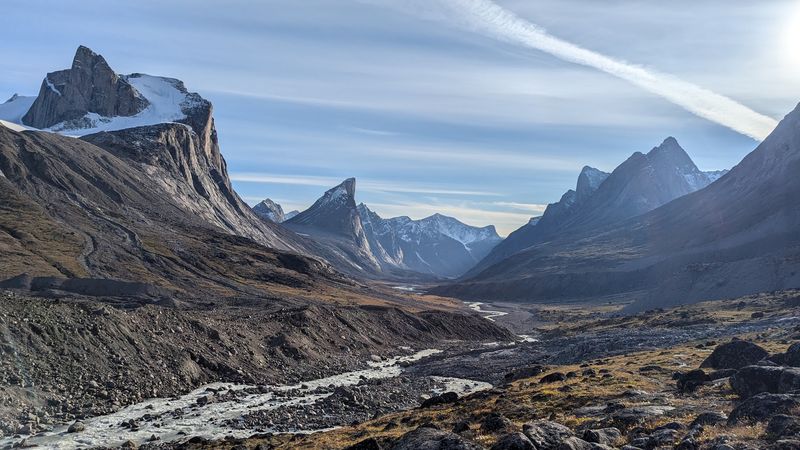
Most mountains are just tall. Mount Thor is aggressively vertical.
Located on Baffin Island in Canada’s remote Nunavut territory, this granite giant holds the world record for Earth’s greatest purely vertical drop, plunging an extraordinary 4,101 feet straight down. The cliff actually overhangs at roughly 105 degrees, meaning it leans out beyond perfectly vertical.
Getting to Mount Thor is already a serious expedition. The nearest town is Pangnirtung, accessible only by small aircraft, and the hike into Auyuittuq National Park takes several days across Arctic tundra and glacial rivers.
Most visitors who make the journey are experienced mountaineers, adventure photographers, or both.
For climbers, the wall represents one of the most punishing big-wall ascents on the planet. The first complete ascent of the vertical face was not completed until 1985, and only a handful of teams have successfully climbed it since.
Even from a distance, the sheer scale of the cliff is hard to process. Standing at its base and craning your neck upward gives you the strange sensation that the mountain is falling toward you.
Polar bears and Arctic foxes occasionally wander through the surrounding landscape, adding a surreal wildlife encounter to an already otherworldly setting.
Glacier Skywalk — Alberta, Canada
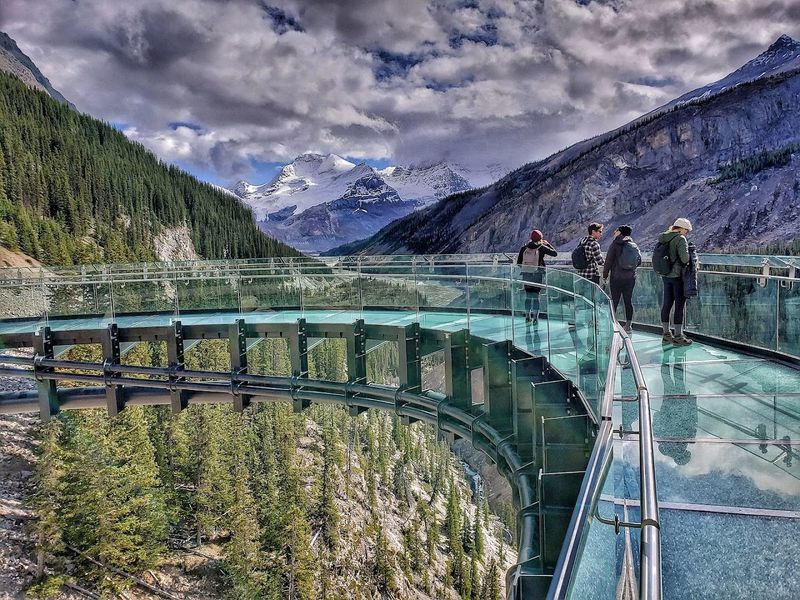
Hovering over a glacial valley with nothing but glass between your boots and a 918-foot drop is the kind of experience that redefines the word thrilling. The Glacier Skywalk in Jasper National Park, Alberta, curves outward from a limestone cliff like a giant question mark, and standing on its glass floor is equal parts terrifying and beautiful.
The views from the platform are genuinely spectacular. Snowy peaks frame the horizon, waterfalls thread down rocky walls, and the pale blue waters of the Sunwapta Valley stretch out far below.
The Columbia Icefield, one of North America’s largest ice masses, sits just a short drive away and adds extra drama to the already stunning surroundings.
The skywalk opened in 2014 and quickly became one of Canada’s most talked-about attractions. Guides stationed along the walkway share fascinating information about glaciers, local wildlife, and the geological history of the Canadian Rockies.
Bighorn sheep sometimes appear on nearby cliffs, completely unimpressed by the whole setup. The structure was designed to leave zero permanent footprint on the natural landscape, with supports engineered to avoid damaging the cliff face.
Even arriving by shuttle bus through the mountain scenery feels like the opening act of something extraordinary.
Shanghai Tower Observation Deck — Shanghai, China
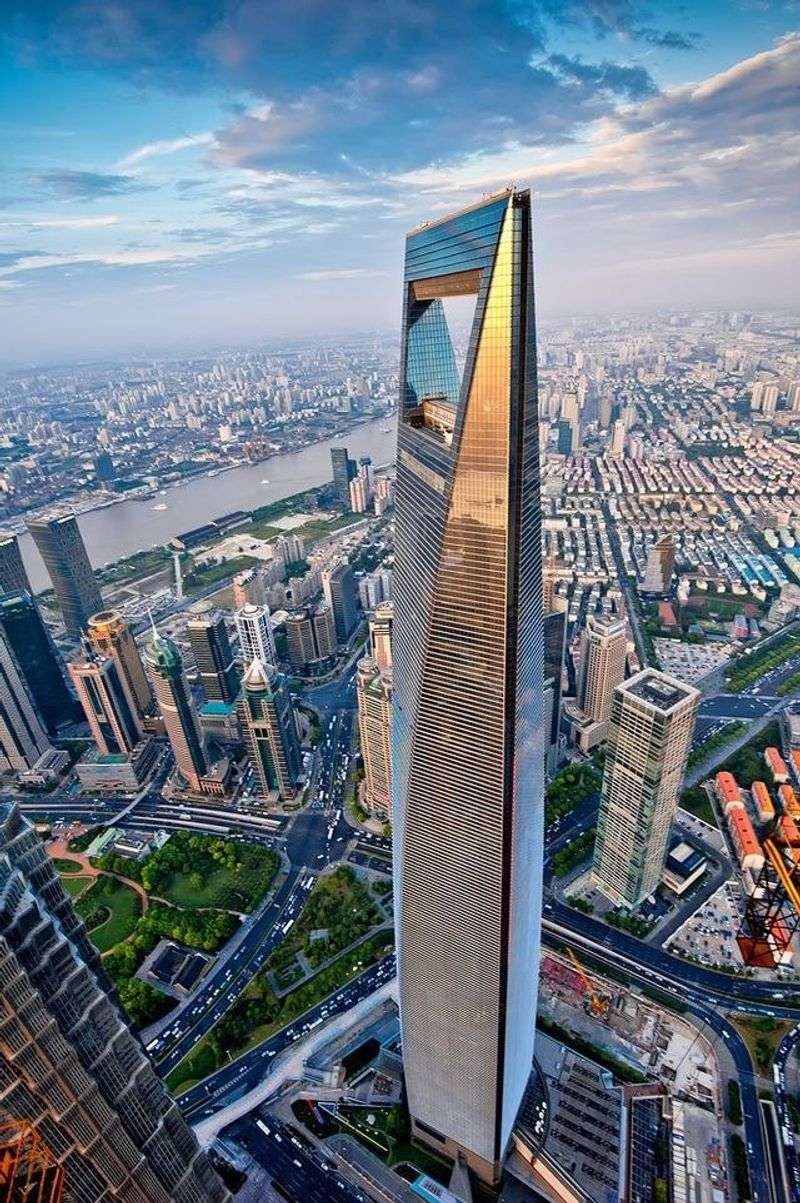
When the fog rolls in over Shanghai, the city’s lower skyscrapers vanish into white mist while Shanghai Tower’s observation deck floats serenely above it all. At 1,844 feet above street level, the deck on the 118th floor ranks among the highest in the world, and the views on a clear day stretch almost beyond imagination.
Shanghai Tower is the world’s second tallest building, and its twisting, tapered design was specifically engineered to reduce wind resistance by 24 percent. The building spirals upward like a tornado frozen in glass and steel, making it instantly recognizable on the city skyline from miles away.
The elevators are the fastest in the world, traveling at a jaw-dropping 45 miles per hour. Riders feel a subtle pressure change during the 55-second ascent, similar to what you experience in an airplane.
At the top, floor-to-ceiling windows wrap around the entire observation level, and interactive exhibits explain how the building was constructed and why its unusual shape actually makes it stronger. On foggy mornings, watching neighboring giants like the Jin Mao Tower and Shanghai World Financial Center poke through the clouds below you creates a genuinely surreal scene.
It feels less like standing in a city and more like standing above one.
Aiguille du Midi — Chamonix, France
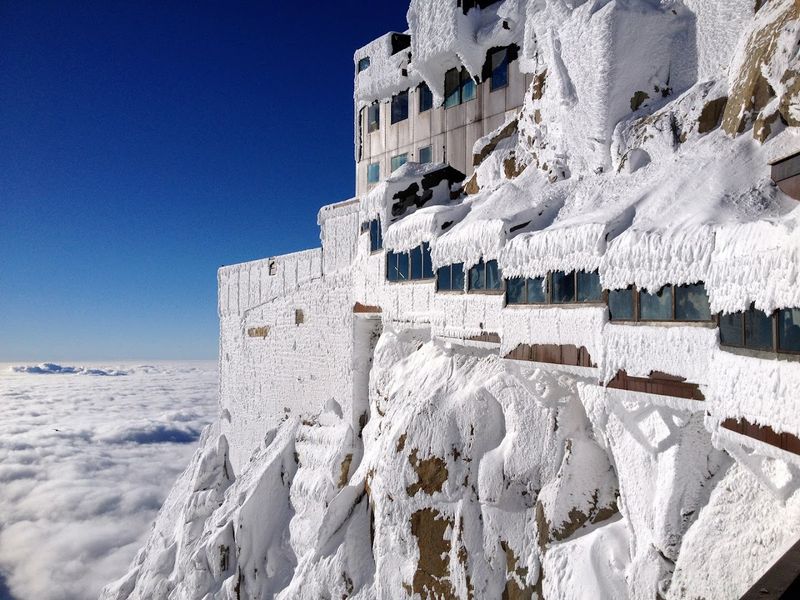
Few cable car rides on Earth deliver you somewhere quite as dramatic as the Aiguille du Midi above Chamonix, France. The journey from the valley floor to the summit station climbs nearly 9,000 feet in about 20 minutes, depositing passengers at 12,605 feet above sea level with panoramic views of Mont Blanc and a jaw-dropping wall of glaciers stretching in every direction.
The real showstopper is the Step Into the Void installation, a glass box that juts out from the summit terrace over a vertical drop of more than 9,000 feet. Stepping inside means standing on transparent glass with nothing visible beneath your feet except a sheer plunge to the valley far below.
Many visitors hesitate at the entrance, then spend several minutes inside taking photos while trying to convince their knees to stop shaking.
The summit itself sits on a narrow rocky pinnacle with steep drops on all sides, making the whole platform feel wonderfully exposed. Temperatures can plunge well below freezing even in summer, so bringing a warm jacket is essential regardless of the weather in town.
Paragliders regularly launch from the terraces here, soaring effortlessly above the glaciers on warm updrafts. Watching someone leap off the edge while you are still working up the nerve to look down is both inspiring and deeply humbling.
Grand Canyon Skywalk — Arizona, USA
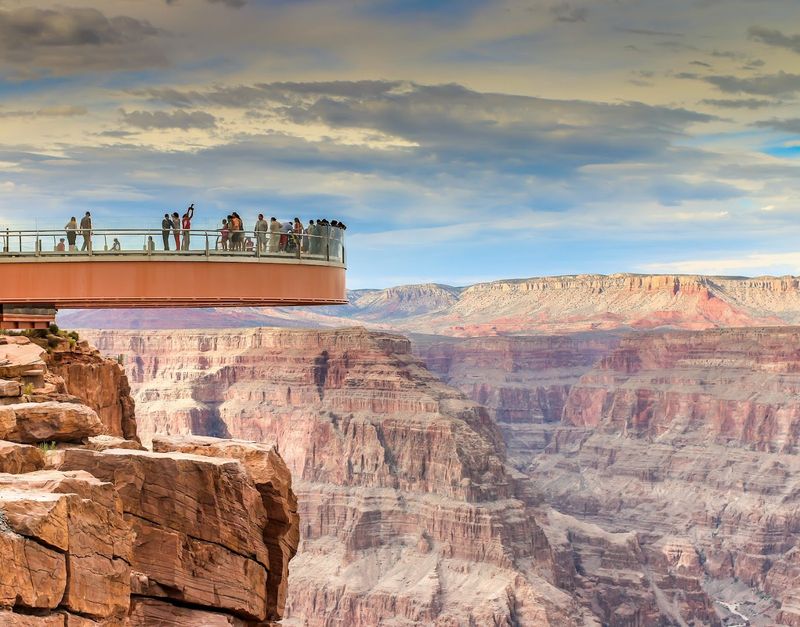
Staring straight down through a glass floor to the Colorado River snaking along the canyon bottom 4,000 feet below is the kind of moment that makes your brain momentarily short-circuit. The Grand Canyon Skywalk is a horseshoe-shaped glass bridge that extends 70 feet beyond the canyon rim on the Hualapai Tribal lands in western Arizona, and it remains one of the most vertigo-inducing structures ever built.
The engineering required to make this work is genuinely impressive. The bridge can support the weight of 71 fully loaded Boeing 747 aircraft and is designed to withstand winds of up to 100 miles per hour.
Despite knowing all that, most first-timers still creep toward the glass floor edge like they are approaching something alive.
The Grand Canyon itself is about 277 miles long, up to 18 miles wide, and more than a mile deep in places. Standing on the skywalk puts all those numbers into physical reality in a way no textbook can replicate.
Special shoe covers are required to protect the glass surface, and personal cameras are not allowed on the bridge itself, though professional photos can be purchased. The Hualapai Nation operates the site and offers additional tours, helicopter rides, and river experiences that make the visit feel complete.
Lotte World Tower — Seoul, South Korea
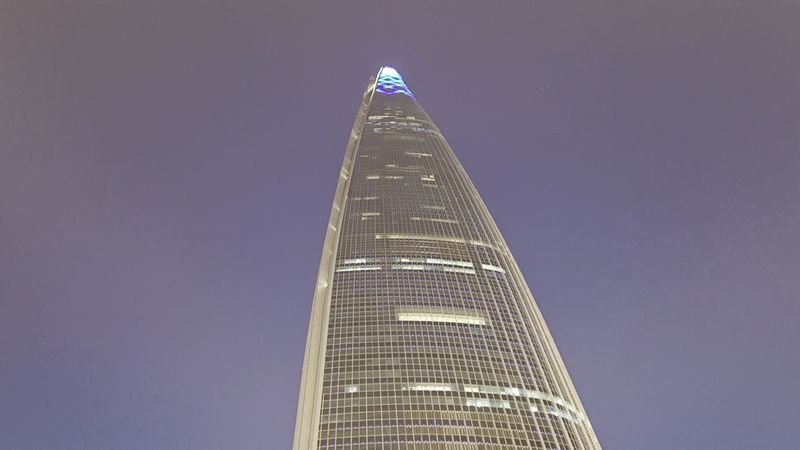
Seoul Sky, the observation experience inside Lotte World Tower, is where South Korean engineering ambition meets absolute vertigo. Opened in 2017, the tower rises 1,821 feet above Seoul, making it the fifth tallest building on Earth and the tallest in South Korea by a very wide margin.
The observation floors sit between the 117th and 123rd floors, each offering a slightly different perspective on the sprawling city below.
The glass floor sections are genuinely alarming in the best possible way. Peering straight down through transparent panels at the tiny streets and cars far below triggers an instinctive freeze response in most visitors, even those who consider themselves fearless.
The surrounding views are equally impressive, stretching across the Han River, distant mountains, and one of Asia’s most densely packed urban landscapes.
A sky bridge connects two of the upper floors, and a high-powered telescope lets visitors zoom in on distant landmarks. On clear days, you can spot mountains more than 60 miles away.
The tower’s design was inspired by traditional Korean ceramic art, with a sleek tapered form that narrows gracefully toward the top. Night visits are especially popular because Seoul’s lights transform the city into a glowing grid that stretches to every horizon.
Arriving after dark is highly recommended for a completely different and equally spectacular experience.
Trango Towers — Pakistan
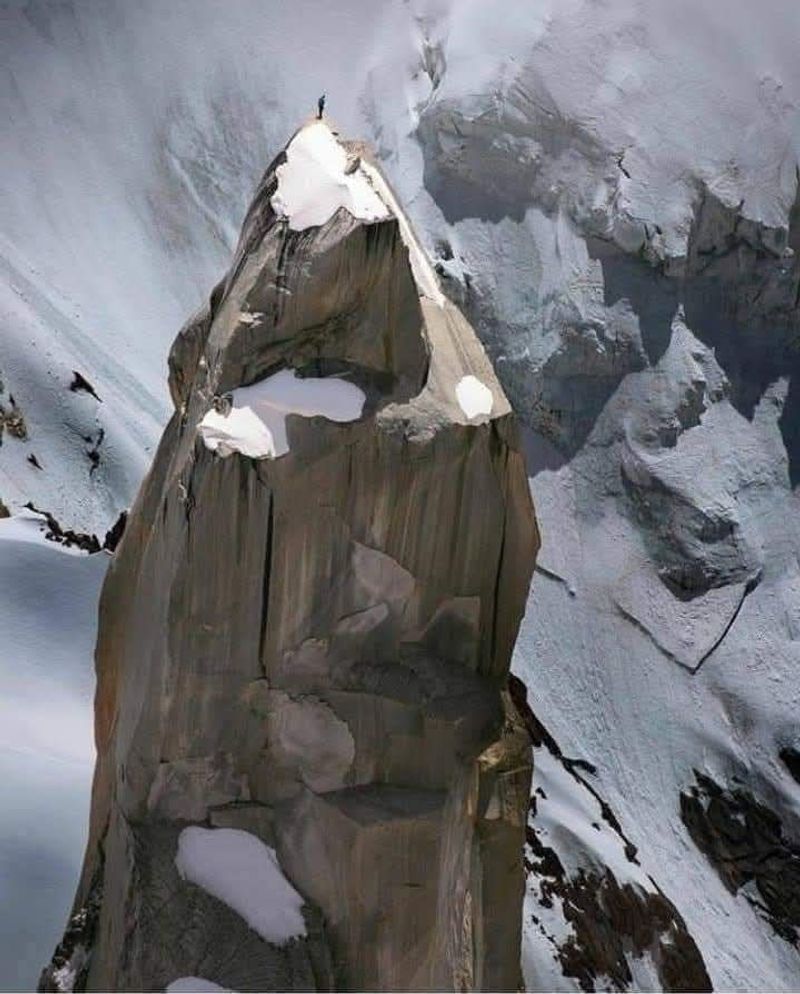
Somewhere in northern Pakistan, a cluster of granite towers rises from a glacier with such raw, aggressive verticality that even experienced alpinists describe them as intimidating. The Trango Towers in the Karakoram range are home to some of the highest and steepest rock faces on the planet, with the Great Trango Tower featuring one of the world’s largest sheer rock faces at roughly 4,396 feet of near-vertical granite.
Reaching the towers requires a multi-day trek along the famous Baltoro Glacier, one of the longest glaciers outside the polar regions. The journey passes through a landscape of staggering scale, surrounded by some of the world’s highest peaks including K2, Broad Peak, and the Gasherbrums.
Every turn on the approach trail reveals something more dramatic than the last.
Elite rock climbers from around the world have made the Trango Towers a bucket-list objective for decades. The routes demand mastery of big-wall techniques, extreme weather tolerance, and an ability to spend multiple nights suspended in a tiny hanging tent thousands of feet above the glacier.
The first ascent of the Nameless Tower, the most striking of the group, was completed in 1976. The surrounding scenery is so overwhelming that many trekkers report simply sitting and staring at the towers for hours, unable to process what they are seeing.
Peak Walk by Tissot — Switzerland
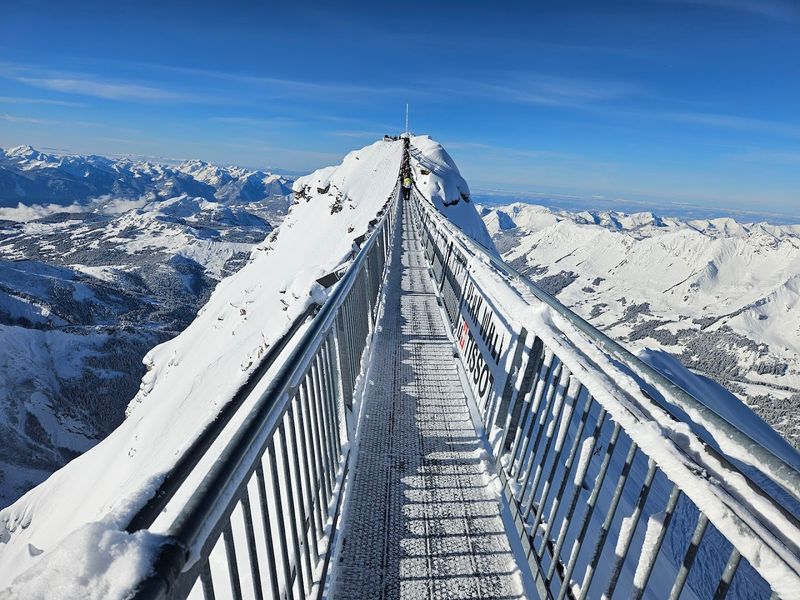
Walking a suspension bridge stretched between two Alpine summits while surrounded by snow-capped peaks in every direction sounds like something from a dream sequence. The Peak Walk by Tissot at Glacier 3000 in Switzerland is exactly that, and it holds the distinction of being the world’s first suspension bridge connecting two mountain peaks.
The structure hangs at an elevation of roughly 9,842 feet above sea level.
The bridge spans about 328 feet and sways slightly underfoot as you cross, which is either thrilling or deeply unsettling depending on your relationship with heights. On one side sits the Scex Rouge summit; on the other, the Pierres Pointes peak.
Between them, the valley drops away sharply while the panorama of Alpine giants including the Matterhorn, Mont Blanc, and the Eiger fills the horizon.
Winter visits transform the experience into something particularly surreal. Snow blankets every surface, visibility can shift within minutes, and the cold bites through jackets in a way that feels strangely satisfying.
Summer brings clearer skies and the chance to spot ibex picking their way across rocky slopes nearby. The Glacier 3000 resort also offers a bobsled run and a dog-sled track, but nothing quite matches standing on that narrow bridge with thousands of feet of empty mountain air beneath your boots and the entire Swiss Alps laid out before you.
Canton Tower — Guangzhou, China
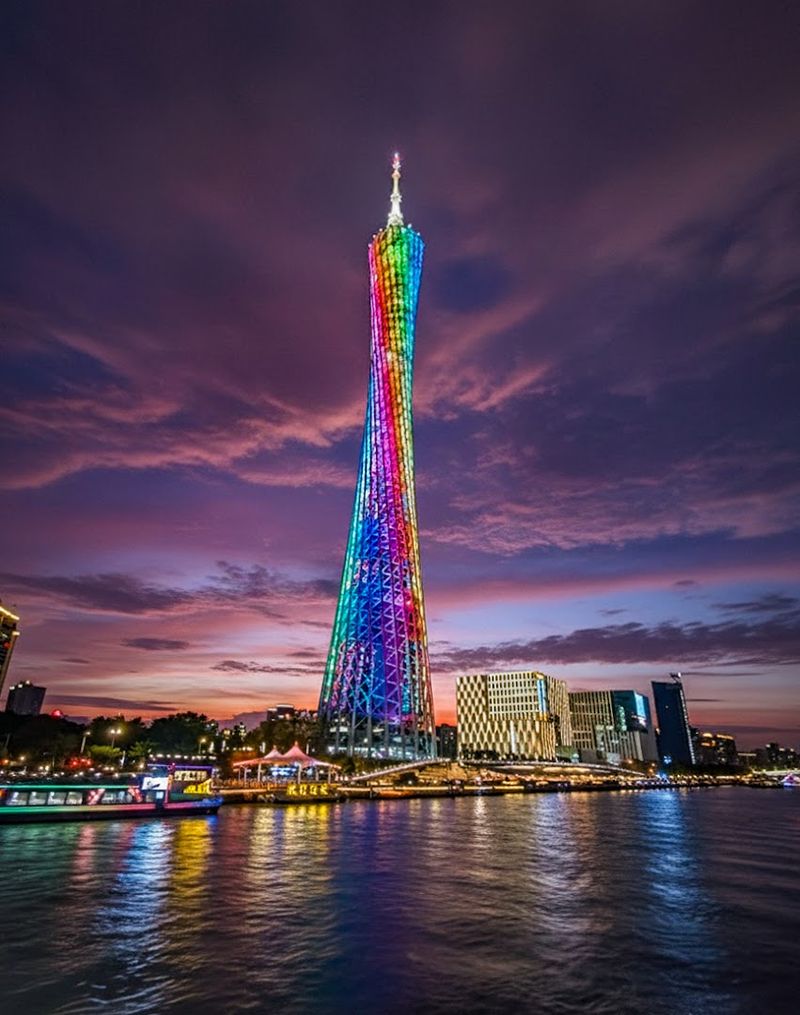
Canton Tower in Guangzhou has a personality that most skyscrapers can only dream about. Its hyperboloid structure twists dramatically as it rises, creating a shape that looks different from every angle and makes it one of the most architecturally distinctive towers in the world.
Standing 1,969 feet tall, it held the title of world’s tallest TV tower when it opened in 2010.
The real crowd-pleaser is the Bubble Tram, a series of small glass pods that slowly rotate around the outside of the tower’s upper section. Passengers sit inside these transparent bubbles as they orbit the structure, dangling hundreds of feet above the city while Guangzhou spreads out below in every direction.
It is equal parts theme park ride and architectural stunt, and it works brilliantly.
The observation decks offer sweeping views across the Pearl River Delta, one of the world’s most densely populated urban regions. On clear days, the horizon reveals an almost endless patchwork of buildings, waterways, and industrial districts stretching toward Hong Kong in the distance.
The tower also features a high-altitude outdoor walkway and a sky drop ride for those who need an extra push of adrenaline. Night visits are spectacular, as the tower’s LED lighting system transforms it into a constantly shifting column of color that can be seen from miles across the city.
Kalaupapa Cliffs — Molokai, Hawaii
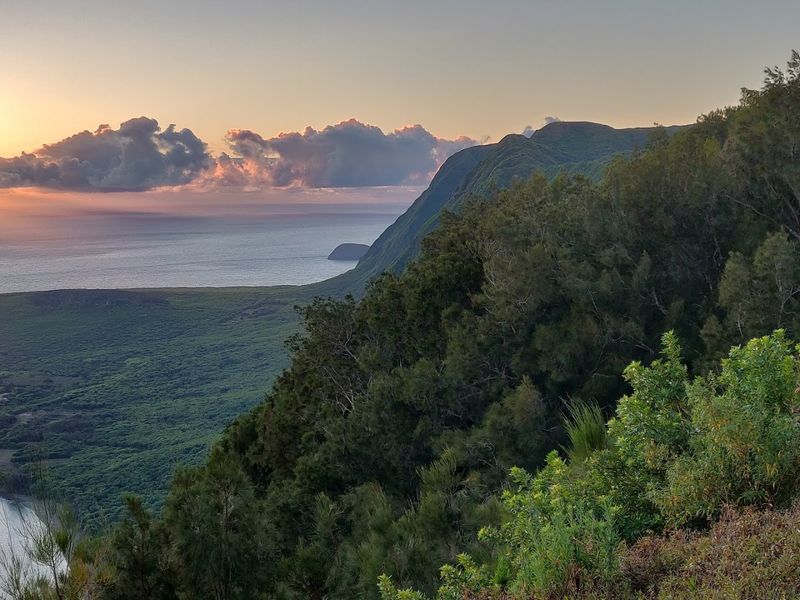
Hawaii tends to get celebrated for its beaches, but the north shore of Molokai holds a secret that most visitors never see. The sea cliffs along the Kalaupapa Peninsula are among the tallest on Earth, rising up to 3,900 feet directly from the Pacific Ocean.
Waterfalls pour freely down the lush green walls, and the entire coastline feels untouched, ancient, and almost impossibly dramatic.
Kalaupapa itself is a remote peninsula that was once used as an isolated settlement for people with Hansen’s disease, also known as leprosy, from the 1860s onward. The area is now a National Historical Park, and access is tightly controlled to honor the history of those who lived and died there.
The combination of human history and raw natural grandeur gives the place a weight that is hard to shake.
Aerial tours by small plane or helicopter are the most popular way to appreciate the cliffs in full, since the sheer scale of the walls is difficult to grasp from sea level alone. Boat tours approach from the ocean and offer a perspective that makes the cliffs feel almost vertical.
The remote location means visitor numbers stay low, which preserves an atmosphere of quiet, uninterrupted awe. Catching the cliffs in soft morning light with waterfalls in full flow is a genuinely once-in-a-lifetime visual experience.
Top of Tyrol — Austria
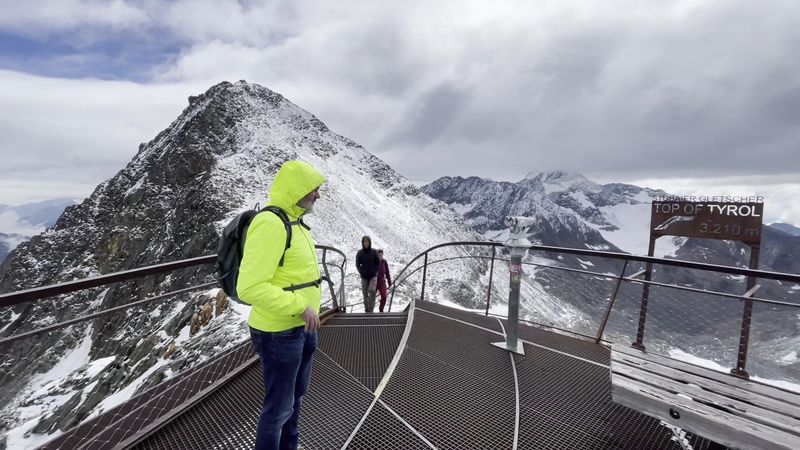
Built at 10,728 feet above sea level on Austria’s Stubai Glacier, the Top of Tyrol viewing platform is the kind of place where the wind has opinions and it is not shy about sharing them. The exposed platform juts out from the glacier’s edge with panoramic views stretching across more than 80 Alpine peaks, including some of the highest mountains in Austria and northern Italy.
Snow and ice dominate the landscape here year-round, even in the height of summer. The glacier itself is one of Austria’s most visited, thanks to a well-developed ski resort that operates across multiple seasons.
But the viewing platform attracts a different crowd: people who simply want to stand at the edge of something enormous and feel small for a few minutes.
The platform’s design is sleek and modern, contrasting sharply with the ancient, raw landscape surrounding it. On windy days, gusts can be powerful enough to make standing upright a minor athletic event.
Clear days reward visitors with views all the way to the Dolomites in Italy, while cloud inversions create a sea-of-white effect below the platform that looks almost supernatural. Getting there involves a series of gondola lifts that climb steadily through the glacier terrain, and each stage of the ascent reveals a landscape that feels progressively more remote and otherworldly.
CN Tower EdgeWalk — Toronto, Canada
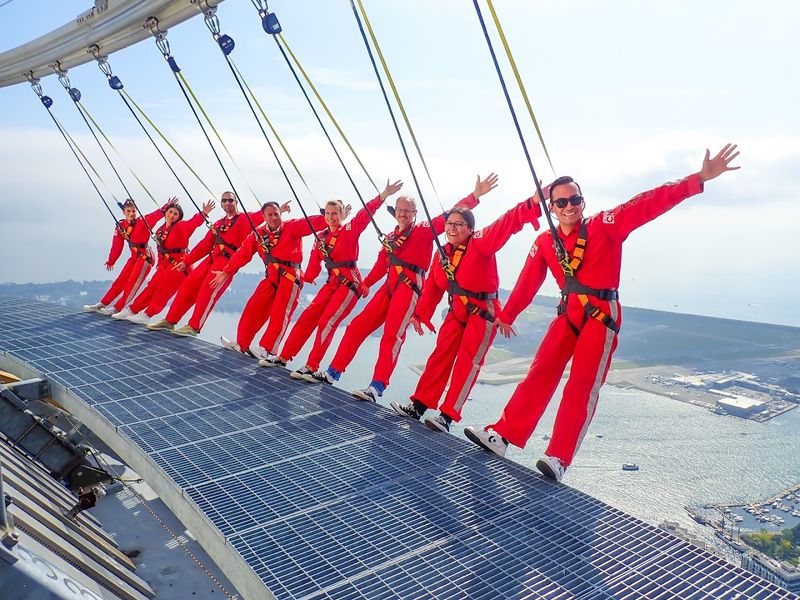
Most people visit the CN Tower to look at Toronto from above. EdgeWalk participants take that concept and crank it to an entirely different level.
This attraction lets guests walk hands-free around the outside of the tower on a circular platform located 1,168 feet above the city streets, secured only by a harness attached to an overhead rail. There are no handrails.
Just you, the wind, and a very long way down.
The experience lasts about 90 minutes, including preparation and safety briefing, with roughly 20 to 30 minutes spent actually on the ledge. Guides encourage participants to lean out over the edge, spread their arms wide, and take in the full panoramic view of Lake Ontario, downtown Toronto, and the surrounding suburbs.
Most people describe the first few steps outside as the hardest part, followed by a surprising wave of calm once the initial shock fades.
EdgeWalk opened in 2011 and holds the Guinness World Record for the world’s highest full-circle hands-free walk on a building. Groups of up to six people walk together, which creates an unexpectedly social and even funny atmosphere as participants cheer each other through the scarier moments.
Weather conditions must meet strict safety standards before each walk, so booking does not always guarantee the experience will run. When conditions are right, though, the views of Lake Ontario stretching to the horizon are absolutely worth every nervous step.
Share this story