For thousands of years, oasis towns made life possible in some of the world’s harshest deserts. Built around reliable water sources, these settlements became vital stops for traders, pilgrims, and travelers crossing the Middle East and North Africa, growing into centers of culture, commerce, and innovation.
Many of these towns are remarkably old, with historic architecture, ancient irrigation systems, and traditions that have survived for centuries. Some have even earned UNESCO recognition for their role in shaping regional history.
This list explores thirteen of the most fascinating oasis towns, each offering a unique look at how people transformed isolated desert landscapes into thriving communities.
1. AlUla, Al Madinah Region, Saudi Arabia
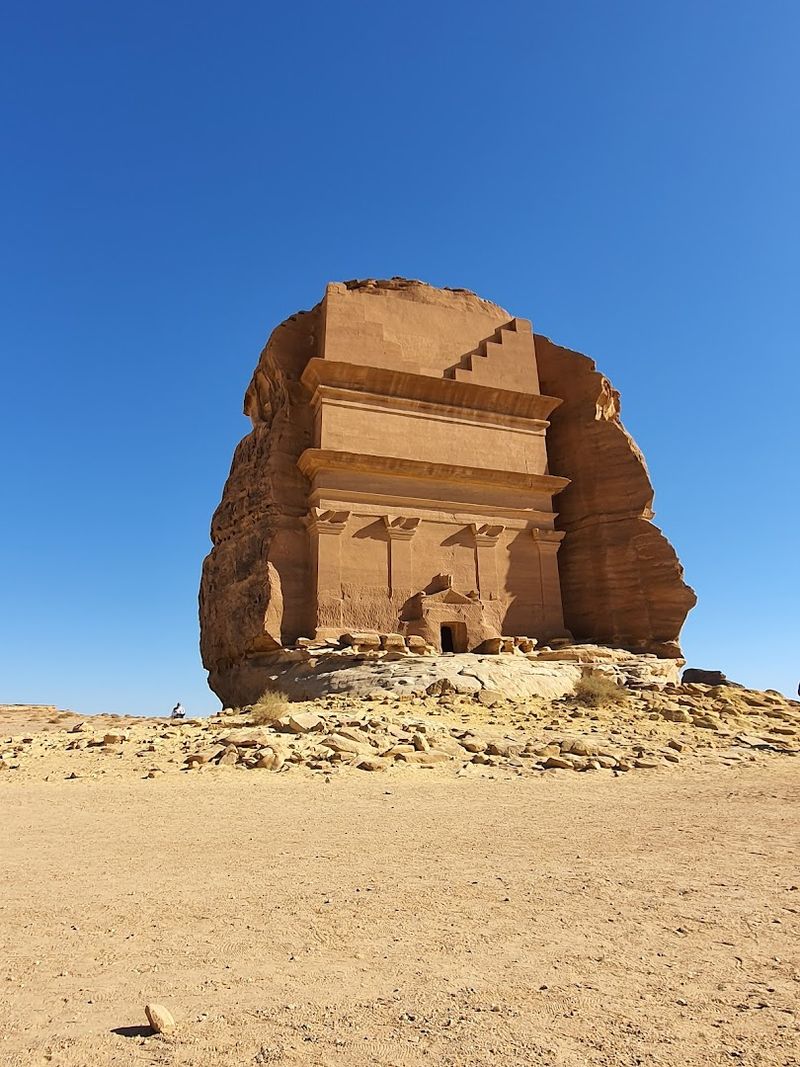
Arabia has kept some remarkable secrets, and AlUla may be its most jaw-dropping one. Settled as far back as the 6th millennium BC, this fertile valley attracted some of the ancient world’s most ambitious builders.
The Dadanite and Lihyanite kingdoms established sophisticated urban centers here long before Rome was a footnote in history.
Hegra, located within AlUla’s governorate, holds Saudi Arabia’s first UNESCO World Heritage designation. Nearly 100 Nabataean tombs were carved directly into rose-colored sandstone cliffs, each one a masterpiece of precision and ambition.
The site rivals Petra in scale and artistry, yet draws far fewer crowds.
AlUla also served as a critical stop on the ancient incense trade route connecting Arabia to the Mediterranean. Today, a growing arts and heritage program brings contemporary exhibitions to this ancient backdrop.
2. Jericho, West Bank, Palestinian Territories
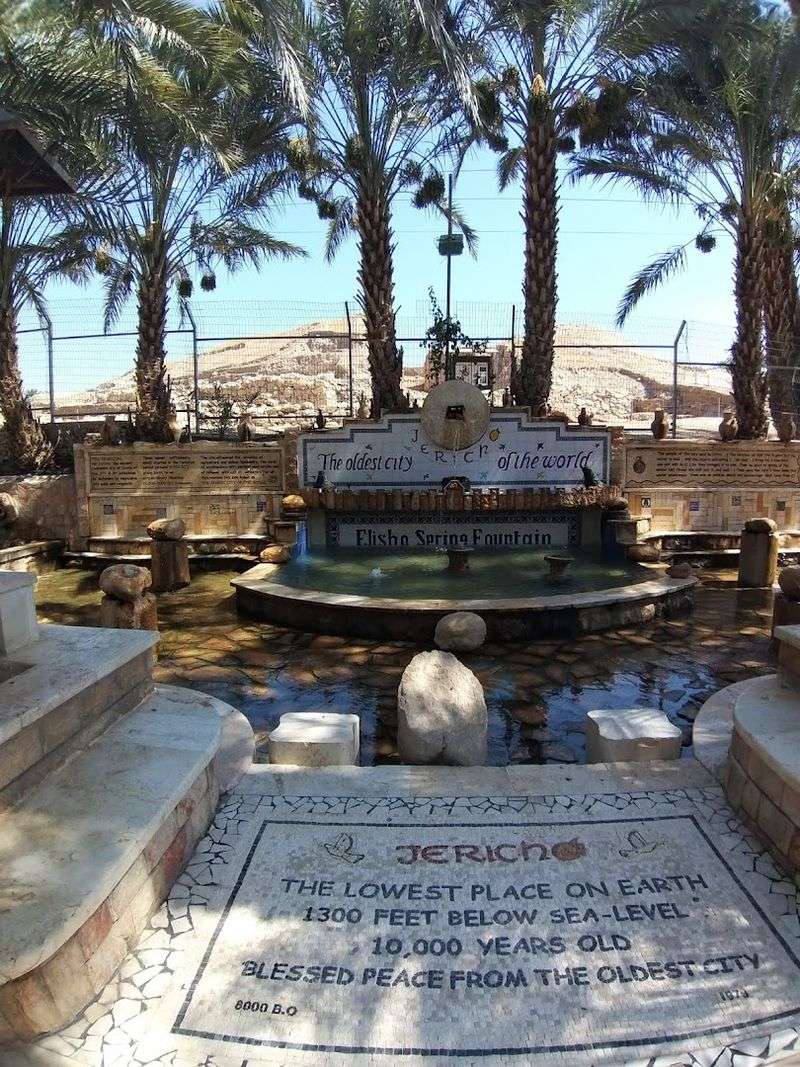
Archaeologists have a phrase they use when they find something truly old: they call it “deeply stratified.” Jericho is so deeply stratified it makes other ancient cities look like recent construction projects. Continuous human habitation here stretches back around 11,000 years, placing it among the oldest known settlements on the planet.
The secret behind Jericho’s longevity is water. Natural springs, particularly the Ein es-Sultan spring, provided a reliable source that sustained communities through millennia of political upheaval, conquest, and change.
Civilizations rose and fell here, each leaving behind a new layer for future archaeologists to puzzle over.
The Tell es-Sultan archaeological site reveals those layers in remarkable detail, offering a physical timeline of human history stacked neatly underground. Palm trees still fill the landscape, framed by the dramatic ridgeline of the Judean Desert.
Visitors who come expecting a quiet town often leave quietly stunned by just how much history is packed into one small oasis.
3. Bahla, Ad Dakhiliyah Governorate, Oman
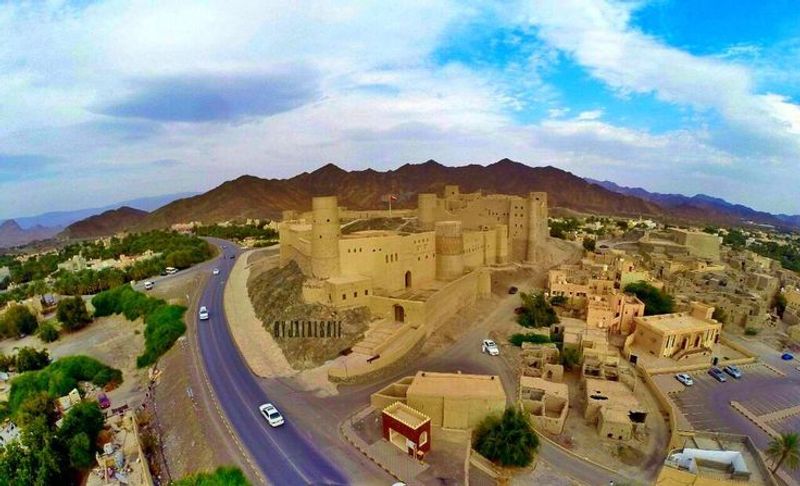
Bahla Fort does not ease you in gently. The massive UNESCO-listed structure announces itself from a distance, its towers and walls stretching for nearly 12 kilometers of surrounding fortifications.
It is one of the largest and oldest forts in Oman, and it has earned every bit of that reputation.
The town of Bahla grew up around oasis land fed by a traditional falaj irrigation system, a network of channels that directed water from underground sources to date palm groves and fields. This same system has been nurturing agriculture here for generations, and it continues to function today with minimal technological intervention.
Bahla was also historically known as a center for pottery and traditional crafts, with local artisans producing distinctive work that traders carried across the Arabian Peninsula. The old souq area still gives a sense of what commercial life looked like in a prosperous desert town.
Bahla rewards the visitor who takes the time to wander slowly.
4. Al Ain, Abu Dhabi Emirate, United Arab Emirates
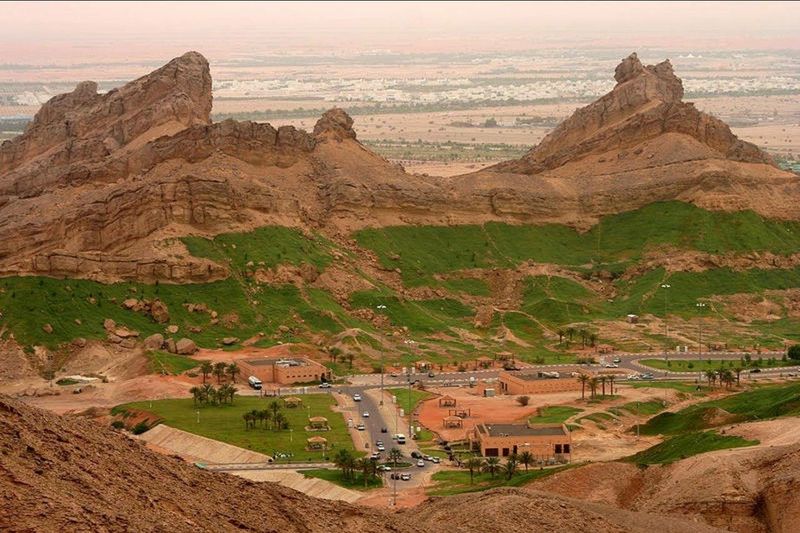
Not every city earns the nickname Garden City, but Al Ain has the receipts to back it up. Built around a network of natural springs and one of the most extensive ancient falaj irrigation systems in the Arabian Peninsula, Al Ain has been green when everything around it was decidedly not.
Archaeological evidence places human settlement here at least 5,000 years ago, and the site of Hili reveals Bronze Age remains that speak to a sophisticated early civilization. The Al Ain Oasis itself, a UNESCO World Heritage Site, contains more than 147,000 date palms still irrigated by traditional channels.
That is not a tourist attraction dressed up to look historical. It is a working agricultural landscape with deep roots.
Historic forts, including Al Jahili Fort, add architectural character to a city that has managed to expand dramatically without entirely forgetting what made it worth settling in the first place. Al Ain is proof that ancient infrastructure can outlast almost anything.
5. Azraq, Zarqa Governorate, Jordan
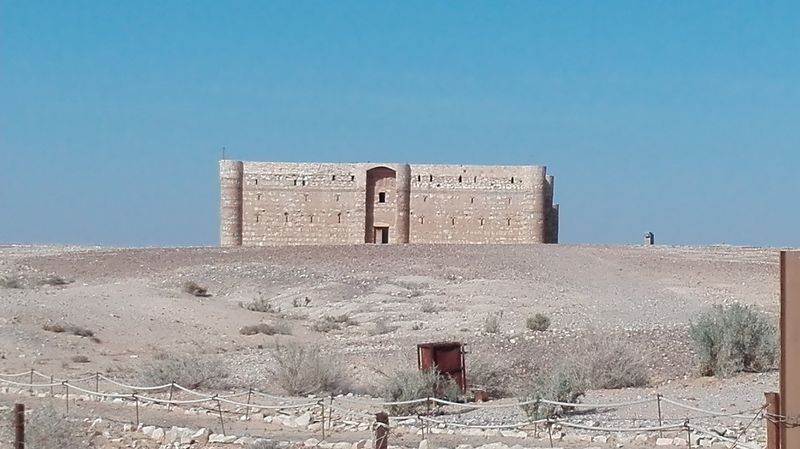
Most desert oases are defined by palm trees and freshwater springs, but Azraq adds something unexpected to that formula: an entire wetland ecosystem in the middle of Jordan’s eastern desert. The Azraq Wetland Reserve is one of the few permanent bodies of water for hundreds of kilometers, making it a critical stop for migratory birds traveling between Africa and Europe.
The town’s historic Azraq Castle, built from black basalt stone, carries a fascinating footnote. T.E.
Lawrence, better known as Lawrence of Arabia, used it as his headquarters during the Arab Revolt in the winter of 1917. He later wrote about the experience in his memoir, describing the castle’s cold basalt rooms in memorable detail.
For centuries before Lawrence arrived, Azraq served as a vital rest point for caravans and travelers crossing Jordan’s harsh eastern plains.
6. Siwa Oasis, Matrouh Governorate, Egypt
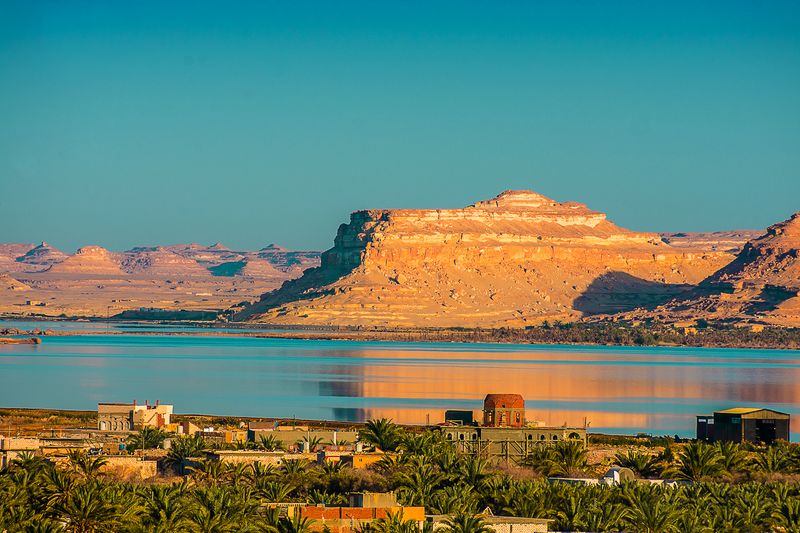
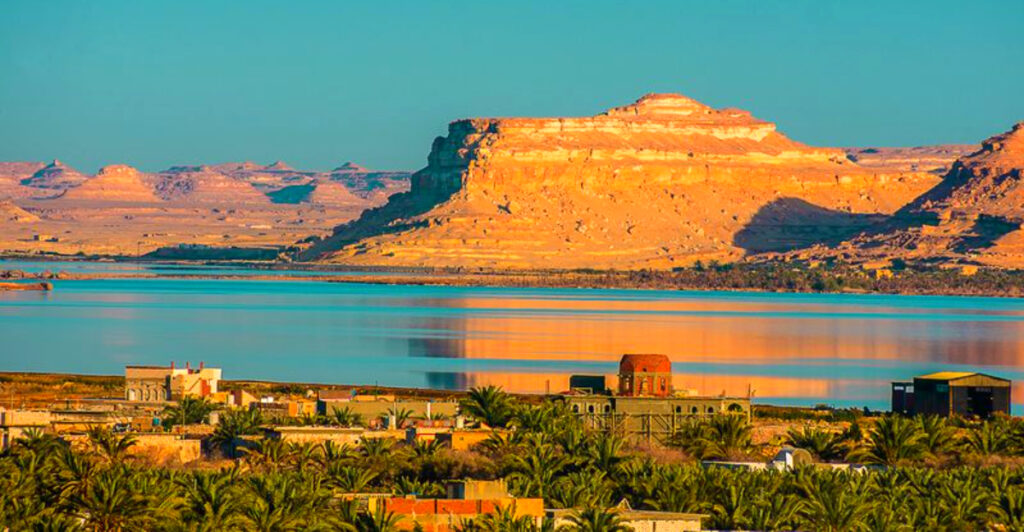
Alexander the Great made a special detour across the Libyan Desert just to visit Siwa, and honestly, it is hard to blame him. The oasis has been famous since ancient Egypt, when it was known as the Oasis of Amun-Ra, home to an oracle so respected that kings and generals crossed deserts to consult it.
Human settlement here dates back at least to the 10th millennium BCE, making Siwa one of the longest continuously inhabited places in the region. The ancient Shali fortress, constructed from salt and earth, still dominates the town center, even in its partially eroded state.
Natural springs, including the famous Cleopatra’s Bath, have drawn visitors for thousands of years.
The Siwi Berber community maintains a distinct culture, language, and set of traditions that set this oasis apart from everywhere else in Egypt. Date palms and olive groves still define the landscape.
Siwa is wonderfully, stubbornly itself.
7. Tayma, Tabuk Province, Saudi Arabia
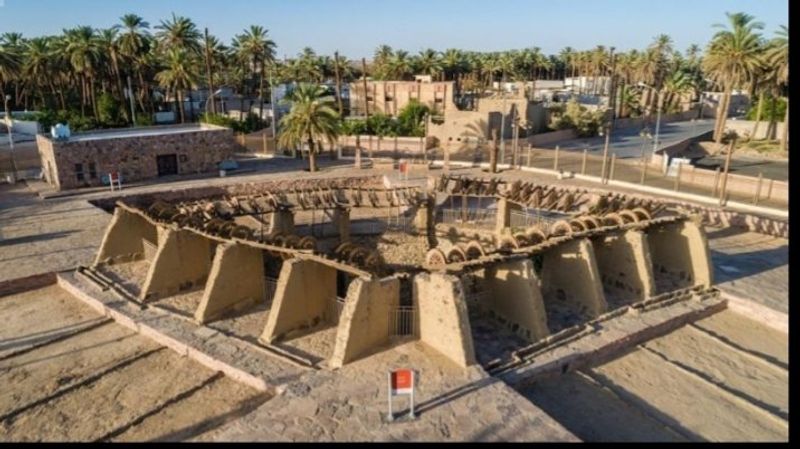
Ancient caravan routes across Arabia were not chosen randomly. They followed water, and Tayma had plenty of it.
The town’s famous Bir Haddaj, an enormous ancient well, once supplied water to entire caravans and the communities that supported them. At roughly 18 meters in diameter, it is one of the largest ancient wells in the Arabian Peninsula.
Tayma’s strategic position made it a meeting point for traders, pilgrims, and diplomats for thousands of years. Assyrian records mention it, Babylonian king Nabonidus famously spent a decade here in the 6th century BC, and inscriptions in multiple ancient scripts have been discovered throughout the area.
The town was, essentially, an ancient international hub.
Today, ongoing archaeological work continues to uncover new details about Tayma’s long and layered past. Palm groves still define the landscape, and the sense of historical weight is palpable at every turn.
8. Tozeur, Tozeur Governorate, Tunisia
Tunisia’s Tozeur has a trick up its sleeve that most oasis towns cannot match: it has appeared on the big screen more times than some Hollywood actors. The surrounding desert landscape served as a filming location for Star Wars, The English Patient, and Raiders of the Lost Ark, among others.
The scenery is genuinely that cinematic.
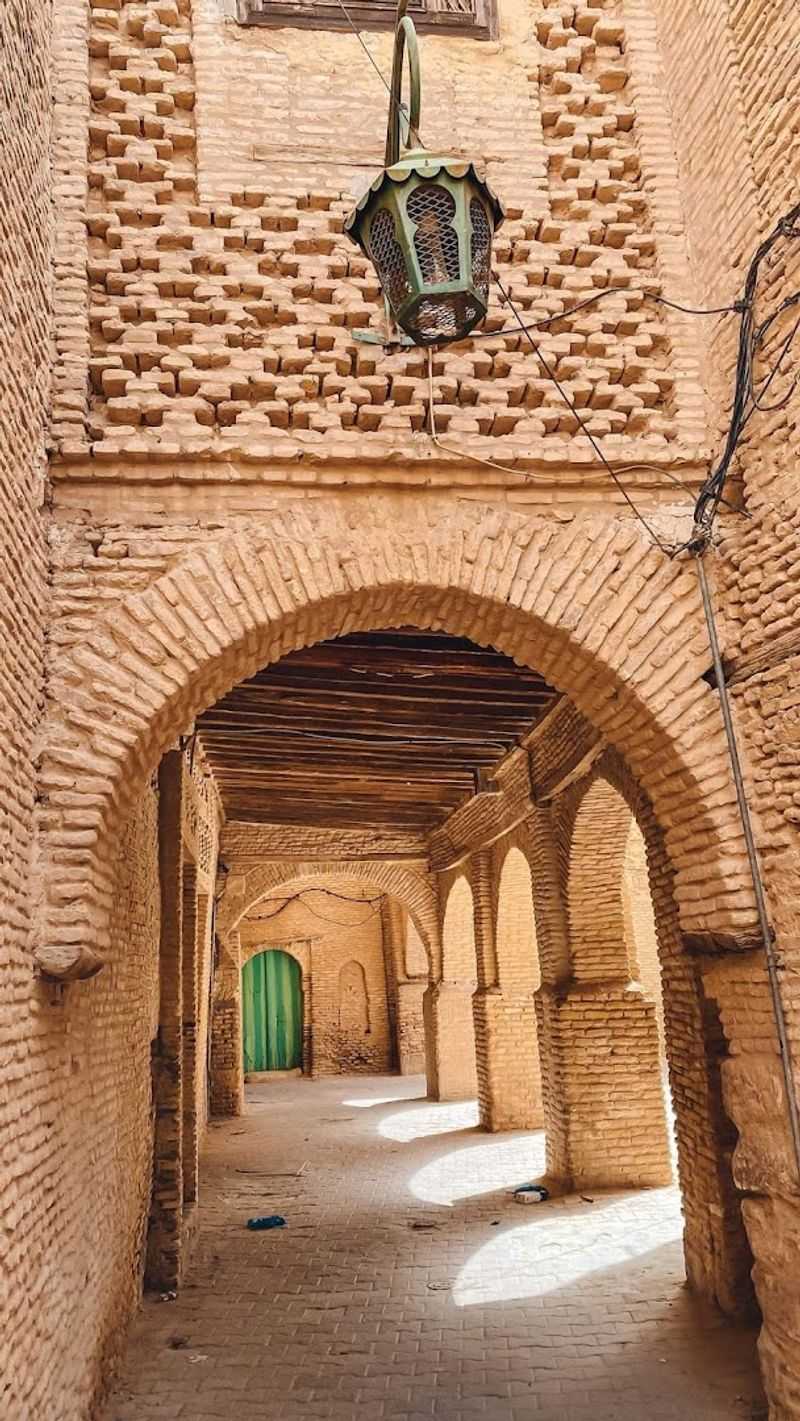
Beyond the film credentials, Tozeur has real historical depth. The town’s distinctive architecture uses small yellow bricks arranged in geometric patterns, a style unique to the region that dates back centuries.
The medina’s narrow streets and traditional buildings reflect a design tradition shaped by the need to manage desert heat without modern technology.
The palm grove surrounding Tozeur contains an estimated 200,000 date palms, fed by more than 200 natural springs. It is one of the largest and most productive palm oases in North Africa.
9. Dumat Al-Jandal, Al Jawf Region, Saudi Arabia
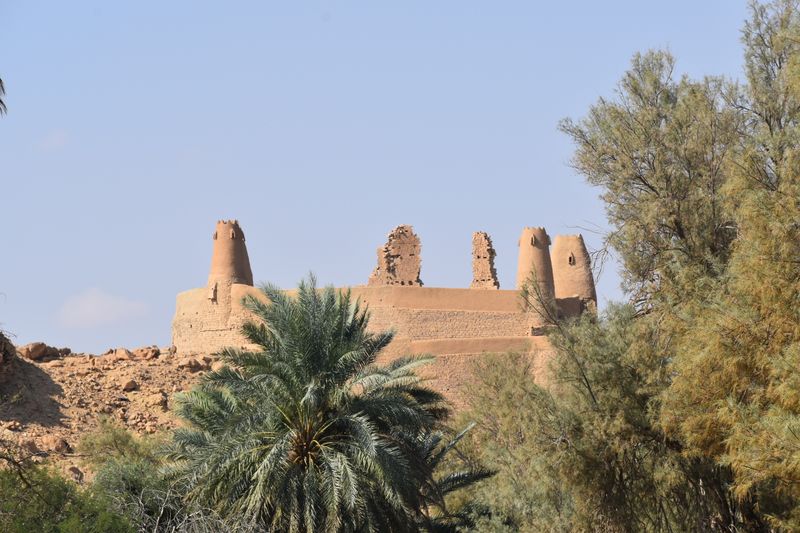
Northern Arabia’s ancient history often gets overshadowed by the more famous sites further south, but Dumat Al-Jandal has been quietly remarkable for thousands of years. Its name translates roughly to “the stone of Jandal,” which gives you a clue about the landscape: this is a place where rock, desert, and water meet in an unusual configuration.
The Marid Castle, perched dramatically on a rocky outcrop above the town, dates back at least to pre-Islamic times and has been rebuilt and reinforced by successive rulers across the centuries. It is one of the best-preserved ancient fortifications in the region.
Nearby, the Omar Ibn Al-Khattab Mosque is considered one of the oldest mosques in the Arabian Peninsula, adding religious heritage to the site’s already considerable historical weight.
Dumat Al-Jandal also sat at the crossroads of ancient trade routes connecting Mesopotamia, the Levant, and the Arabian interior. Caravans passed through regularly, and the oasis supported a permanent community that served them.
10. Nizwa, Ad Dakhiliyah Governorate, Oman
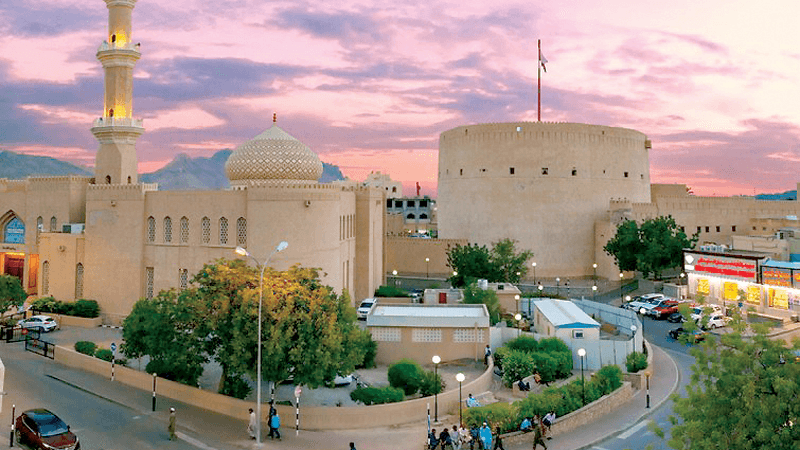
Called “The Pearl of Islam” by those who knew it best, Nizwa was once the capital of Oman and one of the most important cities in the entire Arabian Peninsula. It embraced Islam in 630 AD and grew into a major center for scholarship, trade, and religious education over the following centuries.
That is a serious resume for a town that some modern travelers have never heard of.
Nizwa Fort, completed in 1668 by Imam Sultan Bin Saif Al Ya’rubi, features a massive circular tower that served as both a military stronghold and an administrative center. The tower’s design was specifically engineered to withstand cannon fire, a practical concern at a time when regional power struggles were anything but theoretical.
The traditional falaj irrigation system channels water from the Western Hajar Mountains down to Nizwa’s extensive date palm plantations, sustaining agriculture that has fed the city for generations. The weekly livestock market at the souq still draws locals from surrounding villages.
11. Kharga Oasis, New Valley Governorate, Egypt
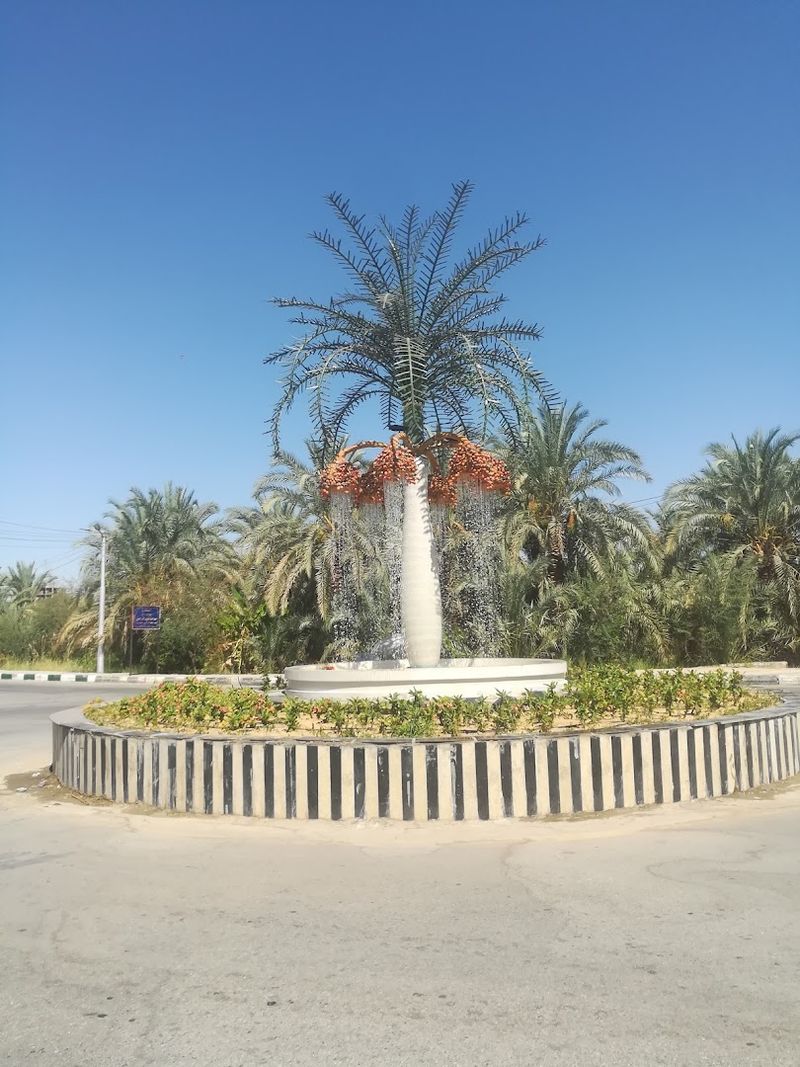
Egypt’s Western Desert holds several oases, but Kharga is the heavyweight. Known to the Romans as Oasis Magna, it is the largest oasis in the Western Desert and has archaeological evidence of human presence stretching back roughly 50,000 years.
That is not a typo. Fifty thousand years of people finding water in the desert and deciding to stay.
The Temple of Hibis, dedicated to the god Amun and largely built during the reign of Pharaoh Nectanebo I, is one of the best-preserved ancient Egyptian temples outside the Nile Valley. The Bagawat Cemetery, a sprawling early Christian burial site with decorated mud-brick chapels, adds another unexpected chapter to Kharga’s story.
Few oases anywhere can claim both pharaonic temples and early Christian monuments.
Kharga also served as a key waypoint on the “Forty Days Road,” a trans-Saharan caravan route connecting sub-Saharan Africa to the Nile Valley. The journey through the surrounding desert to reach Kharga still carries a sense of genuine arrival.
12. Hofuf, Eastern Province, Saudi Arabia
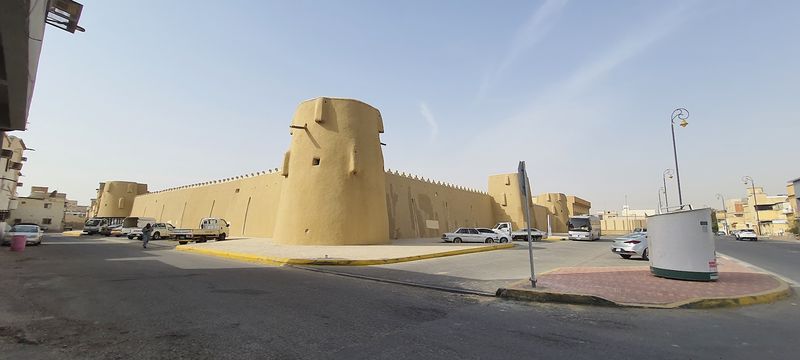
The numbers surrounding Al-Ahsa Oasis, of which Hofuf is the main city, are genuinely hard to process. More than 280 artesian springs.
Approximately 85 square kilometers of irrigated land. An estimated 2.5 million to 3 million date palms.
Al-Ahsa holds the title of the world’s largest self-contained oasis, and it is not a close competition.
Archaeological evidence places human settlement here as far back as 5,000 BC, and the oasis has been a trading hub, a pilgrimage stop, and an agricultural powerhouse through multiple empires and dynasties. UNESCO inscribed Al-Ahsa on its World Heritage List in 2018, recognizing both its cultural and agricultural significance.
Hofuf’s historic Ibrahim Palace, traditional souqs, and centuries-old neighborhoods give the modern city a textured, layered character that pure agricultural statistics cannot fully capture. The date varieties produced here are prized across the Gulf region, and the local market during harvest season is worth organizing a trip around.
13. Ghardaïa, M’zab Valley, Algeria
Ghardaïa was designed with a logic so elegant that Le Corbusier, one of the 20th century’s most influential architects, reportedly traveled here specifically to study it. The Mozabite community that founded these towns in the 11th century built around a central mosque positioned at the highest point of each settlement, with streets spiraling outward and downward in concentric rings.
It is urban planning from a millennium ago that still makes architectural sense today.
The M’zab Valley contains five fortified oasis towns, collectively inscribed as a UNESCO World Heritage Site in 1982. Ghardaïa is the largest and most visited, but each town in the group maintains its own distinct character while sharing the same fundamental design principles.
Palm-filled valleys separate the hilltop settlements, providing agricultural land that has supported the community for centuries.
The Mozabite people have maintained their distinct Ibadi Islamic traditions, language, and customs with remarkable consistency over ten centuries of relative isolation. Ghardaïa’s weekly market draws traders and visitors from across the Sahara region.
It is a place where ancient urban design and living culture exist side by side without either one feeling like a museum exhibit.
Share this story