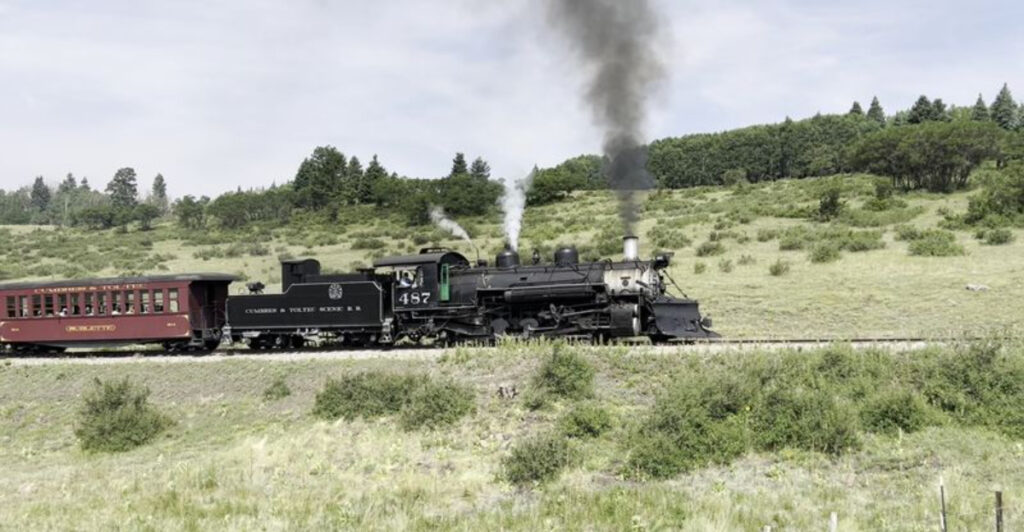
There is a steam train in northern New Mexico that runs through some of the most remote and rugged mountain country in the American Southwest, and most people have never heard of it. The route crosses two states, climbs over a high mountain pass, rolls through tunnels carved into solid rock, and crosses old wooden trestles above deep canyons.
The whole trip covers 64 miles of narrow-gauge track that has been in continuous use since 1880. This is not a tourist gimmick or a short loop around a parking lot.
This is the real thing, a fully operational historic railroad that connects Chama, New Mexico, with Antonito, Colorado, using steam locomotives that are more than a century old. If you have ever wanted to know what train travel looked like in the American West during its golden era, this is your ride.
A Railroad Born in the 1880s
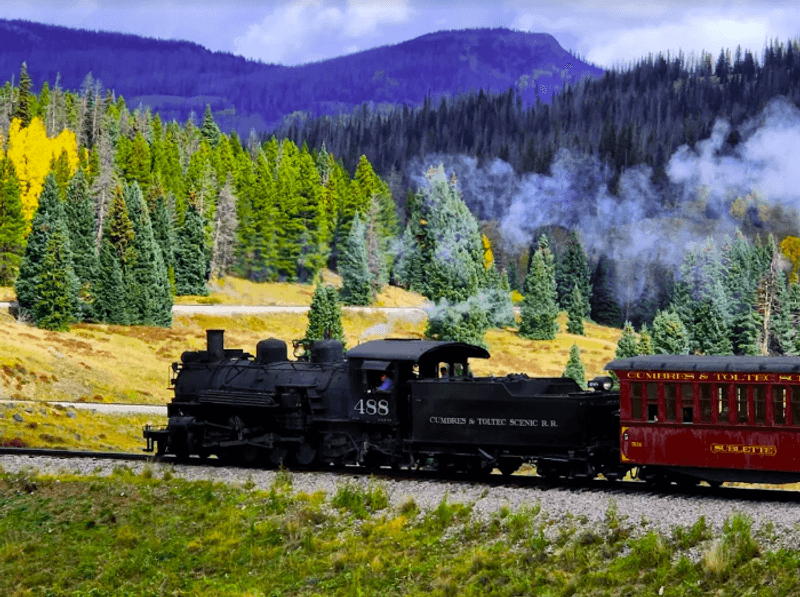
The Denver and Rio Grande Western Railroad built this line in 1880 as part of a push to reach silver mining towns in the San Juan Mountains of Colorado. The narrow-gauge track, which measures just three feet between the rails instead of the standard four feet eight and a half inches, was chosen because it was cheaper to build and easier to route through steep mountain terrain.
When the mining boom faded, the line survived by hauling agricultural goods and passengers across the region for decades. By the 1960s, the route faced closure, but the states of New Mexico and Colorado stepped in and jointly purchased the line in 1970 to preserve it as a living museum of American railroad history.
That decision turned out to be one of the better calls in Southwestern heritage preservation. The railroad has been operating continuously ever since, maintaining its original character rather than reinventing itself as something modern.
The Steam Locomotives Up Close
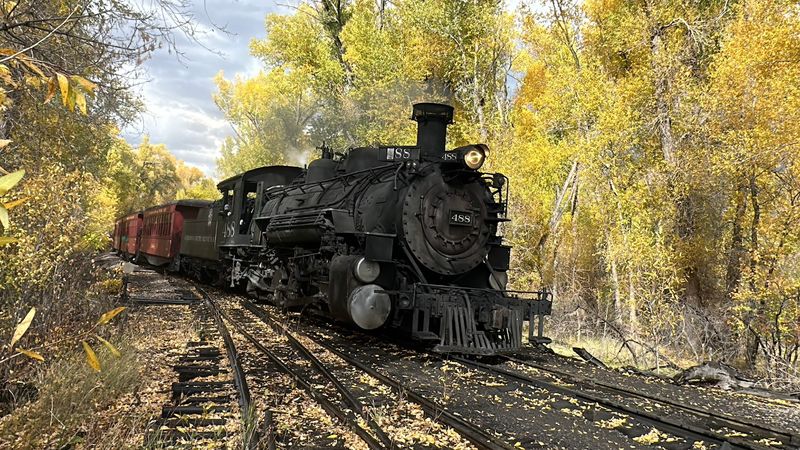
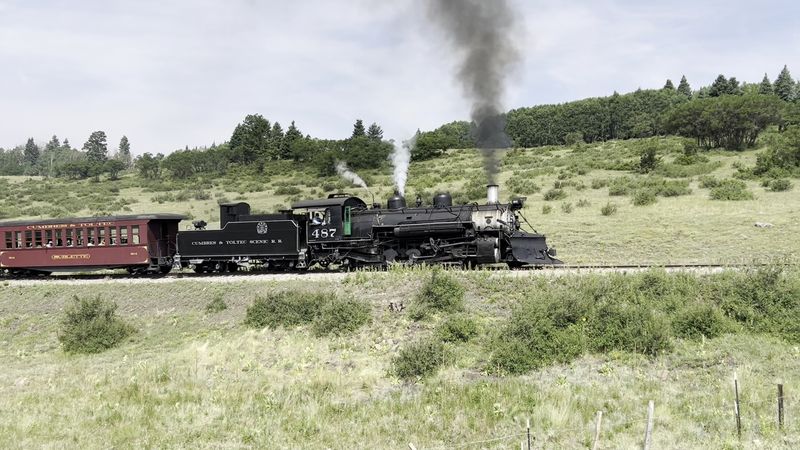
The locomotives pulling trains on this route are not replicas. They are genuine working steam engines, some built more than 100 years ago, that have been maintained and restored to operational condition by the railroad’s own crews.
The railroad operates both coal-burning and oil-burning steam locomotives depending on the season and availability. Each one requires a full crew to operate, including an engineer and a fireman who manages the fuel and water systems throughout the run.
Watching the locomotive take on water at a stop along the route gives passengers a clear picture of how much mechanical work goes into keeping a steam engine running.
For those who are drawn to mechanical history, the Chama yard is an open book. The equipment is accessible, the staff is knowledgeable, and the opportunity to photograph working steam power in a natural mountain setting is genuinely rare in the modern United States.
Few railroads still do this at full scale.
Choosing Your Car: Coach, Premium, or Parlor
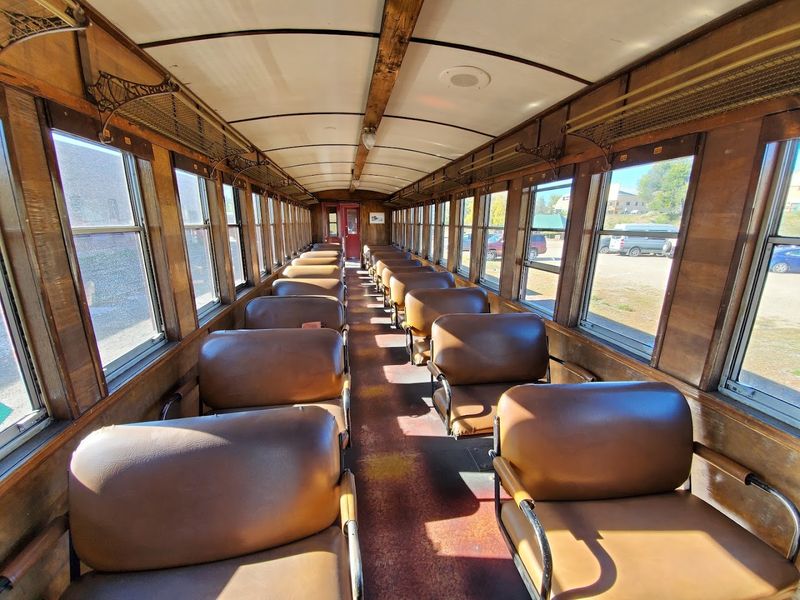
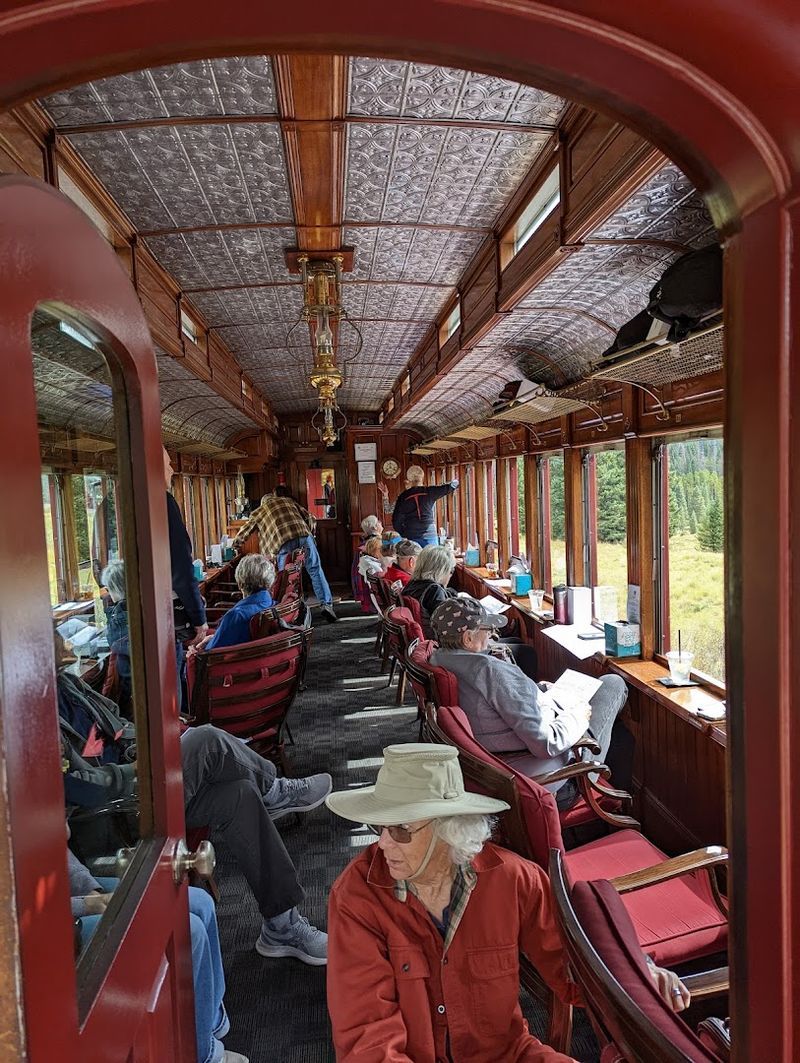
Not all seats on this train are the same, and the choice of car genuinely affects how the trip unfolds. The standard coach cars are comfortable and functional, offering a classic railroad experience with cushioned bench-style seating and large windows.
The premium cars step things up with more comfortable individual seats and additional attention from the car attendants who circulate throughout the journey. The parlor car is the top tier, offering a more curated experience with wider seats, better window positioning, and a quieter atmosphere compared to the more social coach sections.
One practical tip that gets passed around among repeat riders: the side of the train you sit on makes a significant difference depending on your direction of travel. Riders heading from Antonito to Chama get better views from the left side of the car, while those traveling from Chama to Antonito should choose the right side to catch the most dramatic mountain scenery along the route.
The Open Gondola Car Experience
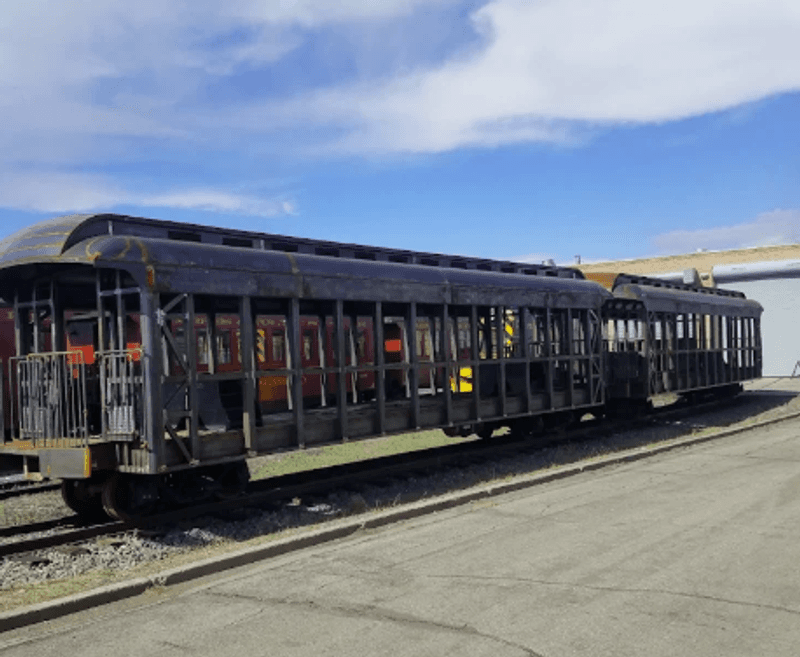
One of the most talked-about features of the trip is the open gondola car, a roofless railcar that lets passengers stand and take in the landscape without any barrier between them and the mountain terrain rolling past.
The gondola is available once the train reaches certain sections of the route, and the railroad staff will let passengers know when it is safe to move into it. The elevation along the route reaches over 10,000 feet at Cumbres Pass, so the temperature in the gondola can drop noticeably even on warm days.
Layers are a smart call regardless of the season.
For photography, the gondola is unbeatable. There is no glass to shoot through, no window frame cutting into the frame, and the views in every direction are unobstructed.
Wildlife is also more likely to be noticed from the open car, with deer sightings along the route being fairly common during the quieter stretches of mountain terrain.
Cumbres Pass: The High Point of the Route
At 10,015 feet above sea level, Cumbres Pass marks the highest point on the route and one of the highest railroad summits still in regular operation in the United States. The train crosses the pass near the Colorado and New Mexico state line, and the landscape up there is noticeably different from the lower elevations on either side.
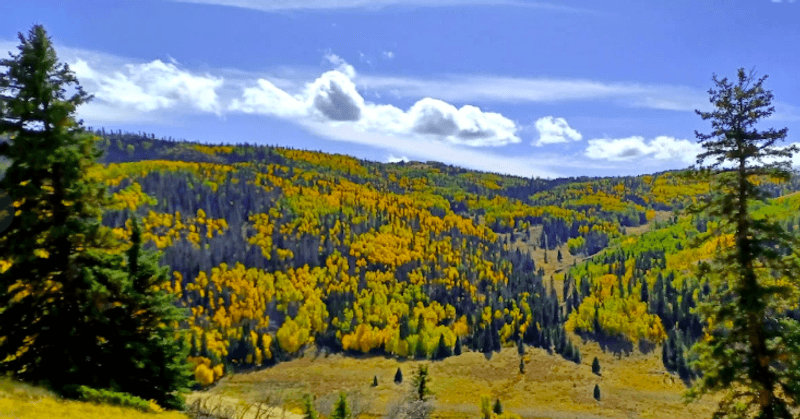
The terrain at the pass opens up into alpine meadows with long sight lines across the surrounding ridgelines. Aspen groves line sections of the track, and during fall, when the leaves turn gold, the pass becomes one of the most photographed railroad locations in the country.
Timing a trip for late September or early October can put passengers right in the middle of peak fall color season.
The grade leading up to the pass is steep enough that the steam locomotives work hard to climb it, and the sound and effort of the engines on the ascent is a highlight for anyone who appreciates how these machines actually function under load.
Tunnels, Trestles, and Tight Curves
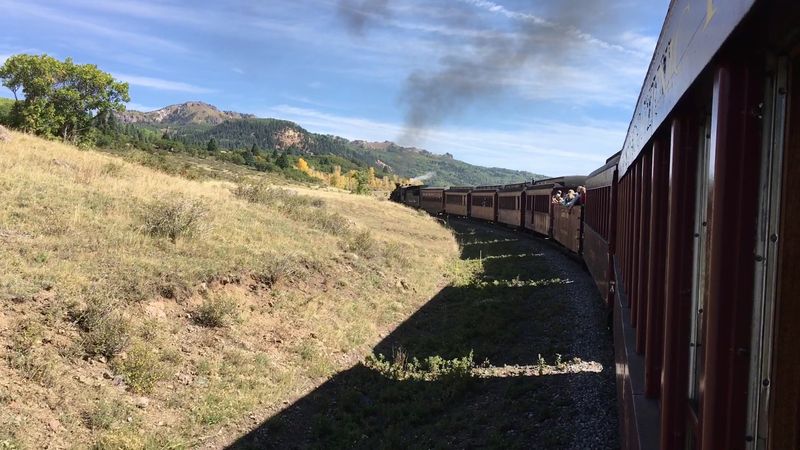
The engineering of this route is part of what makes it historically significant. The original builders in 1880 had to solve some serious geographic problems to get the tracks across this terrain, and the solutions they came up with are still in use today.
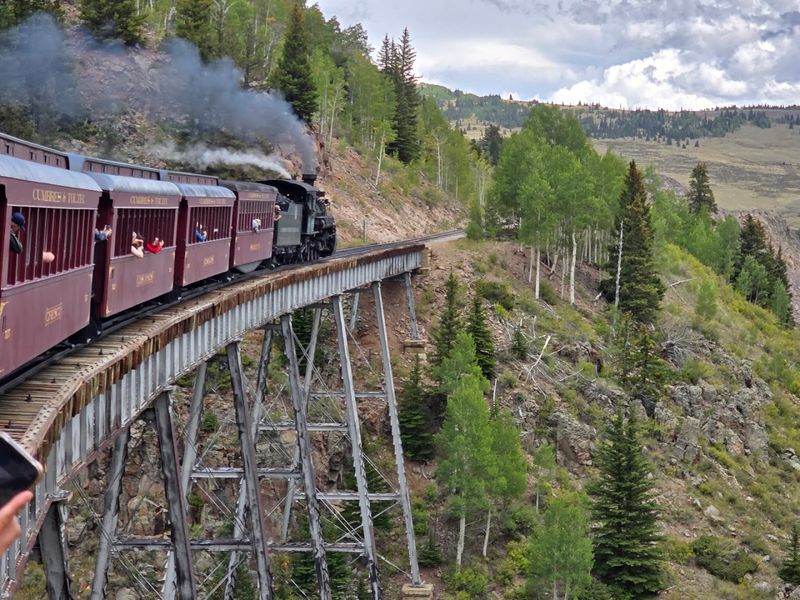
The route includes two tunnels cut through solid rock, a series of wooden trestles spanning canyon gaps, and curves tight enough that passengers in one car can look out the window and see the locomotive rounding the bend ahead. The Phantom Curve is one of the most dramatic of these sections, where the track wraps around a mountain shoulder with a steep drop on one side and a rock wall on the other.
The trestles are particularly striking because they are original construction, maintained rather than replaced, and crossing them on a train moving at moderate speed gives a clear sense of both the skill that went into building them and the scale of the landscape they were designed to cross.
The Lunch Stop at Osier Station
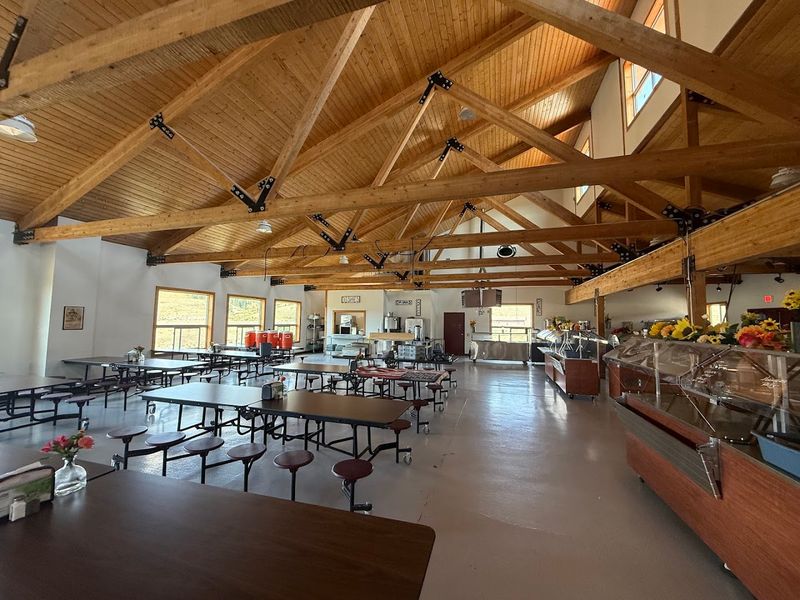
Roughly at the midpoint of the full route, the train stops at Osier Station, a remote outpost in the mountains of southern Colorado where a buffet lunch is included with every full-ride ticket. The stop is one of the more pleasant surprises of the trip for those who do not know it is coming.
The buffet is substantial, with multiple protein options, salads, baked potatoes, desserts, coffee, tea, and water. The setup runs four serving lines to keep things moving, and the quality is consistently better than what most people expect from a remote mountain lunch stop.
The station building itself is historic, and the surrounding landscape gives passengers a chance to stretch and look around.
Osier is also where trains departing from each end of the line meet in the middle. Car attendants switch trains at this point, so the second half of the journey comes with a fresh crew.
The stop typically lasts long enough to eat comfortably and walk around before boarding again.
Half-Trip Option to Osier and Back
Not everyone has the time or stamina for the full 64-mile journey from Chama to Antonito, and the railroad offers a half-trip option that runs from Chama to Osier and back. This route covers the most dramatic sections of the New Mexico side of the line and still includes the buffet lunch at Osier Station.
The half trip is a good fit for families with younger children, older travelers, or anyone who wants a meaningful taste of the experience without committing to a full day on the train. The round trip from Chama still takes most of the day, so it is not a short outing, but it is more manageable than the full route.
Both coal-burning and oil-burning steam locomotives operate on different departures, so checking which engine is scheduled for a particular date can help travelers who have a preference. The staff at the Chama yard is generally open about which locomotive is on duty on any given morning.
Fall Colors and Wildlife Along the Route
The route passes through a variety of ecosystems between Chama and Antonito, ranging from high desert scrubland near the lower elevations to dense pine and aspen forests closer to the pass. Each zone looks different depending on the time of year, but fall is widely considered the best season to ride.
Late September into early October brings peak aspen color to the higher elevations along the route. The aspens turn a bright gold, and on clear days the contrast between the yellow leaves, dark pines, and blue sky is striking enough that even the car attendants pull out their phones to photograph it.
Deer are commonly spotted in the meadows along the track, and hawks are occasionally seen riding thermals above the canyon sections.
Summer departures offer cooler temperatures compared to lower-elevation New Mexico destinations, which makes the train a genuinely comfortable option during the hottest months when other outdoor activities in the region can be less enjoyable.
Planning Your Visit: Practical Tips
The railroad operates seasonally, typically running from late May through late October, with the fall color season being the most popular and the most likely to sell out in advance. Booking tickets early is strongly recommended, especially for weekend departures and parlor car seats.
Layers are essential regardless of what month the trip falls in. The temperature difference between Chama at departure and Cumbres Pass at 10,015 feet can be significant, and the open gondola car adds wind to the equation.
A light jacket or fleece is useful even on warm summer days.
The gift shop at the Chama depot carries a range of railroad-themed souvenirs, books, and memorabilia at reasonable prices. Tickets include the buffet lunch at Osier for full-route riders, which removes the need to pack a full meal, though bringing snacks for the ride is a common and practical choice.
The railroad’s website at cumbrestoltec.com has current schedules, ticket options, and pricing details.
Where the Journey Begins: The Chama Depot
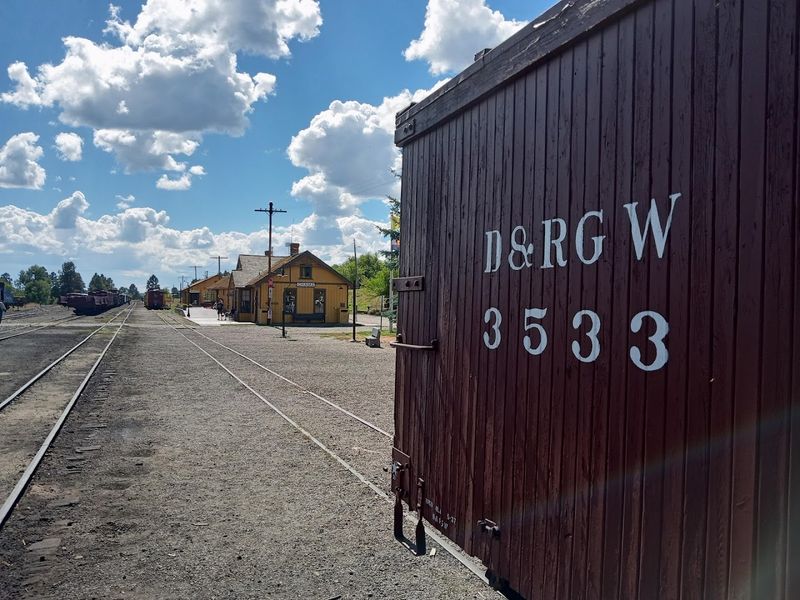
The adventure starts at 500 Terrace Ave, Chama, NM 87520, a small mountain town tucked into the high country of northern New Mexico near the Colorado border. The Chama depot is a well-preserved historic station that sets the tone for everything that follows.
The yard itself is worth arriving early for. Coal cars, vintage passenger coaches, and working steam locomotives sit in the open air, and you can walk close enough to photograph them in detail.
The metal shop on the property is an active restoration facility where staff members work on keeping the equipment running, and some are happy to share the history behind the machinery.
Chama sits at an elevation of about 7,850 feet, so the air is cool even in summer. The surrounding landscape of ponderosa pines and open meadows gives the departure point a character that feels far removed from modern life before the train even moves.
Share this story