This Idaho park combines ancient history, railroad heritage, and dramatic canyon scenery in one stop along the Snake River. Visitors can view petroglyphs carved into basalt rock, cross an 1880s railroad bridge, and explore a landscape shaped by massive floods thousands of years ago.
What makes it stand out is the depth of history packed into a single location. More than 12,000 years of human activity can be traced here, from Indigenous rock art to relics of Idaho’s mining era.
Many travelers pass by without realizing what they are missing. Those who stop discover one of Idaho’s most overlooked historic parks.
Where Exactly You Will Find This Place
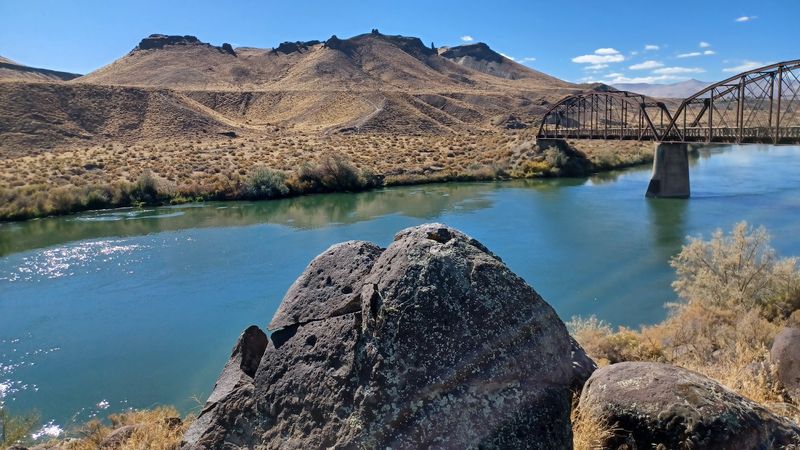
Celebration Park sits at 5000 Victory Lane in Melba, Idaho 83641, right in the heart of Canyon County. The drive down to the park already sets the tone, winding through open high desert terrain before the road drops toward the Snake River Canyon.
Canyon County manages the park, and it is open 24 hours a day, every day of the year. A small day-use fee of two dollars per vehicle applies, and overnight camping runs just five dollars per night, which is genuinely one of the best deals in Idaho outdoor recreation.
The visitor center is the smart first stop. Staff there hand out maps, answer questions, and can point you toward the petroglyphs, trails, and the historic bridge.
The phone number is 208-455-6022 if you want to call ahead, and the official site is canyoncounty.id.gov. A paved road leads all the way to the main facilities, making the park accessible for most vehicles.
Idaho’s Only Archaeological Park and What That Actually Means
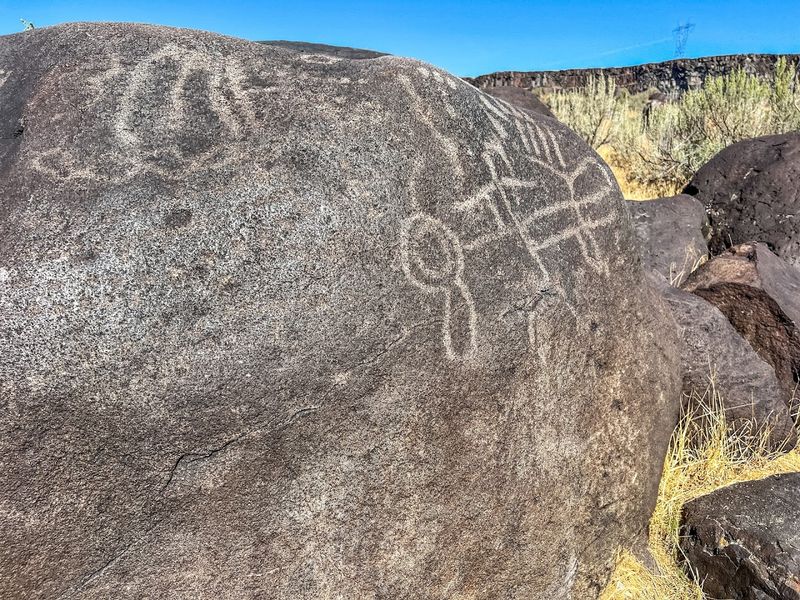
Not every park earns a title like this one. Celebration Park holds the distinction of being Idaho’s sole archaeological park, established in 1989 specifically to protect and interpret the remarkable evidence of human life found along this stretch of the Snake River.
The area is considered one of North America’s oldest continuously inhabited regions, with signs of human presence stretching back more than 12,000 years. That puts people here long before written history, long before any city in the Americas was founded, and long before most of the landmarks most of us learned about in school.
The park was designed so that its archaeological features remain in place rather than being moved to a museum. You walk among the actual artifacts, not replicas.
That decision gives the whole experience a weight that is hard to describe until you are standing next to a petroglyph and realizing the person who carved it lived here thousands of years ago.
The Ancient Flood That Carved This Landscape
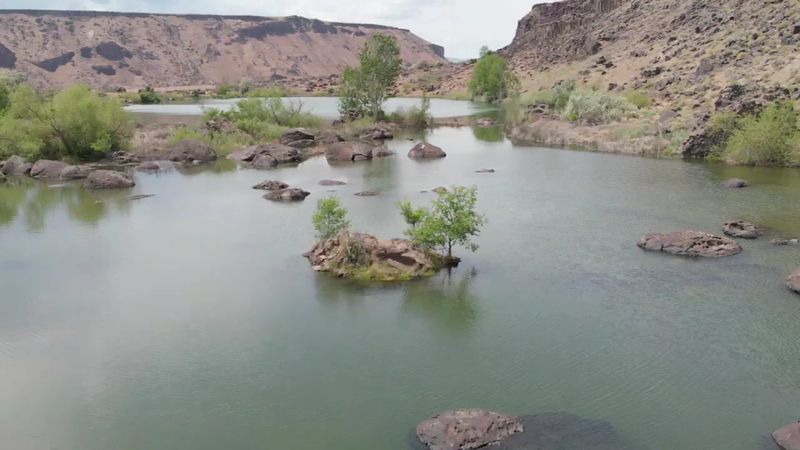
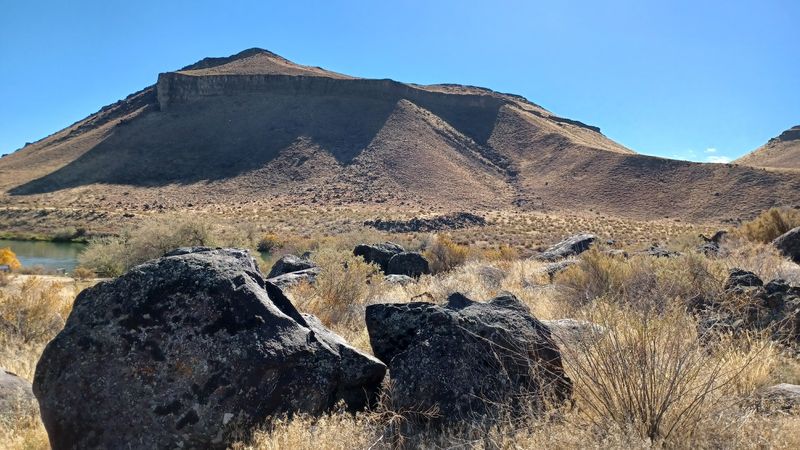
The canyon walls and rocky terrain at this park did not form slowly over millions of years. They were shaped in a sudden, catastrophic event known as the Bonneville Flood, which tore through this region roughly 15,000 to 17,000 years ago.
Ancient Lake Bonneville, a massive prehistoric lake that once covered much of what is now Utah, broke through a natural dam at Red Rock Pass. The resulting flood sent an enormous wall of water rushing through the Snake River plain, carving canyons, depositing boulders, and reshaping the entire landscape in a geologically short period of time.
One of the most visible souvenirs of that event is the basalt melon gravels scattered across the park, large rounded boulders that locals sometimes call watermelon rocks. Their rounded shape came from being tumbled and carried by floodwaters.
Standing among them, it is easy to feel the scale of what happened here, even if the flood itself is long gone.
Petroglyphs That Span Thousands of Years
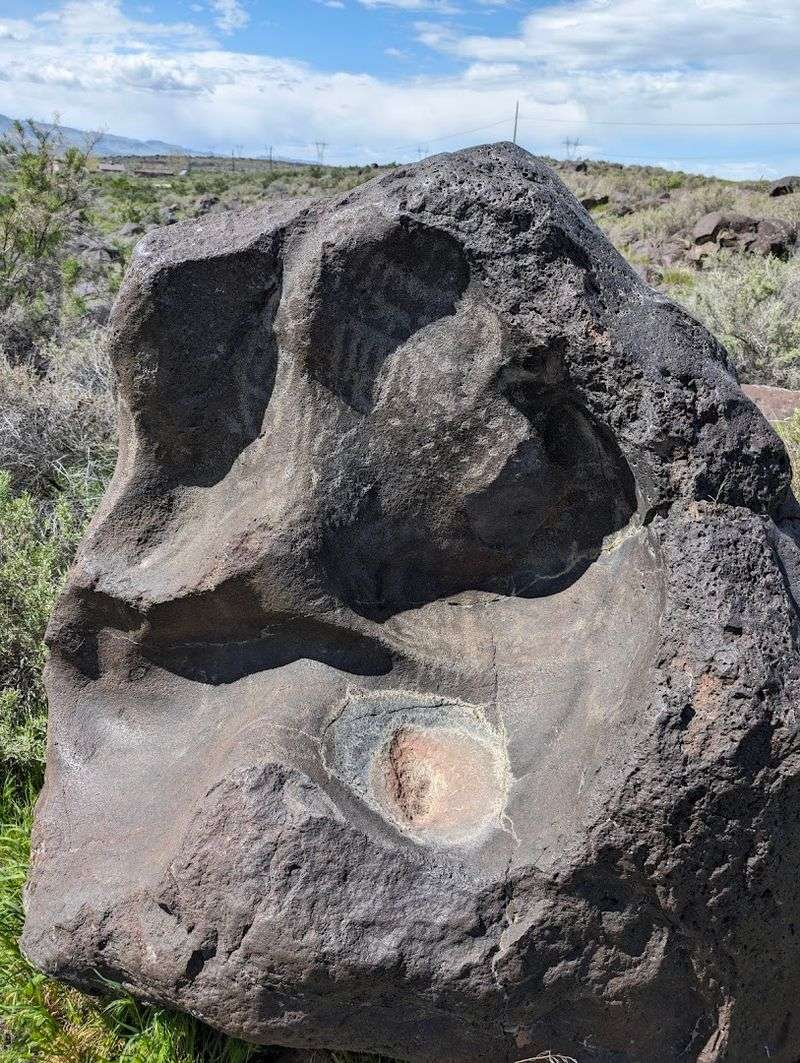
The petroglyphs at this park are the centerpiece of the entire experience, and they do not disappoint. These rock carvings were made by Native American peoples over a span of time ranging from about 100 years ago to as far back as 12,000 years, making this one of the most layered petroglyph sites in the Pacific Northwest.
The carvings represent the work of multiple cultures, including the Shoshone, Bannock, and Northern Paiute peoples who seasonally inhabited this canyon. Some images are abstract geometric patterns, while others appear to depict animals, human figures, and hunting scenes that offer real clues about daily life in the distant past.
Picking out the petroglyphs without a map can be tricky since the dark basalt boulders all tend to look similar. The visitor center provides maps that mark the locations, and guided tours are also available at certain times.
Taking your time with each carving makes a big difference, because the details reward a slow and careful look.
The Guffey Railroad Bridge and Its Remarkable Past
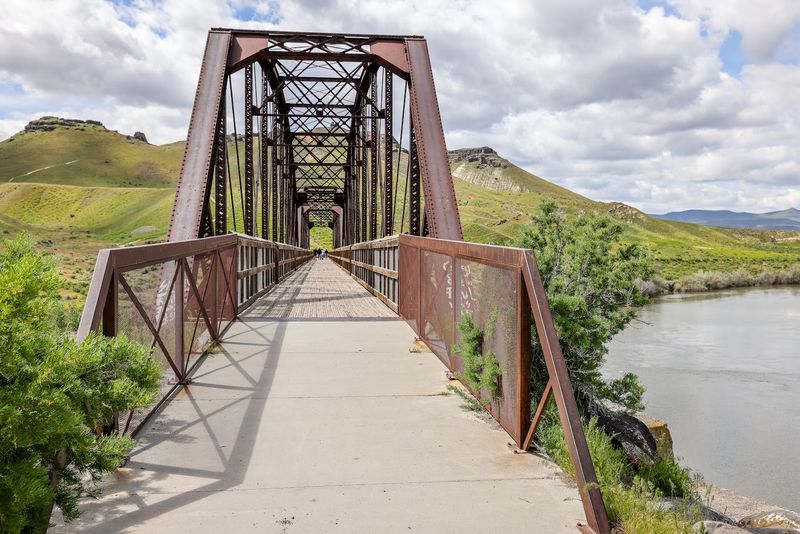
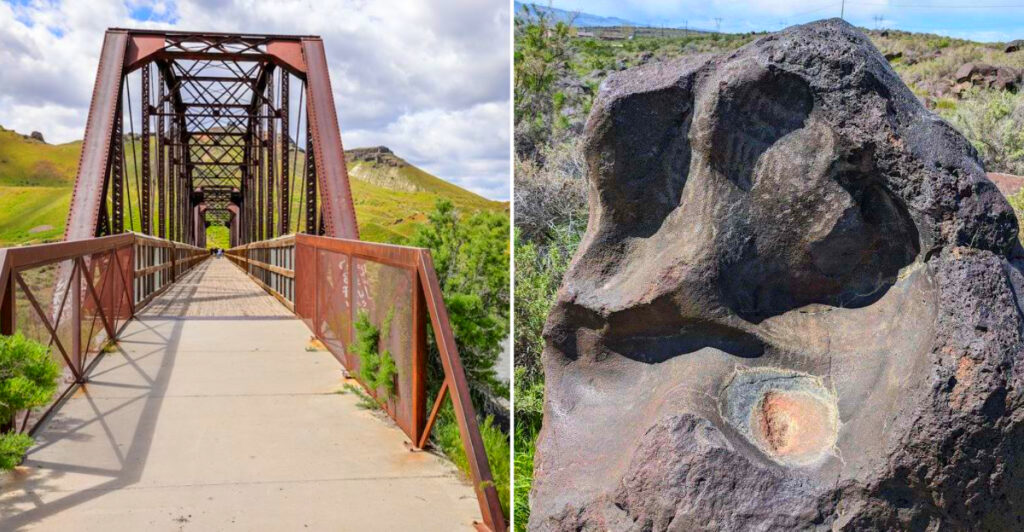
Few things in Idaho carry as much history per square foot as the Guffey Railroad Bridge. Built in 1897, this Parker-Through-Truss steel structure was originally constructed to transport silver and gold ore from Silver City down to Nampa, where it could be processed.
At the time of its construction, the Guffey Bridge was the tallest railroad bridge in the entire country. After the mining era wound down, the bridge shifted its purpose and went on to carry more livestock than almost any other rail line in the western United States.
That is a lot of cattle for a bridge that started life hauling precious metals.
Today the bridge has been refurbished into a pedestrian crossing, connecting Canyon County on one side with Owyhee County on the other. It is listed on the National Register of Historic Places and is considered Idaho’s largest historic artifact.
Walking across it above the Snake River gives a completely different perspective on the canyon below, and the views in both directions are worth the short walk.
Hiking Trails Through Canyon and Riverbank
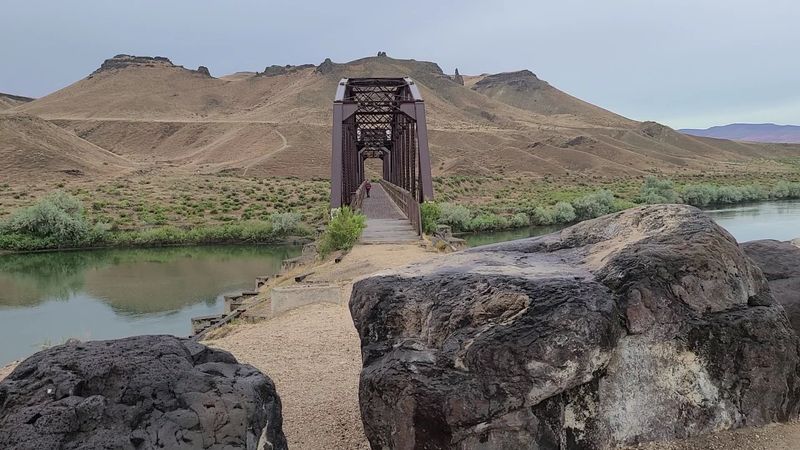
The trail system at this park offers more variety than its relatively small footprint might suggest. Paths wind through fields of basalt boulders, follow the Snake River bank, and climb to viewpoints that show off the canyon from above.
One of the more popular routes leads to Halverson Lake, a quiet spot tucked into the canyon that offers a change of scenery from the main river area. Another trail continues to Swan Falls Dam, a historic hydroelectric dam downstream that adds yet another layer of history to the hike.
Crossing the Guffey Bridge opens up an entirely separate network of trails on the Owyhee County side of the river. Many visitors say they did not have enough time to explore everything in a single visit, which is a good argument for either arriving early or planning an overnight stay.
The terrain is open and mostly flat near the river, though some routes gain elevation as they move into the canyon walls.
Fishing, Boating, and Life on the Snake River
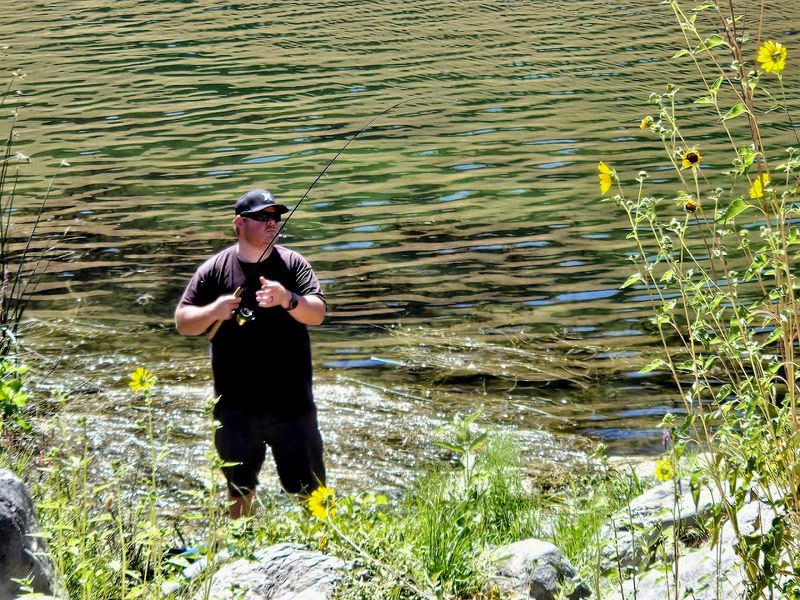
The Snake River at this park is a working river in the best sense. Catfish are the most sought-after catch here, and the stretch of water near the park is well known among local anglers for producing solid results.
Bass fishing also gets good marks from people who have spent time on the water in this section of the river.
A boat ramp provides access for launching various sizes of watercraft, and there is ample parking for trailers, which is a practical detail that matters a lot when you are hauling a boat. The park is also an official access point on the Idaho-Oregon Snake River Water Trail, making it a legitimate stop for paddlers doing longer river trips.
One important note: swimming is not recommended here because of strong and unpredictable currents. The river looks calm in places, but the current runs faster than it appears.
Fishing from the bank or from a boat is the way to enjoy the water safely at this location.
Camping Under a Near-Dark Sky
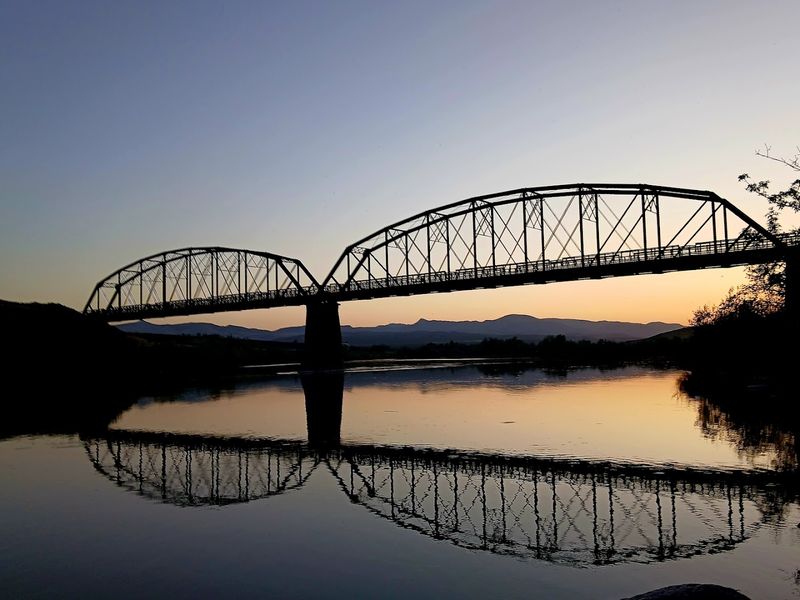
Camping at this park costs five dollars per night, and that price point is not a typo. Each campsite comes with a picnic table, a tent platform, a fire ring, and a trash can, making the setup more organized than many campgrounds charging ten times as much.
The sites are spread out with good separation between neighbors, and the overall atmosphere is quiet and peaceful on most nights. The park is recognized as a semi-dark skies location, meaning light pollution is low enough to make stargazing genuinely rewarding.
On a clear night, the sky above the Snake River Canyon fills up in a way that is hard to find near any populated area.
A few practical things worth knowing: there is no potable water at the campsites themselves, but water is available at the visitor center. The campground has vault toilets nearby, and they are kept remarkably clean.
There is also no shade at the campsites, so a canopy or shade structure is a smart addition during the warmer months.
The Visitor Center and the Atlatl Experience
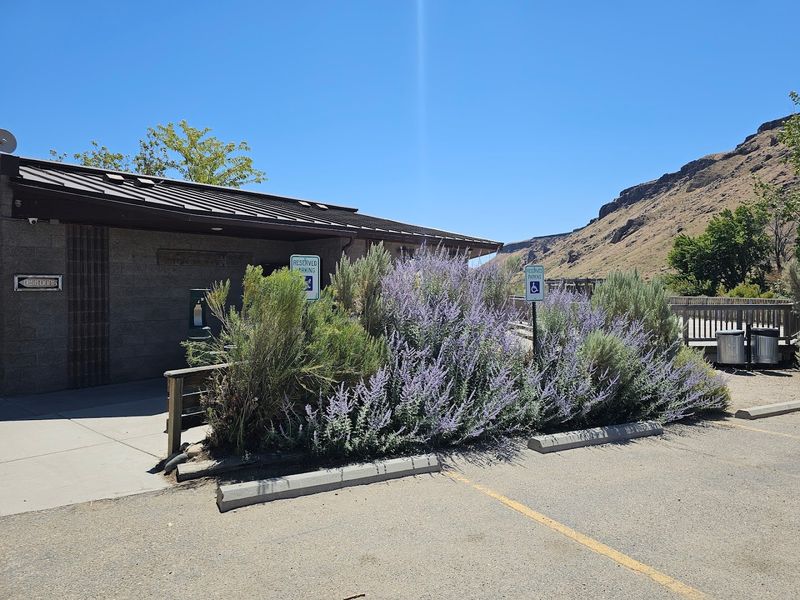
The visitor center at this park is small but genuinely useful. Staff there are known for being friendly and enthusiastic about the history of the site, and they hand out maps that make the petroglyph hunt much more manageable.
One of the more memorable activities available through the visitor center is atlatl throwing. The atlatl is an ancient hunting tool that predates the bow and arrow, essentially a lever device that extends the arm and dramatically increases the speed and force of a thrown spear.
Learning to use one connects visitors to the same technique that people used at this very location thousands of years ago.
Guided tours are also available at certain times, and the staff occasionally runs programs for school groups that bring the archaeology and history of the site to life in hands-on ways. Even if you only stop in briefly, the visitor center gives enough context to make everything else in the park feel more meaningful.
A teepee display near the visitor area adds another visual anchor to the cultural history on offer here.
Practical Tips for Making the Most of Your Visit
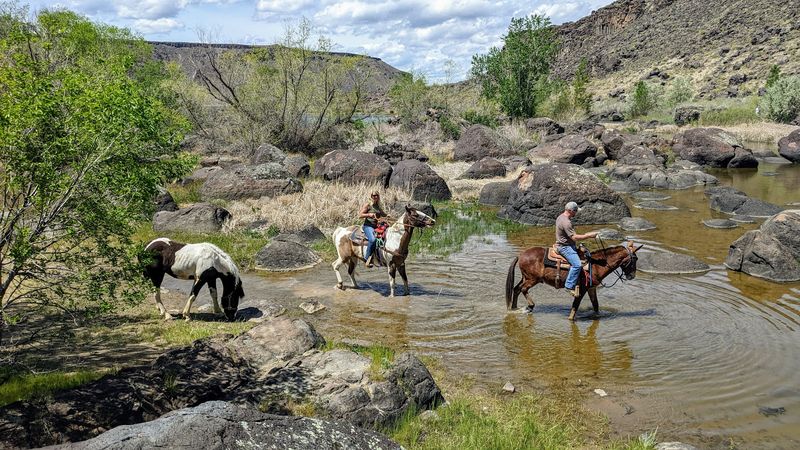
A few small preparations go a long way at this park. Cash is helpful to have on hand since the parking fee and camping fee both operate on an honesty system, and there is no card reader at the entrance.
Two dollars for day use and five dollars for overnight camping are the current rates.
Bringing your own water is essential, especially in warmer months. The visitor center has a bottle-filling station, but the campsites themselves do not have running water.
Sunscreen and a hat matter here more than in forested parks because the canyon terrain is open and exposed for most of the trails.
Dogs are welcome on leash, but the park does not supply waste bags, so bringing your own is the courteous move. The park is open 24 hours every day, which means early morning arrivals can enjoy the trails in near-total quiet before the day heats up.
River flies are a real presence during summer evenings near the water, which is just part of the experience in this kind of natural canyon setting.
Why This Canyon Park Deserves a Spot on Your Idaho List
There are not many places in the United States where you can walk past 12,000-year-old rock carvings, cross a bridge that once carried gold ore in the 1890s, and cast a fishing line into one of the West’s most storied rivers, all in the same afternoon.
The combination of geological drama, indigenous history, pioneer-era infrastructure, and accessible outdoor recreation makes this park genuinely hard to categorize. It is not just a hiking spot, not just a history site, and not just a campground.
It manages to be all of those things at once without feeling scattered.
The low cost of entry, the clean facilities, and the consistently helpful staff make the whole experience feel welcoming rather than overwhelming. Whether you spend two hours or two nights, the Snake River Canyon has a way of staying with you long after you have driven back up the canyon road and returned to the rest of your day.
Share this story