Europe has a way of making you feel like you have walked straight into a fairy tale. From glittering Alpine lakes to medieval streets paved with centuries of history, the continent is packed with towns so beautiful they barely seem real.
Whether you are a seasoned traveler or just daydreaming from your couch, these places will spark your wanderlust and leave you reaching for your passport.
Hallstatt, Austria
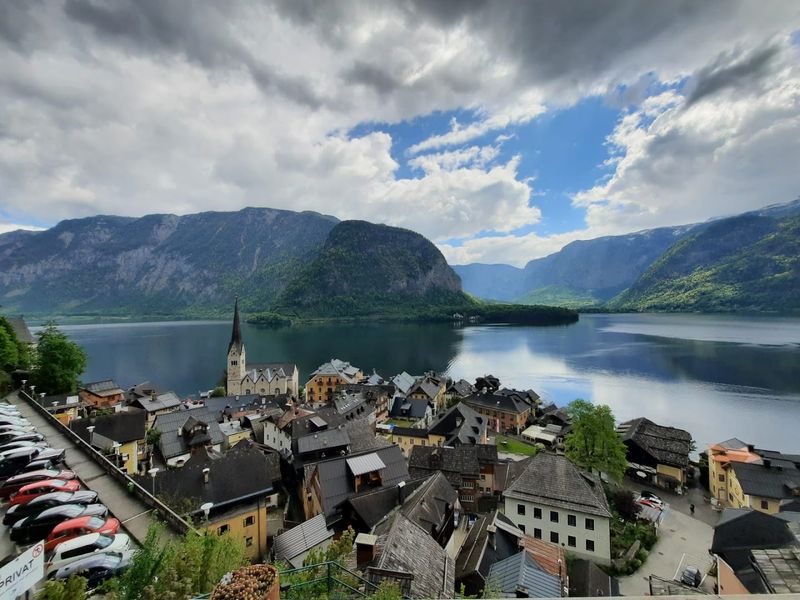
Imagine waking up to a mirror-still lake with mountains so tall they disappear into the clouds above you. That is everyday life in Hallstatt, a tiny Austrian village that consistently tops lists of Europe’s most beautiful places.
With fewer than 800 permanent residents, it punches way above its weight in the scenery department.
The pastel-colored houses along the waterfront look like someone painted them just for a postcard. Narrow lanes climb steeply up the hillside, passing flower boxes and ancient stone churches along the way.
Salt mining here dates back over 7,000 years, making Hallstatt one of the oldest continuously inhabited settlements in the world.
Visitors can explore the historic salt mines, take a boat across the lake, or simply wander and soak everything in. Spring and autumn offer fewer crowds and equally stunning views.
Go early in the morning for the best reflections on the water and a truly magical experience.
Colmar, France
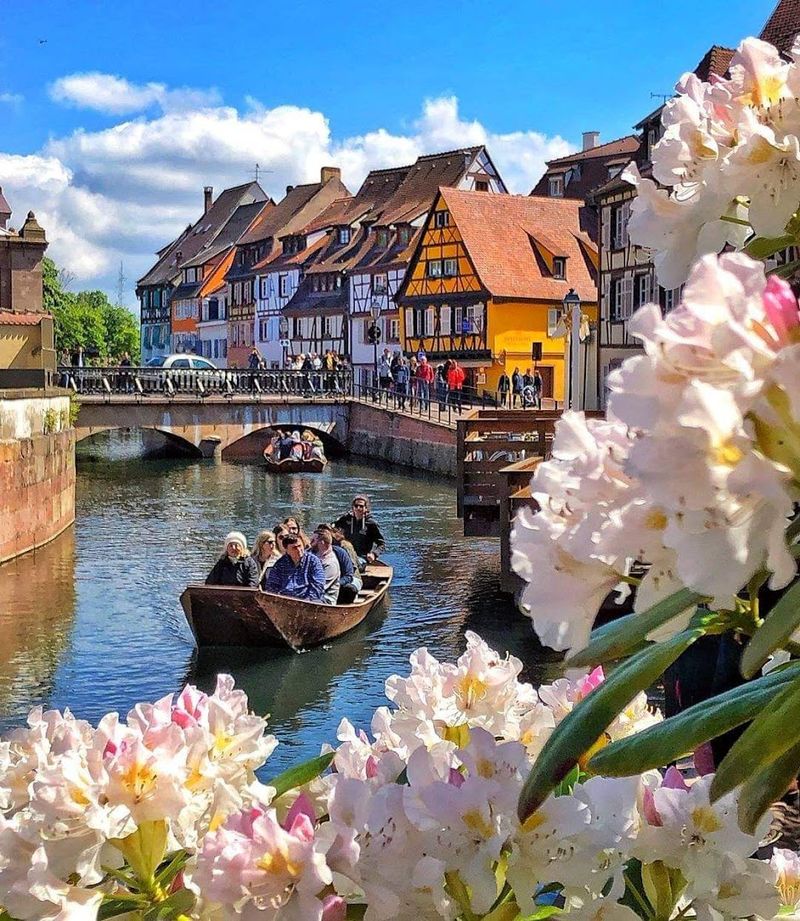
Colmar looks like someone took a children’s illustrated storybook and turned it into an actual town. Located in France’s Alsace region near the German border, it blends two cultures into one impossibly charming package.
The result is a place where French cuisine meets German architecture, and somehow it all works perfectly together.
Brightly painted half-timbered buildings lean cheerfully over winding canals in a neighborhood locals call La Petite Venise, or Little Venice. Window boxes overflow with geraniums in summer, and the whole town smells faintly of pretzels and wine.
Colmar is also the birthplace of Frederic Auguste Bartholdi, the sculptor who designed the Statue of Liberty.
The Christmas market here is legendary, transforming already-beautiful squares into glowing winter wonderlands filled with mulled wine and handmade gifts. Summer visitors enjoy outdoor dining along the canals and easy access to nearby Alsatian wine routes.
Comfortable walking shoes are essential because you will want to explore every single corner of this town.
Rothenburg ob der Tauber, Germany
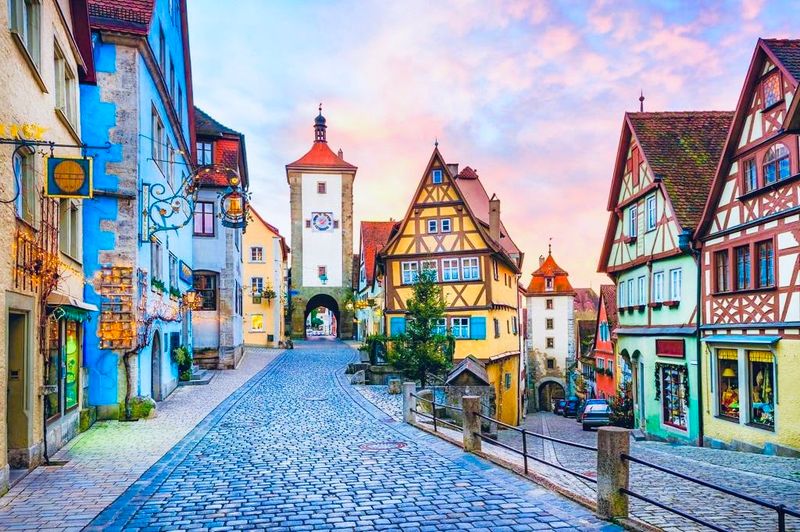
Step through the ancient gates of Rothenburg ob der Tauber and you will feel like you have time-traveled straight into the Middle Ages. This Bavarian gem is one of Germany’s best-preserved medieval towns, and it wears that title with enormous pride.
The city walls are still fully intact, and you can actually walk along them for panoramic views of the rooftops below.
Cobblestone streets wind between crooked timber-framed houses that have been standing for centuries. The central market square is anchored by a magnificent town hall that dates back to the 13th century.
Local legend says the town was saved from destruction during the Thirty Years War because a mayor drank an enormous jug of wine in one go as a bet.
The famous Christmas village here, known as Reiterlesmarkt, is one of Germany’s most beloved holiday markets. Year-round, the town attracts visitors with its museum of medieval crime, quirky shops, and exceptional gingerbread.
Arriving by train and spending at least one night inside the old walls is the best way to truly feel the magic.
Cesky Krumlov, Czech Republic
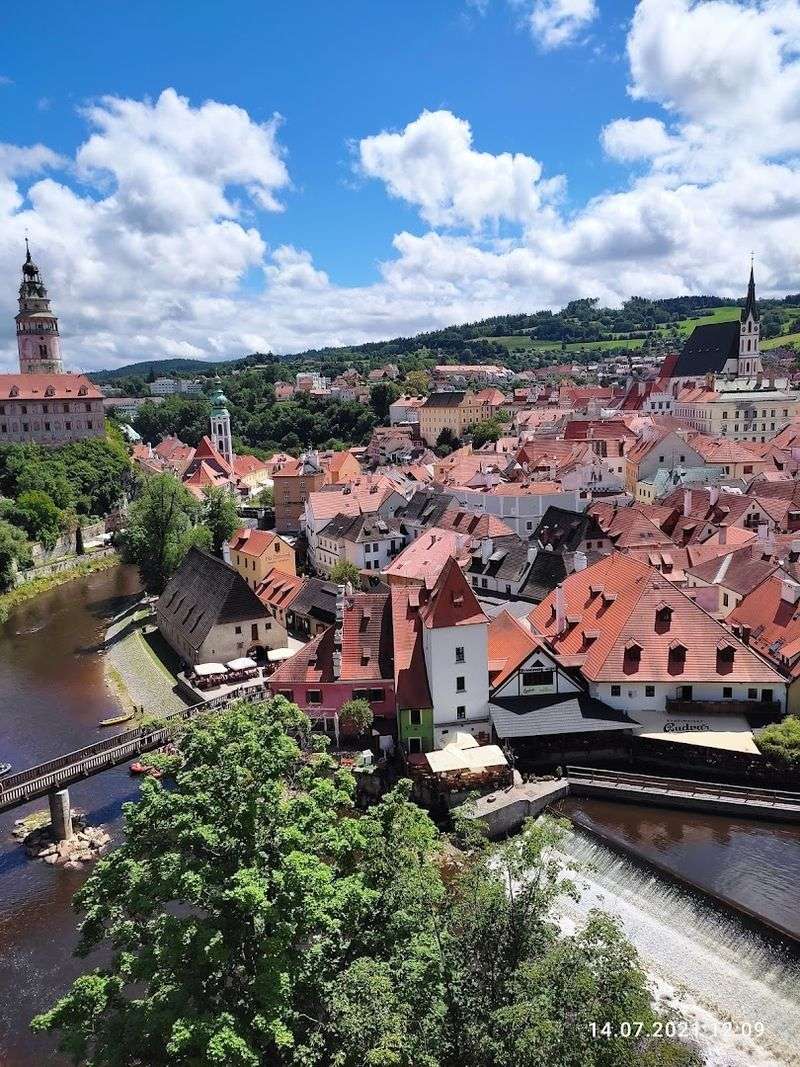
Tucked into a horseshoe bend of the Vltava River, Cesky Krumlov is the kind of place that makes you stop mid-step and just stare. A massive castle towers over the town from a rocky promontory, its round tower painted in a trompe-l’oeil pattern that tricks the eye into seeing three-dimensional stonework.
Below it, red-tiled rooftops tumble down toward the river in a jumbled, gorgeous heap.
The old town is a UNESCO World Heritage Site, and the streets within it feel genuinely untouched by modern life. Renaissance arcades, Gothic doorways, and Baroque fountains compete for your attention at every turn.
The castle complex is the second largest in the Czech Republic, and its gardens and baroque theater are especially worth exploring.
Summer brings outdoor performances and kayaking on the river, while winter turns the town into a quiet, frost-dusted retreat. The town is small enough to explore on foot in a day, but most visitors find themselves wanting to stay longer.
Book accommodation inside the old town walls for the most atmospheric experience possible.
Giethoorn, Netherlands
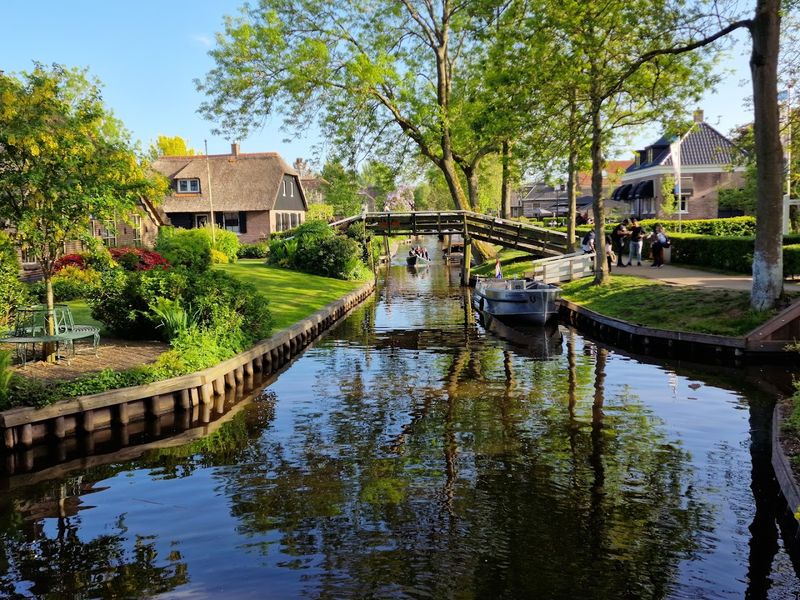
There are no roads in the center of Giethoorn. None.
Cars are replaced by canals, and the soundtrack of daily life is the gentle splash of a punt pole rather than honking traffic. This Dutch village in the province of Overijssel is sometimes called the Venice of the Netherlands, though locals might argue it is far more peaceful than its Italian cousin.
Thatched-roof farmhouses sit on small islands connected by over 170 wooden footbridges. Gardens are immaculate, flower-filled, and almost aggressively charming.
The village was founded around 1230 by a group of fugitives, who discovered peat while digging and accidentally created the canal system by extracting it over centuries.
Renting a whisper boat, which is an electric boat quiet enough to sneak up on a sleeping duck, is the classic way to explore. Spring is peak season when tulips and other flowers are in full bloom along the banks.
Visit on a weekday if possible, since weekends can get surprisingly busy for a place with no cars.
Bruges, Belgium
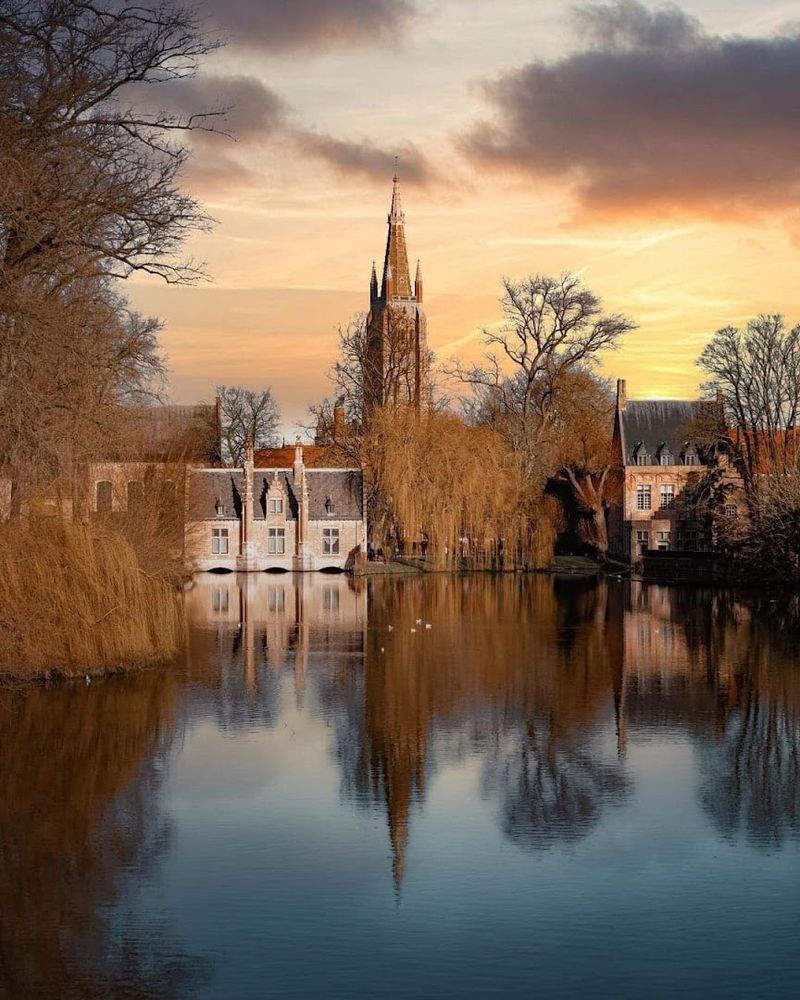
Chocolate shops on every corner, medieval canals glittering under stone bridges, and a skyline that looks like it belongs in a fantasy novel: welcome to Bruges. Belgium’s best-preserved medieval city draws millions of visitors each year, and it genuinely deserves every single one of them.
The entire historic center is a UNESCO World Heritage Site, and it is easy to see why.
The Markt, or central market square, is flanked by guildhalls and dominated by the 83-meter Belfry tower, which offers sweeping views over the city’s rooftops. Canal boat tours are a must, drifting beneath low stone bridges while a guide points out centuries of history above the waterline.
Bruges was once one of Europe’s most important trading cities, and the wealth of that era is still visible in its grand architecture.
The city is incredibly walkable, and getting pleasantly lost in its quieter back streets is one of the great joys of any visit. Belgian waffles and locally brewed beers are essential fuel for all that wandering.
Evening, when the crowds thin out and the canals reflect the lamplight, is when Bruges is at its most romantic.
Reine, Norway
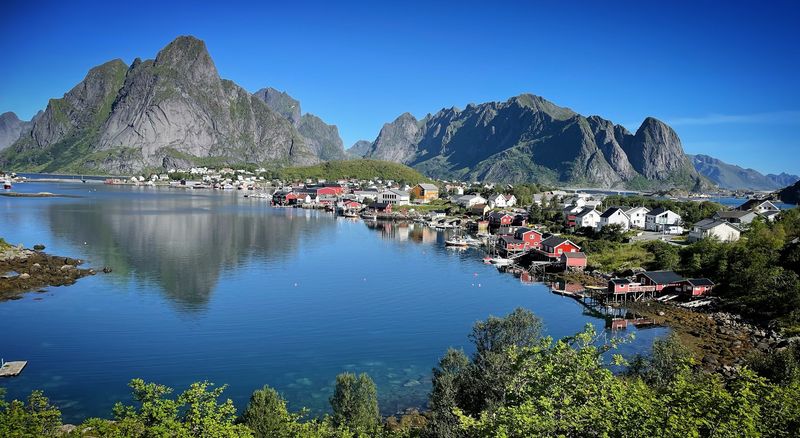
Reine looks like a screensaver that someone forgot to turn off. Perched on the Lofoten Islands above the Arctic Circle, this tiny Norwegian fishing village sits beneath some of the most dramatic mountain scenery on the planet.
Jagged peaks shoot straight up from the fjord like broken teeth, and the water below them shifts between deep blue and electric green depending on the light.
The village is famous for its rorbuer, which are traditional red wooden fishing cabins built on stilts over the water. Many of these have been converted into cozy holiday rentals, making Reine one of the most memorable places to spend a night in all of Scandinavia.
The Northern Lights are visible here in winter, adding an otherworldly glow to an already surreal setting.
Hiking trails around the village lead to viewpoints that photographers travel from around the world to reach. The Reinebringen hike is steep and rewarding, offering a panoramic view that genuinely stops people in their tracks.
Summer brings the midnight sun, meaning you can hike at 11 pm in broad daylight, which feels as strange and wonderful as it sounds.
Sintra, Portugal
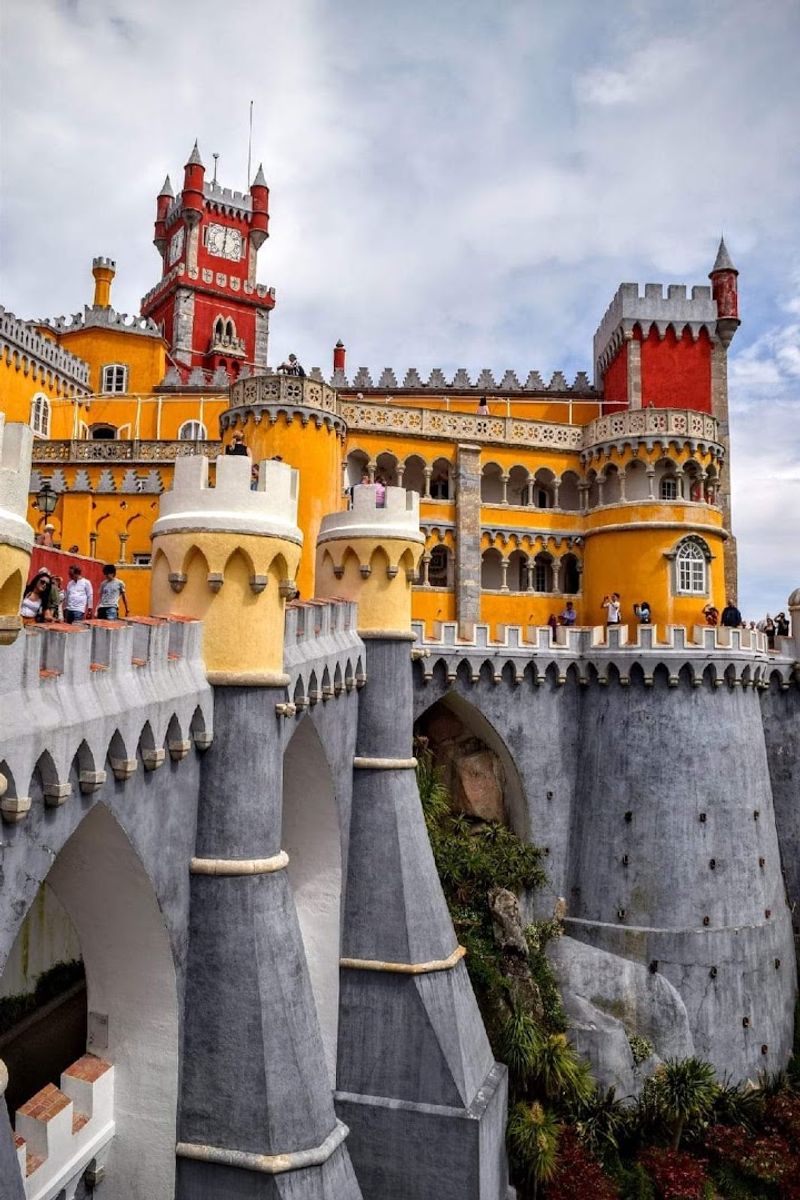
Sintra operates on a different set of rules from the rest of Portugal. Here, palaces appear through the mist like apparitions, forests seem to hide secrets around every bend, and a Moorish castle clings to a hilltop as though it grew there naturally.
Just 40 minutes from Lisbon by train, it feels like a completely different world.
The Pena Palace is the showstopper, a wildly colorful Romanticist castle built for King Ferdinand II in the 19th century. Its bright yellow, red, and blue towers clash gloriously against the green hillside, making it look like a child designed it with no rules and unlimited crayons.
The surrounding Sintra-Cascais Natural Park adds dense forest and dramatic Atlantic cliffs to the mix.
The historic town center below the hills is filled with pastry shops selling travesseiros, which are flaky almond-filled pastries that taste like they were made by someone who truly loves you. The town gets crowded quickly, so arriving early and booking palace tickets in advance is strongly recommended.
Sintra rewards those who explore beyond the main sites and wander its quieter hillside lanes.
Castle Combe, England
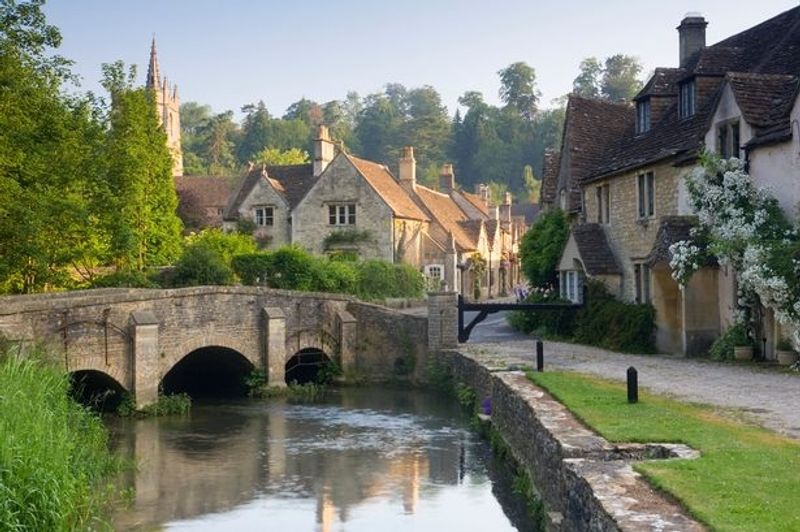
Castle Combe has been called the prettiest village in England so many times that the locals have probably stopped arguing about it. Tucked into a fold of the Wiltshire countryside, it is the kind of place where time appears to have simply stopped caring about moving forward.
Honey-colored stone cottages line a single main street that has barely changed since the medieval wool trade made it prosperous.
A 14th-century market cross stands at the center of the village, and the medieval church of St Andrew looms beautifully nearby. A shallow stream called the By Brook runs through the lower village, adding a gentle soundtrack to the already peaceful atmosphere.
The village has appeared in several films and TV productions, most notably as a filming location for the 1967 film Doctor Dolittle.
There are no traffic lights, no supermarkets, and no fast food chains in Castle Combe, which is precisely the point. Visitors arrive mostly on foot or by car from nearby Chippenham, and the village rewards slow, aimless wandering.
Late afternoon light on the stone buildings turns everything a warm golden color that is almost unreasonably photogenic.
Eguisheim, France
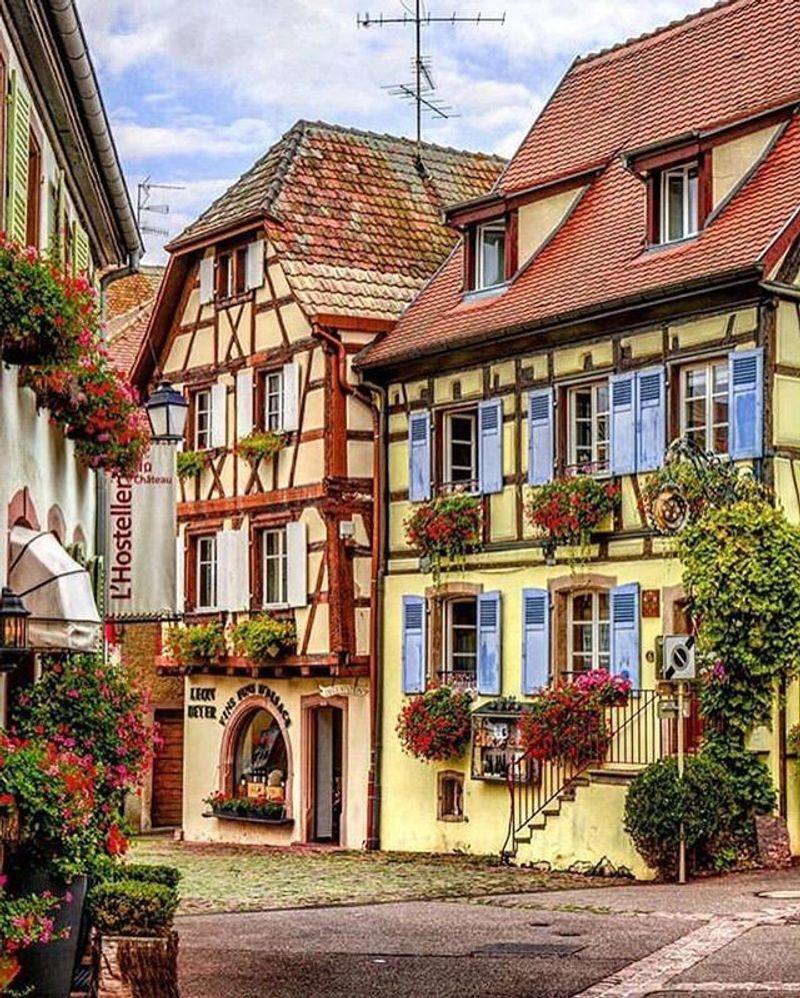
Eguisheim is shaped like a target, with concentric rings of medieval streets radiating out from a central square, and every single ring is more charming than the last. This circular Alsatian village near Colmar is consistently voted one of the most beautiful villages in France, and the competition for that title in Alsace is fierce.
The whole place feels like it was arranged by a very detail-oriented set designer.
Half-timbered houses in shades of mustard yellow, deep red, and sage green lean over cobblestone lanes barely wide enough for two people to pass comfortably. Flower boxes are practically mandatory, and the village enforces a tidiness that makes every corner feel like a photo opportunity.
Eguisheim is also the birthplace of Pope Leo IX, which adds a surprising historical footnote to all the prettiness.
The surrounding vineyards produce excellent Alsatian wines, and several local producers offer tastings right in the village. The annual wine festival in August fills the streets with music, food, and enthusiastic locals in traditional costume.
Visiting during the shoulder seasons of spring and early autumn means enjoying the beauty with significantly fewer fellow admirers blocking your view.
Bled, Slovenia
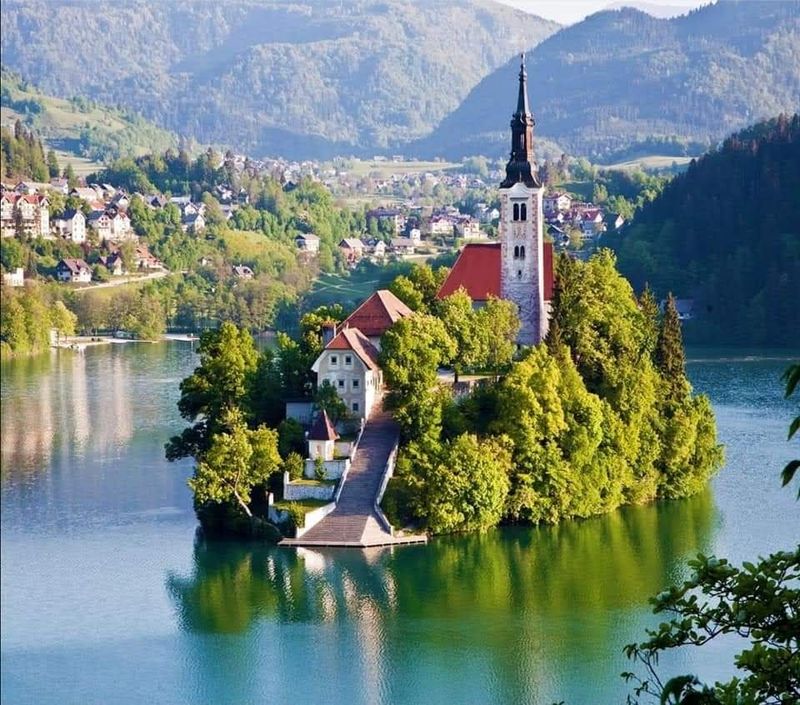
Lake Bled has an island with a church on it, a castle on a cliff above the shore, and mountains ringing the whole scene like a natural amphitheater. It sounds made up.
It is not. This Slovenian gem is one of those rare places where reality actually exceeds the photographs, which is saying something given how extraordinary the photographs already are.
The island church, dedicated to the Assumption of Mary, is reached by traditional wooden flat-bottomed boats called pletnas, rowed by local oarsmen. Ringing the church bell is said to bring good luck, and the climb up 99 steps to reach it is entirely worth the effort.
The castle above the lake dates back to the 11th century and houses a museum, a printing workshop, and a restaurant with jaw-dropping views.
Bled cream cake, a local specialty made of vanilla custard and whipped cream between two layers of pastry, is the mandatory culinary stop. The lake is warm enough for swimming in summer, and the surrounding Julian Alps offer excellent hiking and cycling trails.
Winter transforms the scene into something even more serene, with mist rising from the lake surface in the cold morning air.
Bibury, England
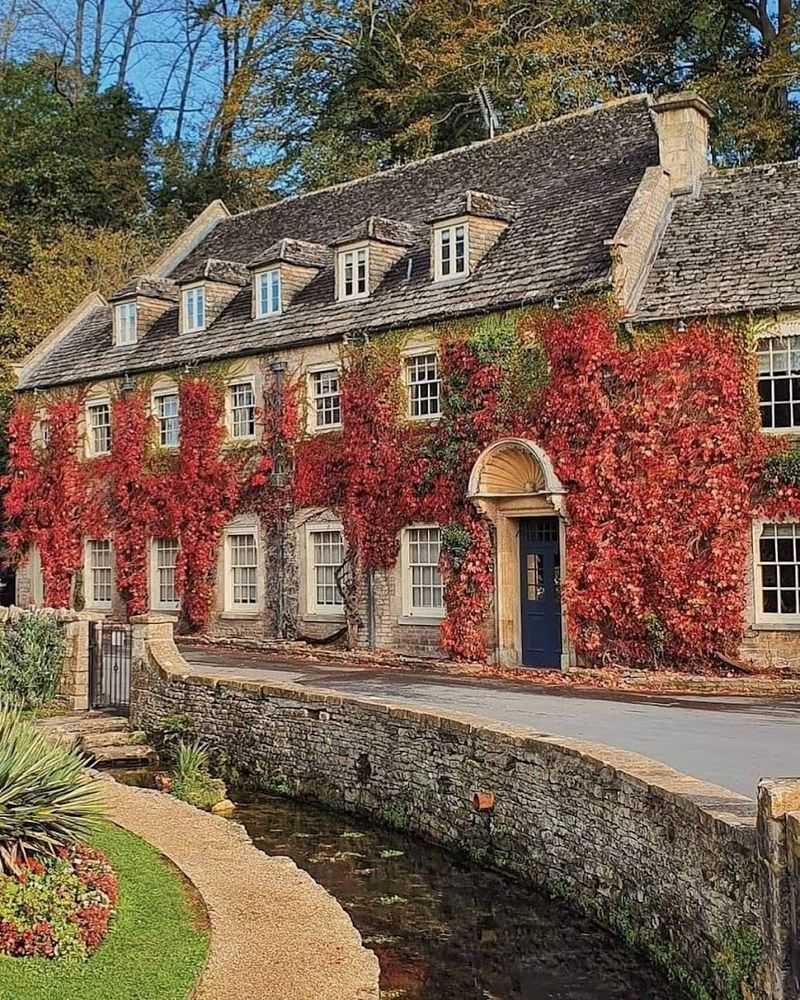
William Morris, the famous Victorian artist and designer, once called Bibury the most beautiful village in England, and he was not wrong. The star attraction is Arlington Row, a terrace of 17th-century stone weavers’ cottages that has become one of the most photographed spots in the entire country.
Standing in front of it feels strangely familiar even on a first visit, because the image is simply everywhere.
The cottages sit beside Rack Isle, a water meadow where weavers once hung their cloth to dry, now protected as a nature reserve full of waterfowl. The River Coln runs clear and cold alongside the main street, home to a famous trout farm that has operated here for over a century.
Bibury is nestled in the Cotswolds Area of Outstanding Natural Beauty, which is a designation that somehow still manages to undersell the scenery.
The village is small and easily explored in a couple of hours, making it an ideal stop on a wider Cotswolds road trip. Early morning visits before the tour buses arrive offer a completely different and far more peaceful experience.
Autumn is particularly gorgeous here, with golden leaves framing the already warm-toned stone buildings beautifully.
Mostar, Bosnia and Herzegovina
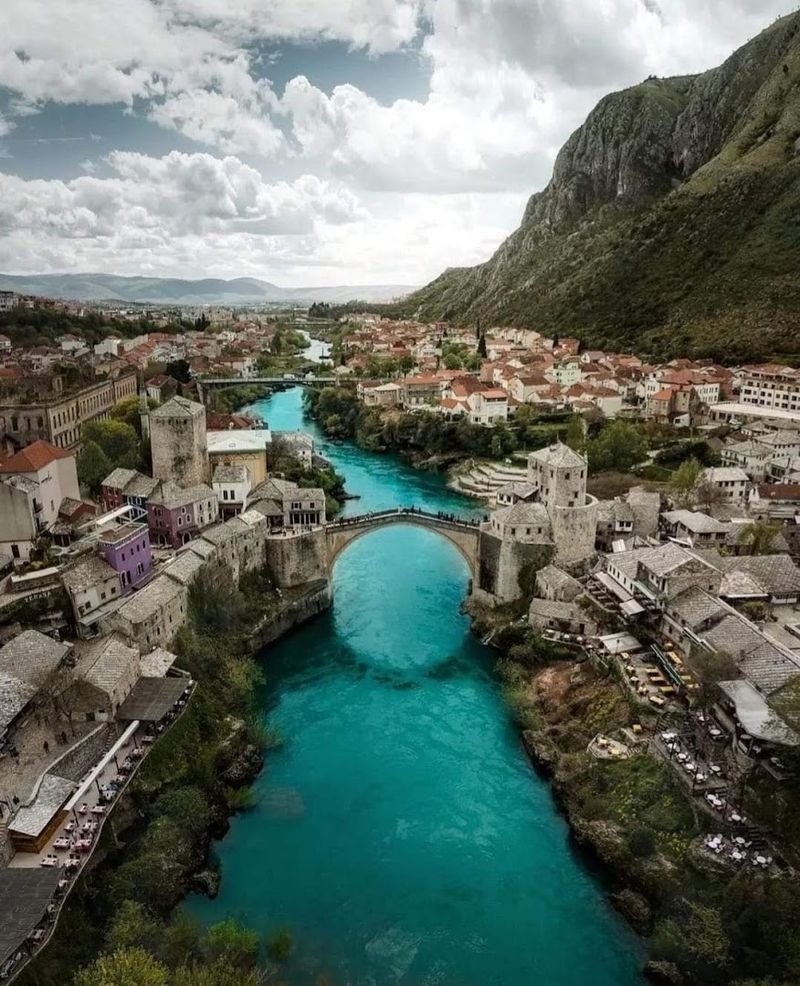
The Stari Most bridge in Mostar is so beautiful that people have been jumping off it competitively since the 16th century, and not just for fun but as a local tradition of courage and skill. The single-arch stone bridge spans the emerald Neretva River and connects two communities that have shared this valley for centuries.
Rebuilt after its destruction in 1993, it stands today as both an architectural triumph and a symbol of resilience.
The old bazaar on the eastern side of the bridge is a labyrinth of copper workshops, textile stalls, and coffee houses where thick Turkish coffee is served in tiny copper pots called dzezvas. Ottoman-era mosques and stone towers add skyline drama, while the surrounding mountains provide a spectacular backdrop.
The sound of the call to prayer echoing over the river at dusk is one of those travel moments that stays with you.
Mostar is often visited as a day trip from Dubrovnik or Split, but spending a night here allows you to experience the town after the day crowds leave. Evenings on the bridge, watching the river glow green below, are genuinely unforgettable.
The food scene, especially grilled meats and baklava, is another excellent reason to linger.
Riquewihr, France
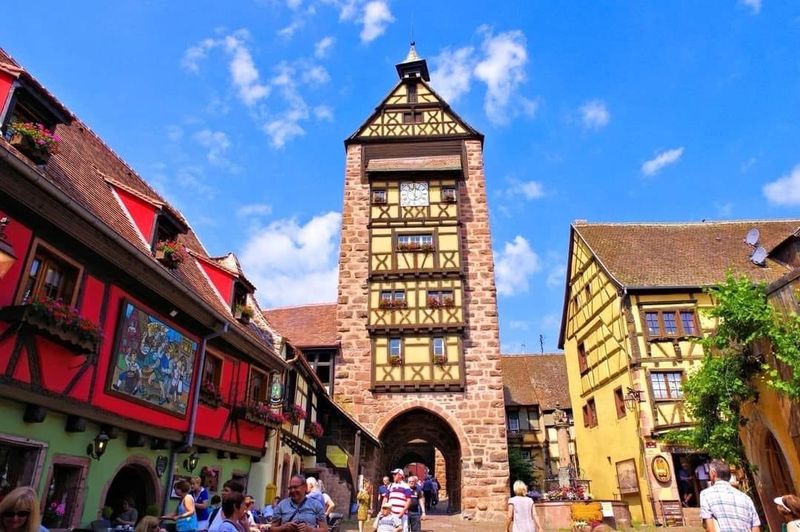
Riquewihr is so perfectly preserved and so relentlessly charming that visitors regularly accuse it of being a theme park. It is not, but the compliment is understandable.
This small Alsatian village has been producing wine since the 8th century and has somehow managed to keep its medieval character almost completely intact through centuries of history, including two World Wars.
The main street, Rue du General de Gaulle, is a pedestrian-only lane lined with timber-framed houses painted in vivid pinks, yellows, and blues. Geraniums spill from every window box, and wine cellars invite visitors in for tastings of local Riesling and Gewurztraminer.
The Dolder tower at the top of the village dates from 1291 and offers a small museum about the town’s history inside its thick stone walls.
During the Christmas season, Riquewihr transforms into something close to a real-life holiday card, with garlands, lights, and market stalls filling every corner. The village is entirely walkable and compact enough to explore thoroughly in a few hours.
Pairing a visit here with nearby Ribeauville and Kaysersberg makes for one of the most scenic day trips in all of France.
Gruyeres, Switzerland
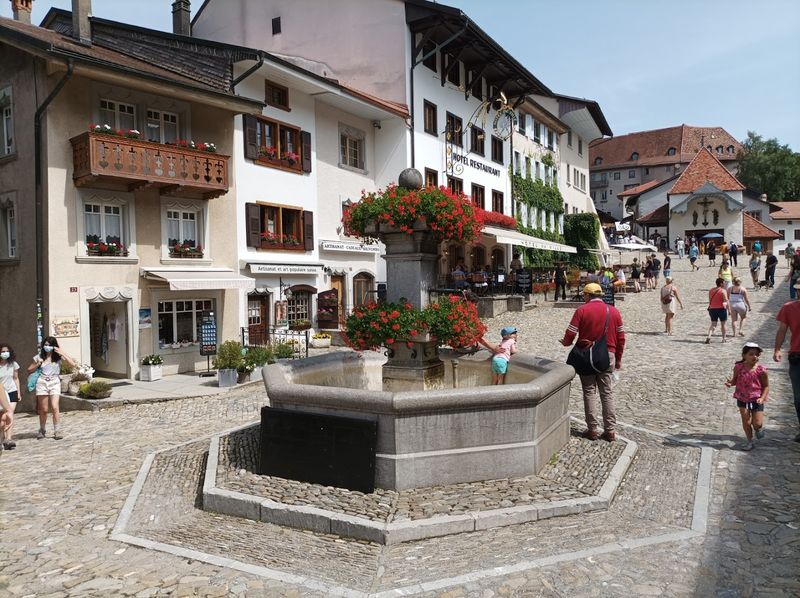
Yes, the cheese is real and yes, it is extraordinary, but Gruyeres offers far more than a reason to eat fondue. This Swiss hilltop village looks like someone built a medieval film set in the middle of the Alps and then forgot to tell anyone it was fictional.
A single cobblestone street climbs from the village entrance straight up to a 13th-century castle, flanked on both sides by beautifully preserved stone buildings.
The castle is open to visitors and offers sweeping views over the green valley below, along with exhibits on the history of the region. The village itself is car-free, which adds to the sense of stepping into another era.
Gruyeres is also home to the H.R. Giger Museum, dedicated to the Swiss artist who designed the creature in the Alien films, which is an unexpectedly surreal addition to such a picturesque setting.
The La Maison du Gruyere cheese factory at the base of the hill offers tours showing exactly how the famous cheese is made, complete with tastings. Combining a cheese tour with a castle visit and a long lunch in the village makes for a near-perfect Swiss afternoon.
Arriving on foot from the train station below adds a gentle uphill walk through meadows that sets the mood beautifully.
Dinan, France
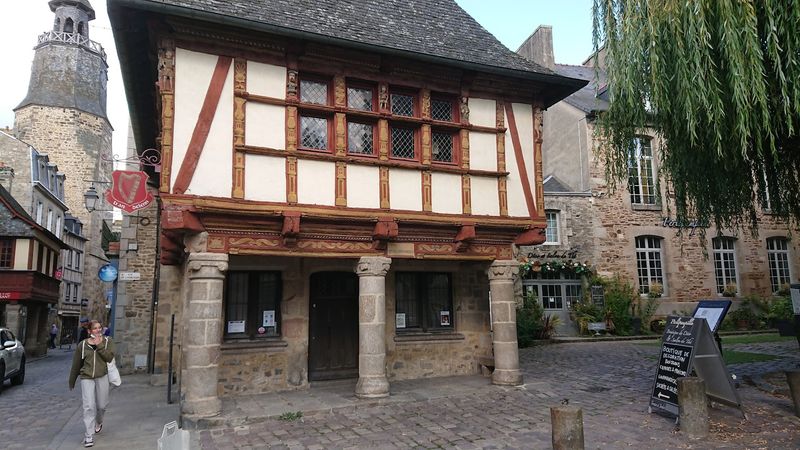
Dinan has been standing on its rocky promontory above the Rance River since the 10th century, and it has developed a very healthy attitude about not changing too much. This Breton town in northern France is one of the best-preserved medieval settlements in the country, with ramparts, towers, and half-timbered houses that look ready for a jousting tournament at any moment.
The whole town has an atmosphere of stubborn, magnificent permanence.
The old town climbs steeply from the river port, where a cluster of restaurants and bars occupy medieval buildings right at the water’s edge. The Rue du Jerzual, a cobblestone street descending sharply to the port, is lined with artisan workshops and galleries that have occupied the same ancient buildings for generations.
The keep of Dinan Castle houses a local history museum with exhibits stretching back to the town’s earliest days.
Breton cuisine is a major draw here, with crepe restaurants, cider houses, and seafood spots filling the old town lanes. The Wednesday and Thursday markets in Place du Guesclin are lively, colorful affairs that draw locals from surrounding villages.
Walking the full circuit of the medieval ramparts takes about an hour and rewards walkers with views over the river valley and surrounding countryside.
Civita di Bagnoregio, Italy
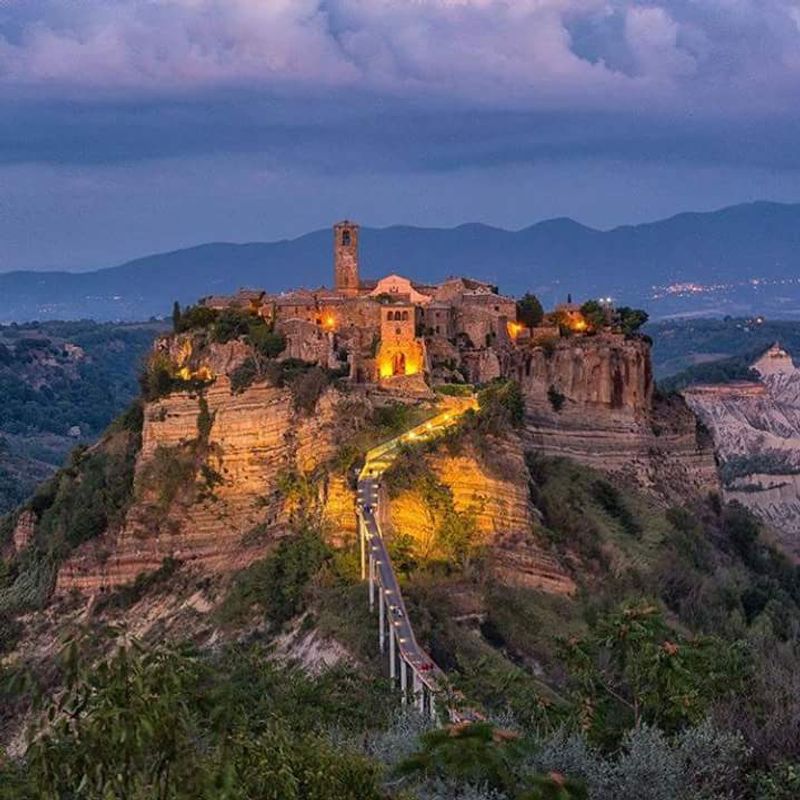
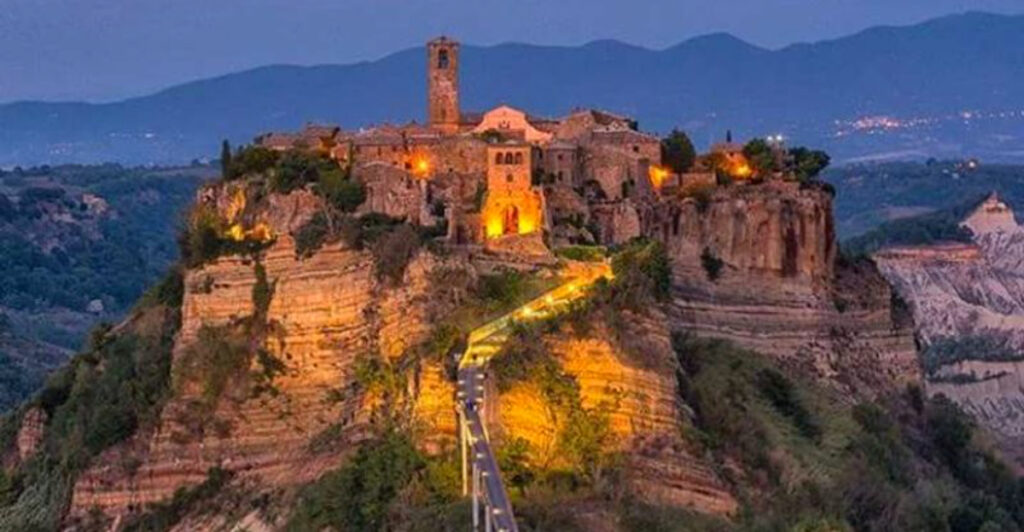
Civita di Bagnoregio is slowly disappearing. The soft volcanic tufa rock it sits on erodes a little more each year, and the village that was once a thriving Etruscan settlement now has fewer than 10 permanent residents.
That impermanence only adds to its haunting, extraordinary beauty. Reached by a single narrow pedestrian bridge stretching across a chasm above a valley of eroded clay gullies, it feels genuinely like the end of the world.
The village itself is a single main square with a Romanesque church, a handful of stone houses, and a few restaurants serving simple, excellent food. Cats outnumber people most days, and the silence is remarkable given how close it sits to the busy Italian tourist trail.
Civita has been called the dying city, a nickname that is both sad and strangely fitting.
Visiting at sunrise or sunset, when the golden light hits the tufa cliffs and the valley below glows amber, is an experience that photographers describe as one of the best in Italy. The entry fee to cross the bridge is modest and well worth paying.
Staying in nearby Bagnoregio town and walking across for the day is the most practical arrangement for most visitors.
Mittenwald, Germany
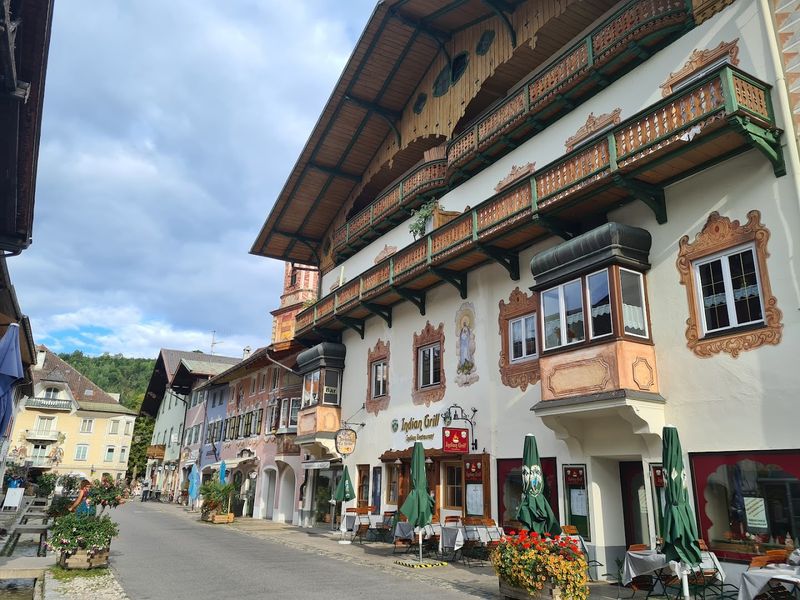
Mittenwald’s buildings are painted with elaborate murals called Lueftlmalerei, a Bavarian tradition of decorating house facades with religious scenes, floral patterns, and trompe-l’oeil architectural details that make flat walls look three-dimensional. Walking through this Bavarian village near the Austrian border feels like strolling through an open-air gallery where the art happens to also be load-bearing.
The Karwendel mountain range looming directly behind the town adds a dramatic backdrop that no painter could improve upon.
The town has been famous since the 17th century for its violin and stringed instrument makers, a tradition started by Matthias Klotz, whose statue stands in the central square. The local Geigenbaumuseum, or violin-making museum, is an unexpectedly fascinating stop that tells the story of this unique craft.
Several master luthiers still operate workshops in the town today, continuing a tradition that is over 350 years old.
The cable car up to the Karwendel summit offers panoramic views across Bavaria and into Austria that are worth the ticket price many times over. The Christmas market here is smaller and less crowded than those in nearby Munich or Garmisch-Partenkirchen, which makes it all the more enjoyable.
Mittenwald is also an excellent base for hiking and skiing, giving visitors plenty of reasons to stay more than a day.
Oia, Greece
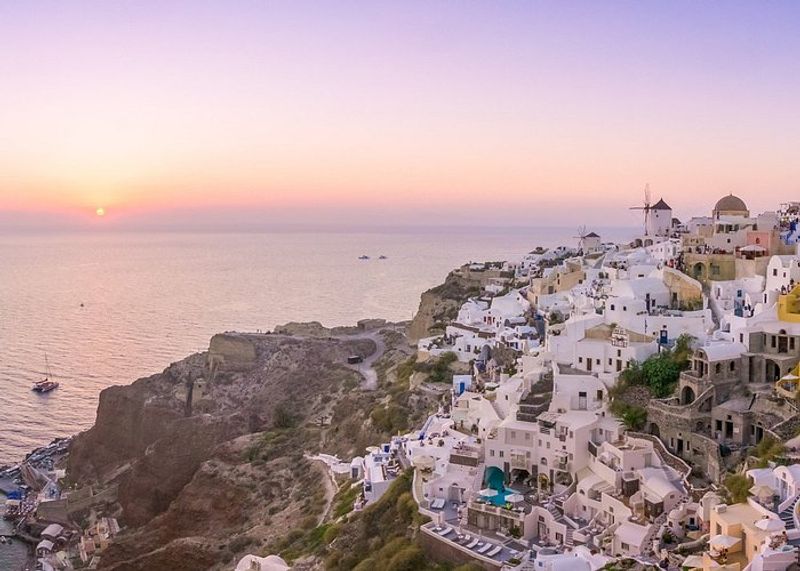
Every evening in Oia, something remarkable happens. Hundreds of people gather along the caldera edge, phones raised, waiting for the sun to sink into the Aegean Sea in a blaze of orange and pink.
The sunset here is so famous that it has developed its own kind of celebrity, and watching it from the cliffside pathways of this Santorini village is one of those experiences that travel writers have been struggling to describe adequately for decades.
Whitewashed cubic houses spill down the volcanic cliffs in cascading terraces, punctuated by the blue-domed churches that have become the defining image of Greece. The narrow lanes between the buildings are barely wide enough for two people to pass, and the views from almost every corner are staggering.
Oia was largely destroyed by an earthquake in 1956 and rebuilt in the distinctive style that now defines it.
Upscale restaurants, boutique hotels carved into the cliffside, and art galleries fill the village with a refined atmosphere that feels a world away from the busier parts of Santorini. Arriving in the off-season, particularly late October or early November, means experiencing the beauty with a fraction of the summer crowds.
The volcanic black sand beaches accessible by steps from the village are an additional, excellent reason to visit.
Eze, France
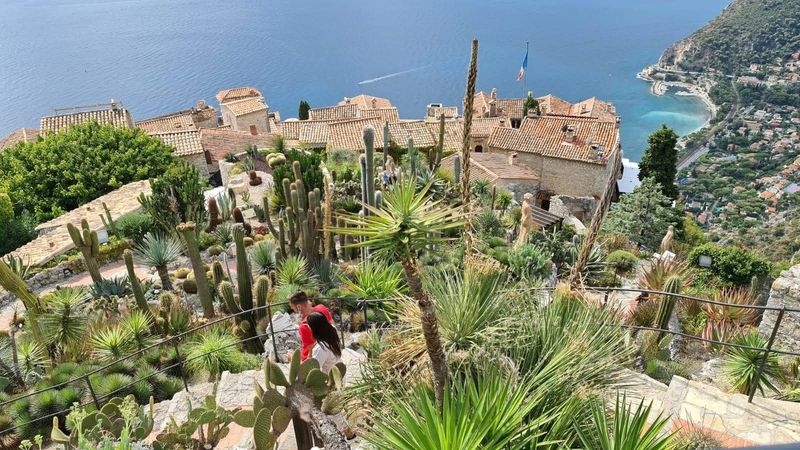
Eze sits 427 meters above the Mediterranean on a rocky peak that the ancient Ligurians apparently looked at and thought, yes, this is where we should build a village. The result, thousands of years later, is one of the most dramatically positioned medieval villages in all of Europe.
From its summit, the view stretches across the turquoise French Riviera coast in both directions, with Monaco visible to the east on a clear day.
The village is a maze of steep stone steps, vaulted passageways, and tiny squares that wind up toward the ruins of a medieval castle at the very top. The Jardin Exotique, an exotic garden built among the castle ruins, is filled with cacti and succulents that somehow thrive on the clifftop, their spiny shapes contrasting beautifully with the blue sea far below.
Perfume house Fragonard has a boutique and factory here, and the scent of jasmine and rose occasionally drifts through the lanes.
Eze village is reached most easily from Nice or Monaco by bus or car, and the road up the cliff is genuinely thrilling. Alternatively, the Nietzsche Path, a hiking trail from the beach below, climbs steeply through olive groves to the village gate.
Arriving on foot, breathless and rewarded, makes the first view of the village feel especially well earned.
Share this story