Most people plan a Spain trip around Barcelona, Madrid, and maybe Seville. Those are all great, but Spain is enormous, and the best surprises are often hiding in places the guidebooks barely mention.
I stumbled onto a few of these spots completely by accident, and they turned out to be the highlights of my entire trip. Here are 15 places worth adding to your Spain list before someone else discovers them first.
Coves de Sant Josep, La Vall d’Uixó, Valencian Community
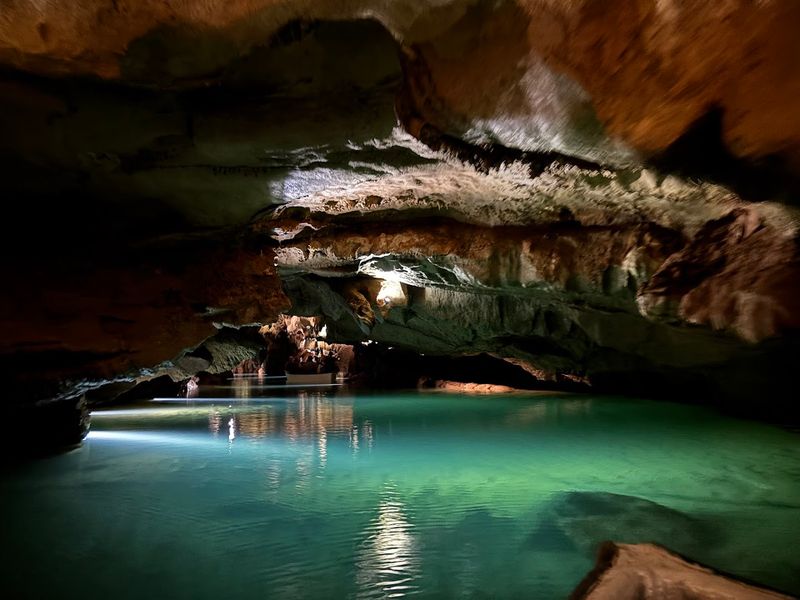
Nobody tells you about the underground river until you are already sitting in a small boat, drifting through a mountain. Coves de Sant Josep in La Vall d’Uixo holds the longest navigable underground river in Europe, and the silence inside is genuinely wild.
The cave walls glow faintly under the lights, and the water is so still it looks like glass.
The guided boat tour takes you deep into the cave system without requiring any special gear or fitness level. It is completely accessible and works well for families, solo travelers, or couples looking for something memorable.
The temperature inside stays cool year-round, which is actually a bonus during a hot Spanish summer.
Getting here is easy from Valencia, roughly an hour by car. There is a small visitor center at the entrance with basic facilities.
Skip the souvenir shop and just enjoy the weird, wonderful quiet of being underground in Spain.
Las Médulas, Carucedo, Castile and León
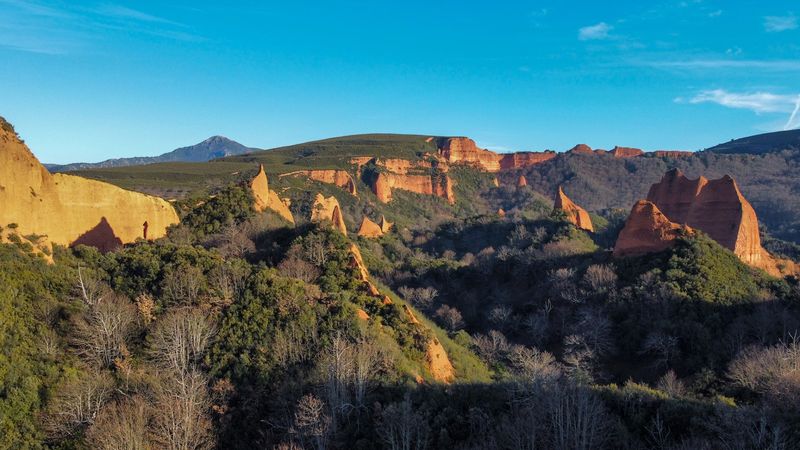
The Romans did not just conquer land. They literally carved it apart looking for gold, and Las Médulas is the proof.
This UNESCO World Heritage Site in Castile and León looks like something from another planet, with massive red cliffs and jagged formations rising out of a green valley. The Romans used a hydraulic mining technique called ruina montium, which basically meant flooding the mountain until it collapsed.
Walking trails wind through the landscape and past old chestnut trees that have been growing here for centuries. The best viewpoint is at Orellán, where a short uphill hike rewards you with a panoramic look at the whole surreal scene.
Go in autumn when the chestnut leaves turn gold, and the whole place looks almost too beautiful to be real.
There is a small interpretation center in the nearby village of Las Médulas. Entry to the site itself is free, which makes this one of Spain’s best value stops.
Bardenas Reales, Tudela and Arguedas, Navarre
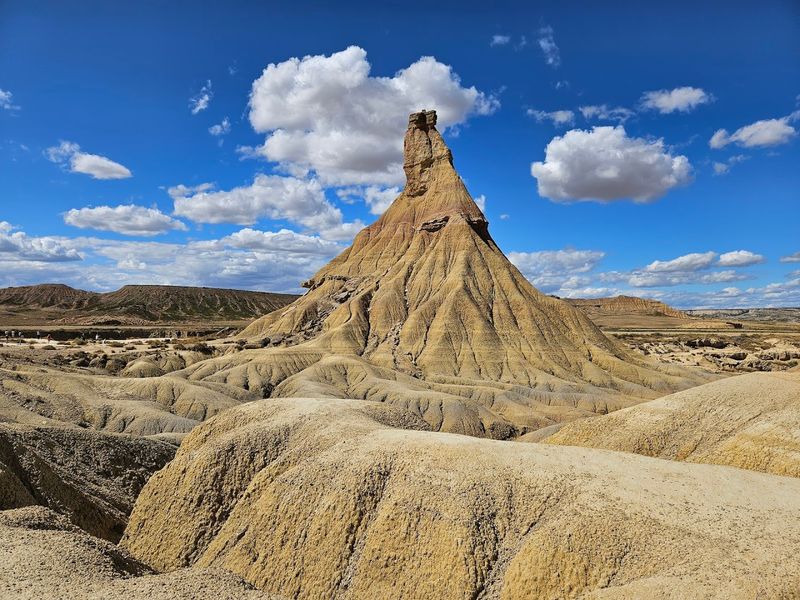
Bardenas Reales looks like a film set, and it literally has been one. Game of Thrones filmed scenes here, and once you see the clay towers and wide empty roads stretching to the horizon, that makes complete sense.
This is a UNESCO-listed biosphere reserve in Navarre, and it is nothing like the Spain most people expect.
The park covers over 42,000 hectares of semi-desert terrain, with marked routes for cars, cyclists, and hikers. The most iconic formation is the Castildetierra, a pointed clay tower that appears on basically every postcard of the park.
Sunrise and sunset visits are especially worth the early alarm or late dinner.
Entry to the park is free and open year-round, though spring and autumn offer the most comfortable temperatures for exploring on foot. Bring water, wear sunscreen, and do not underestimate the heat in summer.
The nearest towns with accommodation are Tudela and Arguedas, both easy bases for a day trip.
Monasterio de Piedra, Nuévalos, Aragon
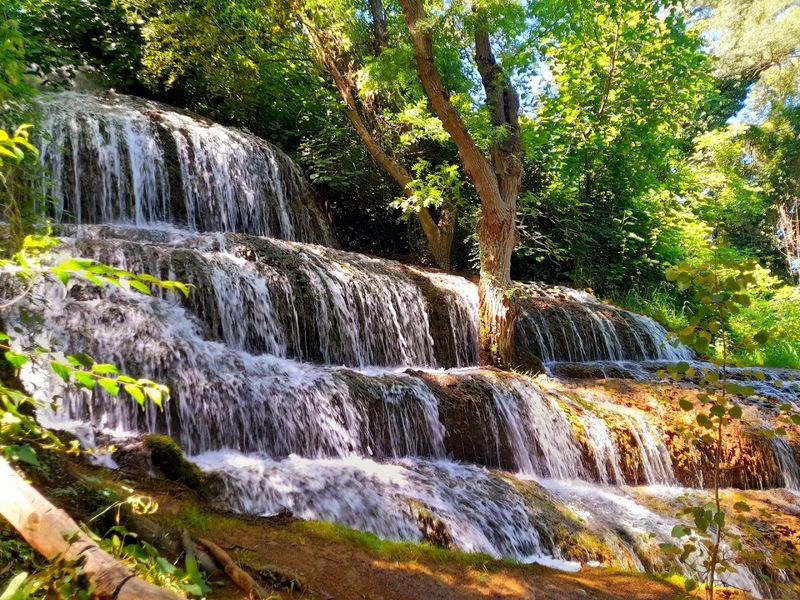
A 12th-century monastery surrounded by waterfalls sounds like something out of a fantasy novel, but Monasterio de Piedra is very much real. Located in the dry interior of Aragon, the garden inside the monastery grounds is shockingly green and cool, fed by the Piedra River.
The contrast with the surrounding landscape hits you the moment you walk through the gate.
The park has a self-guided walking route that winds past several waterfalls, caves, and a lake. The Cola de Caballo waterfall is the showstopper, dropping nearly 53 meters into a pool below.
I spent longer here than planned because every corner seemed to reveal something new.
There is also a hotel inside the monastery if you want to stay overnight and have the gardens almost to yourself in the early morning. Day tickets include the full route and are available online.
Visiting midweek keeps the crowds manageable and the experience much more peaceful.
Parque Minero de Riotinto, Minas de Riotinto, Andalusia
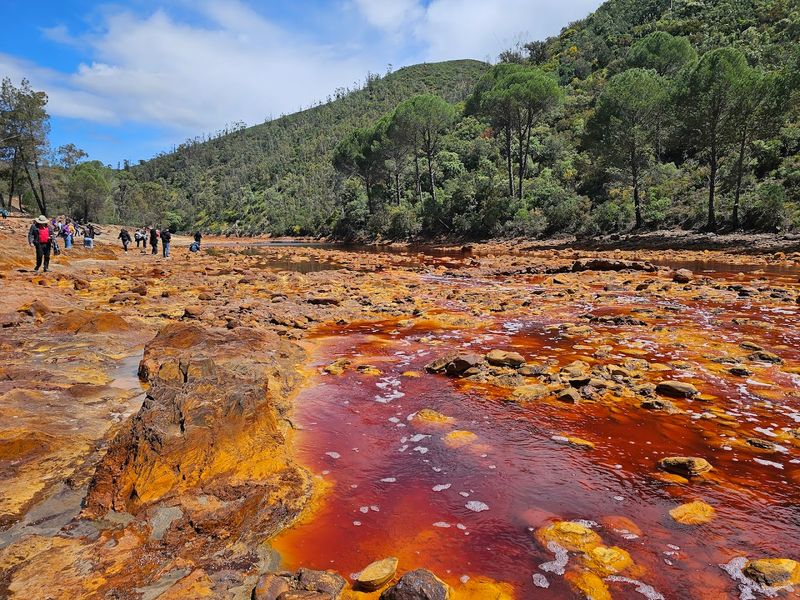
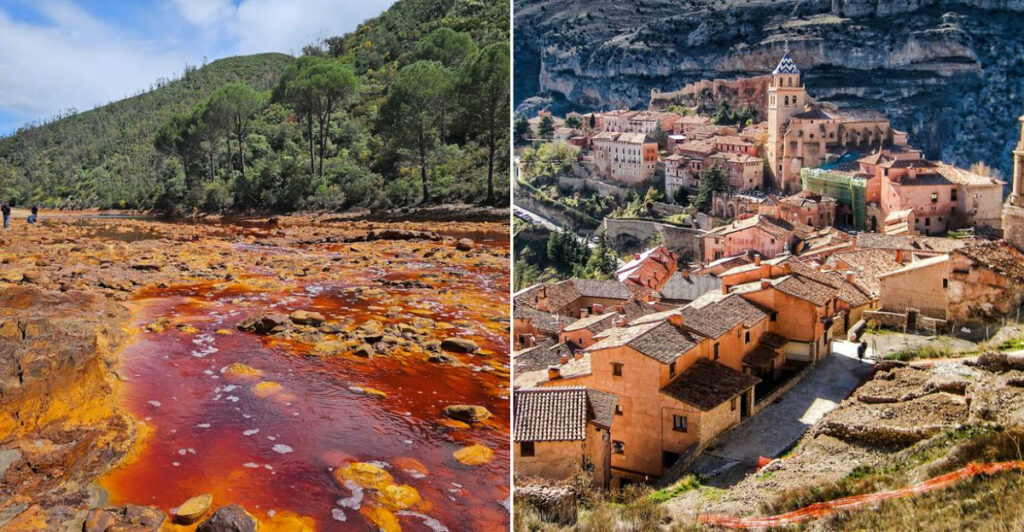
The Rio Tinto river runs the color of rust, and no, that is not a filter. The water gets its deep red hue from iron and sulfur compounds that have been leaching into the river for thousands of years of mining activity.
Scientists have actually studied this place as an analog for Mars. Yes, Mars.
Parque Minero de Riotinto covers the whole mining heritage of the area, from Phoenician and Roman operations right through to 20th-century British-run mines. The museum in the town of Minas de Riotinto is genuinely excellent and includes a reconstructed Victorian house that belonged to the British mining managers.
The old railway route through the mining landscape is a highlight of the visit.
This is not a polished tourist destination, and that is part of what makes it so interesting. The area has real industrial history and a landscape that looks unlike anything else in Andalusia.
Budget a full day and wear comfortable shoes for the outdoor sections.
Palacio Real de Olite, Olite, Navarre
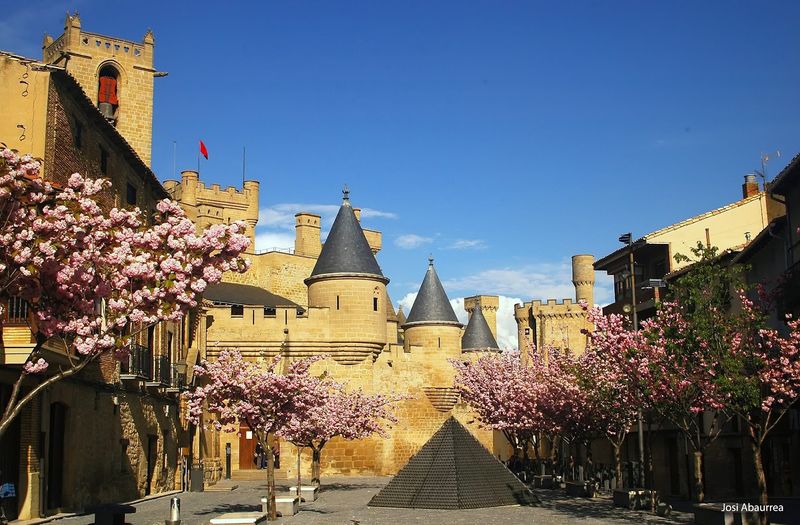
Olite’s royal palace looks like someone took a medieval fantasy and built it in stone. The towers are tall, the walls are thick, and the whole complex sits right in the middle of a small Navarrese town surrounded by vineyards.
It was built in the 15th century for the kings of Navarre and was once considered one of the most lavish royal residences in all of Europe.
The palace had exotic animals in its gardens, including lions, camels, and a giraffe. That detail alone makes it worth visiting.
Today, part of the complex is a parador, which means you can actually sleep inside a medieval castle without sacrificing a comfortable bed.
The town of Olite is also worth exploring on foot, with its old walls, wine shops, and quiet plazas. The area is part of Navarre’s wine route, so a glass of local red after the tour is basically mandatory.
Entry to the palace museum is affordable and well worth it.
El Capricho de Gaudí, Comillas, Cantabria
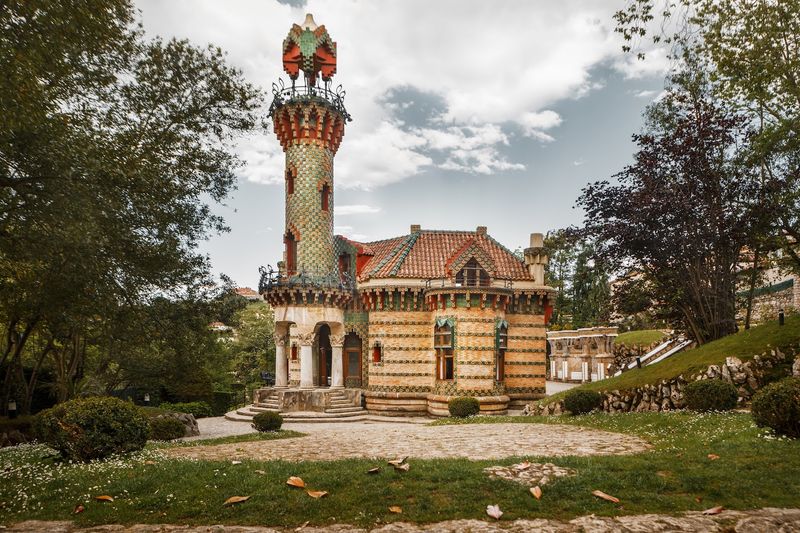
Most Gaudi fans go straight to Barcelona and never leave Catalonia. That means they miss El Capricho, one of his earliest and most playful buildings, sitting quietly in the coastal town of Comillas in Cantabria.
Built between 1883 and 1885, it was designed as a summer villa and is covered in sunflower-patterned tiles that make it look like the most cheerful building in Spain.
The interior is open to visitors and includes exhibits about Gaudi’s design process and the history of the building. The minaret-style tower and the mix of Moorish, Oriental, and organic influences show just how experimental Gaudi was even before his most famous work.
It is compact, which means the whole visit takes about an hour.
Comillas itself is a charming small town with a beach, good seafood, and several other interesting modernist buildings nearby. Combining El Capricho with a walk around town and lunch by the water makes for a very satisfying day in northern Spain.
El Soplao Cave, Celis, Cantabria
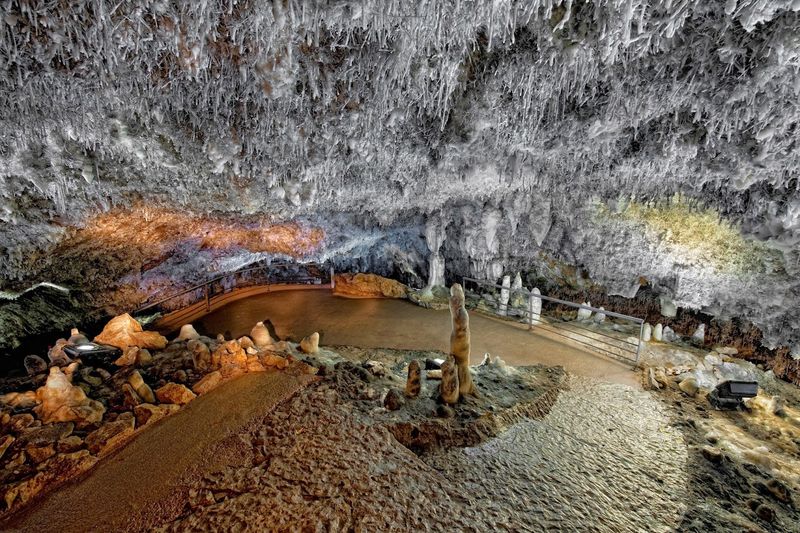
El Soplao has a reputation among geologists as one of the most remarkable caves in the world, and after seeing the helictite formations inside, it is easy to understand why. Helictites are crystals that grow sideways, upward, and in spiraling directions that seem to defy gravity.
The cave looks less like a natural formation and more like an art installation by someone with a very creative brief.
The cave was originally discovered by miners in the early 20th century while they were extracting zinc. They kept it largely secret for decades before it was opened to the public.
There are several tour options available, including a standard walking tour and an adventure tour for those who want to go deeper into the cave system with proper equipment.
Located in the mountains of western Cantabria, El Soplao is about an hour from Santander. Book tickets in advance during summer because availability fills up quickly.
The cave stays at a constant 12 degrees Celsius, so bring a light jacket regardless of the season.
Cíes Islands, Vigo, Galicia
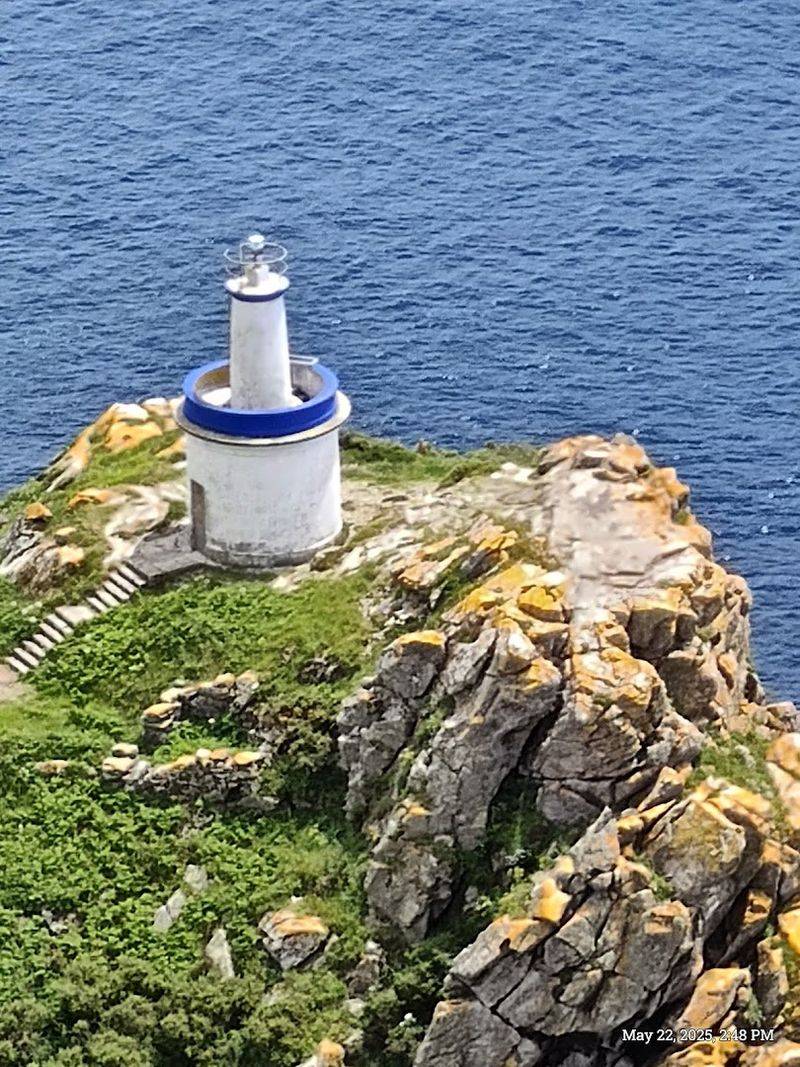
The Guardian newspaper once called Rodas Beach on the Cíes Islands the best beach in the world. That is a bold claim, but standing on that white sand with impossibly clear water in front of you, it is hard to argue.
The islands sit at the mouth of the Ria de Vigo and are part of the Atlantic Islands of Galicia National Park.
Access is only possible by ferry from Vigo, Baiona, or Cangas, and visitor numbers are capped during peak season. You need to apply for authorization online before visiting in summer, which keeps the islands from being overrun.
That small bureaucratic hurdle is actually what makes the experience so special.
Hiking trails cross the islands with views of both the Atlantic and the rias. There is a campsite for those who want to stay overnight and watch the sunset and sunrise from the island.
Ferries run from spring through early autumn, with the most frequent service in July and August.
Caminito del Rey, Ardales and Álora, Andalusia
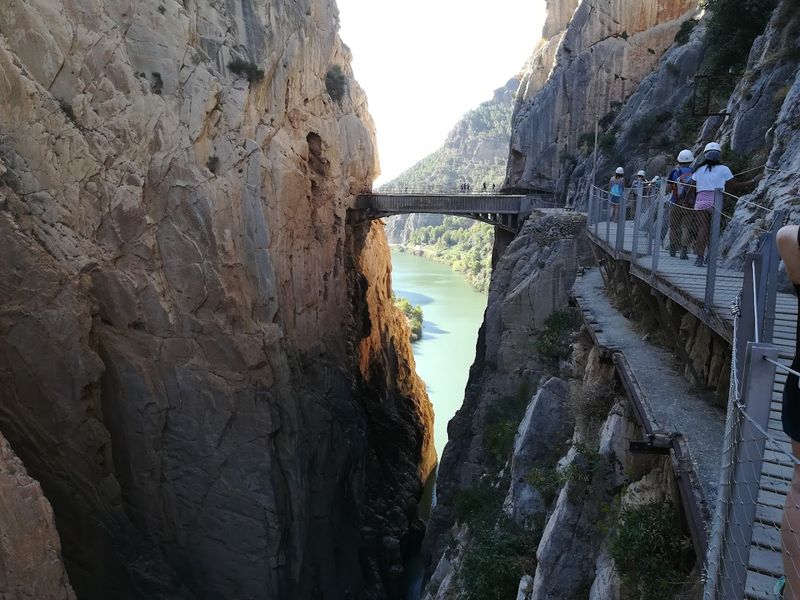
Built for workers maintaining a hydroelectric canal in the early 1900s, Caminito del Rey was once considered one of the most dangerous paths in the world. After a major restoration completed in 2015, it reopened as a fully safe and spectacular hiking route through the Gaitanes Gorge.
The path clings to the cliff face at heights of up to 100 meters above the river below.
The route is about 7.7 kilometers long and takes roughly three to four hours to complete at a comfortable pace. Tickets are timed and must be booked in advance through the official website.
Groups enter at set intervals to prevent overcrowding on the narrow sections of the walkway.
The scenery is genuinely dramatic, with sheer rock walls, a turquoise reservoir, and views that keep changing as you move through the gorge. Wear proper footwear and do not bring a large backpack as the path has tight sections.
This one is absolutely worth the advance planning.
Casa Lis, Salamanca, Castile and León
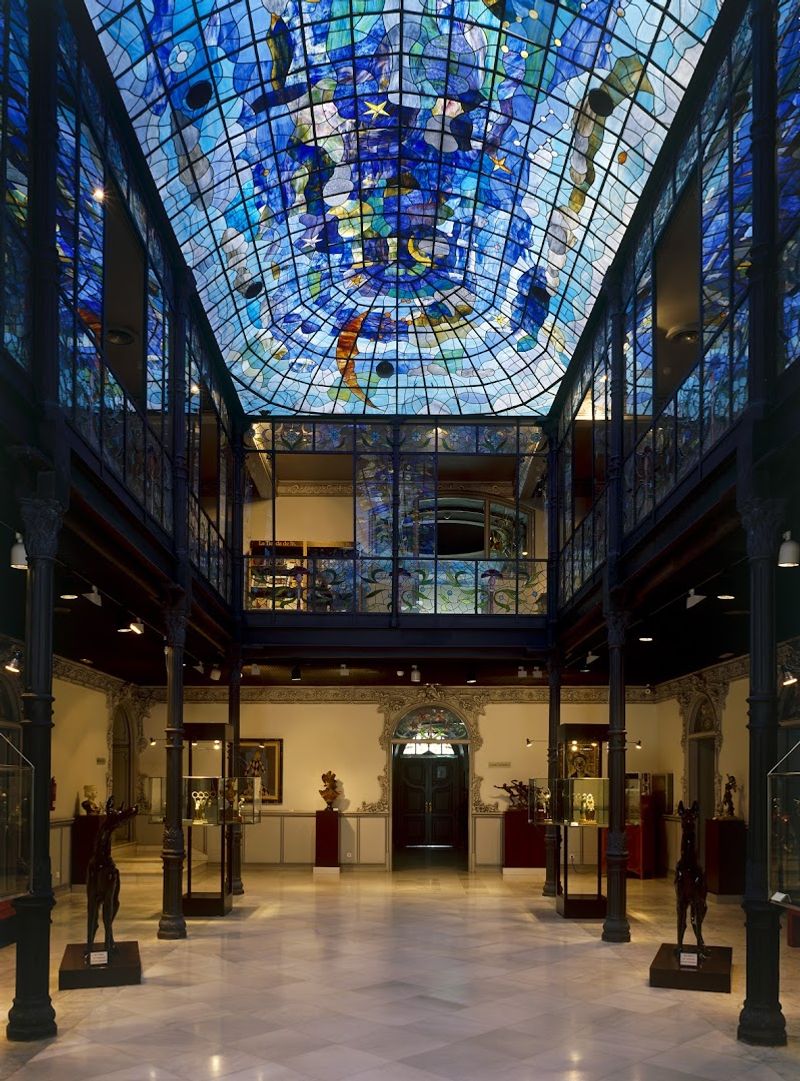
Salamanca is famous for its golden sandstone university buildings, but tucked near the Roman bridge is a building that plays by completely different rules. Casa Lis is an Art Nouveau and Art Deco museum housed in a stunning early 20th-century mansion, and the stained glass on the facade is one of the most visually striking things in the entire city.
Inside, the collection includes over 8,000 pieces covering decorative arts from the late 19th and early 20th centuries. Think porcelain figurines, bronze sculptures, glass lamps, and ornate furniture.
The building itself is as much the attraction as anything on display, especially when afternoon light pours through the colored glass panels.
Entry is affordable and the museum is rarely as crowded as Salamanca’s main cathedral or university. It makes a brilliant addition to a half-day in the city, especially for anyone who appreciates design history.
The small gift shop sells quality prints and reproductions if you want a souvenir with actual taste.
Albarracín, Teruel, Aragon
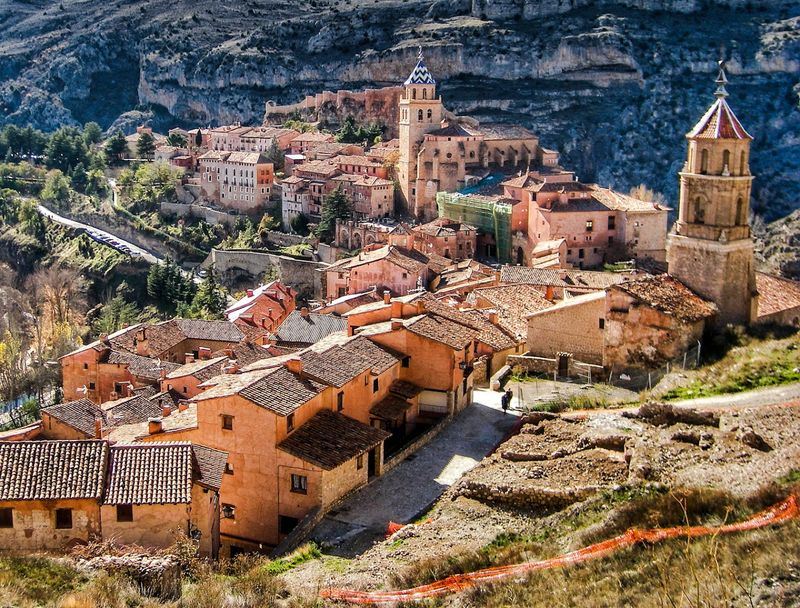
Albarracin has walls that glow pink in the afternoon sun, and the whole town looks like it has barely changed since the Middle Ages. That is not an exaggeration.
The medieval street plan is almost completely intact, with lanes so narrow that two people walking side by side have to negotiate the corners. It sits on a rocky outcrop in Teruel province, surrounded by a river on three sides.
The town was an independent Moorish taifa kingdom in the 11th century, which explains the distinctive Arabic-influenced street layout. The old city walls stretch up the hillside behind the town and are free to walk.
Views from the top take in the whole valley and the dramatic limestone cliffs that frame the scene.
Albarracin has a small selection of good restaurants and rural hotels, making it a viable overnight stop rather than just a day trip. It pairs well with the nearby Jurassic dinosaur tracks and rock art sites in the surrounding sierra.
Fewer than 1,000 people actually live here, which gives the whole place a genuinely quiet, unhurried atmosphere.
Setenil de las Bodegas, Cádiz, Andalusia
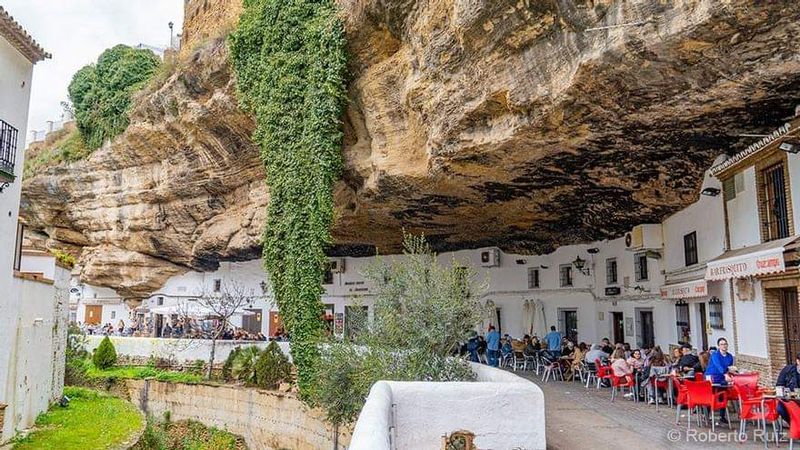
At some point in history, someone in Setenil looked at a massive overhanging rock and thought, great spot for a house. Then their neighbors agreed.
And their neighbors’ neighbors. The result is a white village where entire streets run directly under enormous rock ledges, with buildings using the cliff itself as a ceiling or back wall.
It is completely surreal and completely inhabited.
Unlike some Spanish villages that feel preserved purely for tourism, Setenil is a real working town with about 3,000 residents. The bars under the rocks serve proper food, the bakeries are excellent, and locals genuinely use the cave-street as their daily route.
That ordinariness is what makes it so charming.
The best streets to explore are Calle Cuevas del Sol and Calle Cuevas de la Sombra, which translate roughly to sun caves and shadow caves. Setenil sits about 20 kilometers from Ronda, making it an easy addition to any White Villages route through Cadiz province.
Go on a weekday to avoid the weekend crowds.
Alcalá del Júcar, Albacete, Castile-La Mancha
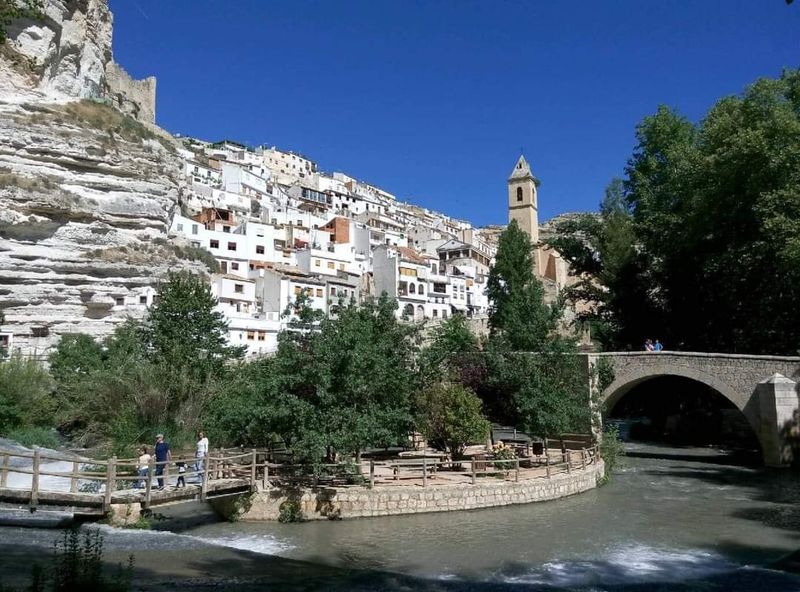
Alcala del Jucar is the kind of place that makes you pull the car over and just stare for a minute. The village stacks up a narrow rocky spur above a tight river canyon, with white houses clinging to the cliff face and a castle crowning the whole thing at the top.
From the opposite bank of the Jucar river, the view is almost comically dramatic.
What makes this place especially unusual is that some of the houses have tunnels carved directly through the rock, connecting front doors on one side of the spur to terraces overlooking the canyon on the other. A few of these cave homes have been converted into bars, where you can sit inside the mountain and look out over the gorge.
That is a sentence I never expected to type.
Albacete province is not a typical tourist destination, which means Alcala del Jucar stays refreshingly low-key even in summer. The village has a handful of restaurants and small hotels.
It works well as a stop between Valencia and the Castilian interior.
Nacimiento del Río Mundo, Riópar, Castile-La Mancha
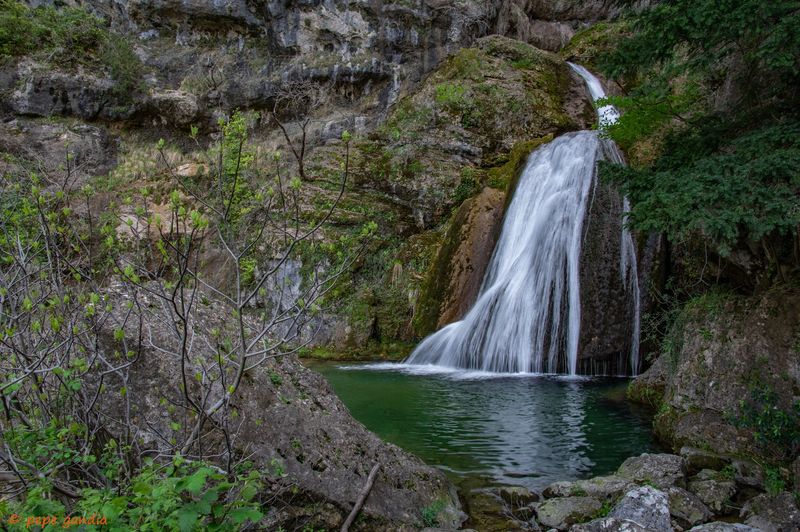
A river being born is not something you expect to watch, but at Nacimiento del Rio Mundo, that is exactly what happens. The Mundo River emerges from a cave mouth high on a limestone cliff, drops as a waterfall, and begins its journey south.
On a normal day it is beautiful. After heavy rain, it transforms into the Reventon, when water pressure forces a spectacular burst from the cave that locals have been watching in awe for generations.
The walk to the spring starts near the village of Riopar and passes through forest in the Sierra de Alcaraz. The trail is well-marked and takes about 45 minutes each way at an easy pace.
There are picnic spots along the route, and the surrounding sierra has additional hiking trails for those who want to extend the day.
This corner of Castile-La Mancha is seriously undervisited, which means the paths stay quiet even in summer. The nearest town with accommodation is Riopar Viejo, a small village with a couple of rural guesthouses.
It is a proper off-the-beaten-path stop that rewards the effort completely.
Share this story