Most people planning a European trip think of Paris, Rome, or maybe Prague. But there is one capital city that keeps stopping travelers in their tracks, and it rarely gets the spotlight it deserves.
Tucked between Belgium, France, and Germany, Luxembourg City is a place where medieval towers rise above deep green river gorges, and cobblestone squares lead to world-class museums. I visited expecting a quiet stopover and ended up staying far longer than planned, completely hooked by a city that manages to feel both ancient and quietly sophisticated at the same time.
A City Built on Rock and History
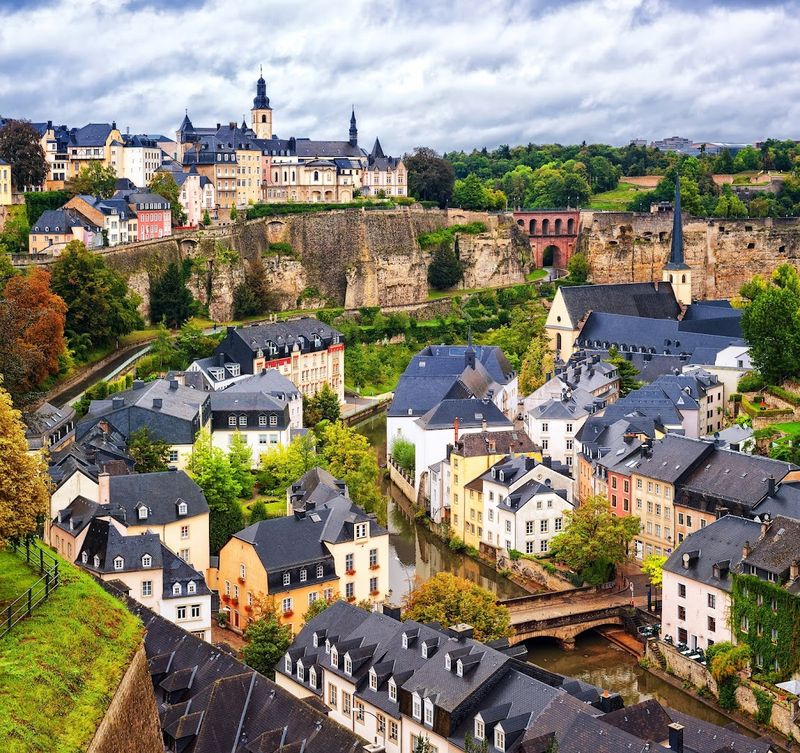
Luxembourg City sits at coordinates 49.6123 N, 6.1258 E, and its official address is simply Luxembourg, Luxembourg. The city is the capital of the Grand Duchy of Luxembourg, one of the smallest yet wealthiest countries in the world.
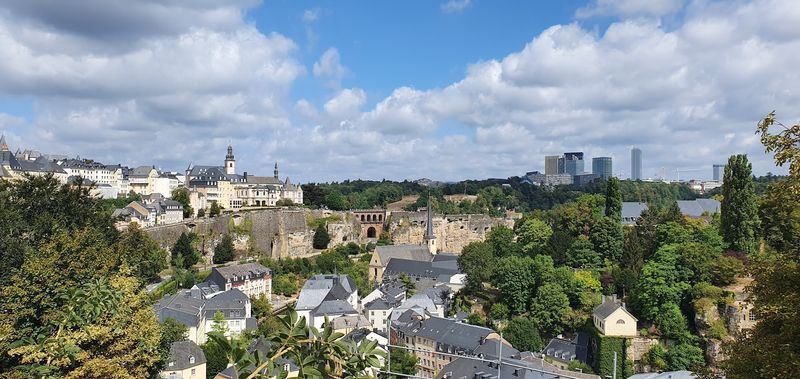
What struck me immediately was how the city is literally built on rock. The old town perches on a sandstone plateau, while the lower quarters nestle in the valleys carved by the Alzette and Petrusse rivers far below.
That dramatic elevation difference gives Luxembourg City a visual personality unlike any other European capital. You can stand on a cliff-edge promenade and look straight down at red-roofed houses sitting 70 meters below you.
The city has been a UNESCO World Heritage Site since 1994, recognized specifically for its fortifications and old quarters. That designation alone tells you something important about what makes this place extraordinary.
The Bock Casemates: An Underground World Beneath Your Feet
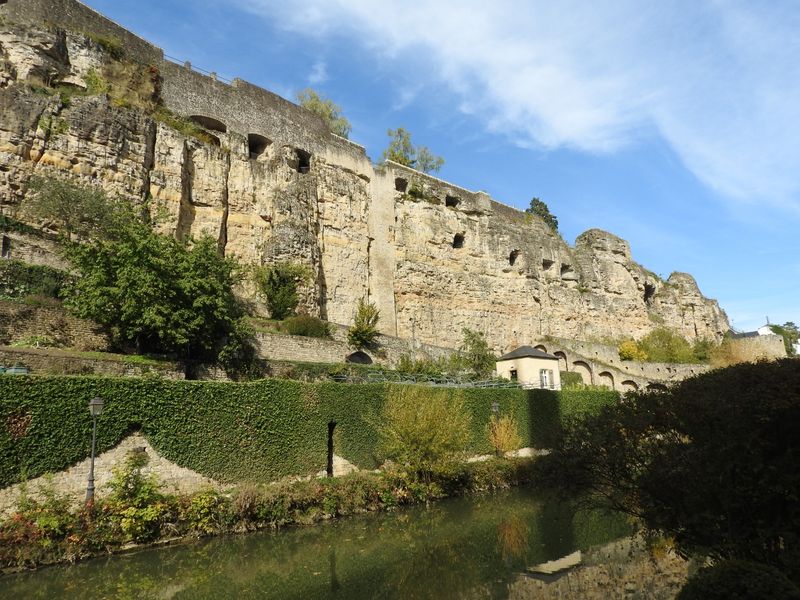
Beneath the streets of the old town lies one of Europe’s most fascinating underground networks. The Bock Casemates are a system of tunnels and galleries carved directly into the sandstone cliff, stretching for roughly 17 kilometers in total.
Only about a kilometer of those passages is open to the public, but that stretch alone took me nearly an hour to explore. The tunnels twist, narrow, and open into chambers with cut-stone windows overlooking the valley far below.
Originally built in the 10th century and expanded over hundreds of years, these casemates once sheltered thousands of soldiers, horses, and even slaughterhouses during sieges. Today, they are one of Luxembourg’s most visited attractions, and for good reason.
The rock stays cool year-round, so bring a light jacket even in summer. The views from the cliff openings are genuinely breathtaking and worth every step of the descent.
The Grand Ducal Palace Right in the Middle of It All
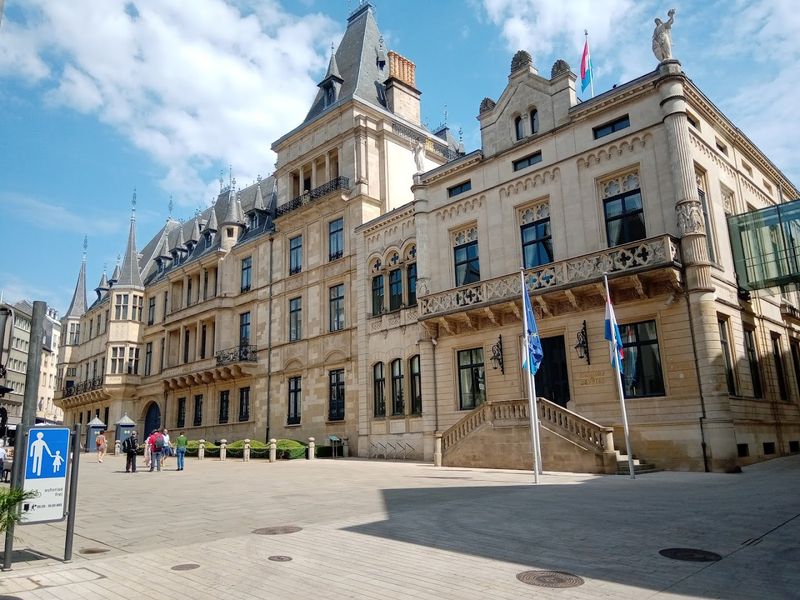
Right in the heart of the old town, the Grand Ducal Palace sits so casually among the surrounding streets that you almost walk past it before realizing what you are looking at. This is the official residence of the Grand Duke of Luxembourg, and it has been at the center of the country’s political and royal life for centuries.
The building dates back to 1572 and was originally the city hall before becoming a royal residence. Its facade blends Spanish Renaissance and Flemish Gothic details in a way that feels both grand and surprisingly approachable.
During summer, guided tours take visitors inside to see the state rooms, which are filled with Flemish tapestries, gilded ceilings, and portraits of the ruling family. I joined one of those tours and came out genuinely impressed by the level of craftsmanship on display.
The changing of the guard outside happens regularly and is a quietly dignified spectacle worth timing your visit around.
The Corniche: Europe’s Most Beautiful Balcony
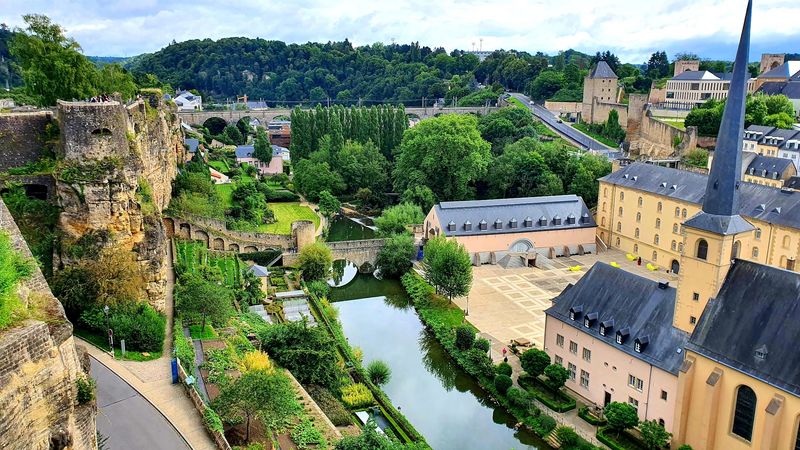
There is a pedestrian promenade in Luxembourg City that locals call the Balcony of Europe, and after walking it myself, I completely understand why. The Corniche runs along the southern edge of the old town, following the top of the cliff above the Grund quarter and the Alzette River valley below.
The views from this path are extraordinary. On one side, you have the medieval fortification walls and towers of the old city.
On the other side, a sheer drop down to the valley floor, where church spires and pastel-colored houses sit tucked among dense green trees.
The walk itself takes about 20 minutes end to end, but I kept stopping every few steps to take in a new angle. At golden hour, the light turns the sandstone walls amber and the whole scene looks almost unreal.
No entrance fee, no crowds pushing you along. Just one of the most genuinely beautiful urban walks I have ever taken.
The Grund Quarter: The City’s Most Charming Neighborhood
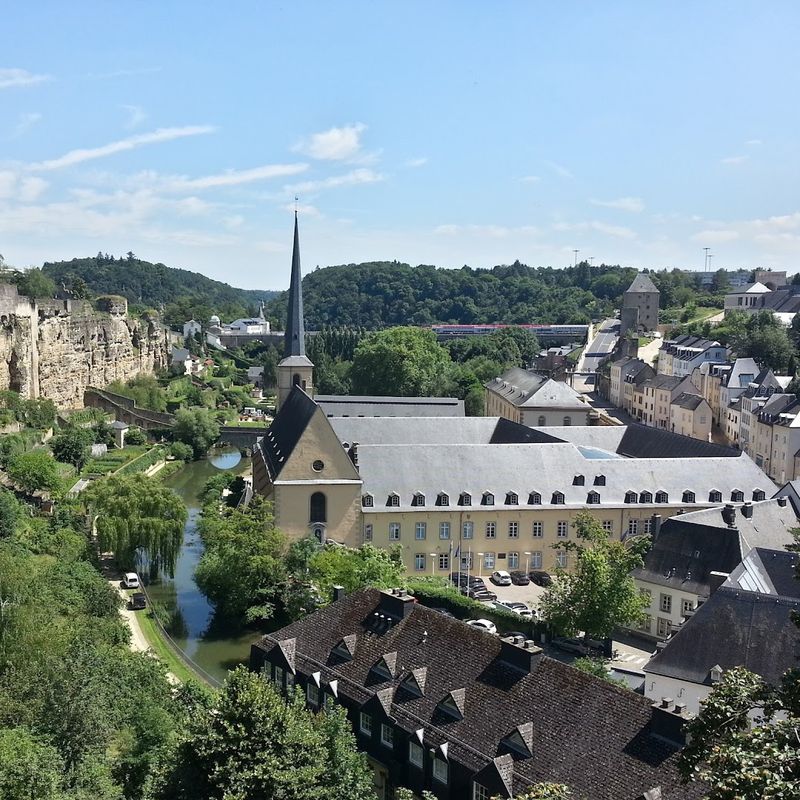
Down in the valley below the old town cliffs sits the Grund, Luxembourg City’s most picturesque neighborhood. Getting there requires either a steep walk down a winding path or a ride in the city’s historic elevator, the Pfaffenthal lift, which connects the lower town to the upper plateau.
Once you reach street level in the Grund, the atmosphere changes completely. The streets are narrow and quiet, lined with low stone buildings that back directly onto the Alzette River.
It feels like a village that got swallowed by a capital city and is perfectly happy about it.
The neighborhood is home to the Abbey of Neumunster, a beautifully restored former monastery that now serves as a cultural center hosting concerts, exhibitions, and community events throughout the year.
I spent a whole afternoon just wandering the riverside paths, watching herons stand motionless in the shallows and listening to the water move past centuries-old stone walls.
Notre-Dame Cathedral: Quiet Grandeur in the City Center
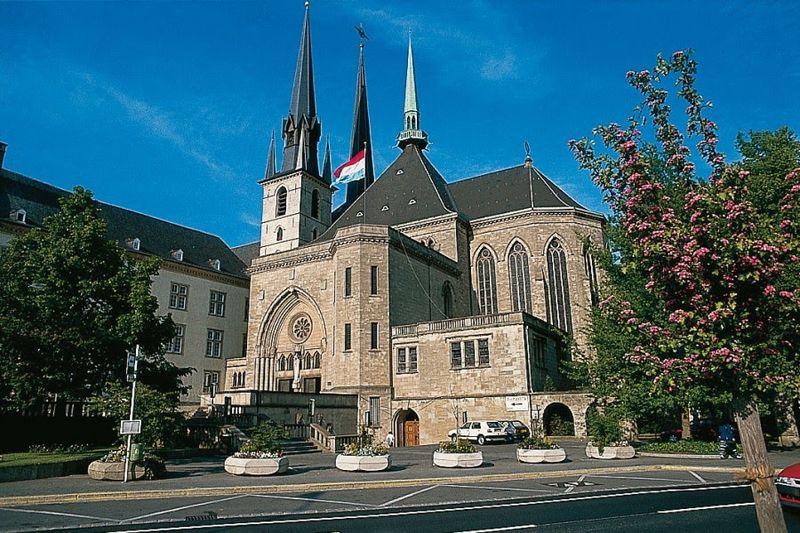
Luxembourg City’s Notre-Dame Cathedral is not as famous as its Parisian counterpart, but it carries its own quiet power. Built between 1613 and 1621, it represents one of the earliest examples of Renaissance architecture in the region, though its three distinctive spires give it a Gothic verticality that dominates the surrounding skyline.
The interior is cool, dark, and deeply peaceful. Stained glass windows cast colored light across the stone floors, and the carved wooden choir stalls are some of the finest I have seen in any European church.
The cathedral also holds the tomb of John the Blind, King of Bohemia and Count of Luxembourg, who ruled in the 14th century and became one of the country’s most celebrated historical figures. His motto, “I serve,” was later adopted by the Prince of Wales and remains in use today.
The cathedral is free to enter and open most days, making it an easy and rewarding stop on any walking tour of the old town.
The MUDAM: World-Class Modern Art in a Historic Shell
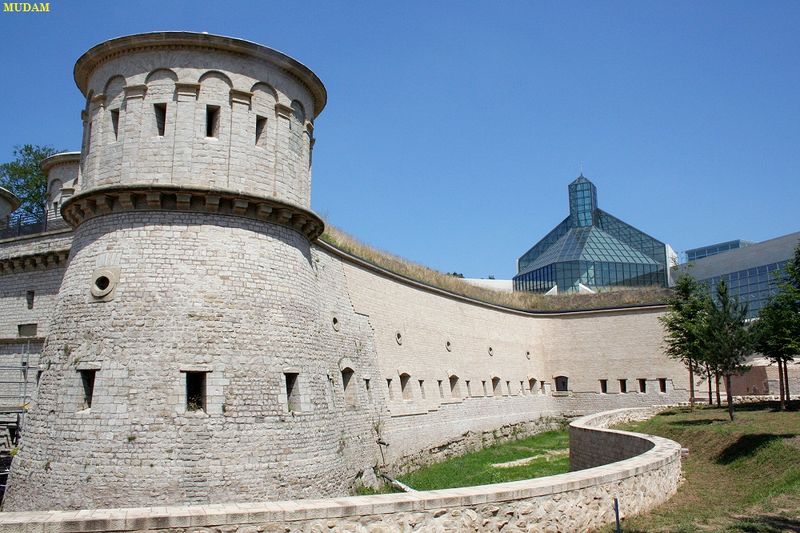
One of the most architecturally striking buildings in Luxembourg City is the MUDAM, the Grand Duke Jean Museum of Modern Art. Designed by the legendary architect I.M.
Pei, the same mind behind the glass pyramid at the Louvre, the building is a masterpiece of integration between old and new.
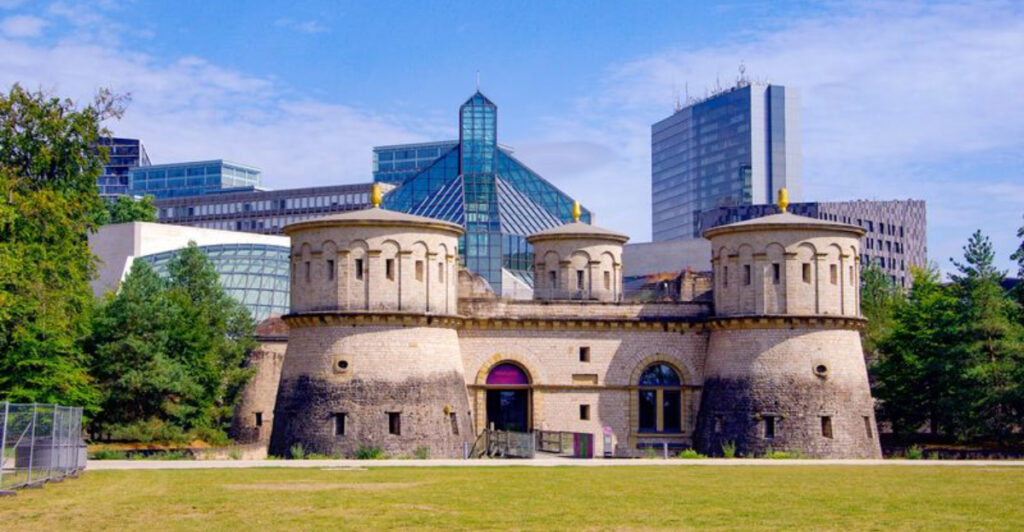
Pei built the museum directly into the ruins of Fort Thungen, a 17th-century fortress on the Kirchberg plateau. The result is a structure where modern glass and steel rise seamlessly from centuries-old stone walls, and the contrast is genuinely thrilling to look at.
Inside, the collection focuses on contemporary art, design, and fashion, with rotating exhibitions that bring in internationally recognized names alongside emerging artists. The permanent collection includes works in painting, sculpture, photography, and applied arts.
Even if modern art is not your usual preference, the building itself is worth the visit. The light inside the main hall, filtered through the glass ceiling, creates an atmosphere that is hard to describe and impossible to forget.
The Kirchberg Plateau: Where Finance Meets Architecture
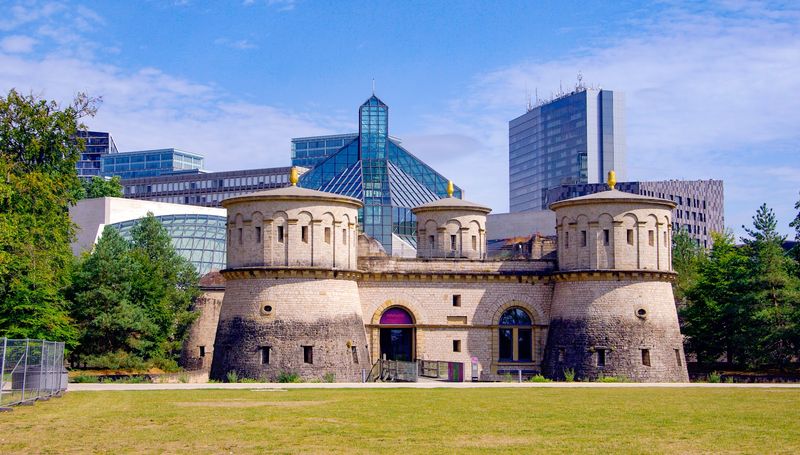
Cross the Red Bridge from the old town and you enter a completely different Luxembourg. The Kirchberg plateau is the city’s modern financial and institutional district, home to the European Court of Justice, the European Investment Bank, and dozens of international financial firms.
The architecture here is bold and deliberate. The European Court of Justice’s golden towers are visible from miles away, and the European Investment Bank’s curved glass facade catches the light in ways that make it look different every hour of the day.
What I found most interesting was how the city manages to hold both worlds simultaneously. You can stand in a medieval square in the morning and eat lunch surrounded by gleaming 21st-century towers in the afternoon, all within a 15-minute walk.
The Kirchberg also has its own cultural draw. The Philharmonie Luxembourg, an elliptical concert hall wrapped in 823 white steel columns, sits here and hosts performances that draw audiences from across Europe.
Place Guillaume II: The Heart of Daily Life
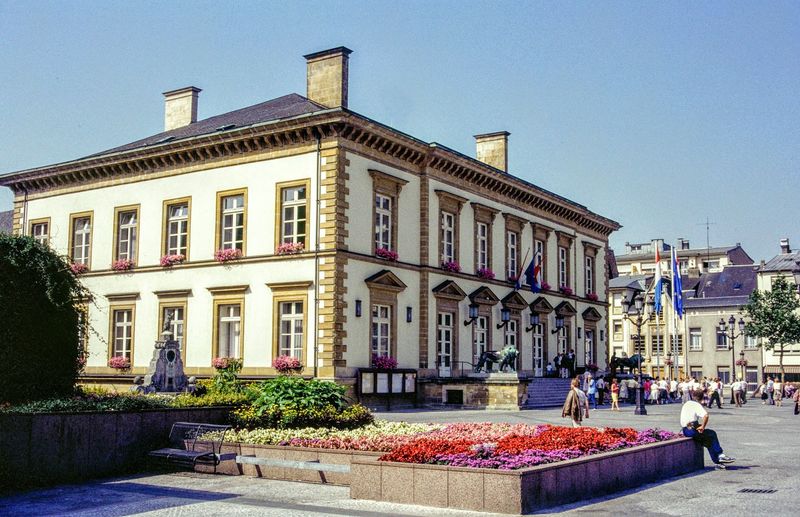
Every great European city has a central square where daily life gathers and pulses, and in Luxembourg City, that place is Place Guillaume II, known locally as Knuedler. The square sits at the crossroads of the pedestrian shopping streets and the historic old town, making it the natural meeting point for locals and visitors alike.
At its center stands an equestrian statue of William II, King of the Netherlands and Grand Duke of Luxembourg, who gave the square its official name. Around the edges, the neoclassical facade of the Hotel de Ville, the city hall, provides a dignified backdrop.
On market days, the square fills with flower vendors, produce stalls, and food trucks, and the whole atmosphere shifts into something festive and communal. I arrived on a Wednesday morning to find it already buzzing with people shopping, meeting friends, and sitting at outdoor cafe tables with coffee.
It is the kind of square that makes you want to slow down and just watch the city live.
The Petrusse Valley: Green Space Inside the City
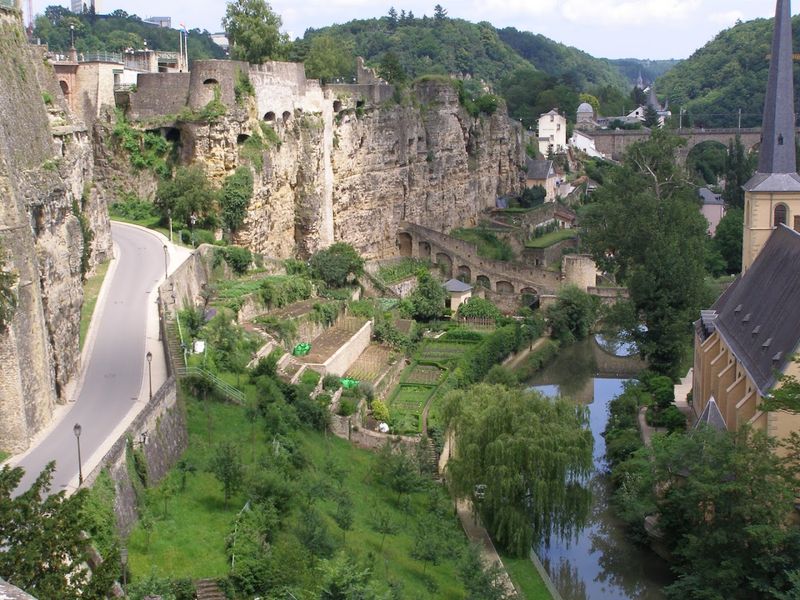
Right below the old town, the Petrusse Valley is one of Luxembourg City’s most unexpected pleasures. The Petrusse River runs through a deep gorge that cuts directly through the urban fabric of the city, and the valley floor has been preserved as a long, narrow park accessible from several points along the cliff above.
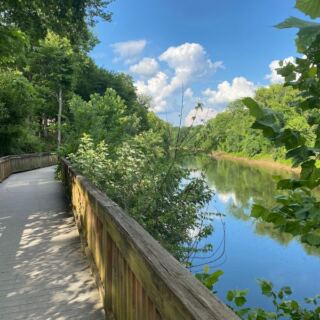
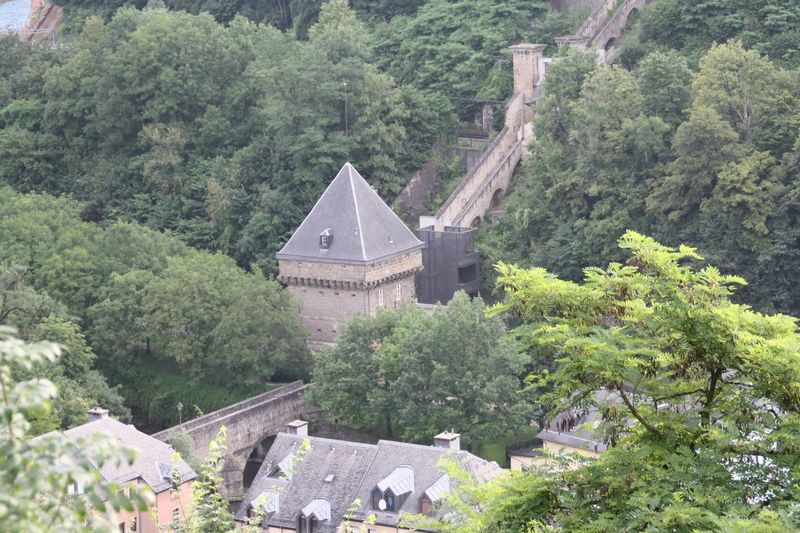
Walking trails wind along the river through dense tree cover, passing under stone bridges and alongside old fortification walls that rise dramatically on both sides. The whole park feels remarkably removed from the city above, even though you are never more than a few minutes from the busy streets.
I came here on a warm afternoon and found families picnicking on the grass, joggers moving along the riverside paths, and a general atmosphere of unhurried contentment. The contrast between the green valley floor and the towering stone walls above creates a visual drama that is uniquely Luxembourg.
Entry is free and the park is open year-round, making it a perfect escape at any time of day.
Luxembourg’s Food Culture: Small Country, Serious Flavors
Luxembourg’s food culture reflects its position at the crossroads of French, German, and Belgian culinary traditions, but it has its own distinct identity that is easy to underestimate until you sit down for a proper meal. The national dish is Judd mat Gaardebounen, smoked pork collar served with broad beans in a rich cream sauce, and it is exactly as satisfying as it sounds.
The old town and the Grund are both packed with restaurants ranging from traditional brasseries to contemporary European kitchens. Prices are higher than in neighboring countries, reflecting Luxembourg’s cost of living, but the quality consistently matches the price point.
Markets are the best places to sample local specialties quickly and cheaply. The Wednesday and Saturday markets at Place Guillaume II feature fresh produce, local cheeses, and prepared foods that give a genuine sense of what people here actually eat.
Finishing a meal with a slice of Quetschentaart, a traditional plum tart, is the kind of small pleasure that stays with you long after you leave.
Getting Around the City: Smaller Than You Think
One of the most practical things to know about Luxembourg City before you arrive is that it is genuinely compact. The historic core, including the old town, the Grund, and the Corniche, is entirely walkable, and most major attractions sit within a 30-minute walk of each other.
For longer distances, Luxembourg offers something remarkable: all public transport within the country, including buses, trams, and trains, has been completely free since 2020. Luxembourg became the first country in the world to make nationwide public transit free, and visitors benefit from this policy just as residents do.
The city’s modern tram line connects the main train station to the Kirchberg plateau and several points in between, running frequently and reliably. Buses fill in the gaps and reach the neighborhoods the tram does not cover.
I never once needed a taxi or a rental car during my stay, which made the whole trip feel easier and more spontaneous than most city breaks I have taken.
The Best Views in the City: Where to Stand and Stare
Luxembourg City rewards people who pay attention to where they stand. The city has several viewpoints that offer genuinely spectacular panoramas, and finding them is one of the great pleasures of exploring on foot.
The Corniche provides the longest sustained view over the Grund and the Alzette valley. The Bock Promontory, at the far eastern end of the old town plateau, gives a 270-degree view that takes in the valley, the lower quarters, and the green hills beyond the city.
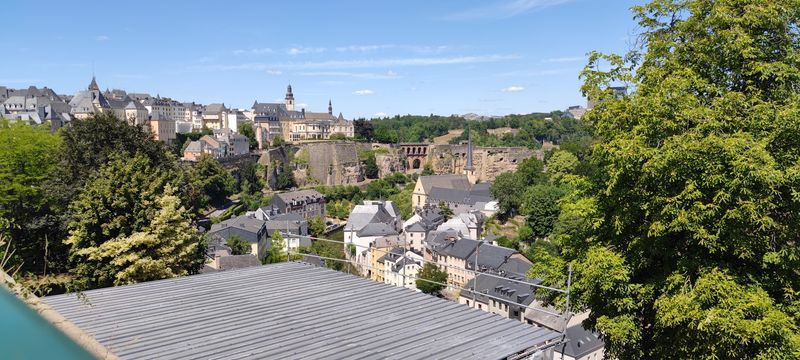
The Trois Tours viewpoint near the Rham Plateau looks back toward the cliff face and the towers of the old fortifications, giving you a sense of just how formidable the city’s defenses once were.
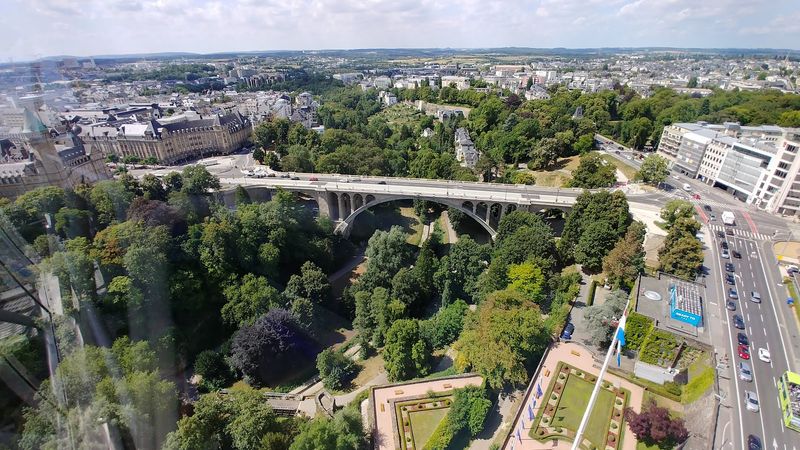
For the widest panorama of all, the viewpoint near the Adolphe Bridge on the Boulevard Franklin D. Roosevelt looks across the Petrusse Valley toward the old town in one direction and the modern city in the other.
Each viewpoint tells a slightly different story about the city, and none of them costs a cent to visit.
Day Trips Worth Taking from the Capital
The Grand Duchy of Luxembourg is a small country, which means that from the capital, you can reach some genuinely spectacular places within an hour or less by car or public transport. Vianden is the most popular day trip, and the reputation is fully earned.
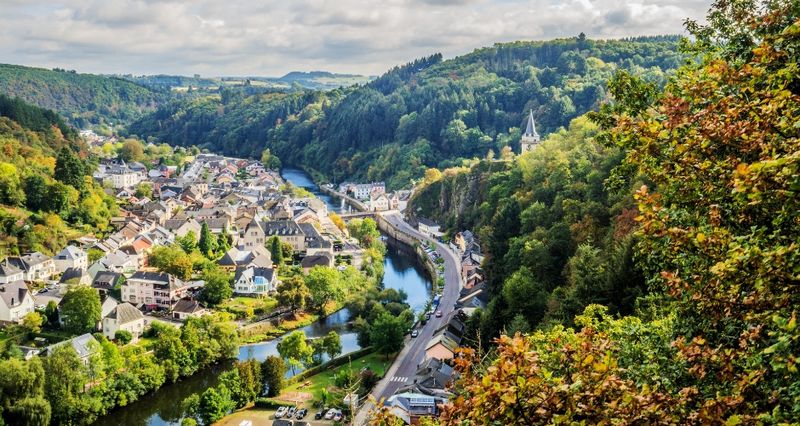
The town of Vianden sits in the Our River valley in the north of the country, dominated by one of the largest and best-preserved feudal residences in Europe. Vianden Castle dates back to the 10th century and was meticulously restored during the 20th century after falling into ruin.
The views from the castle ramparts over the valley and the river below are extraordinary.
Echternach, Luxembourg’s oldest town, offers a quieter but equally rewarding trip. Its Benedictine abbey, founded in 698 AD, and its charming lakeside setting make it a perfect half-day excursion.
The Mullerthal region, sometimes called Little Switzerland, features hiking trails through sandstone rock formations that look nothing like what most people picture when they think of Luxembourg.
Why Luxembourg City Deserves More Attention Than It Gets
After spending several days exploring Luxembourg City, the question that kept coming back to me was simple: why does this place not get the same attention as other European capitals? The honest answer is that it benefits from being overlooked.
The crowds that overwhelm Paris and Rome simply do not exist here. You can walk through the old town on a summer afternoon and still find quiet corners, uncrowded viewpoints, and restaurants where you do not need a reservation made three weeks in advance.
The city manages to be simultaneously historic, architecturally ambitious, culturally rich, and genuinely livable in a way that larger capitals often struggle to achieve. The UNESCO heritage status is not just a marketing badge.
It reflects something real and tangible about the quality and preservation of what exists here.
Coming here without high expectations turned out to be the best travel decision I made that year, and Luxembourg City now sits near the top of every European city ranking I keep in my head.
Share this story