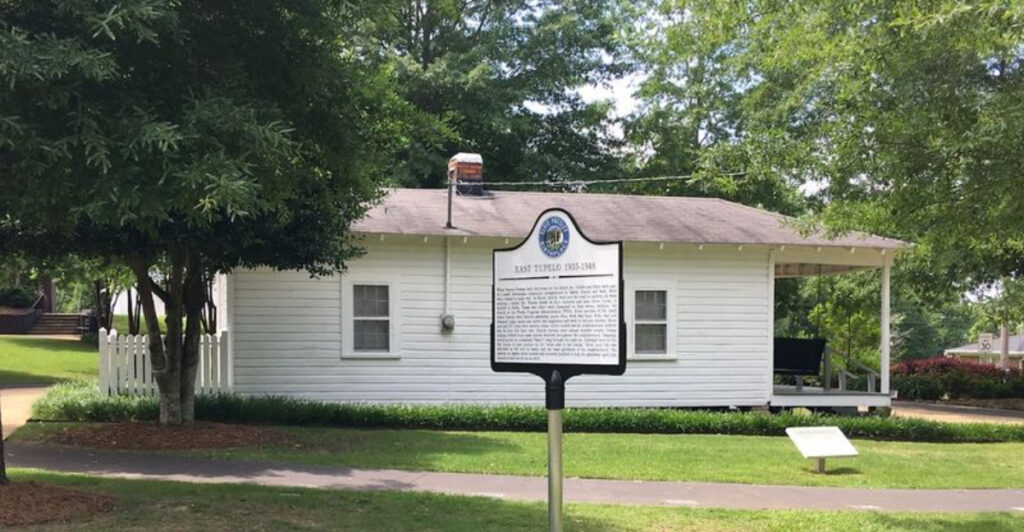
There is a small wooden house in Tupelo, Mississippi, that looks almost too modest to have changed the world. Yet that tiny two-room structure is exactly where the King of Rock and Roll took his first breath.
Long before the sold-out concerts, the rhinestone jumpsuits, and the screaming crowds, there was a boy from a working-class family who grew up without running water or electricity. The Elvis Presley Birthplace complex tells that story with honesty, warmth, and a surprising amount of depth.
Whether you have been an Elvis fan your whole life or you simply appreciate the way history hides in plain sight, this Tupelo landmark has a way of making you stop, slow down, and feel something real. Keep reading to find out everything worth knowing before you plan your visit.
The Birthplace Address and What to Expect on Arrival
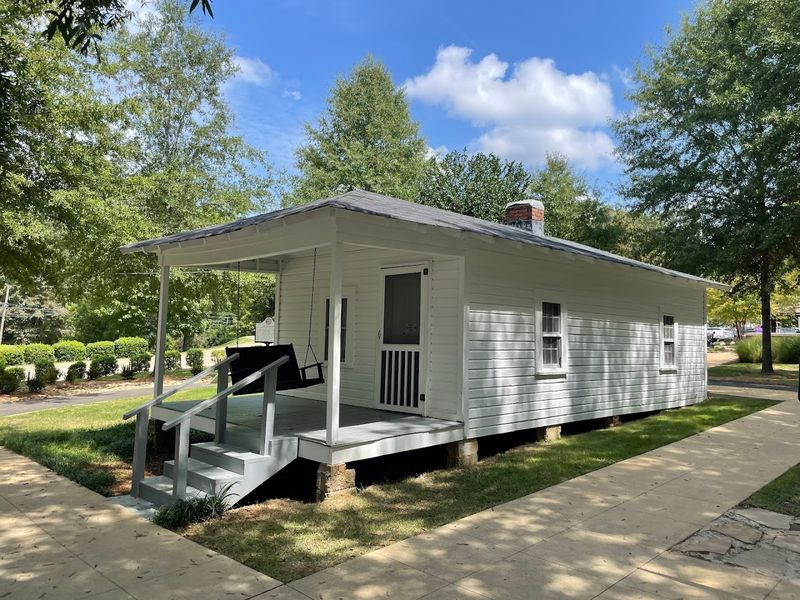
Before you even walk through the gate, you can feel that this place takes its history seriously. The Elvis Presley Birthplace sits at 306 Elvis Presley Dr, Tupelo, right in the heart of a neighborhood that has been carefully preserved around this remarkable site.
The grounds are clean, well-organized, and surprisingly easy to navigate. Free parking is available on site, with additional overflow parking at the top of the property.
There are even dedicated spaces for RVs, which is a thoughtful touch for road-trippers passing through.
The complex opens Monday through Saturday from 9 AM to 4 PM, and on Sundays from 1 PM to 4 PM. Admission runs around $12 to $18 per adult depending on which attractions you choose.
Arriving early on a weekday gives you the most peaceful experience, with fewer crowds and plenty of time to take everything in at your own pace.
The Two-Room House Where It All Began
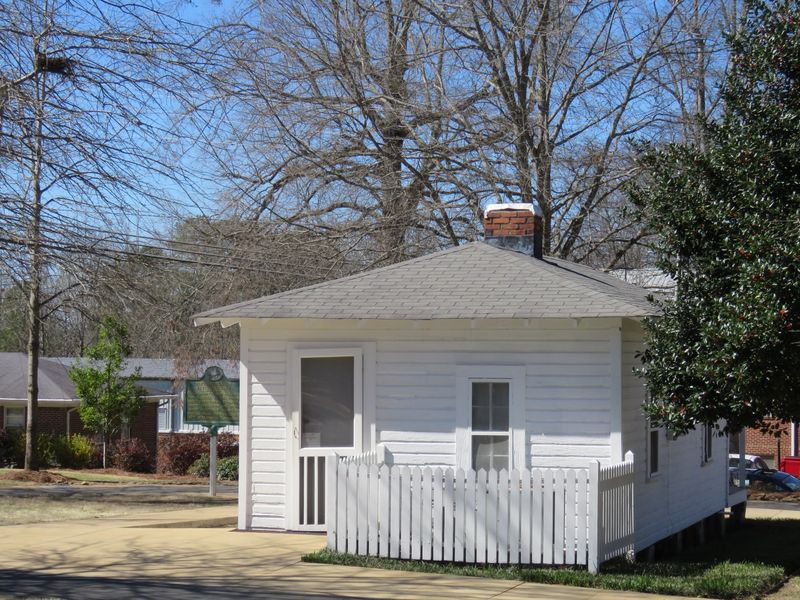
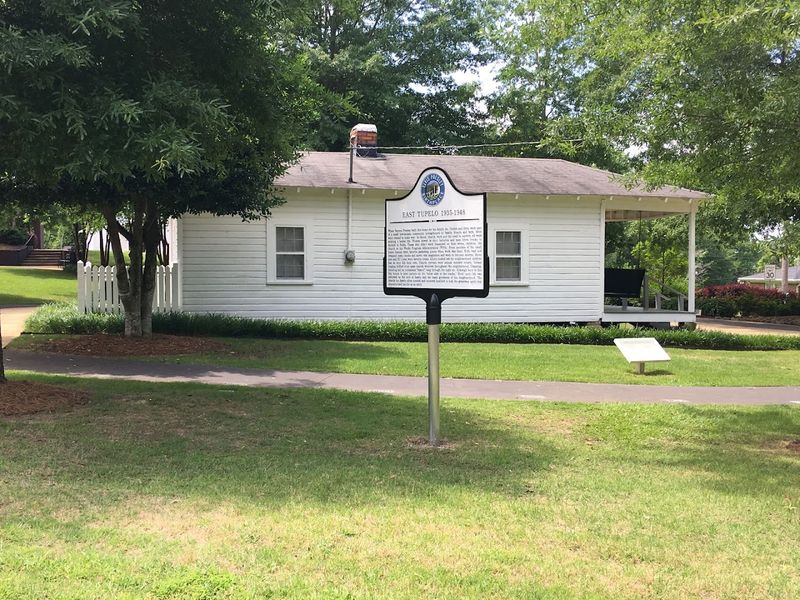
The house itself stops you in your tracks the moment you see it. Vernon Presley built this modest two-room shotgun-style home with his own hands in 1934, just before Elvis was born on January 8, 1935.
The structure is tiny by any standard, and that is exactly the point.
No plumbing, no electricity, no insulation against Mississippi winters. The family lived here with very little, and the house makes that reality completely clear without any dramatic narration needed.
Just standing inside those four walls tells you more about Elvis Presley’s early life than any documentary ever could.
The home has been beautifully preserved and is open for tours. Original furnishings and period-appropriate details fill the space, giving visitors a genuine sense of what daily life looked like for the Presley family in the 1930s.
It is quiet, grounding, and more moving than most people expect before they arrive.
The Museum That Traces His Rise From Tupelo to the World
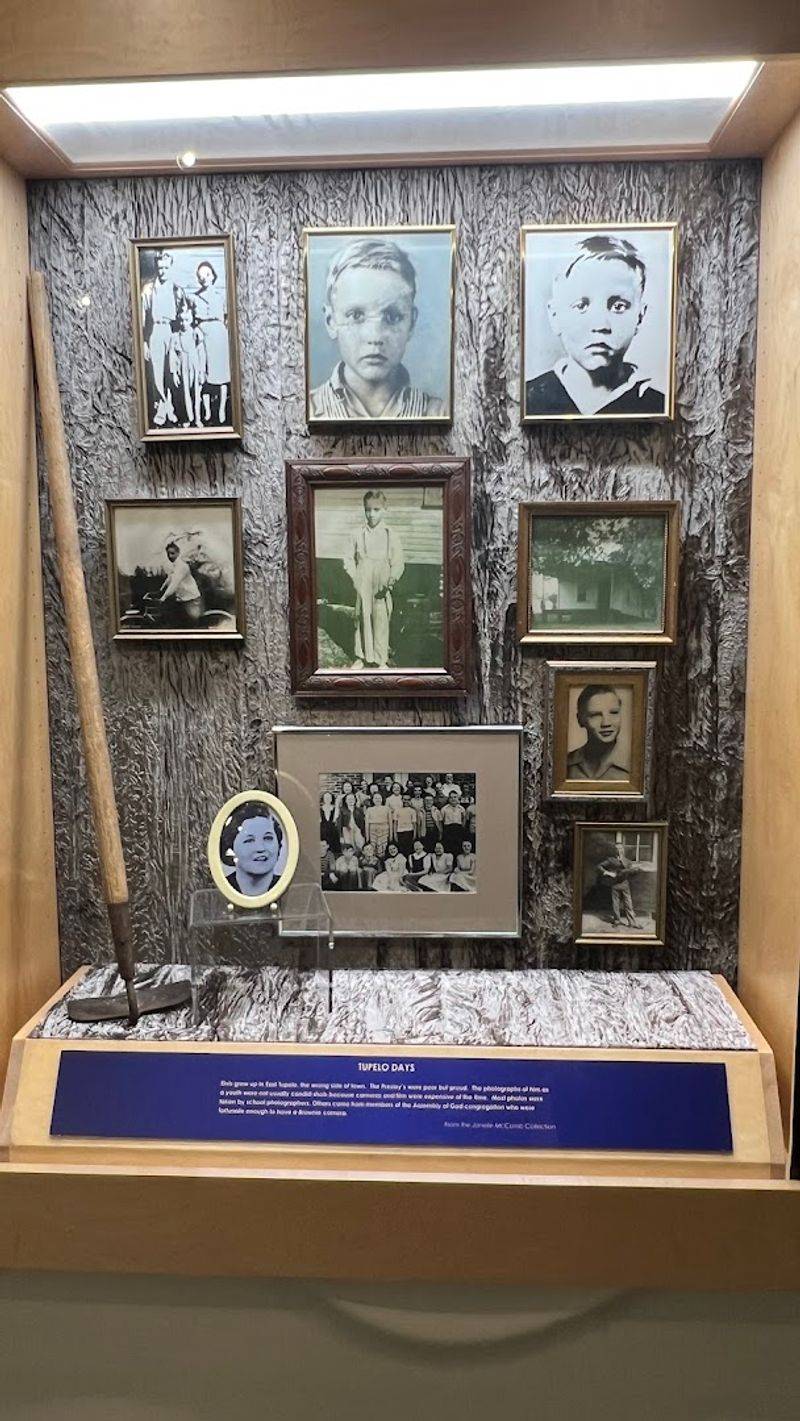
One of the biggest surprises at this complex is how much the museum covers beyond just the birthplace itself. The exhibits follow Elvis from his earliest days in Tupelo all the way through his meteoric rise to fame in Memphis, Nashville, and beyond.
Artifacts, photographs, and carefully curated displays fill the space with context that turns a music legend back into a real human being. You learn about his family, his faith, his community, and the moments that shaped him long before any record label ever heard his name.
The layout flows naturally and never feels overwhelming, which makes it easy to spend a solid hour just reading and absorbing. Families with kids, history buffs, and hardcore Elvis fans all seem to find something here that clicks with them personally.
The museum does not just celebrate the icon; it genuinely tells the story of the person behind the music, and that distinction matters enormously.
The Assembly of God Church He Attended as a Child
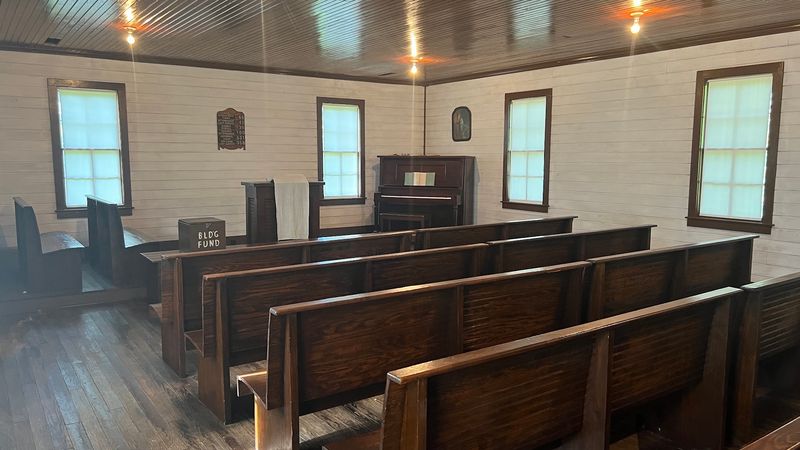
Music did not find Elvis by accident. Long before he ever touched a guitar, he was sitting in a small Assembly of God church in Tupelo, absorbing the gospel sounds that would later weave their way into every recording he ever made.
A replica of that childhood church is part of the birthplace complex, and it is one of the most quietly powerful stops on the grounds. Services are occasionally held there, and some visitors have described the experience of attending one as genuinely moving in a way they did not anticipate.
The church is modest and plain, just like the house, which reinforces the consistent theme running through this entire property. Greatness does not always announce itself early.
Sometimes it grows quietly in small rooms, shaped by community, faith, and the kind of music that reaches something deep inside you. That connection between Elvis and gospel music comes alive here in a way no concert film ever quite captures.
Three Bronze Statues Marking Key Moments in His Life
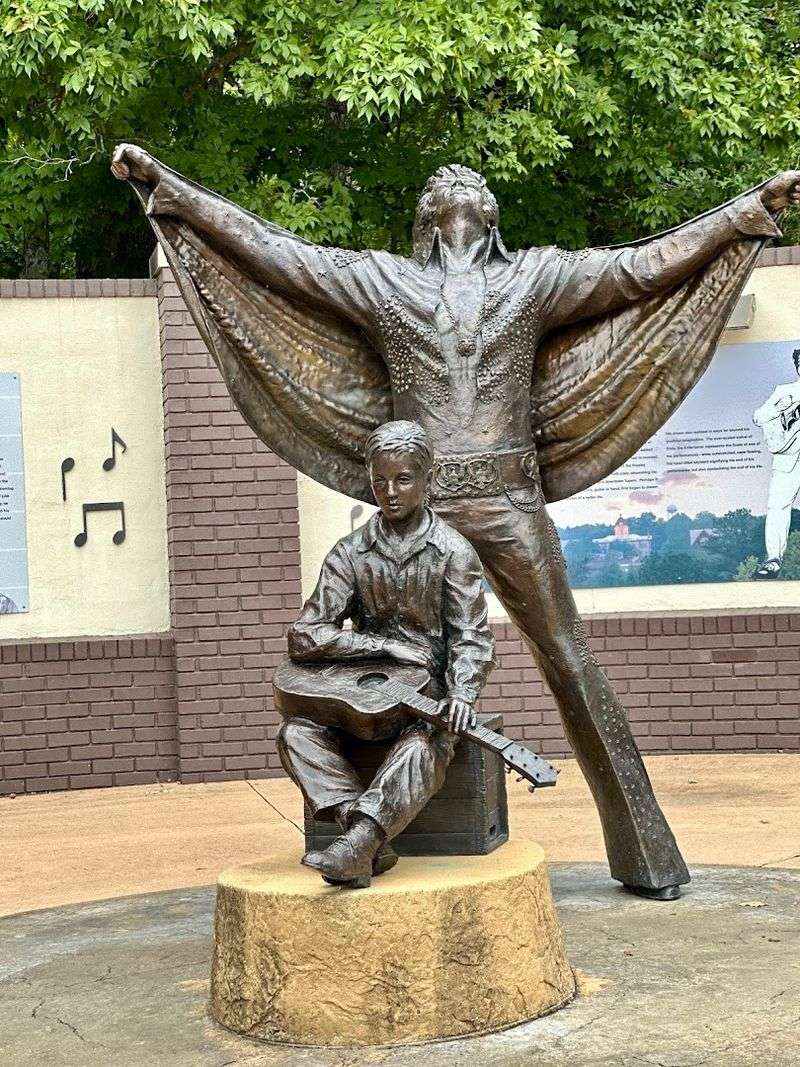
Scattered across the beautifully maintained grounds are three bronze statues, each one capturing Elvis at a different point in his remarkable journey. One depicts him as a young boy, another as a young man on the rise, and the third shows him at the peak of his legendary career.
Together they form a kind of visual timeline that complements everything else you see and read on the property. Standing next to them feels oddly personal, like you are watching a life unfold in slow motion right in front of you.
The craftsmanship on each statue is impressive, and they have become popular photo spots for visitors of all ages. Even people who are not particularly devoted fans tend to linger near them longer than expected.
There is something about seeing a life laid out in bronze that makes history feel less distant and more immediate, more human, and more worth remembering on a Tuesday afternoon in Mississippi.
The Reflecting Pond and the Peaceful Grounds
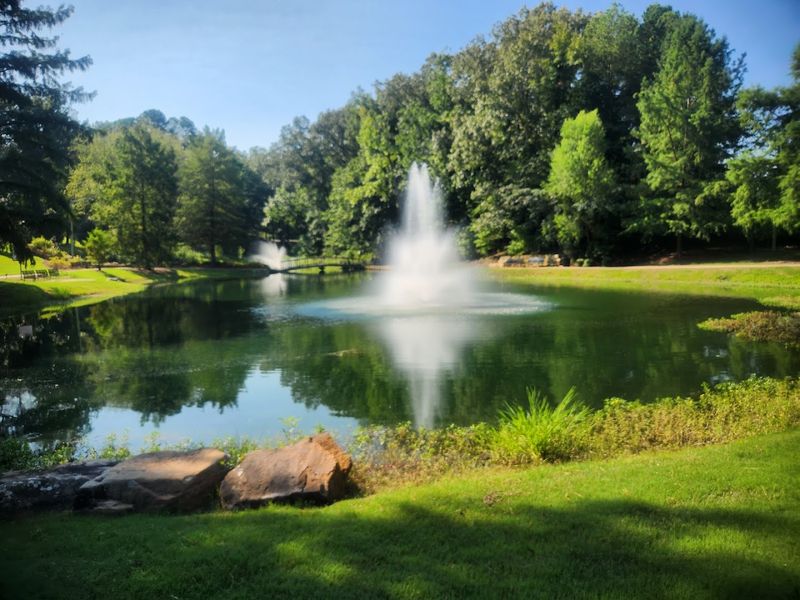
Not everything at this complex demands your intellectual attention. Sometimes you just need to sit by the reflecting pond and let the quiet do its work.
The fountain at the center of the pond adds a gentle sound that makes the whole area feel remarkably calm for a place that attracts thousands of visitors each year.
The grounds surrounding the pond are lush and carefully tended, with mature trees providing shade on warm Mississippi days. Benches are positioned thoughtfully throughout the area, inviting you to slow down rather than rush through.
The vine on the fountain partially covers some of the inscribed dates, which is a small quirk worth noting if you want to read every detail.
Many visitors describe the grounds as unexpectedly serene, almost park-like in their atmosphere. It is the kind of place where you might arrive planning to spend an hour and find yourself still wandering two hours later, completely at ease with that fact.
The Outhouse That Puts History in Perspective
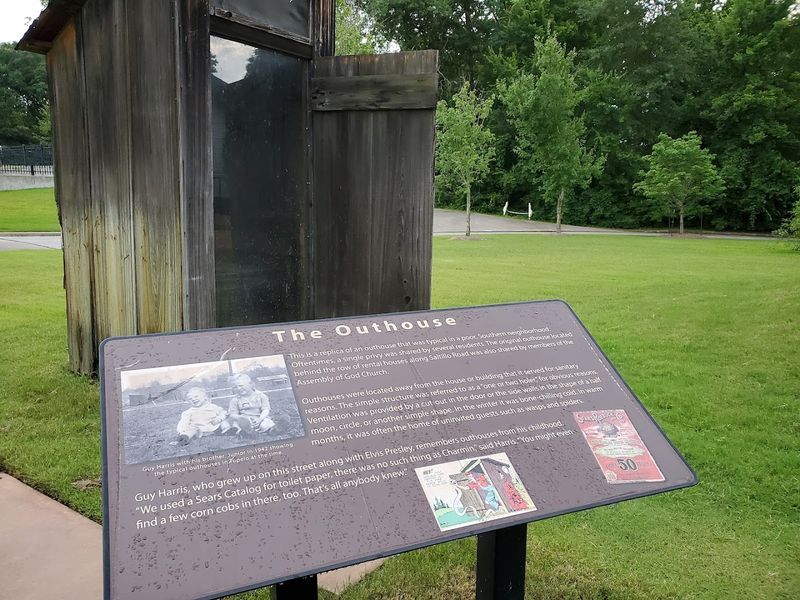
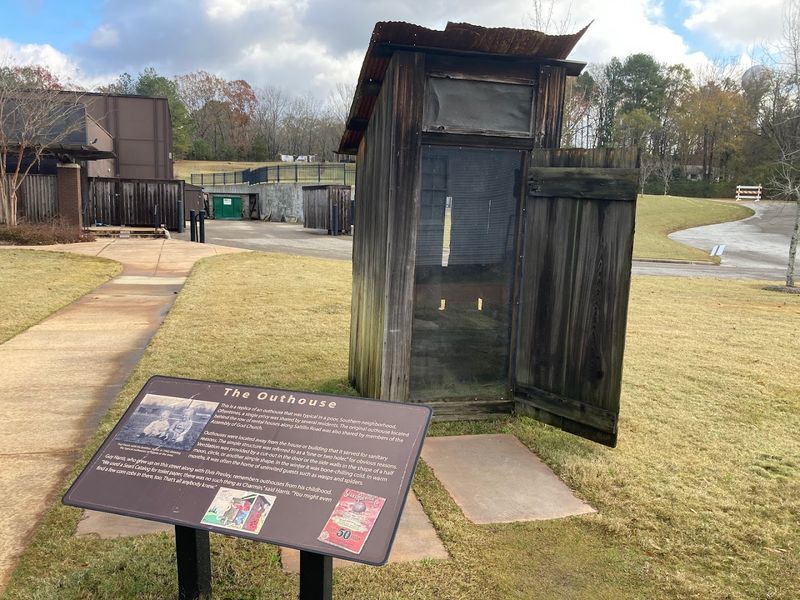
Few exhibits at any museum make history as tangible as a replica outhouse does. The birthplace complex includes one on the grounds, and it is not there for shock value.
It is there to remind you that the Presley family had no indoor plumbing, a reality that was common in rural Mississippi during the 1930s but feels almost unreal to most visitors today.
Standing next to it, you get a clear sense of the gap between Elvis Presley’s origins and the life he eventually built for himself. That contrast is part of what makes his story so enduring and so compelling to people across generations and cultures.
The outhouse is clearly labeled and contextualized within the broader narrative of the property, so it never feels out of place. Instead, it functions as a small but effective anchor to the everyday realities of the era, grounding the Elvis legend in the unglamorous truth of where he actually came from.
The 20-Minute Theater Film Worth Every Minute
Tucked inside the complex is a small theater that screens a 20-minute film about Elvis Presley’s life and legacy. It runs regularly throughout the day, and it is the kind of short documentary that manages to pack a lot of genuine emotion into a compact runtime without feeling rushed or superficial.
The film covers his Tupelo childhood, his early musical influences, and the trajectory that took him from this tiny Mississippi town to international fame. Archival footage and photography give it a texture that feels authentic rather than polished to the point of feeling manufactured.
Families with younger visitors especially appreciate having a sit-down moment built into the experience. After walking the grounds and touring the house, settling into a theater seat for twenty minutes gives everyone a chance to absorb what they have seen.
It also fills in historical gaps that the exhibits alone might leave open, making the whole visit feel more complete and cohesive by the time you walk back outside.
The Gift Shop Stocked With Elvis Memorabilia
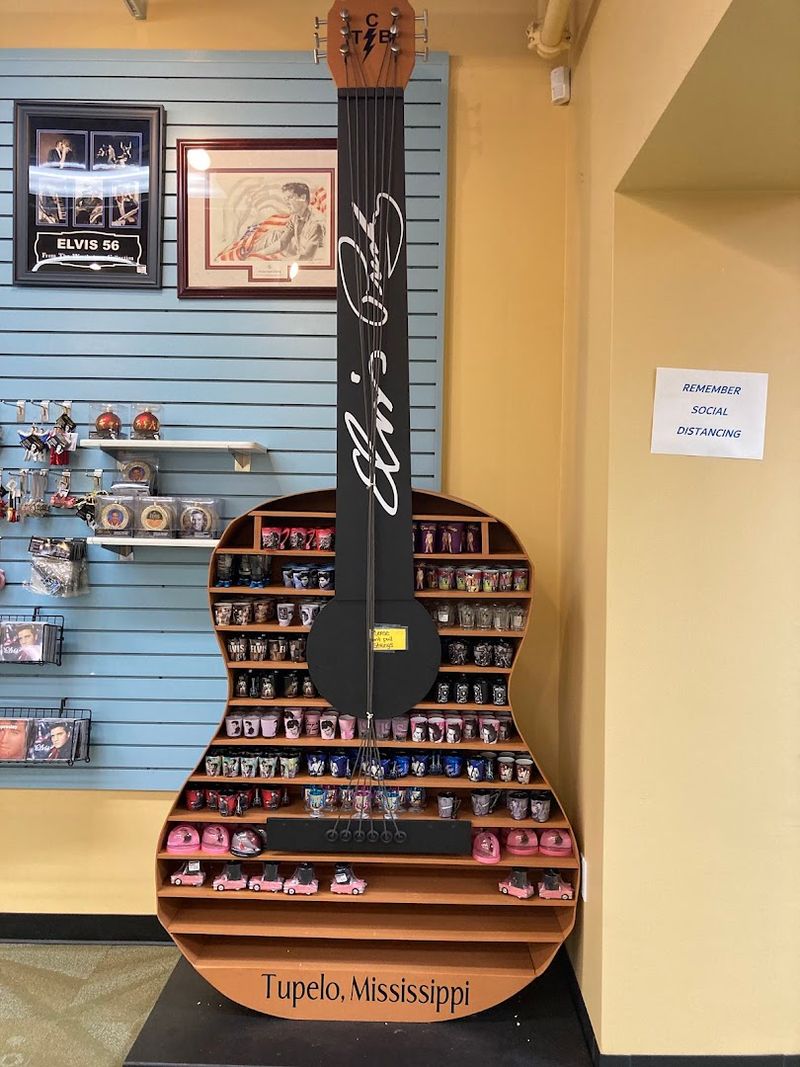
The visitor center at the birthplace doubles as one of the better-stocked Elvis memorabilia shops you will find anywhere outside of Graceland. T-shirts, collector items, books, music, keepsakes, and novelty gifts line the shelves in a way that feels curated rather than chaotic.
Whether you are shopping for yourself or hunting for the perfect souvenir to bring back to someone at home, the selection covers a wide range of budgets and tastes. Some items lean toward the nostalgic and sentimental, while others are more playful and pop-culture-forward.
One practical tip worth remembering: bring cash. The site recommends it, and having it on hand makes the whole transaction smoother.
The shop is a satisfying final stop before heading back to your car, partly because it gives you something tangible to carry home from a visit that is otherwise built almost entirely around feeling and reflection. And the prices are reasonable enough that you will not leave feeling like you overspent on a good time.
How Long to Plan for Your Visit
Most visitors spend between two and three hours at the birthplace complex, which is longer than many people expect when they first pull into the parking lot. The grounds alone can take a solid 45 minutes to explore properly, and that is before you factor in the house tour, the museum, and the theater film.
The experience rewards a slower pace. Rushing through it means missing the small details that make the visit genuinely meaningful, like the handwritten notes in the exhibits or the quiet corners of the grounds where you can just stand and think for a moment.
Going on a weekday, especially a Tuesday or Wednesday morning, tends to give you the most relaxed atmosphere. Sunday hours are shorter, running only from 1 PM to 4 PM, so planning accordingly saves you a wasted trip.
Three hours is a comfortable target that lets you see everything without feeling pressured to move on before you are ready.
The Mural That Celebrates His Legacy

Among the visual highlights of the complex is a mural that celebrates Elvis Presley’s legacy in bold, vivid detail. It serves as both an artistic tribute and a natural gathering point for visitors who want a striking backdrop for photos.
The mural captures the energy and charisma that made Elvis a global phenomenon, which creates an interesting contrast with the humble surroundings of the birthplace itself. One moment you are standing in a tiny two-room house with no plumbing, and the next you are looking at a full-scale artistic tribute to one of the most famous people who ever lived.
That contrast is not accidental. It is the whole point.
Artists and photographers tend to spend extra time near the mural, and it is easy to see why. The colors hold up well in natural light, making it a reliable spot for clear, vibrant photographs at almost any time of day during your visit to the complex.
Why This Place Resonates With Visitors Beyond Elvis Fans
Here is something that surprises a lot of people: you do not have to be an Elvis fan to find this place genuinely worthwhile. The birthplace complex works as a window into American history, specifically the story of poverty, resilience, and the kind of talent that refuses to stay quiet no matter the circumstances.
The site speaks to something universal about human potential and the gap between where someone starts and where they end up. That message lands whether you can name every Elvis album or have never heard a single track.
Visitors who arrived skeptical consistently leave with a different feeling, one that is harder to name but easy to recognize. The property is thoughtful, well-maintained, and honest in how it presents its subject.
It does not oversell or dramatize. It simply shows you the facts and lets you draw your own conclusions, which turns out to be the most powerful approach of all for a story this extraordinary.
Share this story