Most waterfalls crash dramatically through open valleys and mountain landscapes. These hidden cascades do the opposite.
Buried deep inside caves, sinkholes, and underground chambers, they remain concealed beneath the Earth’s surface, creating surreal worlds of echoing water, limestone formations, and underground rivers. Get ready to explore some of the most jaw-dropping secret waterfalls on the planet.
Ruby Falls — Tennessee, United States
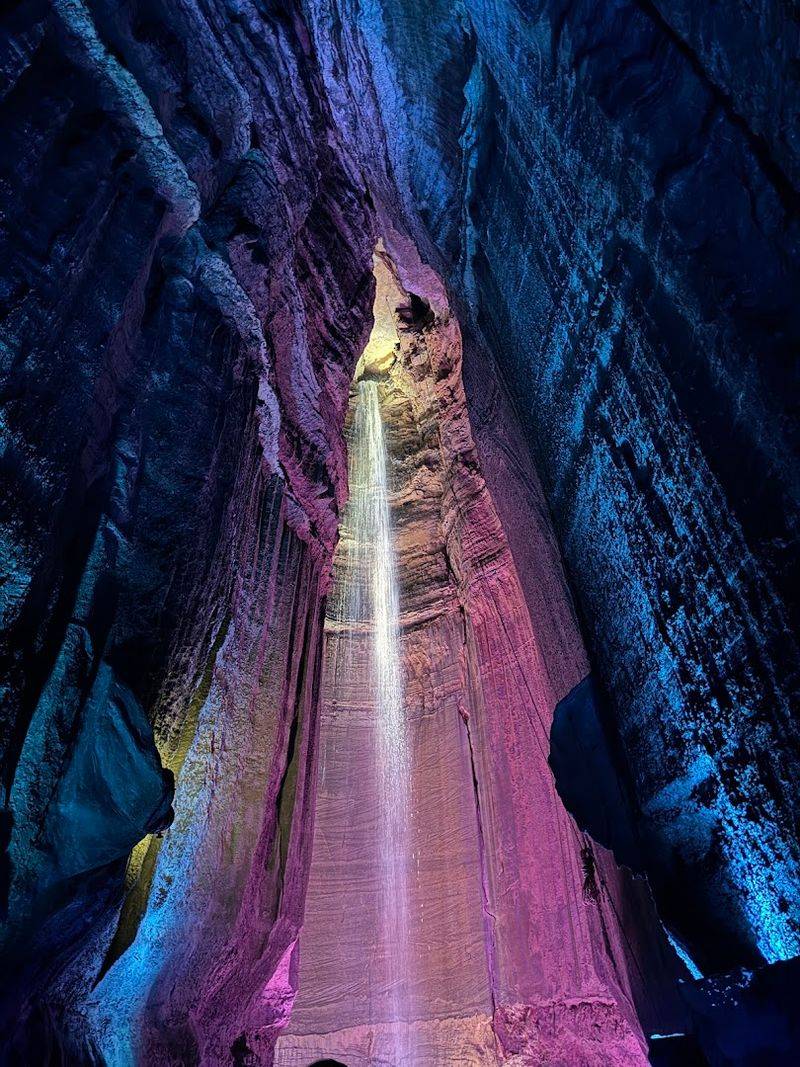
Back in 1928, a man named Leo Lambert was drilling an elevator shaft into Lookout Mountain when his crew accidentally broke through into a hidden cave. What they found inside would eventually become one of America’s most visited underground attractions.
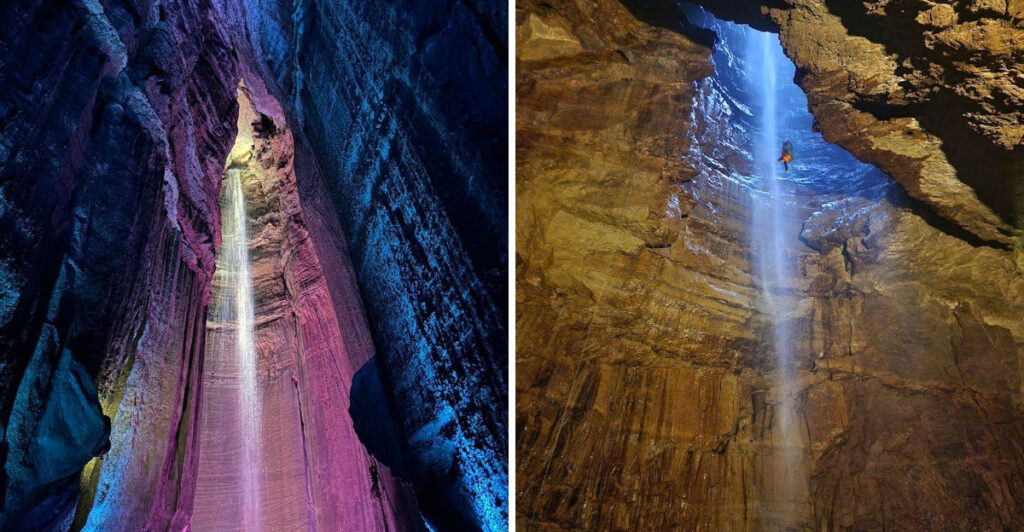
Ruby Falls is a 145-foot waterfall tucked more than 1,000 feet beneath the mountain’s surface.
Visitors ride an elevator deep into the earth before walking through winding cave passages filled with dramatic limestone formations. The journey builds suspense before the waterfall finally comes into view, bathed in colorful lights that make the whole chamber feel dreamlike.
The roar of falling water echoes through the cavern walls in a way that genuinely surprises first-time visitors.
Leo Lambert named the waterfall after his wife Ruby, which honestly makes the whole discovery story even sweeter. The cave stays at a cool 60 degrees year-round, so bringing a light jacket is a smart move.
Ruby Falls welcomes hundreds of thousands of visitors annually, yet somehow the experience still feels personal and wonderfully strange every single time.
Gaping Gill Waterfall — North Yorkshire, England
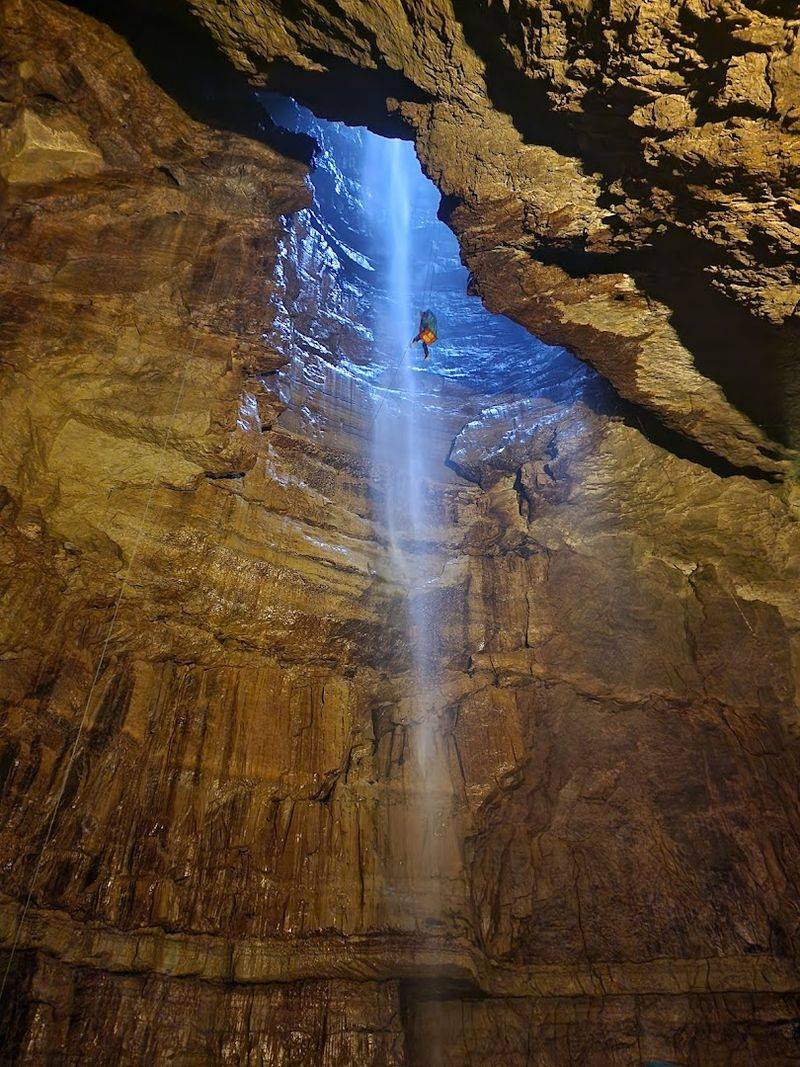
Fell Beck stream flows peacefully across the Yorkshire Dales until it reaches the edge of Gaping Gill and simply disappears. The water plunges 98 meters straight down into a cavern so enormous that a full-sized cathedral could fit comfortably inside.
It is the largest known underground chamber in Britain, and the waterfall feeding it is completely wild and uncontrolled.
Unlike many show caves, Gaping Gill is not a polished tourist attraction with guided tours every hour. Access is limited, and the experience feels genuinely raw and adventurous.
Twice a year, local caving clubs operate a bosun’s chair system that lowers members of the public down the main shaft, giving brave visitors a rare chance to experience the cavern firsthand.
Standing at the bottom and looking up at the thin column of daylight far above is described by visitors as one of the most disorienting and breathtaking moments imaginable. The cave connects to a larger system of underground passages stretching beneath the surrounding hillsides.
Gaping Gill rewards curiosity in a way that few natural attractions can, offering something genuinely unfiltered and a little bit terrifying for anyone willing to make the trip.
Grotte aux Fées Waterfall — Valais, Switzerland
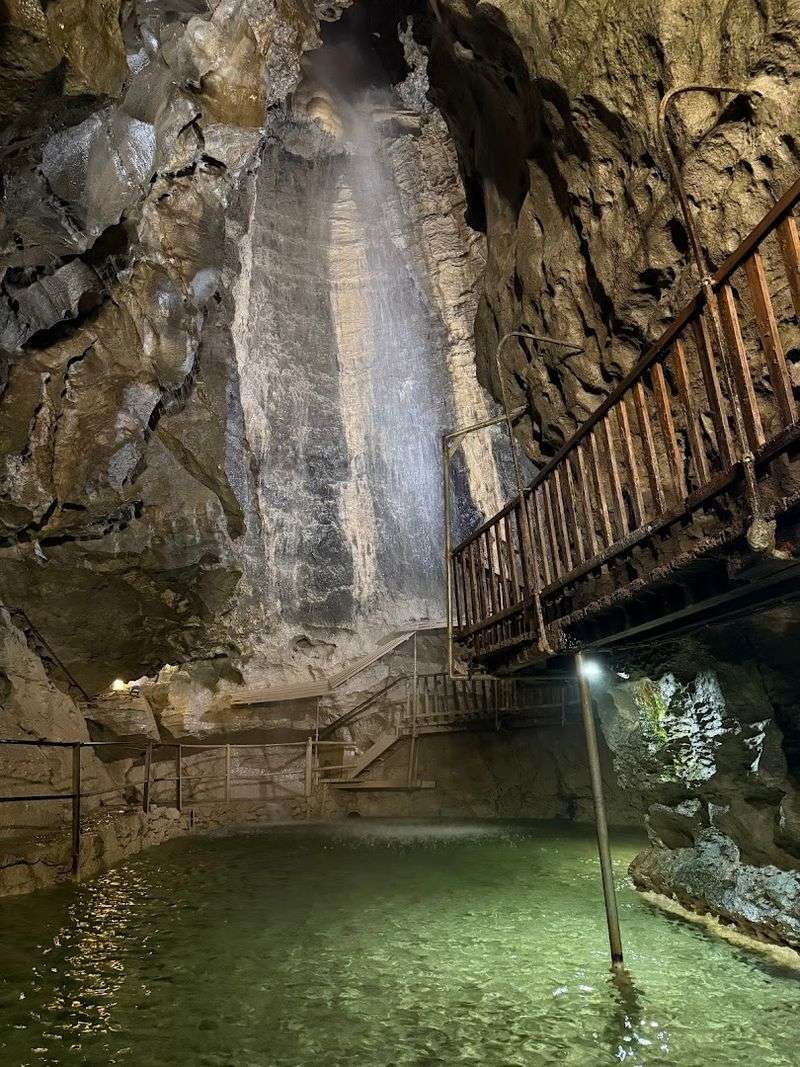
Switzerland is famous for its above-ground waterfalls, but one of its most spectacular cascades has been hiding underground for centuries. The Grotte aux Fées, which translates to Fairy Cave, contains a waterfall roughly 77 meters high tucked inside a limestone mountain above the town of Saint-Maurice.
The name alone sets the mood perfectly.
This cave has been open to the public since 1863, making it one of Switzerland’s oldest show caves. Early visitors explored it by torchlight, which must have made the whole experience feel genuinely otherworldly.
Today the cave is lit with modern lighting that highlights the waterfall and the surrounding stalactite formations beautifully.
The underground lake at the base of the waterfall reflects the cave ceiling above it, doubling the visual impact in a way that photographs struggle to capture properly. A small boat ride across the lake is part of the tour experience, adding a fairytale quality that children and adults both respond to enthusiastically.
Saint-Maurice itself is a charming medieval town worth exploring before or after the cave visit. The combination of history, geology, and sheer natural beauty makes Grotte aux Fées one of Europe’s most underrated underground destinations.
Secret Caverns Waterfall — New York, United States
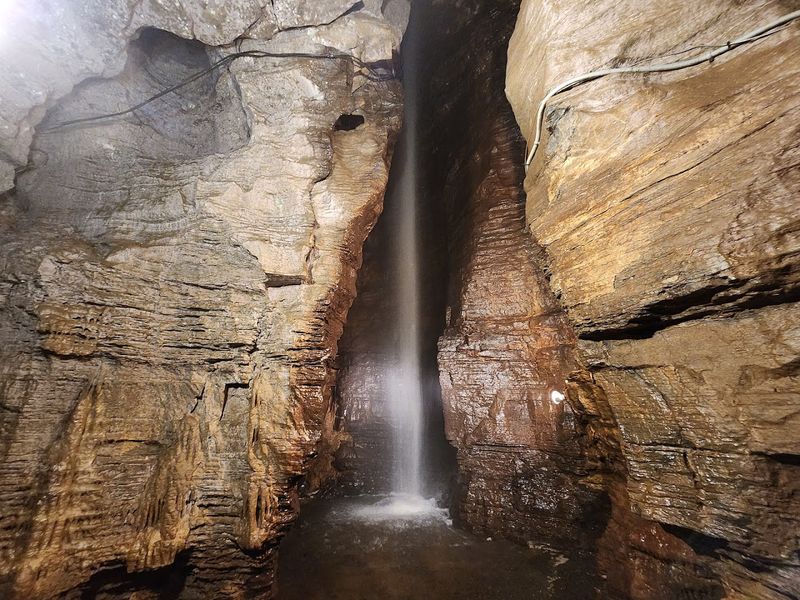
Forget the polished mega-attractions. Secret Caverns in upstate New York has been doing things its own gloriously quirky way since 1929, complete with hand-painted roadside signs that feel like a time capsule from a forgotten era of American road trips.
But the real star of the show waits at the end of the underground tour.
After winding through ancient limestone passages filled with cave formations, visitors arrive at a 100-foot underground waterfall that crashes dramatically through the cavern. The sound builds before you see it, which makes the reveal genuinely exciting.
The cave has an old-school charm that modern attractions with their digital screens and polished floors simply cannot replicate.
The story behind the cave’s discovery adds to its appeal. A farmer reportedly found it while digging on his property, which is exactly the kind of accidental geology moment that makes you want to start digging up your own backyard.
Located near Cobleskill, the cave sits in a region rich with karst geology and underground water systems. Secret Caverns proudly leans into its quirky personality, and that authenticity is a big part of why visitors keep coming back decade after decade.
Niagara Cave Waterfall — Minnesota, United States
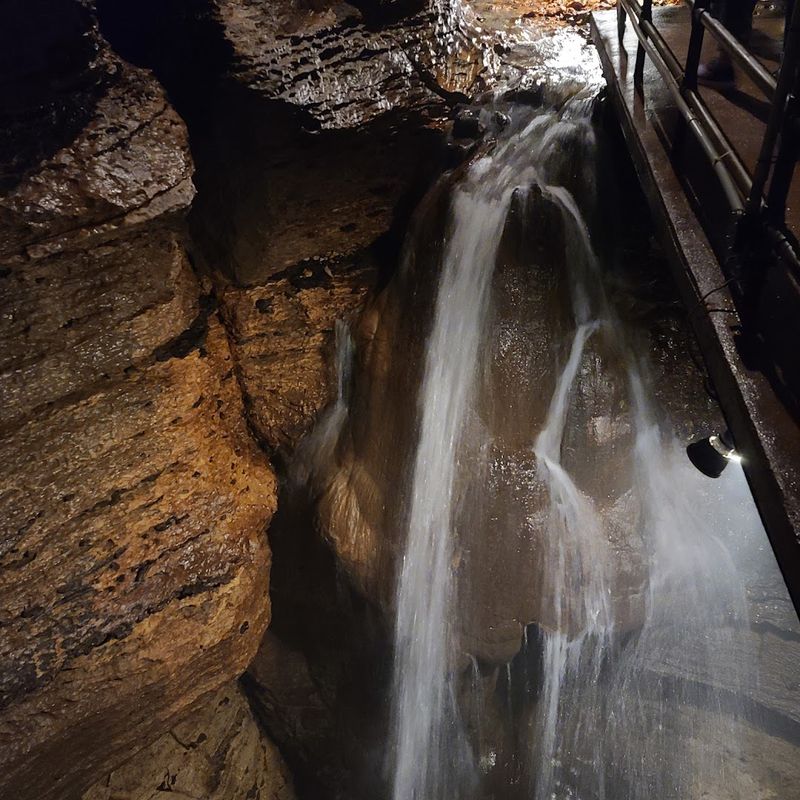
Three pigs went missing on a farm near Harmony, Minnesota in 1924, and when their owners went looking, they discovered the pigs had fallen into a hidden cave entrance. That accidental discovery eventually led to the uncovering of one of the Midwest’s most impressive underground attractions.
The pigs, for the record, were recovered safely.
Niagara Cave sits roughly 200 feet underground and features a 60-foot waterfall thundering through a limestone cave system carved by ancient underground rivers. The cave walls are packed with marine fossils from a time when this part of Minnesota was covered by a shallow sea, making the whole experience feel like walking through deep time.
Stalactites hang from the ceiling throughout the cave, and underground streams continue shaping the passages slowly to this day. The waterfall itself is genuinely powerful, and the sound it generates fills the surrounding chambers in a way that feels surprisingly dramatic for the Midwest.
Guided tours run regularly and cover the cave’s geology, history, and the famous pig story in satisfying detail. Niagara Cave is one of those places that consistently surprises visitors who arrive expecting something modest and leave genuinely impressed by what nature hid underground.
Gournier Cave Waterfalls — France
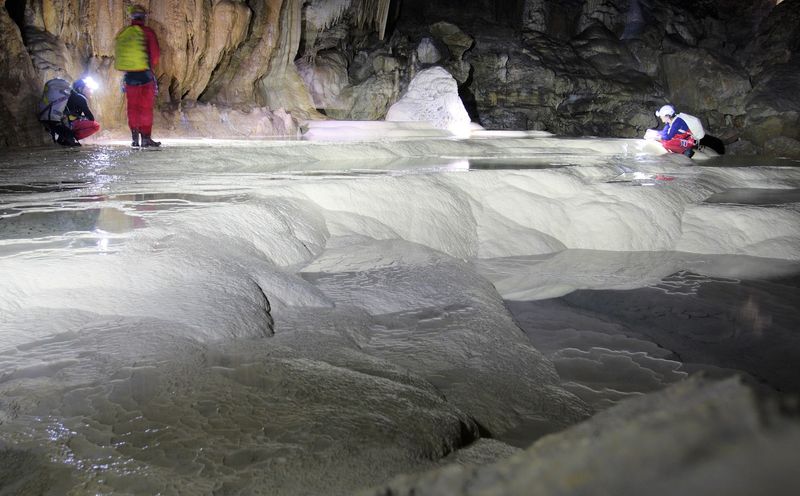
Serious cavers speak about Gournier Cave the way hikers talk about legendary mountain trails. Located in the Vercors region of the French Alps, this cave system contains some of the most breathtaking underground river scenery in all of Europe.
Reaching its dramatic waterfalls is not easy, and that difficulty is part of what makes the experience so memorable.
The cave features an underground river that has carved massive limestone chambers over millions of years. Waterfalls crash through sections of the passage where the river drops suddenly, filling the cave with sound and mist that coats everything in a thin layer of moisture.
The combination of flowing water, towering rock walls, and absolute remoteness creates an atmosphere unlike anything on the surface.
Gournier is considered a classic among French cavers, attracting experienced explorers from across Europe who want to test their skills in a genuinely challenging environment. The cave requires wetsuits, technical gear, and a solid understanding of cave navigation before attempting entry.
For those with the right preparation, the reward is access to one of nature’s most hidden and spectacular underground landscapes. The French Alps above ground are stunning, but the world beneath them is equally extraordinary in a completely different way.
Škocjan Caves Waterfalls — Slovenia
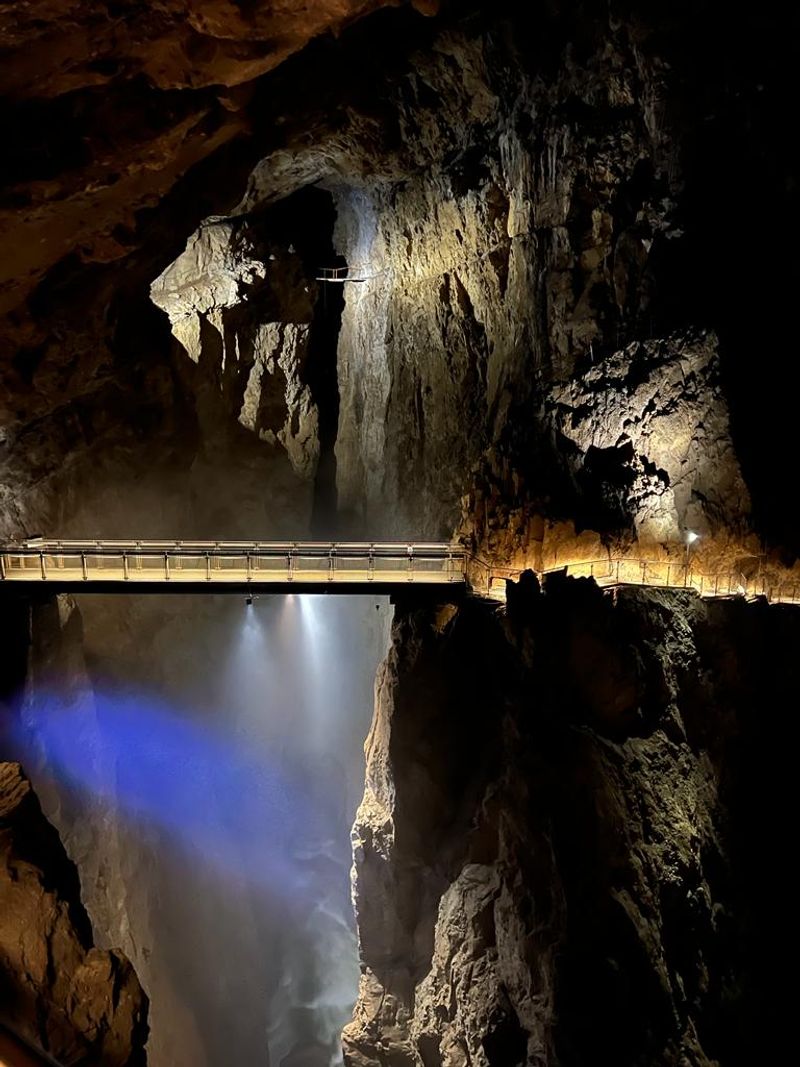
Walking into the Škocjan Caves feels less like entering a cave and more like stepping into a scene from a fantasy novel. The underground canyon carved by the Reka River is so massive that the cave ceiling disappears into darkness far above, and the roar of water echoing through the chambers creates a genuinely overwhelming sensory experience.
UNESCO recognized Škocjan as a World Heritage Site in 1986, and the designation feels completely earned. The cave system contains one of the largest known underground canyons on Earth, with walls rising more than 100 meters in some sections.
Waterfalls tumble into the river below from cracks in the canyon walls, adding to the already dramatic landscape.
A narrow bridge crosses the underground river at one point in the tour, offering a stomach-lurching view straight down into rushing water and absolute darkness. The cave has been known to humans for thousands of years, with evidence of prehistoric settlements found near the entrances.
Guided tours wind through the cave system over about two hours, covering both the dry upper galleries and the active river canyon below. Škocjan consistently ranks among Europe’s top natural wonders, and visiting it is an experience that stays with people for the rest of their lives.
Puerto Princesa Underground River Cascades — Palawan, Philippines
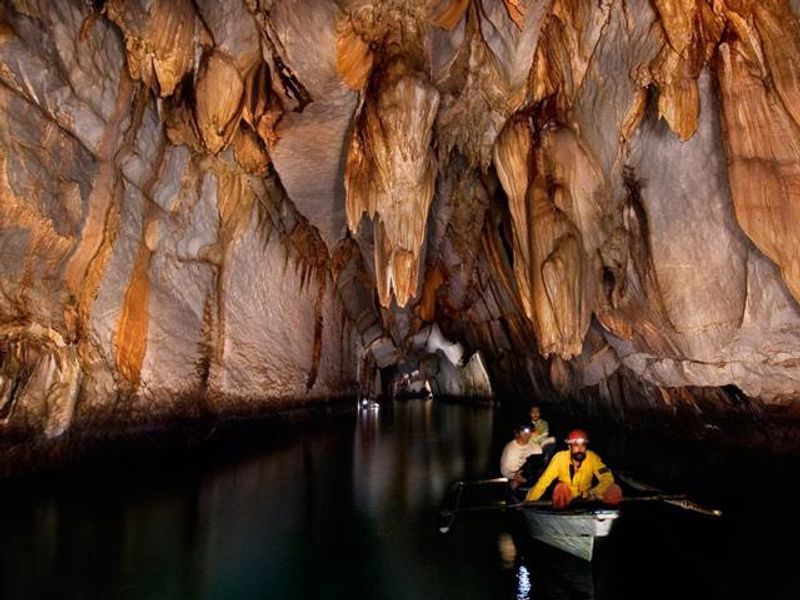
Palawan has a habit of making jaws drop, and the Puerto Princesa Underground River is one of its most impressive achievements. Recognized as both a UNESCO World Heritage Site and one of the New Seven Wonders of Nature, this cave system stretches for more than eight kilometers beneath a jungle-covered limestone mountain.
Most visitors come for the river, but hidden cascades add another layer of wonder to the experience.
Boats glide slowly through the cave while guides point out formations that look like curtains, cathedrals, and creatures frozen in stone. In certain sections, water trickles and cascades from the cave ceiling and walls, creating small hidden falls that catch the light from guide lamps in beautiful ways.
The deeper sections of the cave, which are restricted to researchers, contain even more dramatic underground water features.
The cave is home to millions of swiftlets and bats whose sounds echo constantly through the chambers, mixing with the sound of moving water in a genuinely wild natural soundtrack. Access requires a permit and a boat tour, both of which are easy to arrange from Puerto Princesa city.
The underground river experience is one of those rare travel moments that genuinely lives up to its reputation, no matter how high your expectations are set beforehand.
Mammoth Cave Waterfalls — Kentucky, United States
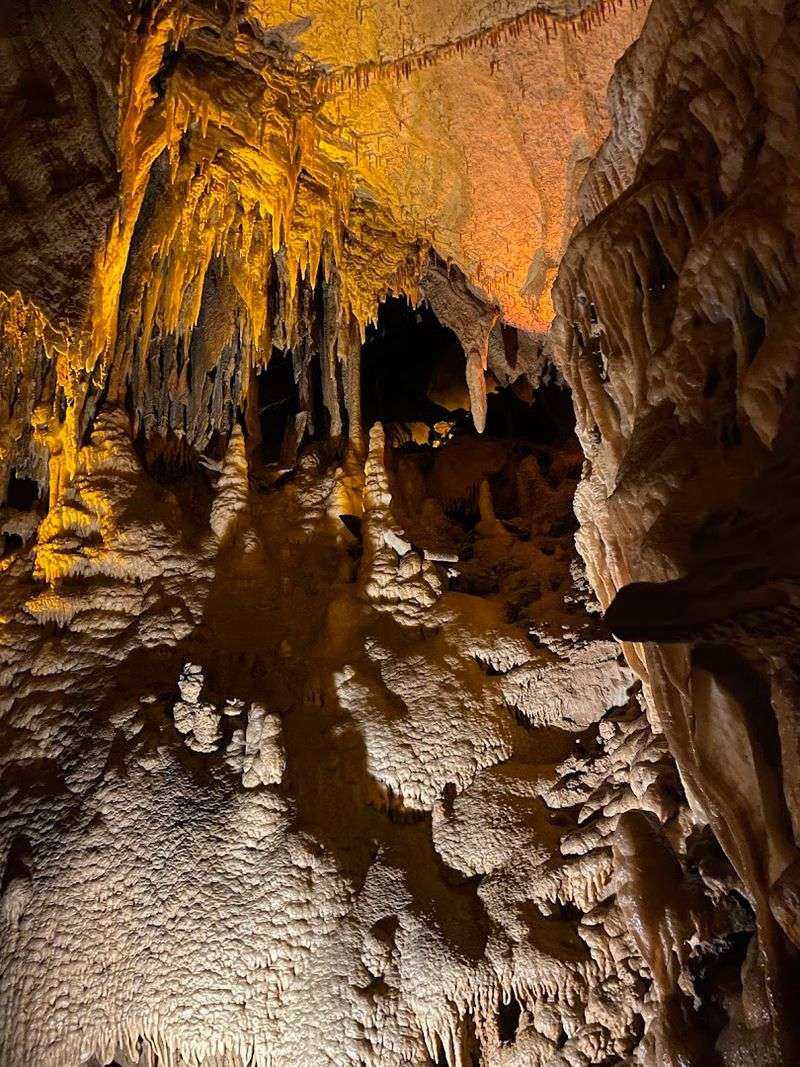
Mammoth Cave holds a record that no other cave system on Earth has come close to breaking. With more than 400 miles of surveyed passages, it is the longest known cave system in the world, and explorers are still mapping new sections regularly.
Hidden somewhere within those hundreds of miles are waterfalls that most visitors never see.
The cave’s main tour routes cover a fraction of the total system, focusing on accessible passages with impressive formations. But deeper within the cave, where underground rivers continue carving new passages through the limestone bedrock, waterfalls appear where streams drop between levels of the cave network.
These hidden cascades exist in near-total darkness, witnessed only by cave researchers and experienced cavers.
Mammoth Cave has been explored by humans for at least 4,000 years, with ancient Native Americans venturing deep inside to mine minerals by the light of reed torches. Some of their artifacts have been found miles from the cave entrance, suggesting they were comfortable navigating its complexity long before modern lighting existed.
The cave’s wild tour options bring small groups into less-developed sections where the sounds of underground water are a constant companion. Mammoth Cave rewards curiosity at every level, from casual tourist to serious underground explorer.
Clearwater Cave Waterfalls — Sarawak, Malaysia
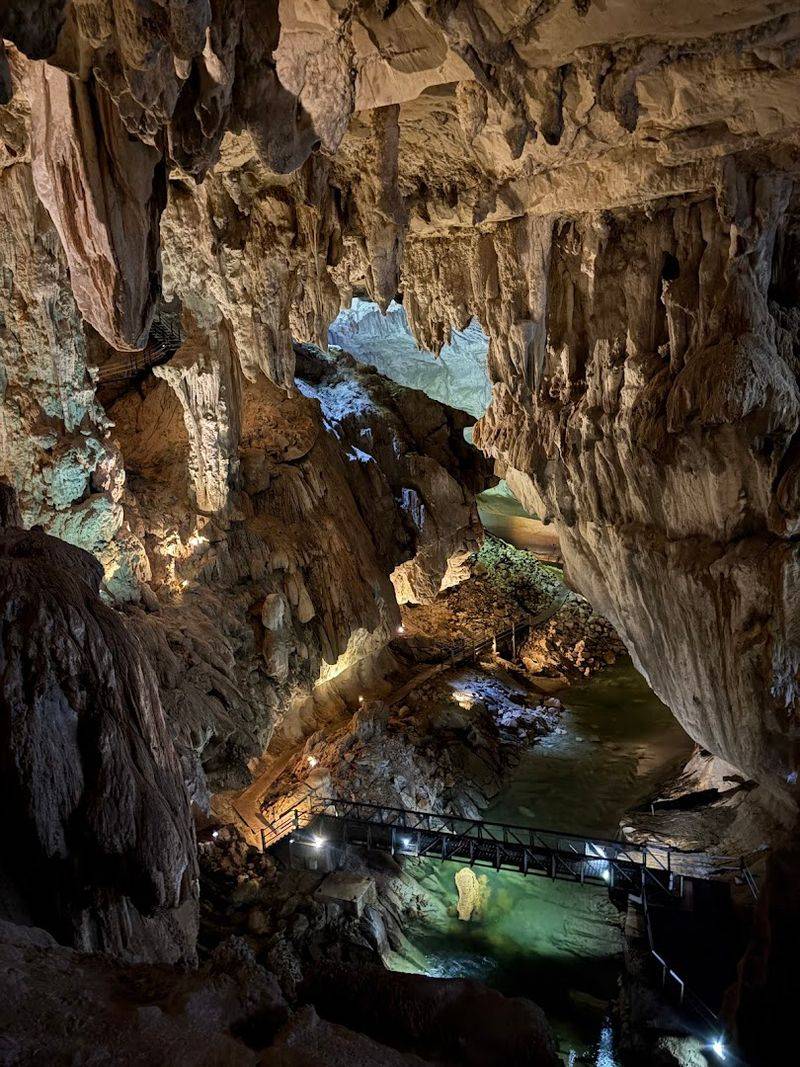
Gunung Mulu National Park in Sarawak contains some of the most jaw-dropping cave statistics on the planet. Clearwater Cave, one of its crown jewels, boasts the longest known cave passage in Southeast Asia, stretching for more than 200 kilometers through the heart of a limestone mountain.
Underground rivers and hidden cascades wind through the entire system.
The cave gets its name from the crystal-clear river that flows through its lower passages, which visitors can access by a short boat ride from the cave entrance. Inside, the river disappears into passages too low to follow, only to reappear further on in larger chambers.
Waterfalls form where the river drops between cave levels, filling the surrounding chambers with mist and the constant sound of moving water.
Gunung Mulu was declared a UNESCO World Heritage Site in 2000, recognizing the extraordinary geological and biological significance of its cave systems. Clearwater Cave also contains some of the richest cave ecosystems in Asia, with dozens of species of fish, crustaceans, and insects living entirely underground.
Getting there requires a flight to Mulu from Kuching or Kota Kinabalu, followed by a short river journey. The effort is absolutely worth it for anyone fascinated by what the underground world has to offer at its most spectacular.
Goa Rangko Cave Waterfall Pool — Flores, Indonesia
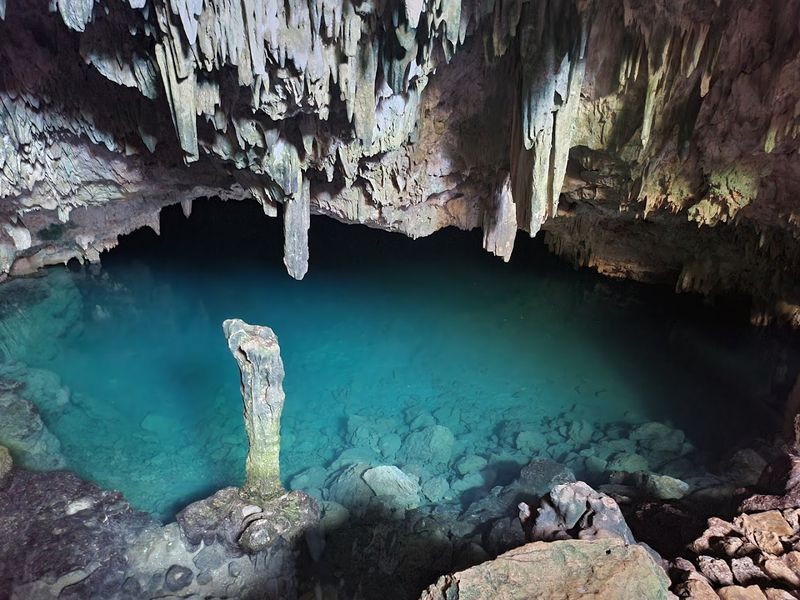
Sunlight does something magical when it hits the water inside Goa Rangko Cave. A natural opening in the cave ceiling sends a beam of light directly into the turquoise pool below, turning the entire chamber into a glowing, otherworldly space that photographers absolutely lose their minds over.
Flores is already one of Indonesia’s most beautiful islands, and this cave adds something genuinely special to its appeal.
During wet season, small cascades form inside the cave where rainwater filters through the limestone and drips or flows into the main chamber. These seasonal underground falls transform the cave’s atmosphere, adding the sound of moving water to the already striking visual experience.
The cave sits near the coast, and the combination of ocean air and underground coolness creates a refreshing environment even on hot days.
Reaching Goa Rangko requires a boat trip from Labuan Bajo followed by a short walk through jungle terrain, which keeps the crowds manageable compared to more accessible attractions. Local guides lead visitors through the entrance passage and down to the pool below, where swimming is one of the highlights of the experience.
The cave is relatively undeveloped, which is exactly what makes it feel like a genuine discovery rather than a tourist production. Flores keeps delivering surprises for those willing to explore a little further.
Share this story