There is a tiny town on the Oregon coast where the ocean does not just sit quietly in the background. It crashes, it sprays, and on lucky days, it sends whale spouts shooting up right in front of you.
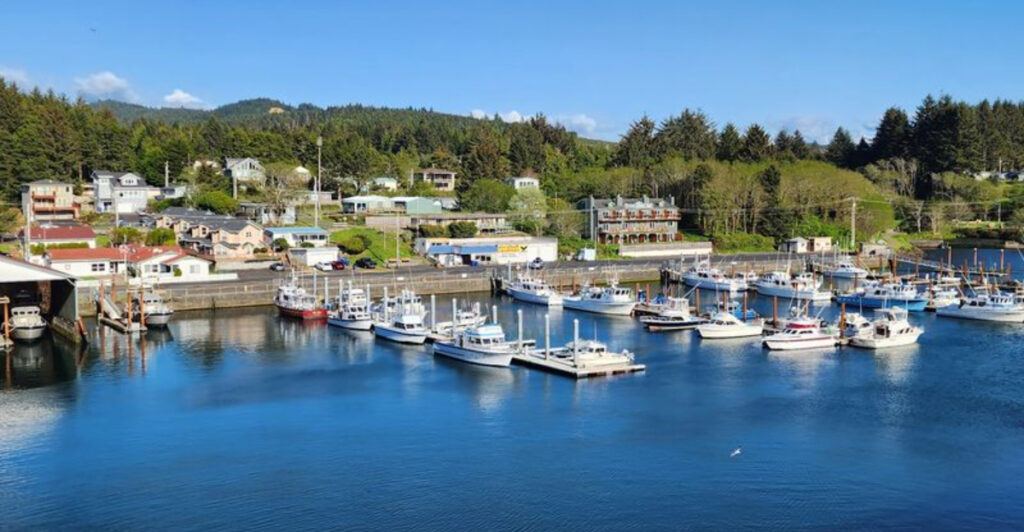
The harbor here is so small that when I first saw it, I genuinely thought it was a large tide pool. But do not let the size fool you.
This little stretch of U.S. Route 101 punches so far above its weight class that it has earned a reputation as one of the best whale-watching spots on the entire West Coast.
Stick around, because this place has a lot more going on than most people expect.
Where the World’s Smallest Navigable Harbor Meets the Oregon Coast
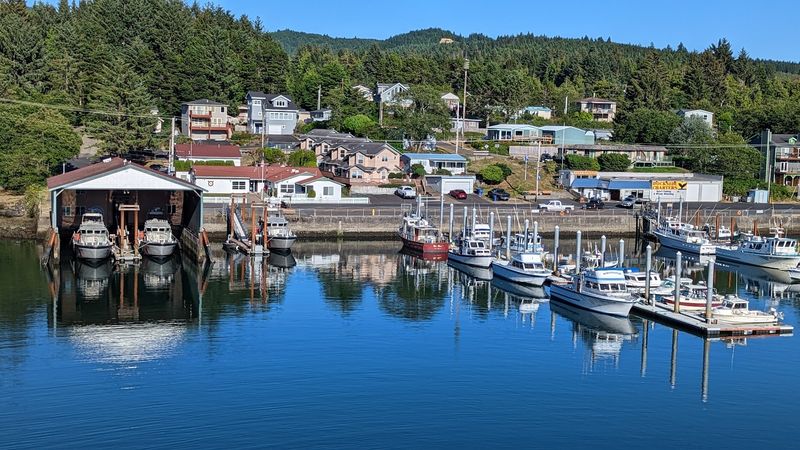
Depoe Bay sits at 270 SE Coast Hwy, Oregon 97341, right along U.S. Route 101 in Lincoln County, Oregon.
The city hugs the Pacific Ocean with a confidence that seems almost unreasonable for a town of about 1,515 people.
The star of the show is the harbor, a 6-acre body of water that the city officially promotes as the world’s smallest navigable harbor. That is not a marketing stretch.
The entrance channel is so narrow that watching a fishing boat squeeze through it feels like watching someone parallel park a school bus in a compact-only spot.
The harbor connects directly to the open Pacific through a tight rocky channel, which makes every departure and arrival a little bit of an event. Locals treat it casually, but first-time visitors tend to grip the nearest railing a little tighter.
The town wraps around Highway 101 in a compact, walkable layout, so you can park once and spend an entire afternoon exploring without moving your car. That kind of easy access is rare on the Oregon coast, and it makes Depoe Bay genuinely satisfying to visit.
The Whale-Watching Scene That Earned the Town Its Reputation
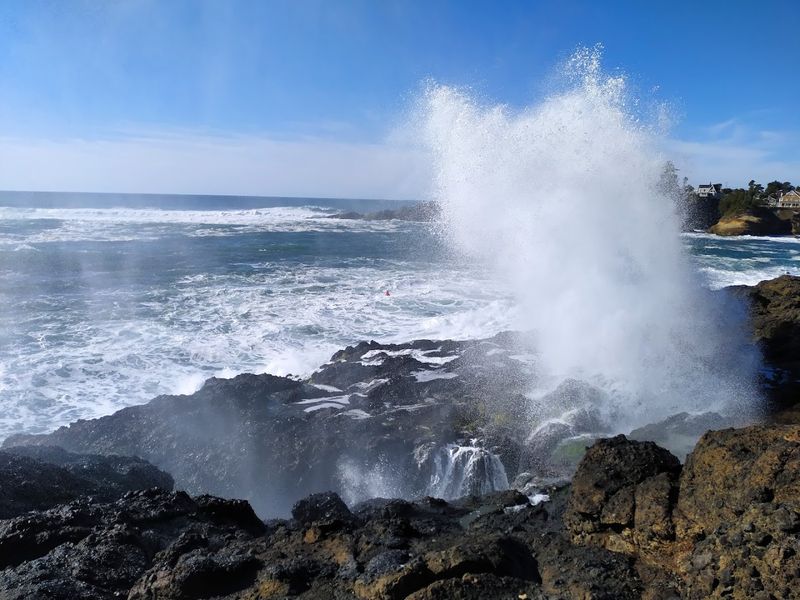
Gray whales pass through this stretch of the Oregon coast twice a year during their migrations, and Depoe Bay has positioned itself right in the middle of that action. The town is widely known as Oregon’s whale-watching capital, and after spending time on the seawall here, it is easy to understand why that title stuck.
During peak migration in December through January and again in March through June, whales come close enough to shore that binoculars are optional. A pair of them surfaced about 200 yards offshore during my visit, and the crowd on the seawall reacted like a hometown team had just scored.
The Whale Watching Center, run by Oregon State Parks, sits right on the highway and offers free admission. Volunteers staff it during Whale Watch Weeks, which happen twice a year, and they are genuinely enthusiastic about pointing out spouts and flukes to anyone who walks in.
Even outside of peak season, resident gray whales hang around the bay feeding on ghost shrimp in the rocky shallows, which means a whale sighting is never completely off the table no matter when you show up.
The Seawall Where the Ocean Makes Its Most Dramatic Entrance
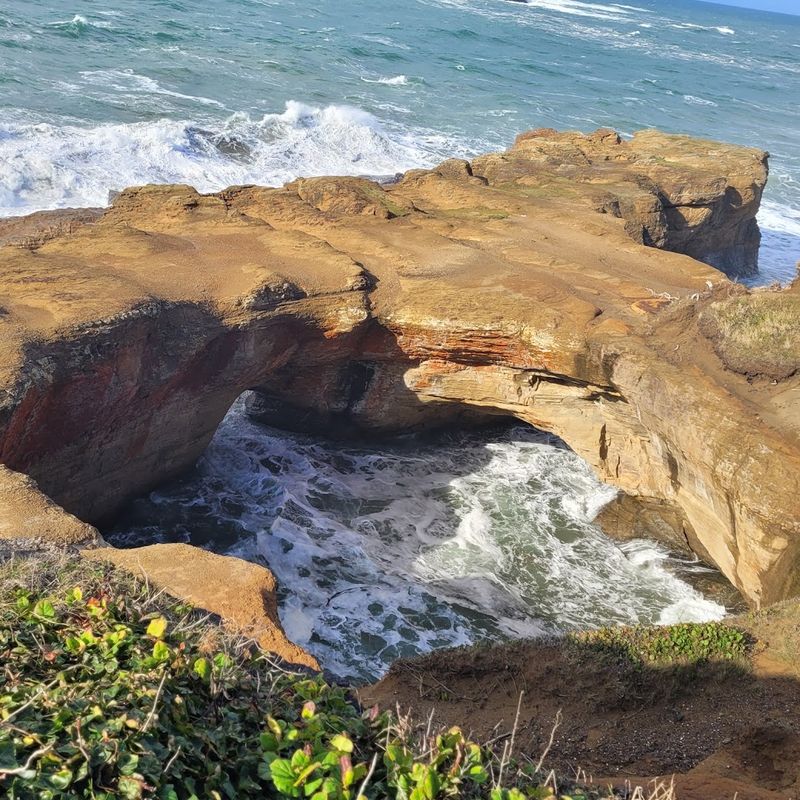
The seawall running along the highway in Depoe Bay is one of those places where the Pacific Ocean reminds you exactly who is in charge. When swells roll in from the open ocean and hit the rocky shoreline, the water does not just splash.
It launches itself upward in sheets of white spray that can reach 40 feet or higher during big storm events.
Locals call these the spouting horns, natural rock formations that funnel incoming waves through narrow gaps and shoot the water skyward. The effect is loud, wet, and completely mesmerizing.
I got drenched standing on the wrong side of a safety sign and considered it entirely worth it.
The seawall is publicly accessible and runs right along the edge of town, making it one of the most dramatic and completely free attractions on the Oregon coast. You do not need a trail map or a guided tour.
Just walk out and stand there.
On calm days, the water is still striking in a quieter way, with deep blue swells rolling in and the harbor entrance visible just to the south. The contrast between those two moods is part of what makes this spot so endlessly watchable.
Ocean Cliffs That Frame Every View With Dramatic Geology
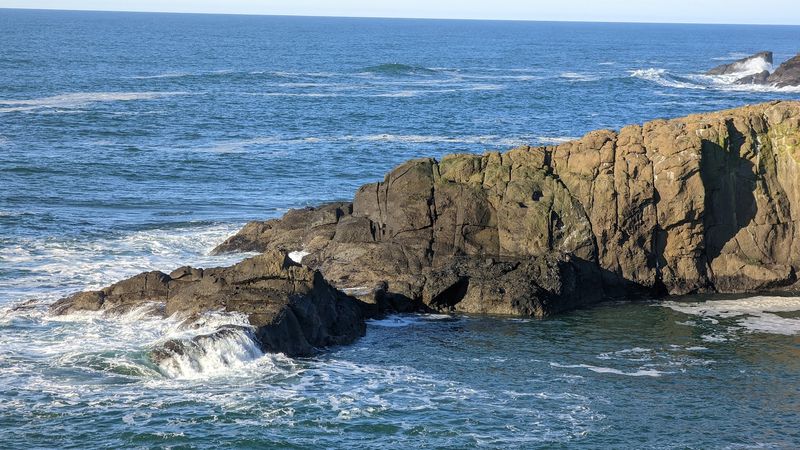
The cliffs around Depoe Bay are not the soft sandy bluffs you find further south along the coast. These are hard, dark basalt formations that have been shaped over millions of years by waves that show absolutely no patience.
The result is a coastline that looks almost sculpted, with sharp edges, deep crevices, and ledges that jut out over the water at bold angles.
From the highway pullouts near town, the cliff views stretch north and south along the coast in a way that makes the Oregon shoreline look like something from a nature documentary. The rock is black and slick near the waterline, then gradually lightens to gray and rust tones as it rises above the spray zone.
Tidepools form in the lower sections of the cliff face during low tide, and they are worth exploring if you time your visit right. Sea stars, anemones, and hermit crabs show up in the shallow pools with reliable consistency.
The cliffs also create natural windbreaks in certain spots, which means you can find a sheltered perch and watch the ocean for long stretches without getting completely battered by the coastal breeze. That kind of small comfort matters more than you might expect.
Charter Fishing and Whale-Watching Boats That Launch From the Tiny Harbor
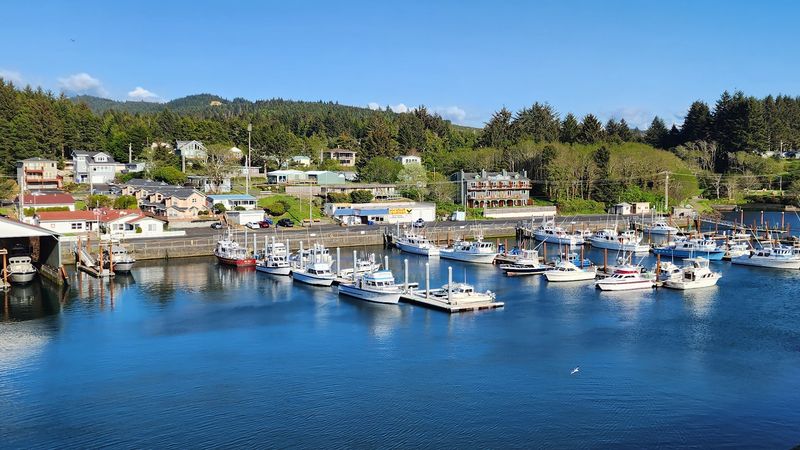
Several charter boat operations run out of the Depoe Bay harbor, and they manage to squeeze fully functional fishing and whale-watching trips through that narrow channel entrance on a daily basis. Watching the captains navigate the passage is a skill demonstration that deserves its own applause.
Fishing charters target rockfish, lingcod, and halibut depending on the season. The boats are small by commercial standards, which means you are never far from the action and the crew has time to actually help you if your line gets tangled, which mine did, twice, without any shame about it whatsoever.
Whale-watching trips run on two-hour schedules and take you out past the surf line where the gray whales feed and travel. Seeing a whale from the water rather than the shore is a completely different experience.
The scale of the animal becomes real in a way that a distant spout from the seawall cannot fully communicate.
Reservations are recommended during peak season, and many operators post real-time whale sighting reports online. Checking those before you book can help you pick the right departure time to maximize your chances of a close encounter on the open water.
The Quiet Story Behind One of Oregon’s Most Compact Coastal Towns
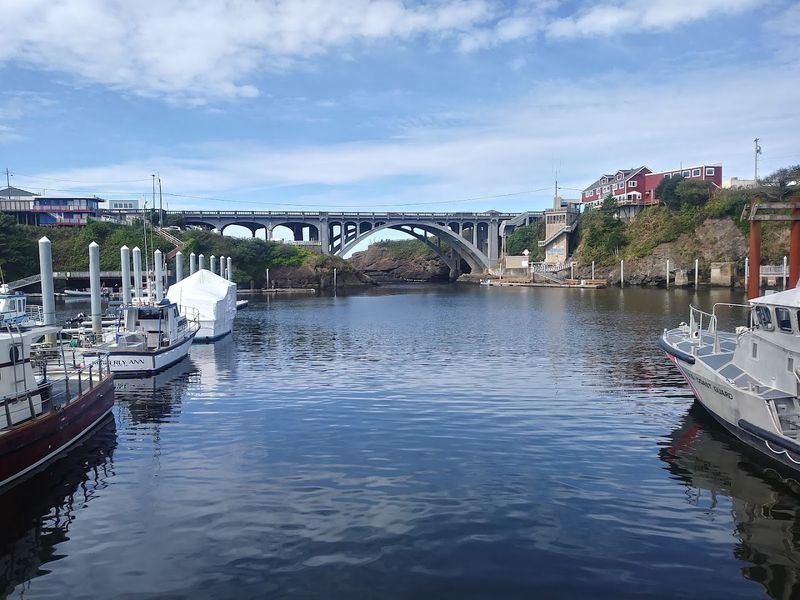
Depoe Bay was incorporated as a city in 1973, but the community around the harbor goes back much further. The town’s name is believed to come from a Siletz tribal member known as Charlie Depot, who received a land allotment in the area in the early 1900s.
That origin story gives the place a more layered history than its compact size might suggest.
The construction of U.S. Route 101 through the area in the 1920s and 1930s transformed the harbor from a local fishing spot into a destination.
The seawall and the highway bridge over the harbor channel date to that era, and both still define the physical look of the town today.
Tourism built up gradually around the whale-watching reputation, and the town leaned into it. The Whale Watching Center opened as a permanent fixture to support the seasonal surge of visitors who arrive specifically for the gray whale migrations.
Unlike some coastal towns that have been smoothed over by development, Depoe Bay has kept a working-town character. The fishing fleet still uses the harbor, and the rhythm of the tides still drives the daily schedule in ways that feel genuine rather than staged for visitors.
Coastal Storms and Winter Swells That Turn the Town Into a Front-Row Seat
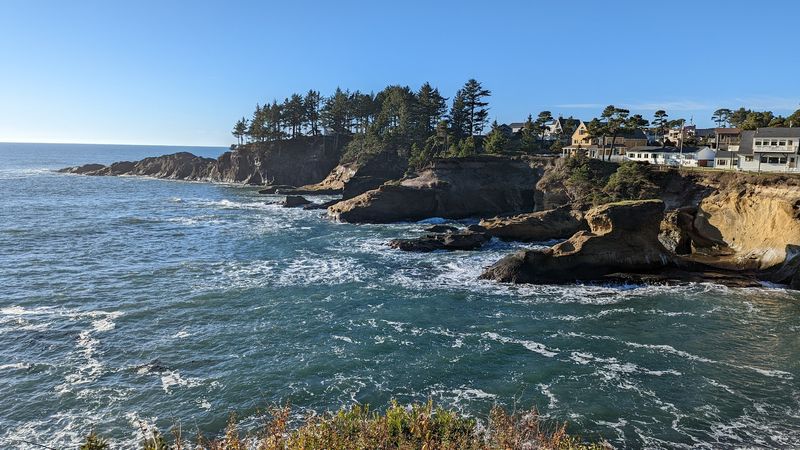
Winter along the Oregon coast is not a season most beach destinations advertise, but Depoe Bay is a genuine exception. When storm systems roll in off the Pacific between November and February, the wave action at the seawall becomes one of the most dramatic natural shows on the West Coast.
Swells from distant storms build for thousands of miles before they hit the basalt cliffs here, and the energy they carry is visible in every crashing wall of water. The spouting horns go into full performance mode during these events, and the spray can cross the highway on particularly active days.
Storm watching has become its own draw for visitors willing to trade sunshine for spectacle. The town sees a consistent stream of people during winter months specifically because of the wave activity, not despite it.
Hotels and rental properties along the coast market storm-view rooms as a selling point, and they fill up during major swell events.
The practical advice is simple: wear waterproof gear, respect the warning signs near the water, and do not stand anywhere the spray is actively landing. The ocean here is powerful enough that it does not need to be provoked to put on a show.
Tidepools and Marine Life Along the Rocky Shore
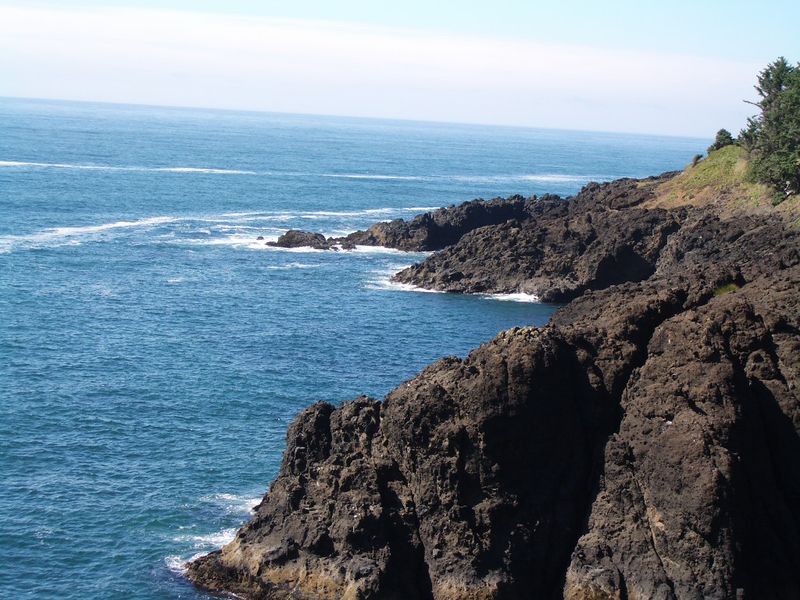
Low tide at Depoe Bay reveals a completely different coastline than the one you see from the highway. The basalt shelves that extend from the cliffs become accessible, and the tidepools that form in the rock depressions hold a dense collection of marine life that surprises most visitors who were not expecting a biology lesson alongside their ocean views.
Purple sea urchins, ochre sea stars, giant green anemones, and hermit crabs are all common sightings. The pools are shallow enough that children can observe everything clearly without needing to get their feet wet, though most kids end up wet anyway because the pools are just too interesting to observe from a distance.
The Oregon Department of Fish and Wildlife asks visitors to look but not touch or collect anything from the tidepools. That rule exists because the ecosystems are surprisingly fragile despite how rugged they look, and repeated handling of the animals causes real stress to the populations.
Timing your tidepool visit to low tide is essential. A tide chart is easy to find online, and planning around it is the difference between an impressive experience and a view of rocks covered in water.
The extra planning step is absolutely worth it.
The Highway Bridge That Doubles as the Harbor’s Front Door
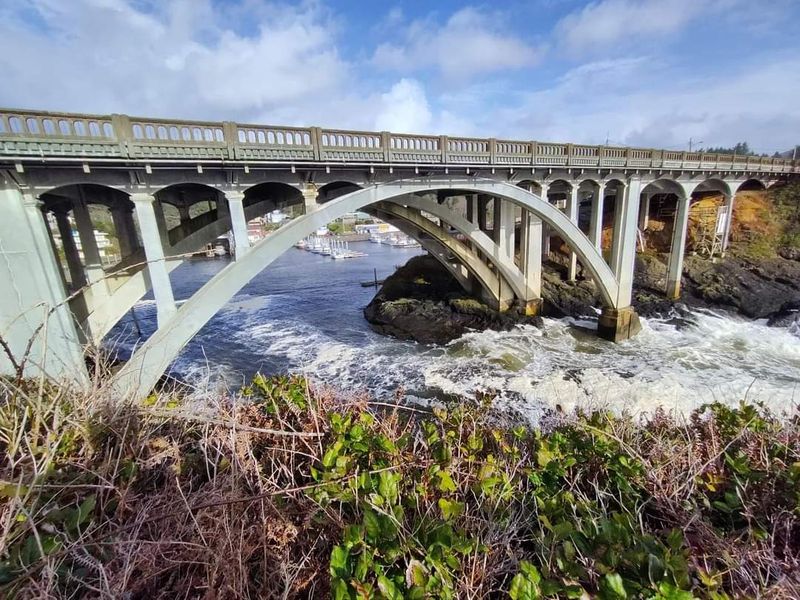
The bridge that carries U.S. Route 101 over the harbor entrance channel at Depoe Bay is not just a piece of infrastructure.
It is a viewing platform, a landmark, and the physical feature that makes the harbor’s claim of being the world’s smallest navigable harbor so visually convincing.
From the bridge railing, you can look down into the channel and watch the water surge in and out with each wave cycle. The channel is narrow enough that you could throw a baseball across it without much effort, yet fishing boats and whale-watching vessels pass through it regularly.
The bridge was built in the 1920s as part of the coastal highway construction project and has been a defining feature of the town ever since. Its low profile keeps the harbor visible from the highway, which is part of why so many people stop here even when they were not planning to.
On busy summer days, the bridge sidewalk fills with people watching boats come and go, and the whole scene has a relaxed, communal energy that feels like the town’s unofficial gathering spot. It is one of those places where strangers end up talking to each other because the view gives them an easy reason to pause.
Local Shops, Seafood, and the Unhurried Pace of a Real Coastal Community
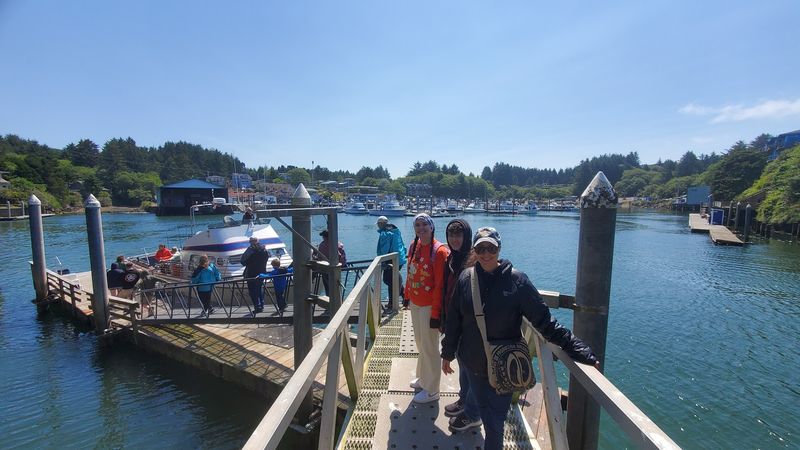
The commercial strip along Highway 101 in Depoe Bay is short enough to walk end to end in about ten minutes, but it covers the essentials in a way that feels curated rather than sparse. Whale-watching gear shops, seafood restaurants, and a few local gift stores fill the storefronts without any of the chain-restaurant sameness that takes over larger coastal towns.
Fresh Dungeness crab and clam chowder show up on almost every menu in town, and the quality is consistent because the supply chain is short. The fishing fleet that uses the harbor brings in product that ends up in local kitchens quickly, and that freshness is noticeable on the plate.
The pace of the town is genuinely unhurried in a way that is increasingly rare. Nobody seems to be in a rush, the parking situation is manageable even in summer, and the overall vibe is closer to a working fishing community than a polished resort town.
That character is part of what makes Depoe Bay worth more than a quick stop on a Highway 101 road trip. It rewards the visitors who slow down and actually spend time here rather than treating it as a photo opportunity between destinations further up or down the coast.
Best Times to Visit and What to Expect Each Season
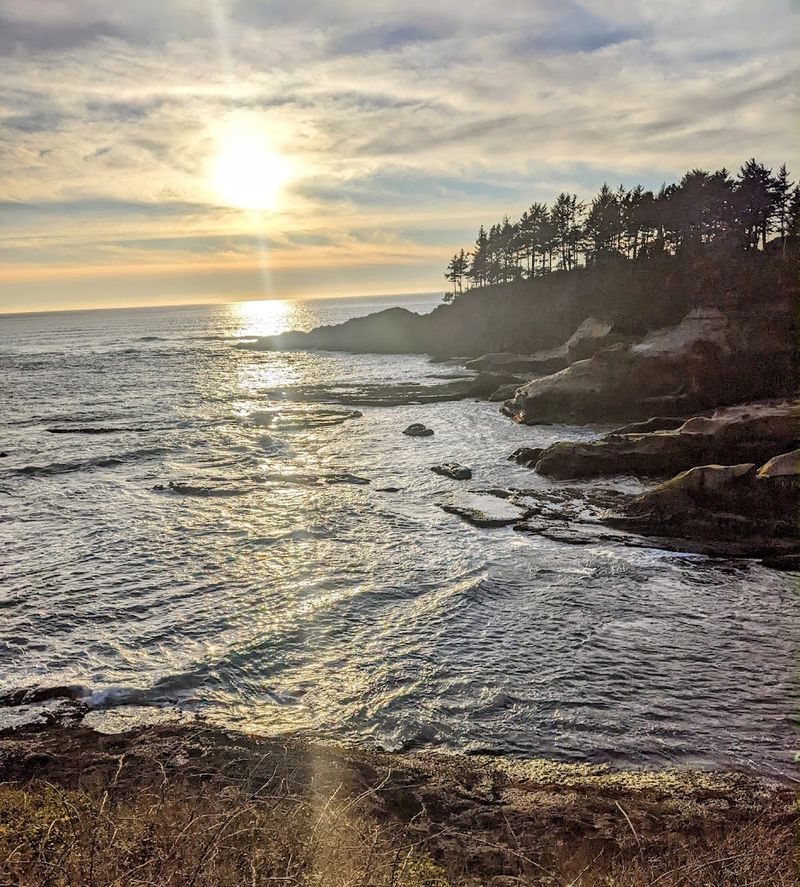
Depoe Bay rewards visitors differently depending on when they arrive, and understanding that seasonal rhythm helps you get the most out of a trip. Summer brings the clearest skies and the calmest ocean conditions, which makes it the best time for charter fishing and whale-watching boat trips.
The resident gray whales that feed in the bay through summer are a reliable presence.
Spring migration runs from March through June and brings the highest whale counts, with thousands of gray whales moving north along the coast after wintering in Baja California. This is when the Whale Watching Center sees its biggest crowds and when the volunteer staff is most active with spotting assistance.
Fall is a quieter period that still offers decent whale activity and noticeably fewer visitors. The weather is transitional, with a mix of clear days and early storm systems that can produce impressive wave action without the full intensity of winter swells.
Winter is for storm watchers and people who prefer their coastline with some drama. The wave events during this season are unlike anything you will find further inland, and the town handles the crowds that come specifically for the storms with a calm efficiency that reflects how central that season has become to the local identity.
Why This Small Oregon Town Stays With You Long After You Leave
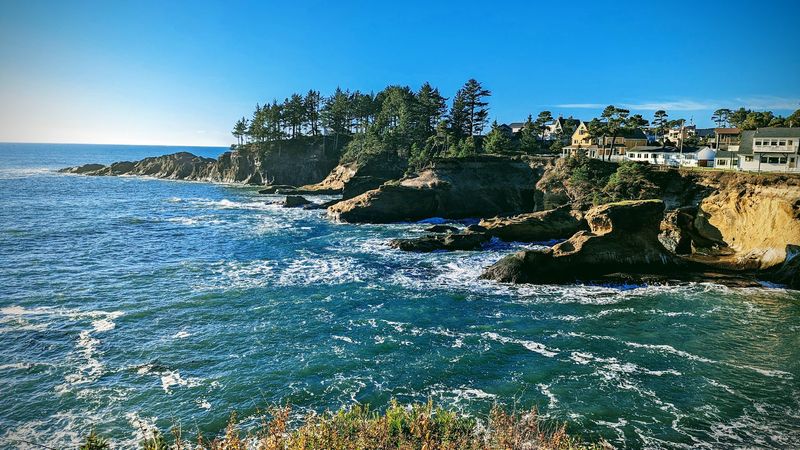
There is something about Depoe Bay that resists easy summarization, and I have been thinking about that since I left. It is not the biggest coastal town, not the most famous, and not the one with the longest list of amenities.
But it has a specific combination of natural drama and human scale that is genuinely hard to find.
The harbor that looks too small to be real. The waves that treat the seawall as a suggestion.
The whales that show up close enough to make you question whether you actually need to book a boat trip. All of it happens within a few walkable blocks of a town that has managed to stay true to its working-coast identity.
Visitors from across the country, including plenty who have made the long drive from places like Oklahoma, tend to describe it as one of those places that recalibrates your sense of what a coastal town can be. Oklahoma travelers especially seem struck by the sheer scale of the ocean energy here, so different from anything landlocked states can offer.
Depoe Bay does not try to be everything to everyone. It just does its specific thing extraordinarily well, and that focused authenticity is exactly why it stays with you.
Share this story