The music of 1961 captured a moment of transition in American popular culture. Rock and roll remained a dominant force, but soul, doo-wop, teen pop, and early Motown were all beginning to reshape the sound of the charts.
It was a year when vocal groups, teen idols, and groundbreaking new artists shared space on the radio, creating one of the most varied musical landscapes of the era.
Many of the songs on this list became major hits, while others earned their place through lasting influence rather than chart position. Together, they reflect the themes, styles, and voices that defined a pivotal year in music history, from dance-floor favorites to heartfelt ballads and early soul classics.
More than six decades later, these recordings still offer a snapshot of a rapidly changing musical world. Keep reading to revisit the songs that helped define 1961 and paved the way for the revolutionary decade that followed.
1. Runaround Sue – Dion
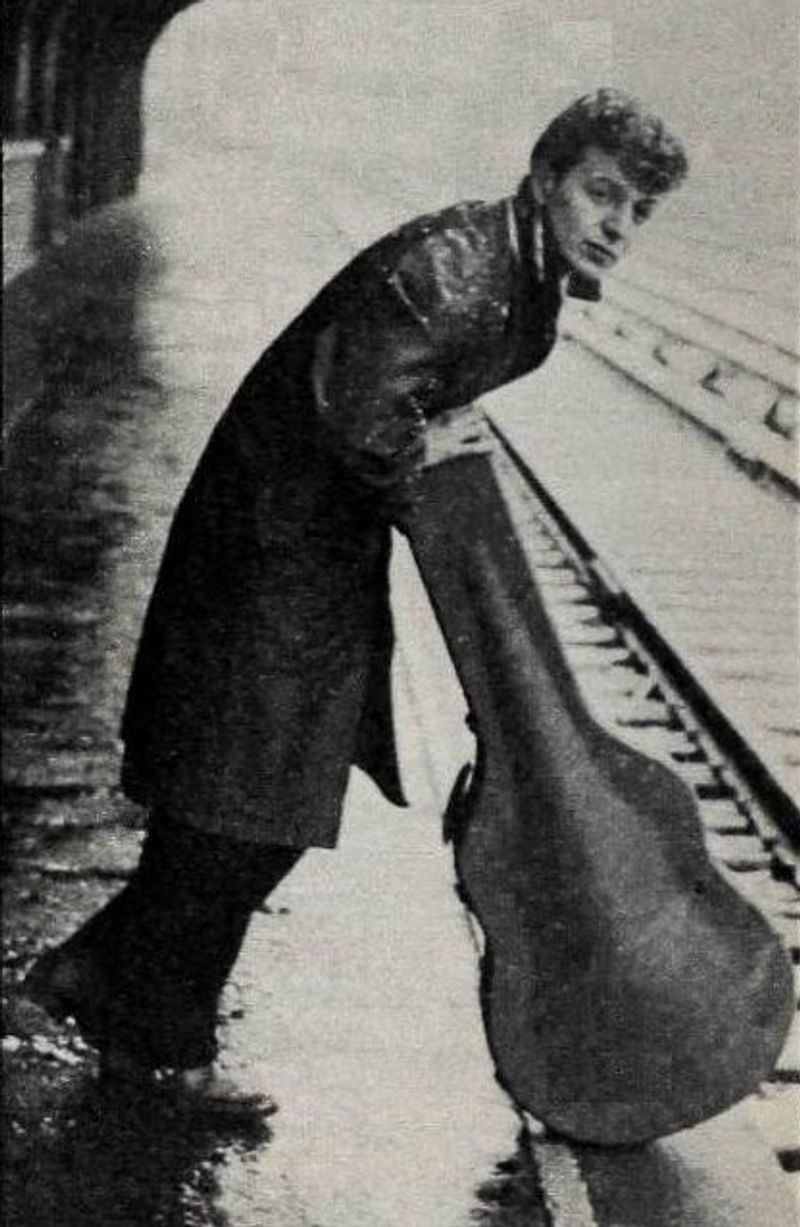
Dion DiMucci recorded this track in the summer of 1961, and it shot to number one on the Billboard Hot 100 by October of that year. The song was built on a rolling doo-wop rhythm that drew directly from the street-corner vocal group tradition Dion had grown up with in the Bronx.
What made Runaround Sue stand out wasn’t just its catchy structure. The lyrics told a straightforward cautionary story about a girl who couldn’t stay loyal, and that kind of direct storytelling was something teenagers in 1961 understood immediately.
Dion had already scored hits with the Belmonts, but this solo record proved he didn’t need a group behind him to dominate the charts. It became one of the most-played songs of the year and helped define the early-’60s sound that bridged classic doo-wop with the more polished pop production style gaining ground at the time.
2. Stand by Me – Ben E. King
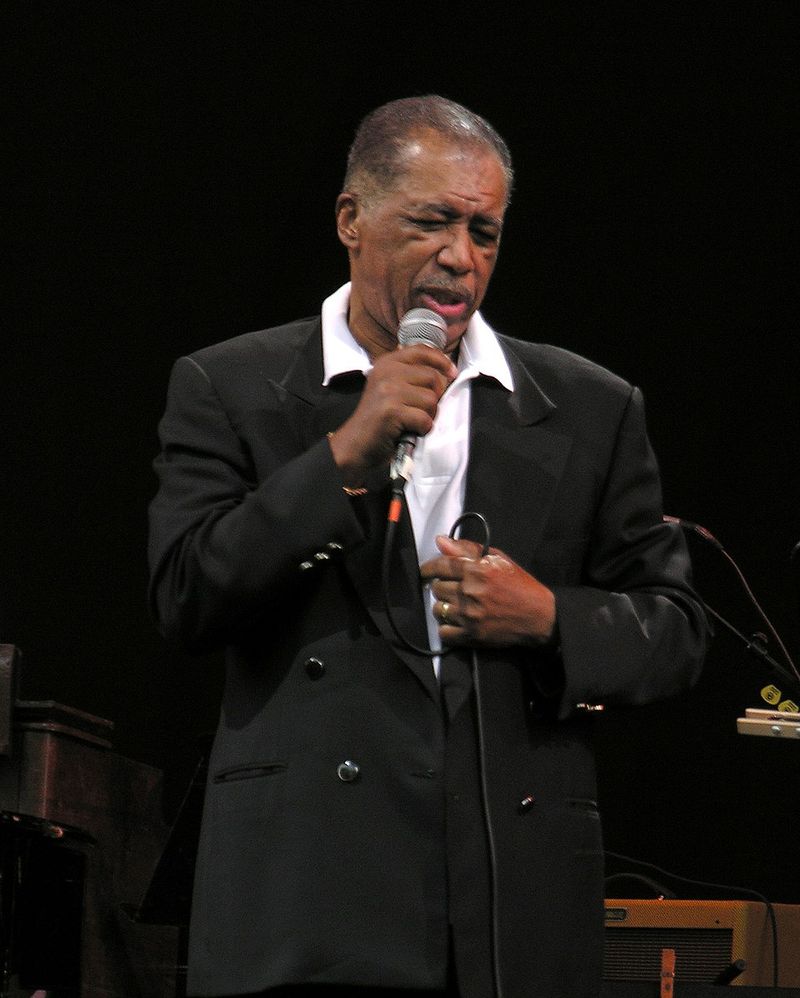
Ben E. King wrote Stand by Me after leaving The Drifters, drawing on the structure of an old gospel spiritual called Stand by Me Father.
He recorded it for Atco Records in early 1961, and the song reached number four on the Billboard Hot 100 that spring.
The production was built around a simple but effective bass line, string arrangement, and King’s remarkably controlled vocal delivery. Producer Jerry Leiber and arranger Gary Sherman kept the track uncluttered, letting King’s voice carry the full emotional weight.
At its core, the song is about loyalty during uncertain times, a theme that connected with listeners across different backgrounds and age groups. It crossed both pop and R&B charts with ease.
Stand by Me has since been covered hundreds of times and was inducted into the Grammy Hall of Fame, but the original 1961 recording remains the definitive version by a wide margin.
3. Travelin’ Man – Ricky Nelson
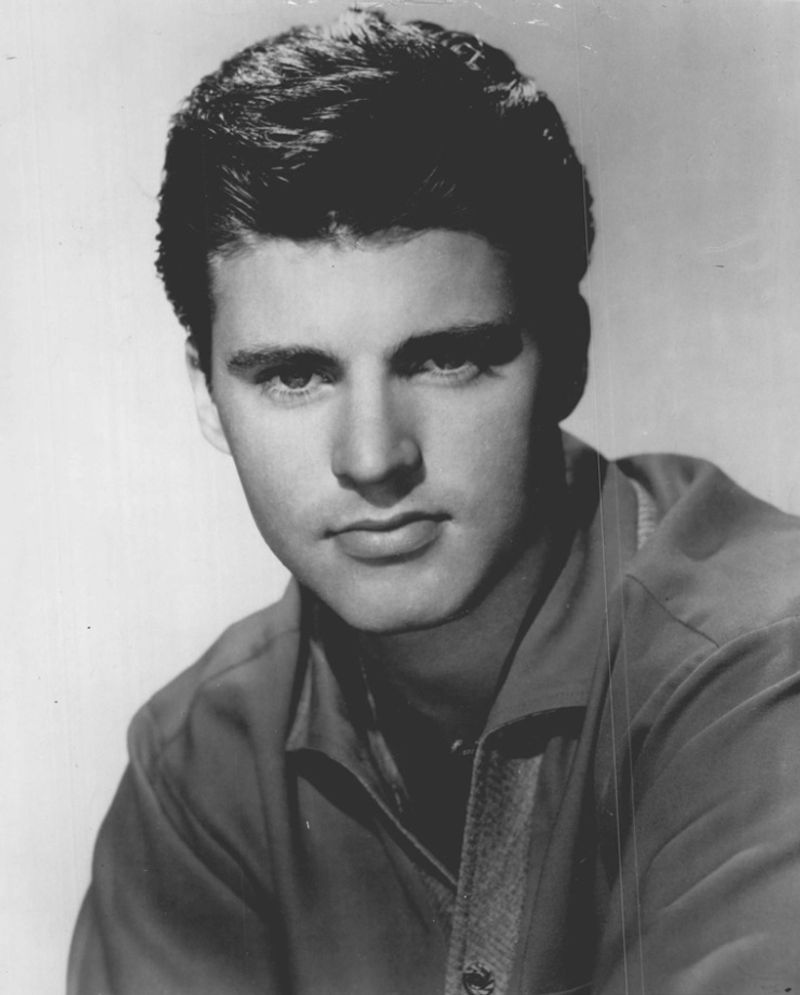
Ricky Nelson had one of the most unusual career paths in early rock and roll. He became famous through his family’s television program, The Adventures of Ozzie and Harriet, and used that platform to launch a genuine music career with real chart success throughout the late 1950s.
Travelin’ Man, written by Jerry Fuller, reached number one on the Billboard Hot 100 in May 1961 and stayed there for two weeks. The song followed a roaming young man with romantic connections in cities around the world, a concept that appealed strongly to the adventure-minded teenage audience of the era.
Nelson’s clean vocal style and the song’s polished production made it a perfect example of the teen-idol sound that major labels were investing heavily in during this period. It was paired with Hello Mary Lou as a double A-side single, and both tracks performed exceptionally well, cementing Nelson’s status as one of 1961’s most commercially successful artists.
4. Crying – Roy Orbison
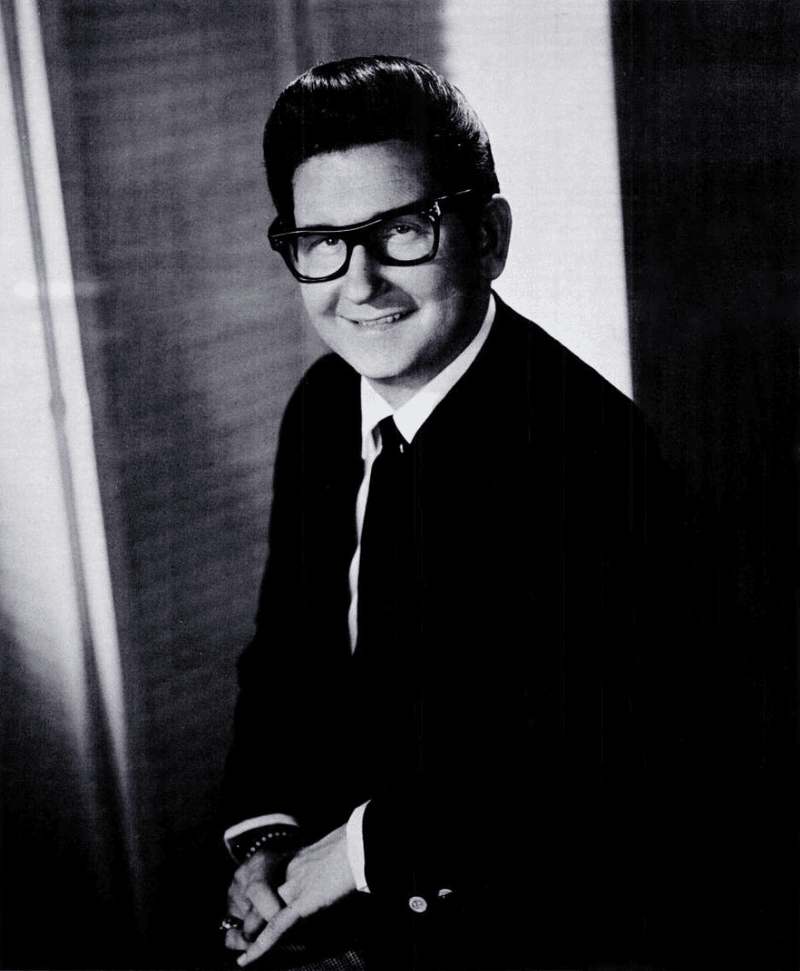
Roy Orbison released Crying in the summer of 1961, and it reached number two on the Billboard Hot 100. The song was built around a vocal performance that pushed well beyond what most pop singers of the era attempted, climbing into a falsetto register that was both technically demanding and emotionally effective.
Orbison co-wrote the track with Joe Melson, drawing on the feeling of unexpectedly seeing a former love and realizing the emotions hadn’t faded. The orchestral arrangement gave the song a cinematic quality that set it apart from the more straightforward productions dominating the charts at the time.
Monument Records founder Fred Foster understood that Orbison’s voice required a different kind of production approach than typical rock and roll, and Crying was one of the clearest examples of that philosophy in action. The song helped establish Orbison as an artist in a category of his own, and its influence on later pop ballad singers has been widely documented by music historians.
5. Pony Time – Chubby Checker
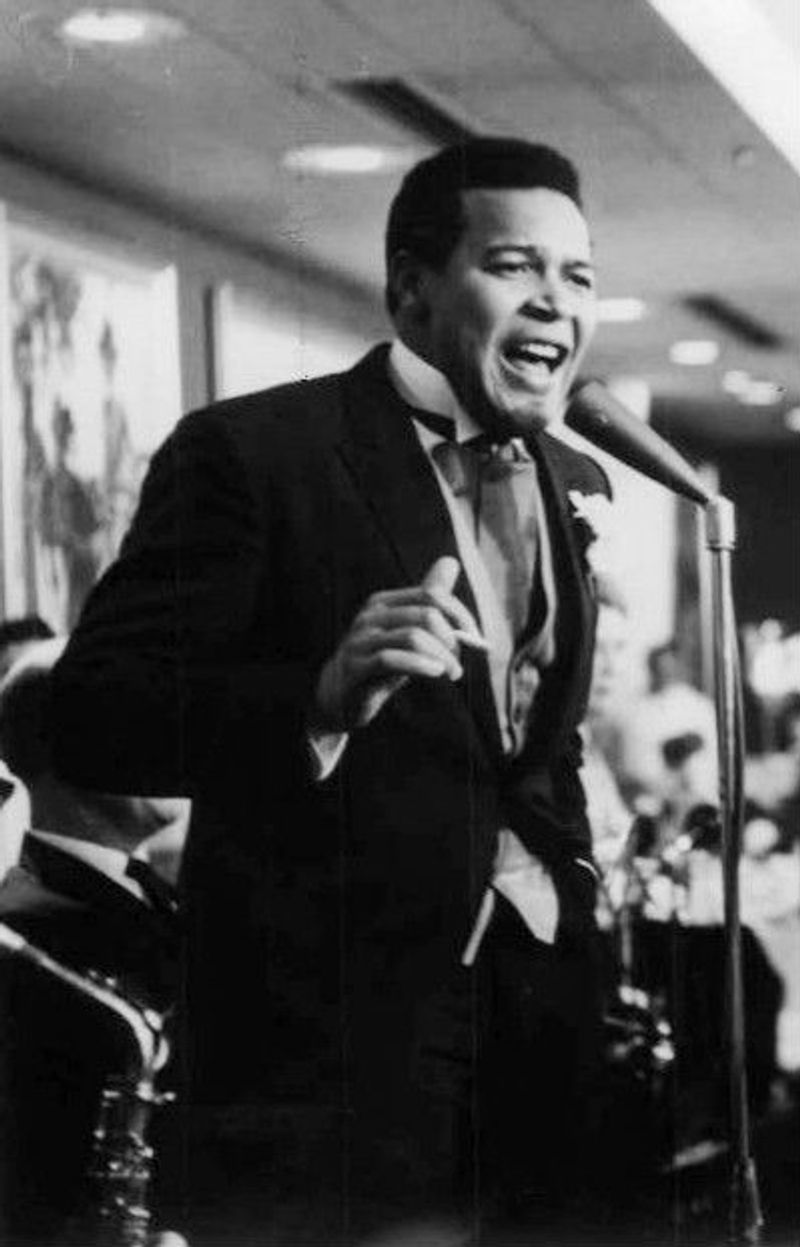
Chubby Checker had already changed American popular culture in 1960 with his recording of The Twist, which launched a nationwide dance craze that reached well beyond the teenage demographic. Pony Time arrived in early 1961 and proved that the appetite for dance-focused records was still very much alive.
The song reached number one on the Billboard Hot 100 in February 1961, making Checker one of the most commercially dominant artists of the year. It was written by Don Covay and John Berry, and its driving rhythm was specifically designed to be performed with a particular set of dance moves.
Dance crazes were a genuine social phenomenon in the early 1960s. They spread through television appearances, teen clubs, and school dances, creating shared cultural experiences across the country.
Pony Time fit perfectly into that pattern, giving young people a new set of moves to learn and a reason to gather. It was a product of its specific cultural moment in the most literal sense.
6. Shop Around – The Miracles
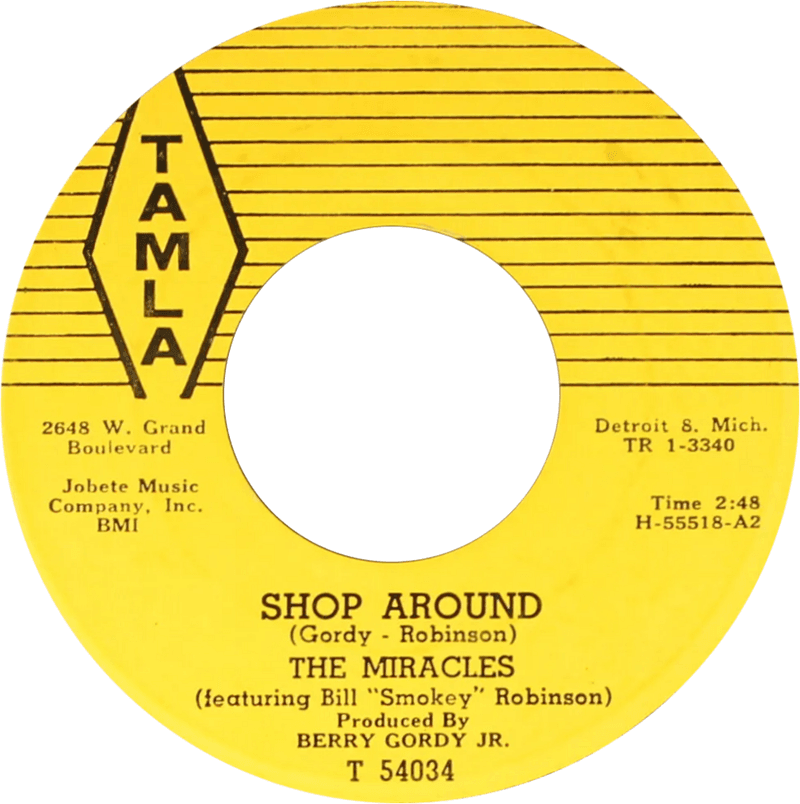
Berry Gordy founded Motown Records in Detroit in 1959, and Shop Around became the label’s first record to sell over one million copies. Smokey Robinson wrote and produced the track, and the version most people know was actually a re-recorded take that Gordy insisted on after hearing the original at a late-night listening session.
The song reached number two on the Billboard Hot 100 in early 1961 and topped the R&B chart. Its message, delivered with a light, conversational tone, was essentially practical advice about not rushing into a romantic commitment, which resonated with a young audience navigating their first relationships.
Shop Around marked a turning point not just for Motown but for American popular music broadly. The label’s approach to production, combining polished arrangements with emotionally relatable lyrics and strong vocal performances, was something genuinely new.
This record demonstrated that a Black-owned independent label from Detroit could compete directly with the major labels for mainstream pop chart dominance.
7. Hit the Road Jack – Ray Charles
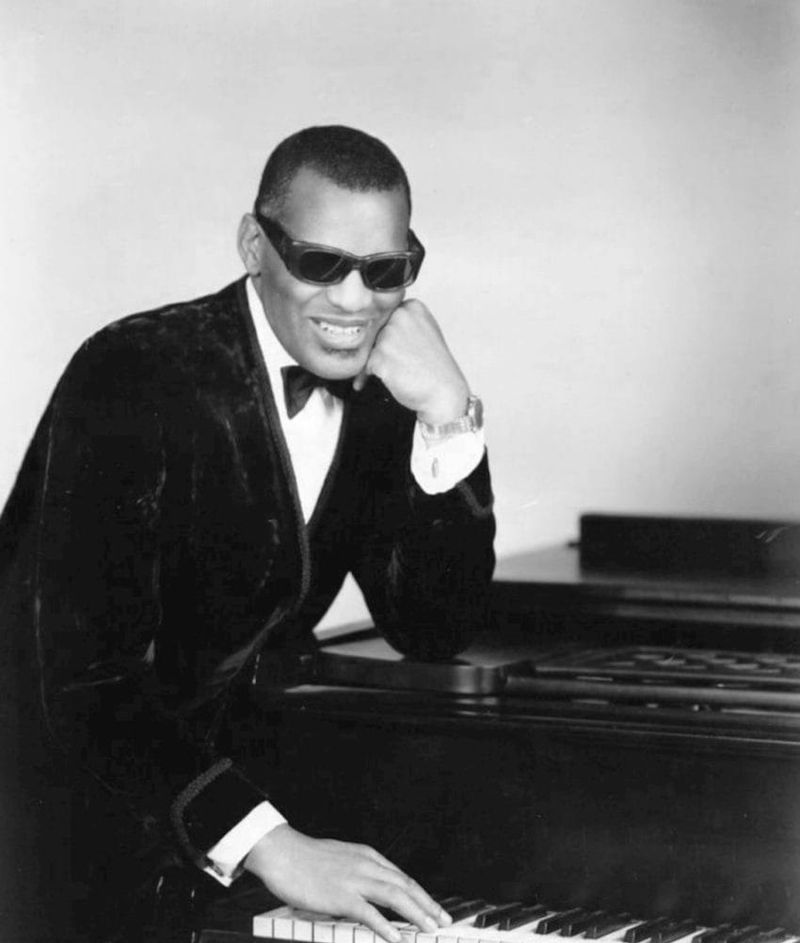
Percy Mayfield wrote Hit the Road Jack, and Ray Charles recorded it for ABC-Paramount Records in the summer of 1961. The song reached number one on the Billboard Hot 100 in October of that year and won the Grammy Award for Best Rhythm and Blues Recording in 1962.
The track’s structure was built around a call-and-response exchange between Charles and the Raelettes, his backing vocal group. That format gave the song an almost theatrical quality, with the departing man and the dismissive woman trading lines in a way that was both funny and pointed.
Ray Charles was already a major figure in American music by 1961, having crossed from R&B into pop with enormous success. Hit the Road Jack showed a different side of his range, combining humor with musical sophistication in a way that felt effortless.
The song has been covered extensively over the decades and remains one of his most recognized recordings, which is saying something given the depth of his catalog.
8. Take Good Care of My Baby – Bobby Vee
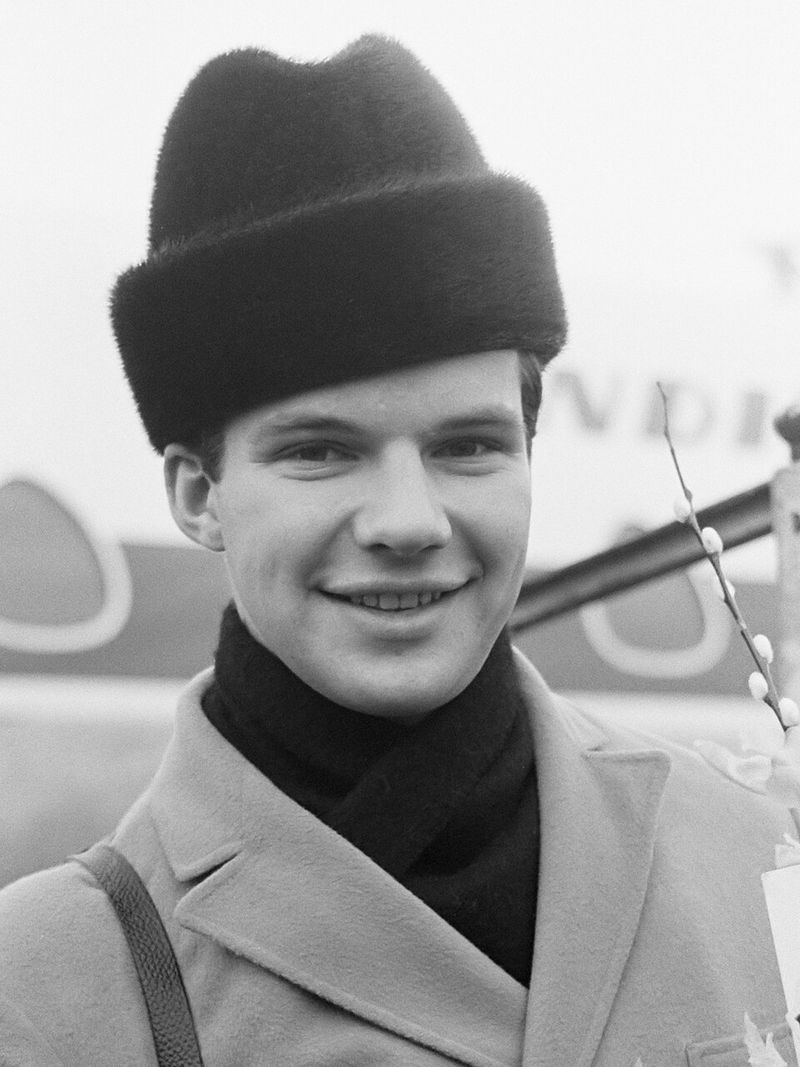
Carole King and Gerry Goffin wrote Take Good Care of My Baby, and it was one of several major hits the songwriting duo produced from their workstation at the Brill Building in New York City. Bobby Vee recorded it in 1961, and it reached number one on the Billboard Hot 100 in September of that year.
The Brill Building model was a highly organized approach to pop songwriting, where professional writers created polished, emotionally precise songs for specific artists and audiences. Take Good Care of My Baby was a near-perfect example of that craft, telling a story of romantic loss with just enough detail to feel personal without being too specific.
Bobby Vee had a smooth, approachable vocal style that suited the song’s gentle tone. He was among the most consistent chart performers of the early 1960s, and this track represented the peak of that commercial run.
It remains one of the clearest examples of how the Brill Building songwriting system shaped mainstream pop during this period.
9. Walk Right Back – The Everly Brothers
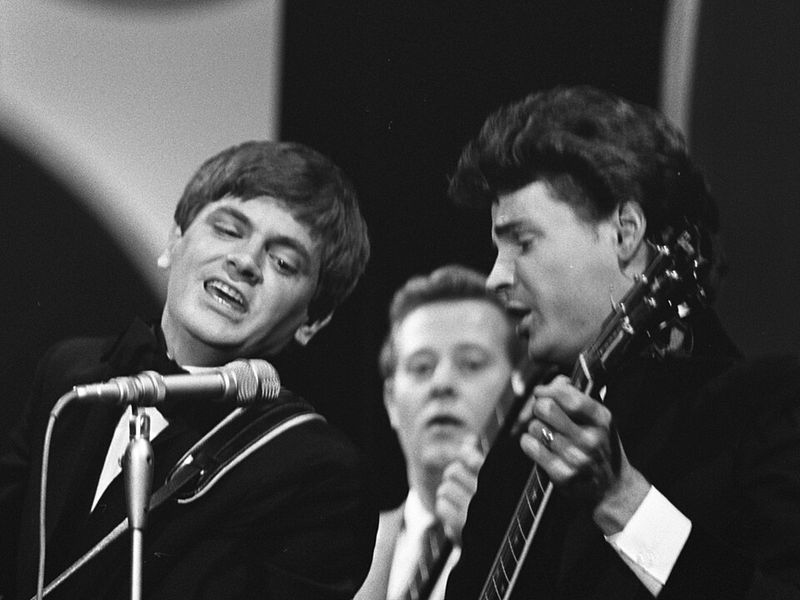
Don and Phil Everly built their career on close vocal harmonies that drew from country music traditions but were polished enough to appeal to mainstream pop audiences. Walk Right Back, written by Sonny Curtis of the Crickets, was released as a double A-side single alongside Ebony Eyes in early 1961.
The record reached number seven on the Billboard Hot 100 in the United States and performed even better in the United Kingdom, where it hit number one. The Everly Brothers had a particularly strong following in Britain, and their influence on the vocal harmony style of later British groups has been well documented.
Walk Right Back captured a specific mood of longing and regret without overplaying it. The production was clean and the arrangement restrained, which let the vocal interplay between the two brothers carry the track.
By 1961, the duo had already released a string of major hits, and this record reinforced their standing as one of the era’s most reliable and musically accomplished acts.
10. Runaway – Del Shannon
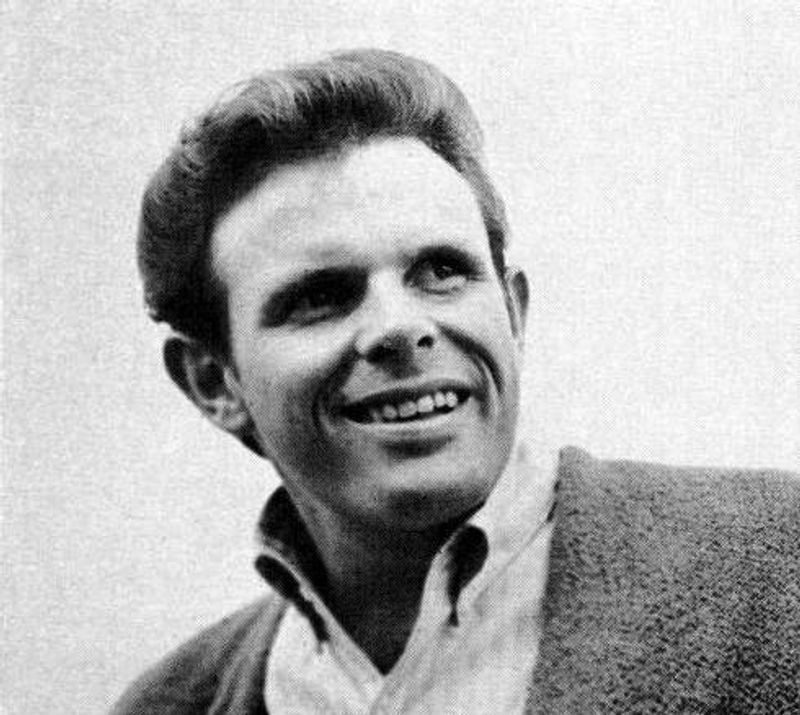
Del Shannon recorded Runaway at a Michigan club called the Hi-Lo Club, where he and keyboardist Max Crook developed the song’s distinctive structure. Crook played a keyboard instrument he built himself called the Musitron, and its unusual tone gave the record’s instrumental break a quality that nothing else on the charts had at the time.
The song reached number one on the Billboard Hot 100 in April 1961 and topped charts in multiple countries. Shannon’s vocal delivery shifted dramatically between a normal singing register and a strained falsetto, which matched the emotional arc of the lyrics.
Runaway was a genuinely inventive record for its moment. Most chart-topping singles of 1961 followed fairly predictable production formulas, but this track used an unconventional instrument, an unusual vocal approach, and a chord progression that felt slightly off-center in a way that made it memorable.
Shannon went on to have additional hits, but Runaway remained the song most closely associated with him throughout his career.
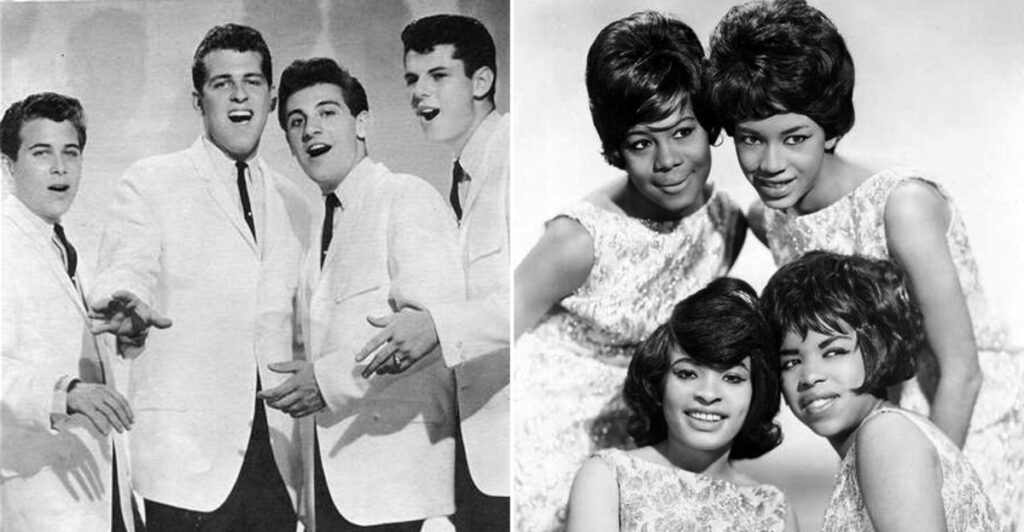
11. Bristol Stomp – The Dovells
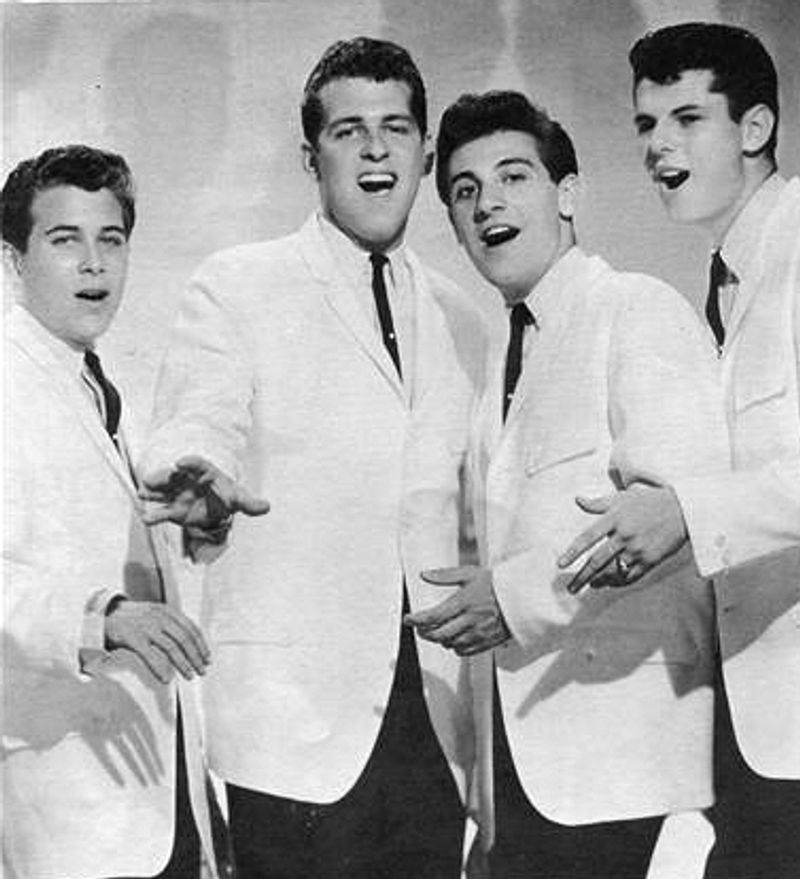
The Dovells were a vocal group from Philadelphia, and Bristol Stomp was inspired by a dance that was reportedly popular among teenagers in Bristol, Pennsylvania. The song was written by Kal Mann and Dave Appell, who worked for Cameo-Parkway Records, a Philadelphia label that specialized in teen-oriented dance music during this period.
Released in the fall of 1961, the record reached number two on the Billboard Hot 100 and became one of the year’s most energetic chart entries. Its production was deliberately straightforward, prioritizing rhythm and momentum over complexity.
The Cameo-Parkway label had a clear formula for making records that worked in the early 1960s market, and Bristol Stomp fit that template precisely. It was a regional dance craze turned into a nationally distributed record, which was a pattern that worked repeatedly during this era.
The song reflected how locally rooted teen social culture could be packaged and broadcast across the entire country through radio and television exposure.
12. Please Mr. Postman – The Marvelettes
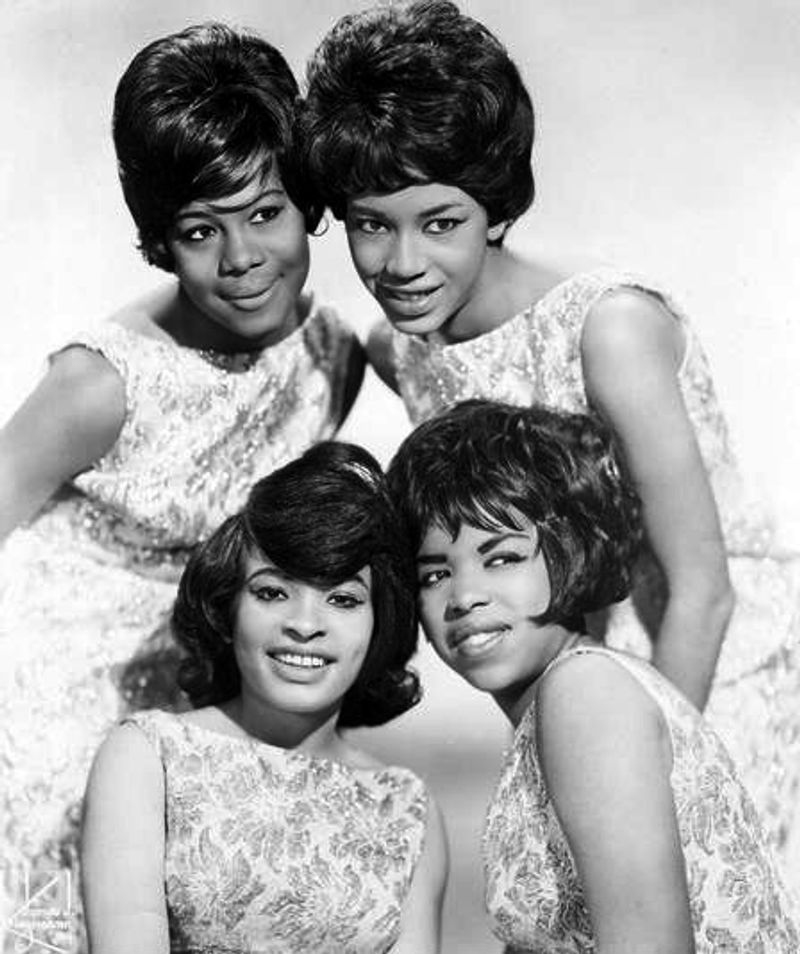
The Marvelettes were high school students from Inkster, Michigan when they auditioned for Motown Records in 1961. Please Mr. Postman became the result of that audition process, and it reached number one on the Billboard Hot 100 in December 1961, making it Motown’s first pop chart-topper.
The song was written by William Garrett and Georgia Dobbins, with additional contributions from other Motown staff writers. Its premise, a young woman waiting desperately for a letter from a distant boyfriend, was immediately relatable to the teenage audience Motown was cultivating.
The record’s success had lasting consequences for the label’s strategy. It confirmed that female vocal groups could anchor Motown’s commercial ambitions just as effectively as male acts, which directly influenced how Berry Gordy developed and promoted acts like The Supremes and Martha and the Vandellas in the years that followed.
Please Mr. Postman is one of the most historically significant singles of 1961 for exactly that reason.
Share this story