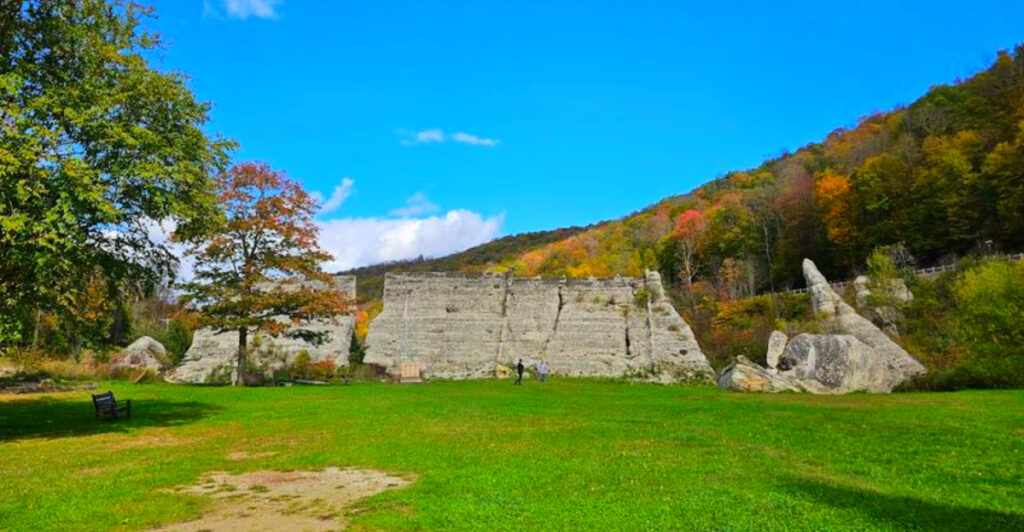
Hidden in the hills of north-central Pennsylvania, this historic site marks the location of one of the nation’s most devastating dam failures. When the Austin Dam collapsed in 1911, a massive flood swept through the valley, forever changing the local community and influencing future dam safety practices.
Today, visitors can explore the towering concrete ruins that remain from the disaster, along with exhibits and historical information that tell the story of what happened. Surrounded by scenic landscapes and walking trails, the site offers a unique blend of history and natural beauty, making it one of Pennsylvania’s most intriguing hidden landmarks.
Where the Park Sits and How to Find It

Deep in Potter County, Pennsylvania, Austin Dam Memorial Park sits along a quiet stretch of PA-872, with the official address at 5384 PA-872, Austin, PA 16720. The park is open daily from 8 AM to 8:45 PM, and the phone number on file is 814-647-3318 for anyone who wants to call ahead.
Austin is a genuinely small town, the kind of place that does not appear on many travel itineraries, which makes the discovery feel all the more rewarding. The surrounding valley is lush, rolling, and heavily forested, typical of the PA Wilds region that stretches across this part of the state.
Cell reception is limited out here, so downloading a map or directions before you leave home is a smart move. The access road can get icy in winter, and a vehicle with four-wheel drive makes the colder months far less stressful.
Summer and early autumn tend to offer the most comfortable and visually striking visit.
The Dam That Should Never Have Been Built
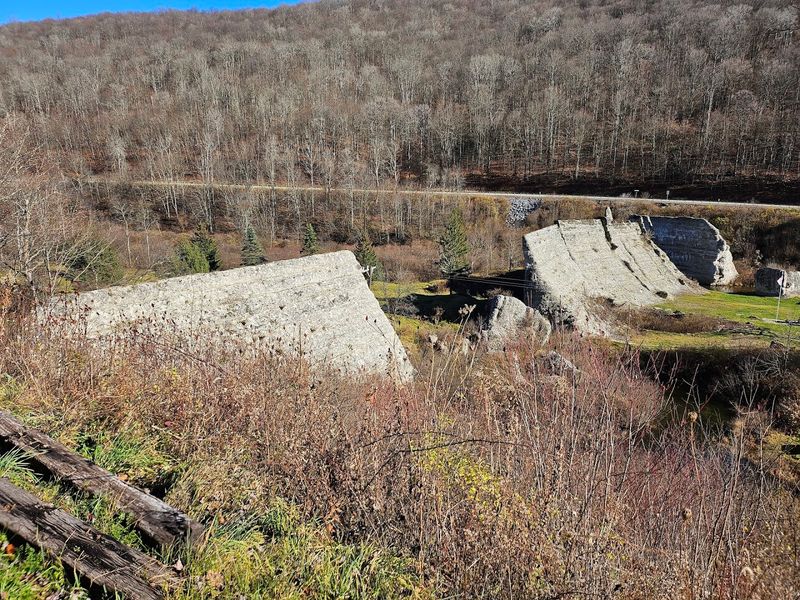
The story of this dam is really a story about cutting corners. The concrete gravity dam was constructed between May and November of 1909 on Freeman Run, built to supply water for the Bayless Pulp and Paper Company mill operating nearby in Austin.
The structure stood 50 feet tall and stretched between 530 and 544 feet across, an impressive footprint for its time. The construction cost came in at around $86,000, which translates to over $3 million in today’s money, yet critical savings were made in all the wrong places.
The dam was designed to be 30 feet thick but was actually built at only 20 feet. An underground vertical concrete slab meant to prevent water seepage beneath the dam was quietly omitted to reduce costs.
Some concrete was reportedly poured during freezing temperatures without proper curing time, which further weakened the structure from the very beginning.
Warning Signs That Nobody Heeded
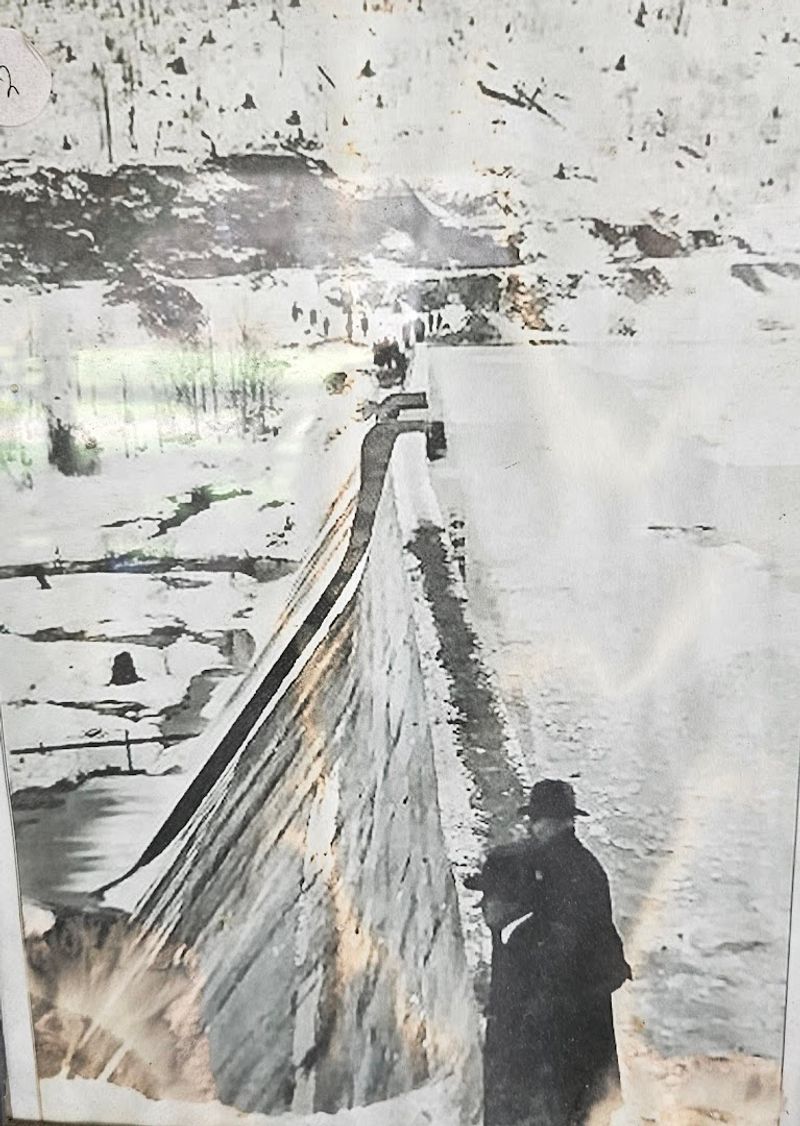
The dam did not fail without warning. Just months after the reservoir filled for the first time in January 1910, the entire structure shifted downstream, deflected noticeably, and cracked in multiple places.
That alone should have been the end of the story.
Workers used dynamite to blast a makeshift spillway into the dam to relieve the water pressure, which was a dramatic and revealing fix that exposed how fragile the structure truly was. The underlying problem, a foundation built on weak interbedded sandstone and shale that lacked the shear strength needed to hold back that volume of water, remained completely unresolved.
George C. Bayless, the mill owner, had already pressured the engineer T.
Chalkley Hatton to reduce costs during construction and later increased the dam’s storage capacity without the engineer’s knowledge or approval. The combination of a compromised foundation, a thinner-than-designed wall, and an owner pushing for more capacity created a slow-moving catastrophe that the town of Austin had no idea was coming.
The Day the Water Came
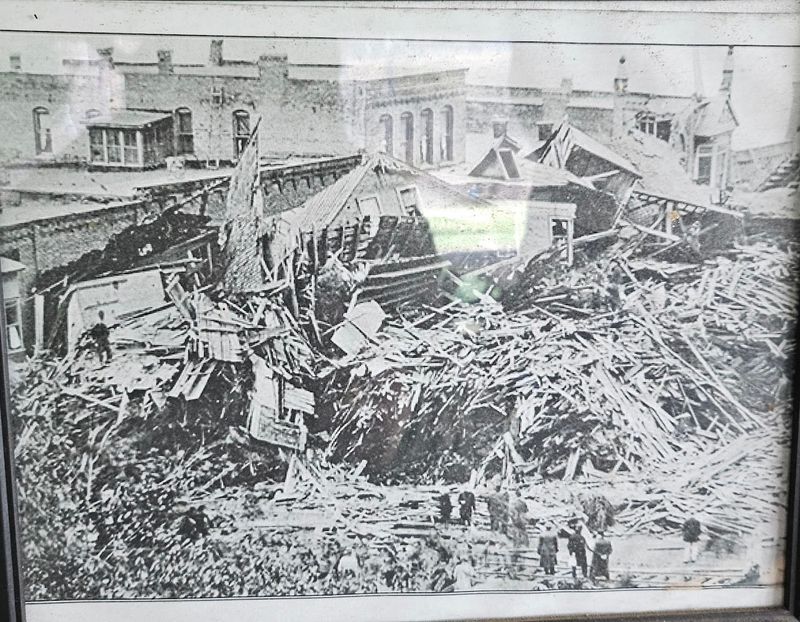
September 30, 1911 started as an ordinary autumn day in Austin. A full week of heavy rain had already raised the reservoir close to its overflow level, quietly pushing the damaged structure past whatever tolerance it had left.
When the dam finally gave way, nearly 400 million gallons of water surged down the valley in a matter of minutes. The flood wave hit the Bayless Pulp and Paper Mill first, then tore through the town of Austin and continued into the neighboring community of Costello, destroying most of what stood in its path.
At least 78 people lost their lives that day, and property damage estimates ranged from $3 million to $10 million, which equals well over $100 million in today’s economy. The disaster is recognized as the second-worst flood in Pennsylvania history and the sixth-worst dam failure in United States history measured by the number of lives taken.
The ruins you can walk among today are the physical remnants of that moment.
Ruins That Still Tell the Story
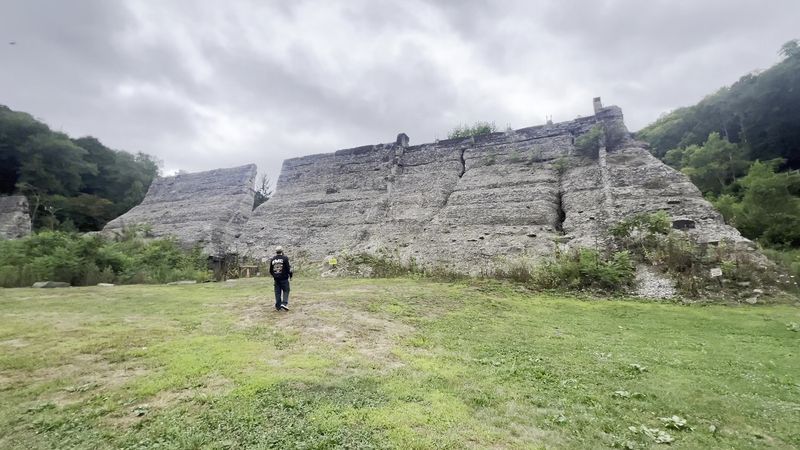
Few historic sites in Pennsylvania hit you quite the way the ruins of the Austin Dam do. The broken slabs of concrete are enormous, some tilted at sharp angles, others lying flat on the ground where the water tossed them more than a century ago.
Moss and wildflowers have reclaimed the cracks and edges, softening the scene just enough to remind you that nature does not wait around. The sheer mass of the broken pieces gives you an immediate sense of the forces that were at play on that September afternoon in 1911.
Standing at the base of the dam and looking up at what remains is a completely different experience from viewing it from the road. The concrete chunks are so large and so out of place that the scale becomes hard to process at first.
The ruins were added to the National Register of Historic Places in 1987, recognizing them as an irreplaceable piece of American engineering and social history that deserves to be seen and understood.
A Memorial That Honors the Victims
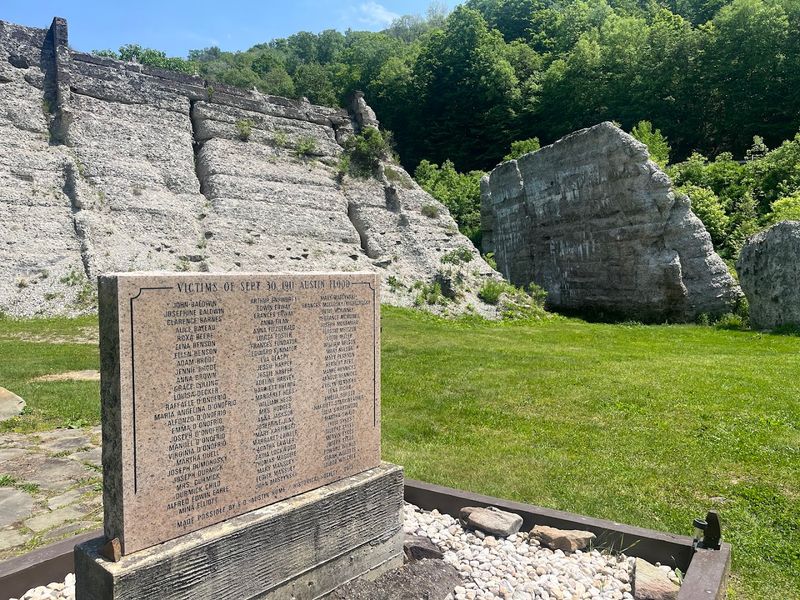
Beyond the ruins themselves, the park includes a dedicated memorial to the people who lost their lives in the 1911 flood. The memorial plaques carry the names of those who perished, and reading them brings the human cost of that engineering failure into sharp and personal focus.
There is something quietly powerful about standing in a peaceful, green park and reading names carved in stone, knowing that each one represents a real person who woke up on an ordinary Tuesday morning with no idea what was coming. The contrast between the calm surroundings today and the chaos of that day creates a feeling that is hard to describe but easy to feel.
A pavilion near the memorial area displays historical photographs from before and after the flood, offering a visual timeline that helps connect the ruins to the actual events. Those photos show Austin as a thriving mill town, and then show what the water left behind.
That visual pairing makes the history feel immediate rather than distant.
The Law That Changed American Dam Safety
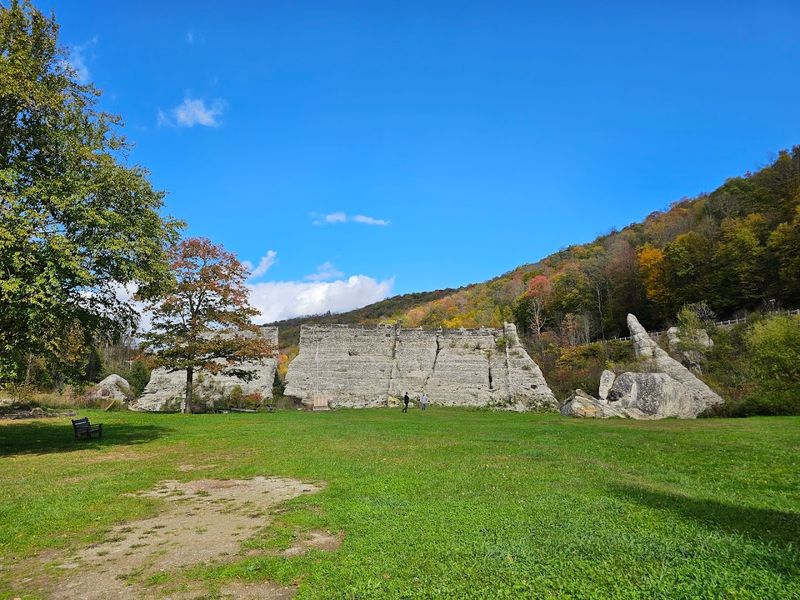
One of the most significant outcomes of the Austin Dam disaster is something most visitors do not initially realize when they arrive. The collapse of this dam directly led Pennsylvania to pass the first dam safety legislation in the entire United States in 1913.
Before that law existed, dam construction across the country operated with remarkably little oversight. Private companies could build structures holding millions of gallons of water over populated towns with almost no government review of the engineering plans or the quality of construction materials used.
The Austin disaster made it impossible to ignore that gap any longer. Pennsylvania’s 1913 law set a precedent that eventually spread across the country, reshaping how engineers, inspectors, and government agencies approach the design and maintenance of dams.
Every dam safety standard in America today traces part of its lineage back to what happened in this quiet Pennsylvania valley. That makes the ruins here more than a local tragedy; they are a turning point in national infrastructure policy.
Hiking Trails Through a Valley Full of History
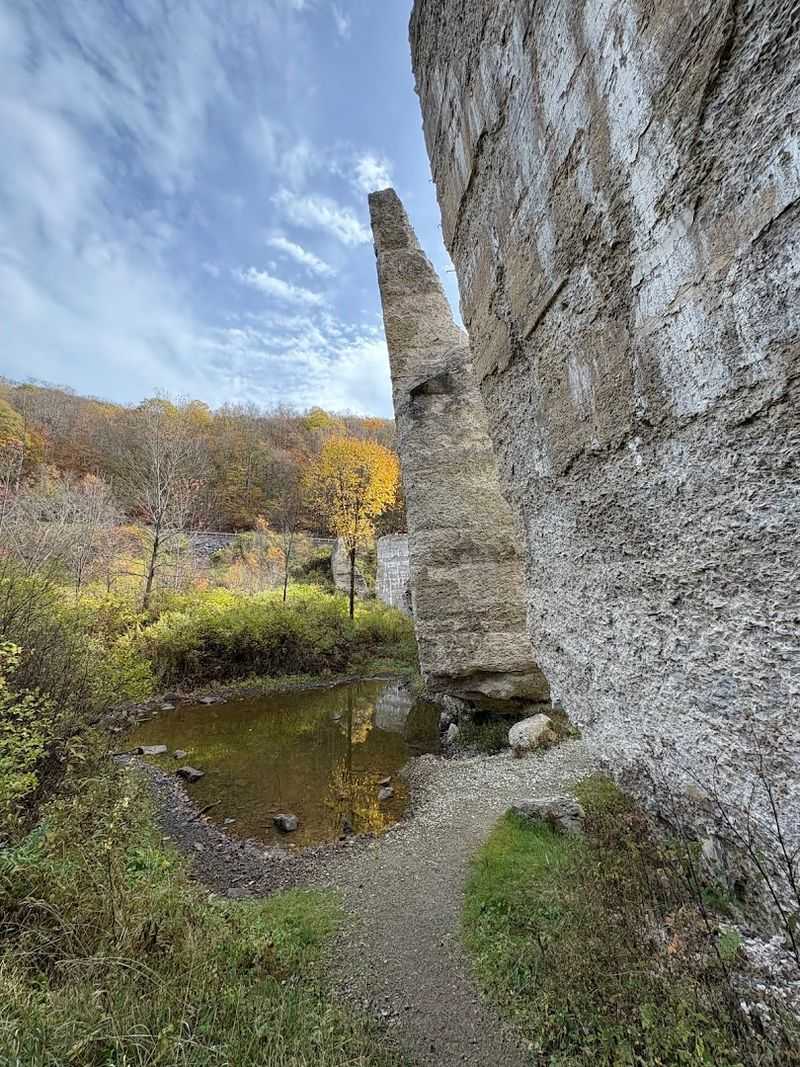
The park covers 76 acres, and the trail network winds through a valley that feels genuinely wild despite being well-maintained. The paths are marked and documented on the park map, making navigation straightforward even for first-time visitors who are not experienced hikers.
The terrain is more of a scenic walk than a strenuous hike, which makes the park accessible to a wide range of visitors, including families with children and older adults who want to experience the site without a demanding physical challenge. The trails pass through forest, along the creek, and around the ruins themselves.
Visiting in July can mean dealing with overgrown sections along some trails, so late spring or early fall tends to be the sweet spot for trail conditions and overall scenery. The autumn foliage in this part of Potter County is genuinely beautiful, and the combination of golden hillsides and ancient concrete ruins creates a visual atmosphere that feels unlike anything else in the region.
The abandoned paper mill nearby adds another layer of exploration for those willing to look around.
Camping Among the Ruins
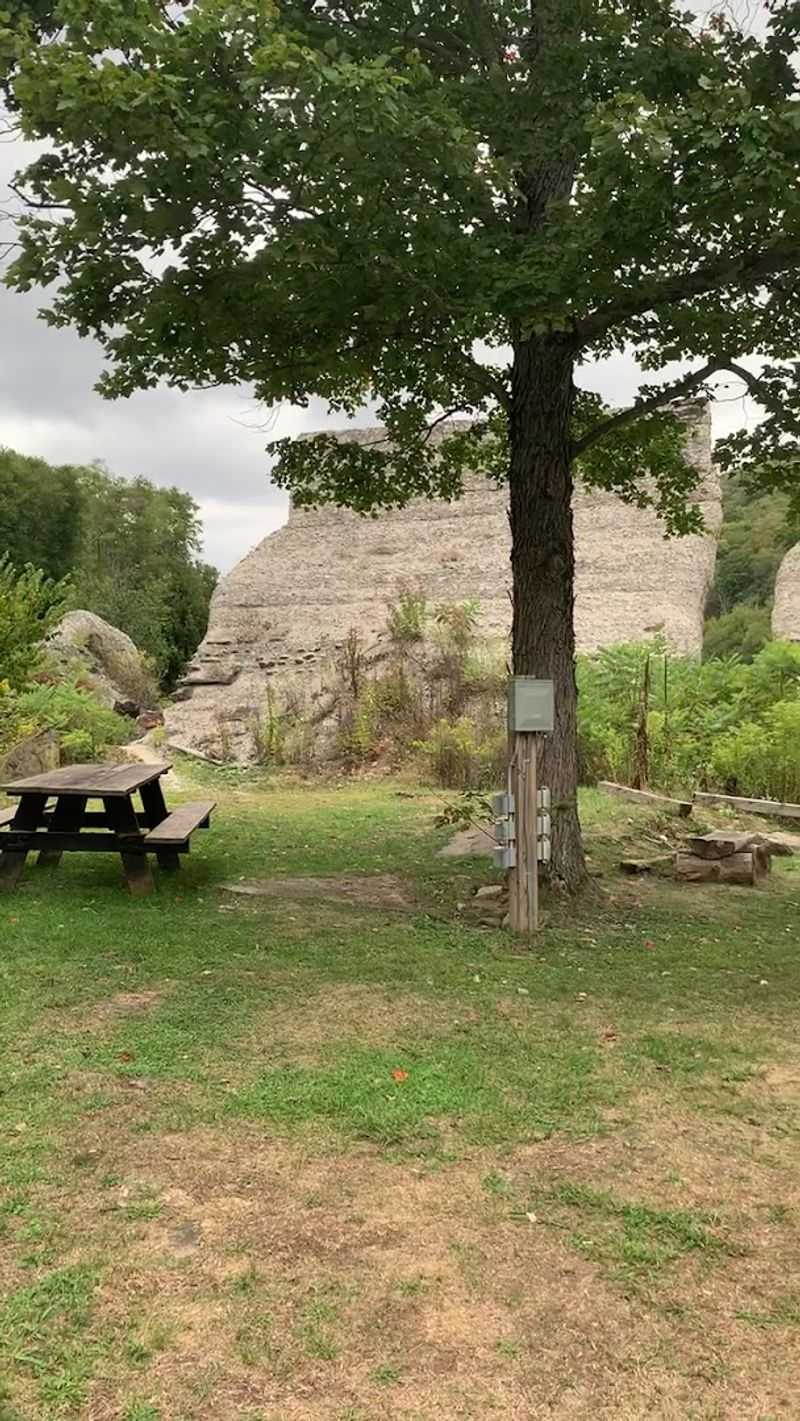
Not many people realize that Austin Dam Memorial Park has a campground, and that fact alone sets it apart from most historic sites in the state. The camping area is basic and quiet, without the crowded amenity-heavy setup of a commercial campground, which is exactly what makes it appealing to the right kind of traveler.
Waking up in the morning with the sound of the creek nearby and the ruins of a century-old dam just a short walk away creates a setting that history enthusiasts tend to find genuinely memorable. Wildlife moves through the area regularly, and the community of Austin clearly takes pride in keeping the grounds clean and well-managed.
The campground works well as a base for spending a full weekend exploring not just the park itself but the broader PA Wilds region. Families who homeschool have discovered this place as an ideal overnight field trip destination, combining outdoor recreation with a hands-on history lesson that no textbook can fully replicate.
Reservations and details are available at austindam.mailchimpsites.com.
The Annual Music Festival at the Ruins

Every summer, the Austin Dam Memorial Park Association organizes an annual music festival held among the ruins, and that event alone has become a reason for people to plan a trip specifically around the park calendar. The image of live music echoing off century-old broken concrete is one that sticks with people long after they drive home.
The association was formed in 1994 with the dual mission of preserving the site and educating the public about what happened here in 1911. The festival fits naturally into that mission by drawing crowds who might not otherwise make the trip to a remote corner of Potter County.
The event turns the park into a gathering space where community, history, and entertainment overlap in an unexpected and genuinely enjoyable way. Check the park website or call 814-647-3318 for updated dates and event details before planning a visit around the festival, since schedules can shift year to year depending on community planning and seasonal conditions.
Historical Photos That Put It All in Context
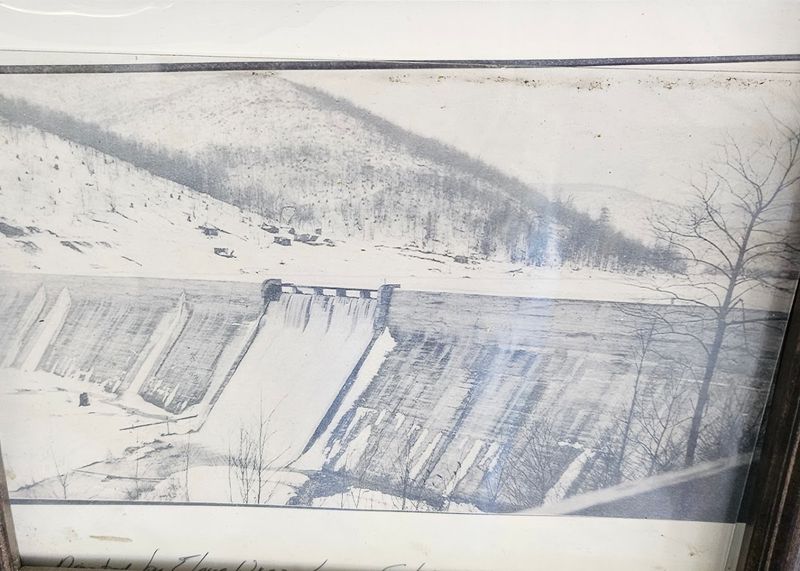
The pavilion at the park houses a collection of historical photographs that document Austin before the flood, the chaos of the disaster itself, and the devastated landscape that remained afterward. Those images do something that the ruins alone cannot fully accomplish: they show you what was lost.
Seeing photographs of a busy mill town with workers, buildings, and a functioning community, and then seeing what the water reduced it to, creates an emotional response that catches many visitors off guard. The photos are not tucked away in a museum where you need to book a tour; they are right there in the open pavilion, free to view at your own pace.
Some visitors spend a long time at the pavilion, moving slowly from image to image and cross-referencing what they see in the photos with the ruins visible just beyond the park boundary. That combination of visual history and physical evidence is what makes Austin Dam Memorial Park feel like more than a scenic stop.
It functions as a genuine outdoor classroom with no admission fee required.
Practical Tips for Planning Your Visit
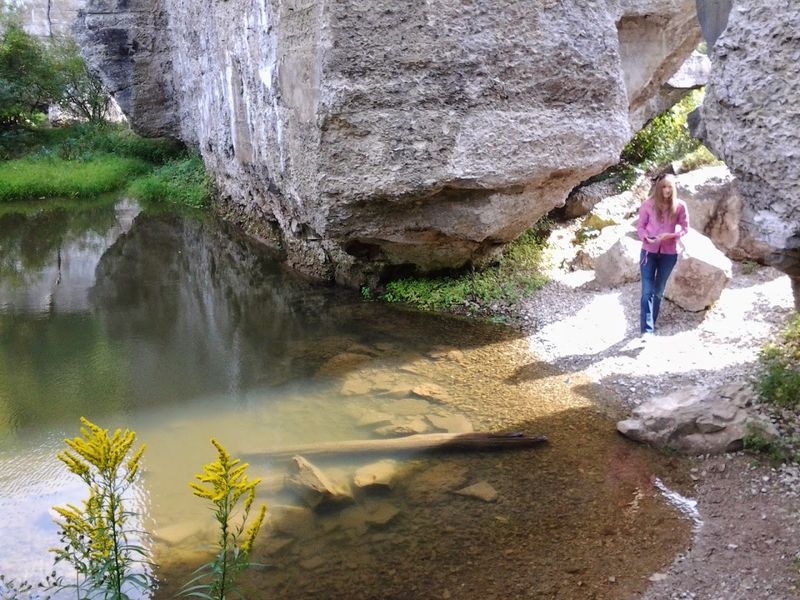
The park is open every day of the week from 8 AM to 8:45 PM, giving visitors a solid window of time to explore without rushing. Arriving in the morning tends to mean quieter trails and better light for taking photos of the ruins, especially in the cooler months.
Download your maps and directions before leaving home, since cell service is genuinely unreliable in this part of Potter County. Winter visits are possible but require a vehicle with four-wheel drive due to icy road conditions on the access road, and some trail sections may be less accessible depending on snowfall.
The restrooms at the park are reasonably maintained, and the overall grounds are kept in good condition by the community and the Austin Dam Memorial Park Association. There is no admission fee to enter the park, which makes it an easy addition to any road trip through northern Pennsylvania.
A documentary about the Austin Dam is also available for those who want to go deeper into the history before or after their visit.
Share this story