America has a secret world hiding just beneath its surface, and it is absolutely worth exploring. From volcanic lava tubes in Washington to sparkling caverns in the Ozarks, underground trails offer some of the most jaw-dropping scenery you will ever encounter.
I went on my first cave tour as a kid and never quite got over the feeling of standing inside the earth. Whether you are a seasoned hiker or just cave-curious, these 15 underground trails across the country are ready to blow your mind.
Carlsbad Caverns Natural Entrance Trail, Carlsbad, New Mexico
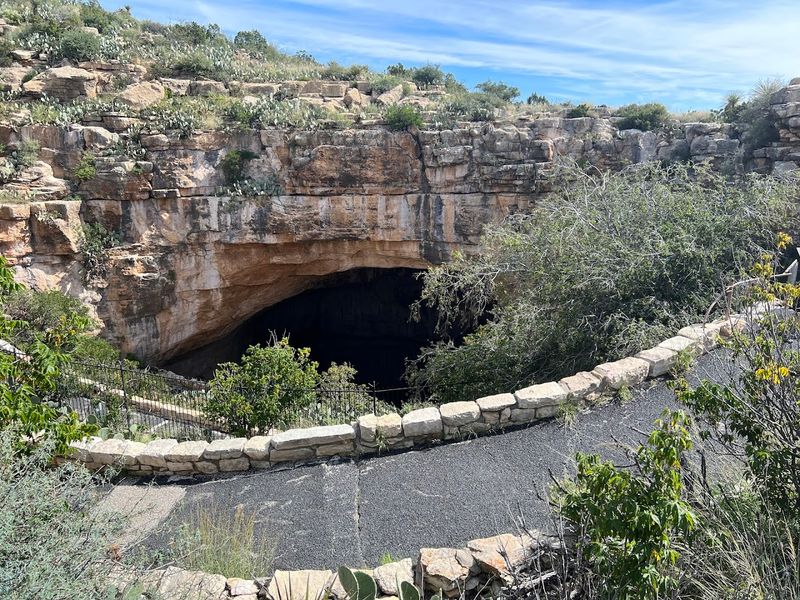
Skipping the elevator at Carlsbad Caverns is one of the best decisions a visitor can make. The Natural Entrance Trail drops steeply through a historic cave opening that feels like the earth just swallowed you whole.
Limestone walls tower on both sides as you descend, and the scale gets bigger with every step.
The trail winds through shadowy chambers and past formations that look like they belong on another planet. It is not a lazy afternoon stroll since the route is steep and takes real effort.
But the payoff is a sense of underground grandeur that few cave trails in America can match.
Carlsbad Caverns holds roughly 119 known caves within its boundaries. The Big Room at the bottom stretches over 8 acres, making it one of the largest cave chambers in North America.
Plan to spend a good chunk of the day here because rushing this one would be a genuine crime.
Mammoth Cave National Park, Mammoth Cave, Kentucky
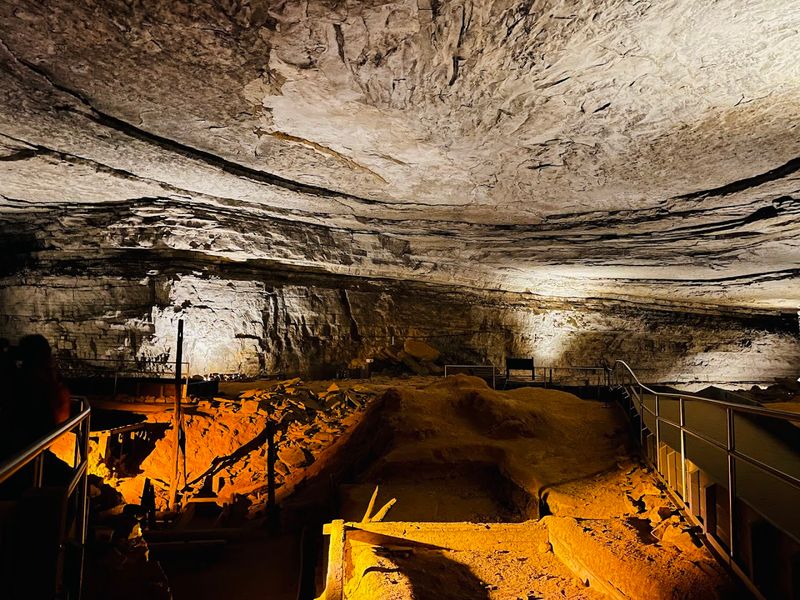
Mammoth Cave holds a world record that no other cave system on earth has beaten. It is the longest known cave in the world, stretching over 400 mapped miles underground.
That alone should be enough to put it at the top of any caver’s list.
Guided tours range from broad historic corridors to tighter, more demanding routes depending on what visitors choose. Some passages reveal the history of early explorers and even saltpeter miners who worked underground during the 1800s.
The cave is as much a history lesson as it is a geology show.
Above ground, the national park adds forests, river views, and classic karst landscape to round out the visit. No single tour covers the whole cave, which is honestly a relief since 400 miles would be quite the hike.
Start with a classic tour and let the size of this underground world quietly rearrange your sense of what is possible.
Timpanogos Cave Trail, American Fork Canyon, Utah
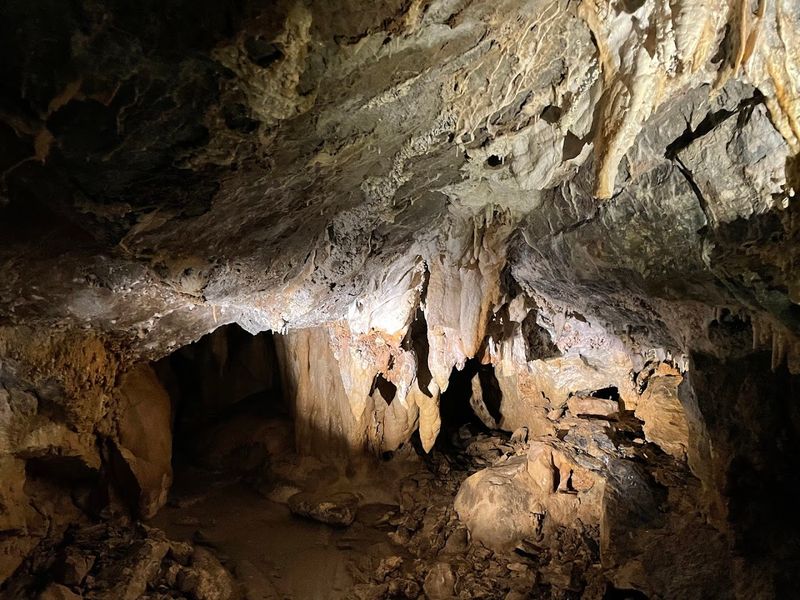
Timpanogos Cave makes you earn it, and that is honestly part of the charm. The adventure kicks off with a steep 1.5-mile hike up American Fork Canyon before you ever set foot underground.
Mountain views and rugged canyon walls keep the trail interesting the whole way up.
Once inside, guided tours lead through decorated chambers packed with helictites, stalactites, and formations in shades of pink and white. The cave system actually connects three separate caverns, which gives the tour a nice sense of progression.
Each room feels like a new chapter in a very geological story.
This trail works best for visitors who want their cave day to feel like a proper outdoor adventure rather than just a short underground shuffle. The hike alone is worth the trip.
Tickets sell out fast during summer months, so booking ahead is not optional if you want to avoid showing up and staring sadly at a sold-out sign.
Ape Cave, Mount St. Helens, Washington
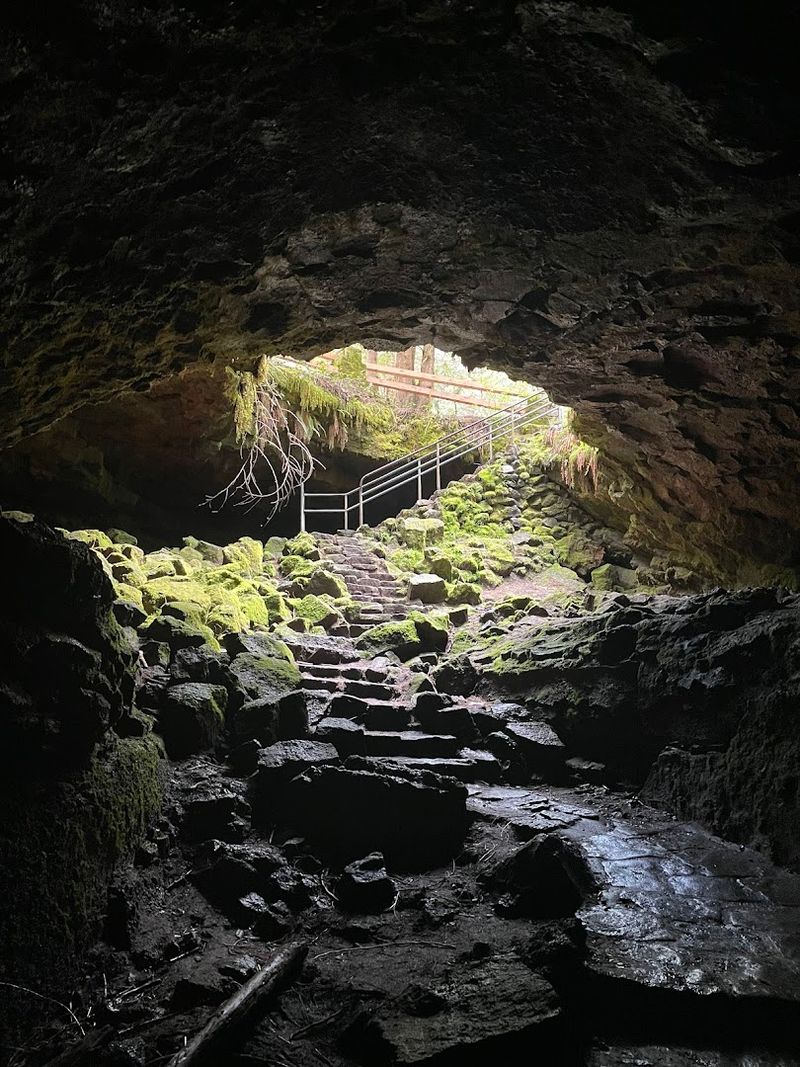
Ape Cave has nothing to do with apes, which is the first fun fact worth sharing. The cave was named after a local hiking club called the Mount St. Helens Apes, which is somehow even better.
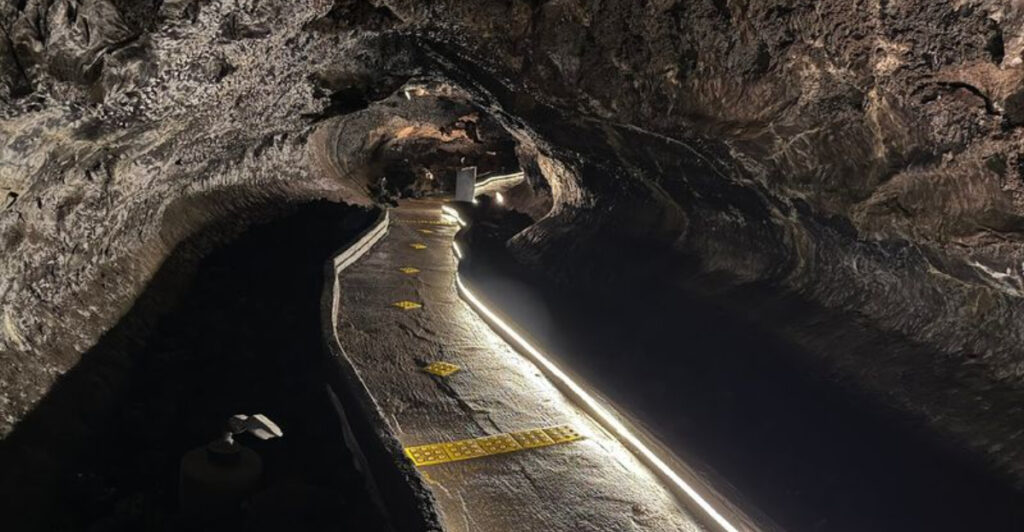
What it does have is one of the longest lava tubes in the continental United States.
Formed by ancient volcanic activity, the cave is a raw basalt tube with no delicate stalactites or flowstone. The lower route is manageable for most visitors, while the upper route gets rougher, darker, and genuinely demanding.
Bring real lights, not just a phone flashlight, because this cave will humble you quickly.
I tried the upper route on a trip a few years back and spent a solid ten minutes figuring out how to climb a lava fall with a headlamp and zero grace. Totally worth it.
For travelers who want a cave experience that feels more like a real expedition than a polished tour, Ape Cave delivers every time.
Lava Beds National Monument Cave Loop, Tulelake, California
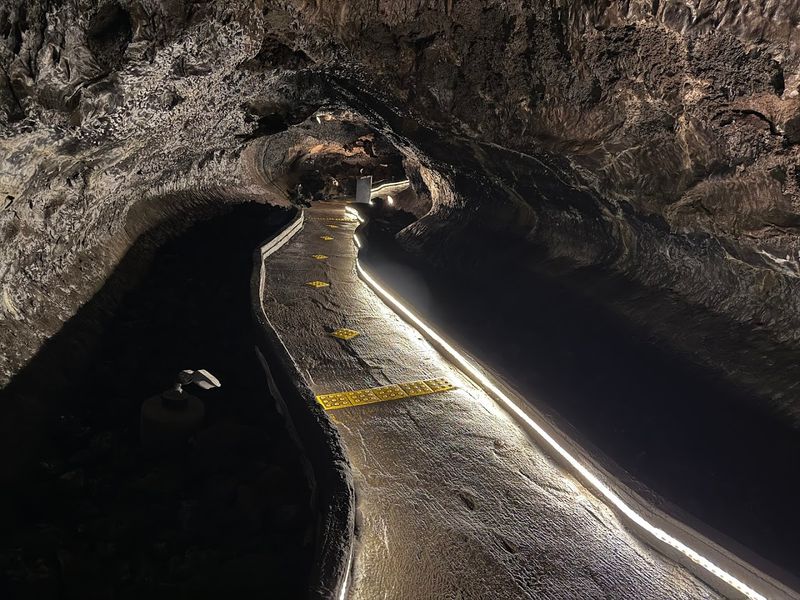
Lava Beds National Monument is the kind of place that makes you feel like you discovered something most people have never heard of. The park sits in a remote corner of northern California and contains more than 800 lava tube caves.
That is not a typo.
The Cave Loop near the visitor center gives explorers a great sampling of what the park offers. Some tubes are short and beginner-friendly with paved floors, while others require crawling through tight passages in a helmet with a headlamp.
The variety means you can tailor the day to your comfort level or your appetite for adventure.
Cave conditions and seasonal closures change regularly, so stopping at the visitor center before heading out is genuinely important. Rangers there can point you toward the best options for the day.
The park also sits within a landscape rich in volcanic history and Native American heritage, which makes the whole visit feel layered and worth slowing down to appreciate.
Ruby Falls Cave Walk, Chattanooga, Tennessee
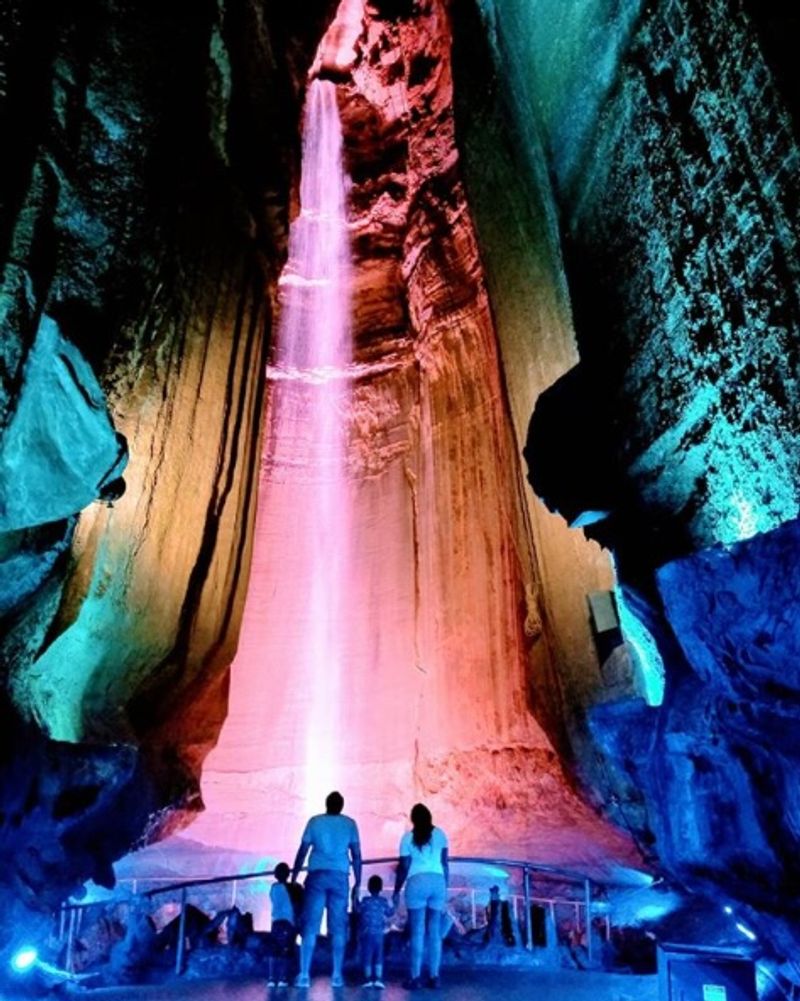
Ruby Falls pulls off one of the best dramatic reveals in American cave tourism. Visitors descend into Lookout Mountain and walk a guided cavern trail that builds anticipation through winding passages and shadowy formations.
Then the waterfall appears, and all that buildup pays off in a big way.
The waterfall drops 145 feet underground, making it one of the tallest and deepest waterfalls in the United States. The cave was discovered in 1928 when a local geologist named Leo Lambert drilled an elevator shaft and stumbled onto the cavern by accident.
He named the waterfall after his wife Ruby, which is genuinely sweet.
The trail itself winds through limestone rooms with interesting formations along the way, so the walk to the falls is not just filler. This is a solid pick for travelers who want a cave experience with a memorable ending rather than just a collection of rocks in a dark hallway.
It is crowd-pleasing in the best possible way.
The Lost Sea Adventure, Sweetwater, Tennessee
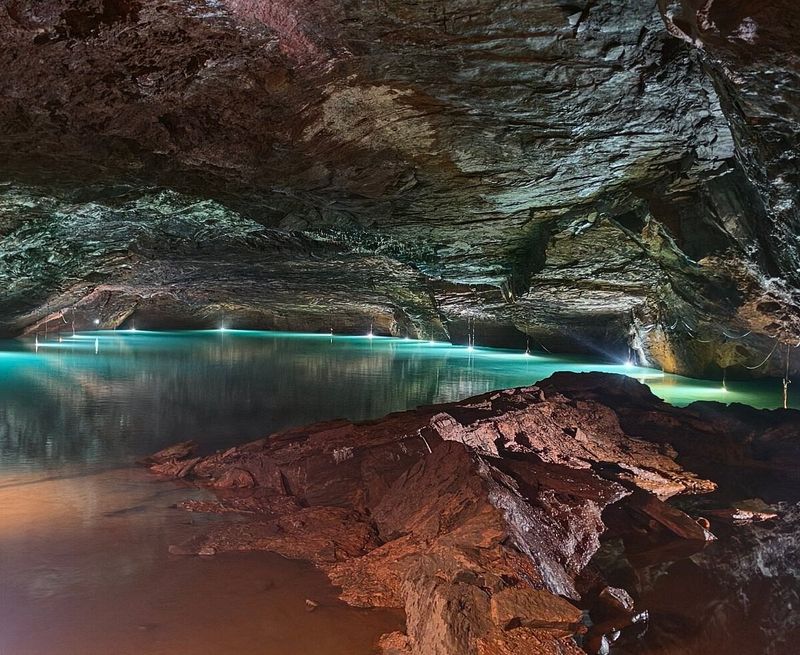
The Lost Sea Adventure earns its name because it genuinely feels like discovering something that was never supposed to be found. Craighead Caverns in Sweetwater, Tennessee hides America’s largest underground lake, and visitors get to see it up close from a glass-bottom boat.
That is not an everyday Tuesday.
The guided trail leads down through the cave past interesting formations and historic sections before reaching the lake. The boat ride across the underground water adds a completely different dimension to the visit.
Trout swim in the lake, having adapted to the dark environment over generations.
The cave also has a documented history stretching back thousands of years, with evidence of Cherokee use and even Civil War-era saltpeter mining. It is one of those attractions that works for curious kids, geology fans, and history buffs all at once.
For families or travelers who want their cave visit to include a boat ride and a genuine sense of wonder, this is the one.
Oregon Caves National Monument, Cave Junction, Oregon
Oregon Caves National Monument sits tucked into the Siskiyou Mountains, which means getting there already feels like a small adventure. The surrounding forest and mountain scenery set a moody, atmospheric tone before visitors even step underground.
It earns the word remote in the best possible way.
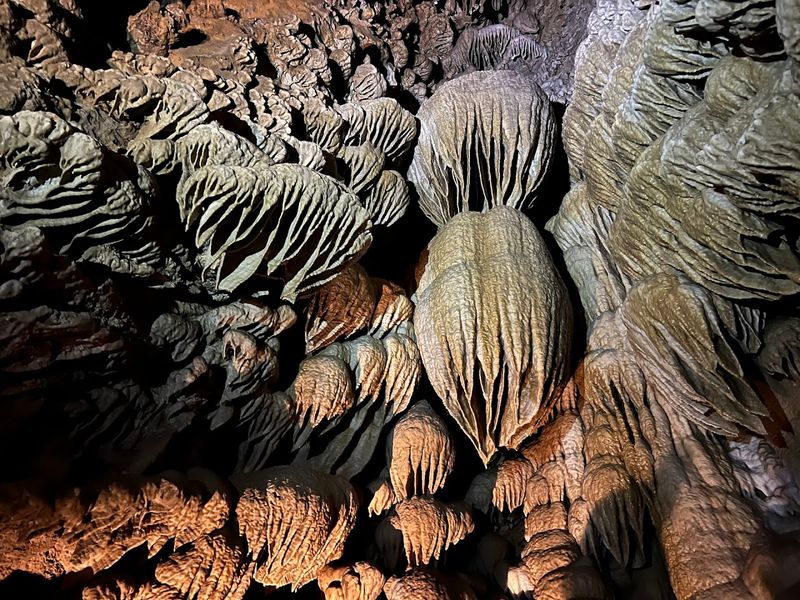
Inside, the cave runs through marble rather than the limestone more common in eastern cave systems. Winding passageways, unusual formations, and ranger-led tours that cover both geology and preservation make the experience feel educational without being dry.
The guides here are notably good at making cave science feel genuinely exciting.
The monument also includes a historic chateau perched near the cave entrance, adding a quirky architectural note to the visit. Oregon Caves is a smaller, quieter cave destination compared to some of the heavy hitters on this list, but that intimacy is part of its appeal.
Visitors who want a cave trail with real national park character and a sense of discovery will feel right at home here.
Jewel Cave National Monument, Custer, South Dakota
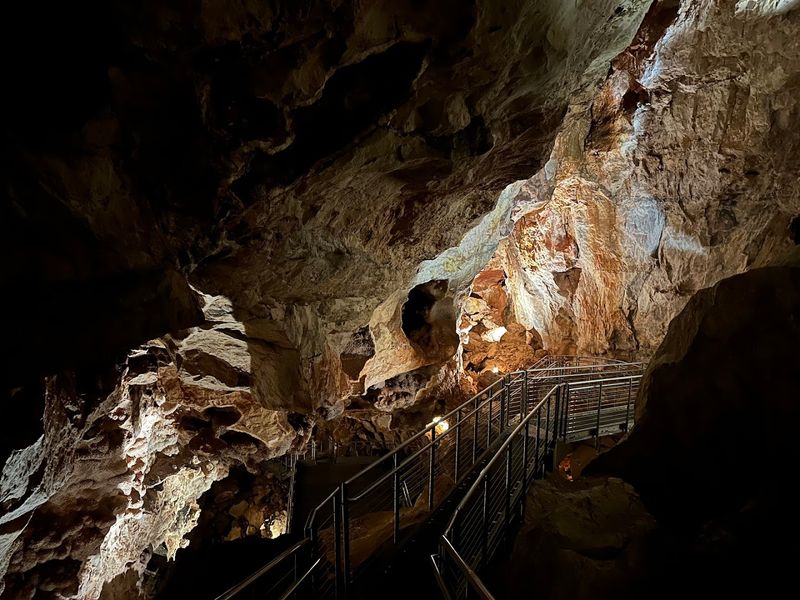
Jewel Cave ranks as the third longest cave in the world, with more than 220 mapped miles of passages. Explorers are still finding new sections, which means the map keeps growing.
That kind of ongoing discovery gives the place a thrilling, unfinished quality.
The cave gets its name from the calcite crystals that line the walls and sparkle in the light. Guided tours reveal narrow passages, complex underground rooms, and formations that look almost handcrafted.
It feels less like a polished show cave and more like a real peek behind the curtain of something vast.
Jewel Cave sits in the Black Hills near Wind Cave, so combining both into a South Dakota cave trip makes a lot of sense. The scenic drive through Custer State Park between the two is a bonus worth factoring into the plan.
Anyone visiting the region who skips Jewel Cave is leaving one of the genuinely great underground experiences in America off the table.
Wind Cave National Park, Hot Springs, South Dakota
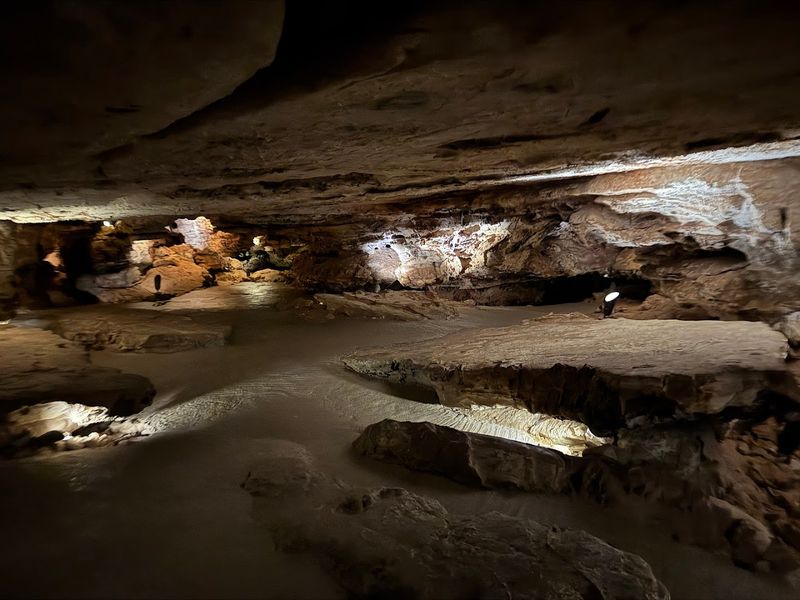
Wind Cave has a party trick no other cave in the world can match quite as well. Its walls are covered in boxwork, a rare formation made of thin calcite fins that create a honeycomb pattern across the surfaces.
Scientists believe about 95 percent of all known boxwork exists in this one cave.
All visits are by ranger-guided tour, which helps protect the fragile underground environment from the wear that high traffic can cause. The cave feels quieter and more mysterious than flashier destinations, which is a genuine selling point for visitors who prefer substance over spectacle.
The formations do the talking here.
Above ground, Wind Cave National Park is surrounded by bison-roamed prairie and rolling hills, so the visit offers two completely different landscapes in one stop. The combination of rare geology underground and classic American wildlife scenery above ground makes Wind Cave one of the most well-rounded national park experiences in the country.
It is understated in the best possible way.
Lehman Caves, Great Basin National Park, Nevada
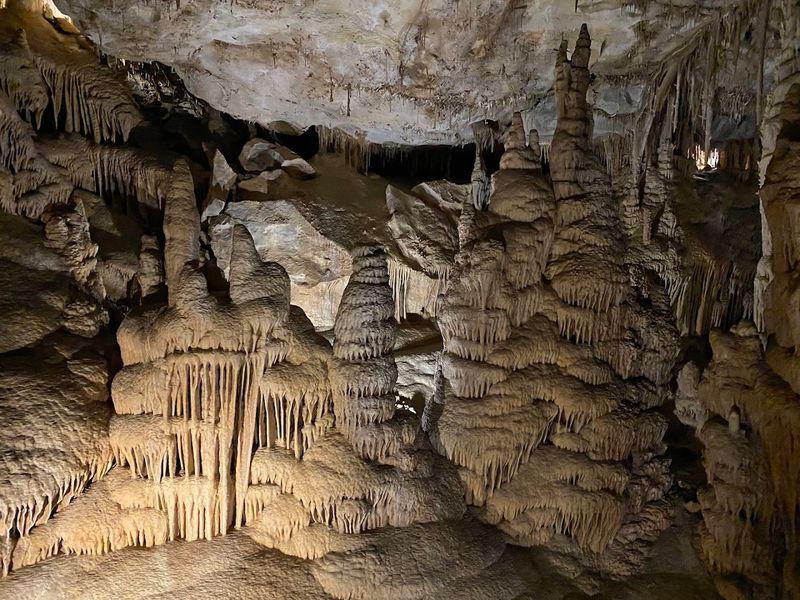
Great Basin National Park is one of the least visited national parks in the country, which is a mystery worth solving. Lehman Caves sits at the heart of the park and offers one of the most ornate cave interiors anywhere in the American West.
The formations here are dense, detailed, and genuinely impressive.
After a seasonal closure for an electrical upgrade, lantern tours resumed in 2026, giving the cave a warm, historic atmosphere that brighter modern lighting simply cannot replicate. Walking through by lantern light makes the shields, stalactites, and delicate cave decorations feel even more dramatic.
It is a small production choice that makes a big difference.
The cave also features rare shield formations, which are disc-like structures that grow outward from the walls in ways that still puzzle geologists. Lehman Caves is a strong choice for travelers who want a less crowded national park cave without sacrificing quality.
The surrounding Great Basin landscape, with ancient bristlecone pines and dark skies, makes the whole trip feel extraordinary.
Crystal Cave, Sequoia National Park, California
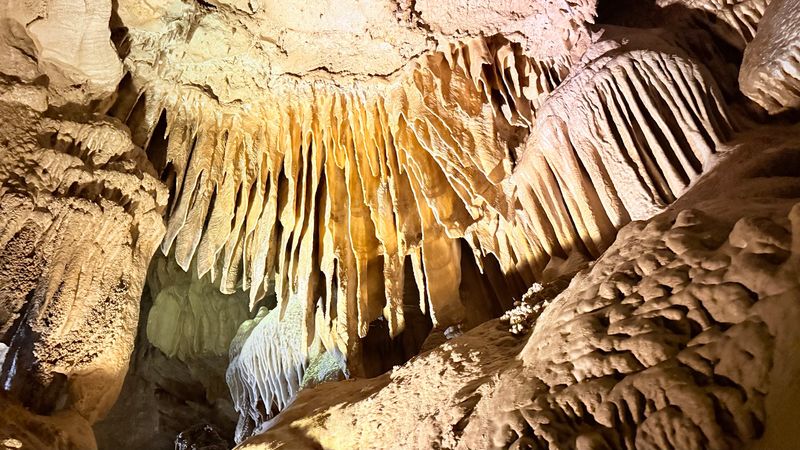
Crystal Cave proves that Sequoia National Park is not just about giant trees, even though the trees are admittedly spectacular. This marble cavern reopened for the 2026 season and quickly reminded visitors why it belongs on the must-see list.
The cave sits at the end of a short trail that winds through classic Sierra Nevada forest scenery.
Inside, polished marble walls give the cave a different visual feel from the beige limestone interiors common in many American caverns. Guided tours move through chambers shaped by water over millions of years, and the formations have a subtle elegance that rewards careful looking.
The cave stays around 48 degrees year-round, so a light jacket is not optional.
Tours operate seasonally and tickets sell out quickly, especially on summer weekends. Booking ahead is the move here because showing up without a reservation usually means turning around disappointed.
For visitors who want a cave experience woven into one of America’s most iconic national parks, Crystal Cave is a genuinely satisfying find.
Kartchner Caverns State Park, Benson, Arizona
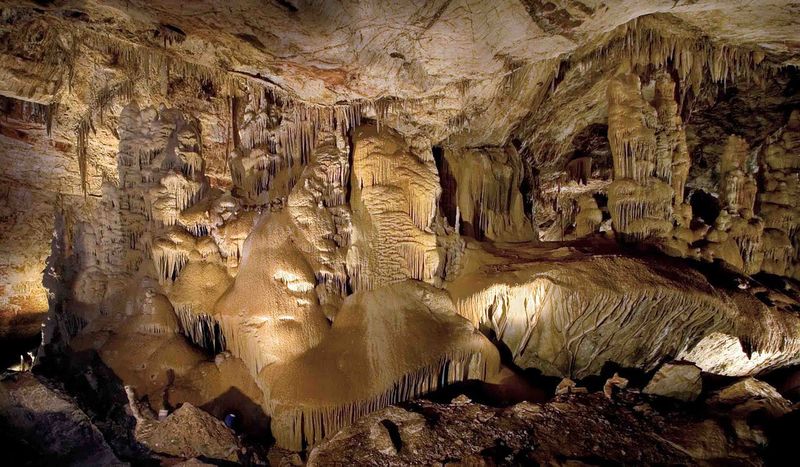
Kartchner Caverns might be the most carefully protected cave open to the public in the entire United States. Two cavers discovered it in 1974 and kept the location secret for fourteen years while working to ensure it would be properly preserved before being opened to visitors.
That level of dedication to a cave is honestly remarkable.
The result is a living cave where formations are still actively growing. Stalactites, stalagmites, columns, and other features continue to change at a pace measured in centuries.
The park uses airlocks at the entrance to maintain the cave’s natural humidity and temperature, which keeps the environment stable and the formations healthy.
Guided tours walk visitors through a carefully managed underground world that feels pristine compared to older, less protected cave destinations. For travelers who love geology and conservation working together, Kartchner Caverns is the gold standard.
Arizona is more than desert scenery, and this cave is one of the best arguments for exploring the state beyond its famous red rocks.
Blanchard Springs Caverns, Fifty-Six, Arkansas
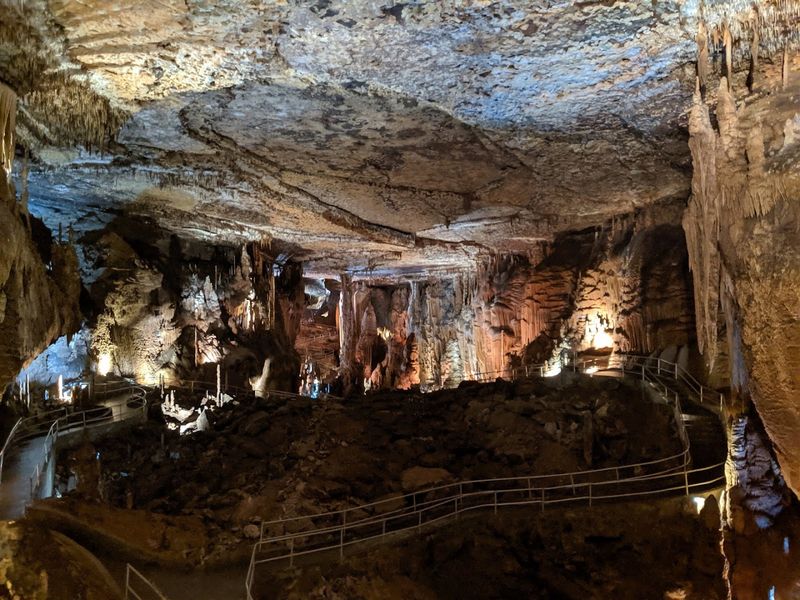
Blanchard Springs Caverns sits in the Ozark-St. Francis National Forests and manages to feel like a well-kept secret even though it has been welcoming visitors for decades. The cave system is a genuinely beautiful example of what water and limestone can build together over millions of years.
Flowstone, columns, and delicate formations fill the rooms in ways that make it hard to stop staring.
Guided tours lead through a living cave where formations are still growing, and the underground rooms have a grandeur that surprises visitors who were not expecting much from an Arkansas cave. The Dripstone Trail is the most accessible route, while the Discovery Trail goes deeper and feels more adventurous.
The surrounding national forest adds springs, trails, and dense Ozark scenery to the overall experience. For travelers exploring the South and looking for a cave trail that punches well above its fame level, Blanchard Springs is the answer.
It consistently impresses people who expected something good and got something great instead.
Luray Caverns, Luray, Virginia
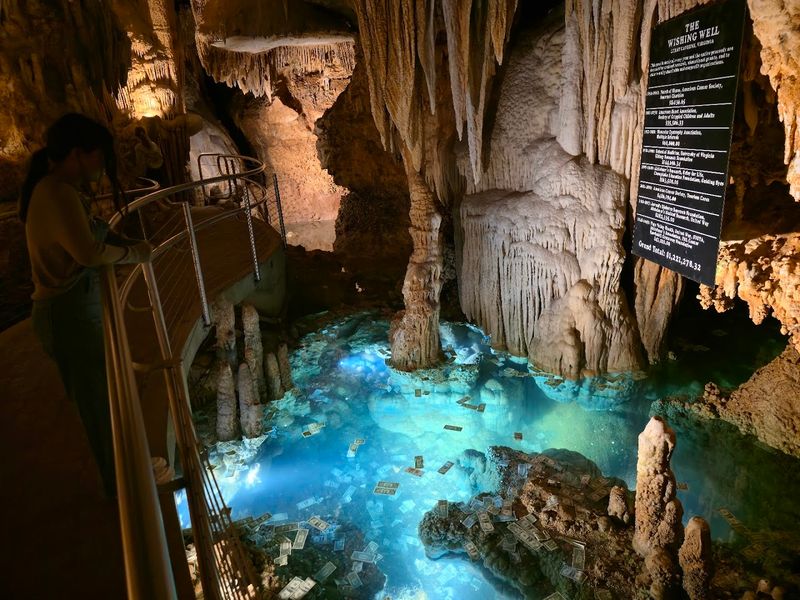
Luray Caverns has been wowing visitors since 1878, which makes it one of the longest-running cave attractions in American history. The self-guided walking tour covers about a mile of paved path through chambers that feel genuinely massive.
Towering columns, mirrored reflection pools, and formations of every shape fill the route with one visual highlight after another.
The cave stays open year-round, which is a practical advantage over many seasonal cave destinations. Planning a visit does not require chasing a narrow operating window or racing against a sold-out tour.
That kind of accessibility has helped Luray build its reputation as a reliable, rewarding stop in the Shenandoah Valley.
Luray also houses the Great Stalacpipe Organ, an actual musical instrument that uses stalactites throughout the cave to produce sound. It holds a Guinness World Record as the world’s largest natural musical instrument.
For visitors who want big formations, an easy walk, and a side of cave trivia that will absolutely win a dinner party, Luray Caverns delivers the full package.
Share this story