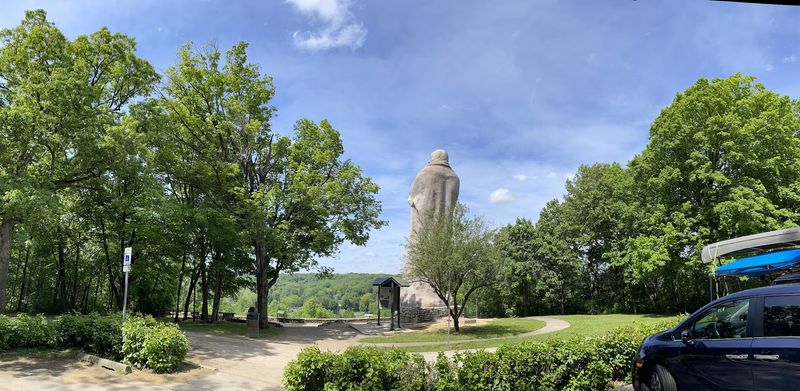
There is a spot in northern Illinois where a massive concrete figure stands on a bluff, arms folded, eyes fixed on the horizon, and the river below stretching out like a silver ribbon through the trees. Most people driving through Ogle County have no idea it exists, and that is exactly what makes finding it feel like such a reward.
I stumbled onto this place on a road trip through the Midwest, and I will be honest, nothing quite prepared me for the sheer scale of what I saw when I rounded the last bend in the park road. This is the kind of place that makes you stop the car, get out slowly, and just stand there for a minute, because your brain needs a moment to catch up with your eyes.
Where to Find This Towering Landmark
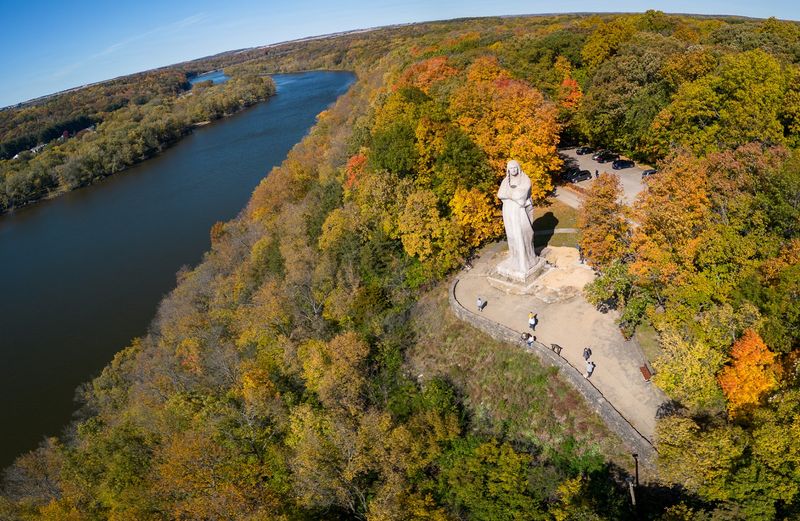
The full address is 1411 N River Rd, Oregon, IL 61061, and it sits inside Lowden State Park, a quiet stretch of state-managed land along the Rock River in Ogle County, Illinois. Oregon is a small town, the kind of place you might pass through without thinking twice, but this park gives it an identity that draws visitors from across the region and beyond.
The drive in is part of the experience. A paved road winds through the trees and climbs gradually to a parking area right in front of the statue, so you do not need to hike just to reach it.
That said, there is plenty of trail time available if you want it.
The park is free to enter, which still surprises people when they hear it. No ticket booth, no reservation required for a casual visit.
You simply pull in, park, and find yourself face to face with one of the most striking outdoor sculptures in the entire Midwest. It is the kind of easy access that makes a big impression feel even more generous.
The Story Behind the Sculpture
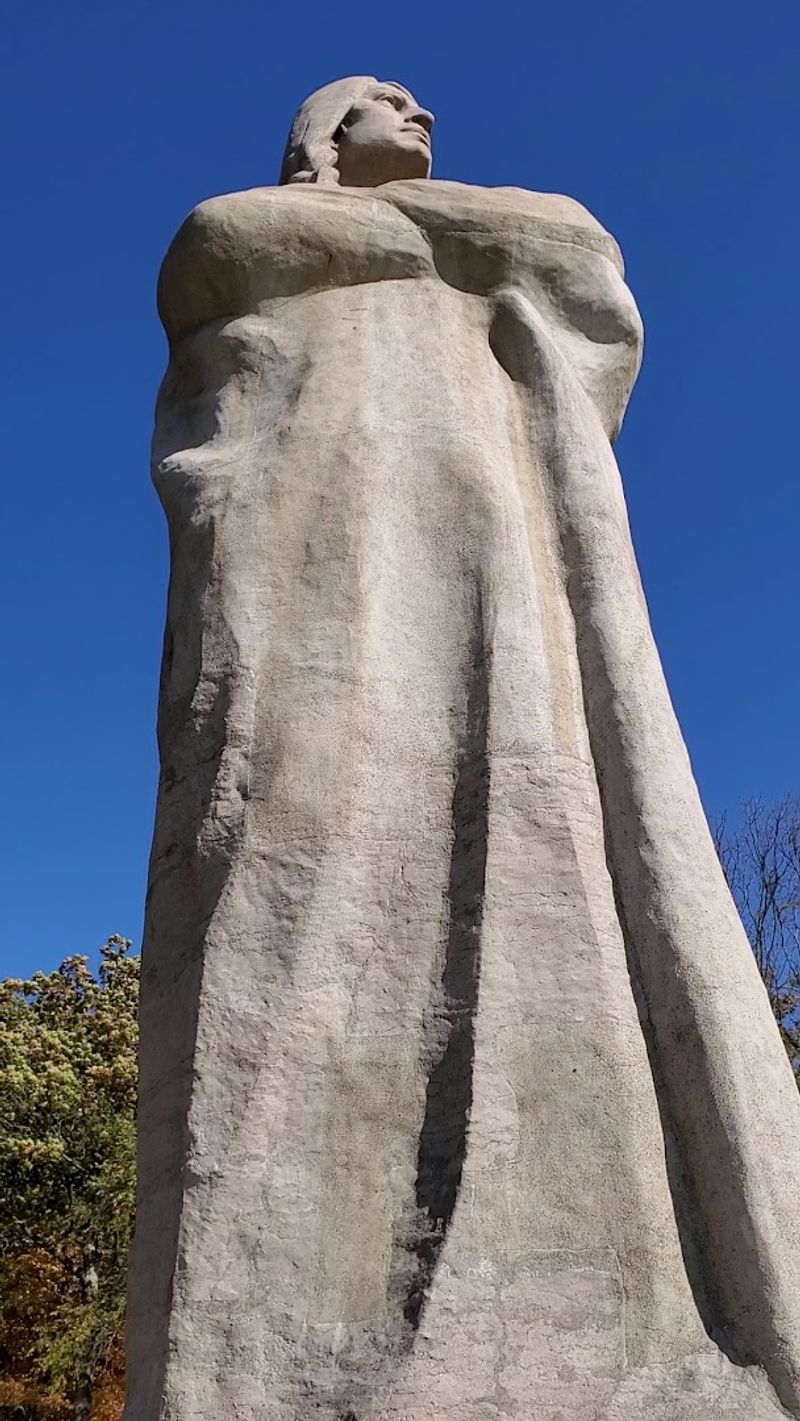
The figure looming over the Rock River is meant to represent Black Hawk, a leader of the Sauk people who lived and fought in this region during the early 1800s. He is one of the most recognized figures in the history of the upper Midwest, known for resisting the forced removal of his people from their ancestral lands along the Rock River valley.
The statue was created by sculptor Lorado Taft, a well-known Chicago artist whose work also includes the famous fountain outside the Art Institute of Chicago. Taft designed the figure not as a portrait but as a symbolic representation of all Native American people of the region, giving it a timeless, dignified quality.
Construction was completed in 1911, which means this statue has been watching over the river for well over a century. Taft used hollow concrete, which was a fairly new material at the time, and the result has weathered the decades with only occasional restoration work needed.
Knowing that history makes standing beneath it feel like a genuinely layered moment, not just a photo stop.
The Scale That Stops You in Your Tracks
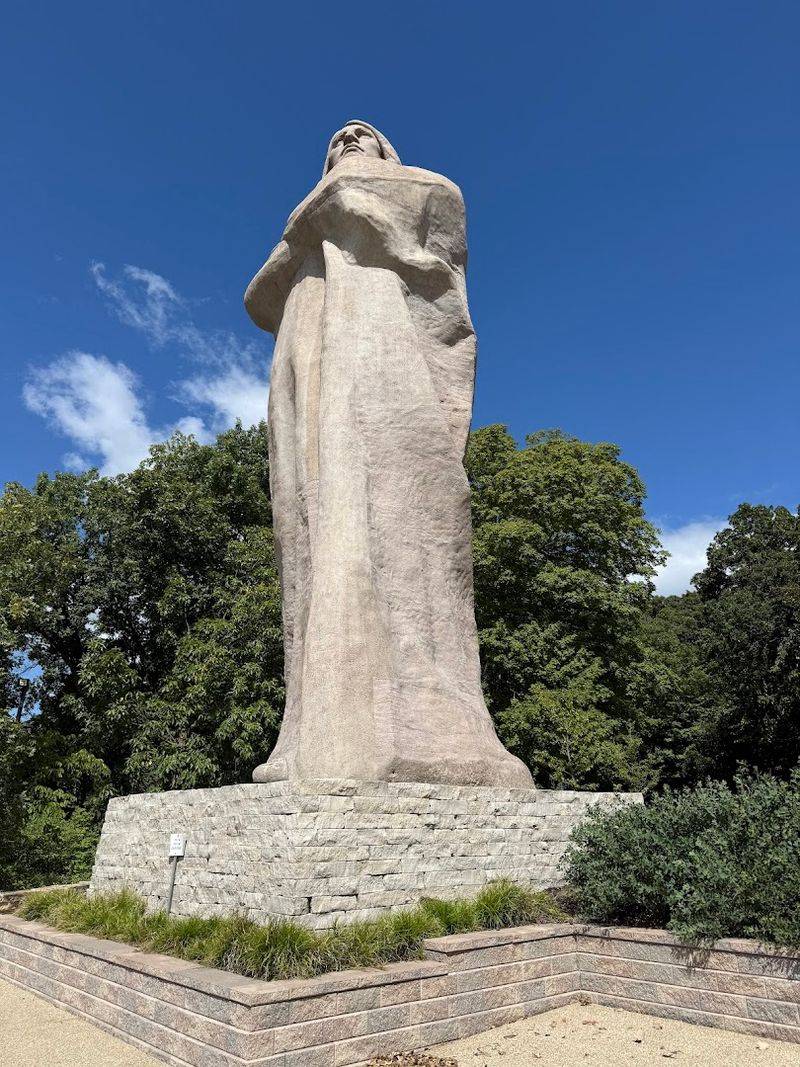
At 48 feet tall, the Black Hawk Statue is not something you ease into. One moment you are in a parking lot surrounded by trees, and the next you are craning your neck back to take in a figure that makes full-grown adults look like action figures at its base.
The scale is genuinely hard to process until you are standing right in front of it.
The statue faces northwest, arms crossed, chin slightly lifted, in a posture that reads as both watchful and composed. There is no dramatic gesture or theatrical pose, just quiet authority, and somehow that restraint makes the size even more impressive.
People who visit for the first time almost always do the same thing: they walk up close, then step back, then walk up close again, trying to find the angle that makes the most sense. Kids especially tend to go a little wide-eyed.
Even seasoned travelers who have seen their share of monuments tend to agree that the combination of height, setting, and stillness here is something that does not show up in photos the way it hits in person.
Views Over the Rock River Valley
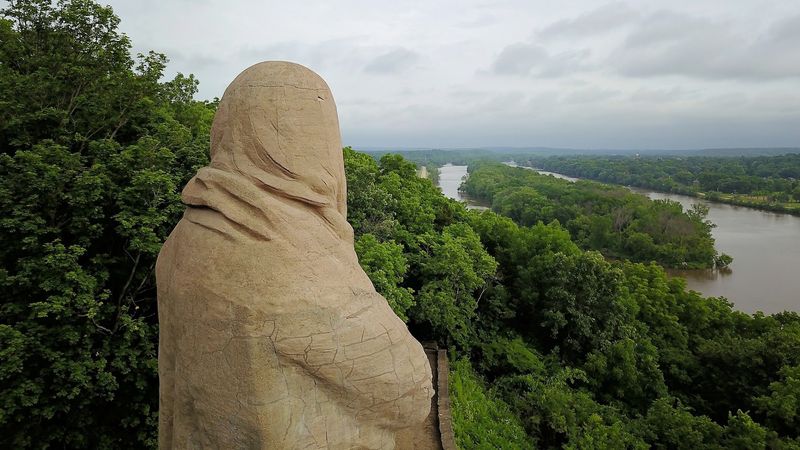
The statue does not just sit on a bluff for dramatic effect. The view from that elevated position is genuinely spectacular, especially during fall when the tree canopy below turns every shade of orange, red, and gold.
The Rock River stretches wide and calm from this vantage point, and on a clear day the valley opens up in a way that feels almost cinematic.
Spring visits offer their own version of this view, with fresh green growth pushing through the hillsides and the river running full and fast from snowmelt. Summer brings dense shade and cooler air under the tree cover along the trails.
Each season offers something different, but most repeat visitors tend to name fall as their favorite time to make the trip.
There is a wooden staircase that descends from the bluff down toward the riverbank, and the view shifts completely as you go lower. What starts as a wide panorama becomes an intimate close-up of the water, the rocks, and the tree roots along the bank.
The contrast between the two perspectives makes the whole visit feel like two separate experiences packed into one stop, which is a rare thing to find for free.
The Wooden Staircase Down to the River
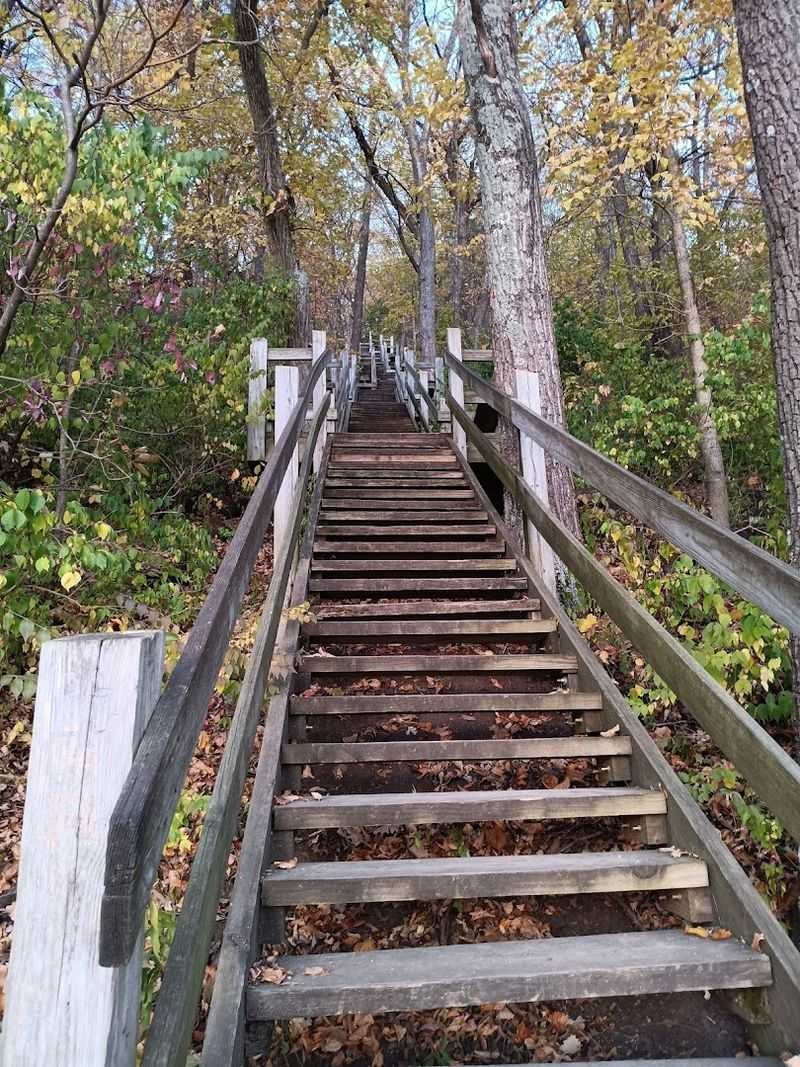
That wooden staircase deserves its own mention, because it is both a highlight and a genuine physical challenge. The steps number around 206 one way, and the descent is steep enough that your legs will know about it on the way back up.
More than one visitor has described the return climb as a surprise workout they did not plan for that day.
At the bottom, the riverbank opens up and the atmosphere shifts completely. The sound of the Rock River fills in around you, the bluff rises behind you, and the statue above is no longer visible, replaced by a wall of rock and roots and sky.
Fishing is allowed along the riverbank, and on weekday mornings the spot is usually quiet enough to feel almost private.
The path along the river at the base of the stairs can get muddy after rain, so sturdy shoes are a practical necessity rather than just a suggestion. The staircase itself is well-maintained and has handrails throughout.
Whether you are the type to tackle every step twice or just curious enough to go halfway down and turn around, the descent offers a perspective on this landscape that the parking lot simply cannot give you.
Trails, Picnic Spots, and the Wider Park
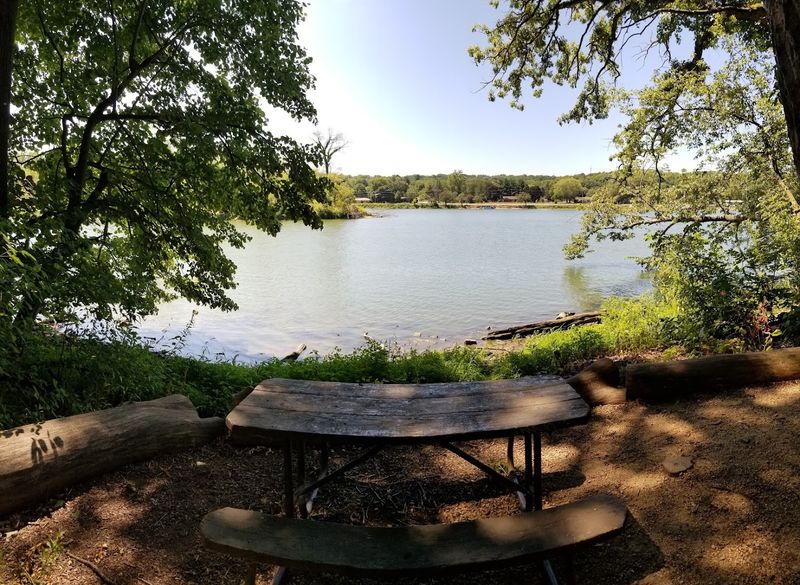
Beyond the statue and the staircase, Lowden State Park offers a network of trails that wind through the surrounding forest. The paths range from easy flat walks to steeper routes that climb along the bluff edge, and most are well-marked and easy to follow without a map.
The forest trail in particular gets good marks for being accessible and pleasant even for casual walkers.
Picnic areas are scattered throughout the park, with tables set up in shaded clearings that catch the breeze off the river. On weekends, families spread out across these spots with coolers and folding chairs, turning a quick visit into a full afternoon.
There are restrooms available and play areas that make the park genuinely family-friendly rather than just technically suitable for kids.
The park also has a campground for overnight stays, complete with a small ice cream shop inside the camping area, which is the kind of detail that earns genuine loyalty from repeat visitors. Whether you are there for two hours or two nights, the park has enough variety to fill the time without feeling like you are stretching thin.
The whole setup rewards visitors who slow down and stay a while rather than rushing through.
Best Times to Visit and What to Expect
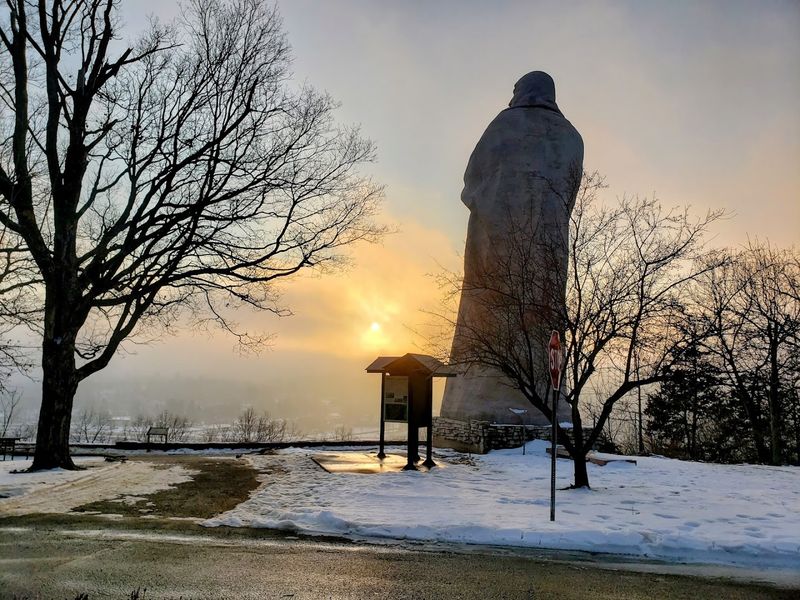
Sunset visits come up again and again among people who know this place well, and for good reason. The late afternoon light hits the concrete figure from the west and gives the whole scene a warm, almost amber tone that photographs beautifully and feels even better in person.
The river below picks up the same light and the effect across the valley is genuinely worth timing your arrival around.
Fall is the most popular season, and if you visit on a clear October weekend you will likely share the parking area with other cars. Arriving on a weekday morning in fall gives you much of the same scenery with a fraction of the crowd.
Spring is a close second for scenery, and the park tends to be quieter then.
Summer visits work well too, particularly for families who want to combine the statue with a longer day of hiking and picnicking. The shade along the trails keeps things cooler than you might expect.
Winter visits are less common but not unheard of, and the bare trees actually open up longer sightlines down the valley that the leafy canopy hides the rest of the year. The park is open year-round, so the timing is entirely yours to choose.
The Cultural Weight of the Place
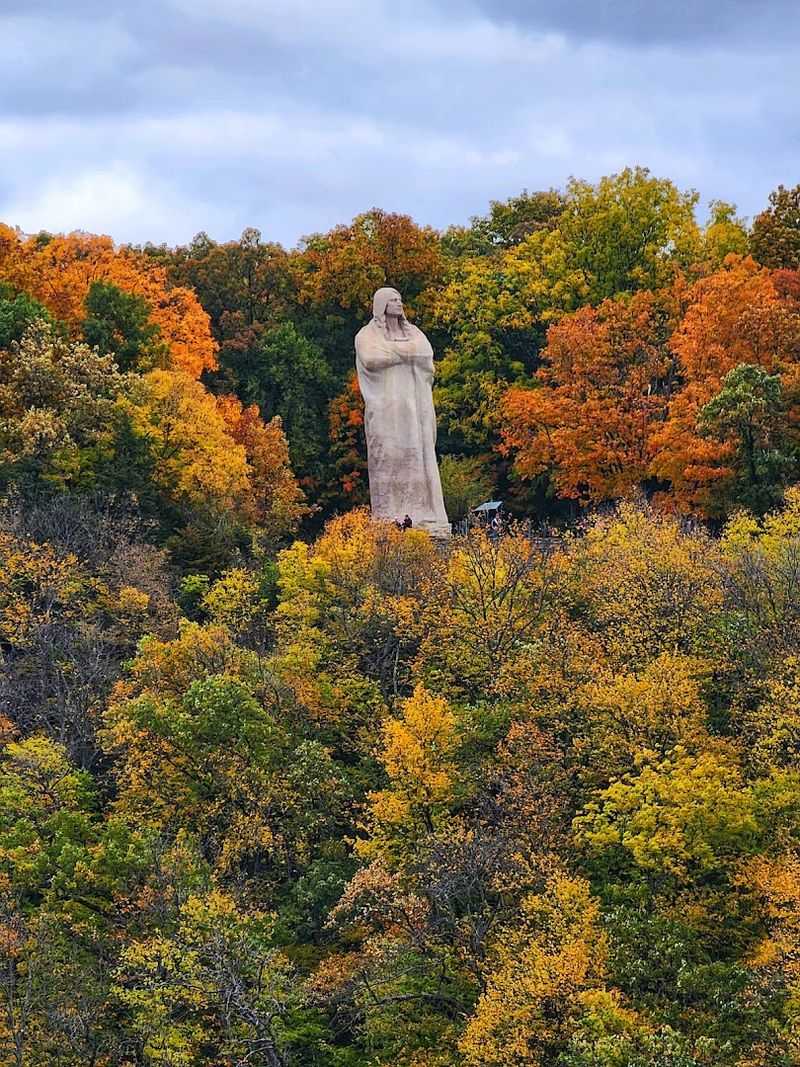
This is not just a large sculpture in a pretty park. The Black Hawk Statue carries real historical and cultural significance tied to the Sauk people, the Rock River valley, and a period of American history that is often glossed over in mainstream storytelling.
Standing beneath it prompts questions that a roadside attraction usually does not.
Black Hawk himself was a complex figure, a warrior and a leader who refused to accept the 1804 treaty that ceded Sauk lands without the consent of the full tribal council. His resistance led to the Black Hawk War of 1832, a conflict that ended badly for his people but did not erase the record of his refusal to accept terms he considered unjust.
The statue honors that legacy without simplifying it.
Visitors who take a few minutes to read about the history before or after their visit tend to leave with a much richer sense of what they have seen. The connection between this specific landscape and the people who lived here long before state parks and parking lots existed gives the whole site a gravity that purely scenic destinations rarely achieve.
Much like certain sites in Oklahoma that honor Indigenous history, this place asks you to hold beauty and history in the same thought at the same time.
Making the Most of Your Visit
A few practical notes can make the difference between a good visit and a great one. The park is free to enter and the road leads all the way to a parking area directly in front of the statue, so accessibility is genuinely good even for visitors who are not up for a long walk.
The phone number for the park is +1 815-732-6828 if you want to confirm hours or ask about conditions before making the drive.
Wear shoes with grip if you plan to take the staircase down to the river, especially after rain when the path at the bottom can turn slick. Bring water on warm days, particularly if you plan to hike the longer trails.
The ice cream shop in the campground area is a nice reward at the end of the afternoon if it happens to be open during your visit.
The park sits in a part of Illinois that does not get the same tourist traffic as Chicago or the southern resort towns, which is honestly a large part of its appeal. Much like hidden natural sites in states such as Oklahoma, the best spots are often the ones that reward a little extra effort to find.
This one asks almost nothing of you and gives back far more than you might expect from a free afternoon in a small Illinois town.
Share this story