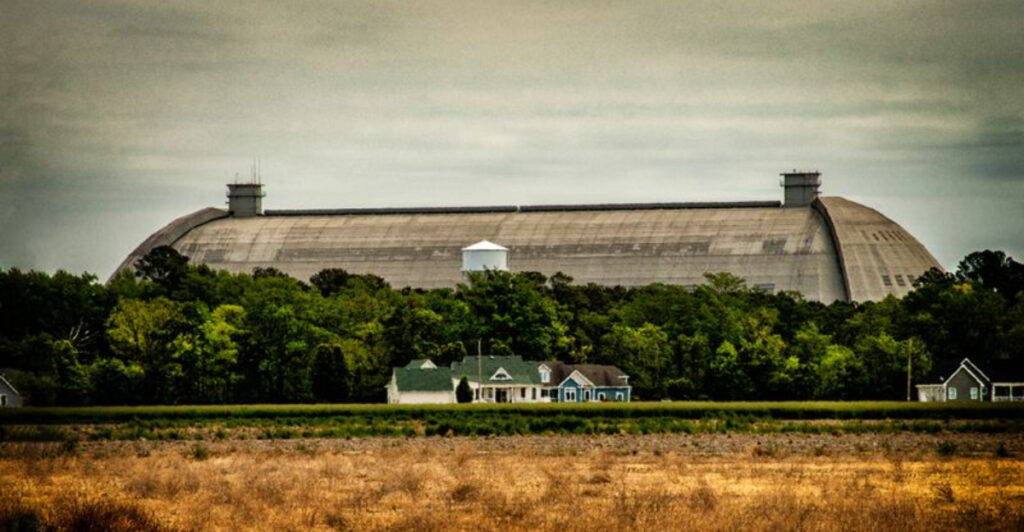
There is a structure in eastern North Carolina so enormous that it can create its own weather system inside. It was built in a hurry, during a time when German submarines were terrorizing the Atlantic coast, and it housed some of the most unusual military aircraft ever deployed by the United States Navy.
The Weeksville Dirigible Hangar, standing near Elizabeth City, is one of the last surviving blimp hangars from World War II, and every inch of it carries a story worth knowing. I visited this place and came away genuinely stunned by how much history a single building can hold.
The Address and Setting That Stops You Cold
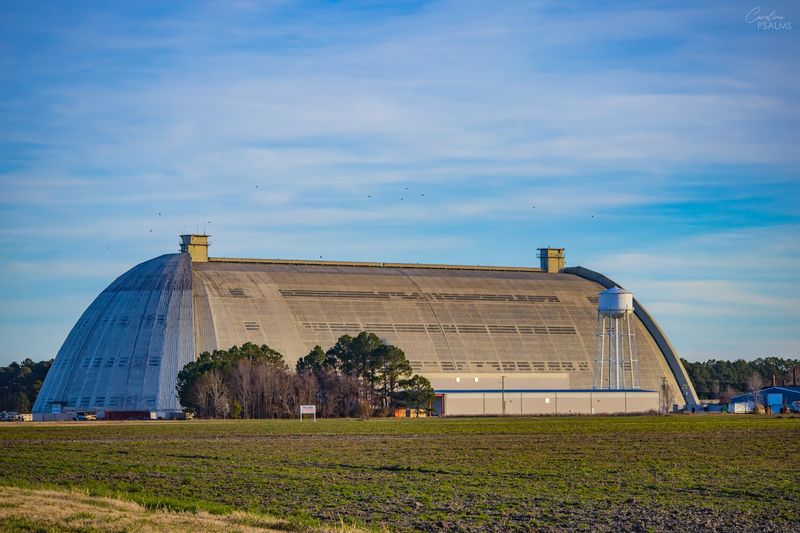
Most people drive past Elizabeth City without expecting to see something that looks like it belongs on another planet. At 173 T Com Dr, Elizabeth City, NC 27909, the Weeksville Dirigible Hangar rises from the flat Pasquotank peninsula like a structure from a science fiction film.
The surrounding landscape is classic coastal North Carolina: wide open fields, low scrub, and the kind of sky that goes on forever. Against that backdrop, the hangar looks absolutely massive, and that first visual punch never really fades no matter how long you stand there staring at it.
The building sits on land that has been tied to military aviation since the early 1940s, when the U.S. Navy chose this remote stretch of northeastern North Carolina for its strategic position near the Atlantic coast.
The Pasquotank River is nearby, the air is salty, and the wind comes in steady and strong. It is the kind of place that feels like history before you even get out of the car, and that feeling only grows stronger as you get closer.
Why the Navy Built a Blimp Base Here
German U-boats were sinking Allied ships at a terrifying rate along the American eastern seaboard in the early years of World War II. The Navy needed a fast, effective solution, and blimps turned out to be one of the best answers available at the time.
Non-rigid airships, commonly called blimps or dirigibles, could hover low over the water for hours, scanning the surface for enemy submarines. They were slow by aircraft standards, but their endurance and low-altitude capability made them ideal for coastal patrol work.
The Navy established a network of blimp bases along the East Coast, and Weeksville was one of them.
Construction began in 1942, and the base was operational quickly, reflecting the urgency of the wartime situation. The location in northeastern North Carolina gave the airships access to a huge stretch of the Atlantic, from the Chesapeake Bay region down through the Carolina coast.
Unlike land-based fighter planes or bombers, blimps could loiter over a suspected submarine position and radio its coordinates to attack aircraft. That combination of patience and precision made them genuinely valuable, and the Weeksville base played a real role in protecting Allied shipping lanes during the conflict.
The Sheer Scale of the Structure
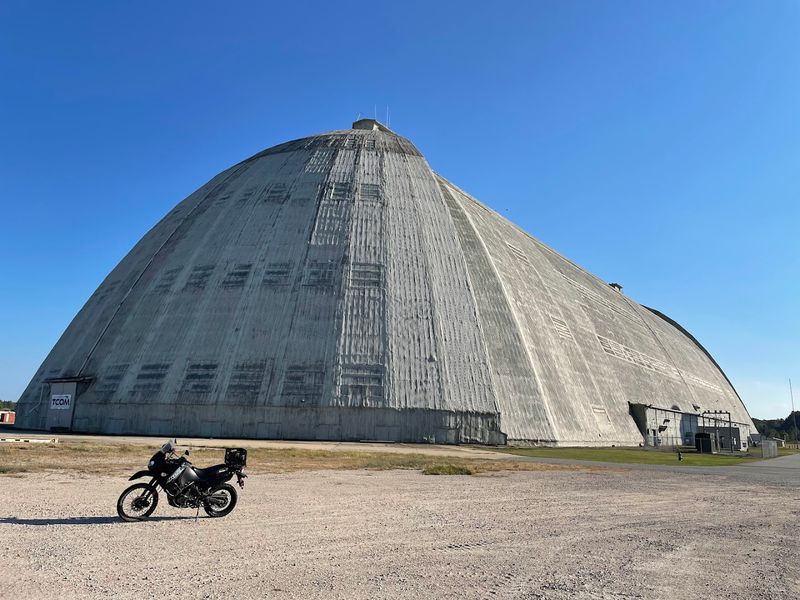
Numbers alone do not fully capture what it feels like to stand next to this building. The Weeksville hangar stretches roughly 1,000 feet in length and rises about 170 feet at its peak, making it one of the largest wooden structures ever built in the United States.
The original hangar was constructed almost entirely from wood, a wartime necessity driven by steel shortages. Engineers and builders pulled off something remarkable under serious time pressure, assembling a structure large enough to house multiple blimps simultaneously while also providing maintenance facilities, crew quarters, and operational support spaces.
The interior volume is so vast that condensation from warm air meeting cold surfaces has been known to create a light mist near the ceiling, giving the space an almost surreal atmosphere on certain days. Workers who have spent time inside the building describe a sense of awe that never quite goes away, even after years on the job.
The wooden arches that curve overhead are engineering achievements in their own right, holding up an enormous roof without the steel framework that would normally be required for a span this wide. The craftsmanship involved is genuinely impressive by any era’s standards.
The Fire That Changed Everything
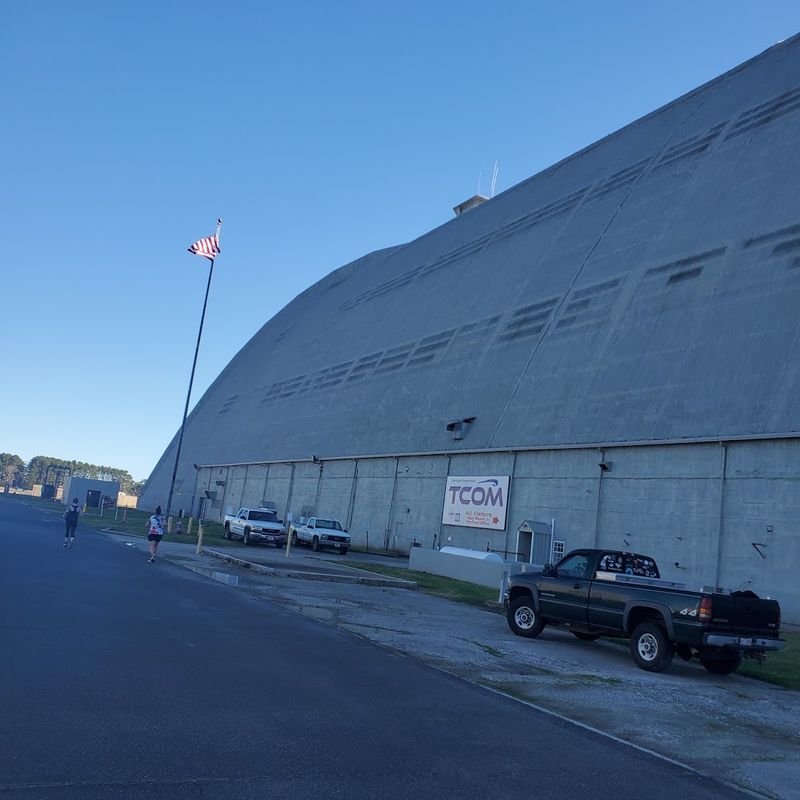
The original hangar did not survive intact to the present day. A fire tore through the structure at some point after the war, destroying much of the main building but leaving the enormous corner sections standing as scorched reminders of what once existed.
Those surviving corners are haunting in the best possible way. They are tangible proof of the original scale of the structure, and they give visitors a sense of just how much was lost while also showing how much engineering went into the original construction.
The corners themselves are still impressively large, even stripped of the roof and walls that once connected them.
A replacement hangar was eventually built on the same site, continuing the property’s aviation mission into the modern era. The current structure is still enormous and still serves an active purpose, but the ghost of the original hangar lingers in those standing corners.
Knowing that the original burned adds a layer of melancholy to the visit, the kind that makes you think about everything that was preserved only in photographs and memory. History has a way of surviving in fragments, and the Weeksville site is a powerful example of that truth holding firm across eight decades.
The Radiomen and Crews Who Served Here
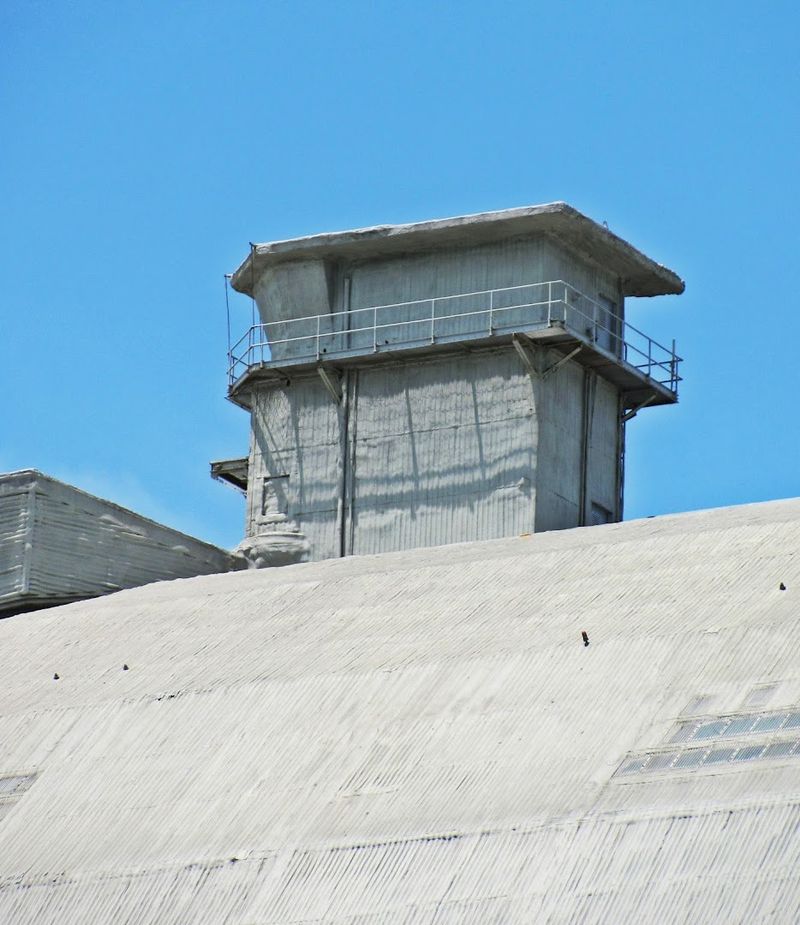
The human stories attached to this place are just as compelling as the architecture. Servicemen stationed at Weeksville came from all over the country, and some were lucky enough to serve close to their own hometowns in northeastern North Carolina.
Radiomen aboard the blimps played a crucial role in the anti-submarine mission. When a crew spotted a U-boat on the surface or detected one through other means, the radioman would immediately transmit the position to shore, which would then dispatch attack aircraft to the location.
The blimp itself was not heavily armed for offensive strikes, but its ability to stay on station and keep eyes on a target made it an essential part of the hunting team.
Veterans who served here carried those memories for the rest of their lives. The combination of technical skill, physical endurance, and genuine danger made blimp service a unique chapter in naval aviation history.
These were young men doing a demanding job far from the glamour of fighter squadrons, but their contribution to keeping the Atlantic shipping lanes safer was real and meaningful. Their stories deserve to be remembered with the same respect given to any other branch of wartime service, and this site keeps that memory alive.
How Blimps Actually Hunted Submarines
The tactics used by blimp crews during World War II were surprisingly sophisticated for what most people think of as slow, ungainly aircraft. Blimps patrolling the Atlantic would fly at low altitudes, often just a few hundred feet above the water, scanning the surface visually and using early sonar buoy technology.
When a submarine was running on the surface to recharge its batteries, it was vulnerable. A blimp could spot the wake and shadow of a U-boat from a considerable distance, and its slow speed actually worked in its favor during surveillance because it could circle a position without burning through fuel at the rate a conventional aircraft would.
The coordinated system worked like this: the blimp finds the target and radios the position, then faster aircraft arrive to make the actual attack. The blimp might also drop smoke markers or flares to help guide the attack planes in.
It was a team effort that required precise communication and calm nerves from everyone involved. The crews who flew these missions out of Weeksville did so knowing that a surfaced U-boat was also capable of fighting back, which added genuine risk to every patrol flight over the cold Atlantic waters below.
TCOM and the Modern Mission at Weeksville
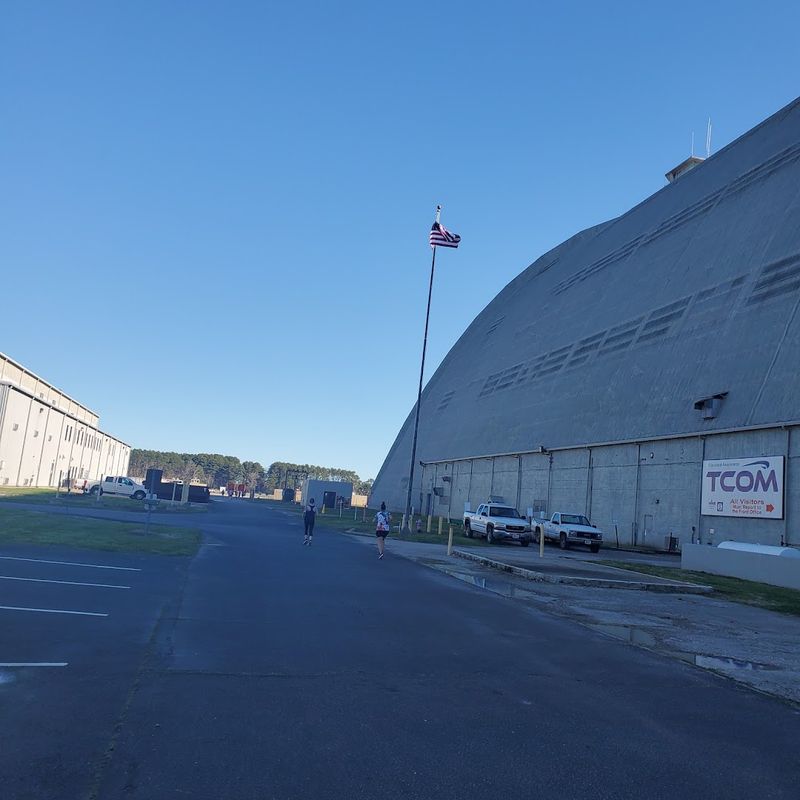
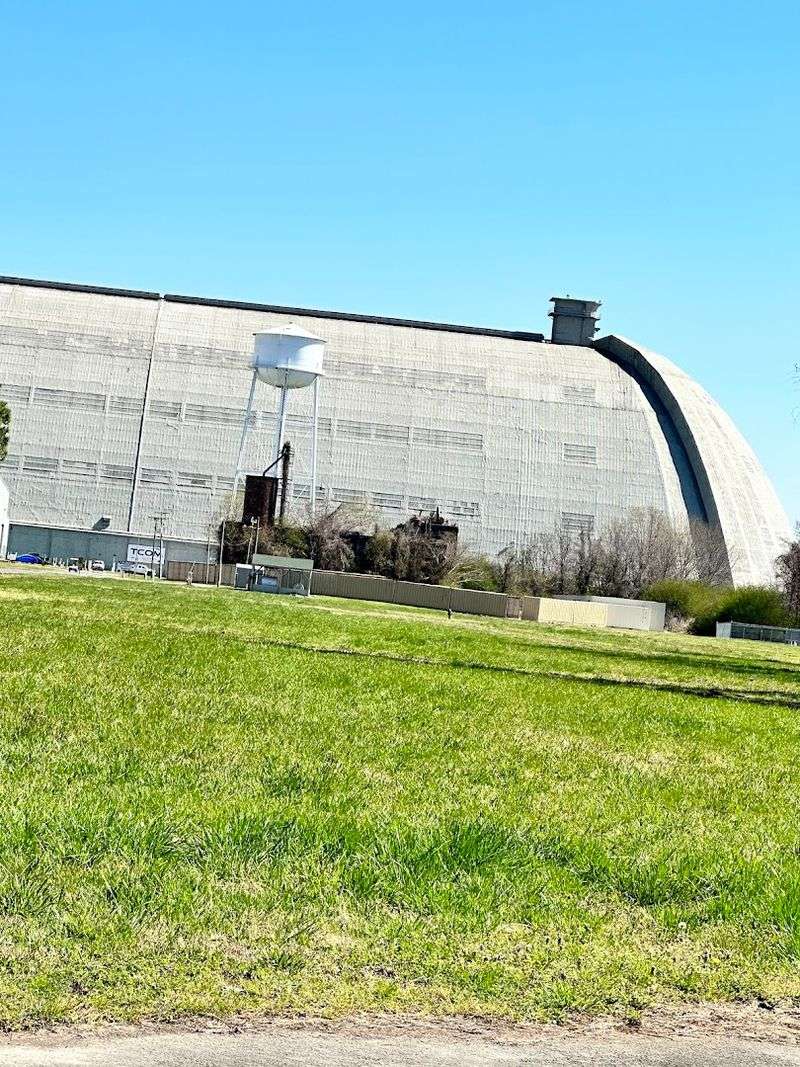
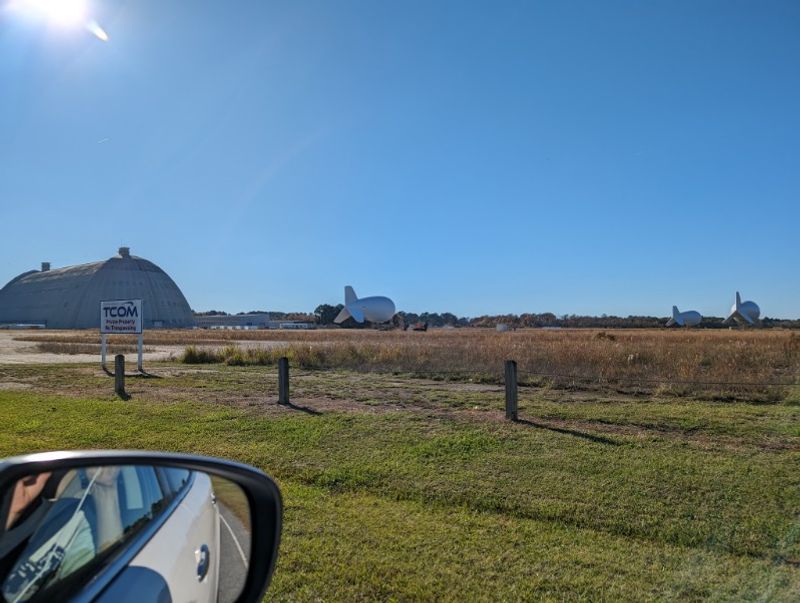
The Weeksville site did not fade into irrelevance after World War II ended. Today, the property is home to TCOM, a company that designs and manufactures lighter-than-air systems for military and government clients around the world.
TCOM produces tethered aerostats, which are helium-filled balloon platforms used for surveillance, communications relay, and border monitoring. These are not the kind of blimps that carry passengers or trail advertising banners at football games.
They are serious military systems used in active operational environments, and they are built and tested inside the enormous hangar at the Weeksville site.
The connection between the original WWII mission and the current work at the facility is striking. Both involve lighter-than-air craft performing surveillance and communications tasks in support of military operations.
The technology has changed dramatically, but the fundamental idea, putting eyes in the sky using a buoyant platform, remains the same. Because of the military nature of the work, photography inside the building is not permitted, and the facility is not open to the general public.
That restriction is understandable, but it does add a layer of intrigue to an already fascinating place. The legacy continues in a very active, present-tense way.
The Rarity of Surviving Blimp Hangars
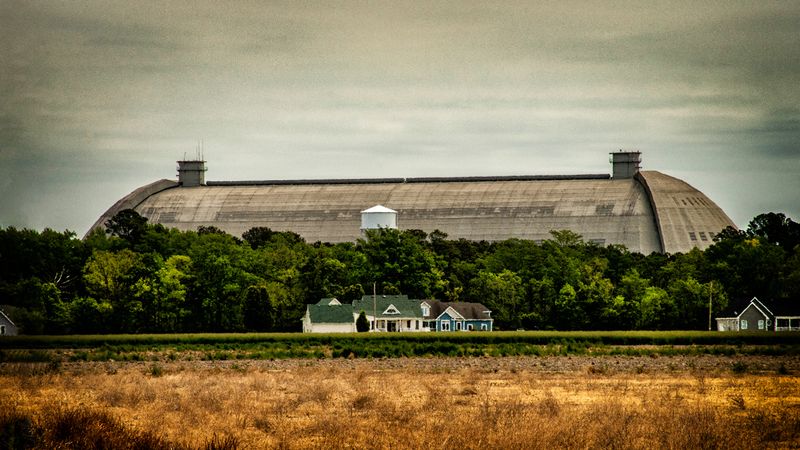
Most people have no idea how many blimp bases the United States operated during World War II, or how few of the hangars from that era are still standing today. At the height of the war, the Navy operated more than a dozen blimp bases along the Atlantic and Gulf coasts, stretching from New England down through Florida and around to Texas.
The hangars were massive investments of materials and labor, but once the war ended and blimps were phased out of active military service, many of the bases were decommissioned and the hangars were demolished or simply left to deteriorate. Fire, weather, and neglect claimed a significant number of them over the decades that followed.
The surviving examples, including the Weeksville site, are genuinely rare pieces of American military and architectural history. Preservation advocates and aviation historians treat them with the same seriousness that others reserve for battlefields or historic warships.
Each surviving hangar is a three-dimensional document of a specific moment in American history, one that most textbooks barely cover. The fact that Weeksville is still in active use rather than sitting empty or falling apart makes it even more exceptional among the small group of surviving structures from this chapter of wartime aviation history.
What a Visit to the Site Actually Looks Like
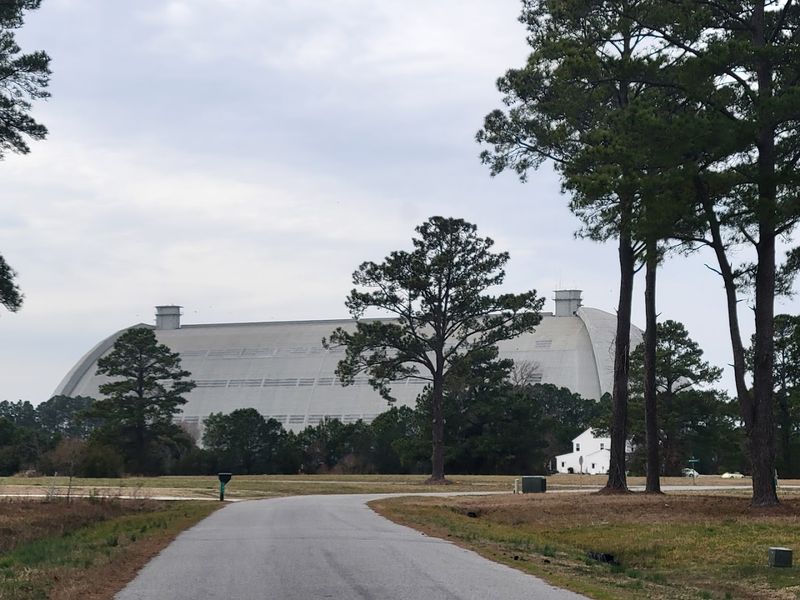
Getting close to the Weeksville Dirigible Hangar requires some realistic expectations. The facility is an active, secure industrial and military site, which means walk-up tours are not a standard offering, and the interior is off-limits to casual visitors.
That said, the exterior of the building is visible from the road, and the sheer size of the structure makes even a drive-by visit worthwhile. The hangar dominates the landscape in a way that photographs genuinely struggle to capture.
You need to be physically present to understand how something this large can exist in a place this quiet and flat.
Occasionally, special events or organized tours have given select groups access to the property, and those who have experienced such visits describe them as genuinely memorable. The Coast Guard Marathon has routed runners past the hangar, giving participants a rare chance to experience the scale of the building from close range.
For history enthusiasts who find themselves in the Elizabeth City area, simply driving out to see the exterior is a worthwhile detour. The hangar is the kind of thing that rewards curiosity, even from the outside, and it tends to spark a lot of questions about a chapter of the war that most people have never encountered before.
Why This Place Deserves a Spot on Your Radar
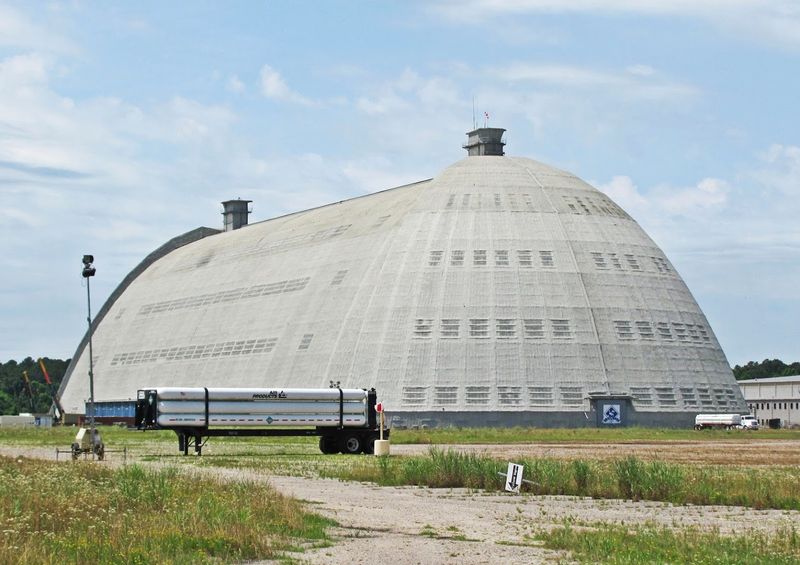
There is a tendency in American travel culture to focus on the obvious landmarks while overlooking the genuinely strange and specific ones. The Weeksville Dirigible Hangar falls firmly into the second category, and that is exactly what makes it so worth knowing about.
This is not a reconstructed museum exhibit or a replica built for tourism purposes. The building and its grounds are a living, working piece of military history that has continued to serve a purpose connected to its original mission for more than eight decades.
That kind of continuity is rare anywhere in the country, and it gives the site an authenticity that no amount of interpretive signage can manufacture.
For anyone interested in World War II history, aviation, engineering, or the overlooked corners of American military heritage, this site represents something genuinely worth seeking out. The broader Elizabeth City area has its own coastal charm, and a trip to the region can easily combine a look at the hangar exterior with exploration of the Pasquotank River waterfront and the surrounding Albemarle Sound area.
Much like certain historical installations in Oklahoma that quietly shaped American military history, Weeksville does its important work without demanding attention, and that quiet confidence is part of what makes discovering it feel so rewarding.
Share this story