Some streets are just streets. But others carry centuries of history in every cobblestone, archway, and faded doorway.
The 14 streets on this list are the kind that make you forget you had somewhere to be. Walking them feels less like sightseeing and more like stepping straight into a living, breathing history book.
Stradun (Dubrovnik, Croatia)
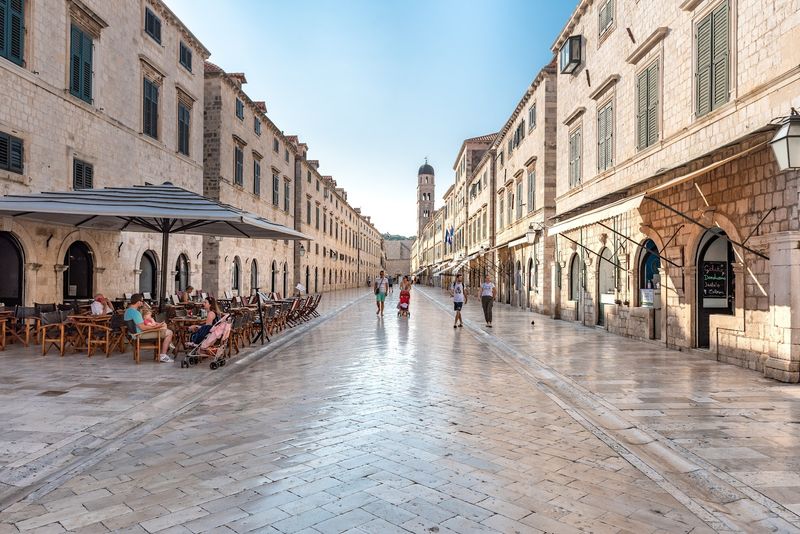
Stradun is so polished it practically glows. The limestone surface has been worn smooth by millions of footsteps over hundreds of years, giving it a mirror-like shine on sunny days.
First time I walked it, I nearly slipped and blamed the street entirely.
Stretching about 300 meters through Dubrovnik’s Old Town, Stradun is fully pedestrianized and lined with uniform baroque buildings rebuilt after a devastating 1667 earthquake. Cafes spill onto the pavement, church bells ring on the hour, and narrow side alleys branch off like little rabbit holes of discovery.
Every alley hides something worth finding, whether a hidden terrace, a centuries-old fountain, or a quiet courtyard. Stradun is technically a promenade but functions more like an outdoor gallery with espresso service.
Visit early morning to beat the crowds and actually hear your own footsteps echo off those glorious old walls.
Via San Gregorio Armeno (Naples, Italy)
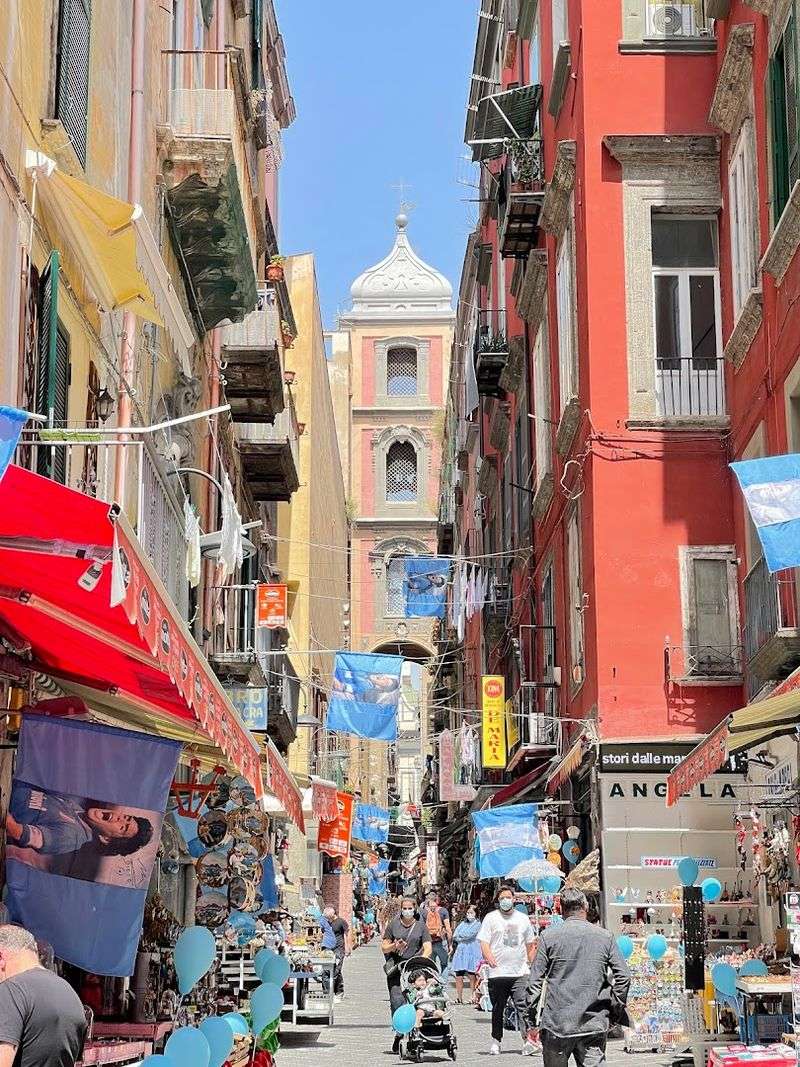
Only in Naples would an entire street dedicate itself to Christmas figurines year-round and make it work brilliantly. Via San Gregorio Armeno has been home to craftsmen carving nativity scenes for over 400 years.
The tradition runs so deep that even the street’s stones feel festive.
Artisans here don’t just make baby Jesus figurines. They also craft tiny versions of politicians, soccer players, and celebrities, tucked cheekily among the angels.
It’s irreverent, charming, and completely Neapolitan in the best possible way.
The street gets seriously crowded near Christmas, but the workshops operate all year, so a spring or autumn visit means more breathing room and easier conversations with the craftsmen. Some families have been running the same workshop for multiple generations.
Wandering slowly and stopping to chat with the artisans makes for a far richer experience than rushing through with a camera. Quality over quantity applies here.
Calleja de las Flores (Córdoba, Spain)
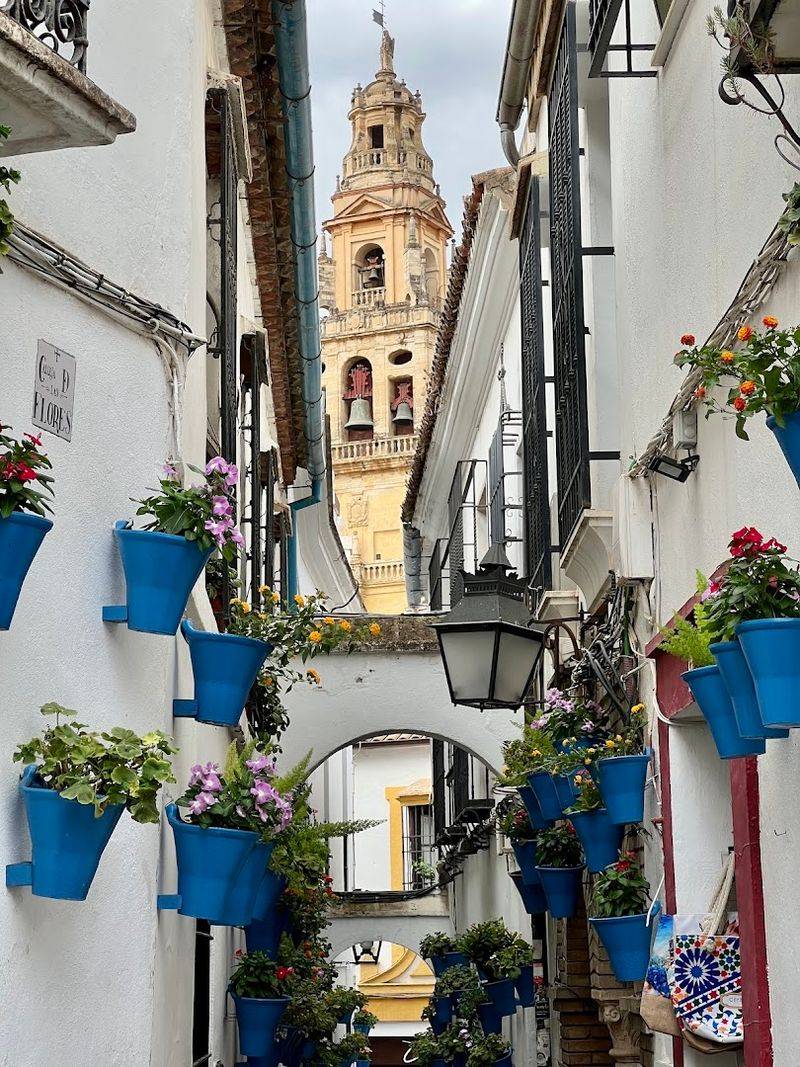
This tiny lane in Cordoba might be the most photographed dead end in Europe. Calleja de las Flores translates to Alley of the Flowers, and the name is not exaggerating one bit.
Whitewashed walls are stacked with colorful ceramic pots bursting with blooms, and at the far end, the Mezquita tower frames the view perfectly.
The alley is short, maybe 50 meters total, but packs more visual charm per square meter than streets ten times its length. It sits within Cordoba’s historic Jewish Quarter, a labyrinth of narrow lanes that rewards anyone willing to wander without a fixed destination.
May is the best month to visit, when Cordoba holds its famous Patio Festival and flower displays reach peak extravagance across the whole city. The Calleja gets crowded fast, so arriving before 9am gives you a quiet, unhurried version of the experience.
Early birds get the best light and the least elbow contact.
Royal Mile (Edinburgh, Scotland)
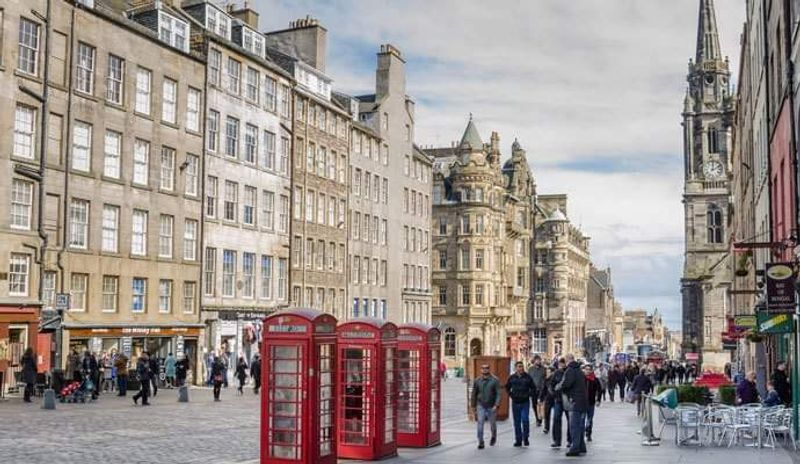
The Royal Mile is essentially a greatest hits album of Scottish history, played out across one very long, very dramatic street. Running from Edinburgh Castle at the top to the Palace of Holyroodhouse at the bottom, it covers roughly a mile of medieval closes, centuries-old pubs, and hidden courtyards.
The gradient alone makes it feel like an adventure.
What makes the Royal Mile special is what hides off it. The closes, narrow alleyways cutting between buildings, lead to tiny squares, old graveyards, and tucked-away museums most tourists walk straight past.
Exploring them is genuinely the best use of time here.
During the Edinburgh Festival in August, the street transforms into a performance stage with street artists, musicians, and comedy acts competing for attention. Outside festival season, it’s calmer and far easier to appreciate the architecture.
Either way, wear comfortable shoes. The cobblestones are charming but merciless on anything with a heel.
Rue du Petit-Champlain (Quebec City, Canada)
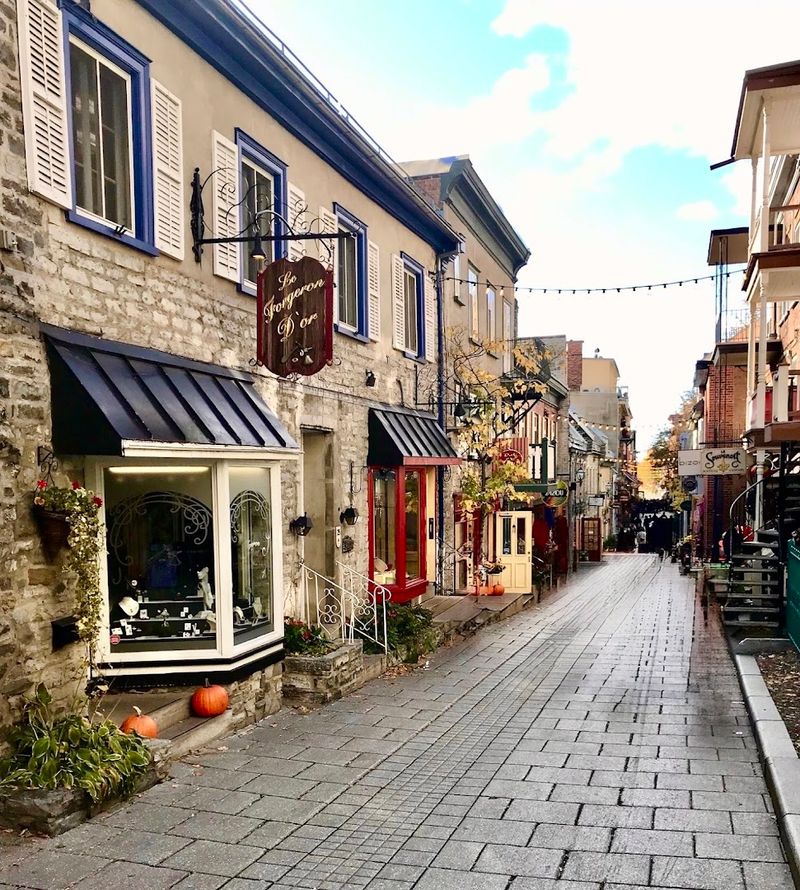
Quebec City pulled off something remarkable by keeping one of North America’s oldest commercial streets looking thoroughly European. Rue du Petit-Champlain sits at the base of Cap Diamant, reached via a funicular or a steep staircase that doubles as a cardio workout.
The street dates back to the 17th century and somehow still feels like it belongs to that era.
Stone buildings house artisan boutiques, galleries, and restaurants, and the whole street is pedestrianized, which makes lingering feel natural rather than inconvenient. In winter, it becomes especially magical with string lights, snow-covered rooftops, and a general festive atmosphere that would make even the grumpiest traveler smile.
Summer brings outdoor performances and longer daylight hours to explore. The street is short but dense with things worth slowing down for.
Skip the souvenir shops selling maple syrup everything and seek out the independent craft stores instead. The quality difference is immediately noticeable and your luggage will thank you later.
Stortorget and Köpmangatan (Gamla Stan, Stockholm, Sweden)
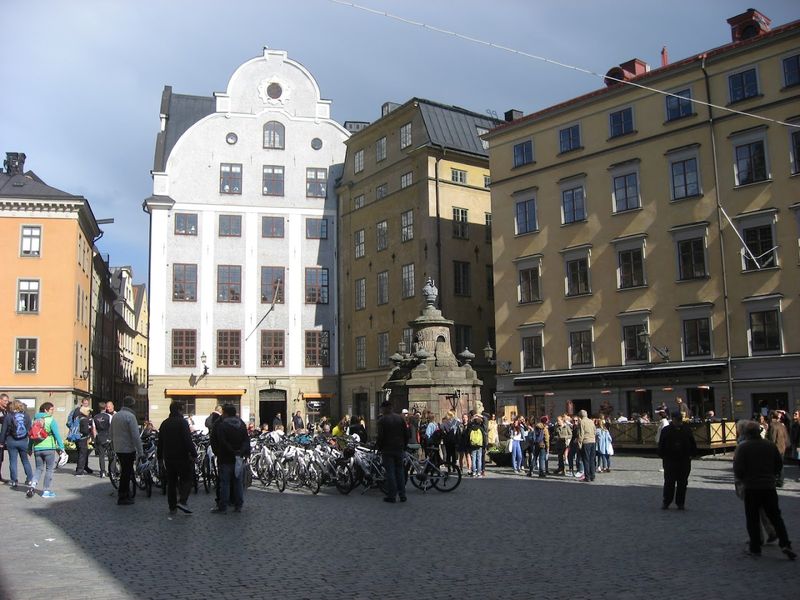
Stockholm hid its most charming street inside an island. Gamla Stan, the old town, sits on its own island in the center of the city, and Köpmangatan is one of its oldest surviving streets, dating back to medieval times when Stockholm was a key Hanseatic trading hub.
The buildings are painted in shades of amber, rust, and mustard that make even grey Swedish winters look warm.
Köpmangatan connects to Stortorget, the main square, where a famous 1520 massacre took place. History here is not always cheerful but it is always compelling.
The square’s colorful merchant houses are among the most photographed in Scandinavia.
Gamla Stan can get crowded on summer weekends, but the maze of lanes surrounding Köpmangatan absorbs visitors quickly. Ducking off the main paths rewards you with quieter corners and fewer tour groups.
A fika stop at one of the old square’s cafes is basically mandatory. Skip it and you have missed the point entirely.
Obispo Street (Havana, Cuba)
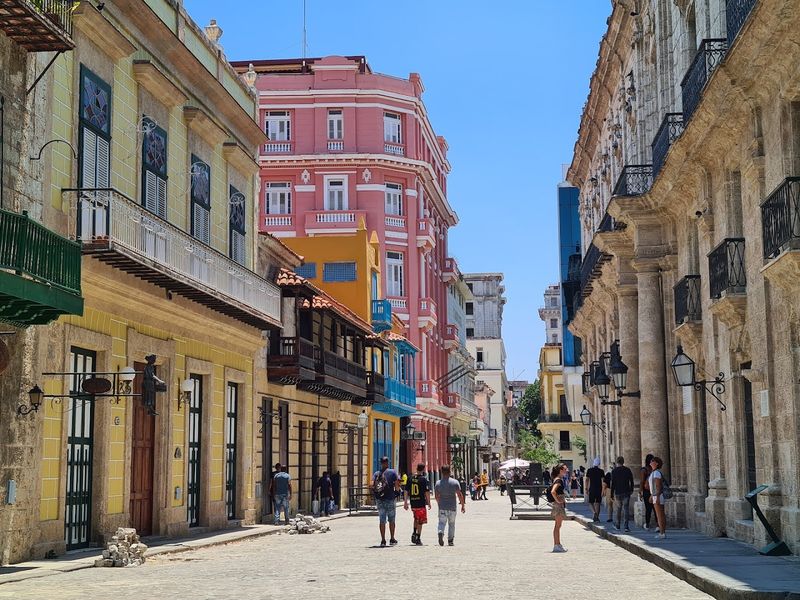
Obispo Street moves to its own rhythm, and that rhythm involves a lot of live music. Running through the heart of Old Havana, this pedestrianized colonial street hums with musicians, booksellers, cafe chatter, and the general beautiful chaos that defines Cuban city life.
Cars are kept out, which lets the street breathe.
The architecture along Obispo is a layered mix of Spanish colonial, neoclassical, and art deco styles, all slightly weathered in a way that adds character rather than suggesting neglect. Bookstores selling secondhand Cuban literature sit next to pharmacies and small cafes serving strong coffee at prices that feel like a pleasant surprise.
The street connects the Plaza de Armas to Parque Central, making it a natural route for anyone exploring the old city. Walking it slowly and stopping wherever feels interesting beats any guided tour.
Ernest Hemingway was a regular in this neighborhood, and his favorite bar, El Floridita, sits right at the end of the street.
Strøget (Copenhagen, Denmark)
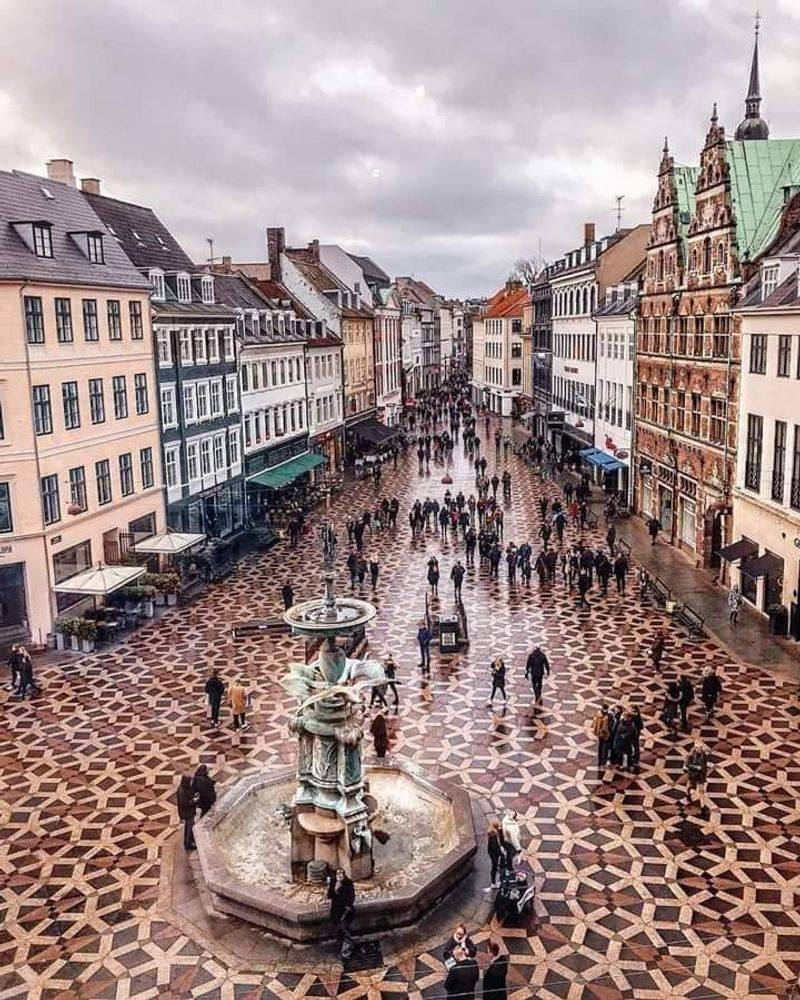
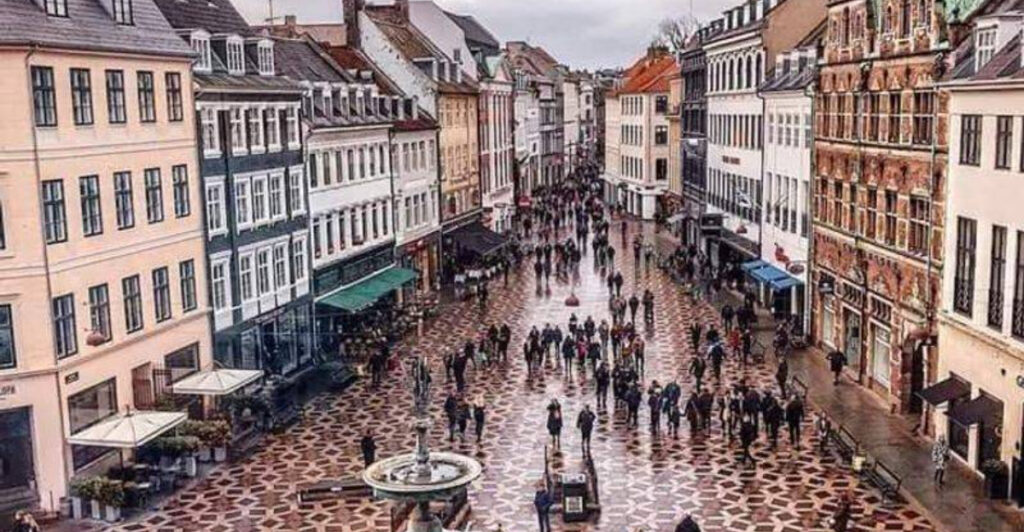
Strøget made history before most streets even thought about it. When Copenhagen pedestrianized this central corridor in 1962, city officials were bombarded with skeptics insisting nobody would actually use a car-free street.
Within a year, foot traffic had tripled. The skeptics went very quiet.
Running about 1.1 kilometers through the historic center, Strøget connects several public squares and passes through centuries of architectural history. The buildings range from Renaissance to baroque to neoclassical, creating a visual timeline that rewards anyone who looks up while walking.
The street is busiest around Stroget’s central squares, Gammeltorv and Nytorv, where street performers and outdoor seating create a lively hub. Side streets branching off Stroget hide some of Copenhagen’s best independent shops and cafes, worth exploring if the main strip feels too busy.
Urban planners from around the world still visit Copenhagen specifically to study what Stroget got right. It remains a masterclass in making cities actually enjoyable to walk through.
Istiklal Avenue (Istanbul, Turkey)
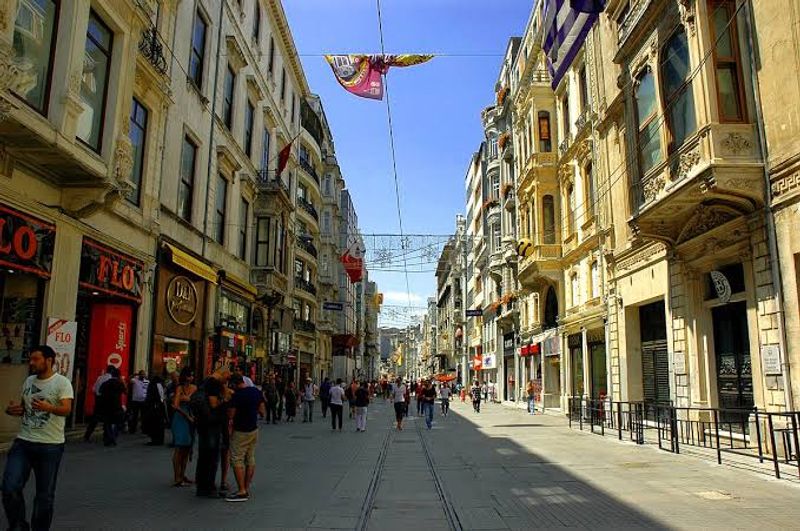
Few streets in the world can claim Ottoman palaces, Greek Orthodox churches, art nouveau passages, and a vintage red tram all within the same stretch. Istiklal Avenue manages it without breaking a sweat.
This 1.4-kilometer pedestrian boulevard in Istanbul’s Beyoglu district is one of the busiest streets on the planet, drawing millions of visitors and locals alike every year.
The famous red tram still runs the full length of the avenue, more beloved symbol than practical transport at this point. Historic arcades called passages branch off the main street, hiding cafes, bookshops, and antique dealers in beautifully faded 19th-century interiors.
The contrast between these quiet passages and the buzzing main avenue is genuinely striking.
Evenings on Istiklal are especially atmospheric, with restaurants opening onto the street and live music drifting from open windows. Arrive on a weekday afternoon to avoid the thickest weekend crowds.
The side streets of Cihangir nearby offer a quieter, more residential glimpse of the neighborhood if the main avenue feels overwhelming.
Rua Augusta (Lisbon, Portugal)
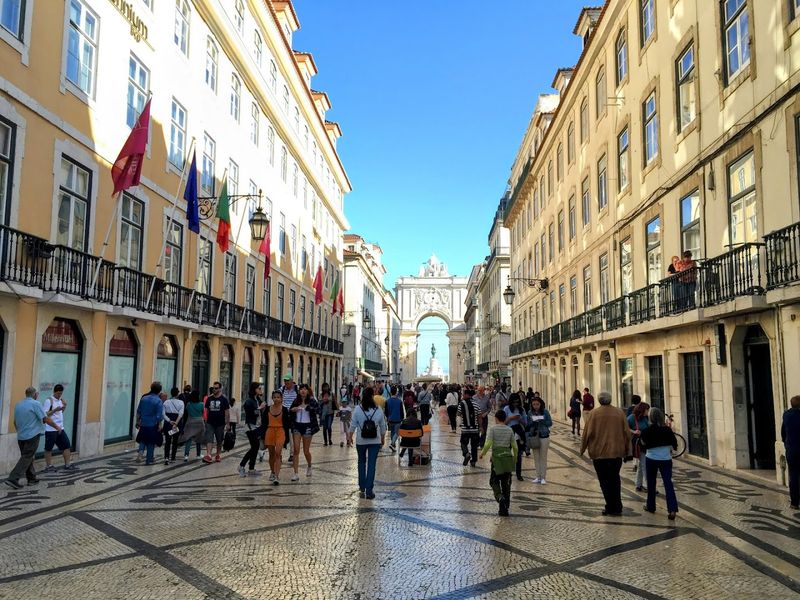
Rua Augusta was essentially born from disaster. After the catastrophic 1755 earthquake flattened much of Lisbon, the visionary Marquis of Pombal rebuilt the Baixa district on a rational grid, with Rua Augusta as its grand central axis.
The famous triumphal arch at its southern end was added later as a monument to the city’s resilience. Not bad for a street born out of rubble.
Today it runs from Rossio square straight to the Tagus riverfront, lined with elegant buildings, outdoor cafes, mosaic-tiled pavements, and a rotating cast of street performers. The architecture is neoclassical and satisfyingly uniform, giving the whole avenue a composed, stately feel.
Mornings are peaceful enough to appreciate the architecture properly. By midday the street fills with energy, which has its own appeal.
The side streets of Baixa branch off in an orderly grid, each worth a short detour. Lisbon’s famous pasteis de nata are best enjoyed at a nearby cafe after the walk.
That part is non-negotiable.
The Shambles (York, England)
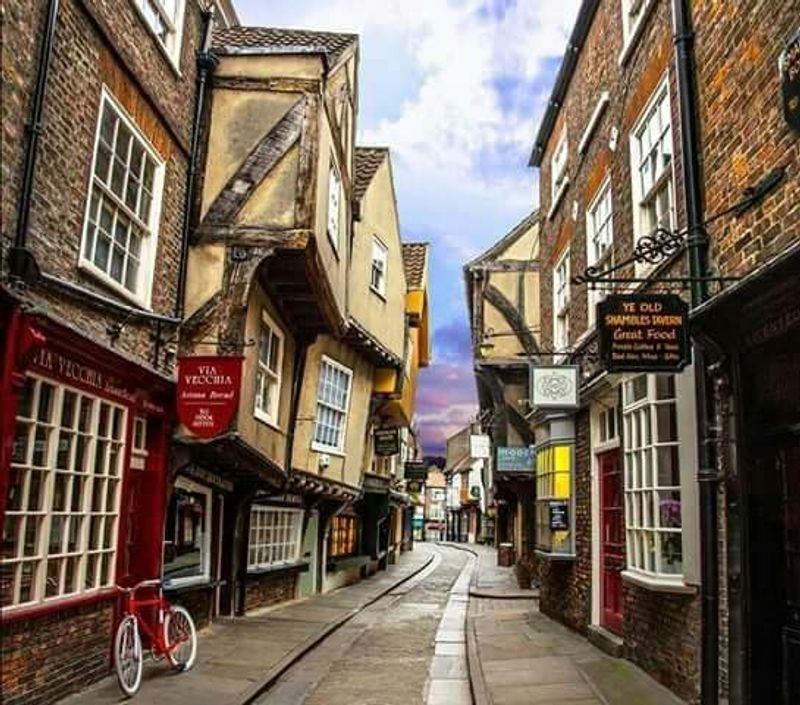
The Shambles leans. Literally.
The timber-framed buildings on either side of this narrow York lane tilt toward each other overhead, creating a crooked tunnel effect that has been charming visitors for centuries. Medieval builders apparently had strong opinions about personal space, and those opinions did not include much of it.
Originally a street of butcher shops dating back to at least the 14th century, the overhanging upper floors were designed to keep meat cool in the shade. The hooks and shelves once used for hanging carcasses are still visible on some buildings.
It is equal parts history lesson and slightly grim fun fact.
Today the butchers are long gone, replaced by independent shops, cafes, and the occasional Harry Potter-themed store. The street appears regularly on lists of best-preserved medieval lanes in Europe, and the recognition is deserved.
Visit on a weekday morning for the quietest experience. York’s city walls are a short walk away and pair perfectly with a Shambles wander.
Dihua Street (Taipei, Taiwan)
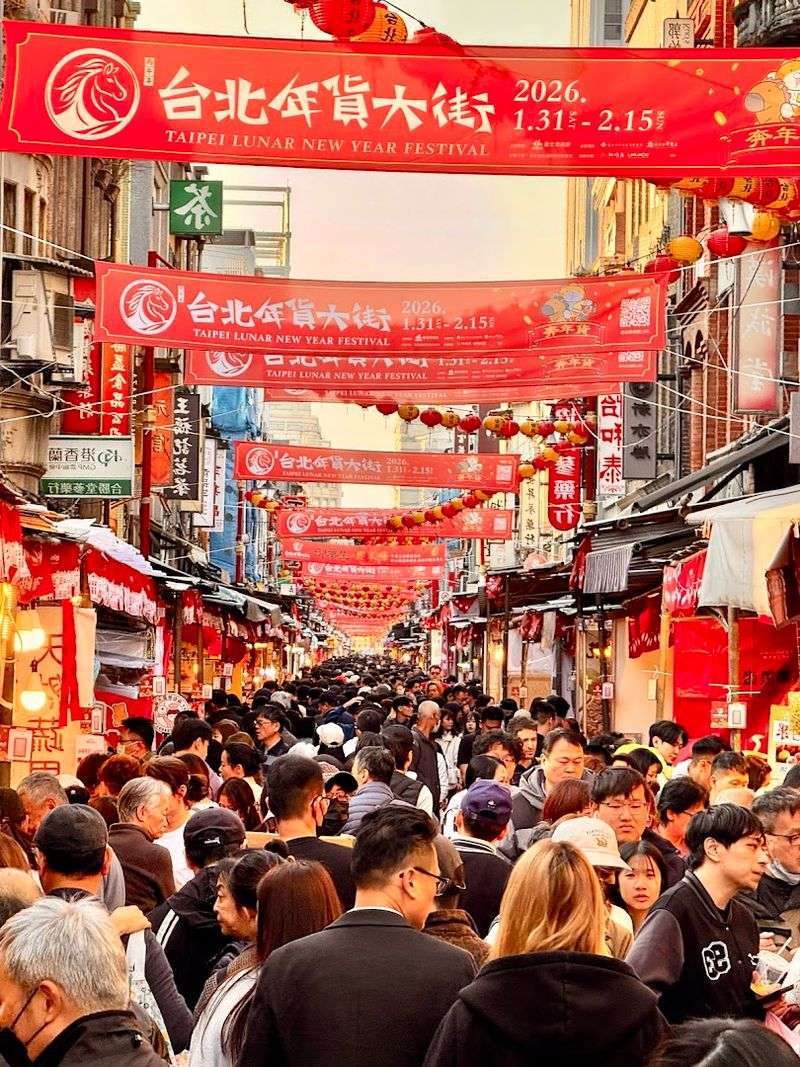
While Taipei races toward the future with glass towers and high-speed rail, Dihua Street quietly holds its ground in the 19th century. This heritage thoroughfare in the Dadaocheng district is one of the oldest and best-preserved streets in the city, lined with traditional Minnan and baroque-influenced merchant houses that have barely changed in over a century.
Tea merchants, herbal medicine shops, fabric stores, and dried goods sellers still operate alongside newer cafes and creative studios that have moved in without disrupting the street’s character. The architectural mix of ornate facades and deep-set shopfronts creates a rhythm that is genuinely pleasant to walk through slowly.
The Lunar New Year period brings Dihua Street to life with festive markets and enormous crowds, so plan accordingly if large gatherings are not your preference. A quieter weekday visit lets you actually browse the shops and chat with vendors.
The contrast between Dihua’s preserved streetscape and Taipei’s modern skyline visible just beyond it is one of the city’s most interesting juxtapositions.
Ulica Mariacka (Gdansk, Poland)
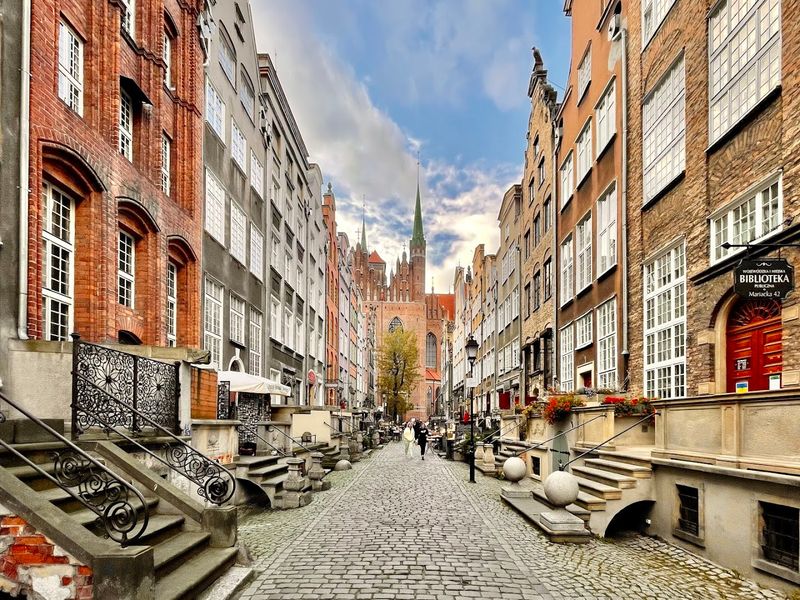
Ulica Mariacka is technically a reconstruction, but you would never guess it. After World War II reduced much of Gdansk to rubble, the city rebuilt Mariacka Street using historical photographs, drawings, and architectural records so precise that the result looks authentically medieval.
The attention to detail is borderline obsessive, and the street is all the better for it.
Gothic terraces with carved gargoyles line the cobblestones, and amber jewelry shops occupy nearly every ground-floor unit. Gdansk sits on the Baltic coast and has been a center of amber trade for centuries, so buying a piece here connects you to a genuinely long tradition rather than just a tourist transaction.
The street runs from the waterfront to St. Mary’s Church, one of the largest brick Gothic churches in the world, making it a natural connector between two major sights. Evening light on the terrace facades is particularly worth catching.
A slow walk here feels entirely removed from the modern city just a few blocks away, which is exactly the point.
Insadong Area (Seoul, South Korea)
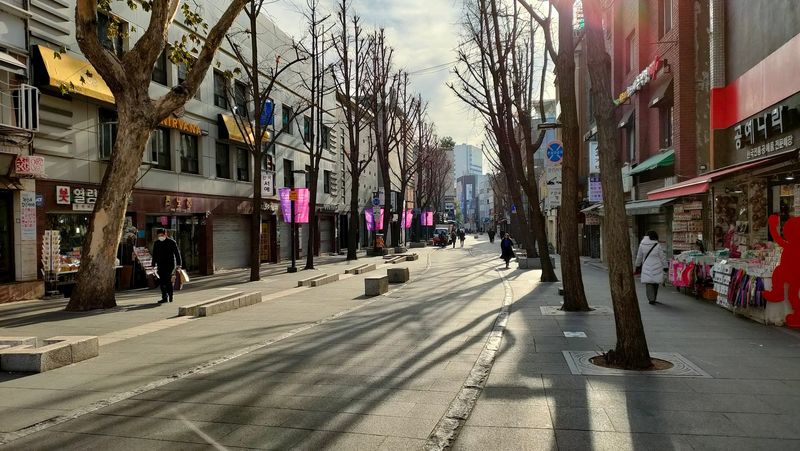
Seoul is a city that reinvents itself at speed, which makes Insadong’s stubborn commitment to tradition feel almost radical. The narrow lanes surrounding this historic area preserve much of old Seoul’s character, with tea houses, craft galleries, antique dealers, and hanok-inspired buildings holding their own against the surrounding urban sprawl.
It is cultural resistance in architectural form.
The main Insadong-gil street is fully pedestrianized on weekends, turning it into a relaxed stroll past independent shops and street food vendors. The side alleys, particularly around Ssamziegil, a quirky courtyard complex, reward exploration with small galleries and design studios tucked into unexpected corners.
Traditional Korean crafts sold here tend to be genuinely handmade rather than mass-produced imports, which matters when you are looking for something worth keeping. The area sits close to Gyeongbokgung Palace, making it easy to combine both in a single afternoon.
Visiting on a Sunday gives the full pedestrianized experience. Bring cash for smaller vendors who prefer it and bring curiosity for everything else.
Share this story