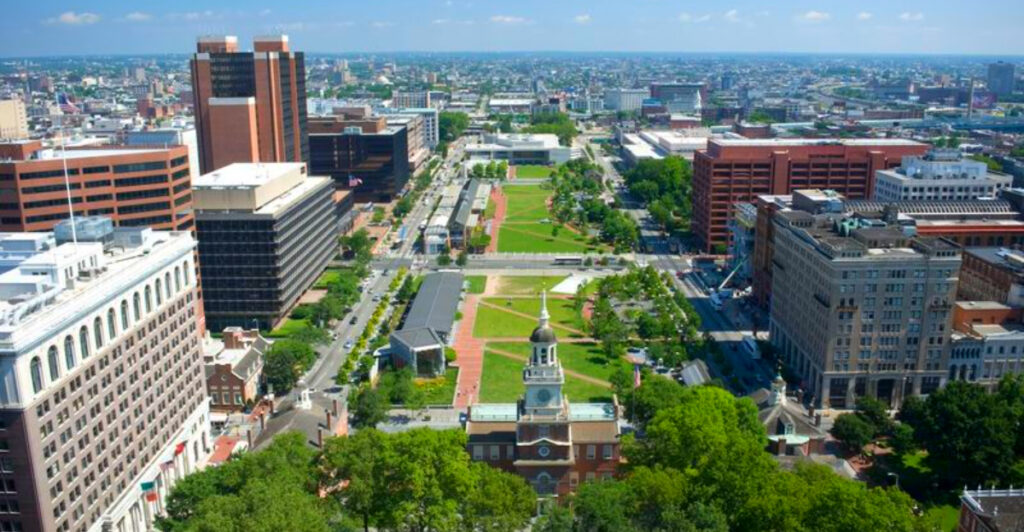
Independence National Historical Park packs some of America’s most important landmarks into a single area of Philadelphia. Here, visitors can see the Liberty Bell, tour Independence Hall, and stand in the rooms where the Declaration of Independence and U.S.
Constitution were debated and signed.
The famous sites are only part of the story. Behind every building, artifact, and historic room is a fascinating chapter in the nation’s founding.
Keep reading to discover why this UNESCO World Heritage Site remains one of the most significant places in the United States.
Where the Address Meets American History
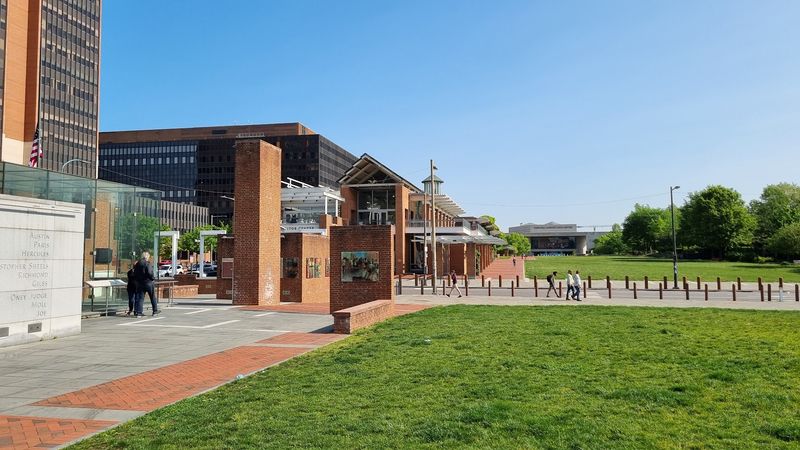
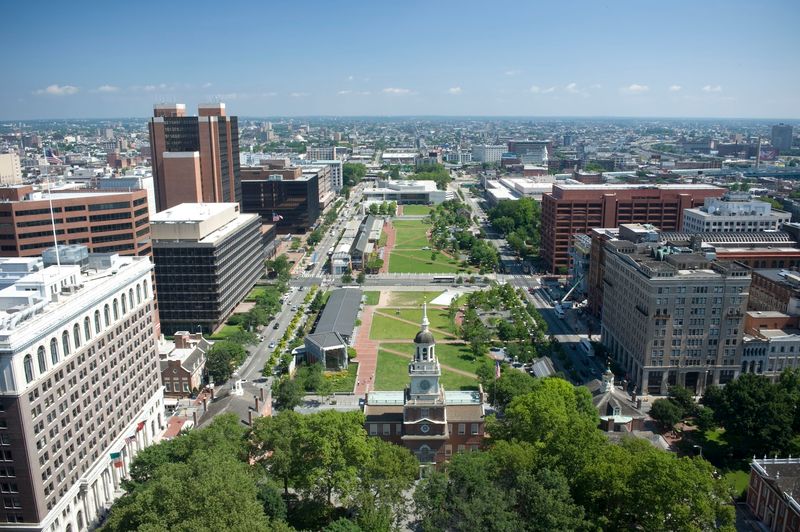
Right in the heart of Philadelphia’s Old City neighborhood, at Philadelphia, PA 19106, sits one of the most historically significant pieces of land in the entire United States.
Independence National Historical Park spans roughly 55 acres and covers about 20 city blocks, tucked between Chestnut, Walnut, 2nd, and 6th Streets.
The park is managed by the National Park Service and can be reached by phone at +1 215-965-2305, or through the official website at nps.gov/inde.
Congress authorized the park in 1948, and it officially opened on July 4, 1956, a date that was clearly chosen with intention.
Everything within these blocks is walkable, well-maintained, and free to explore for the most part, with timed tickets required only for certain tours.
Right now the park is undergoing renovations ahead of the nation’s 250th birthday in 2026, so some areas may look a little different than expected during a visit.
The Building Whose Image Appears on the $100 Bill
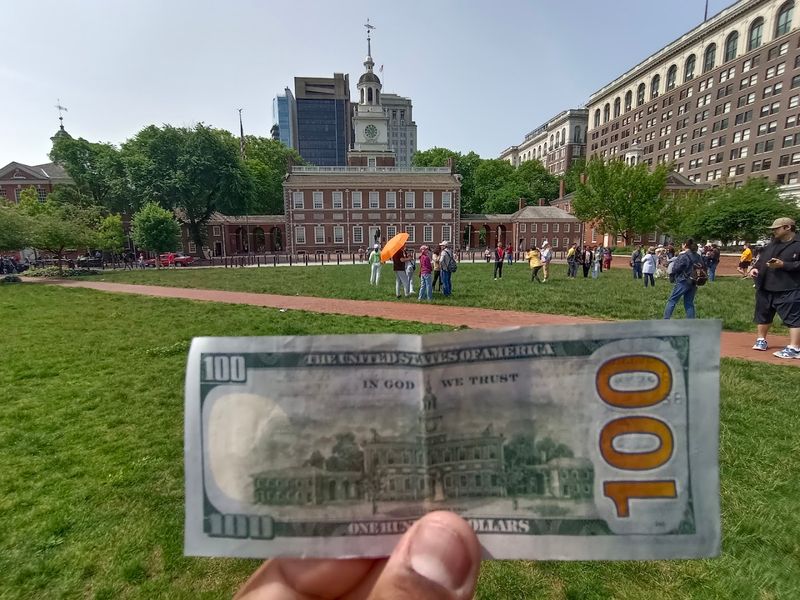
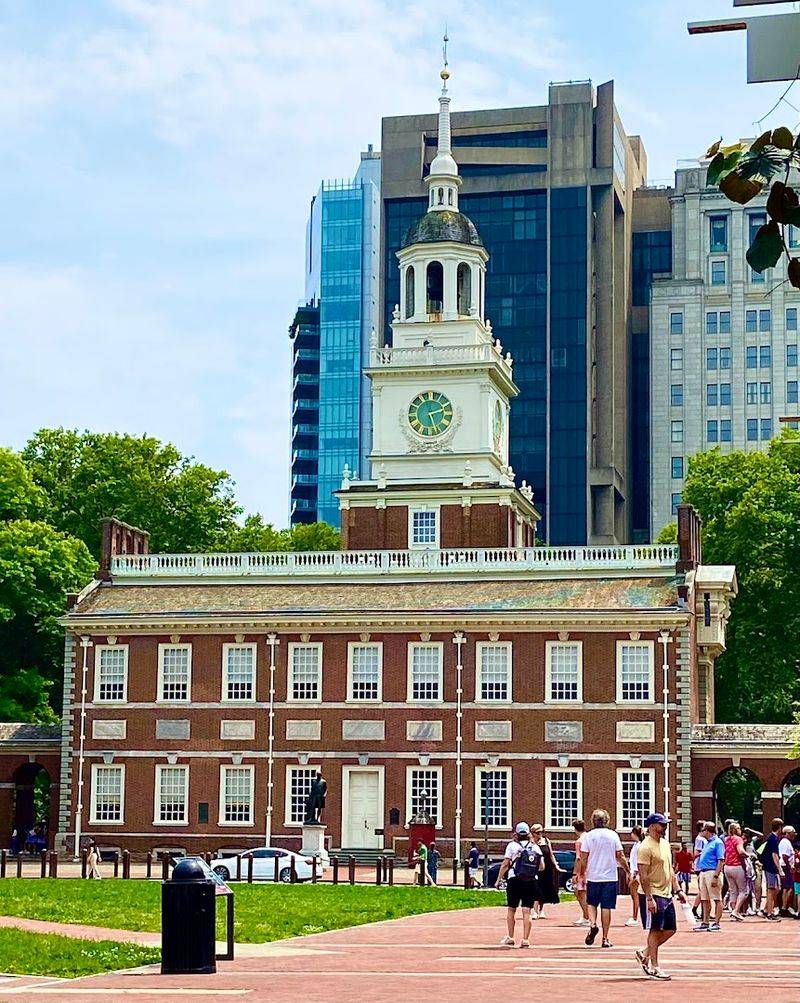
Few buildings in America carry as much weight as Independence Hall, originally known as the Pennsylvania State House, constructed between 1732 and 1756.
This is the building featured on the back of the $100 bill, and its Assembly Room is depicted on the reverse of the $2 bill, which makes it arguably the most printed building in U.S. history.
The Second Continental Congress met here from 1775 to 1781, and it was within these walls that the Declaration of Independence was debated, ratified, and adopted on July 4, 1776.
The Constitutional Convention also took place here from May to September 1787, resulting in the United States Constitution being signed on September 17, 1787.
Prominent figures including John Adams, Benjamin Franklin, Thomas Jefferson, James Madison, and George Washington all gathered in its Assembly Room to shape the future of a nation.
Independence Hall holds both U.S. National Historic Landmark status and UNESCO World Heritage Site recognition, a combination very few buildings anywhere on Earth can claim.
The Bell With a Crack and a Story Bigger Than Its Size
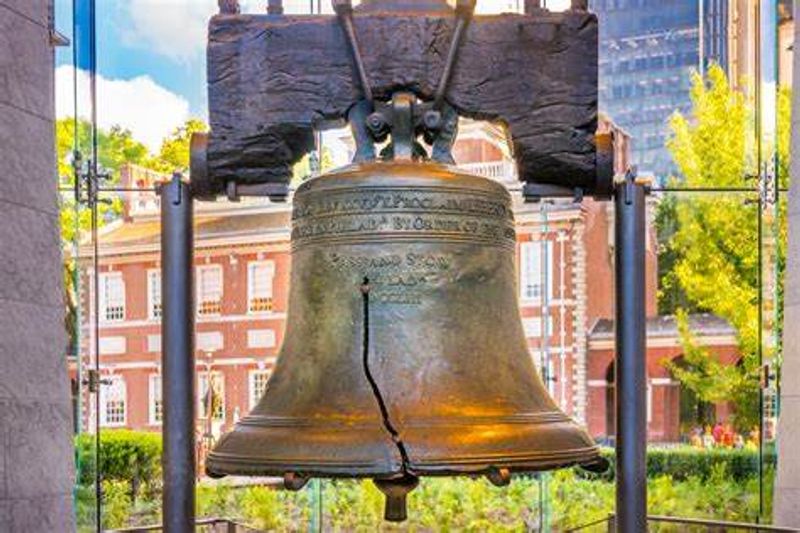
Weighing approximately 2,080 pounds and made of 70% copper and 25% tin, the Liberty Bell is one of the most recognizable objects in American history, and its famous crack is just as storied as the bell itself.
Commissioned in 1751 to mark the 50th anniversary of William Penn’s 1701 Charter of Privileges, the bell was originally cast in London and cracked almost immediately upon arrival.
Local craftsmen John Pass and John Stow recast it twice in 1753, and their names are actually inscribed on the bell itself, a small but fascinating detail most visitors overlook.
The crack that everyone recognizes today is believed to have developed around 1846, possibly during a celebration of George Washington’s birthday, and is roughly half an inch wide and 24.5 inches long.
The inscription on the bell reads, “Proclaim LIBERTY throughout all the Land unto all the inhabitants thereof,” taken from Leviticus 25:10.
Few objects in any museum anywhere carry that kind of layered meaning in such a compact form.
A Symbol That Movements Claimed as Their Own
The Liberty Bell was not always famous for the American Revolution alone, and that is actually one of the most surprising things about it.
Over the decades, the bell became a powerful symbol adopted by multiple social and political movements, including anti-slavery advocates, Civil Rights activists, and Native American rights campaigners.
Abolitionists in the 1830s were among the first to widely use the bell’s image and its inscription about proclaiming liberty as a rallying point against slavery, long before the bell had its current iconic status.
That inscription from Leviticus gave the bell a moral weight that went far beyond its original ceremonial purpose, turning a piece of metal into a statement.
The bell was moved from Independence Hall to a glass pavilion in 1976 and then to its permanent home in the Liberty Bell Center in 2003, where it remains on free public display every day.
The Liberty Bell Center itself is worth exploring slowly, because the exhibits around the bell add context that makes the object feel even more significant than it looks.
Congress Hall and the Early Days of a Working Government
Not everyone knows that Congress Hall, located right next to Independence Hall, served as the seat of the United States Congress from 1790 to 1800, during a critical decade in the country’s early life.
During those ten years, the first political parties began to form, the Bill of Rights was put into effect, and two presidential inaugurations took place within these walls, those of George Washington’s second term and John Adams’ first.
The building is compact by modern standards, and that contrast between its modest size and the enormous decisions made inside it is genuinely striking when you stand in the room.
Congress Hall is part of the free admission areas within the park, so there is no reason to walk past it without stepping inside.
The restored chambers of the House of Representatives and the Senate are both open for viewing, and the period furnishings give a very clear sense of how early American government actually functioned day to day.
The building pairs naturally with a visit to Independence Hall and makes the whole picture of early American governance feel much more complete.
Franklin Court and the Genius Who Lived There
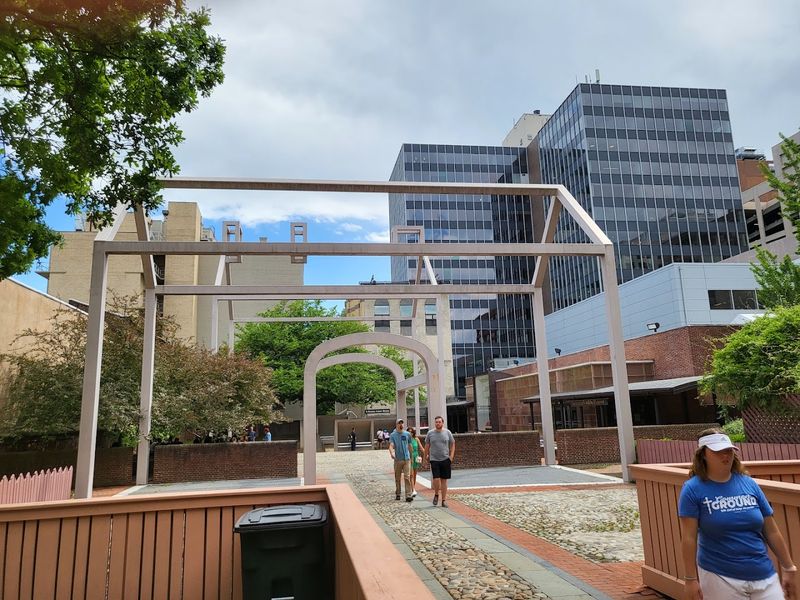
Benjamin Franklin lived at the site now known as Franklin Court, and while his original home no longer stands, the National Park Service made a creative choice to mark where it once was with a steel frame ghost structure that outlines the building’s footprint.
Below ground, there is an underground museum dedicated to Franklin’s life, inventions, and extraordinary career as a printer, diplomat, scientist, and founding father, all packed into exhibits that are surprisingly engaging.
Franklin Court also includes a working print shop where visitors can see demonstrations of 18th-century printing techniques, which connects directly to Franklin’s early career as a printer and publisher.
The site sits just off Market Street and is easy to miss if you are not specifically looking for it, which is a shame because it rewards curiosity in a way that the bigger landmarks sometimes do not.
Franklin’s life touched nearly every aspect of early American history, and this court gives that story a physical home.
The ghost structure alone is worth seeking out, because it is one of the more quietly clever pieces of historical interpretation anywhere in Philadelphia.
The Park Rangers Who Make History Feel Personal
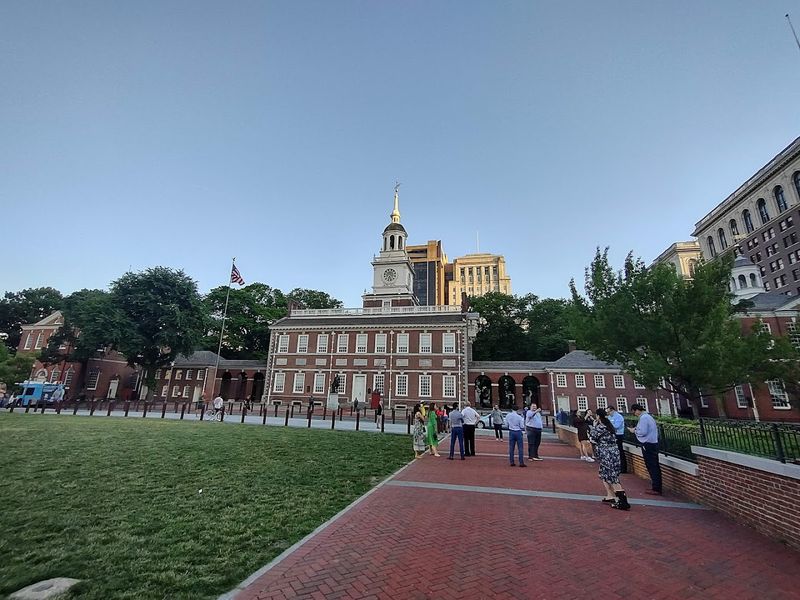
One of the genuinely underrated parts of visiting this park is the quality of the National Park Service rangers stationed throughout the grounds.
Rangers give talks every half hour outside Independence Hall, and those fifteen-minute sessions are packed with historical context that genuinely changes how you experience the buildings and objects around you.
The rangers bring nuance and personality to stories that could easily feel dry on a printed sign, and the best talks acknowledge the complicated humanity of the founders without losing the thread of why their work still matters.
Even in cold weather, rangers are outside and available, which says something about their commitment to the visitors who show up year-round.
There are also rangers stationed inside most of the major buildings, so questions are always welcome and answers tend to go well beyond the basics.
The free guided tour of Independence Hall is ranger-led and requires a timed ticket, which can be booked through the National Parks App or the NPS website before arrival, and booking ahead is strongly recommended during busy seasons.
Practical Tips Before You Show Up at the Gate
A few practical details can make the difference between a smooth visit and a frustrating one at this park, and the most important is the ticket situation.
Timed entry tickets are required for the Independence Hall tour and should be reserved in advance through the National Parks App or at nps.gov/inde, especially during spring and summer when demand is high.
There are metal detectors at the entrance to Independence Hall, so plan to arrive a few minutes early and avoid bringing large bags if possible to speed things along.
The Liberty Bell Center and several other sites, including Congress Hall and Franklin Court, are free and do not require advance tickets, so those are good fallbacks if the Hall tour is sold out.
Arriving early, right around the 9 a.m. opening time, means shorter lines and a much more relaxed experience overall.
Parking in the area is available but can be expensive, so public transit or rideshare is worth considering, especially for a short visit where parking costs can easily feel disproportionate to the time spent.
The Assembly Room Where a Nation Was Argued Into Existence
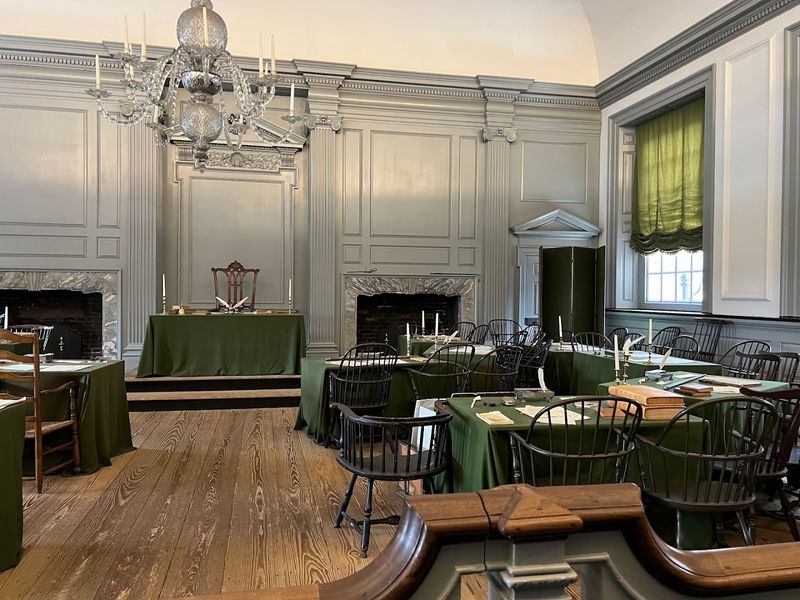
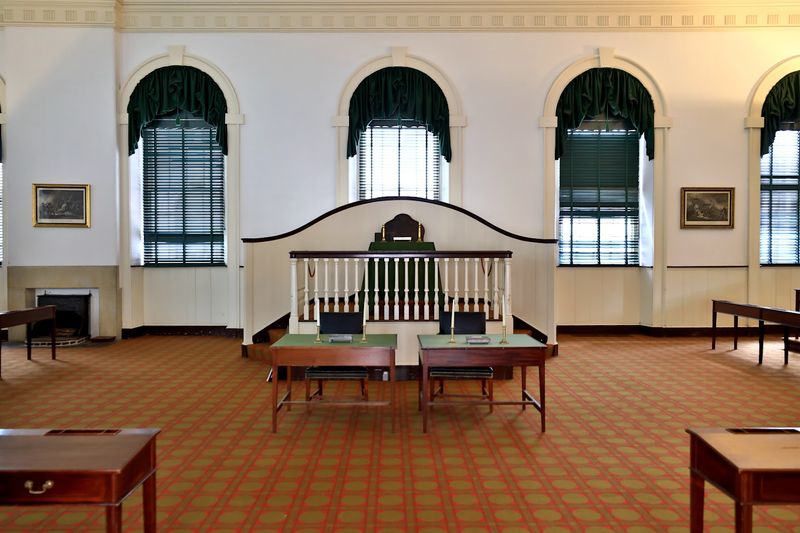
The Assembly Room inside Independence Hall is the single most historically charged room in the United States, and standing inside it is a genuinely different experience than reading about it.
This is the room where the Declaration of Independence was debated and adopted on July 4, 1776, where the Articles of Confederation were ratified in 1781, and where the U.S. Constitution was signed on September 17, 1787.
The room’s period furniture, tall windows, and relatively modest scale make it feel unexpectedly intimate for a place where so much consequential history unfolded.
George Washington’s chair, often called the Rising Sun Chair, sits at the front of the room and was famously commented on by Benjamin Franklin at the close of the Constitutional Convention.
Franklin reportedly said he had wondered throughout the convention whether the sun carved on the chair’s back was rising or setting, and that at last he was certain it was rising.
That story alone captures the uncertainty and hope of the moment in a way that no amount of description can fully replicate.
Life-Size Statues and the Room That Stops Visitors Cold
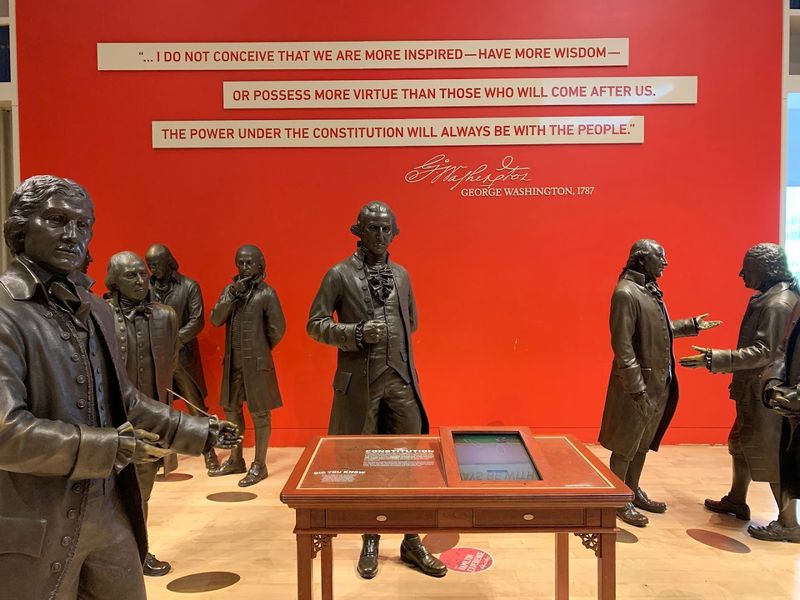
Just steps from the park, the National Constitution Center on Independence Mall features a room that consistently surprises first-time visitors, a circular hall filled with life-size bronze statues of the 39 men who signed the U.S. Constitution.
The statues are arranged as if the signing is still in progress, and the effect of standing among them at eye level is something photographs do not fully capture.
The National Constitution Center is not technically part of Independence National Historical Park, but it sits directly on Independence Mall and pairs seamlessly with a park visit, especially for anyone who wants a deeper look at how the Constitution came to be.
A combo ticket with the Museum of the American Revolution, located nearby on Chestnut Street, is available and worth considering for a full day of connected history.
The suffrage exhibit at the Constitution Center is also particularly well done and covers a chapter of American history that the founding-era sites naturally cannot address on their own.
The whole area rewards a full day of slow, curious exploration rather than a rushed two-hour pass-through.
The Neighborhood Around the Park Is Part of the Experience
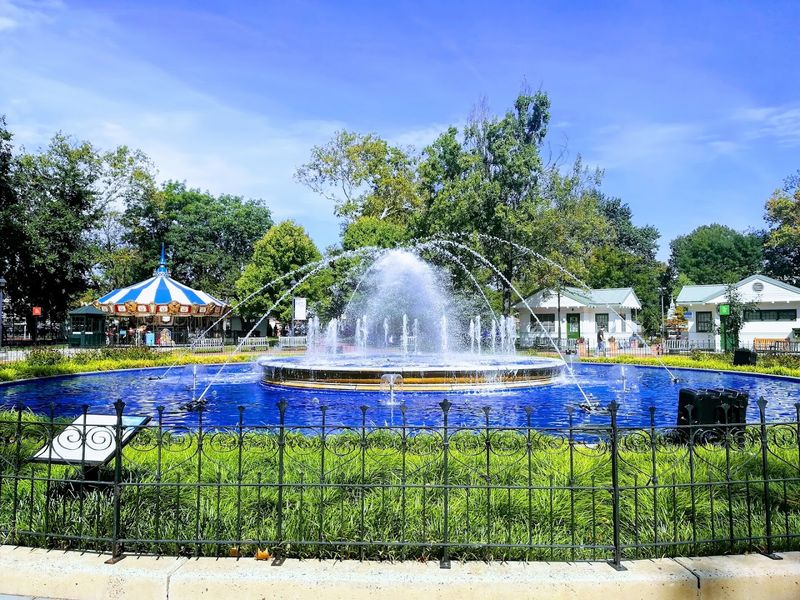
Old City Philadelphia, the neighborhood surrounding the park, is one of the most walkable and historically textured urban areas anywhere in the country.
The Betsy Ross House, located at 239 Arch Street, is an easy walk from the park and adds another layer to the story of early American symbolism, with costumed interpreters and well-preserved period rooms inside.
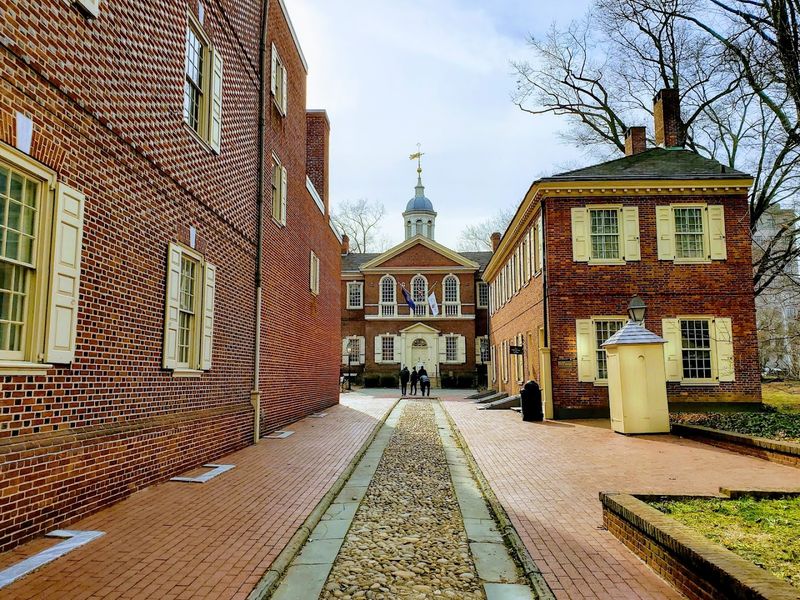
Carpenters’ Hall, where the First Continental Congress met in 1774, is also within the park’s boundaries and is easy to overlook amid the bigger attractions, but it is free to enter and genuinely worth a stop.
The streets around the park are lined with cafes, restaurants, and local shops that make it easy to take a break mid-visit without losing the historical atmosphere of the area.
The whole neighborhood rewards wandering, and the density of significant sites within walking distance of each other is something that few places in the country can match.
Why This Place Feels Different in 2026 Than It Did a Decade Ago
Something has shifted in how people experience this park over the past several years, and it is noticeable from the moment the ranger talks begin.
The interpretation here now openly acknowledges the contradictions of the founding era, including the fact that many of the men who wrote about liberty also enslaved other people, and that the freedoms proclaimed in these buildings were not extended to everyone at the time.
That honesty makes the place feel more trustworthy rather than less inspiring, because it invites visitors to engage with history as a living, complicated thing rather than a fixed monument.
Share this story