Yellowstone is one of the most extraordinary national parks in the world, where erupting geysers, colorful hot springs, abundant wildlife, and volcanic landscapes share the same vast wilderness. While Old Faithful draws much of the attention, the park offers far more, from deep canyons and alpine lakes to roaming bison, elk, bears, and wolves.
With every region offering something different, Yellowstone delivers unforgettable experiences around every turn.
Where America’s Wildest Wilderness Begins
The address most visitors use for the north entrance is Yellowstone National Park, Gardiner, MT 59030, which places you right at the Montana border where the Roosevelt Arch has welcomed travelers since 1903.
That stone arch, inscribed with the words “For the Benefit and Enjoyment of the People,” sets the tone immediately. Yellowstone was established in 1872, making it the first national park in the United States and arguably the blueprint for every protected wilderness area that followed worldwide.
The park sprawls across 3,472 square miles, covering parts of Wyoming, Montana, and Idaho. The Montana portion connects visitors to the northern range, which is widely considered the best area for year-round wildlife watching.
The park is open 24 hours a day, every day of the year, though some roads and entrances close seasonally. The main visitor information line is +1 307-344-7381, and the official website is nps.gov/yell.
The Supervolcano Sleeping Beneath Your Boots
Most people visit Yellowstone thinking of it as a nature park, but the deeper truth is that the whole thing is essentially a massive volcanic system that has not fully gone quiet.
The Yellowstone Caldera, sometimes called the Yellowstone Supervolcano, formed from a series of eruptions over millions of years. The most recent major eruption happened roughly 640,000 years ago, and the magma chamber beneath the park is still very much active, which is exactly why the ground steams, bubbles, and occasionally shakes.
The park sits in one of the most seismically active regions in North America. Thousands of small earthquakes occur here every year, most too subtle to feel, but they serve as a constant reminder that this landscape is geologically young and restless.
That underground energy is responsible for every geyser, hot spring, mud pot, and fumarole in the park, and understanding that connection makes the whole experience feel far more dramatic than any brochure suggests.
Old Faithful and the Art of a Predictable Spectacle
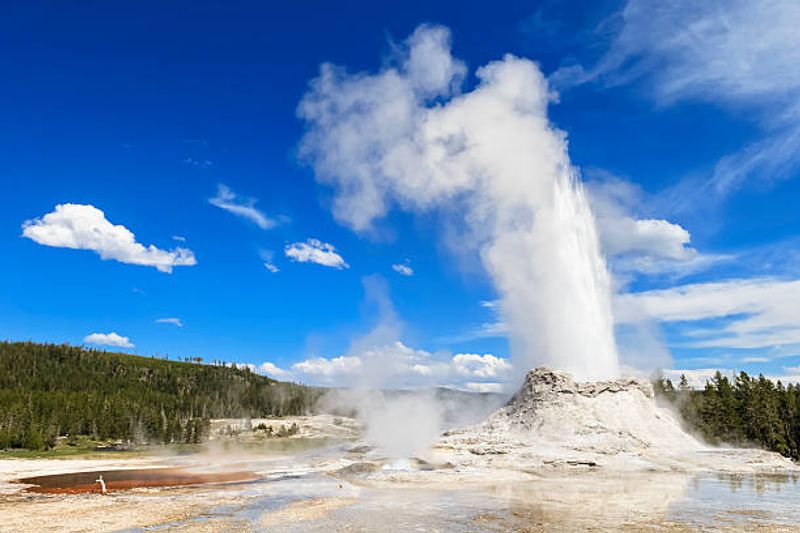
Old Faithful earned its name honestly. This legendary geyser erupts roughly every 45 to 90 minutes, shooting boiling water between 100 and 185 feet into the air, and the park’s rangers can predict each eruption within a ten-minute window.
The crowds that gather on the surrounding boardwalk before each eruption create an atmosphere that feels almost ceremonial. Everyone goes quiet when the first surge of steam begins, and for about two to five minutes, the geyser puts on a show that genuinely earns every second of the wait.
Old Faithful sits within the Upper Geyser Basin, which contains the highest concentration of geysers on Earth. The basin alone holds around 150 geysers, including Castle, Grand, and Riverside, each with its own personality and eruption pattern.
What surprised me most was not the height of the eruption but the sound, a deep, rushing roar that you feel in your chest before you fully process what you are watching.
Steamboat Geyser: The Record-Breaker Most People Miss
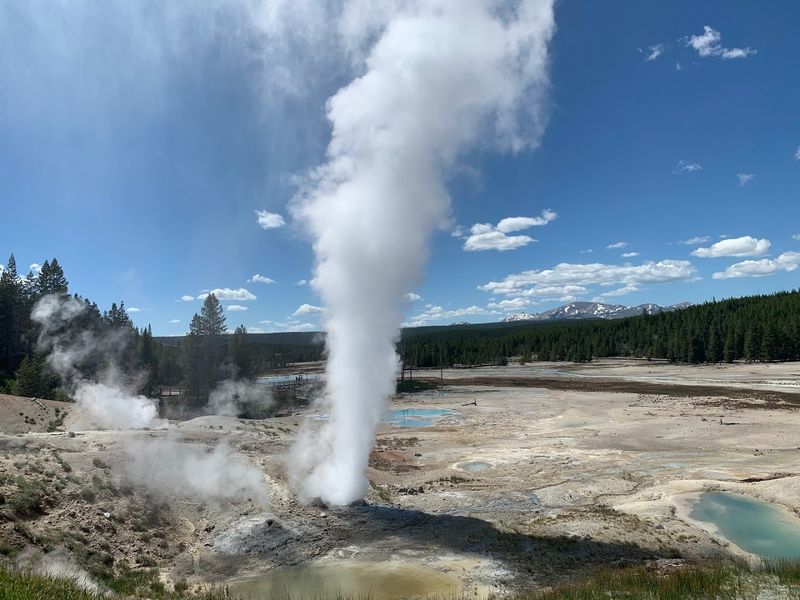
Old Faithful gets most of the attention, but Steamboat Geyser holds the actual world record for the tallest active geyser on Earth. When it erupts, it can send water more than 300 feet into the air, nearly double the height of Old Faithful at its peak.
The catch is that Steamboat is gloriously unpredictable. It can sit dormant for years, then suddenly erupt multiple times in a single month.
Between 2018 and 2020, it went through an unusually active phase, erupting over 100 times, which thrilled scientists and lucky visitors alike.
Steamboat is located in the Norris Geyser Basin, which is the hottest and most dynamic thermal basin in the entire park. The ground there shifts constantly, and features that existed last year sometimes disappear entirely as the underground plumbing rearranges itself.
Visiting Norris without knowing about Steamboat is like visiting a concert hall and missing the headline act, so plan accordingly and check current conditions at the visitor center.
Grand Prismatic Spring and Colors That Seem Computer-Generated
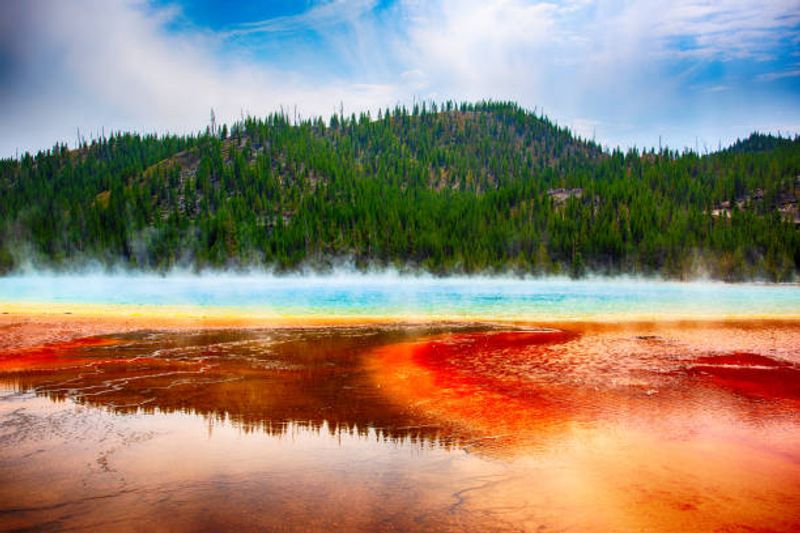
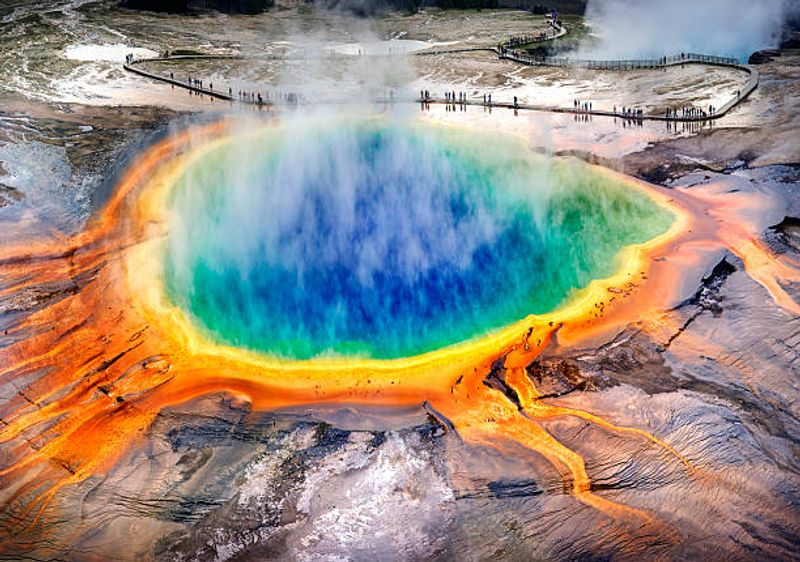
Grand Prismatic Spring is the kind of place that makes you double-check whether your camera settings are accurate, because the colors look too vivid to be real.
At 370 feet across and over 120 feet deep, it is the largest hot spring in the United States and the third largest in the world. The brilliant rings of orange, yellow, green, and deep blue are created by heat-loving microorganisms called thermophiles, which form pigmented mats around the edges of the pool as the water cools from the scorching center outward.
The center of the spring reaches temperatures close to 189 degrees Fahrenheit and appears a deep, almost electric blue because of the way water at that depth absorbs light.
The best view is from the Fairy Falls Trail overlook, which gives you an elevated perspective that shows the full circular pattern. From the boardwalk at ground level, you get the steam and the scale, but the overlook is where the full picture clicks into place.
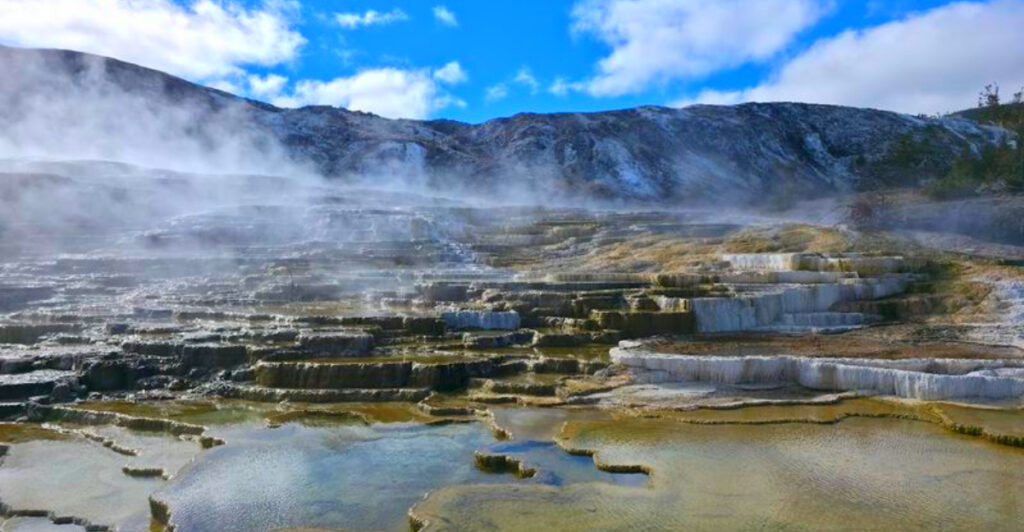
Mammoth Hot Springs and the Terraces That Keep Rewriting Themselves
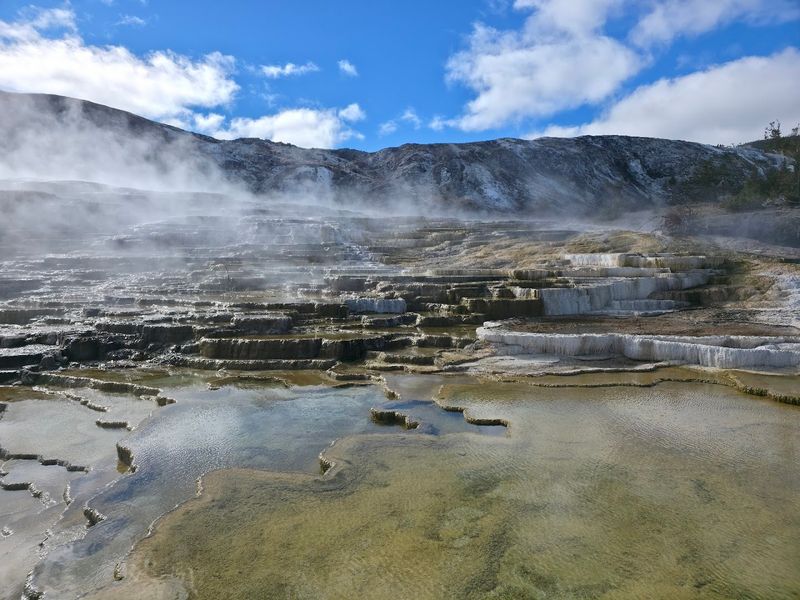
Mammoth Hot Springs looks less like a natural landscape and more like something a sculptor spent centuries designing, then kept changing their mind about.
The terraces here are made of travertine, a form of limestone deposited by hot water as it rises from underground and cools at the surface. The result is a series of cascading, cream-colored shelves streaked with orange, pink, and brown from the microorganisms living in the warm water.
What makes Mammoth especially interesting is that it never stops changing. New terraces form while old ones dry out and turn chalky white.
Features that were active last season may be dormant this year, and new ones appear without warning. The park estimates that roughly two tons of travertine are deposited here every single day.
The town of Mammoth Hot Springs also serves as the park’s administrative headquarters and is one of the few areas accessible year-round. Elk frequently wander through the historic buildings there, completely unbothered by the humans watching them.
Bison, Bears, and the Wildlife That Owns This Place
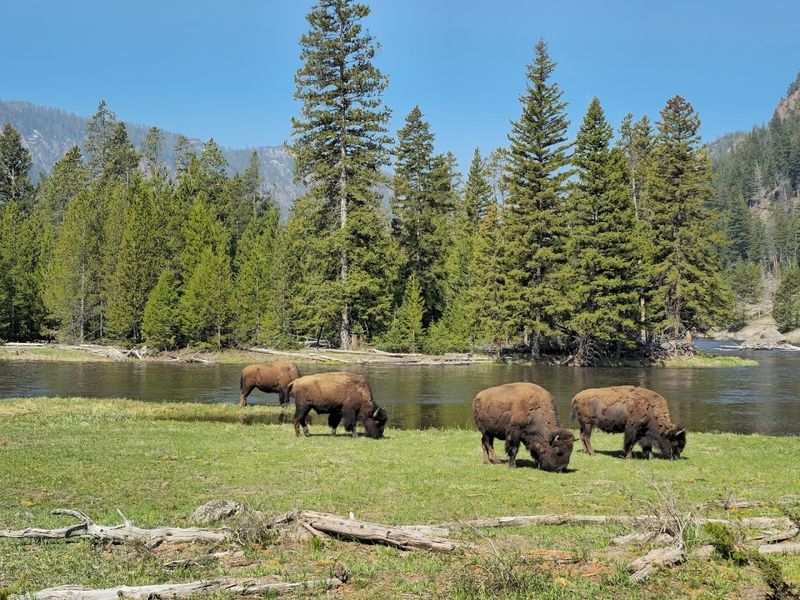
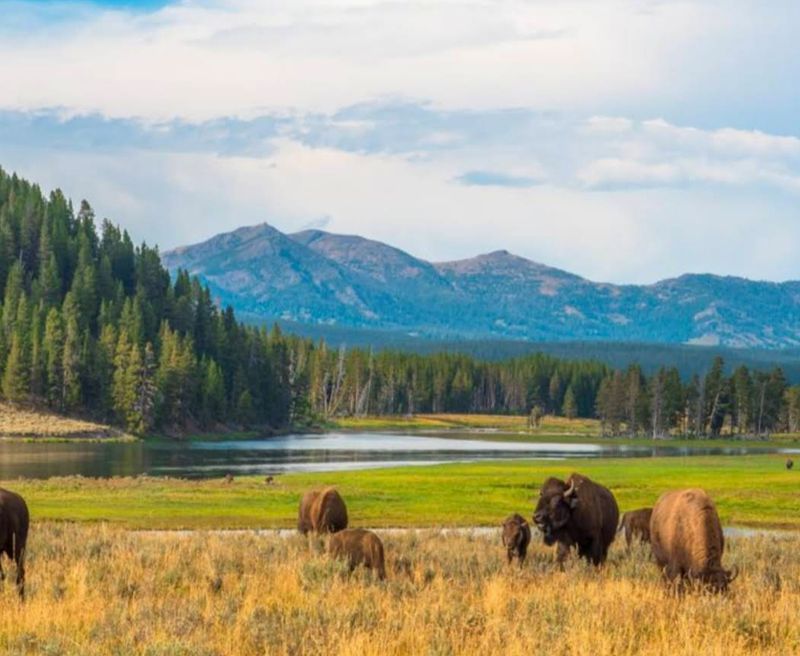
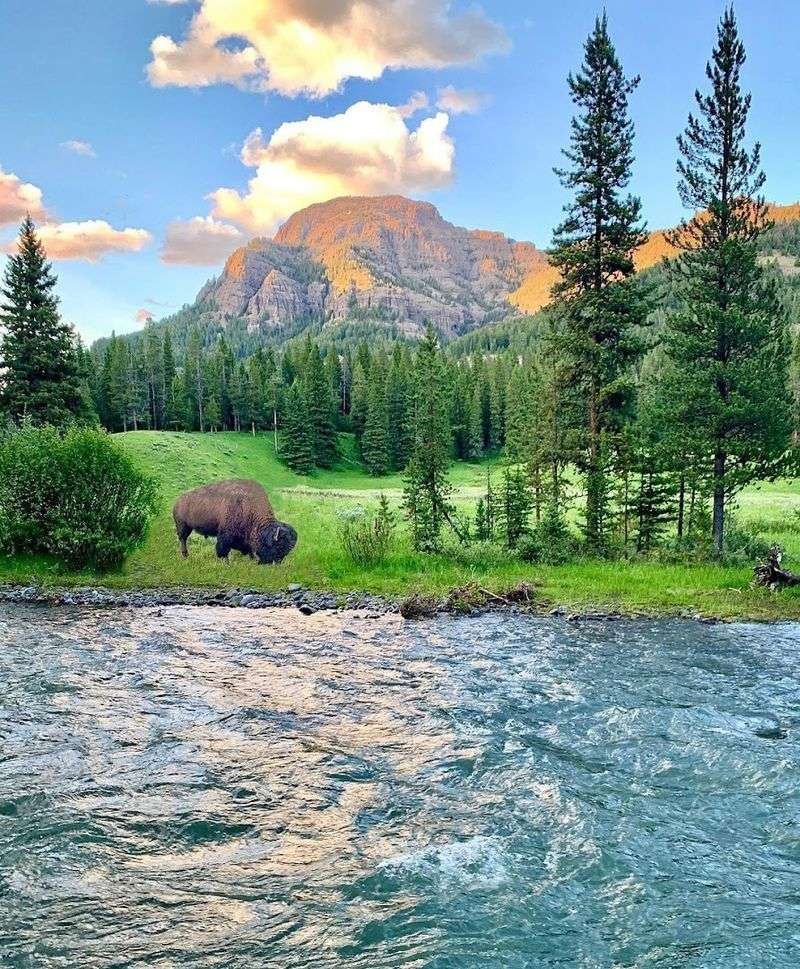
Yellowstone holds the largest free-roaming bison population in the United States, with roughly 5,000 animals spread across the park’s valleys and meadows. Seeing them up close from a car window, which is as close as you should ever get, is a genuinely humbling experience.
The park is also home to grizzly bears, black bears, gray wolves, elk, pronghorn, bighorn sheep, and mountain lions, making it one of the most complete large-mammal ecosystems remaining in the temperate world. The reintroduction of gray wolves in 1995 was a turning point, and as of early 2024, an estimated 124 wolves live within park boundaries.
The northern range, accessible from the Montana entrance near Gardiner, is consistently the most productive area for wildlife watching, especially during the early morning hours.
Bison jams, where a herd crosses the road and traffic stops completely, are a regular occurrence. The bison are aware of their right of way and use it without hesitation, which makes the whole situation both frustrating and absolutely unforgettable.
The Grand Canyon of the Yellowstone and Its Thundering Falls
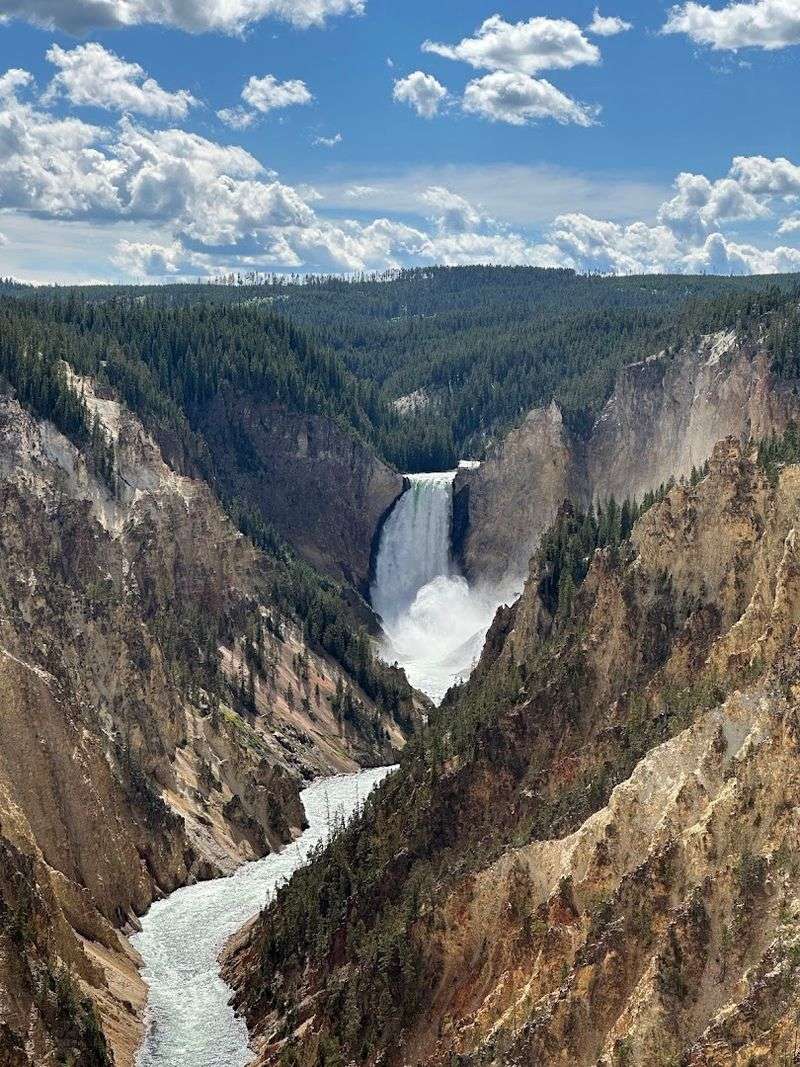
The name Grand Canyon of the Yellowstone sounds like marketing, but one look from Artist Point silences any skepticism immediately.
The canyon stretches roughly 20 miles long and reaches depths of up to 1,200 feet. The walls display a vivid palette of yellow, orange, red, pink, and white, colors produced by iron oxidation and hydrothermal alteration of the volcanic rock over thousands of years.
This is literally where the park got its name.
The Lower Falls of the Yellowstone River plunge 308 feet into the canyon below, making them nearly twice the height of Niagara Falls. The roar and mist from the base are extraordinary, and the view from the brink of the falls boardwalk, where you peer straight down into the chasm, is not for those uncomfortable with heights.
Artist Point, on the south rim, remains the most famous viewpoint and is worth visiting at both sunrise and late afternoon when the canyon walls glow in entirely different shades depending on the angle of the light.
Yellowstone Lake: Calm Surface, Wild Secrets Below
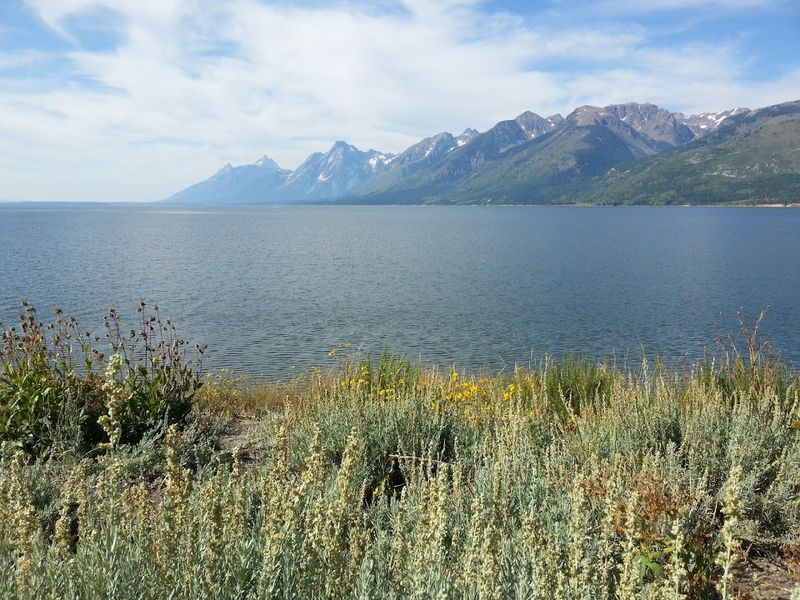
Yellowstone Lake looks serene from the shore, and in many ways it is, but the bottom of that lake tells a much wilder story.
At 7,730 feet above sea level, it is the largest high-elevation lake in North America, covering 132 square miles with an average depth of about 139 feet. The lake surface can appear glassy and peaceful on a calm morning, but the water temperature rarely climbs above 60 degrees Fahrenheit even in summer, so swimming is strongly discouraged.
Beneath the surface, hydrothermal vents and even submerged geysers dot the lake floor. Researchers have mapped underwater hot springs that create their own bizarre ecosystems far below the waterline, completely hidden from visitors on the shore.
The drive along the lake’s western edge is one of the most underrated scenic routes in the entire park. Pulling off at one of the small picnic areas along that stretch for a quiet lunch with the lake spread out before you and mountains rising behind it is the kind of simple moment that stays with you long after you leave.
Hiking, Boardwalks, and Getting Around Without Getting Burned
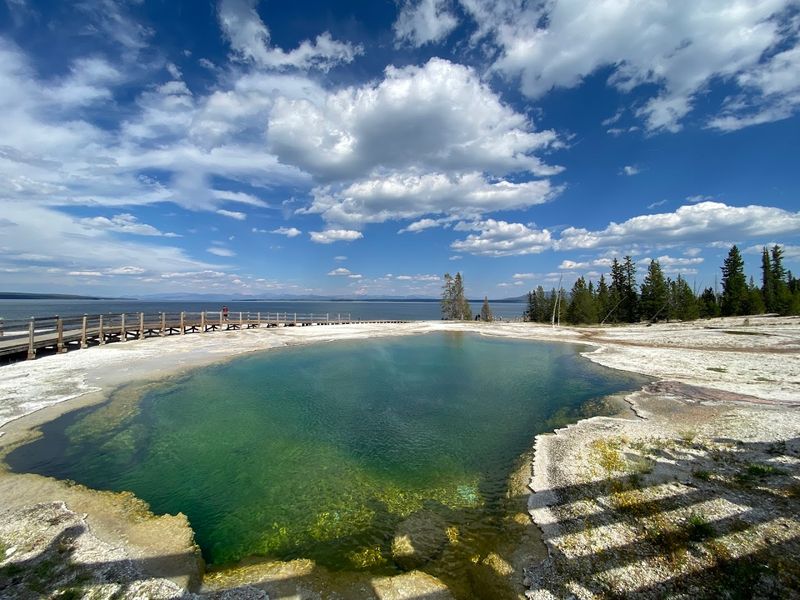
Getting around Yellowstone requires some planning, because the park is genuinely enormous and the thermal features demand real respect from everyone walking near them.
The boardwalk system throughout the geyser basins is one of the best investments the park service ever made. Those raised wooden paths keep visitors safe from the dangerously thin crust surrounding many thermal features, where stepping off the trail can mean breaking through into scalding water just inches below the surface.
For hikers, the park offers over 900 miles of trails ranging from flat, easy walks to strenuous backcountry routes. The trail to the Fairy Falls overlook, which rewards you with that aerial view of Grand Prismatic Spring, is one of the most popular moderate hikes and well worth the effort.
Bear spray is strongly recommended on any backcountry trail, and rangers suggest making noise while hiking to avoid surprising wildlife. Most visitor centers rent or sell bear spray, and the staff there are genuinely helpful when it comes to trail recommendations based on current conditions and animal activity.
When to Visit and How to Make the Most of Every Season
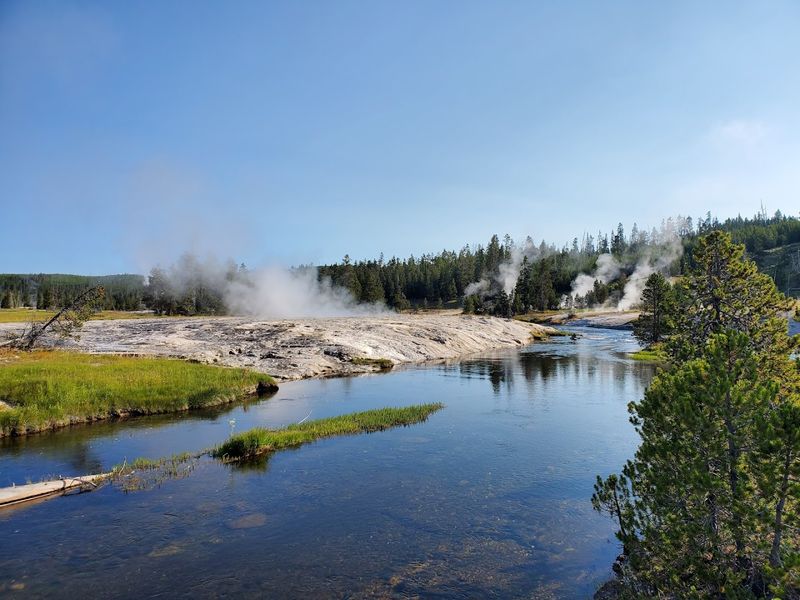
Yellowstone rewards visitors in every season, but each one comes with a completely different experience and a different set of trade-offs worth knowing before you book.
Summer, roughly late May through early September, brings the most access, with all five entrances open, all major roads drivable, and the full range of visitor services available. It also brings the largest crowds, particularly in July and August.
The first week after Memorial Day tends to offer better crowd conditions while most facilities are already open.
Fall is arguably the most atmospheric time to visit. September brings elk rutting season to the northern range, with bull elk bugling across the valleys in a sound that is difficult to describe and impossible to forget.
October crowds thin considerably, and the cooler air makes the steam from thermal features more dramatic and photogenic.
Winter limits road access to the northern corridor between Gardiner and Cooke City, but that stretch remains open year-round. Snowmobile and snow coach tours offer access to the interior, and seeing Old Faithful erupt against a frozen landscape is an experience that summer visitors never get the chance to witness.
Practical Tips That Will Actually Save Your Trip
A few practical details can make the difference between a frustrating visit and one you spend the next decade telling people about.
Entrance fees as of 2025 run $35 per vehicle for a seven-day pass, and the America the Beautiful annual pass at $80 covers entry to all national parks for a full year, which pays for itself quickly if you plan more than two park visits. Reservations for campgrounds inside the park fill months in advance, especially for summer, so booking early through recreation.gov is essential.
Cell service is extremely limited throughout most of the park, which means downloading offline maps and trail guides before you arrive is genuinely useful rather than optional. Many visitors also underestimate how much driving is involved.
The Grand Loop Road alone is about 142 miles, and stopping at every worthwhile viewpoint along the way turns that into a full day of travel.
Spending at least four to six days gives you a realistic chance of covering the main regions without feeling rushed, and the park genuinely rewards those who slow down and stay longer than they originally planned.
Share this story