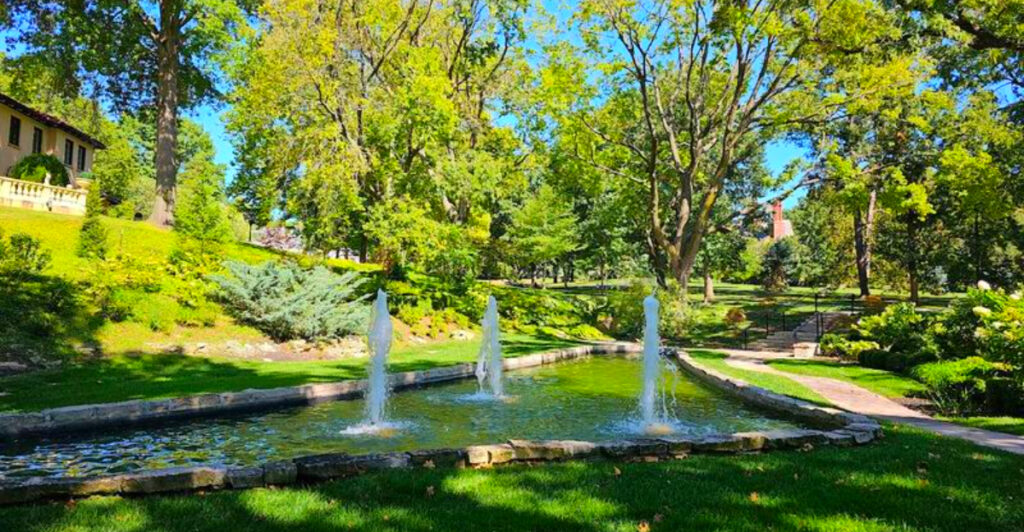
Hidden in a Kansas City neighborhood, this small park proves that size has little to do with impact. Measuring just a fraction of an acre, it combines a reflection pool, landscaped gardens, and a quiet setting that feels far removed from the surrounding city streets.
What makes the space memorable is not its scale but its story. Over the years, community support and restoration efforts have helped preserve this pocket-sized landmark, turning it into a favorite spot for residents seeking a peaceful place to pause and unwind.
A quick visit is all it takes to appreciate its charm, but the history behind it makes it even more interesting. Keep reading to discover how this tiny park became one of Kansas City’s most distinctive hidden gems.
Where Exactly You Will Find This Tiny Treasure
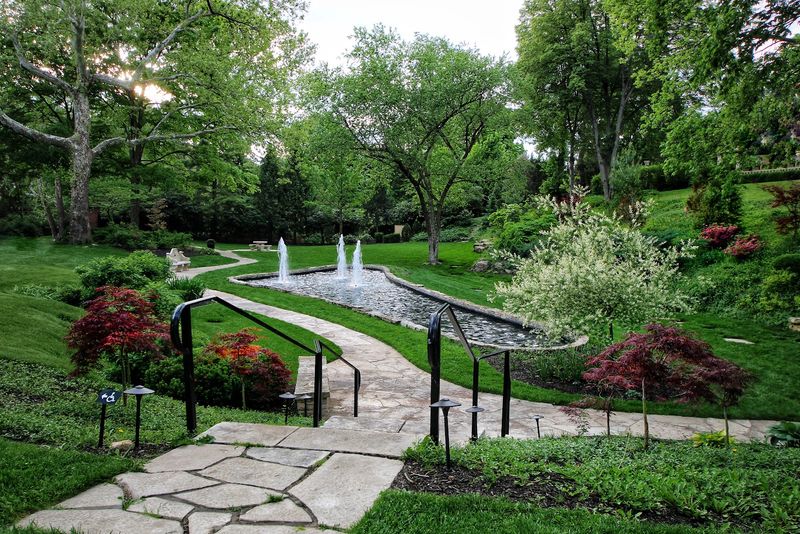
The full address of this micro-park is Verona Columns Park, at the corner of Ensley Lane and Overhill Road in Mission Hills, Kansas 66208, just north of 63rd Street.
Mission Hills is one of the most well-kept residential communities in the Kansas City metro area, known for its wide, tree-lined streets and carefully maintained properties. The garden sits nestled right into this neighborhood like a secret that only locals seem to know about.
There are no large signs pointing you toward it, and the park does not announce itself from a distance. You have to know it is there, or you have to be the kind of curious person who slows down when something catches your eye.
Parking is available along the street, which works fine given how compact the space is. First-timers often do a double take when they realize the entire park is sunken below the road, hidden in plain sight on a corner most people treat as just another intersection.
A Rock Quarry That Became Something Beautiful
The ground beneath this garden was not always a peaceful retreat. Before it became a park, this spot was a working rock quarry, carved out of the earth and left behind when the stone was no longer needed.
Around 1926, a physician named Dr. Sam Roberts purchased the land from the Nichols Company, the real estate firm founded by urban planner J.C. Nichols, who had a strong vision for how the Mission Hills area should look and feel.
Dr. Roberts had his own vision too. He wanted to transform the rough, industrial hollow into a rock garden and pool, something that would complement the elegant character of the neighborhood rather than clash with it.
The respected landscape architecture firm Hare and Hare contributed to the early design, helping shape the space into something that included a pool, thoughtful plantings, and a small summer house. By 1936, a photograph of the garden was captioned with the words “Sunken Garden suggests Italian Villa,” which tells you everything about the ambition behind it.
The Italian Villa Feeling That Still Lingers Today
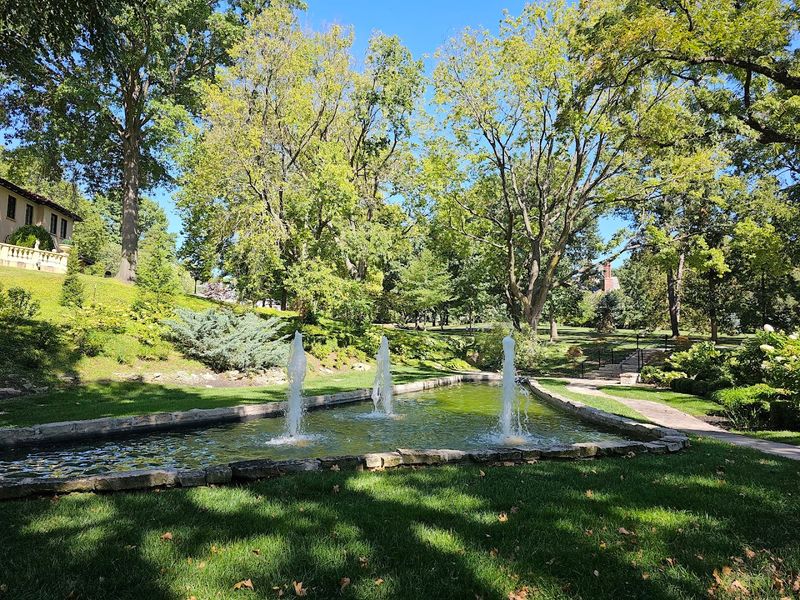
That 1936 caption about an Italian villa was not just flattery. There is genuinely something about the layout and the materials of this garden that gives it a formal, European quality despite its modest size.
Stone walls frame the sunken area, and the reflection pool sits at the center with small fountains that push water up in soft arcs before it settles back into stillness. The sound alone is enough to make you pause and take a breath.
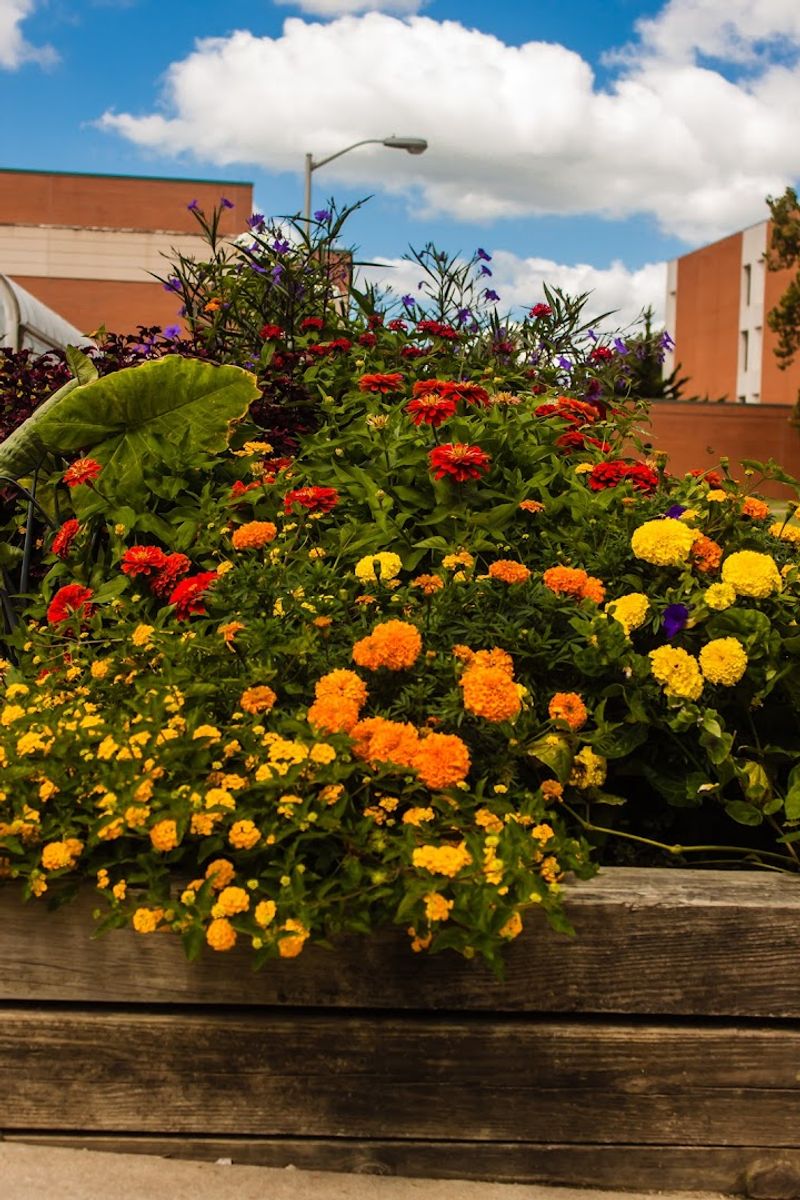
The plantings are arranged with intention, not just scattered around for color. Shrubs and flowers follow lines that feel considered and deliberate, giving the garden a structured look that contrasts nicely with the loose canopy of trees overhead.
Even on an overcast day, the space has a kind of quiet elegance that is hard to describe without sounding like you are overselling it. The truth is that the Italian villa comparison holds up surprisingly well for a park that could fit inside a large living room, and that contrast between grand ambition and tiny scale is a big part of its charm.
How the Garden Fell Into Disrepair and Why It Mattered
Gardens need care, and this one went through a difficult stretch before its recent revival. Years of fluctuating Midwest weather, combined with underlying engineering issues, took a serious toll on the space.
The water feature stopped functioning properly. The plantings became ragged and thin.
The hardscaping showed cracks and wear that made the whole park feel more like a forgotten corner than a cherished neighborhood landmark.
For a space with such a deliberate and storied beginning, the decline felt particularly sharp to those who knew what it had once been. Community members who remembered the garden in better shape were not happy to see it fading.
What happened next says a lot about the Mission Hills community. Rather than waiting for someone else to fix it, neighbors rallied together and raised the funds needed to bring the garden back.
That kind of collective investment in a tiny public space is genuinely rare, and it is one of the reasons the restoration story feels so meaningful to the people who live nearby. The garden mattered enough to fight for.
The Restoration Project That Took Over a Year

Heinen Landscape led the restoration effort, and the project was no small undertaking given the complexity packed into such a compact space. The work stretched over a year from start to finish.
The team addressed the engineering problems that had caused so much of the damage in the first place, making sure the new design would hold up against Kansas City’s famously unpredictable weather patterns. A proper irrigation system was installed to keep the plantings healthy through hot summers and dry spells.
Fresh sod was laid, new flowers and shrubs were selected and planted, and the hardscaping was reimagined with materials that honored the original aesthetic while adding modern durability. The reflection pool was rebuilt and the fountain system was restored to working order.
Every decision in the restoration seemed aimed at respecting what the garden had been while making sure it could survive for another generation. The community donations that funded the work gave the project a personal weight that a standard municipal renovation rarely carries, and you can feel that care in every corner of the finished space.
What the Garden Looks Like Right Now
The current version of the garden is genuinely lovely in a quiet, understated way. Fresh green grass covers the ground around the reflection pool, and the plantings are full and well-maintained, with a mix of flowers and shrubs that shift with the seasons.
The reflection pool sits at the heart of the space, its surface broken by small bubbling fountains that keep the water moving and the air around it cool. On a warm afternoon, the sound of that water is the first thing you notice when you step down into the sunken area.
Shade trees arch over the garden, filtering the light and keeping the temperature noticeably lower than the surrounding streets. It creates a microclimate that feels almost deliberately designed for sitting still and doing nothing for a few minutes.
The whole space is compact enough that you take it in almost instantly, but detailed enough that the longer you stay, the more small things you notice, a particular flower arrangement, the way the stone walls catch the afternoon light, the precise placement of the bench that faces the pool.
The Sounds and Sensory Details That Make It Special
A lot of small parks look fine on a phone screen but feel underwhelming in person. This garden works the other way around.
The photos never quite capture what makes it worth visiting, because the experience is as much about sound and air as it is about visuals.
The bubbling fountains in the reflection pool produce a steady, low sound that fills the sunken space without being loud. It is the kind of background noise that quiets the mental chatter most people carry around all day.
The trees overhead create a soft rustling when there is any breeze, and the combination of moving water and moving leaves makes the garden feel alive in a way that static photos simply cannot communicate. The air inside the sunken area tends to be cooler and more humid than outside, which adds to the sense of stepping into a different environment entirely.
Visitors who sit on the bench for more than a few minutes often find themselves staying longer than planned, which is one of the best reviews a tiny public park can get and the garden earns it consistently.
How Small It Actually Is and Why That Works in Its Favor
Let’s be honest about the scale here. At roughly 100 feet by 25 feet, this garden is smaller than many apartment living rooms.
You can walk its full length in about half a minute without rushing.
That size could easily feel like a disappointment, especially if you arrive expecting something grand. But the compactness is actually a big part of what makes the space work so well.
Everything in the garden is visible from a single vantage point, which means you can take in the whole picture at once and then choose what to focus on. There is no wandering required, no map needed, and no section that feels neglected or forgotten.
The intimacy of the space is what gives it its fairytale quality. Big parks spread their beauty thin across acres of lawn and walkways.
This garden concentrates everything into a space so small that the detail-to-square-foot ratio is almost absurdly high. Every flower, every stone, every ripple in the pool feels close and personal, and that closeness is something you genuinely cannot fake with more space.
The Neighborhood Context That Shapes the Experience
Mission Hills is not a neighborhood that draws a lot of tourist foot traffic, and that is precisely why the garden feels like a discovery rather than a destination. The streets are wide, the homes are large, and the overall atmosphere is one of careful, quiet prosperity.
J.C. Nichols designed the Mission Hills area with a strong aesthetic philosophy, and that philosophy shows in the way the streets curve, the lots are laid out, and the landscaping connects private and public spaces.
The Sunken Garden fits naturally into that vision.
The park does not feel like an afterthought dropped into the neighborhood. It feels like it belongs there, as if the neighborhood was always meant to have this particular kind of quiet, beautiful anchor tucked into one of its corners.
That sense of belonging makes the experience of visiting feel different from visiting a city park in a more mixed-use area. Here, the garden and its surroundings reinforce each other, and the result is a visit that feels unusually cohesive and calm.
The neighborhood sets the tone before you even reach the garden.
Tips for Visiting and Making the Most of the Trip
A few practical notes will save you from the minor frustrations that some first-time visitors mention. Street parking is available along Ensley Lane and Overhill Road, and since the garden is tiny, you will not need more than a few minutes to find a spot.
The garden does not have restroom facilities or a formal entrance, so treat it like the neighborhood micro-park it is rather than a full destination park. Go with the right expectations and you will leave happy.
Morning visits tend to offer the softest light and the most peaceful atmosphere, before neighborhood traffic picks up and before the afternoon heat sets in. The shade trees help at any time of day, but early visits have a particular stillness that suits the garden well.
Bring a phone or camera if you enjoy photography, because the reflection pool and the surrounding plantings offer genuinely good shots at almost any angle. And do yourself a favor: once you get there, put the phone down for at least a few minutes and just sit on the bench.
That part is free, and it is the whole point of the place.
Share this story