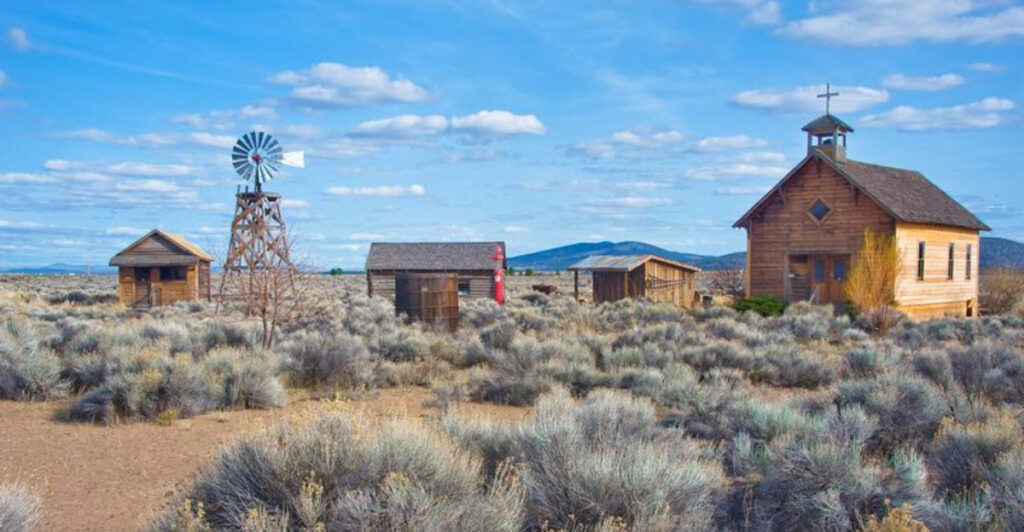
Oregon is famous for its rugged coastline, volcanic landscapes, and towering forests, but hidden beneath all that natural beauty are fascinating reminders of the past. Scattered across the state are ghost towns, crumbling mines, and weathered landmarks that tell stories of boom-and-bust industries, frontier life, and changing times.
Whether you love history, photography, or just a good adventure off the beaten path, these Oregon ruins have something special waiting for you. Lace up your boots and get ready to explore some of the most hauntingly beautiful places in the Pacific Northwest.
Shaniko — The Wool Capital That Time Forgot
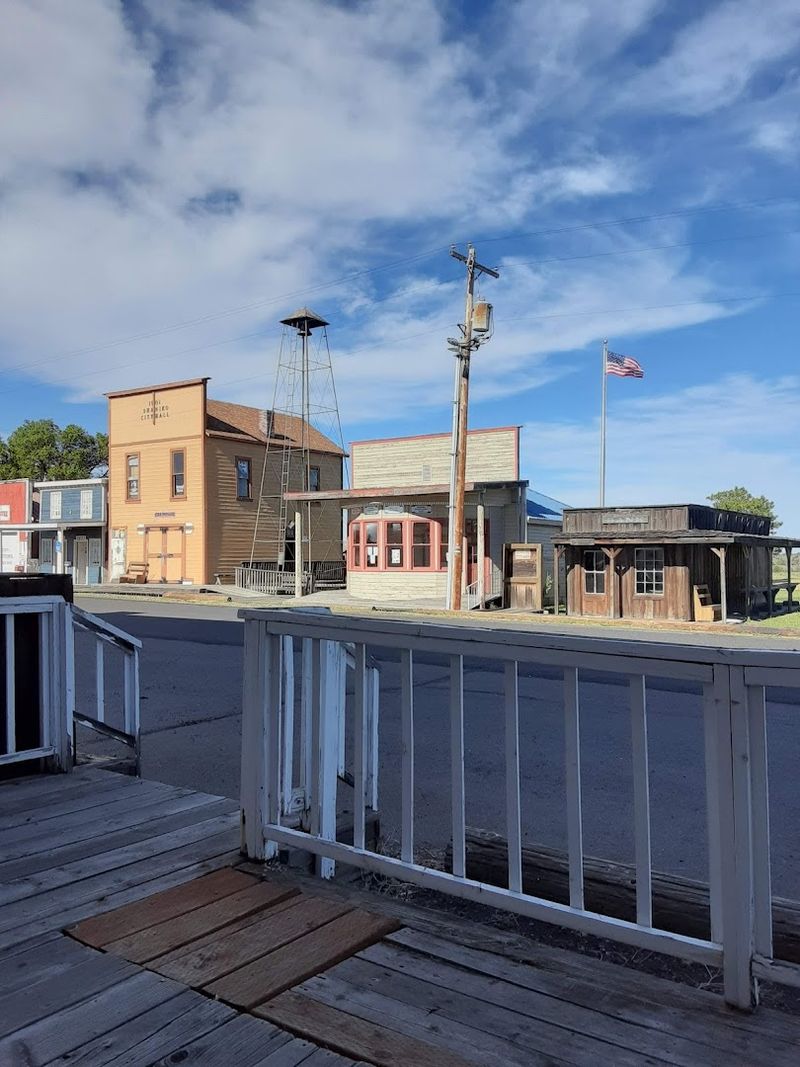
Step onto Shaniko’s wooden sidewalks and you might half-expect a cowboy to wander out of the saloon. Once crowned the “Wool Capital of the World,” this tiny north-central Oregon town was a powerhouse of the early 1900s sheep trade.
When railroad routes shifted, though, the town’s fortune evaporated almost overnight.
What makes Shaniko so remarkable is how much of it survived. Original storefronts, a vintage water tower, and creaky wooden buildings still line the main street, giving visitors an almost movie-set quality experience.
Unlike fully abandoned ghost towns, a handful of residents still call Shaniko home, which adds a quirky living-history dimension to any visit.
Photographers absolutely love the golden-hour light bouncing off those weathered facades. Plan your visit during warmer months, as the roads and facilities are limited in winter.
Shaniko sits about two hours south of Portland, making it a very doable day trip. Bring water, charge your camera battery, and prepare to feel like you have stepped straight into a forgotten chapter of Oregon history.
Golden — A Southern Oregon Mining Village Frozen in Place
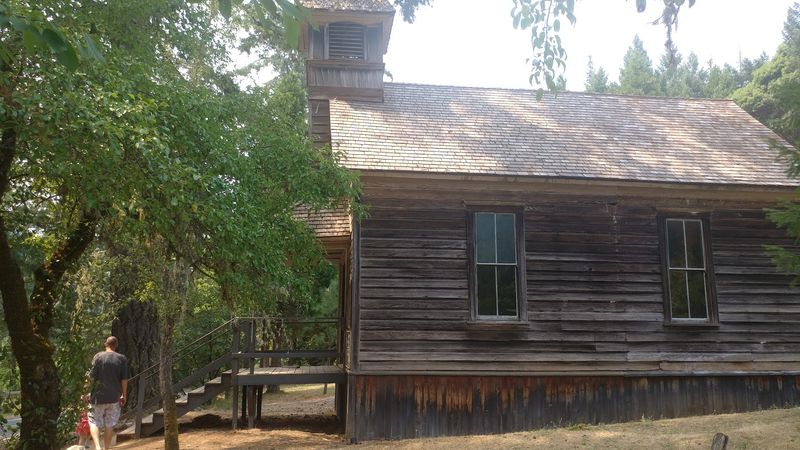
Tucked into the forested hills of Josephine County, Golden is the kind of place that makes you feel like you stumbled onto a movie set that nobody cleaned up. Founded during the 1850s gold rush, this small community once buzzed with miners and merchants chasing their fortunes in southern Oregon’s rugged terrain.
When the gold ran out, so did the people. What remained is a tight cluster of original buildings, including a charming white church and a one-room schoolhouse, both remarkably intact considering their age.
The Oregon Parks and Recreation Department manages the site, so the structures are protected and accessible to curious visitors.
The forest has slowly crept back around the buildings, which honestly makes the whole scene even more atmospheric. Visiting Golden feels less like a tourist attraction and more like a genuine discovery.
The drive through the Applegate Valley adds extra scenic value to the trip. Bring sturdy shoes because the grounds can be uneven, and go in spring or fall when the weather cooperates.
Golden is one of those rare Oregon spots that rewards the effort of finding it.
Sumpter Dredge — The Giant Gold-Eating Machine of Eastern Oregon
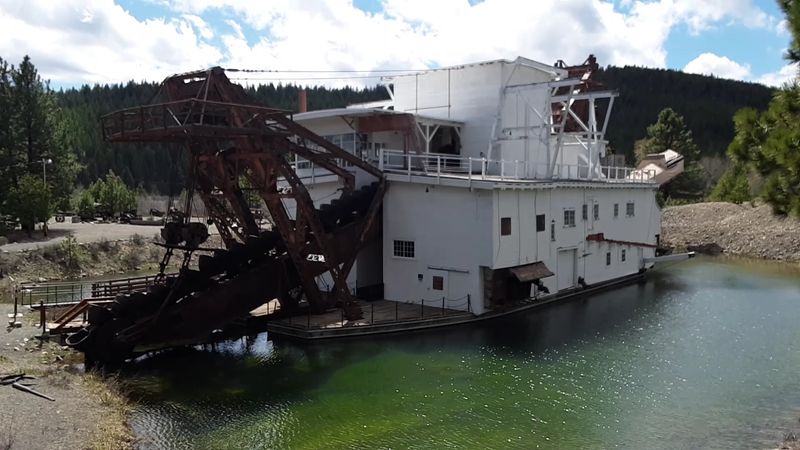
Imagine a five-story floating machine that literally chewed through the earth searching for gold, and you have the Sumpter Valley Gold Dredge in a nutshell. Built in 1935, this colossal contraption processed millions of cubic yards of gravel during its working life, leaving behind the distinctive rocky mounds that still define the Sumpter Valley landscape today.
Now preserved as a state heritage area, the dredge sits in a shallow pond it essentially created for itself during operations. Visitors can walk around the exterior and, during certain seasons, actually climb aboard for guided tours that explain how the machinery worked.
The sheer scale of the thing is genuinely jaw-dropping in person.
The surrounding valley tells its own story through those strange gravel piles, called tailings, which stretch across the landscape like a lunar surface. Wildlife has since reclaimed much of the area, so bring binoculars alongside your camera.
The nearby town of Sumpter offers food and lodging options, making this an easy overnight adventure. History buffs and engineering fans alike will find plenty to appreciate at this one-of-a-kind Oregon landmark.
Fort Rock Homestead Village — Pioneers, Hardship, and High Desert Silence
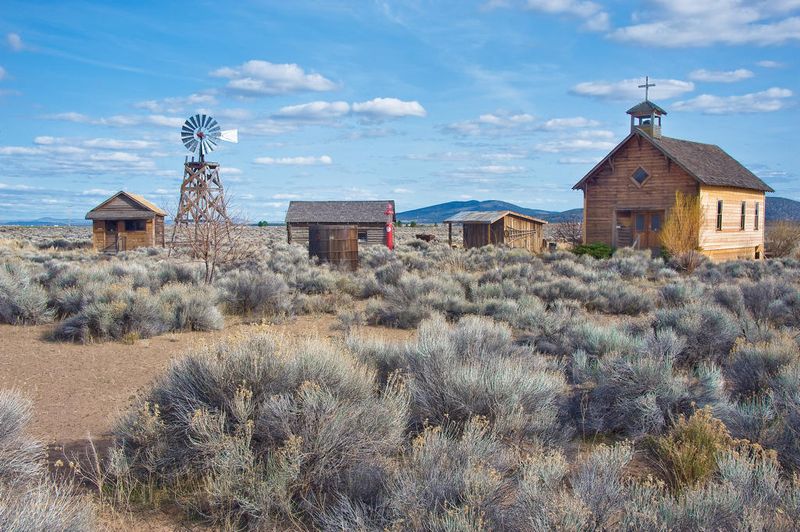
Out in the high desert of Lake County, where the wind never really stops and the sky feels enormous, a small cluster of old homestead buildings tells one of Oregon’s most quietly heartbreaking stories. Fort Rock Homestead Village preserves structures from the early twentieth century, when optimistic settlers flooded this remote region after the government opened it for homesteading.
The dream sounded good on paper. In reality, the harsh desert conditions, unpredictable rainfall, and brutal isolation drove most families away within a generation.
What they left behind, old cabins, a post office, and various outbuildings, has been carefully relocated and preserved near the base of the spectacular Fort Rock volcanic formation.
Standing inside one of those tiny cabins, you can almost feel the weight of those difficult years. The contrast between the humble human-built structures and the dramatic geology surrounding them is genuinely striking.
Fort Rock itself is worth exploring separately, a remnant of ancient volcanic activity that towers above the flat desert floor. Visit in spring when wildflowers bloom across the landscape for an especially memorable experience.
This is a spot that rewards slow, thoughtful exploration rather than a quick drive-through.
Whitney — Eastern Oregon’s Logging Relic Hidden in the Pines
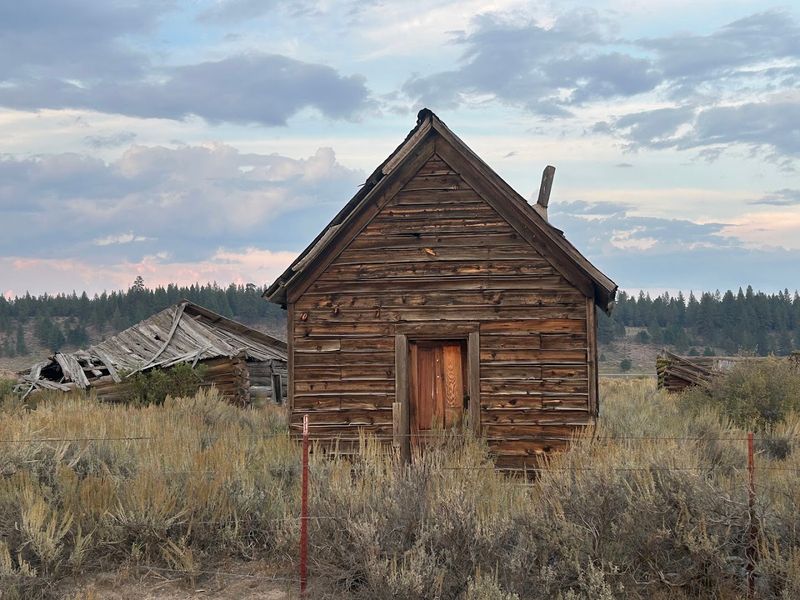
Nobody planned for Whitney to become a ghost town. For a while, this remote Grant County community was a real, functioning place where families lived, kids went to school, and loggers came home tired after long shifts in the forest.
Then the timber industry shifted, and one by one, the residents packed up and left.
What remains today has a melancholy beauty to it. Sagging structures, old foundations hidden under decades of undergrowth, and scattered remnants of community life create a landscape that feels more like an outdoor museum than a forgotten failure.
The surrounding Malheur National Forest adds a lush backdrop that makes the ruins feel even more surreal by contrast.
Whitney is genuinely off the beaten path, which means you will likely have the place to yourself. That solitude is part of the appeal.
The drive through eastern Oregon’s pine-covered hills is scenic in its own right, so the journey becomes part of the experience. Bring a paper map or download offline navigation before heading out, as cell service is unreliable in this area.
Whitney rewards the curious traveler who does not mind a little effort for a genuinely authentic historical encounter.
Cornucopia Mine Site — Gold, Glory, and an Incredible Mountain Hike
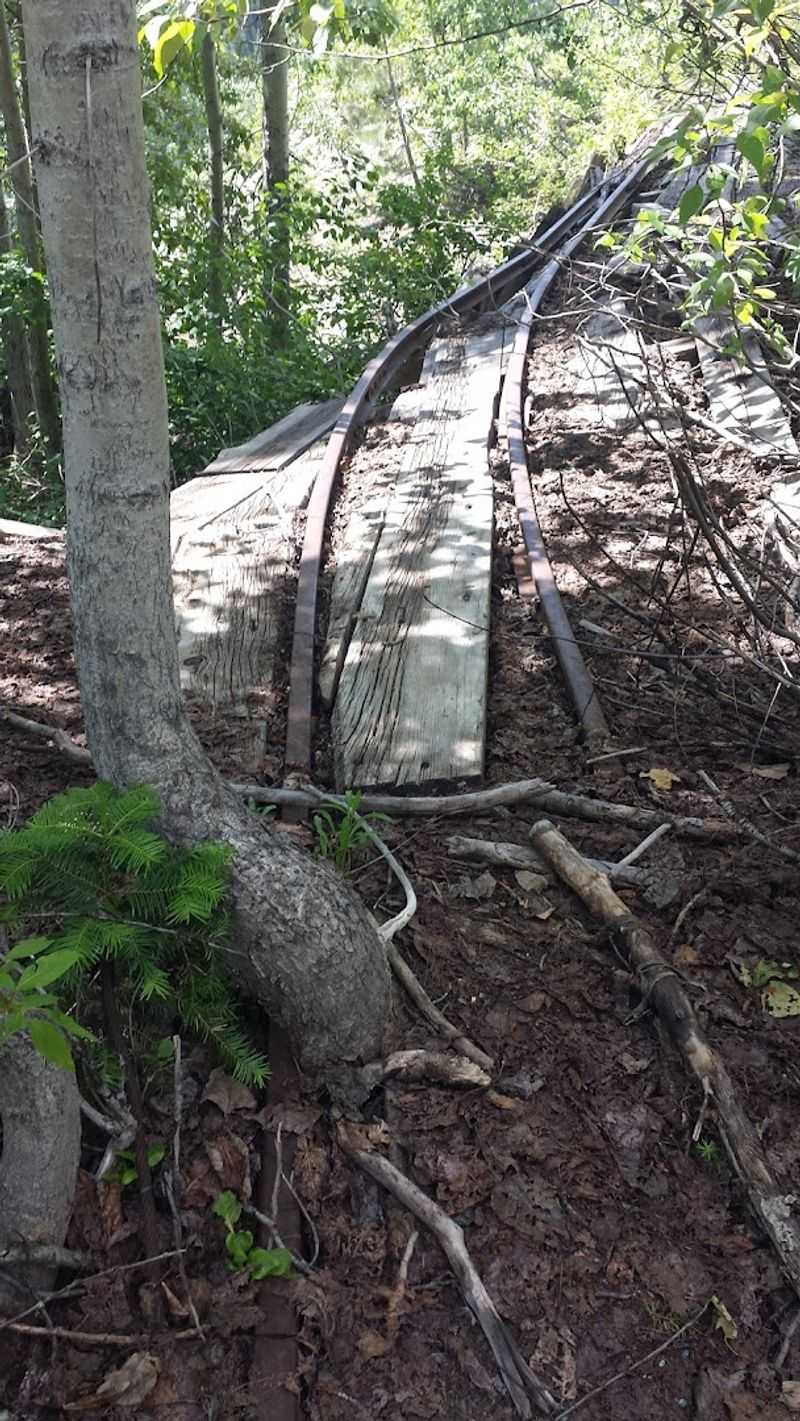
Getting to the Cornucopia Mine Site is half the adventure. Tucked high in the Wallowa Mountains of Baker County, this remote gold mining district requires a rough road and a healthy sense of exploration to reach, but the payoff is extraordinary.
At its peak in the late 1800s and early 1900s, Cornucopia was one of Oregon’s most productive gold operations.
Several original structures still stand at the site, including old mining buildings and equipment remnants that have weathered decades of mountain winters with surprising stubbornness. The alpine setting is breathtaking, with wildflower meadows, clear streams, and jagged peaks providing a dramatic backdrop for the crumbling industrial ruins.
It is the kind of contrast that makes photographers and history lovers equally happy.
The access road can be rough, so a high-clearance vehicle is strongly recommended. Summer and early fall offer the best conditions, as snow can linger well into spring at this elevation.
Pack a lunch, plenty of water, and layers for the mountain chill. Cornucopia is not on most tourist itineraries, which means those who make the trip enjoy a genuine sense of discovery that more accessible sites simply cannot match.
Tillamook Air Museum Hangar — The World War II Blimp Barn That Defies Belief
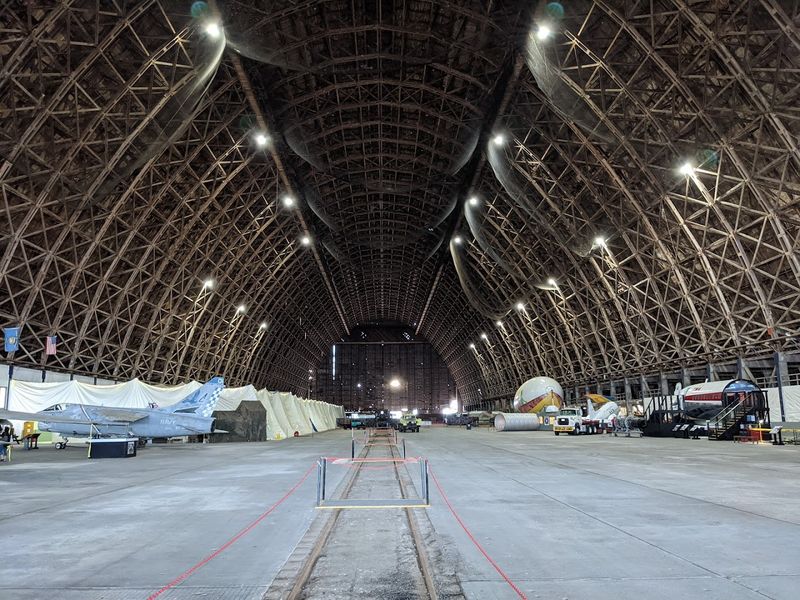
When people say Hangar B in Tillamook is big, they mean genuinely, absurdly, almost incomprehensibly big. Built during World War II to shelter blimps used for coastal submarine patrols, this wooden structure covers more than seven acres under one roof.
That is larger than six football fields, and standing inside it feels like being swallowed by history.
Originally part of Naval Air Station Tillamook, Hangar B is one of only a handful of such structures still standing in the United States. A second hangar burned down in 1992, making this survivor even more historically precious.
Today it operates as the Tillamook Air Museum, housing a remarkable collection of vintage aircraft alongside the architectural wonder of the building itself.
Even visitors with zero interest in aviation tend to be stunned by the hangar’s sheer presence. The building’s wooden arched roof is an engineering feat that was remarkable even by modern standards.
Tillamook is already worth visiting for its famous cheese factory and coastal scenery, so combining that with a museum visit makes for an excellent full day out. Check the museum’s seasonal hours before heading out, as schedules can vary throughout the year.
Battery Russell — Where Concrete Bunkers Guard the Oregon Coast
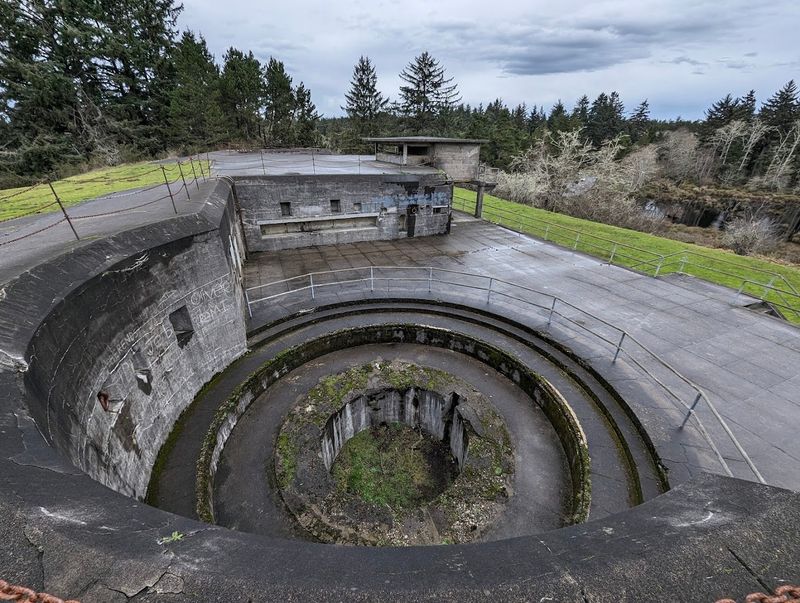
Battery Russell holds a distinction that makes American history buffs do a double-take: it was the last military fortification on the continental United States to be fired upon by a foreign enemy, a Japanese submarine shelling it briefly during World War II in 1942. The battery’s guns never fired back, partly because the range was too great, which makes the whole story even more surreal.
Located within Fort Stevens State Park near Warrenton, the battery’s thick concrete walls, underground corridors, and open gun emplacements are remarkably well-preserved and freely accessible to visitors. Moss and coastal plants have softened the hard edges of the military architecture, creating a hauntingly photogenic scene that works at any time of day.
Fort Stevens itself has a rich history stretching back to the Civil War era, so Battery Russell is just one piece of a larger historical puzzle worth exploring. The park also includes miles of trails, beach access, and other historic military remnants.
Combine a visit with a walk along the nearby beach for a full coastal experience. Admission to the park requires a day-use fee, but the access to this much history makes it genuinely good value.
Peter Iredale Shipwreck — Over a Century of Rust and Romance on the Oregon Coast
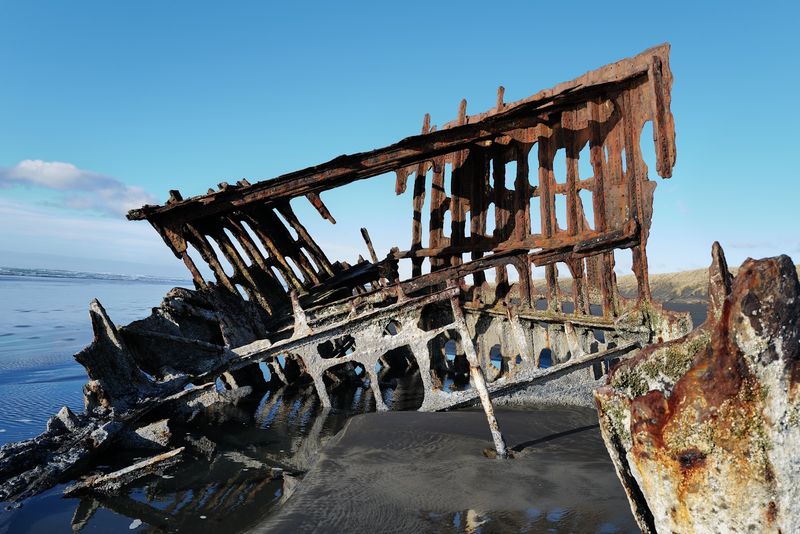
Since October 25, 1906, the steel skeleton of the British sailing ship Peter Iredale has been slowly sinking into the sands of the Oregon coast, and it has become one of the most photographed spots in the entire state. The ship ran aground during a fierce storm while attempting to enter the Columbia River, and despite salvage attempts, the vessel never moved again.
What remains today is a dramatic tangle of rusting metal ribs and hull sections that emerge from the sand at low tide like the bones of some ancient sea creature. The wreck sits within Fort Stevens State Park, making it easy to combine with a visit to Battery Russell for a full day of Oregon history.
Sunset visits are especially popular, as the warm light turns the rusty metal into something almost beautiful.
The wreck is accessible year-round, and there is no extra fee beyond the park day-use charge. Getting close to the structure is allowed, and many visitors pose for photos inside the remaining hull sections.
Check tide charts before visiting if you want maximum exposure of the wreck. The Peter Iredale is one of those Oregon landmarks that genuinely lives up to its reputation every single time.
Friend Schoolhouse — A One-Room Wonder in Oregon Wheat Country
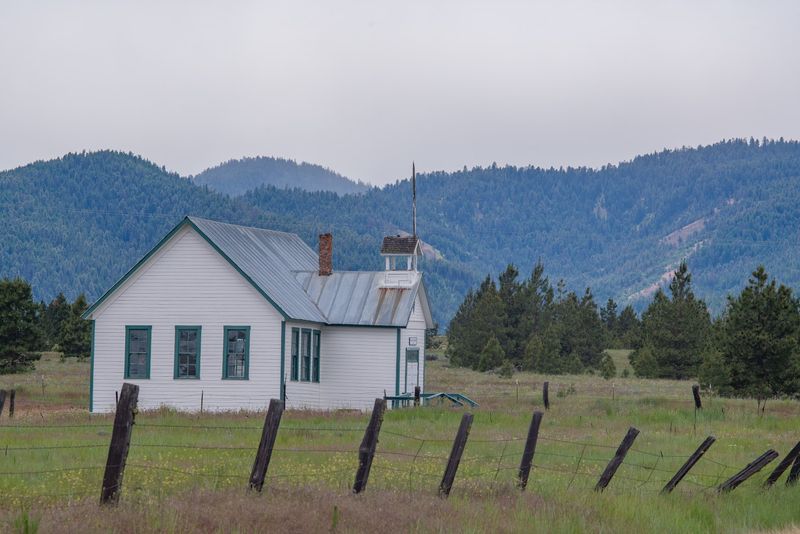
Surrounded by nothing but rolling wheat fields and enormous Oregon sky, the Friend Schoolhouse looks like it wandered out of a black-and-white photograph and forgot to go back. Built in 1915 to serve the children of local farming families, this compact white building operated for decades before the rural population thinned out and the school closed for good.
Today it stands as one of the most recognizable abandoned structures in the entire state, drawing photographers from across the Pacific Northwest who come specifically for that striking contrast between the humble building and the vast agricultural landscape. The schoolhouse has appeared in countless calendars, art prints, and travel features, yet it remains quietly tucked away on a rural road that most people drive past without realizing what they are missing.
Visiting requires a bit of navigation through north-central Oregon’s back roads, which is part of the charm. The surrounding Wasco County landscape has its own beauty, especially in summer when the wheat turns gold.
Respect the property and surrounding farmland during your visit, as the site sits near active agricultural operations. Bring a wide-angle lens if you shoot photography, because the scenery surrounding the schoolhouse is honestly just as compelling as the building itself.
Whitney Bridge and Rail Remnants — Ghosts of Eastern Oregon’s Logging Railroad
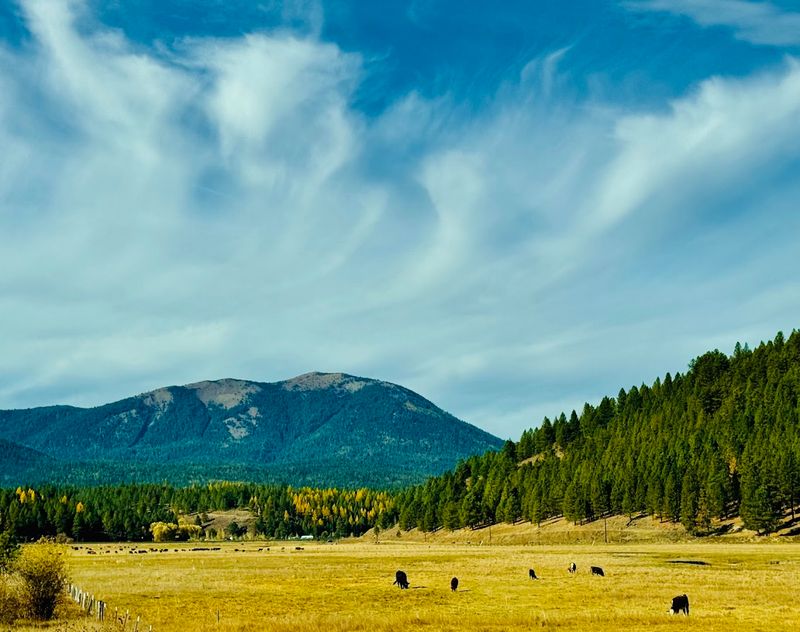
Long before trucks dominated the timber industry, railroads were the lifelines that kept Oregon’s logging operations alive, hauling massive loads of cut timber out of remote mountain forests. The Whitney area of Grant County preserves some of the most accessible remnants of that era, including old rail grades, crumbling bridge structures, and scattered hardware left behind when the lines shut down.
Exploring the rail remnants feels like following a trail of industrial breadcrumbs through the forest. The old grades are often still walkable, providing a built-in hiking path through beautiful pine country.
Rusted spikes, rotting ties, and occasional bridge timbers appear along the route, each one a small artifact of the logging economy that once defined this region.
This is a destination for the genuinely curious explorer rather than the casual tourist. There are no visitor centers or interpretive signs, so researching the area’s railroad history beforehand will dramatically enrich the experience.
Local historical societies in Grant County have published resources on the old logging railroads that are worth tracking down. Sturdy footwear is essential, and a GPS device or detailed map is highly recommended.
The solitude and forest scenery alone make the exploration worthwhile even for those with only passing interest in railroad history.
Bourne Ghost Town — A Forgotten Mountain Mining Camp in Baker County
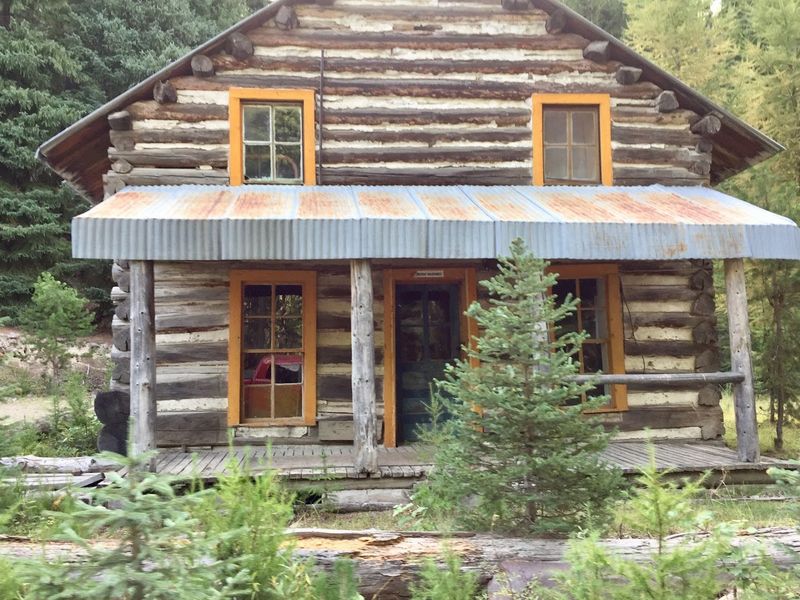
Perched in a narrow canyon east of Baker City, Bourne had a brief but intense moment in the sun during Oregon’s mining boom years. At its height, the town supported hundreds of residents, complete with saloons, a post office, and the general chaos that accompanied any serious gold rush settlement.
Then the ore ran thin, and Bourne quietly collapsed into history.
Getting there today means navigating a winding mountain road, but the destination delivers genuine ghost town atmosphere without the tourist crowds that plague more famous sites. Foundation outlines, crumbling walls, and scattered remnants of buildings tell the story of a community that burned bright and faded fast.
The creek that runs through the canyon adds a pleasant soundtrack to the exploration.
Bourne sits within the Wallowa-Whitman National Forest, so the surrounding scenery is genuinely spectacular. Fall is an outstanding time to visit, when the canyon fills with golden color from turning aspens and maples.
The drive itself through the Powder River country is scenic enough to justify the trip independently. Pack a picnic and plan to spend a few hours wandering, because rushing through Bourne means missing the quiet details that make ghost town exploration so rewarding.
Old Cascade Locks Powerhouse Ruins — Where Industry Met the Columbia River Gorge
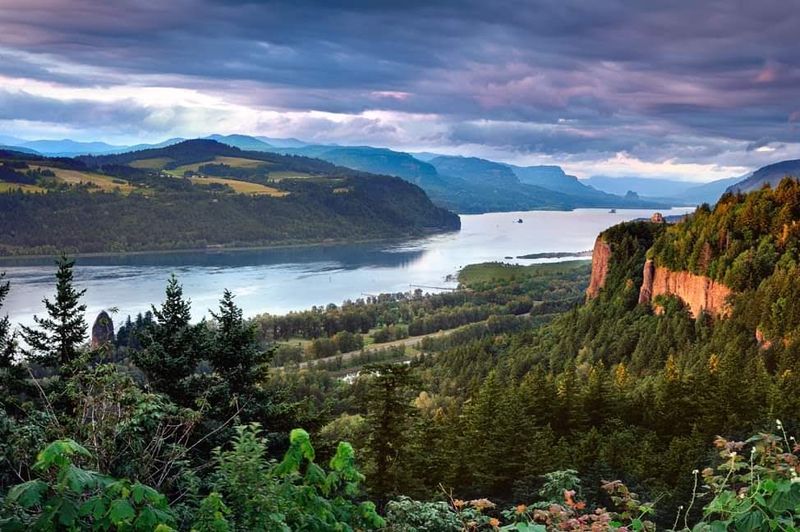
The Columbia River Gorge has always been a place where human ambition collides with overwhelming natural force, and the ruins near Cascade Locks are a quiet testament to that long relationship. Early hydroelectric infrastructure built along this stretch of the Columbia helped power the region’s growing industrial economy, and while the technology has long since moved on, traces of those original facilities still linger in the landscape.
Weathered stone walls, concrete foundations, and rusted mechanical remnants sit tucked against the gorge’s dramatic basalt cliffs, partially hidden by the lush vegetation that reclaims everything given enough time. The contrast between the crumbling human-built structures and the timeless power of the river and canyon walls is genuinely striking.
It is the kind of place that makes you pause and think about scale, both human and geological.
Cascade Locks itself is a charming small town with good food options and access to the Historic Columbia River Highway, so combining the ruins with a broader gorge exploration makes excellent sense. The area is accessible year-round, though spring and fall offer the most comfortable temperatures for outdoor wandering.
Wear layers, as the gorge creates its own unpredictable weather patterns regardless of what the forecast says upstream.
Share this story