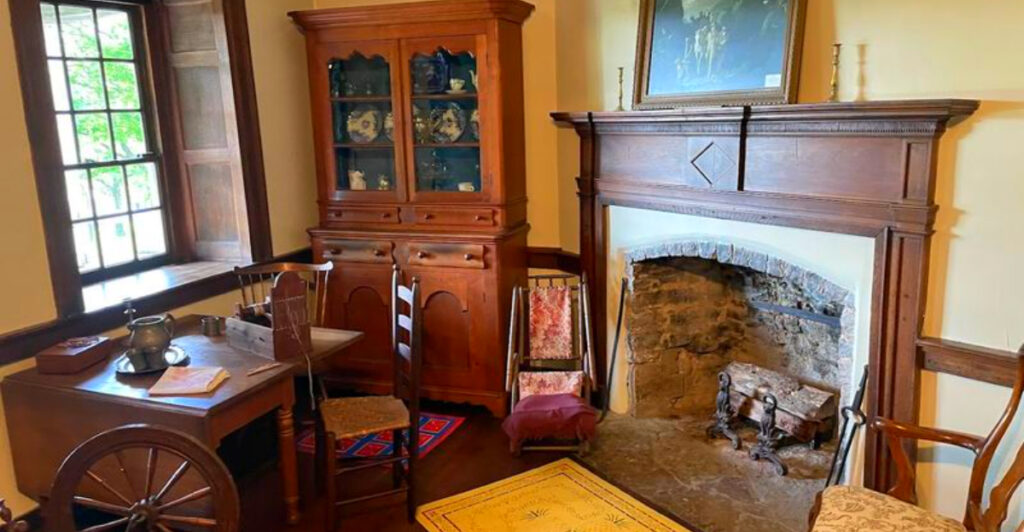
Just outside Defiance, Missouri, the Daniel Boone Home offers a fascinating look at the life of one of America’s most famous frontiersmen. The centerpiece is Boone’s impressive limestone home, where he spent his final years, but the experience extends far beyond a single historic building.
Visitors can explore a recreated frontier village, learn about Missouri’s early settlement period, and discover Boone’s life beyond the legends. Keep reading to see why this historic site remains one of Missouri’s most intriguing destinations.
A Pioneer Address in the Heart of Missouri Wine Country
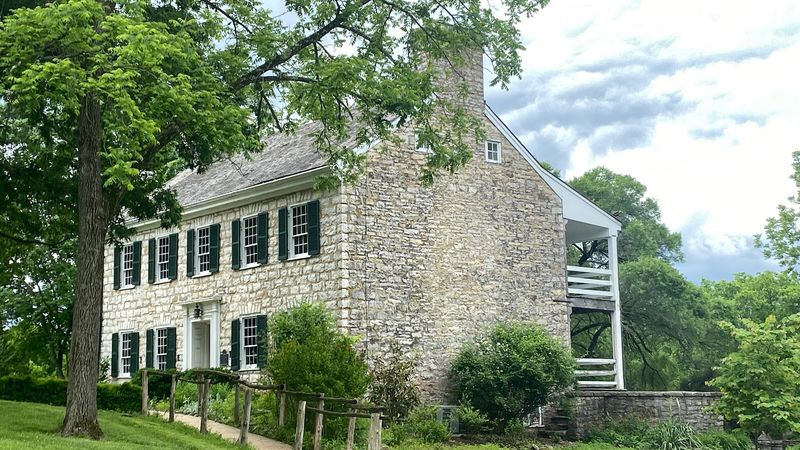
The address sounds simple enough: 1868 Highway F, Defiance, MO 63341. But what waits at the end of that road is anything but ordinary.
The Historic Daniel Boone Home at Lindenwood Park sits in the gentle hills of St. Charles County, just west of the Missouri River and a short drive from the town of Defiance.
The site is now managed by St. Charles County’s Parks and Recreation Department, which took ownership in May 2016 after Lindenwood University donated the property. The transition brought renewed energy and investment to a place that already carried enormous historical weight.
Getting there is part of the experience. The drive along Highway 94 rolls through vineyards, old farmsteads, and wooded ridgelines that look almost unchanged from two centuries ago.
By the time you reach the gravel parking lot and see that three-story limestone house rising against the sky, the everyday world feels very far away. And honestly, that feeling only gets stronger the longer you stay.
The Surprising Truth About Who Actually Built This House
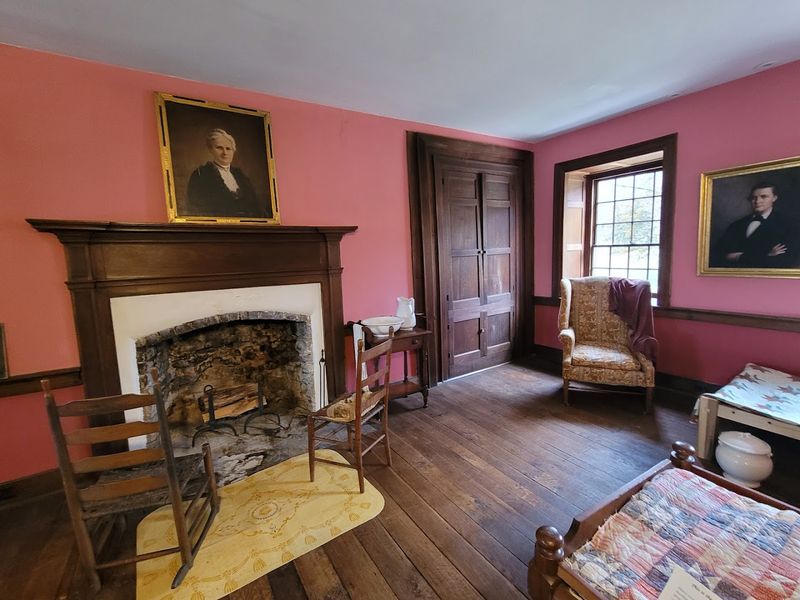
Here is the detail that catches almost every visitor off guard: Daniel Boone did not build this house. His youngest son, Nathan Boone, began construction around 1800 to 1803, and the home was completed by 1810.
Nathan designed and built the impressive Georgian-style structure using locally quarried Missouri blue limestone.
That does not make Daniel Boone’s connection to the house any less real. He and his wife Rebecca moved in with Nathan’s family from at least 1804 onward, and again from late 1816 until Daniel Boone passed away on September 26, 1820.
He spent the final 21 years of his life in Missouri, a fact that surprises many people who picture him forever roaming the Cumberland Gap.
The house represents a collaboration across generations, a son building a permanent home and a father spending his last chapter within its thick walls. That layered family story gives the place a warmth that pure monument sites sometimes lack.
The walls here hold more than history; they hold a family’s full arc.
Why Daniel Boone Ended Up in Missouri in the First Place
Most Americans know Daniel Boone as the man who blazed the Wilderness Road through the Appalachians, but his Missouri chapter tends to get skipped over. He arrived in the Upper Louisiana Territory in 1799, before the Louisiana Purchase even happened, after accepting a land grant from the Spanish government.
Spain was actively recruiting American settlers to populate the territory, and Boone was a prestigious name. He was invited to serve as a judge and commandant of the Femme Osage District, a role that gave him legal authority over a stretch of frontier land along the Missouri River.
It was a fresh start after years of legal battles over land claims back in Kentucky had left him deeply frustrated.
Missouri gave Boone something Kentucky eventually could not: space, stability, and a community that respected him. The guided tours at the home cover this backstory in detail, and hearing it laid out in context makes the whole site feel less like a museum and more like the final chapter of a genuinely remarkable life story.
What Those Holes in the Limestone Walls Were Really For
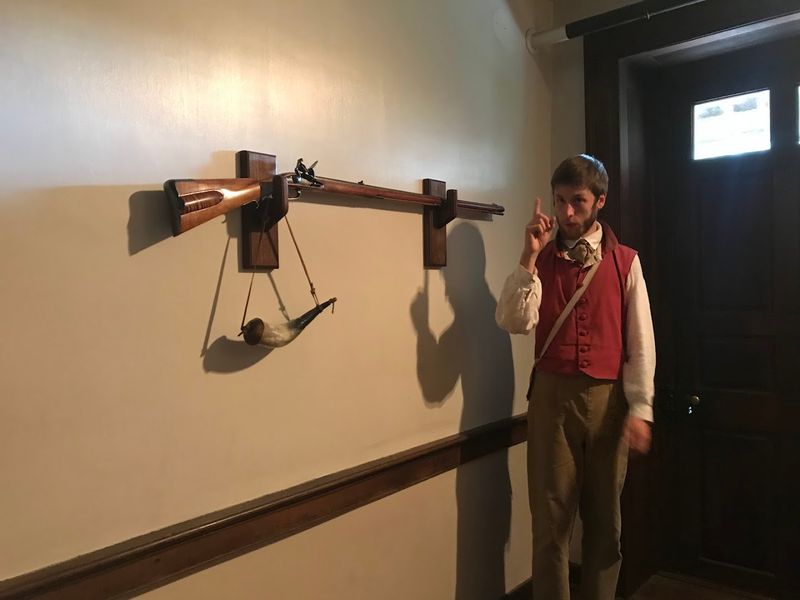
The walls of the Boone Home are 2.5 feet thick, built from Missouri blue limestone quarried nearby, and they were designed to do more than just keep out the cold. Look closely at the exterior and you will notice small holes cut into the stone at regular intervals.
These are defensive loopholes, designed to allow rifles to be fired outward in the event of an attack.
That detail reframes the whole building. This was not just a family home; it was a fortified residence on an active frontier.
Tensions between settlers and Native American communities were real and ongoing during the years the Boones lived here, and the architecture reflects that reality without flinching.
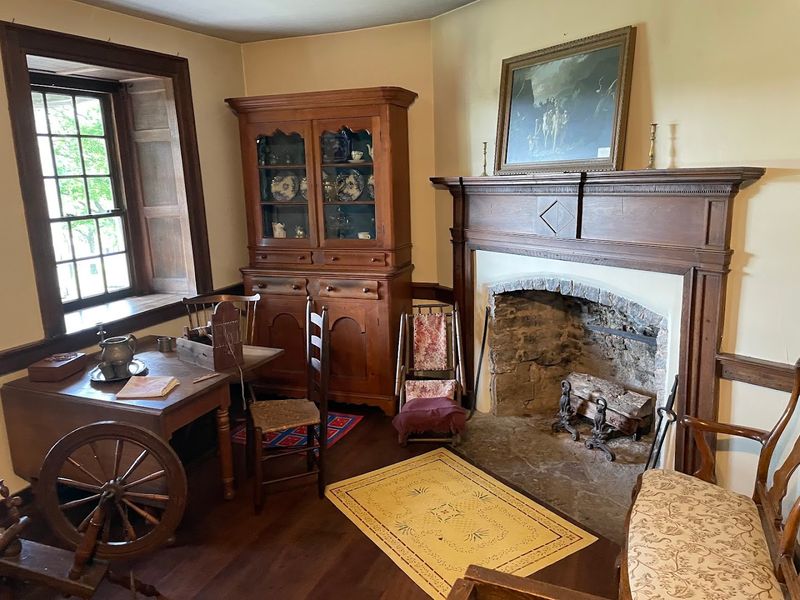
The house also features seven fireplaces spread across its three floors, plus a basement level that served as the kitchen and dining area. A ballroom occupies the top floor, which adds an unexpected social dimension to a building that otherwise looks built purely for survival.
The contrast between defensive walls and a dancing floor on the same structure says a great deal about frontier life. The home was added to the National Register of Historic Places in 1973.
Inside the Guided Tour: Three Floors of Living History
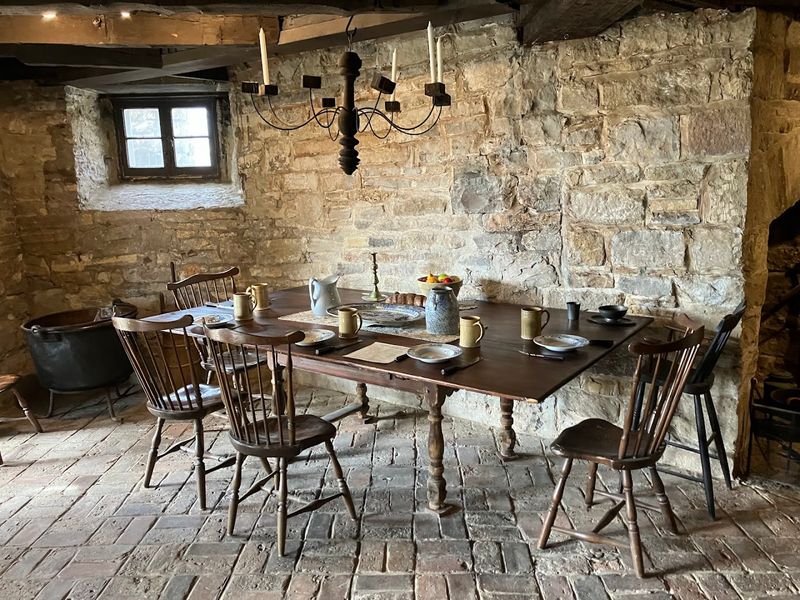
The guided tour of the Boone Home covers three floors and runs about one hour, and it moves faster than you would expect. The guides are genuinely knowledgeable and clearly love what they do, threading together the Boone family’s personal story with the broader history of Missouri’s territorial era in a way that never feels like a lecture.
Rooms are furnished to reflect the early 1800s, and the guides connect each space to specific moments in the family’s life. The basement kitchen and dining area give a vivid sense of daily labor; the upper floors open into more formal spaces that hint at the social life the Boones maintained even on the frontier.
The tour also covers American Indian history and the experiences of Black individuals connected to the site, giving visitors a more complete picture of who actually lived and worked in this part of Missouri. The tour fee is modest, and the grounds are free to walk on your own.
Going early in the day is a smart move, especially on weekends when tour slots fill up steadily.
Boonesfield Village and the Buildings That Traveled Miles to Be Here
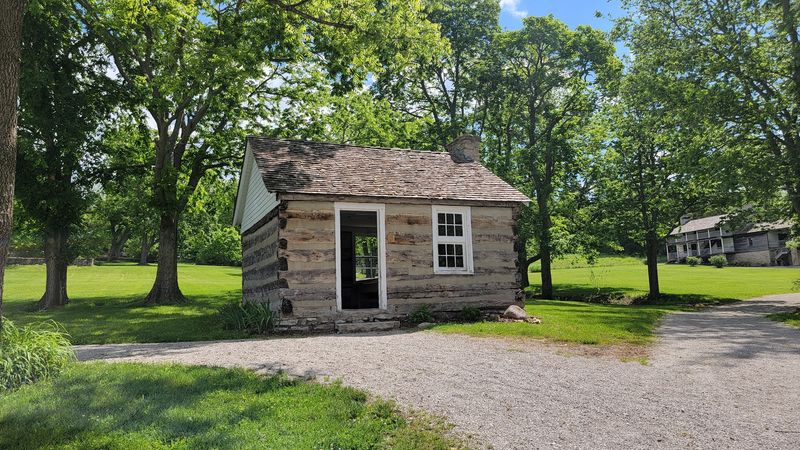
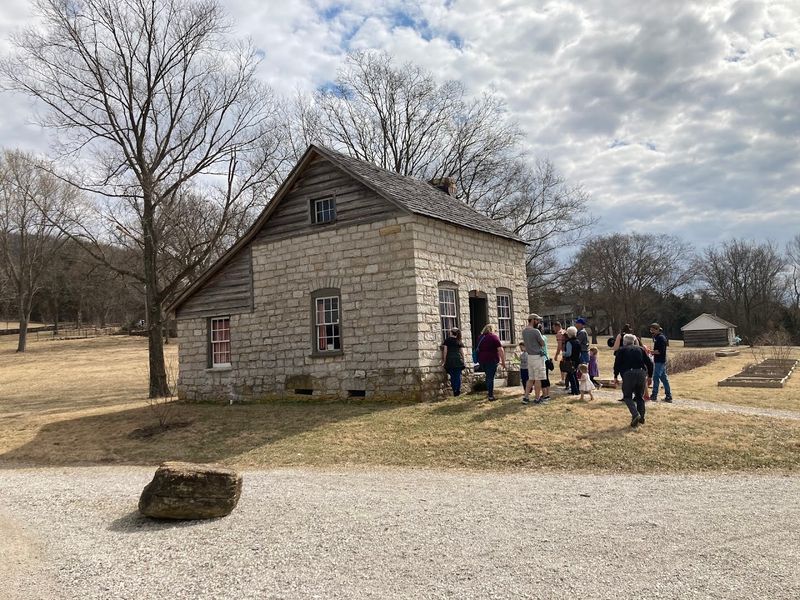
Beyond the main house, the property opens into Boonesfield Village, and this is where the site takes on a different kind of energy altogether. More than a dozen historic buildings were relocated from within a 50-mile radius of Defiance to create a reconstructed 19th-century Missouri frontier village.
Each one was saved from demolition and given a second life here.
The collection includes a one-room schoolhouse, a grist mill, a general store, a carpenter shop, and the Old Peace Chapel, a small white church that visitors consistently describe as one of the most striking structures on the grounds. The chapel is available for private events, including weddings, which explains why the site occasionally hums with celebration on weekends.
What makes Boonesfield Village genuinely compelling is that none of these buildings are reproductions. They are authentic structures from the era, relocated and preserved rather than rebuilt from scratch.
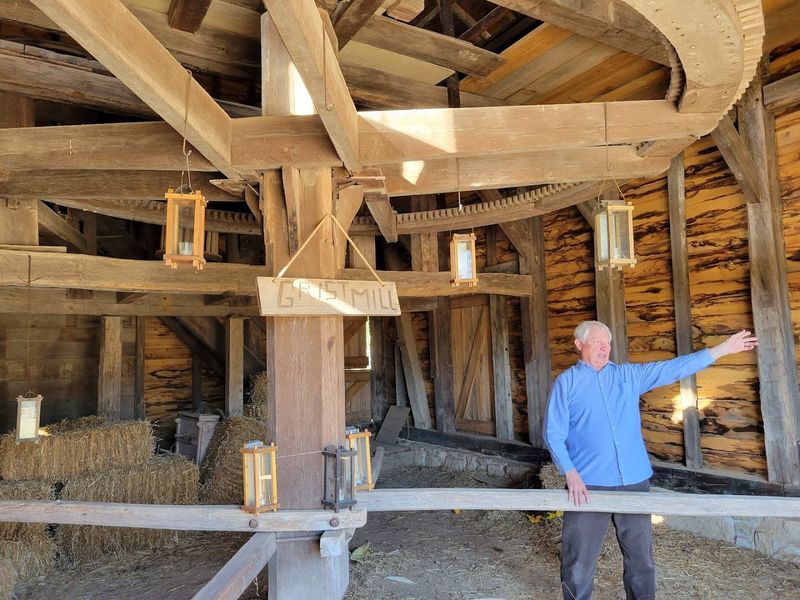
Wandering among them feels less like visiting a theme park version of history and more like stumbling onto a real community that time somehow forgot to dismantle. The grist mill alone is worth the trip.
Living History Programs That Actually Bring the Past to Life
One of the best reasons to check the site’s calendar before you visit is the seasonal living history programming. On certain days, costumed demonstrators set up throughout the village and the grounds, showing visitors how frontier families made yarn from raw wool, dyed fabric using wildflowers, churned butter by hand, and worked with period tools to construct and maintain their homes.
These demonstrations are hands-on in the best sense. Visitors, especially kids, get to touch, try, and ask questions rather than just observe from behind a rope line.
The experience of watching someone grind corn at the grist mill or card wool into a workable fiber makes the abstract concept of frontier self-sufficiency suddenly very concrete and very impressive.
Homeschool groups have found the site particularly valuable for exactly this reason. The staff and volunteers who run these programs bring patience and genuine enthusiasm to every interaction.
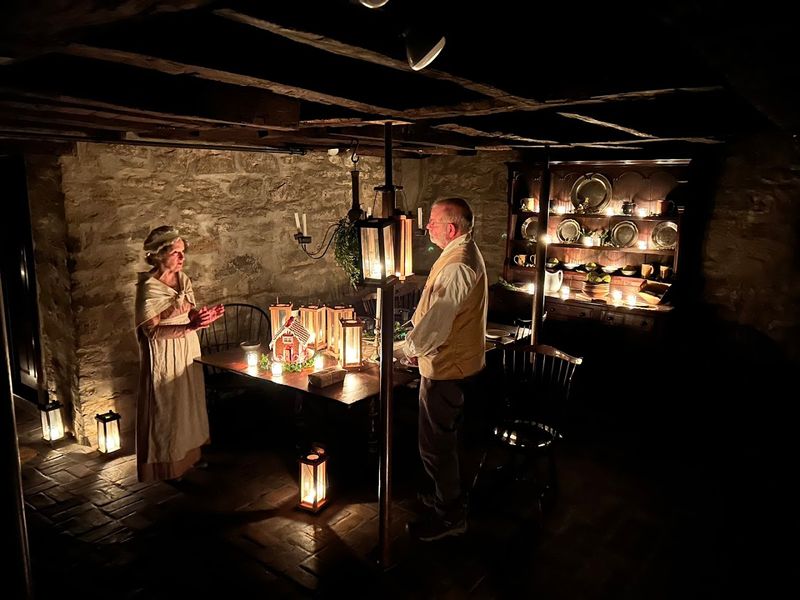
Special seasonal events include a fall lantern tour and a candlelit Christmas walk, both of which transform the village into something quietly magical after dark. Those evening events book up quickly, so planning ahead is worth the effort.
The Grounds, the Gift Shop, and the Honey You Did Not Expect
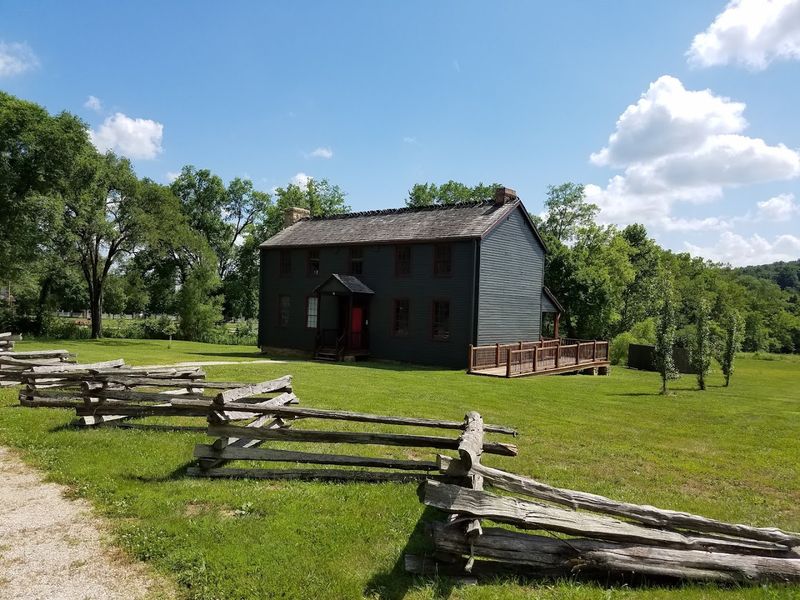
Walking the grounds at no charge is one of the genuinely good deals in Missouri heritage tourism. The property is spacious, well-maintained, and peaceful in a way that feels earned rather than manufactured.
Mature trees shade the paths between buildings, and the surrounding countryside gives the whole site a natural backdrop that photographs beautifully in every season.
The gift shop sits near the main entrance and stocks local wares alongside the usual historical souvenirs. The standout item is honey harvested directly from the property’s own bees, which makes for a genuinely local and practical keepsake.
It is the kind of small detail that sticks with you after you leave.
Bringing a picnic is a popular strategy among repeat visitors, and the grounds offer plenty of comfortable spots to spread out and eat. Restrooms are available on-site, and parking in the gravel lot is plentiful.
The site is partially wheelchair accessible, with the main and lower levels of the Boone Home reachable without stairs. Fall is a particularly beloved season here, when the trees shift color and the limestone house takes on a warm, amber-lit quality in the afternoon sun.
What the Architecture Reveals About Georgian Style on the Frontier
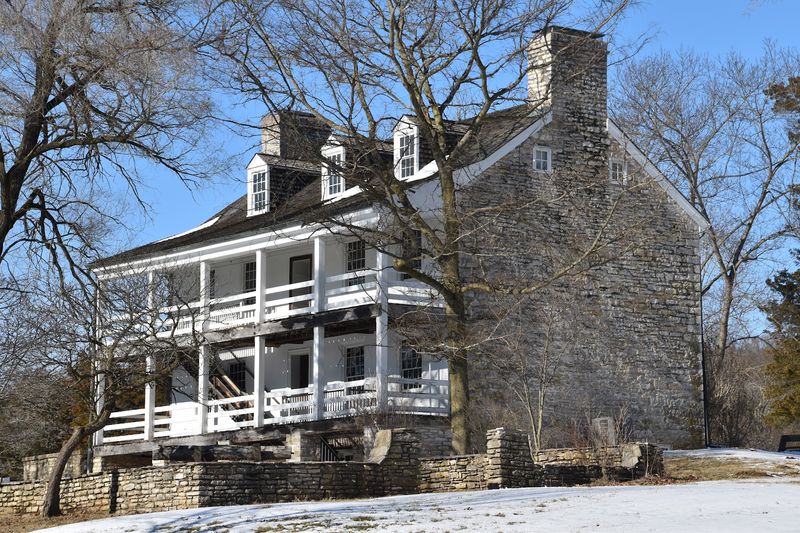
The Boone Home is not a log cabin, and that surprises people more than almost anything else about the site. Nathan Boone built a proper Georgian-style stone house, three stories tall with a basement level, symmetrical window placement, and a formal ballroom on the top floor.
It is the kind of architecture you would expect to find in a settled Eastern city, not on the Missouri frontier of 1810.
The choice of Missouri blue limestone as the primary building material was both practical and impressive. The stone was quarried locally, which kept costs manageable, but the scale of the construction, with walls nearly three feet thick and seven fireplaces throughout, required serious labor and skill.
The result is a building that has stood for over two centuries with its structural integrity fully intact.
Seeing it in person recalibrates what the word “frontier” actually means. The Boones were not roughing it in the wilderness; they were building a substantial, permanent home with clear architectural ambitions.
That tension between the wildness of the surrounding territory and the formality of the house itself is one of the most interesting things the site has to offer.
The Best Times to Visit and How to Make the Most of Your Trip
The site is open Tuesday through Saturday from 8:30 AM to 5 PM, Friday and Saturday as well, and on Sundays from 11:30 AM to 5 PM. Monday hours match the weekday schedule.
The phone number for tour reservations and event inquiries is 636-798-2005, and the county parks website carries current program listings.
Fall is the most popular season, and for good reason. The combination of changing leaves, cooler temperatures, and the limestone house glowing in autumn light creates an atmosphere that feels genuinely cinematic.
The fall lantern tour is a seasonal highlight that sells out, so booking early is not optional if you want a spot.
Spring and early summer offer quieter visits with lush green surroundings and comfortable walking weather. Arriving early in the day on weekends gives you the best chance of securing a guided tour slot without a long wait.
Budget at least two hours for a full visit that includes the house tour and a walk through Boonesfield Village. Those who rush through always wish they had given themselves more time.
Why This Site Matters Beyond the Famous Name on the Sign
The name Daniel Boone draws visitors in, but the site earns its place in Missouri’s heritage landscape through something broader and more substantive than celebrity. The tours cover American Indian history connected to the Femme Osage region, the lives of Black individuals who worked and lived in and around the Boone household, and the full texture of what territorial Missouri actually looked like for everyone who inhabited it.
Boonesfield Village functions as a regional archive in physical form. By relocating historic structures from a 50-mile radius and preserving them on a single property, the site has created a repository of built history that would otherwise have been lost to demolition.
Each building carries its own story that extends beyond the Boone family name entirely.
St. Charles County’s stewardship since 2016 has kept the site publicly accessible and educationally focused in a way that feels genuinely community-minded. The 4.8-star rating across hundreds of visitor reviews reflects not just the history on offer but the quality of the people who bring it to life every day.
A place this well-tended earns its reputation one honest visit at a time.
Share this story