Texas has a well-earned reputation for doing things big, bold, and just a little bit weird. From buried Cadillacs to fake luxury stores in the middle of nowhere, the Lone Star State is packed with roadside surprises that will make you do a double-take.
I road-tripped across Texas last summer and genuinely could not believe some of the things I stumbled upon. Whether you’re a lifelong Texan or a first-time visitor, these 18 quirky attractions are absolutely worth a detour.
Cadillac Ranch (Amarillo)
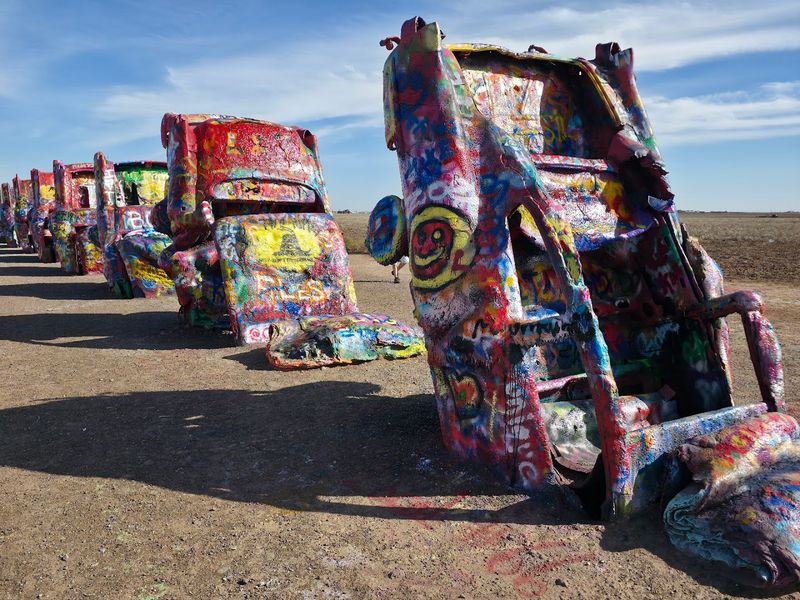
Nothing says Texas quite like ten half-buried Cadillacs sticking out of the ground like metallic weeds. Located just off Route 66 near Amarillo, Cadillac Ranch was created in 1974 by the art group Ant Farm, and it has been collecting spray paint ever since.
Here’s the best part: visitors are not just allowed to add their own graffiti, they are practically encouraged to. Bring a can of spray paint and leave your mark on automotive history.
The artwork changes almost daily, which means no two visits ever look the same.
Admission is completely free, and the site is open year-round. Go at sunrise for the best light and the fewest crowds.
It’s gloriously weird, wildly photogenic, and 100% unforgettable.
Prada Marfa (Valentine)
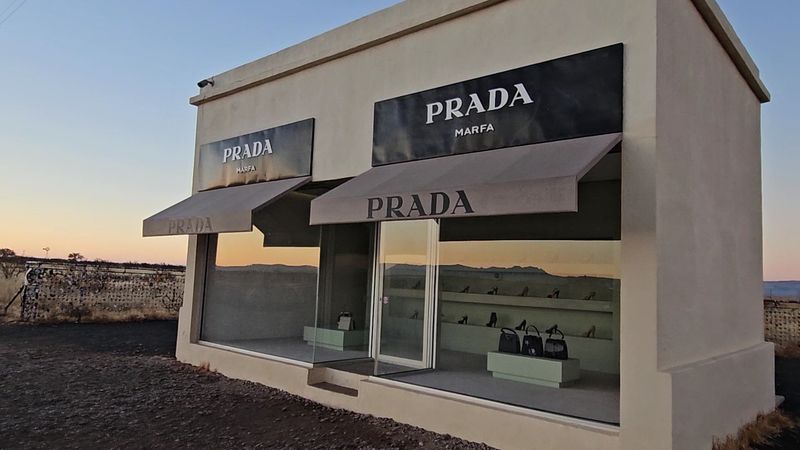
Somewhere between Valentine and Marfa, in the middle of absolutely nowhere, stands a perfect little Prada store that has never once sold a handbag. Created in 2005 by artists Elmgreen and Dragset, this permanent art installation is designed to slowly decay into the desert landscape over time.
The windows display real Prada shoes and bags from the fall 2005 collection, and the door stays locked forever. It is simultaneously absurd and oddly beautiful, which is exactly the point.
The contrast between high fashion and endless desert scrub is genuinely striking.
Plan your visit for the golden hour before sunset when the light turns the whole scene cinematic. Cell service is spotty out here, so download your maps ahead of time.
Trust me, the drive alone is worth it.
Beer Can House (Houston)
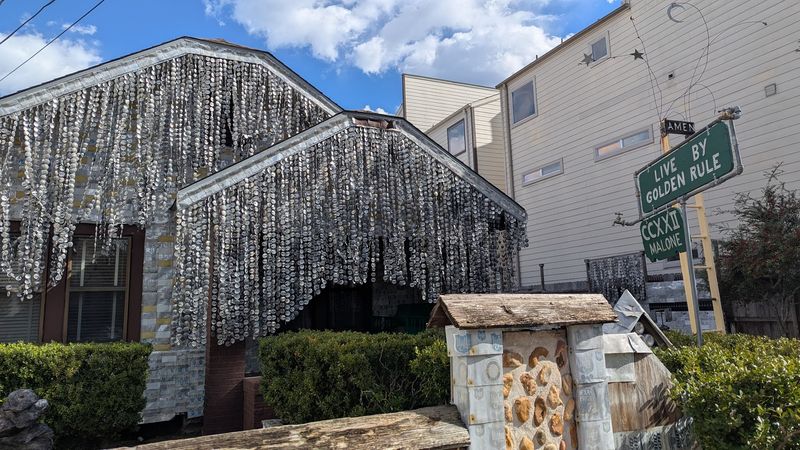
John Milkovisch liked beer. He also really, really liked not mowing his lawn.
Starting in 1968, this retired upholsterer began covering his Houston home with beer cans, pull tabs, and garlands of aluminum to replace the grass and siding he was tired of maintaining.
Over 18 years, he used roughly 50,000 beer cans to transform an ordinary bungalow into one of America’s most celebrated folk-art environments. The result is part recycling project, part obsession, and entirely magnificent.
The Beer Can House is now maintained by the Orange Show Center for Visionary Art and is open for tours on weekends. Walking through it feels like stepping inside someone’s wonderfully unhinged dream.
Pro tip: the interior is just as wild as the outside, so don’t rush through it.
Stonehenge II (Ingram)
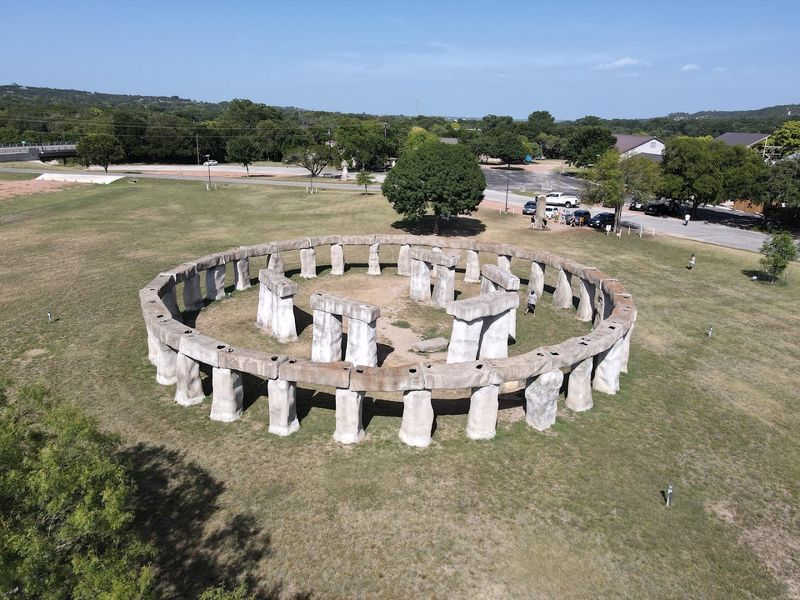
Al Shepperd built a 90-percent-scale replica of Stonehenge in his Texas Hill Country field in 1990, because apparently that’s just a thing people do in the Lone Star State. The structure is made from steel and plaster rather than ancient stone, but it is surprisingly convincing from a distance.
The real showstoppers, though, are the two Easter Island-style moai heads standing guard on either side. Together, they form one of the most delightfully unexpected combinations in roadside art history.
The installation now lives at the Hill Country Arts Foundation in Ingram after being relocated from its original private property. Admission is free, and the grounds are open daily.
It’s the kind of place that makes you laugh first and then quietly marvel at the craftsmanship. Bring your camera and your best confused-tourist face.
The World’s Largest Cowboy Boots (San Antonio)
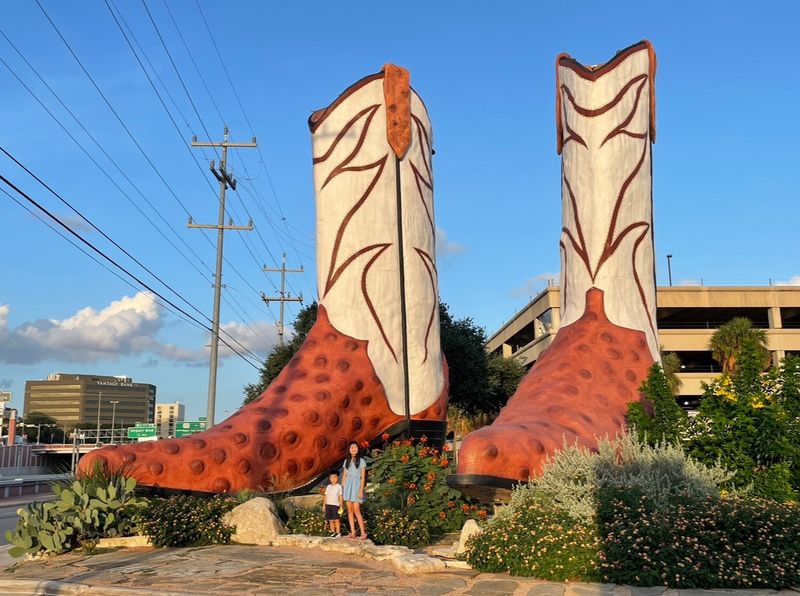
Standing 35 feet tall outside North Star Mall in San Antonio, these giant cowboy boots are the kind of landmark that makes you slam on the brakes and yell at your passengers to look. Sculptor Bob “Daddy-O” Wade created them in 1980, and they have been a beloved city icon ever since.
Made from fiberglass and steel, the boots are detailed right down to the stitching, which you can only truly appreciate once you’re standing next to them feeling approximately the size of a Lego figure. They weigh around 4,000 pounds each, which is commitment to a theme if I’ve ever seen it.
The boots are free to visit anytime the mall is open, and there is usually plenty of parking. They photograph best in the morning light.
Bonus points if you show up wearing your own boots to match.
The Giant Sam Houston Statue (Huntsville)
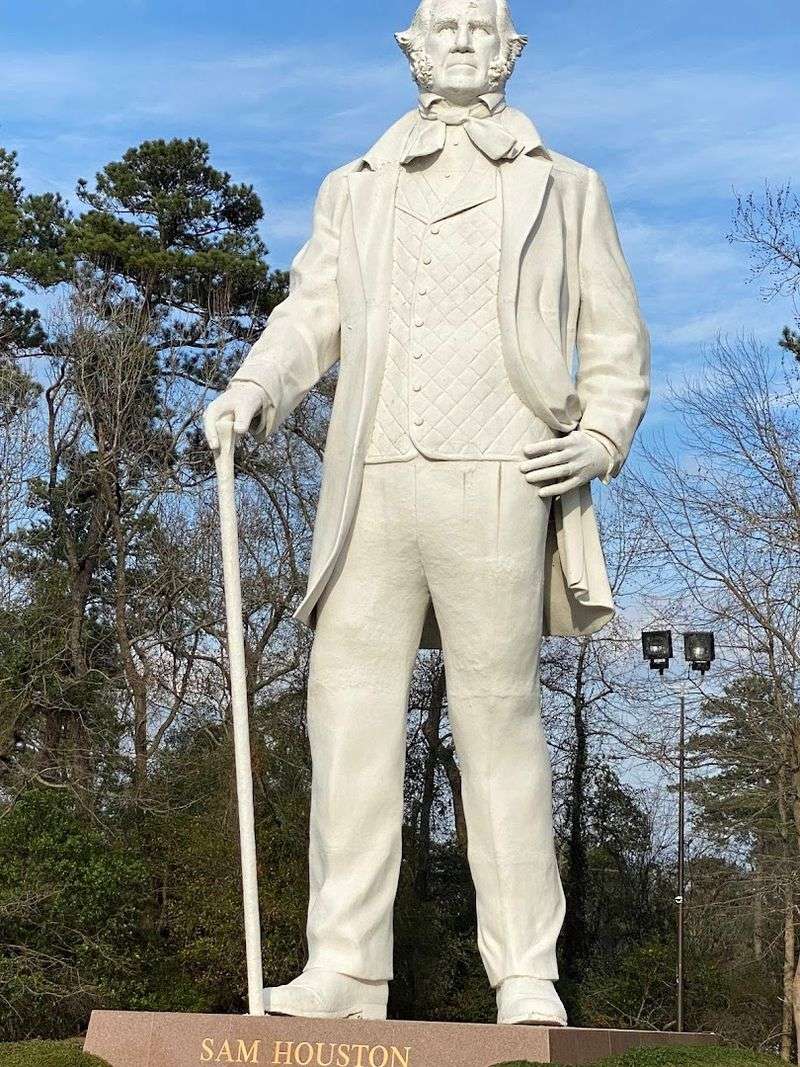
Towering over Interstate 45 at a whopping 67 feet, the Sam Houston statue in Huntsville is the tallest statue of an American hero in the United States. It was completed in 1994 by sculptor David Adickes, the same artist responsible for several other giant presidential busts across the country.
Sam Houston was governor of both Tennessee and Texas, president of the Republic of Texas, and a U.S. senator, so the oversized tribute feels at least a little justified. The statue’s outstretched arm points toward the highway like he’s personally welcoming every driver who passes through.
The surrounding park includes a visitors center and a gift shop where you can buy miniature versions of the big man himself. It’s free to visit, easy to find from the highway, and genuinely hard to miss.
Spoiler: you will see it from miles away.
The World’s Largest Fire Hydrant (Beaumont)
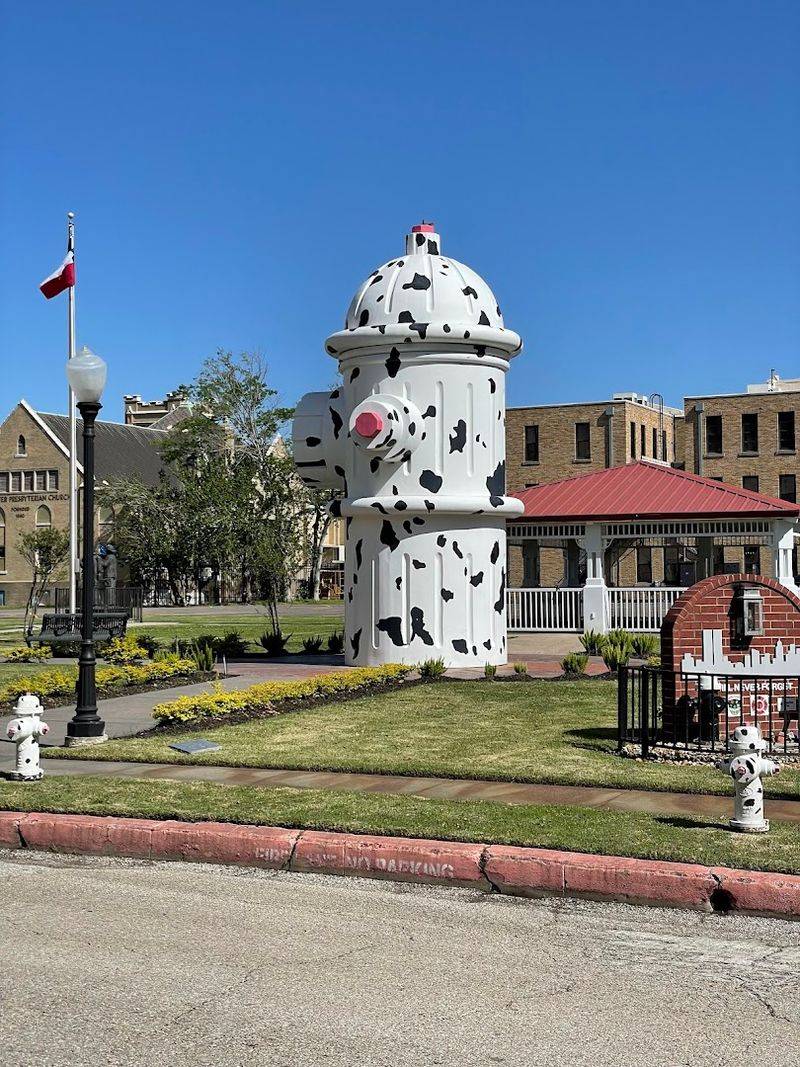
Outside the Fire Museum of Texas in Beaumont stands a fire hydrant so large it could theoretically put out a dragon. Measuring 24 feet tall and weighing over 2,000 pounds, this crimson giant was gifted to the city by Disney in 1999 to celebrate the release of the animated film 101 Dalmatians.
The hydrant is painted with spots to resemble a Dalmatian, which is either charming or deeply confusing depending on your perspective. Either way, it holds the Guinness World Record for the world’s largest fire hydrant, which is a sentence I genuinely love writing.
The Fire Museum itself is worth a stop too, with vintage fire trucks and interactive exhibits that kids absolutely go wild over. Admission to the museum is affordable, and snapping a photo next to the hydrant is completely free.
Bring your dog for the full effect.
The Toilet Seat Art Museum (The Colony)
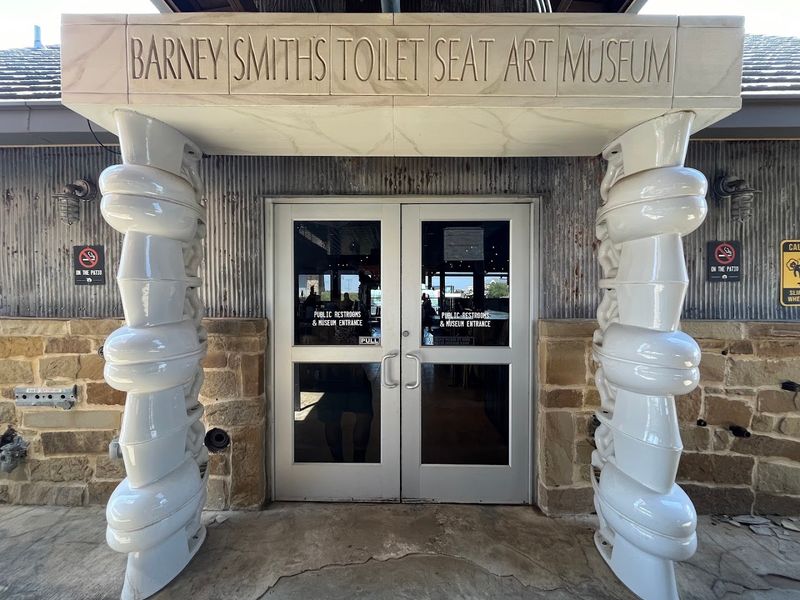
Retired plumber Barney Smith spent over 50 years transforming ordinary toilet seats into elaborate works of art, and the result is exactly as spectacular as it sounds. His collection eventually grew to more than 1,300 uniquely decorated pieces, each one a tiny window into a different story, era, or inside joke.
Seats feature everything from moon-landing memorabilia to portraits of celebrities to tiny dioramas of Texas landscapes. Some are funny, some are oddly moving, and a few are genuinely baffling in the best possible way.
The collection moved from its original San Antonio garage location to The Colony, where many pieces remain on display. Barney passed away in 2020, but his legacy lives on in the most wonderfully offbeat way imaginable.
This is the kind of place you tell every single person about afterward, whether they want to hear it or not.
Munster Mansion (Waxahachie)
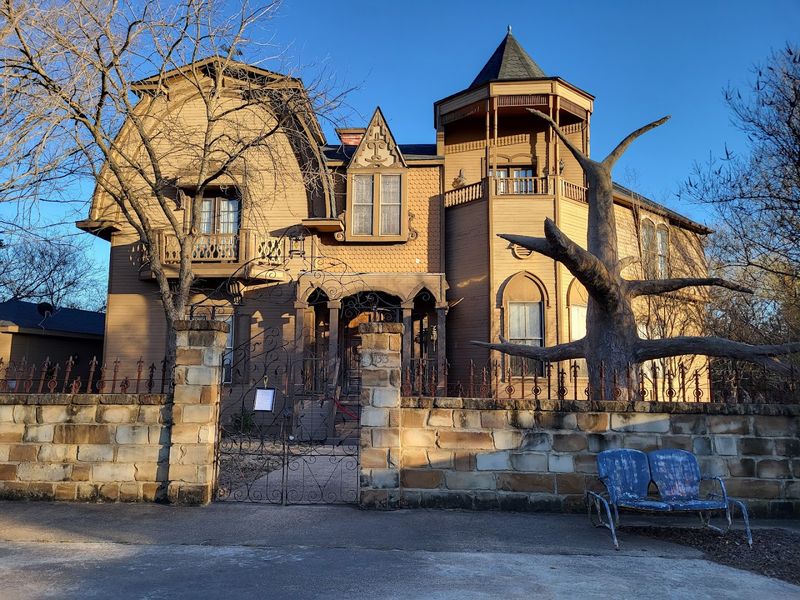
Charles and Sandra McKee spent years and a truly staggering amount of money building a faithful full-scale recreation of the Munster family home from the 1960s TV show, right in their Waxahachie backyard. The exterior alone took years to complete and is shockingly accurate down to the gargoyles and gothic trim.
The inside is equally jaw-dropping, packed with replica props, original memorabilia, and furniture designed to match the show’s iconic sets. Fans of the series will feel like they’ve walked straight through the television screen, which is either a dream or a mild existential crisis.
Tours are available by appointment, and the owners are genuinely passionate about sharing the project with visitors. Tickets are affordable, and the experience is unlike anything else in Texas.
Fair warning: you may leave wanting to repaint your own house in gothic Victorian black.
Giant Squirrel at Berdoll Pecan Farm (Cedar Creek)
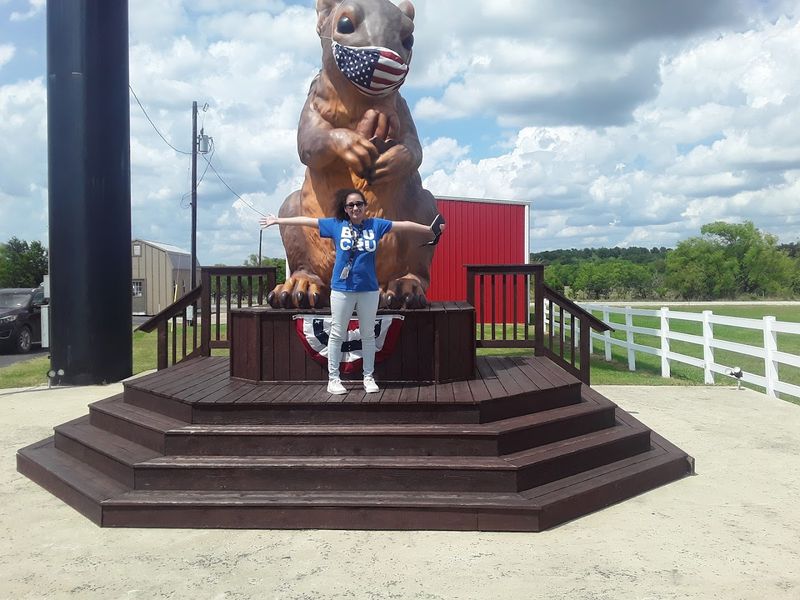
Meet Pearl, the oversized squirrel queen of Cedar Creek, Texas, standing proudly outside Berdoll Pecan Farm with a pecan the size of a small child tucked under her arm. She has become a beloved roadside celebrity for anyone driving between Austin and Bastrop along Highway 71.
The farm itself is a genuine treat, selling fresh pecans, pecan candies, pecan pies, and basically every pecan-based product your heart could desire. I stopped here on a road trip and walked away with two bags of pralines and absolutely zero regrets.
Pearl is free to visit and photograph anytime during farm hours, and the staff is incredibly friendly about people wandering around for photos. The farm store is open daily.
Even if pecans aren’t your thing, stopping to pose with a giant squirrel is simply the right thing to do.
Cathedral of Junk (Austin)
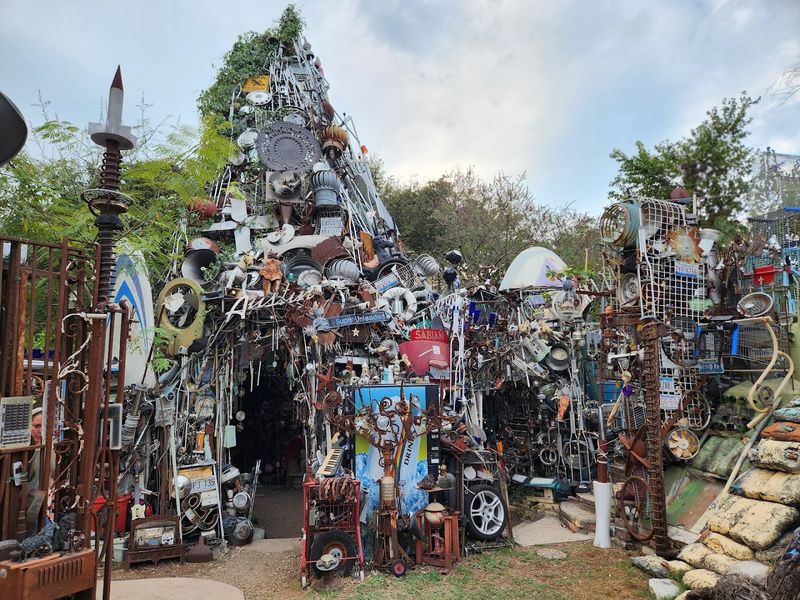
Vince Hannemann started building his Cathedral of Junk in his South Austin backyard in 1988, and the project has never really stopped. The structure now rises over 33 feet high and contains more than 60 tons of discarded materials, including bicycles, televisions, car parts, and just about everything else you can imagine.
Walking through it feels like exploring a fever dream designed by a very creative raccoon. Tunnels, towers, and open chambers are connected by thousands of wired-together objects that creak and shimmer in the breeze.
Visits are by appointment only, so contact Vince in advance through his website or social media. There’s a small suggested donation.
Austin is famous for keeping things weird, and the Cathedral of Junk might be the city’s single greatest contribution to that reputation. Absolutely not to be missed.
Marfa Lights Viewing Area (Marfa)
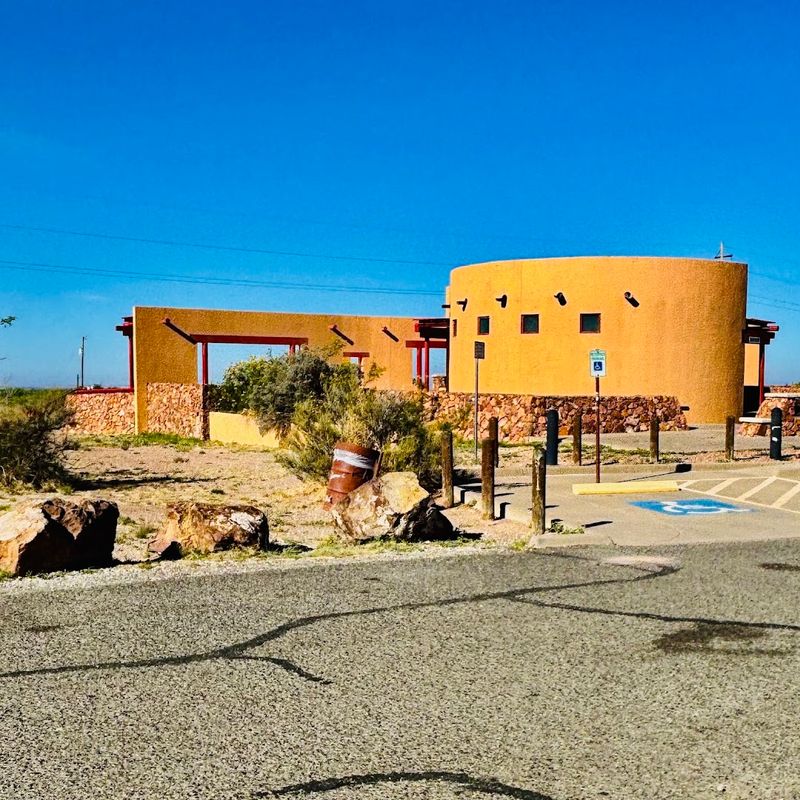
For over a century, people have been reporting mysterious glowing lights dancing on the horizon near Marfa, and nobody has definitively explained them. The Marfa Lights have been documented since 1883, and they still show up several times a year to baffle scientists, thrill tourists, and fuel endless campfire arguments.
The official Marfa Lights Viewing Area sits about nine miles east of town on Highway 90, with a paved pullout, informational signs, and a clear view toward the Chinati Mountains where the lights tend to appear. Some researchers attribute the phenomenon to atmospheric refraction of car headlights, while others prefer the alien explanation.
Both camps are fun to argue with.
The area is open day and night, admission is free, and the night sky out here is so spectacular that even a lights-free evening is worth the trip. Go on a clear, moonless night for the best chance of seeing something unexplainable.
Futuro House (Royse City)
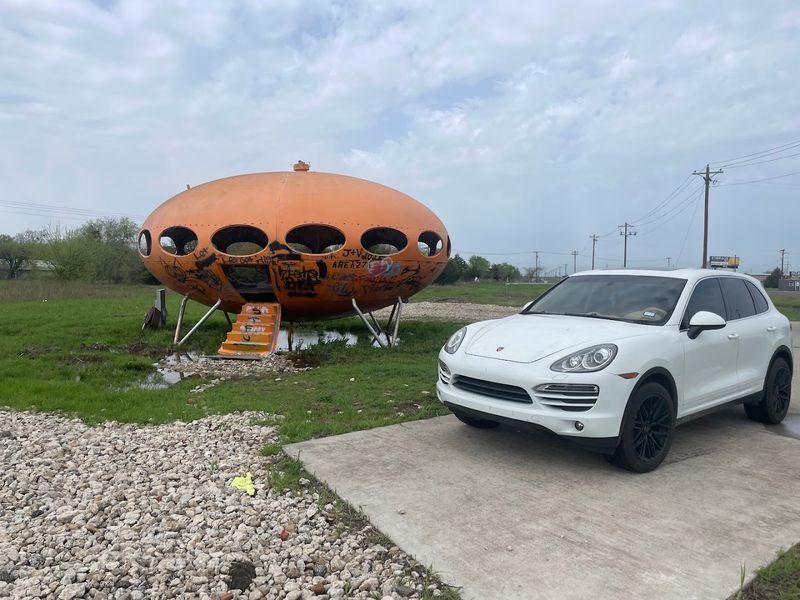
Designed by Finnish architect Matti Suuronen in 1968, the Futuro House was meant to be the ski cabin of the future, a mass-produced flying saucer you could plop on any hillside. Only about 100 were ever built worldwide, and the one near Royse City is among the rare survivors still standing in the United States.
Its oval white fiberglass body sits on splayed legs like a spacecraft that changed its mind halfway through landing. The interior was designed with molded plastic furniture and a hatch door that opens like an airlock, because why not commit fully to the space-age aesthetic.
The Royse City Futuro is on private property, so it’s best admired from the road rather than approached directly. Still, catching a glimpse of this architectural oddity from your car window is a genuinely surreal experience.
It’s proof that the future was much weirder than we ended up with.
Jacob’s Well (Wimberley)
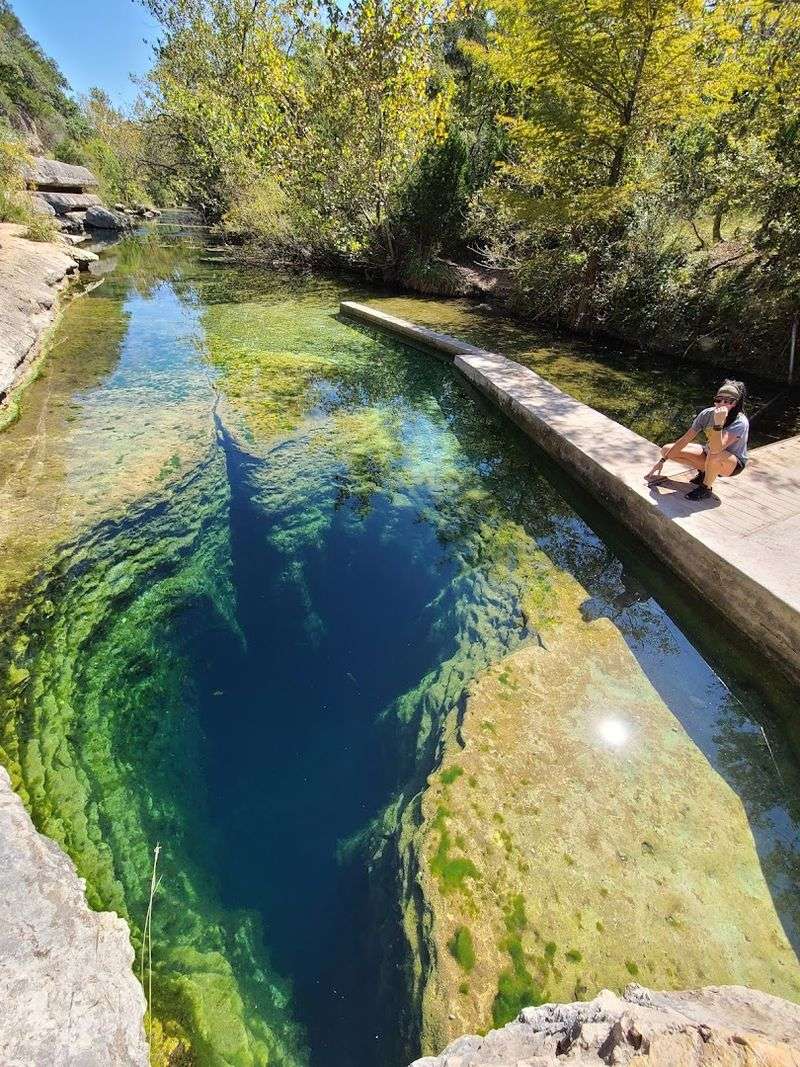
Jacob’s Well is a natural artesian spring that punches straight down into the Edwards Aquifer through a vertical limestone shaft, creating one of the most strikingly beautiful swimming holes in all of Texas. The water is an almost unreal shade of turquoise blue, and the temperature stays around 68 degrees year-round.
The main shaft drops about 30 feet before branching into a series of underwater caves that extend much deeper, making it a popular but genuinely challenging dive site. For most visitors, though, jumping into that crystalline water on a hot August afternoon is adventure enough.
Jacob’s Well Natural Area is managed by Hays County and requires advance reservations during peak summer months, which fill up fast. Entry fees are modest.
The surrounding park has picnic areas and hiking trails through beautiful Hill Country terrain. Arrive early, wear sunscreen, and prepare to be absolutely gobsmacked by the color of that water.
Giant Teapot (Navasota)
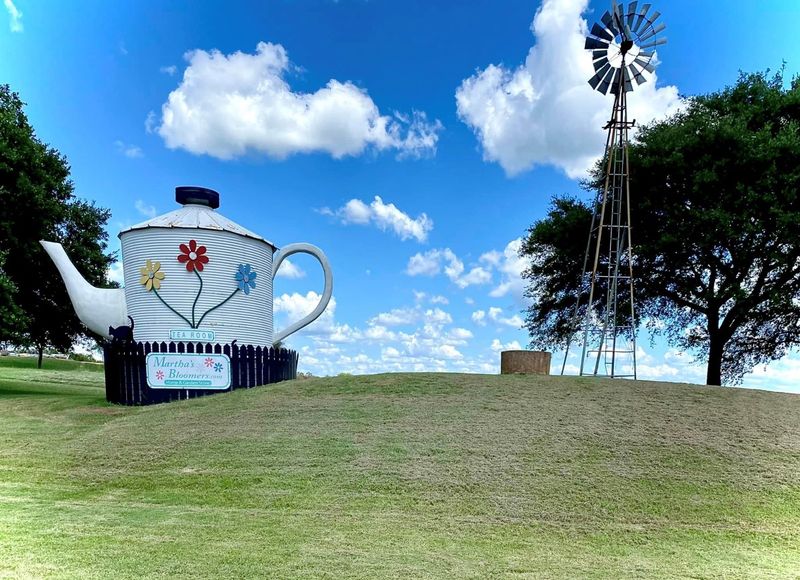
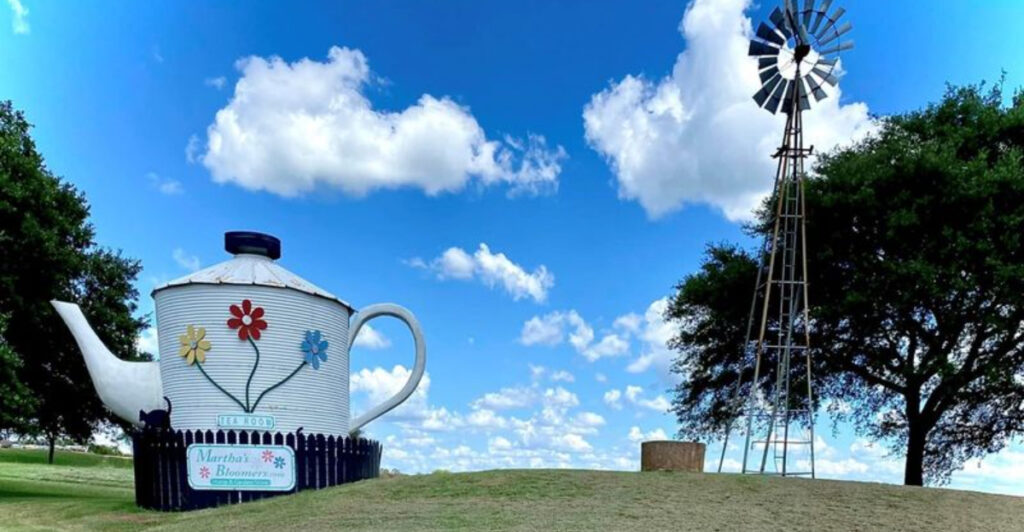
Navasota’s Giant Teapot is the kind of roadside find that makes you pull over, tilt your head, and say “well, I was not expecting that” out loud to yourself. Sitting cheerfully beside the road, this oversized ceramic-style teapot is a quirky tribute to the town’s history and an irresistible photo stop.
Texas has a long tradition of giant roadside objects, and the teapot fits right into that proud legacy. It’s not the flashiest attraction on this list, but there’s something genuinely charming about a small Texas town committing to a giant teapot as its landmark.
The teapot is free to visit and easy to spot from the road. Navasota itself is a pleasant little town with antique shops and local restaurants worth exploring while you’re in the area.
Consider it a delightful bonus stop on any Houston-to-Austin road trip through the Brazos Valley backroads.
World’s Largest Pecan (Seguin)
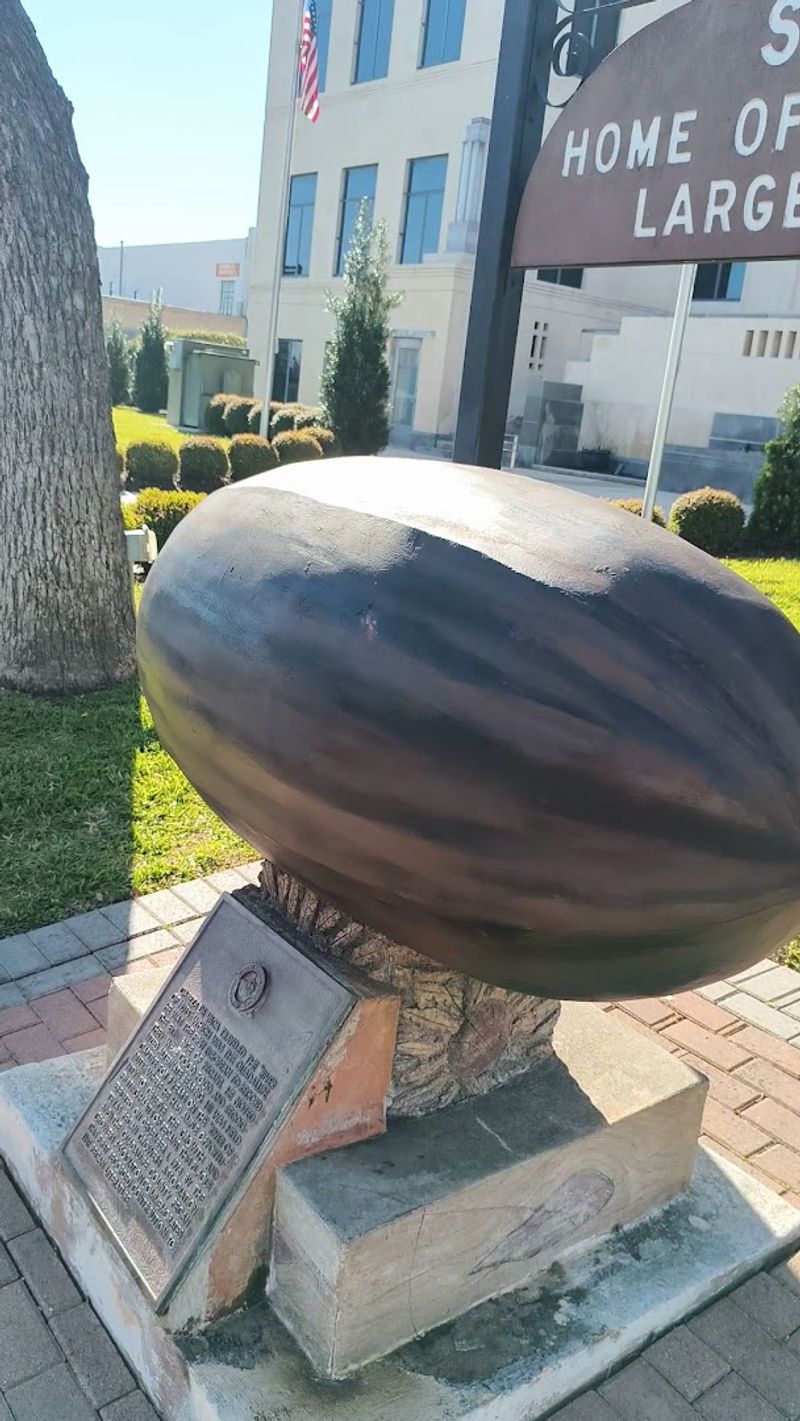
Seguin, Texas, takes its pecan heritage extremely seriously, and the World’s Largest Pecan sitting in the center of town is the delicious proof. The giant nut measures over five feet long and weighs around 1,000 pounds, which is both impressive and slightly unsettling when you’re standing next to it.
Seguin was founded in 1838 and sits in one of Texas’s prime pecan-growing regions, so the tribute makes total sense. The sculpture has been a local icon for decades and was even updated to a shinier, more detailed version to keep up with its growing fame.
The pecan is located near the Guadalupe County Courthouse in downtown Seguin, making it easy to combine with a stroll through the historic town square. Admission is free, parking is easy, and the photo opportunity is genuinely nutty.
Bring your best squirrel impression for the picture.
Paris Eiffel Tower with a Cowboy Hat (Paris, Texas)
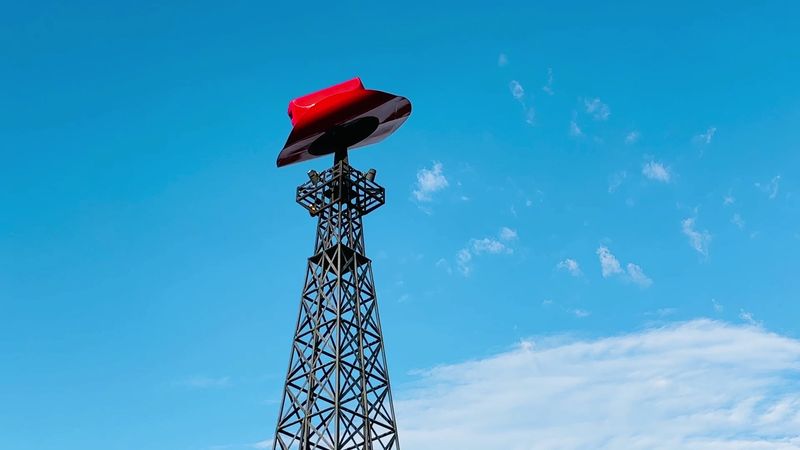
Paris, Texas, has its own Eiffel Tower, and it wears a cowboy hat, because of course it does. The 65-foot replica was built in 1993, and locals added the bright red cowboy hat in 1998 after Paris, Tennessee, built a taller version and bragged about it.
Texas was not having that.
The hat-wearing tower sits in a small park and has become one of the most photographed oddities in the entire state. It’s the perfect symbol of Texas’s competitive spirit and its ability to make anything funnier with the addition of Western wear.
The tower is free to visit, and the park around it is pleasant for a picnic. Paris, Texas, also has a full downtown worth exploring, with local shops and a charming small-town atmosphere.
The Eiffel Tower is open anytime, but golden-hour photos with that hat glowing in the sunset are genuinely spectacular.
The Big Texan Steak Ranch (Amarillo)
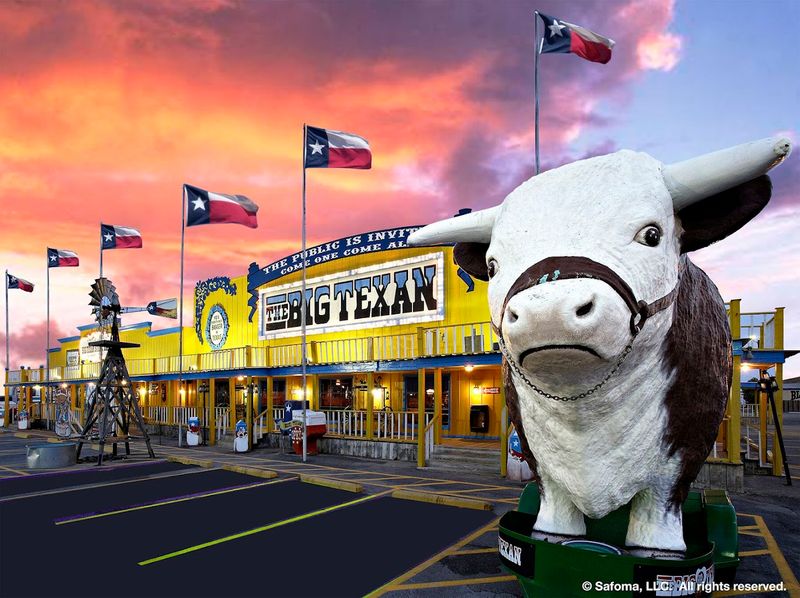
The Big Texan Steak Ranch has been daring hungry visitors to eat a 72-ounce steak since 1960, and the challenge is exactly as brutal as it sounds. Finish the steak along with a shrimp cocktail, baked potato, salad, and roll in under an hour, and the whole meal is free.
Fail, and you’re out around $72 and your dignity.
The restaurant is an Amarillo institution, complete with a giant cowboy sign, a longhorn out front, and a dining room that feels like the inside of a Western movie set. Thousands of people attempt the challenge every year, and roughly one in five actually completes it.
Even if you have zero intention of eating your body weight in beef, the Big Texan is worth a visit for the atmosphere, the regular-sized steaks, and the entertainment of watching challengers battle their meals at the raised center table. It is chaotic, theatrical, and utterly Texan.
Share this story