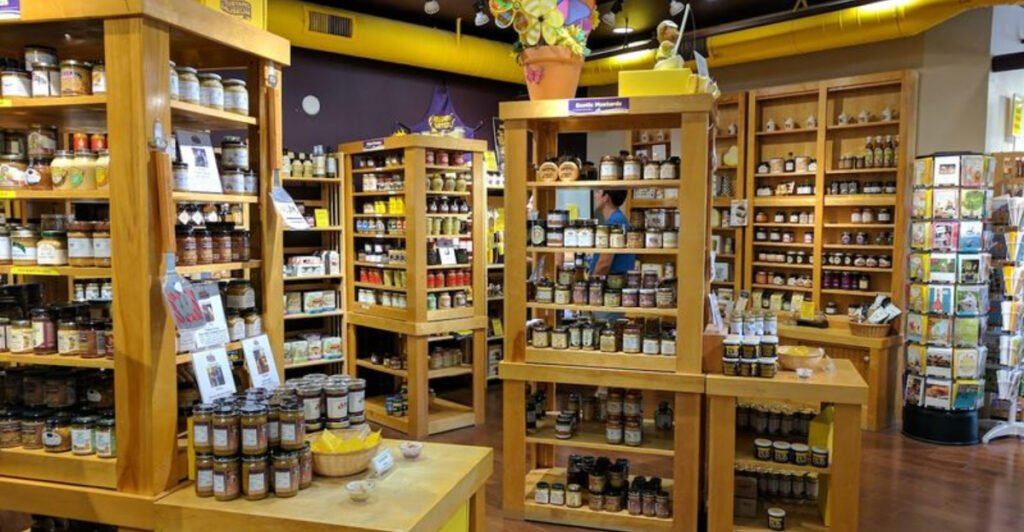
Most people pass through Middleton, Wisconsin without expecting to stumble onto something genuinely worth talking about. But tucked along Hubbard Avenue sits a place that has turned one of the world’s most overlooked condiments into a full-blown cultural institution.
Th9is museum holds more than 6,000 mustards from all 50 states and over 70 countries, displayed in floor-to-ceiling glass cases that make the whole setup feel almost unbelievable. Free to enter, packed with history, and complete with a tasting bar offering over 100 varieties to sample, this quirky Wisconsin landmark has earned its reputation as one of the most unexpectedly entertaining stops in the entire Midwest.
Whether mustard is your thing or not, this place has a way of winning people over.
More Than 6,000 Jars and Counting
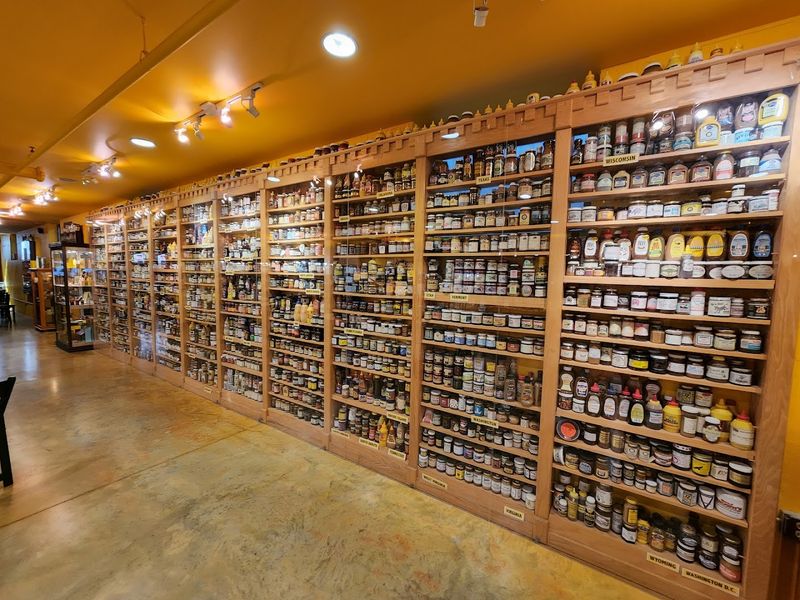
The sheer scale of the collection is the first thing that stops most people in their tracks. Over 6,000 mustards from all 50 U.S. states and more than 70 countries are housed here, organized and displayed in large glass cases that line the walls of the museum floor below the main shop.
Each jar tells its own small story. There are classic American yellow mustards sitting alongside French Dijon varieties, Japanese hot mustards, German stone-ground options, and flavors from places most people would not immediately connect to mustard at all.
The range of labels, packaging styles, and jar shapes alone makes browsing the collection genuinely interesting.
The museum team keeps the collection current, which means new additions arrive regularly as mustard producers from around the world send in their products. It is a living collection in the truest sense, and that ongoing growth is part of what keeps the display from ever feeling static or finished.
The Tasting Bar That Changes Minds
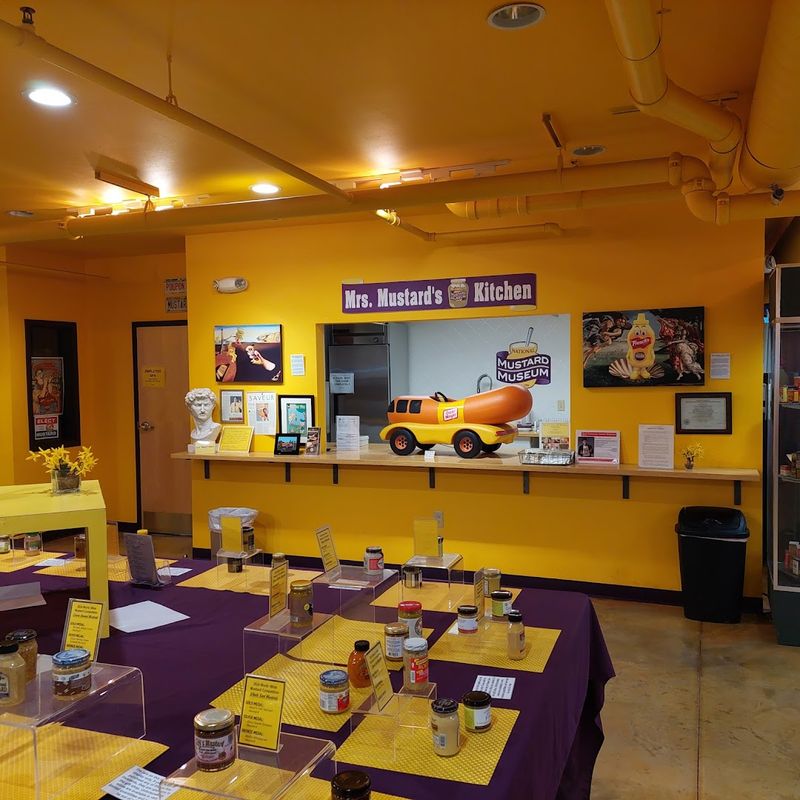
For a lot of people who walk through the door claiming they do not like mustard, the tasting bar upstairs is where that position tends to quietly fall apart. The bar offers over 100 different mustards available for sampling at any given time, with staff on hand to guide choices and explain what makes each variety distinct.
The sampling process is not self-serve. A staff member scoops a small portion onto a disposable spoon for each mustard requested, which keeps things clean and also opens up a natural conversation about what you are tasting.
That interaction alone adds a layer of fun to the whole experience.
Flavors range from traditional to genuinely unexpected. Honey raspberry, chipotle, chocolate, horseradish, and Dijon-style options all share shelf space, and the contrast between them is striking enough to hold attention for a solid stretch of time.
Even confirmed mustard skeptics tend to find at least one variety that surprises them.
Free Admission With a Donation Option
One of the most refreshing things about this museum is that it costs nothing to enter. Admission is completely free, which makes it an easy yes for families, solo travelers, or anyone passing through the Madison area with an hour to spare and no interest in spending a lot of money on an unplanned stop.
A donation box sits near the entrance for those who want to contribute, and the museum genuinely appreciates any support since maintaining a collection of this size requires ongoing effort. Buying something from the gift shop is another way people tend to show their appreciation without it feeling like an obligation.
Free parking is also available on site, so the only real investment is time. For a place that can easily fill 60 to 90 minutes depending on how long you linger at the tasting bar or read through the exhibit placards, that math is hard to argue with.
It stands as one of the better no-cost attractions in Wisconsin.
The Museum Floor Below
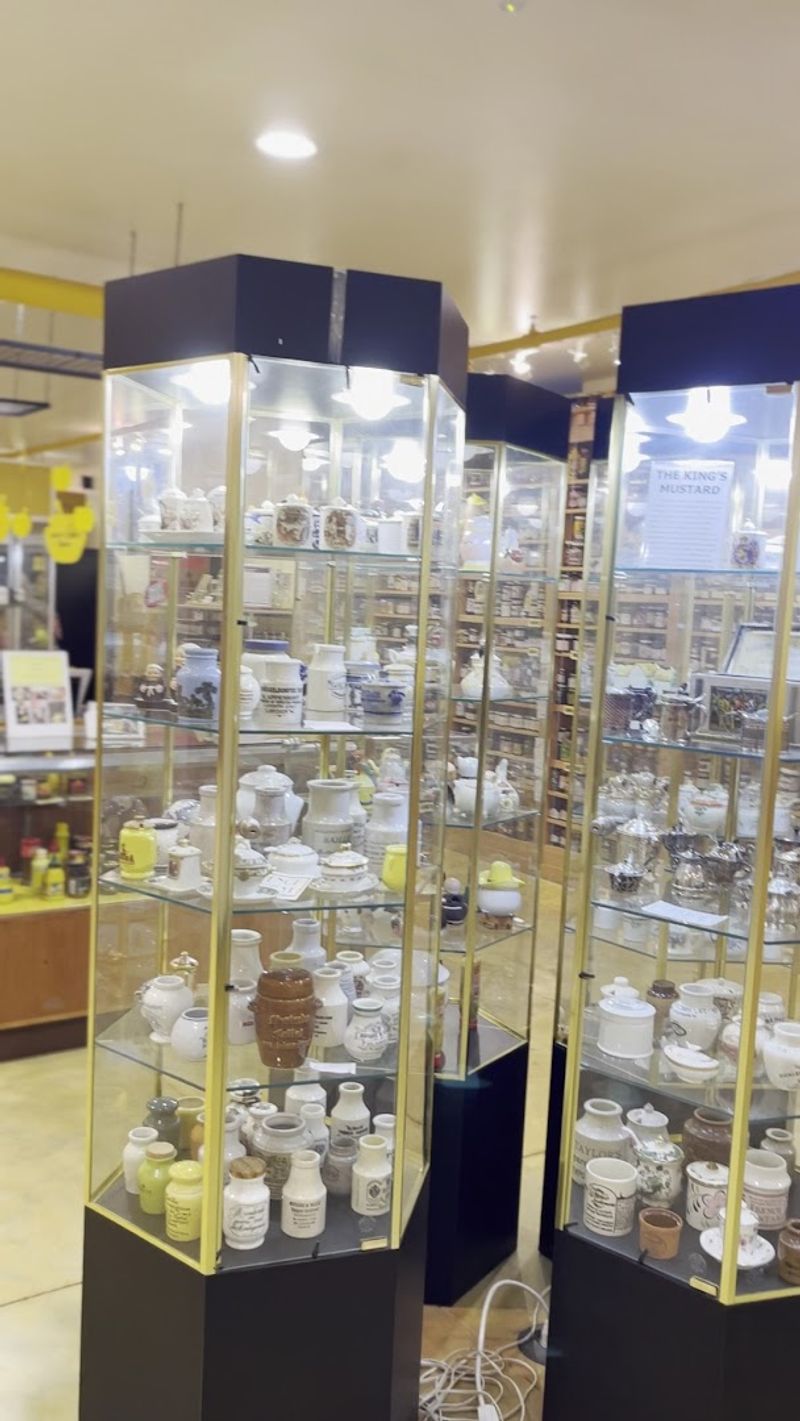
The main museum exhibit occupies the lower level of the building, accessible by stairs or elevator. Down here, the focus shifts from shopping and tasting to actual history, with well-lit display cases presenting the story of mustard from ancient times through its modern role in global cuisine and culture.
Informational placards cover topics that most people would never think to look up on their own. There are exhibits on mustard seed varieties, the chemistry behind how mustard gets its heat, historical uses in medicine and food preservation, and the evolution of mustard packaging over the decades.
A small theater plays a short film walking through the production and history of mustard in a format that is easy to follow and genuinely informative.
Quirky memorabilia and mustard-themed collectibles fill the gaps between the more educational displays, giving the whole floor a personality that keeps things from feeling too textbook-heavy. The balance between fun and information is handled well throughout.
Mustards Organized by Country and State
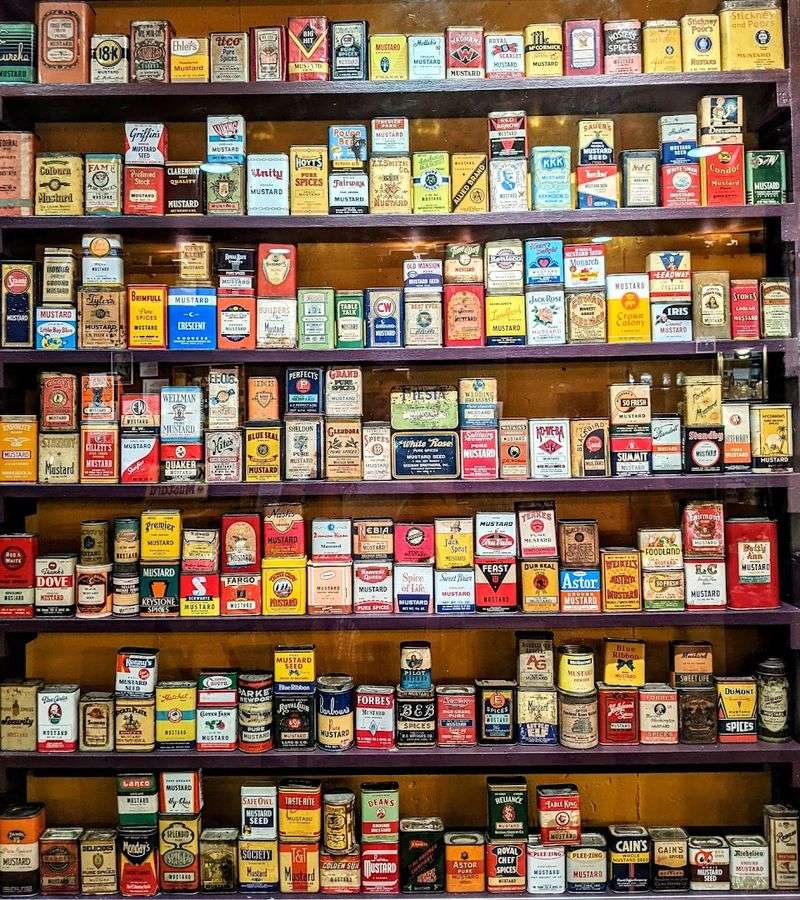
Navigating a collection of over 6,000 mustards could easily become overwhelming, but the museum and gift shop handle the organizational challenge in a way that actually makes browsing enjoyable. Mustards in the shop are categorized by country, with each nation getting its own dedicated shelf space, making it easy to zero in on a specific region or explore broadly.
American mustards are sorted by state, which adds a fun game-like quality to the shopping experience. Trying to find your home state on the shelf or picking out a mustard from every state you have visited turns a simple condiment purchase into something more personal and memorable.
The structure also helps with gift-buying. Picking up a mustard from a country someone has a connection to, or from a state tied to a shared memory, turns a jar of condiment into something with a bit more meaning behind it.
The gift shop staff are well-versed in the inventory and happy to point customers toward specific regions or flavor profiles.
A History Older Than Most People Realize
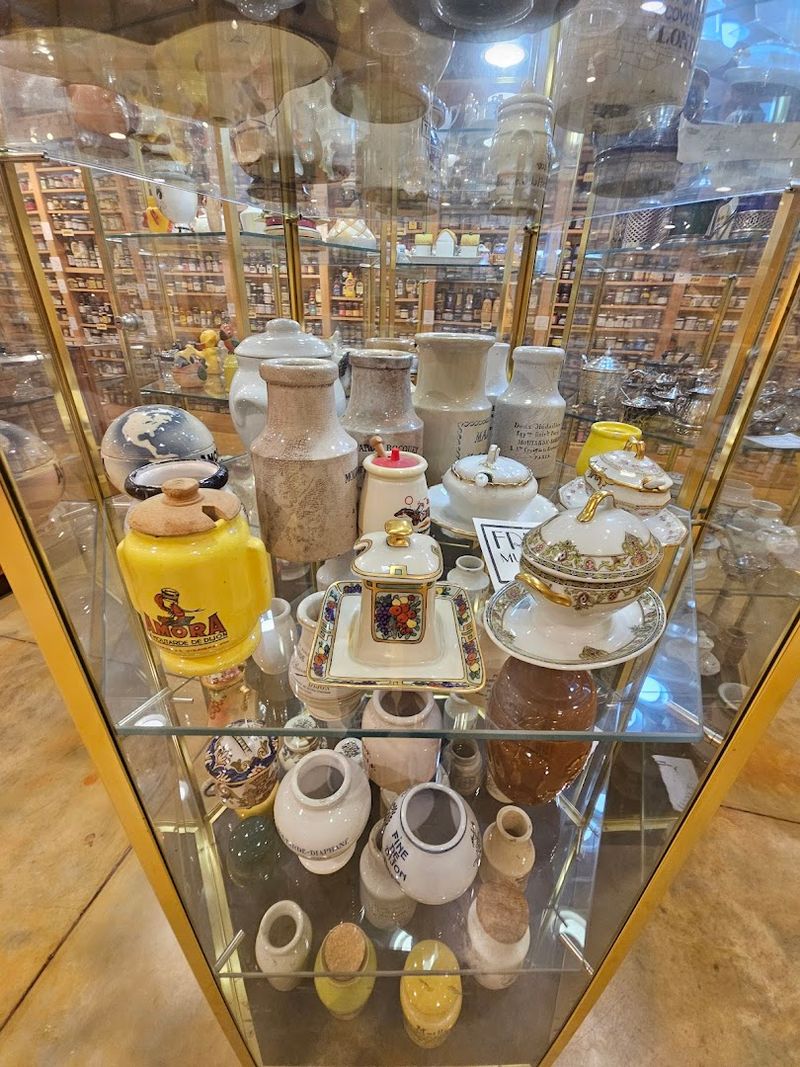
Mustard has been around far longer than most condiment conversations give it credit for. The museum traces its history back thousands of years, with evidence of mustard use in ancient civilizations across Asia and Europe.
Roman soldiers are believed to have carried mustard seeds on their campaigns, spreading the plant across the continent as they traveled.
One of the more unexpected historical footnotes covered in the exhibit involves mustard baths, which were once a popular wellness treatment believed to have restorative properties. The museum presents this and other unusual chapters of mustard history with enough detail to be genuinely educational without becoming dry.
The French mustard tradition gets particular attention, including a Dijon-style variety whose original recipe dates back to 1760 and is still sold today in a ceramic jar sealed with wax. That kind of continuity across centuries is a reminder that mustard has been a serious culinary staple for a very long time, not just a hot dog topping.
The Gift Shop That Keeps on Giving
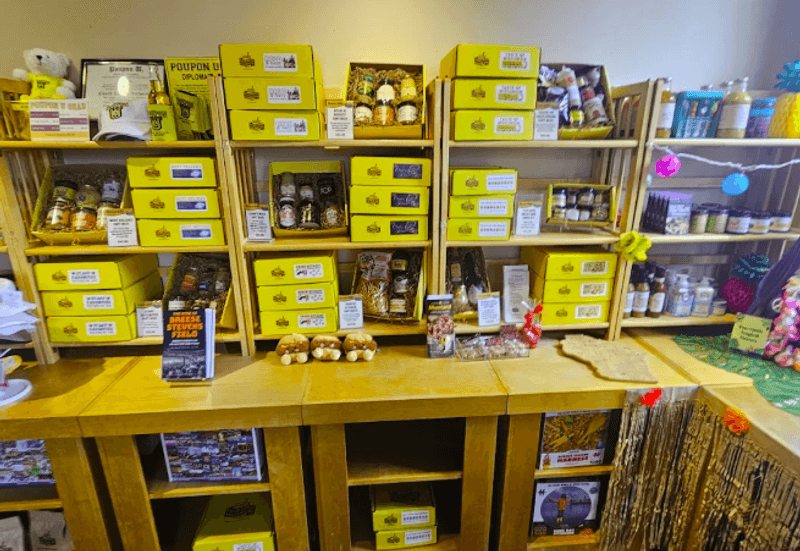
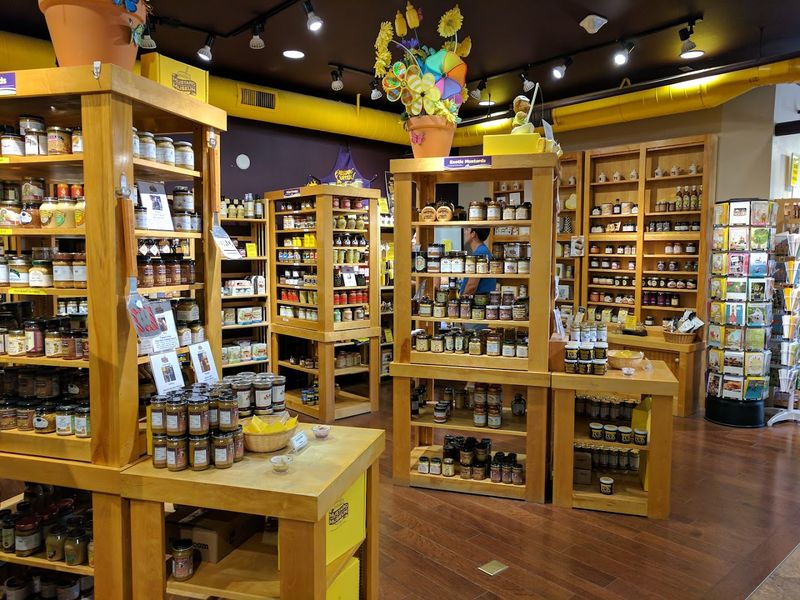
The gift shop on the main floor of the museum is a destination in itself. Thousands of mustards are available for purchase, covering a range of flavors, heat levels, and origins that could keep a serious condiment fan occupied for the better part of an afternoon.
The selection is one of the most comprehensive anywhere in the country.
Beyond mustard jars, the shop carries a solid range of branded merchandise including t-shirts, hats, novelty items, and mustard-themed kitchen accessories. Prices are described as reasonable for a museum gift shop, which is a welcome contrast to the marked-up merchandise common at most tourist attractions.
The museum also runs a fully stocked online store, which means the shopping does not have to stop when the visit ends. That is particularly useful for anyone who wants to send a quirky gift to someone who could not make the trip in person.
A jar of French mustard in a wax-sealed ceramic crock makes for a genuinely memorable present.
What Makes This Place So Easy to Love
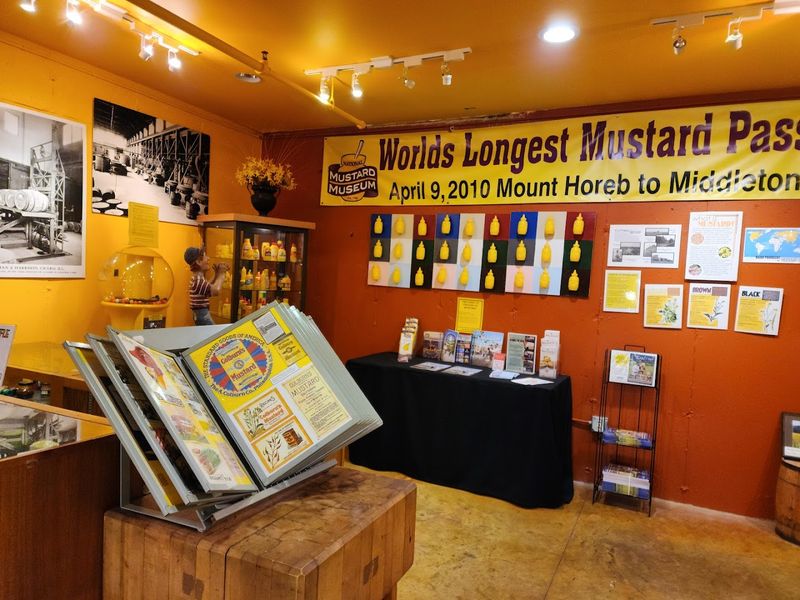
There is a specific kind of place that works because it takes itself just seriously enough. The National Mustard Museum falls squarely into that category.
The exhibits are genuinely informative, the collection is legitimately impressive, and the humor woven throughout, from signage to the overall concept, keeps the whole experience feeling light and enjoyable rather than academic.
The staff contribute a lot to that atmosphere. They are consistently described as knowledgeable, patient, and enthusiastic without being overbearing.
At the tasting bar especially, having someone explain the backstory of a particular mustard or suggest a pairing idea turns what could be a simple sample into a small moment of connection.
The physical space itself is well-maintained, brightly lit, and easy to move through. A fountain outside adds a pleasant touch to the approach, and the surrounding downtown Middleton area offers enough additional shops and character to make an afternoon out of the whole visit.
It is the kind of stop that earns a spot on the highlight reel of a road trip.
How Long to Plan For a Visit
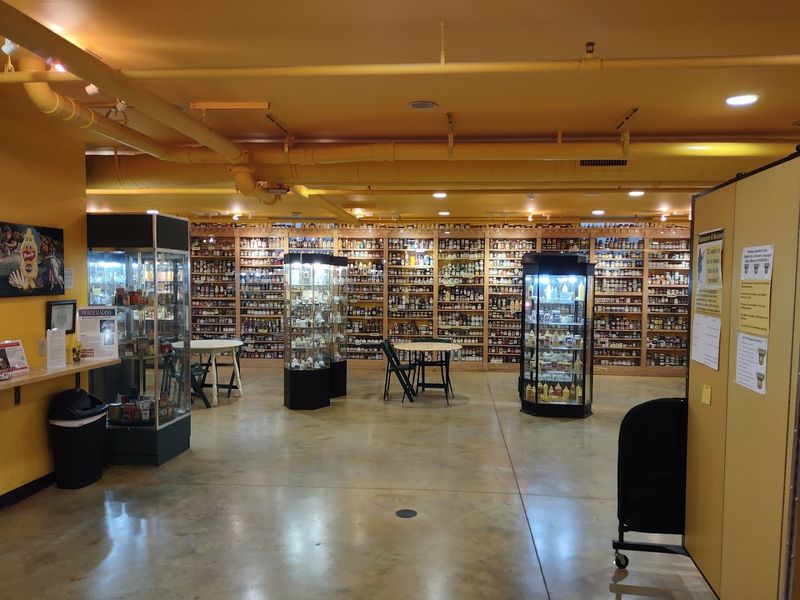
Most people find that 60 to 90 minutes covers a thorough visit, especially if they take time to read through the exhibit placards downstairs and spend a good stretch at the tasting bar. That said, anyone who gets genuinely absorbed in the collection or wants to work through a wide range of samples at the tasting station could easily stretch the visit closer to two hours.
The museum is open seven days a week from 10 AM to 5 PM, which makes scheduling straightforward regardless of what day a trip to the Madison area falls on. There are no timed entry windows or reservation requirements, so dropping in spontaneously is completely viable.
Families with kids tend to find the visit moves a bit faster since the tasting bar and gift shop tend to hold younger attention spans better than the exhibit floor. Either way, the free admission and no-pressure atmosphere mean there is no reason to rush, and no financial stakes attached to how long anyone decides to stay.
Why This Stop Belongs on Any Wisconsin Road Trip
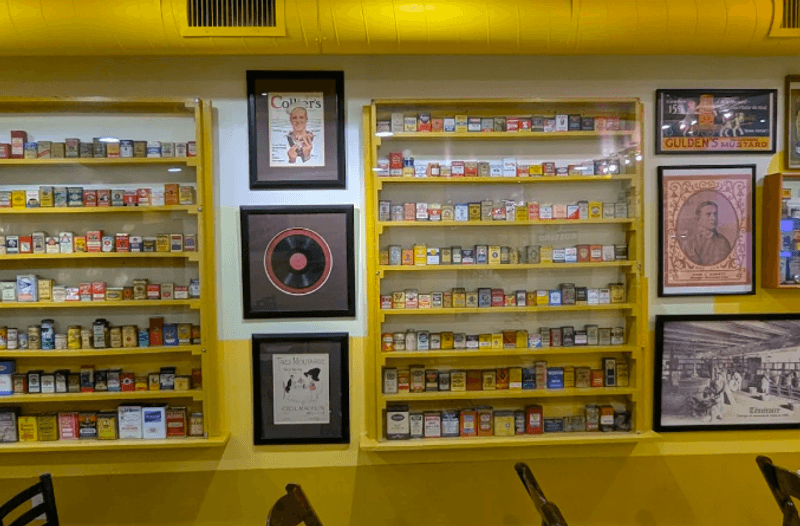
Wisconsin already has plenty of reasons to draw road trippers in, from the Dells to Door County to the countless lakes dotting the landscape. The National Mustard Museum adds something genuinely different to that list, a stop that is equal parts educational and entertaining, and one that almost nobody forgets once they have been.
Its location near Madison makes it a natural fit for anyone already planning a visit to the state capital, the University of Wisconsin campus, or a Badgers game at Camp Randall Stadium. Middleton sits close enough to fold into an existing itinerary without adding meaningful travel time.
The combination of free admission, a world-class collection, a hands-on tasting experience, and a gift shop worth browsing makes this one of the most complete low-cost stops anywhere in the state. It rewards curiosity, delivers on its quirky premise, and sends people home with something to talk about, which is exactly what the best road trip stops are supposed to do.
Where Exactly This Mustard Mecca Calls Home
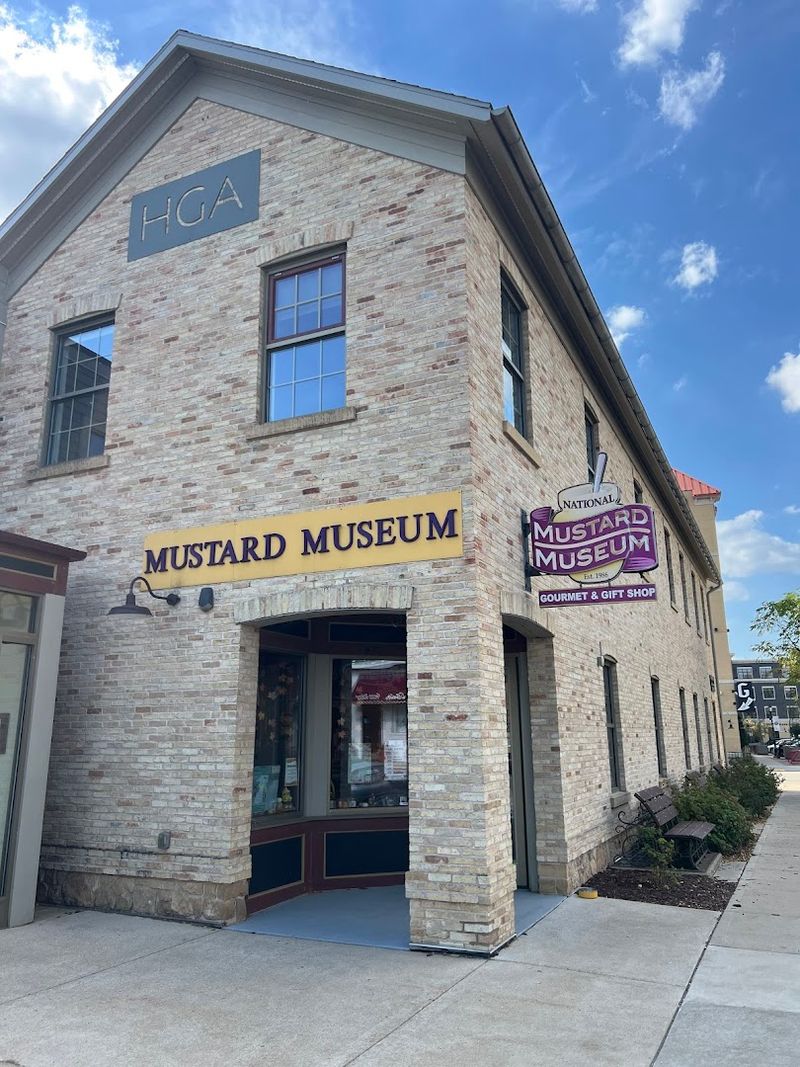
Right in the heart of Middleton, Wisconsin, at 7477 Hubbard Ave, Middleton, WI 53562, the National Mustard Museum occupies a spot that feels perfectly suited to its offbeat personality. The surrounding downtown area is charming, lined with boutique shops and local businesses that make the whole stretch worth a stroll.
The museum is open every day of the week from 10 AM to 5 PM, which means there is almost always a window to stop in without much planning. A free parking lot sits right outside, and a decorative fountain near the entrance gives the building a bit of extra character before you even walk through the door.
Middleton itself sits just west of Madison, making this an easy add-on for anyone visiting the state capital or attending a University of Wisconsin Badgers game. The location is central enough that it rarely feels out of the way, and the payoff is absolutely worth the detour.
Share this story