Montana has never been a state that chases food trends. Out here, the restaurants that matter most are the ones that have been feeding the same families for fifty, sixty, even eighty years.
A grandmother’s recipe for pie, a father’s secret burger seasoning, a son who grew up washing dishes and now runs the whole operation. These places are not just restaurants.
They are living proof that good food and stubborn loyalty to quality can outlast just about anything. Across small towns and city blocks from Bozeman to Butte, from Missoula to Miles City, Montana’s multigenerational family restaurants tell the story of the state better than any history book could.
Some of them look exactly the same as they did decades ago. Others have grown, changed hands within the family, or added a new generation’s touch to the menu.
What they all share is a deep, unshakeable connection to the communities that kept coming back, year after year. Here are ten of the best.
1. Paul’s Pancake Parlor, Missoula, Montana
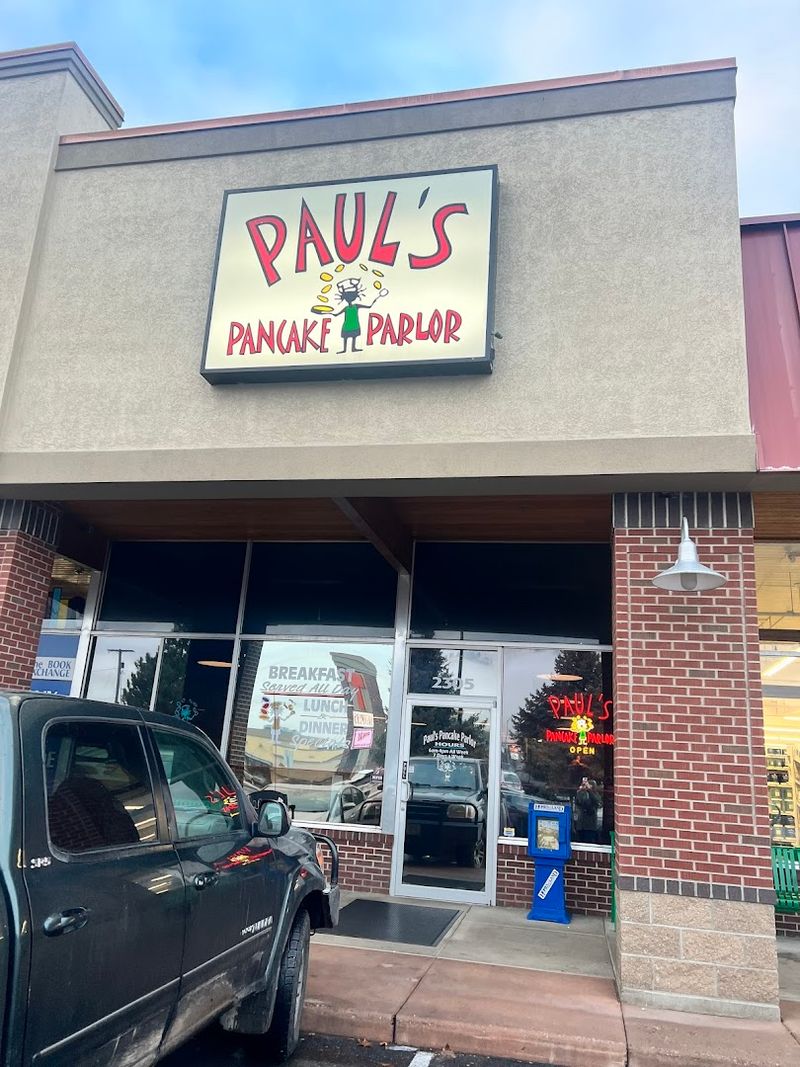
Since 1963, Paul’s Pancake Parlor has operated on a simple and effective philosophy: make the pancakes right, keep the portions generous, and do not overthink it.
That approach has worked for over six decades in Missoula, where the Parlor has built a reputation that stretches well beyond the university neighborhood it calls home. The pancakes are the main event, available in a range of styles that give regulars plenty of reasons to return without ever feeling like the menu is trying too hard.
The breakfast-counter setup is part of the experience. Seats fill quickly on weekend mornings, and the rhythm of the place feels consistent with how it must have run back in the Johnson administration.
Paul’s has survived because it understood something important early on: a neighborhood restaurant earns loyalty not through novelty but through reliability. Missoula residents who ate here as children now bring their own families, which is the most honest kind of five-star review a restaurant can receive.
The portions are large enough that skipping lunch becomes a reasonable and guilt-free life choice.
2. Richwine’s Burgerville, Polson, Montana
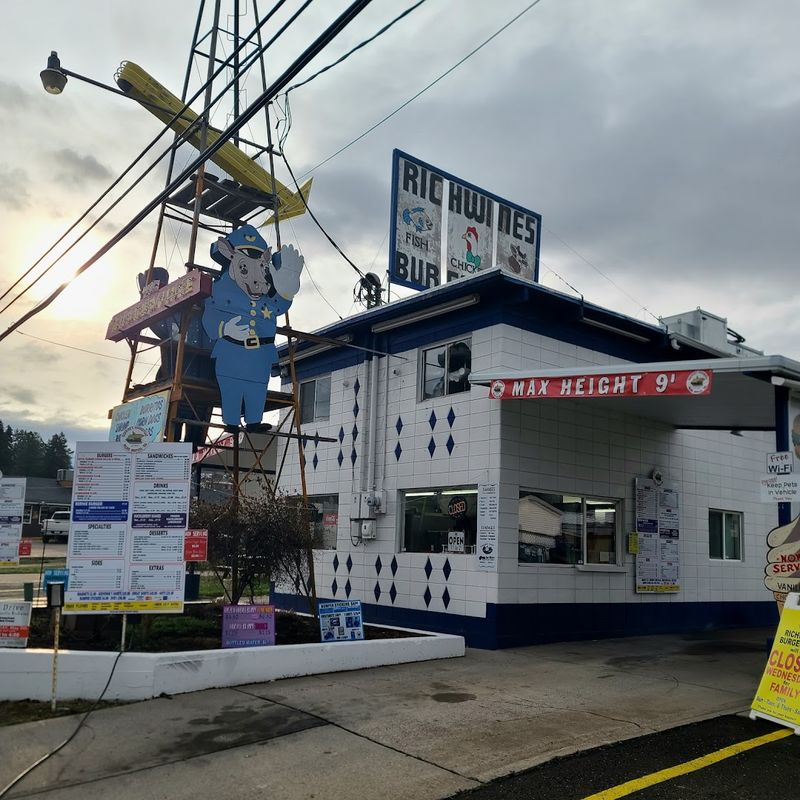
There is a particular kind of joy that only a seasonal drive-in can deliver, and Richwine’s Burgerville in Polson has been delivering it for decades.
Family-owned and fiercely local, this Flathead Lake area institution built its name on fresh-ground burgers, crispy fries, and thick shakes that require a strong straw and a little patience. The menu stays focused, which is exactly why it works so well.
Richwine’s operates seasonally, which means its return each summer carries real weight for the community. Regulars track its opening date the way some people track the first day of fishing season.
It is that kind of place.
The drive-in format encourages a relaxed, unhurried visit. Families pull in, order at the window, and eat outside with the Flathead Lake country as a backdrop that no restaurant decorator could ever match.
What keeps Richwine’s in the conversation year after year is not reinvention. It is the commitment to doing a small number of things correctly, every single time, without cutting corners or chasing trends that would confuse the regulars who have been coming since childhood.
3. Mark’s In & Out Beefburgers, Livingston, Montana
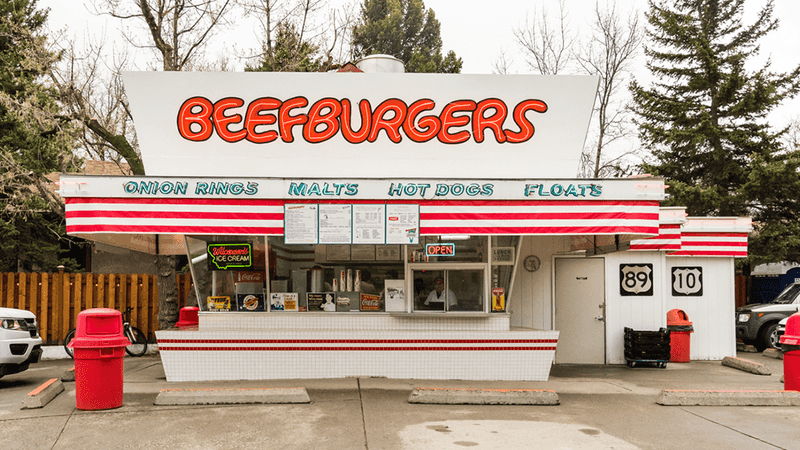
Nineteen fifty-four was a long time ago, but Mark’s In & Out Beefburgers in Livingston has not spent much time worrying about that.
The red-and-white drive-in look still feels wonderfully midcentury, and the menu has stayed close to the original playbook: beefburgers, fries, and thick shakes that do exactly what they promise. There is no seasonal avocado option here, and the regulars would not have it any other way.
Livingston sits right at the northern edge of Yellowstone country, which means Mark’s has spent seven decades feeding road-trippers, park visitors, and locals in equal measure. The location alone guarantees a steady stream of first-timers, but the food is what turns them into repeat customers.
The drive-in format fits the town’s easygoing pace. You order, you wait, you eat in the car or at a picnic table, and you leave feeling like you got a fair deal.
For a town with real Western character, Mark’s fits perfectly into the landscape. It is a place that earns its reputation not through marketing but through decades of showing up and getting the burger right every single time.
4. The Western Cafe, Bozeman, Montana
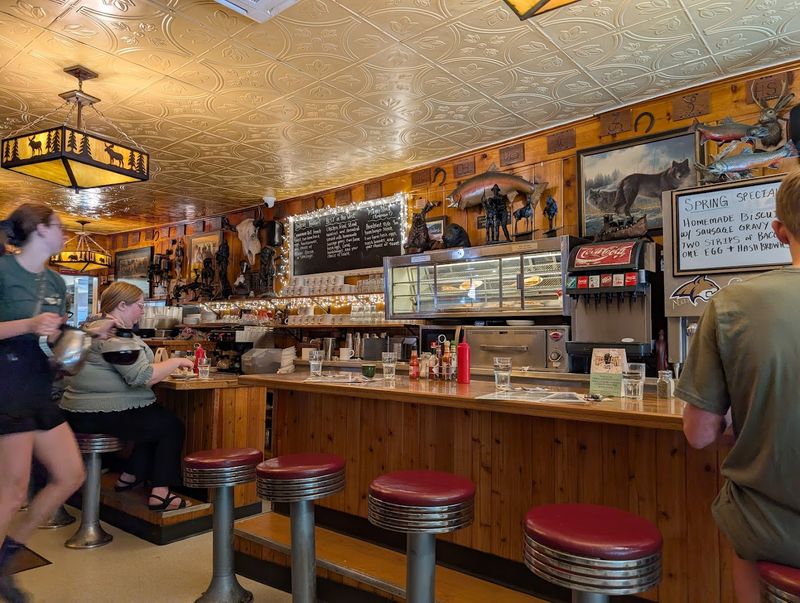
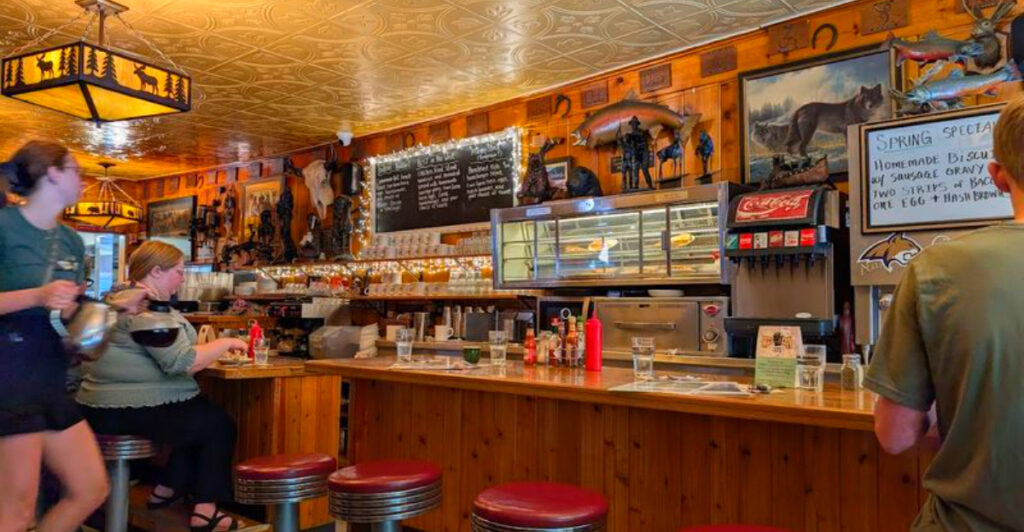
Old Bozeman did not disappear. It just moved into a booth at The Western Cafe and ordered the biscuits and gravy.
This downtown institution has been run by three generations of a Montana family, and it carries that history in every detail. The menu reads like a love letter to classic American diner cooking: chicken fried steak, homemade mashed potatoes, hot beef sandwiches, and breakfasts that take their job seriously.
Current owner Sue Sebena has kept the spirit of the place intact since 2008, maintaining the old-school atmosphere that regulars depend on. The dining room has a lived-in quality that no designer could replicate on purpose.
What makes The Western Cafe stand out is not just the food but the consistency. Locals have been bringing their kids here for decades, and now those kids are bringing their own children.
That cycle of return is the real measure of a restaurant’s worth.
First-time visitors often comment on how the place feels genuinely unchanged, which is exactly the point. In a city that has grown rapidly, The Western Cafe holds its ground without apology.
5. Freeway Tavern, Butte, Montana
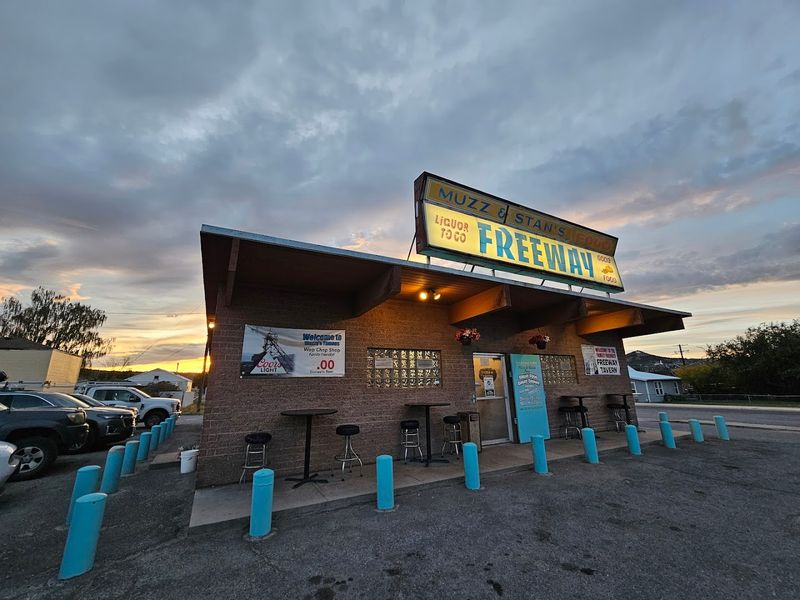
Butte has always done things its own way, and Freeway Tavern is one of the clearest examples of that independent local spirit still standing.
Open since the early 1960s, this Butte original is best known for the Wop Chop, a dish that has become so tied to the restaurant’s identity that ordering anything else feels almost like a betrayal of tradition. The working-class, no-frills character of the place is not a design choice.
It is just who Freeway Tavern has always been.
Butte’s food culture is genuinely unlike anywhere else in Montana, shaped by its mining history and the mix of immigrant communities that built the city. Freeway Tavern carries that history in its menu and its atmosphere without making a big production of it.
The regulars here are serious about their loyalty. Some of them have been coming for thirty or forty years, which means the staff often knows orders before they are placed.
For visitors curious about what Butte actually tastes like, Freeway Tavern is one of the most honest answers available. It does not perform authenticity.
It simply is authentic, which is a much harder thing to pull off.
6. Lydia’s Supper Club, Butte, Montana
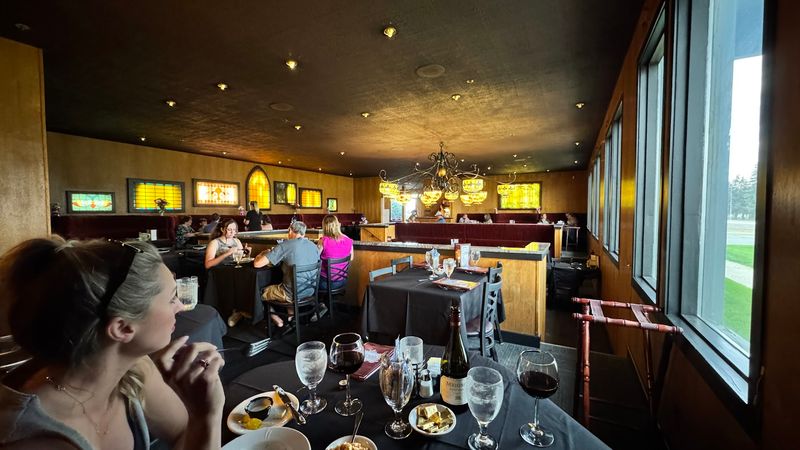
Lydia Micheletti opened her supper club in 1946, and the Micheletti family has been running it ever since, now into its third generation of ownership.
Lydia’s Supper Club is one of the few remaining examples of the Meaderville dining tradition that once defined Butte’s Italian-American community. Multi-course meals, old family recipes, and a dining room that feels connected to decades of local celebrations are the hallmarks of this remarkable place.
The menu leans into Italian-American comfort food with confidence. Recipes that Lydia herself developed have been preserved with care, which gives the food a continuity that most restaurants simply cannot offer.
When the spaghetti sauce tastes the same as it did in 1962, that is not an accident.
Supper clubs as a format have largely faded from the American dining landscape, which makes Lydia’s survival all the more meaningful. It represents a specific time and place in Montana history that could easily have been lost.
Three generations of the Micheletti family have made sure that did not happen. For anyone interested in where Butte’s food identity comes from, Lydia’s is one of the most important stops on that tour.
7. Pork Chop John’s, Butte, Montana
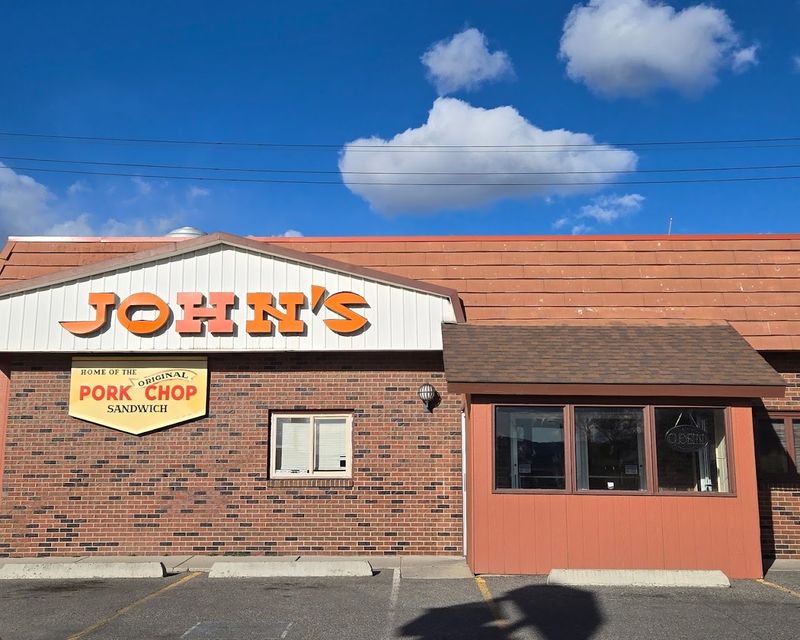
The pork chop sandwich has been part of Butte’s food identity since the 1920s, when it started as a street-cart item that workers grabbed on their way to and from the mines.
Pork Chop John’s turned that humble origin into a full restaurant when the Mercury Street location opened in 1932, and it has been drawing visitors ever since. The sandwich itself is straightforward: a breaded pork chop in a bun, crisp and salty, with the kind of no-fuss execution that makes simple food genuinely satisfying.
What is remarkable about Pork Chop John’s is how completely it has become woven into the city’s identity. Butte residents who move away often cite the pork chop sandwich as one of the things they miss most, which says a great deal about how food and place can become inseparable.
The Mercury Street location looks like it belongs to another era, and that is part of its appeal. There is no attempt to modernize the concept or rebrand it for a new audience.
The sandwich is the same as it has always been, and the people who love it are fiercely protective of that fact. Some traditions earn their permanence honestly.
8. Glen’s Mountain View Cafe, Florence, Montana
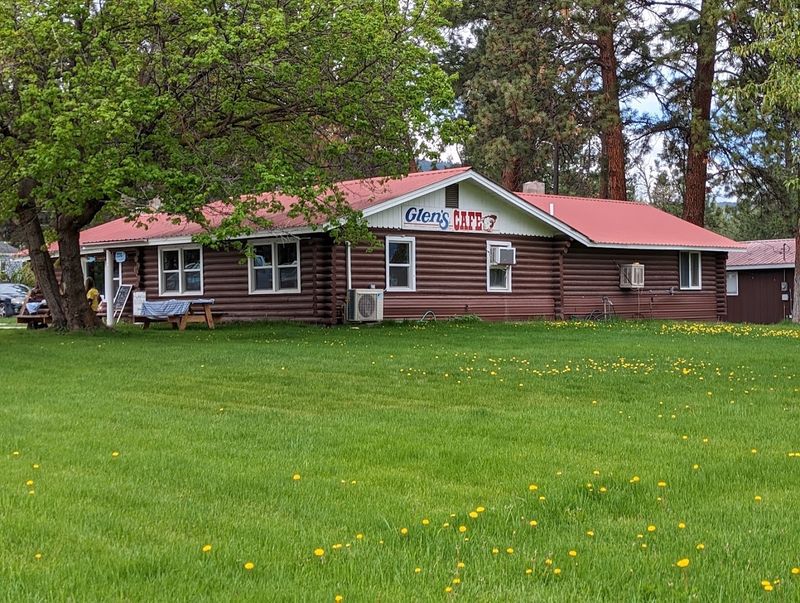
A log-cabin restaurant in the Bitterroot Valley sounds like something a travel brochure invented, but Glen’s Mountain View Cafe has been the real thing since 1972.
Family-owned and operated from the beginning, this Florence fixture is known for home-cooked meals that use locally sourced, homegrown beef and homemade pie that people plan their route around. The menu is built on the kind of food that requires patience and genuine skill to prepare correctly.
What Glen’s has maintained over five decades is a personality that feels entirely its own. Small-town cafes can easily lose their character as ownership changes or as the surrounding community shifts, but Glen’s has stayed true to what it set out to be.
The log-cabin aesthetic fits the Bitterroot Valley landscape without feeling forced. It is the kind of building that looks like it grew there naturally, which suits a restaurant this deeply rooted in its community.
Regulars come for the pie as much as for the entrees, and the homemade versions here have earned a loyal following that extends well beyond Florence. For a small town cafe, that kind of regional reputation is a serious achievement worth celebrating.
9. Wheat Montana Bakery & Deli, Three Forks, Montana
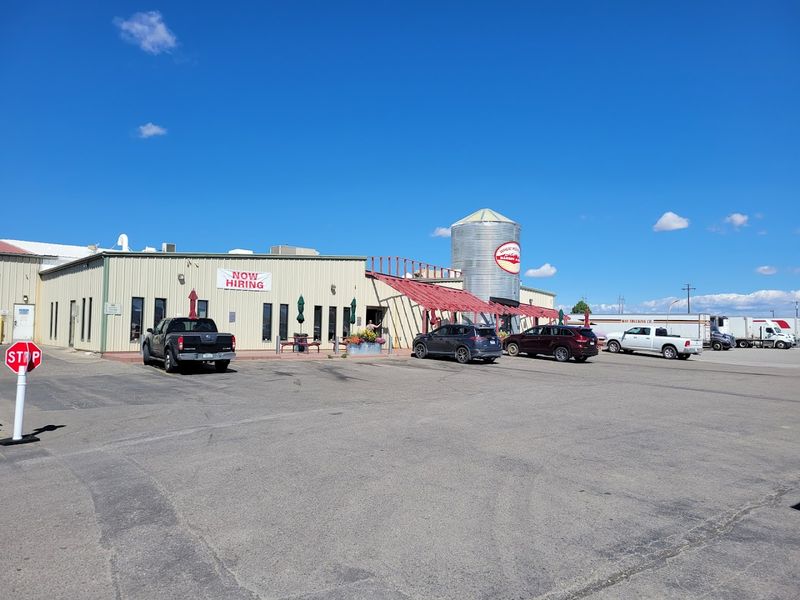
The Folkvord family did not start in the restaurant business. They started in the fields, farming wheat near Three Forks, and the bakery grew out of that agricultural foundation in a way that few food businesses can genuinely claim.
Wheat Montana Bakery and Deli operates at the intersection of farming and food service, which gives it a clarity of identity that is hard to manufacture. The bread comes from grain grown nearby, and the sandwiches are built on that foundation with straightforward, quality-focused ingredients.
Travelers along Interstate 90 have been stopping here for decades, drawn in by the bakery’s reputation and the practical appeal of a well-made sandwich and a fresh-baked loaf to take home. The deli counter moves efficiently, which matters when you are on a road trip with a schedule.
What makes Wheat Montana genuinely interesting is the story behind it. A family farm that grew into a regional food brand, still rooted in the same land and the same values, is a rarity in the modern food industry.
The baked goods sell out regularly, which is the most straightforward possible evidence that the Folkvord family got the recipe right from the very beginning.
10. Taco Treat, Great Falls, Montana
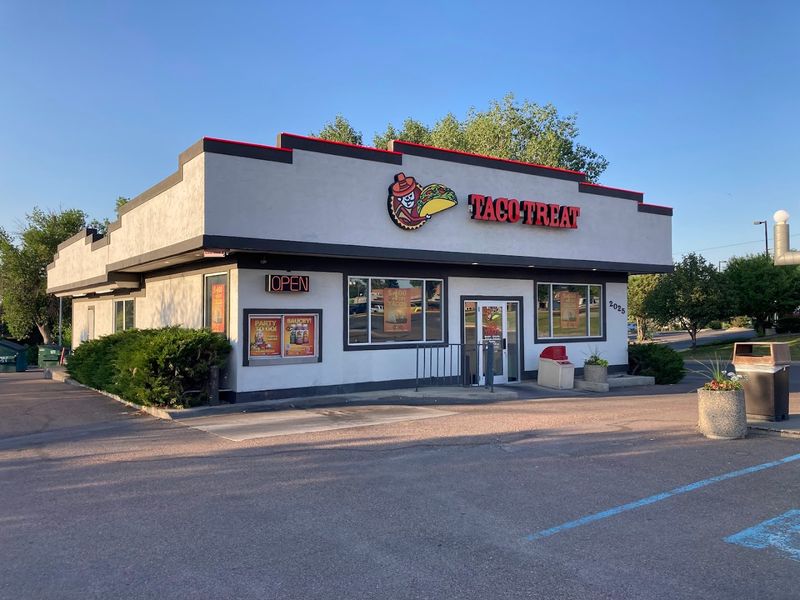
Montana has its own taco tradition, and it dates back to 1958, when Taco Treat first introduced its original recipe to a Great Falls audience that clearly approved.
More than sixty years later, the Great Falls locations are still operating with the same retro regional fast-food character that made the brand a local institution. The menu centers on crisp tacos and enchiladas prepared from recipes that have not been dramatically reinvented since the early days.
Taco Treat occupies a specific category that is increasingly rare: the regional fast-food chain with genuine roots and a loyal base that has no interest in switching allegiances to a national competitor. Great Falls residents treat it less like a restaurant choice and more like a hometown habit, which is an accurate description of what it has become.
The fan base is multigenerational in the most literal sense. Grandparents who ate here in the 1960s have passed the tradition down through their families, creating a chain of loyalty that no advertising campaign could replicate.
For visitors curious about what makes Montana’s food culture distinct from anywhere else, a Taco Treat order is a perfectly good place to begin that education.
Share this story