Royal palaces are more than just grand buildings. They are living symbols of history, power, and tradition that continue to shape the world today.
From Europe to Asia, many of these magnificent structures still serve as official residences, workplaces, and ceremonial centers for royal families. Get ready to explore 15 stunning palaces that remain very much alive and in use.
1. Buckingham Palace (United Kingdom)
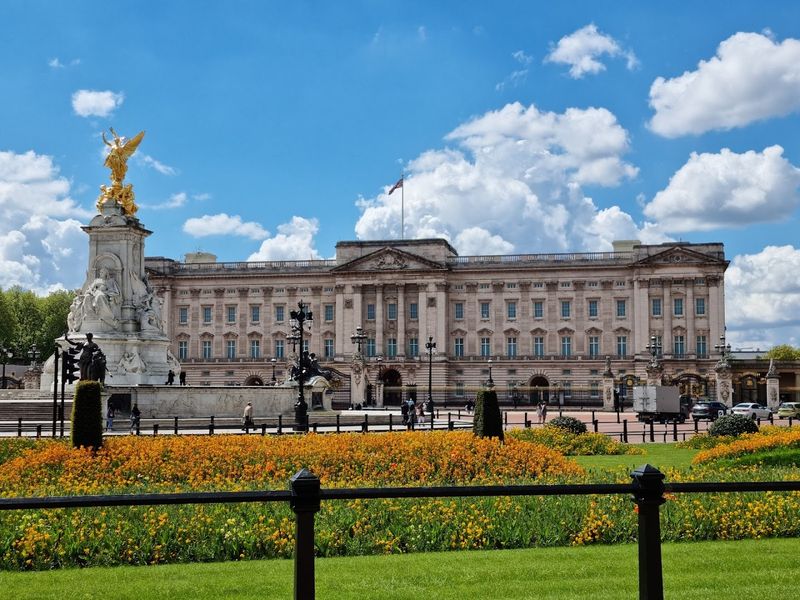
Few buildings in the world carry as much recognition as Buckingham Palace. Since 1837, it has served as the official London home of British monarchs and stands as one of the most photographed landmarks on the planet.
King Charles III now calls it his official royal residence.
The palace contains 775 rooms, including 19 state rooms, 52 royal and guest bedrooms, and 92 offices. Each year, the State Rooms open to visitors during summer, offering a rare glimpse into royal life.
The famous balcony has hosted countless historic moments, from royal weddings to wartime celebrations.
The Changing of the Guard ceremony outside its gates draws enormous crowds daily. Beyond its tourist appeal, the palace remains a fully functioning headquarters for the monarchy, hosting state banquets, diplomatic receptions, and official investitures throughout the year.
2. Windsor Castle (United Kingdom)
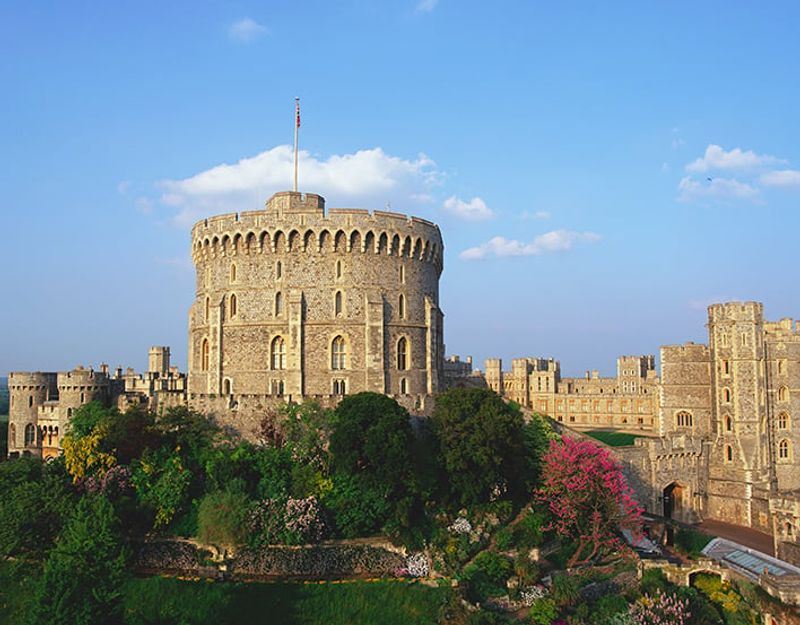
Windsor Castle holds a record that few structures anywhere can claim: it is the oldest and largest occupied castle in the world. For nearly 1,000 years, British monarchs have lived, worked, and been buried within its ancient stone walls.
Queen Elizabeth II famously spent much of her later life here.
Covering about 13 acres of land, the castle includes the magnificent St. George’s Chapel, where royal weddings and funerals have taken place for centuries. King Charles III continues to use Windsor as a regular weekend retreat and a venue for important state visits.
The town of Windsor has grown up around the castle over centuries, making the two almost inseparable. Walking through Windsor’s grounds gives visitors a genuine sense of how deeply history is woven into everyday British royal life.
It remains fully operational and open to the public on most days.
3. Royal Palace of Madrid (Spain)
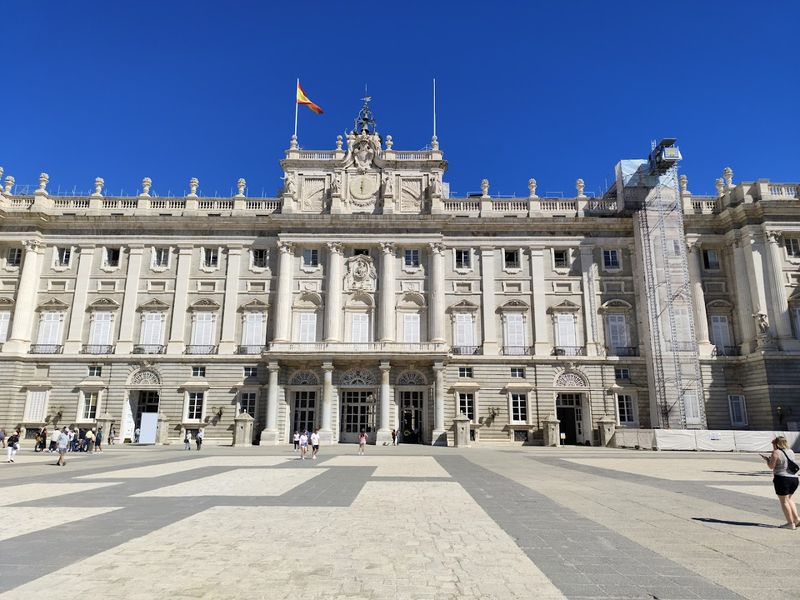
Standing at the edge of a dramatic cliff overlooking the Manzanares River, the Royal Palace of Madrid is one of Europe’s most impressive royal buildings. With 3,418 rooms, it is technically the largest royal palace in Western Europe by floor area.
Spain’s King Felipe VI and Queen Letizia do not actually live here, preferring a quieter residence nearby.
Despite not being a private home, the palace plays a central official role. State banquets, military ceremonies, and diplomatic receptions are regularly held within its gilded halls.
Foreign heads of state are welcomed here with full ceremonial honors.
The palace’s interior is breathtaking, filled with priceless paintings by Velazquez and Goya, royal armories, and lavishly decorated throne rooms. It is open to the public on most days, attracting millions of visitors annually who come to experience Spain’s rich royal heritage up close.
4. Amalienborg Palace (Denmark)
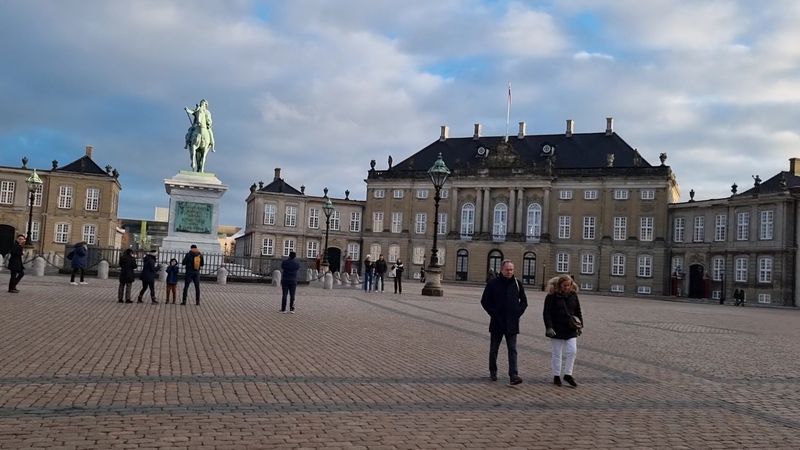
Amalienborg is unlike most royal palaces because it is actually four separate but nearly identical mansions arranged around a beautiful octagonal courtyard. Built in the 1750s in the elegant rococo style, it became the royal family’s primary Copenhagen residence after a fire destroyed Christiansborg Palace in 1794.
Queen Margrethe II lived here for decades, and the Danish royal family continues to occupy two of the four palaces today. The courtyard’s centerpiece is a striking equestrian statue of King Frederick V, the monarch who originally commissioned the complex.
Every day at noon, the Royal Guard marches through Copenhagen’s streets from the barracks to the palace for the Changing of the Guard ceremony. When the royal standard flies above one of the buildings, it signals that a member of the royal family is in residence.
Visitors can tour one of the palace buildings, which now serves as a royal museum.
5. Drottningholm Palace (Sweden)
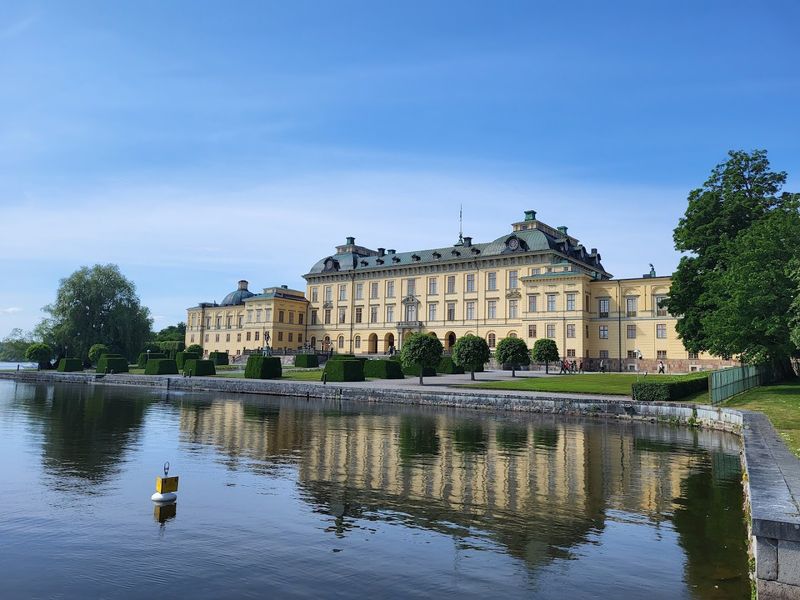
Tucked away on the island of Lovon in Lake Malaren, just a short boat ride from Stockholm, Drottningholm Palace feels like something out of a fairytale. Sweden’s King Carl XVI Gustaf and Queen Silvia have made it their permanent private home since 1981, choosing its peaceful surroundings over the bustle of Stockholm Palace.
The palace was built in the late 17th century and is heavily inspired by the Palace of Versailles in France. Its formal baroque gardens, Chinese Pavilion, and beautifully preserved court theater make it one of Scandinavia’s most complete royal estates.
UNESCO recognized its outstanding universal value in 1991.
Visitors are welcome to explore the palace’s public rooms, wander the gardens, and even catch performances at the historic court theater during summer. Knowing that a royal family genuinely lives and relaxes behind these walls makes every visit feel unexpectedly personal and special.
6. Royal Palace of Brussels (Belgium)
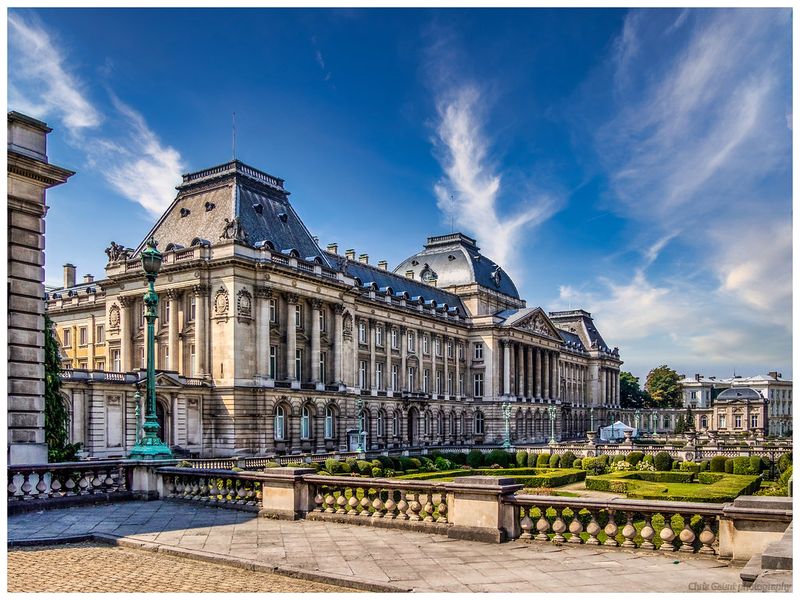
Every summer, something magical happens in Brussels. The Royal Palace comes alive with thousands of light bulbs that illuminate its neoclassical facade, creating a dazzling spectacle visible from across the city.
This tradition has made the palace one of Belgium’s most beloved summertime sights.
King Philippe and Queen Mathilde use the palace as their official workplace rather than a personal home. State affairs, diplomatic meetings, credential ceremonies for foreign ambassadors, and royal audiences all take place within its formal rooms.
The Belgian monarch carries out many constitutional duties here throughout the working year.
During the summer months, the palace opens its doors to the public free of charge, allowing Belgians and tourists to explore the stunning throne room, mirror room, and other ceremonial spaces. The palace sits directly across from the Belgian Parliament, a fitting symbol of the close relationship between the monarchy and the democratic state.
7. Noordeinde Palace (Netherlands)
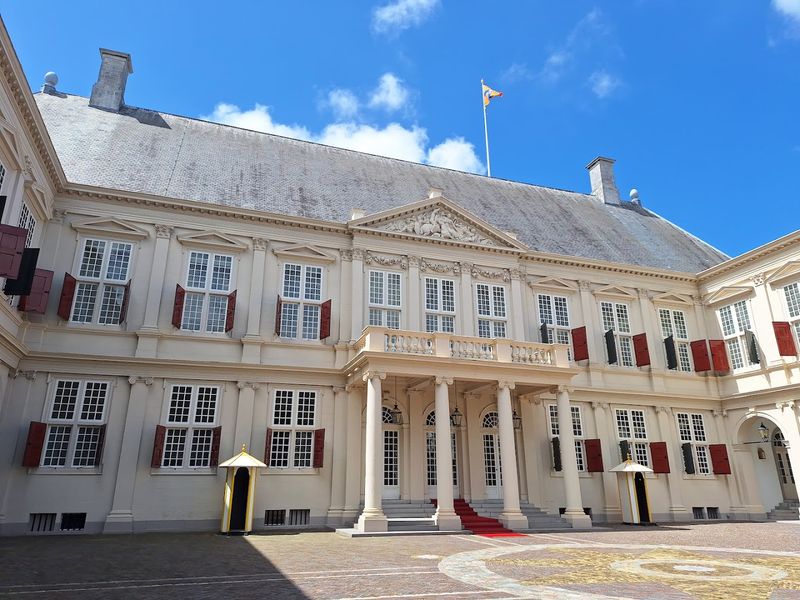
Hidden along a quiet street in the heart of The Hague, Noordeinde Palace carries a quiet dignity that suits the Dutch royal family’s famously understated style. King Willem-Alexander uses it as his official working palace, meaning he conducts the daily business of the monarchy from within its walls rather than living there full time.
The palace’s history stretches back to the 16th century, though it has been renovated and expanded many times over the centuries. A famous bronze statue of William of Orange, the founder of the Dutch royal house, stands proudly in front of the building, connecting the present monarchy to its distant origins.
The palace grounds are not generally open to the public, but the building remains an important landmark in The Hague, a city already packed with government institutions and international courts. On King’s Day each year, the royal family often appears publicly near the palace, drawing enthusiastic crowds.
8. Royal Palace of Oslo (Norway)
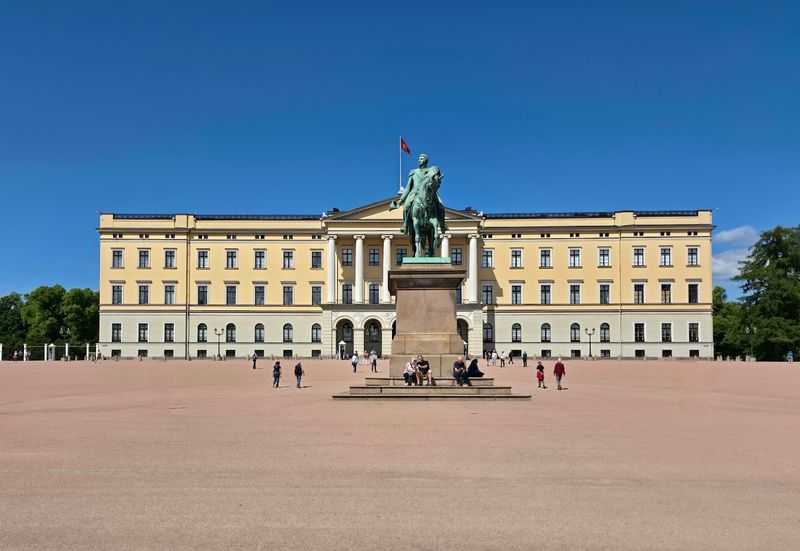
Perched on a gentle hill at the top of Oslo’s main boulevard, Karl Johans gate, the Royal Palace of Norway has a welcoming quality that reflects the country’s open and democratic royal tradition. Unlike many European palaces surrounded by high walls, this one sits in a public park where anyone can stroll freely on the grounds.
Construction finished in 1849, and Norway’s King Haakon VII and Queen Maud moved in after Norway gained independence in 1905. Today, King Harald V and Queen Sonja reside here as their official home.
The palace hosts state dinners, national day celebrations on May 17th, and official receptions for foreign guests.
Every day at 1:30 p.m., the Royal Guard performs a Changing of the Guard ceremony on the palace grounds. On Norway’s Constitution Day, the royal family stands on the palace balcony and waves to thousands of flag-waving schoolchildren parading past below.
9. Stockholm Palace (Sweden)
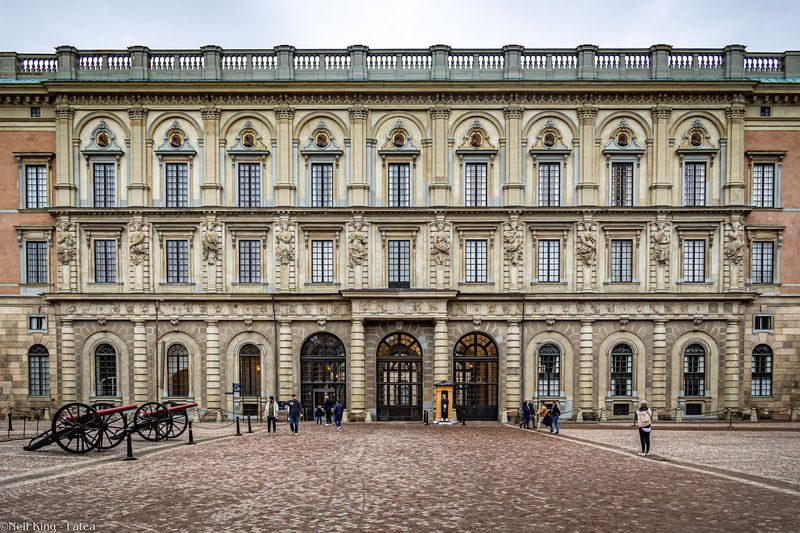
Stockholm Palace is enormous. With over 600 rooms, it ranks among the largest palaces in Europe and serves as the official residence of Sweden’s royal family, even though King Carl XVI Gustaf actually prefers living at Drottningholm.
The palace remains the setting for all of Sweden’s most important royal ceremonies and official functions.
Completed in 1754 after nearly a century of construction, the palace replaced an older medieval castle that burned down in 1697. Its baroque exterior, designed by architect Nicodemus Tessin the Younger, dominates the skyline of Gamla Stan, Stockholm’s charming old town district.
Inside, visitors can explore the Royal Apartments, the Treasury holding Sweden’s crown jewels, and the Museum of Antiquities. The daily Changing of the Guard ceremony on the palace’s outer courtyard is one of Stockholm’s most popular attractions.
The palace genuinely functions as the monarchy’s administrative and ceremonial nerve center year-round.
10. Imperial Palace (Japan)
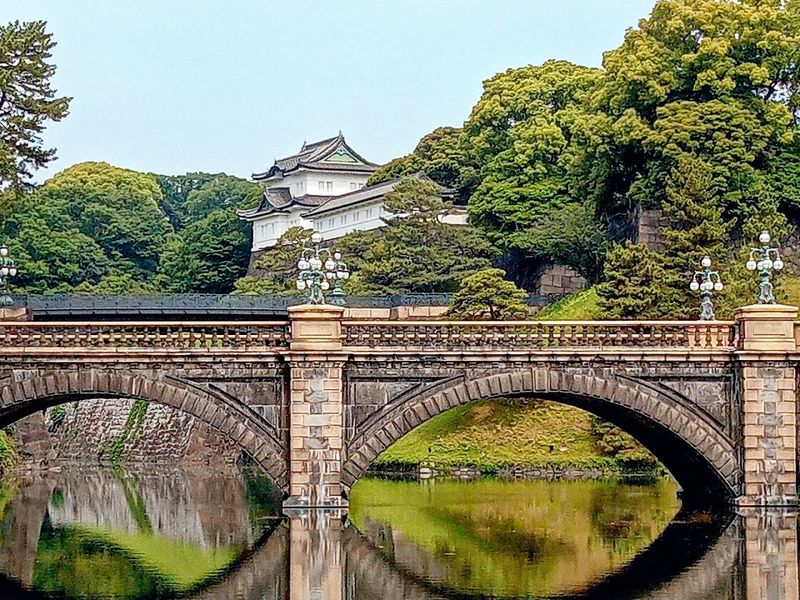
At the center of one of the world’s busiest cities lies an island of extraordinary calm. The Imperial Palace in Tokyo occupies the site of the old Edo Castle, the historic seat of the Tokugawa shoguns, and has served as the Emperor’s primary residence since 1869.
Emperor Naruhito and Empress Masako live here today.
The palace complex covers about 3.41 square kilometers and is surrounded by stone walls, moats, and stunning traditional gardens. Most of the grounds remain closed to the public, preserving the private and sacred nature of the imperial family’s home.
However, two public open days per year allow visitors to enter the inner grounds.
The famous Nijubashi bridge, made up of two overlapping bridges crossing the inner moat, is one of Tokyo’s most iconic images. Crowds regularly gather at the outer plaza to photograph this serene scene against the backdrop of the modern city skyline rising around it.
11. Istana Negara (Malaysia)
Malaysia does something few countries do: it rotates its king. The Yang di-Pertuan Agong, or Supreme Ruler, is elected every five years from among nine hereditary state rulers, making Malaysia’s constitutional monarchy genuinely unique.
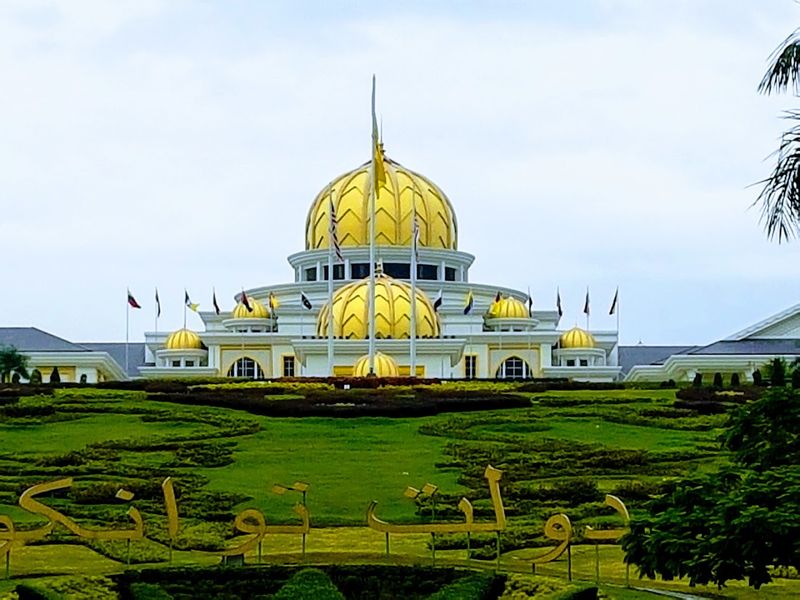
Istana Negara in Kuala Lumpur serves as the official home and ceremonial base for whoever holds this rotating position.
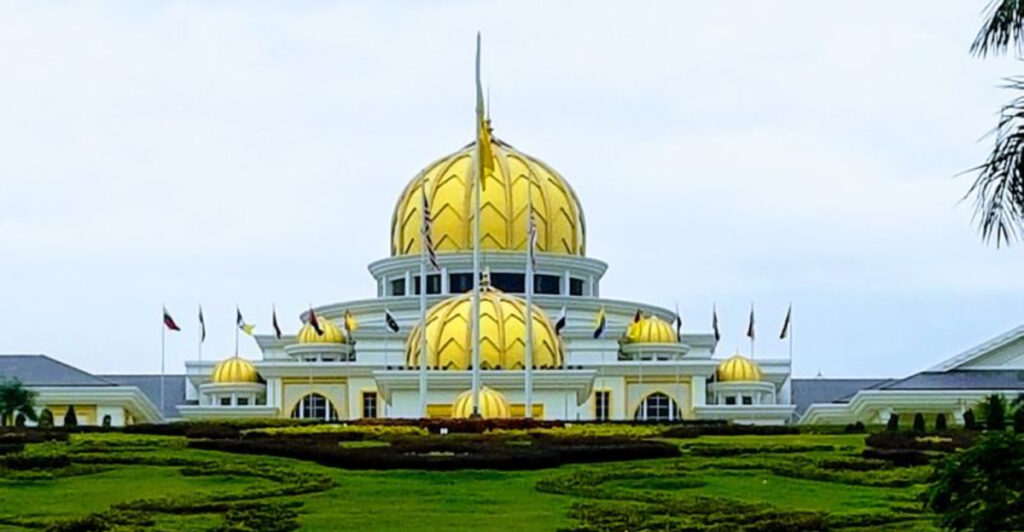
The current palace, opened in 2011, replaced an older colonial-era building. Its bold design blends modern architecture with Islamic artistic traditions, featuring 22 golden domes that shimmer in the Malaysian sun.
The grounds cover an impressive 97 hectares on the edge of Kuala Lumpur’s city center.
The palace is not open to the public for regular visits, but the ornate main gate and sweeping driveway are popular photography spots. On National Day and other official occasions, grand ceremonies take place here, reinforcing Istana Negara’s role as a powerful symbol of Malaysian national identity and unity.
12. Grand Ducal Palace (Luxembourg)
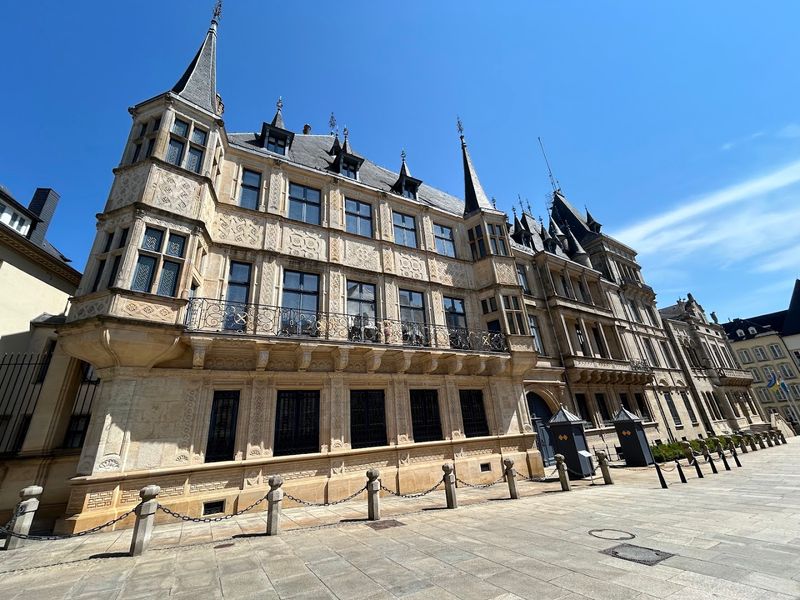
Sitting right in the middle of Luxembourg City’s old town, the Grand Ducal Palace is a palace that genuinely lives among its people. Unlike many royal residences hidden behind vast grounds, this one faces directly onto a busy street, with shoppers and tourists passing just meters from its ornate facade every single day.
Originally built as the city hall in 1572, the building was later converted into the official residence and workplace of Luxembourg’s Grand Duke. Grand Duke Henri uses it for official audiences, state receptions, and diplomatic functions throughout the year.
The royal family actually lives at a more private estate outside the city.
During summer, guided tours allow visitors to explore the palace’s richly decorated state rooms. The palace’s Spanish Renaissance architecture, with its distinctive black and gold ironwork balconies, makes it one of the most photographed buildings in Luxembourg.
It is small by royal palace standards but carries enormous symbolic weight.
13. Royal Palace of Rabat (Morocco)
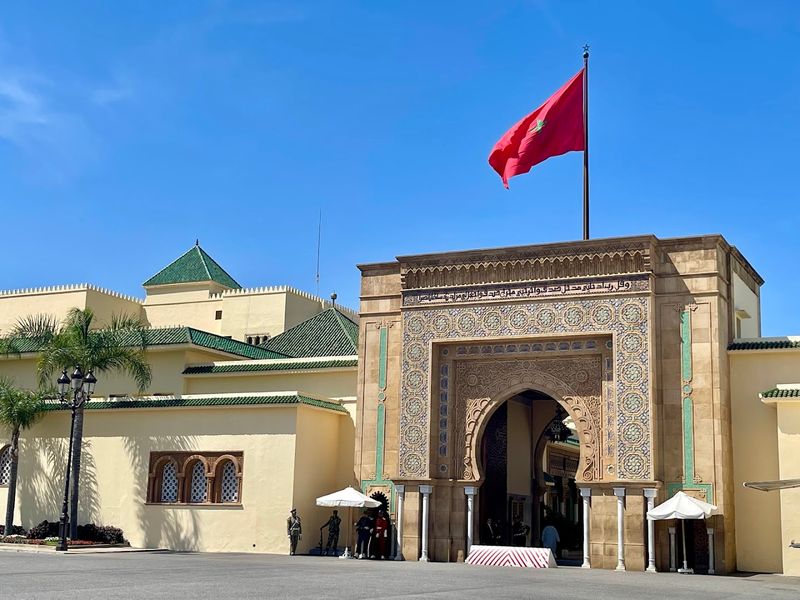
Morocco’s Royal Palace in Rabat is not just a residence. It is a sprawling complex covering nearly 70 hectares that includes mosques, gardens, government offices, a school, and ceremonial halls.
King Mohammed VI uses it as his primary official base, though he travels frequently between several royal residences across the country.
The most striking feature visible to the public is the main entrance gate, adorned with breathtaking Islamic geometric tilework and polished brass details. Royal guards in traditional white uniforms stand watch at the gates around the clock, adding to the palace’s sense of timeless authority.
The surrounding medina of Rabat frames the complex beautifully.
While the palace interior remains strictly private, the ceremonial plaza in front draws visitors who come to admire the architecture and photograph the guards. Morocco’s monarchy plays a deeply active political role, and the Rabat palace sits at the very heart of that power.
14. Royal Palace of Phnom Penh (Cambodia)
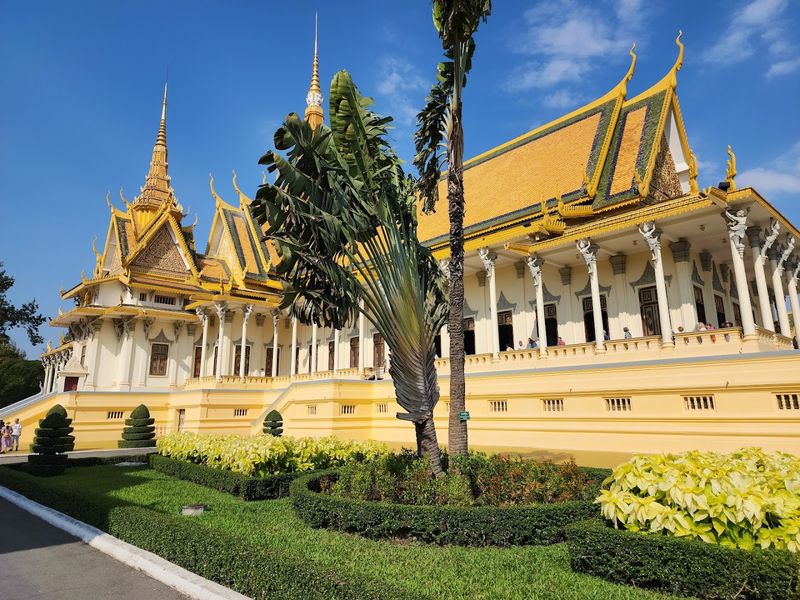
Few royal palaces in Asia are as visually stunning as the Royal Palace of Phnom Penh. Built in the 1860s after the Cambodian capital moved to Phnom Penh, the complex showcases classic Khmer architecture at its most elegant, with soaring golden spires, tiered rooftops painted in vivid yellow and green, and beautifully manicured gardens.
King Norodom Sihamoni officially resides here, making it one of Southeast Asia’s few truly active royal residences. The palace complex includes the famous Silver Pagoda, whose floor is tiled with over 5,000 silver tiles weighing nearly a ton in total.
Inside the pagoda stands a life-size gold Buddha encrusted with thousands of diamonds.
Parts of the palace are open to visitors, offering a rare window into Cambodia’s living royal traditions. The palace also survived the brutal Khmer Rouge period largely intact, making its continued existence feel especially meaningful to the Cambodian people.
15. Al Yamamah Palace (Saudi Arabia)
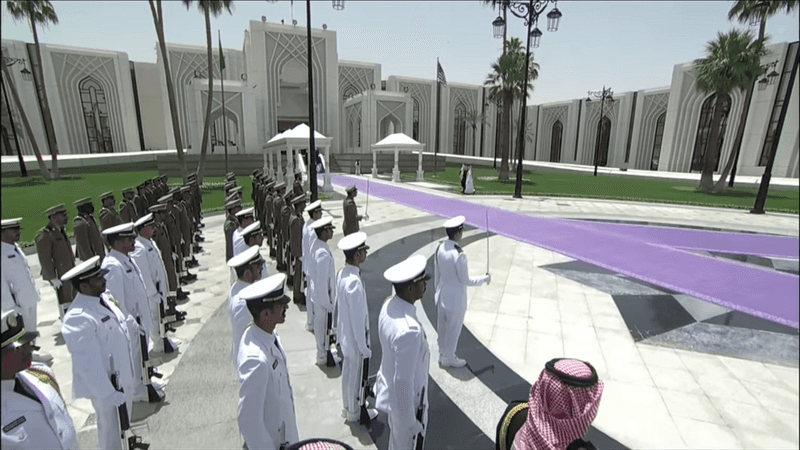
Al Yamamah Palace in Riyadh is the nerve center of one of the world’s most powerful monarchies. Serving as the official residence and administrative headquarters of Saudi Arabia’s king, the palace is where critical state decisions are made, foreign dignitaries are received, and the daily machinery of the kingdom operates at the highest level.
The name Al Yamamah refers to a historically significant region in central Arabia, connecting the palace symbolically to Saudi Arabia’s deep roots. The complex is vast, befitting the scale of a country that controls a significant portion of the world’s oil reserves and wields enormous geopolitical influence.
King Salman currently uses the palace as his primary base.
Security around Al Yamamah is extremely tight, and public access is not permitted. Unlike many European royal palaces that double as tourist attractions, this palace remains firmly focused on its political and ceremonial functions, operating as a working heart of government rather than a museum.
Share this story