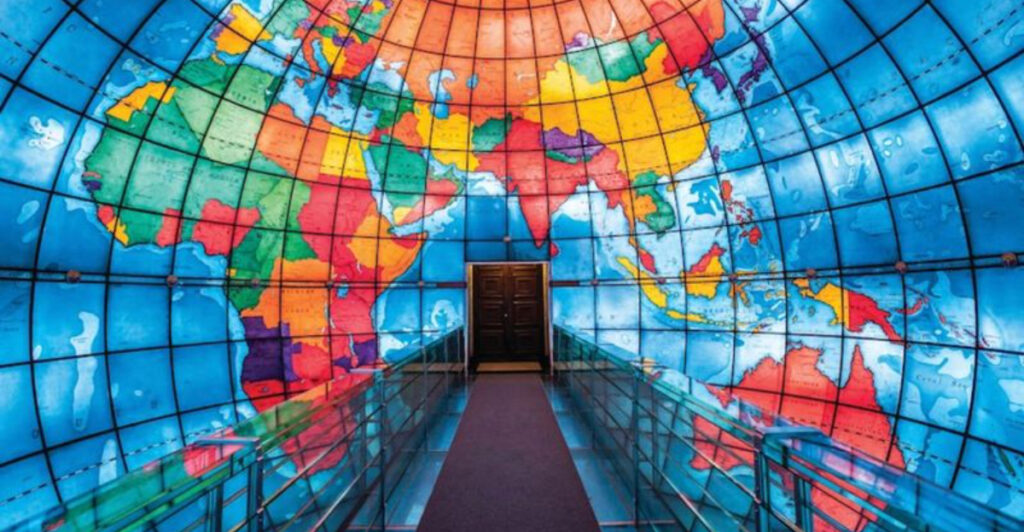
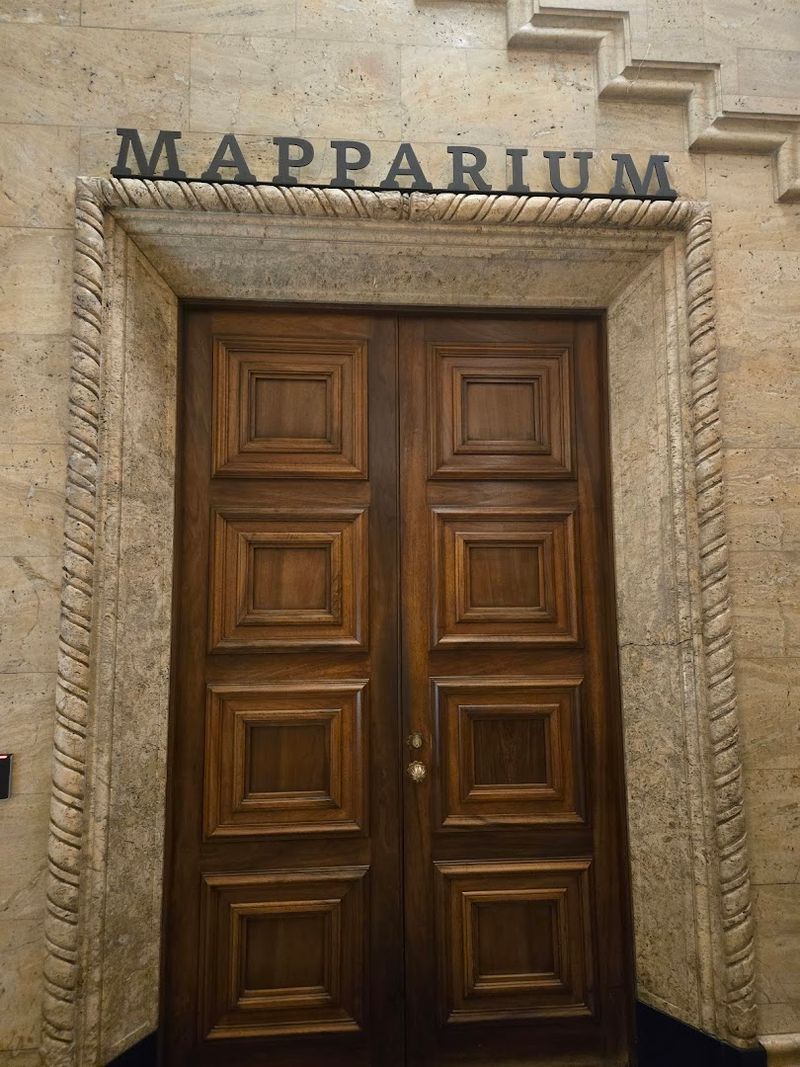
There is a place in Boston where you can stand at the center of the entire world, surrounded by 608 panels of hand-crafted stained glass, and look outward at every continent and ocean at once. That place is the Mapparium, a three-story globe built in 1935 that has quietly amazed everyone who walks across its glass bridge.
Most people have never heard of it, which makes discovering it feel like finding a secret that the city has been keeping for nearly 90 years. The map shows the world as it looked in 1935, with borders and country names that no longer exist today, making it both a geography lesson and a history lesson rolled into one extraordinary room.
At just $6 for adults, it is one of the most affordable and genuinely surprising attractions in all of New England.
The Story Behind the Globe That Defied Its Era
The Mapparium was completed in 1935 and was designed by architect Chester Lindsay Churchill for the Christian Science Publishing Society, the organization behind the Christian Science Monitor newspaper.
The original idea was to give editors and readers a visually accurate way to understand the global reach of the publication and the world it covered. Building a globe from the inside out was a bold engineering choice at a time when such a project had never been attempted before.
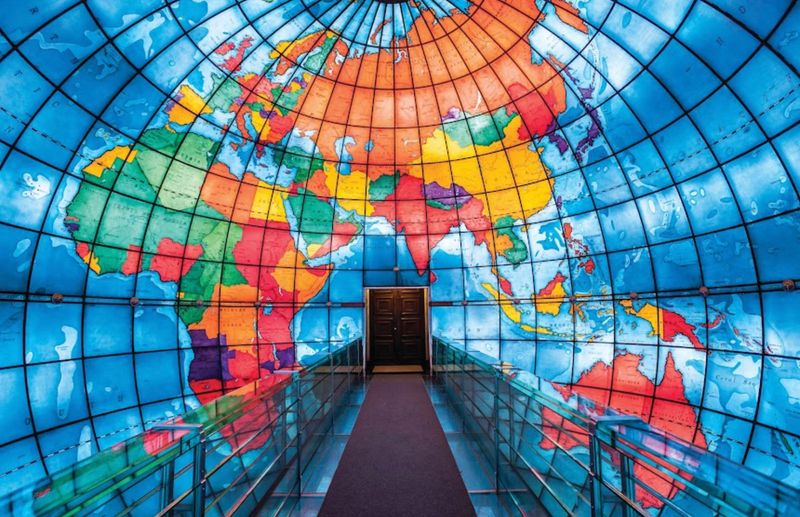
Each of the 608 stained-glass panels was individually crafted and fitted into a steel frame to create a sphere that measures 30 feet in diameter. The map reflects the political geography of 1935, which means visitors see colonial-era borders, countries that no longer exist, and names that have since changed.
That historical snapshot is not a flaw but rather one of the most compelling reasons to visit, turning the globe into a living document of how dramatically the world has shifted.
What It Actually Feels Like to Walk Inside a Globe
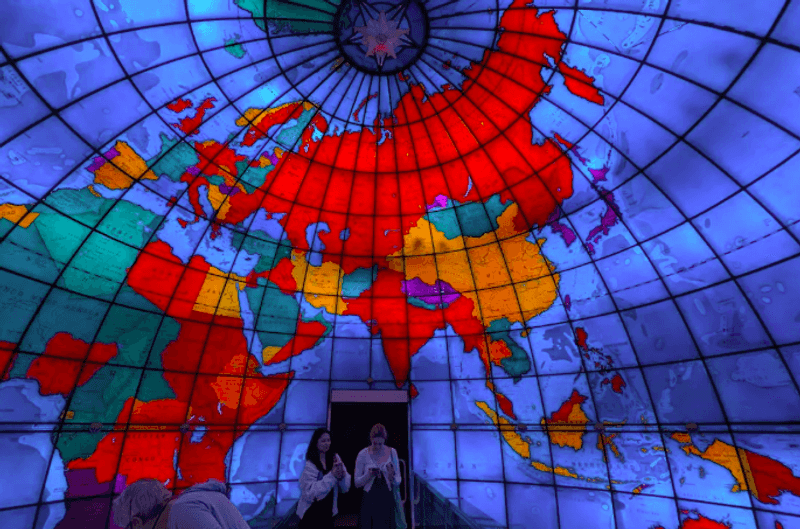
A glass bridge runs straight through the center of the Mapparium, putting visitors at the geographic heart of the globe with every continent curving around them in every direction.
The stained glass glows with deep blues for the oceans and a warm palette of greens, yellows, and reds for the landmasses, creating a visual that is genuinely unlike anything else in Boston.
Because the globe is a perfect sphere, it functions as a whispering gallery. Sound travels along the curved walls in a way that makes even a soft whisper audible on the other side of the bridge, a physical quirk that consistently surprises first-time visitors.
The tour includes a guided light and sound presentation that highlights different regions of the map while a narration walks through the historical context of what is being shown. After the presentation, there is a brief window for photographs before the group exits through the lobby into the surrounding free exhibits.
A Map Frozen in 1935 and What That Means Today

The globe captures the world exactly as cartographers understood it in 1935, which means the borders, country names, and territorial divisions on display reflect a very different political reality than the one that exists today.
Colonial territories are still marked across Africa and Asia. Countries that have since been renamed, divided, or absorbed into other nations appear under their original designations.
The Soviet Union appears as a single vast landmass stretching across northern Asia and eastern Europe.
Rather than being a source of confusion, this frozen snapshot gives the Mapparium its most educational dimension. Guides use the light and sound presentation to walk through how borders have shifted and countries have changed since the globe was created, framing the map as a starting point for understanding modern geopolitics.
For anyone with a genuine interest in history or world geography, that contrast between the 1935 map and today’s world is endlessly fascinating. The globe becomes less of a decorative object and more of a conversation about how much the world can change in under a century.
How Much It Costs and What You Get for the Price
Adult admission to the Mapparium globe is $6, which makes it one of the most affordable paid attractions in Boston. Children aged 17 and under are admitted free, and a range of discounts are available to keep the experience accessible for different groups.
Boston Public Library cardholders can visit with a group of up to three people at no cost, which is a detail worth knowing before booking. The GoCity pass, which covers multiple Boston attractions, also includes the Mapparium, making it an easy addition to a broader sightseeing itinerary.
Beyond the globe itself, the surrounding exhibits are free for everyone and do not require a ticket. Church tours of the nearby First Church of Christ, Scientist are also offered at no charge and typically last around 40 minutes.
For the price of a coffee, the Mapparium delivers a genuinely original experience that most Boston regulars have never encountered. That combination of low cost and high novelty is difficult to beat anywhere in the city.
The Free Exhibits That Surround the Globe
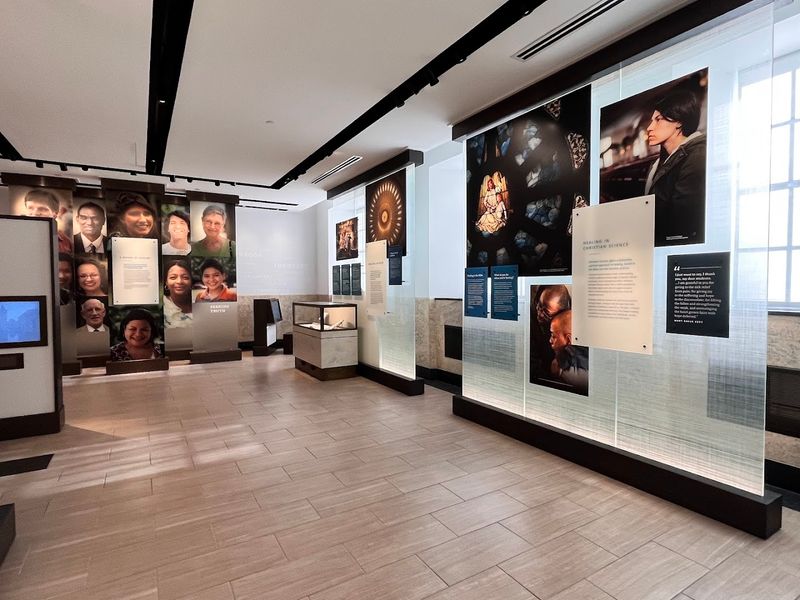
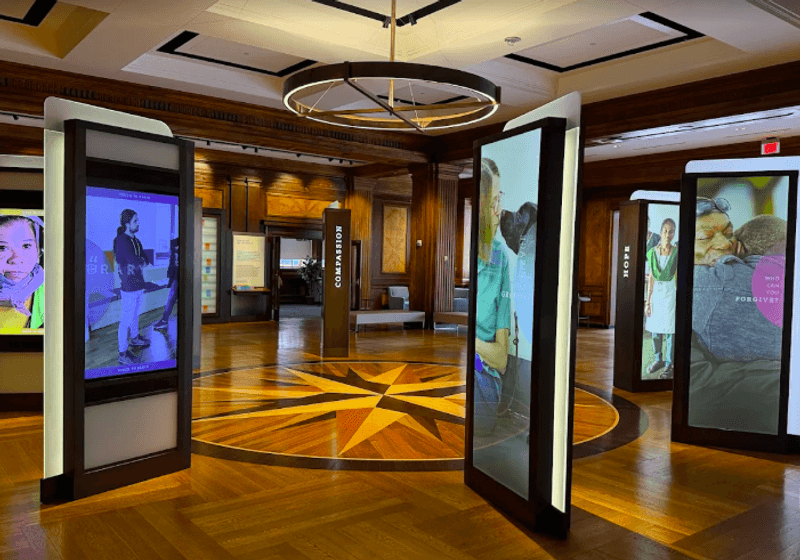
The Mapparium globe is the centerpiece of a broader experience called “How Do You See the World?”, and the free exhibits surrounding it add real depth to the visit. These displays explore the history and global reach of the Christian Science Monitor, the newspaper founded by Mary Baker Eddy in 1908.
Profiles of individuals featured in Monitor journalism over the decades are displayed throughout the exhibit space, covering stories from countries around the world. The tone is broadly humanistic rather than religious, and the content tends to resonate with visitors regardless of their personal background or beliefs.
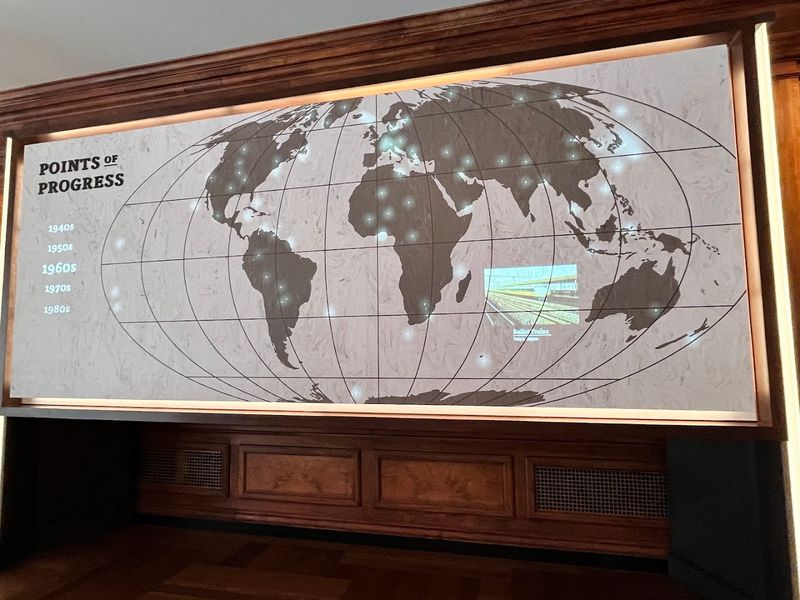
One exhibit, called “Points of Progress,” highlights specific countries and the Monitor’s coverage of them over the years. Peru, for example, is featured with a 1958 article on Peruvian cultural expression, giving the exhibit a genuinely global scope.
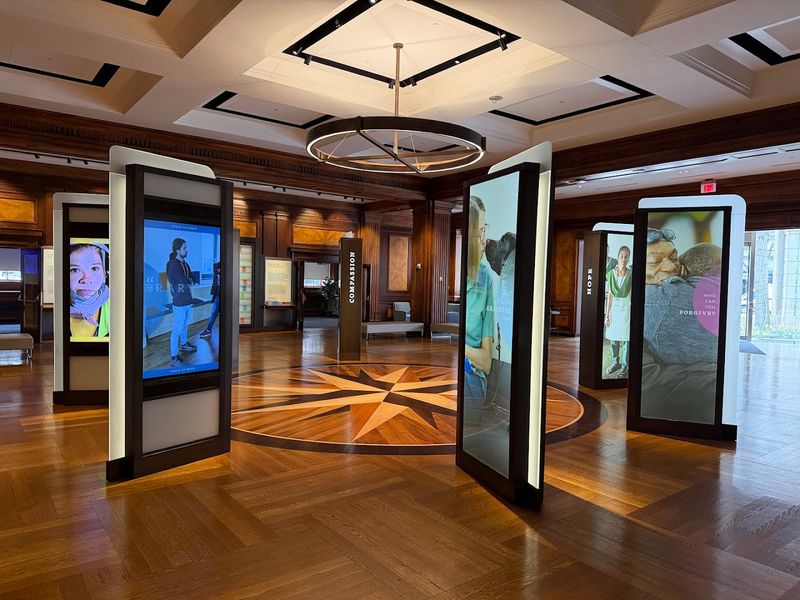
The lobby area also contains reading materials and video content, which makes the waiting period before a scheduled tour feel productive rather than idle. Most visitors find the surrounding exhibits worth at least 20 to 30 minutes of additional time.
The Architecture of the Building Itself
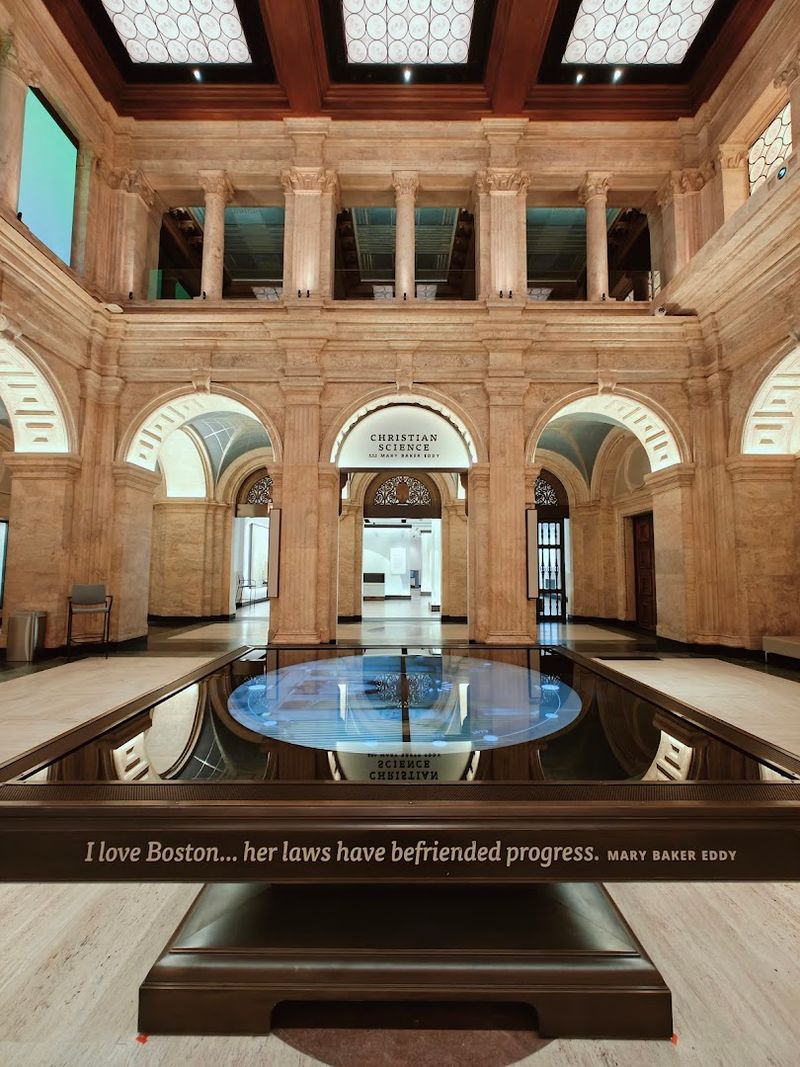
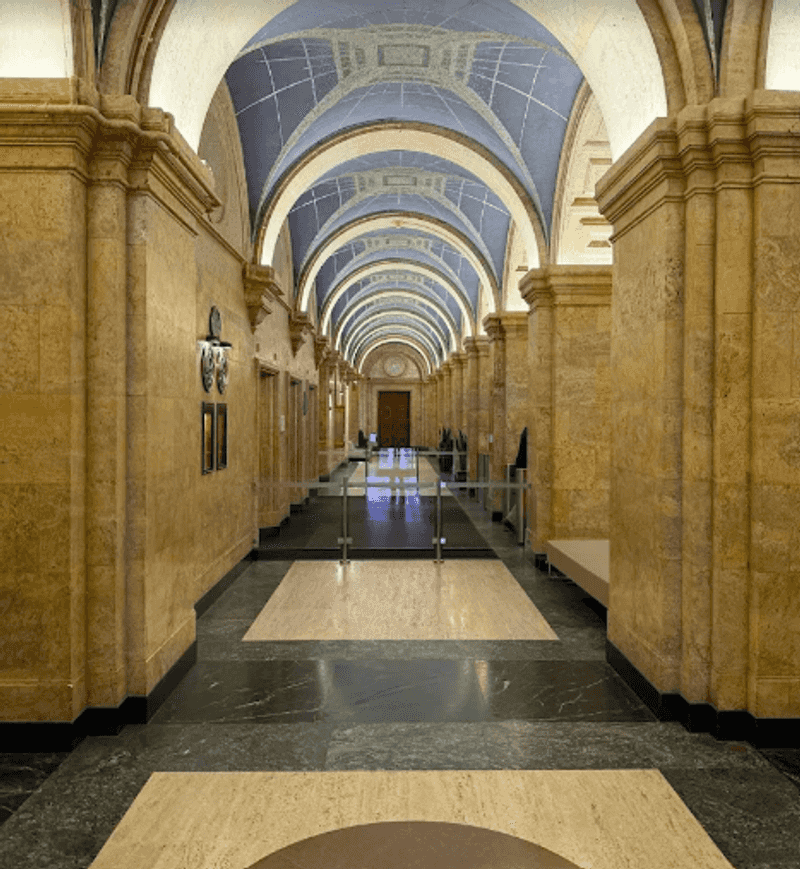
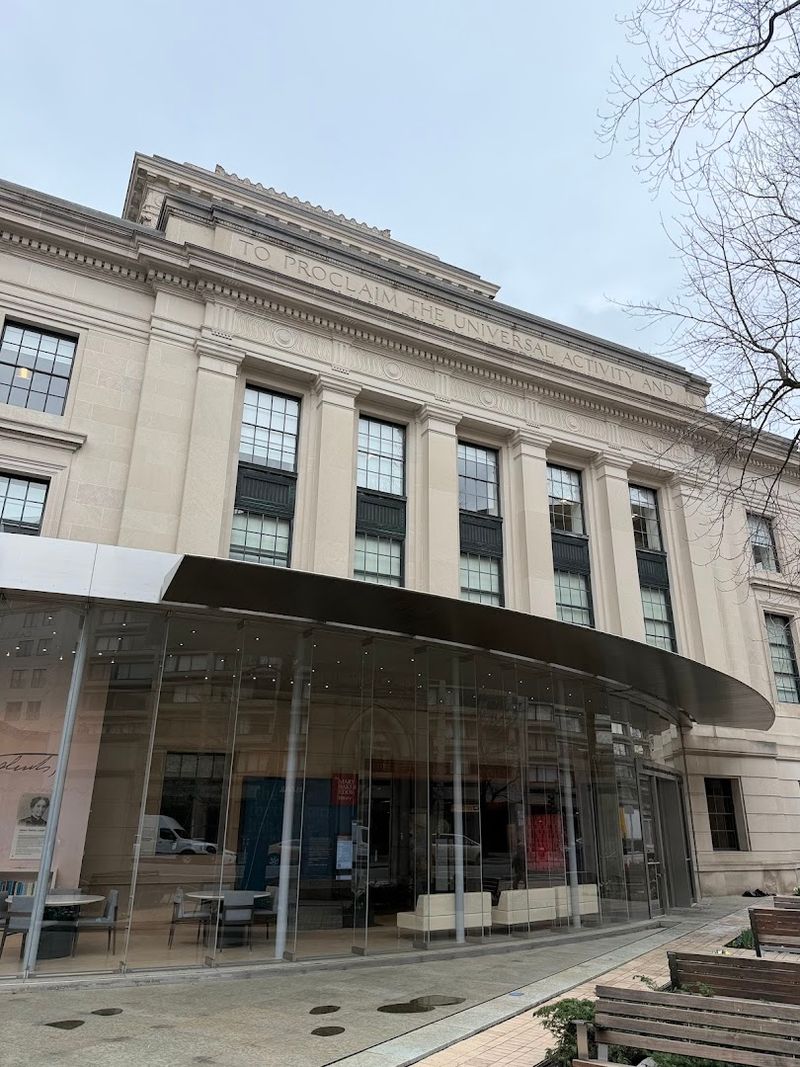
The Mary Baker Eddy Library is not just a container for the Mapparium. The building itself is an architectural landmark, completed in 1934 as part of the larger Christian Science complex that includes the original Mother Church and the domed Extension building.
The library’s interior features high ceilings, marble surfaces, and a formal elegance that feels more like a museum than a typical library. The lobby alone is worth pausing in before the tour begins, with its detailed craftsmanship and the quiet dignity of a building that was clearly designed to impress.
Outside, the Christian Science Plaza stretches across several city blocks and includes a 670-foot-long reflection pool that is one of the more photogenic spots in Back Bay. The pool and surrounding gardens are open to the public and free to walk through at any time.
The combination of the library’s interior grandeur and the open plaza outside gives the whole complex a scale and presence that feels genuinely monumental, especially for a part of Boston that many tourists overlook entirely.
Tips for Getting the Most Out of Your Visit
Timing matters more at the Mapparium than at most Boston attractions. Weekday visits, particularly midday on a Tuesday or Wednesday, tend to draw smaller crowds, which means more space on the bridge and a more relaxed atmosphere during the light show.
Arriving about ten minutes before your scheduled tour time is a smart move, because the lobby exhibits give you something genuinely interesting to look at while you wait. Tours are guided and run on a schedule, so late arrivals may miss their slot.
Photography is permitted inside the globe, but the window for taking photos is brief, typically around one minute at the end of the presentation. Having your phone or camera ready before the light show ends will save frustration.
If time allows, staying for the free church tour afterward is highly recommended. It runs about 40 minutes and covers the historic First Church of Christ, Scientist, which is architecturally remarkable on its own terms and adds meaningful context to the broader Christian Science complex.
Who This Attraction Is Best Suited For
The Mapparium draws a genuinely varied crowd. Geography enthusiasts find it endlessly interesting because the globe shows countries at their true relative sizes without the distortion that flat maps introduce.
History buffs are drawn to the 1935 time capsule aspect and the chance to see a world that no longer exists.
Families with children tend to respond well to the combination of the visual spectacle and the whispering gallery acoustic effect. Kids who are fascinated by maps and countries often leave the Mapparium talking about it for days afterward, which says something about how effectively the space communicates its subject.
Architecture lovers appreciate both the engineering achievement of the globe itself and the grandeur of the surrounding library building. Casual tourists looking for something genuinely different from the standard Freedom Trail itinerary will find the Mapparium offers exactly that kind of unexpected detour.
The short tour length, roughly 20 minutes for the globe itself, also makes it easy to fit into a full day of Boston sightseeing without feeling like a major commitment of time or money.
The Engineering Achievement Behind 608 Glass Panels
Building a structurally sound, geographically accurate stained-glass globe 30 feet in diameter in 1935 was not a small undertaking. Each of the 608 individual panels had to be precisely shaped and fitted into a steel armature so that the completed sphere would hold together and accurately represent the continents and oceans of the world.
The glass itself was custom-made, with different colors assigned to different countries and regions to make the map readable from the inside. The level of craft involved in cutting, fitting, and soldering hundreds of uniquely shaped panels into a coherent spherical surface is remarkable by any standard, but it is especially impressive given the technology available in the 1930s.
Unlike flat stained-glass windows, which can be assembled on a horizontal surface and then raised into place, the Mapparium panels had to be fitted into a three-dimensional frame that curved in every direction simultaneously.
Nearly 90 years later, the globe remains intact and functional, a testament to the quality of materials and workmanship that went into its original construction.
The Reflection Pool and Plaza Worth Exploring Outside
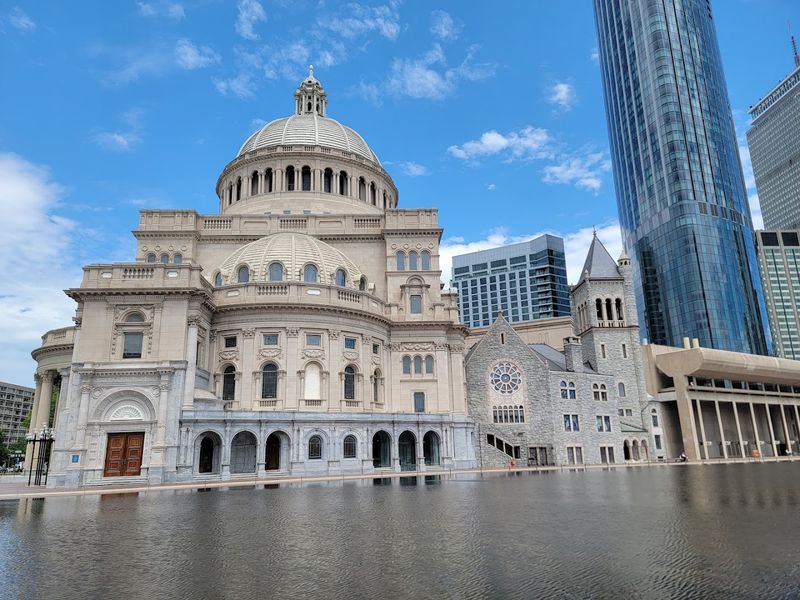
Before or after visiting the Mapparium, the Christian Science Plaza outside is worth at least a slow walk. The 670-foot-long reflection pool is one of the longest in New England and runs parallel to the library and church buildings, creating a wide open space that feels surprisingly calm given its central Boston location.
The plaza stretches across several city blocks in the Back Bay neighborhood and is freely accessible to the public at all times. On clear days, the reflection pool mirrors the surrounding architecture in a way that makes the whole complex look even more imposing than it already is.
The gardens around the pool are well maintained and provide a quiet place to sit and collect thoughts before heading into the library. The scale of the complex, which includes the original Mother Church from 1894, the domed Extension from 1906, and the library from 1934, gives the area a sense of accumulated history that few other city blocks in Boston can match.
Why the Mapparium Deserves a Spot on Every Boston Itinerary
Boston is full of well-known landmarks, from the Freedom Trail to Faneuil Hall to the Museum of Fine Arts. The Mapparium sits comfortably alongside all of them in terms of the experience it delivers, but it does so with almost none of the crowds or the fanfare.
At $6 for adults and free for children, it is also one of the most financially accessible attractions in a city where admission prices can climb quickly. The short tour length makes it easy to combine with other nearby stops in Back Bay or the South End without disrupting a full day of plans.
What makes the Mapparium genuinely memorable is its combination of novelty, history, and physical strangeness. There is no other place in the world where you can stand inside a stained-glass globe, hear your own whisper echo back from across the room, and look out at a version of the world that existed nearly a century ago.
That specific combination is rare enough to make the Mapparium not just worth visiting but worth telling people about long after the trip is over.
Where in Boston You Will Find This Hidden Wonder
The Mapparium is housed inside the Mary Baker Eddy Library, located at 210 Massachusetts Ave, Boston, MA 02115, in the Back Bay neighborhood near the Christian Science Plaza.
The building itself is a striking piece of architecture, and the plaza surrounding it features a long reflection pool and well-kept gardens that make the approach feel almost ceremonial.
The area is easy to reach by public transit, and the Hynes Convention Center stop on the Green Line puts you just a short walk away.
Hours run Monday through Saturday from 10 AM to 5 PM, and Sunday from 11 AM to 5 PM. The Mapparium is part of the broader “How Do You See the World?” experience, which includes free exhibits surrounding the globe itself.
Parking is available nearby, but the T is genuinely the most convenient option for most Boston visitors heading to this part of Massachusetts Avenue.
Share this story