Alfred Hitchcock’s films transformed real-world locations into icons of suspense, mystery, and intrigue. From dramatic coastal landscapes to historic mansions and city landmarks, many of the settings that helped define his movies can still be visited today.
Whether you’re a lifelong fan or simply enjoy places with cinematic history and atmosphere, these twelve destinations offer a chance to step into the world of one of film’s greatest storytellers. Keep reading to discover the real locations behind some of Hitchcock’s most memorable scenes.
1. Mission San Juan Bautista, San Juan Bautista, California
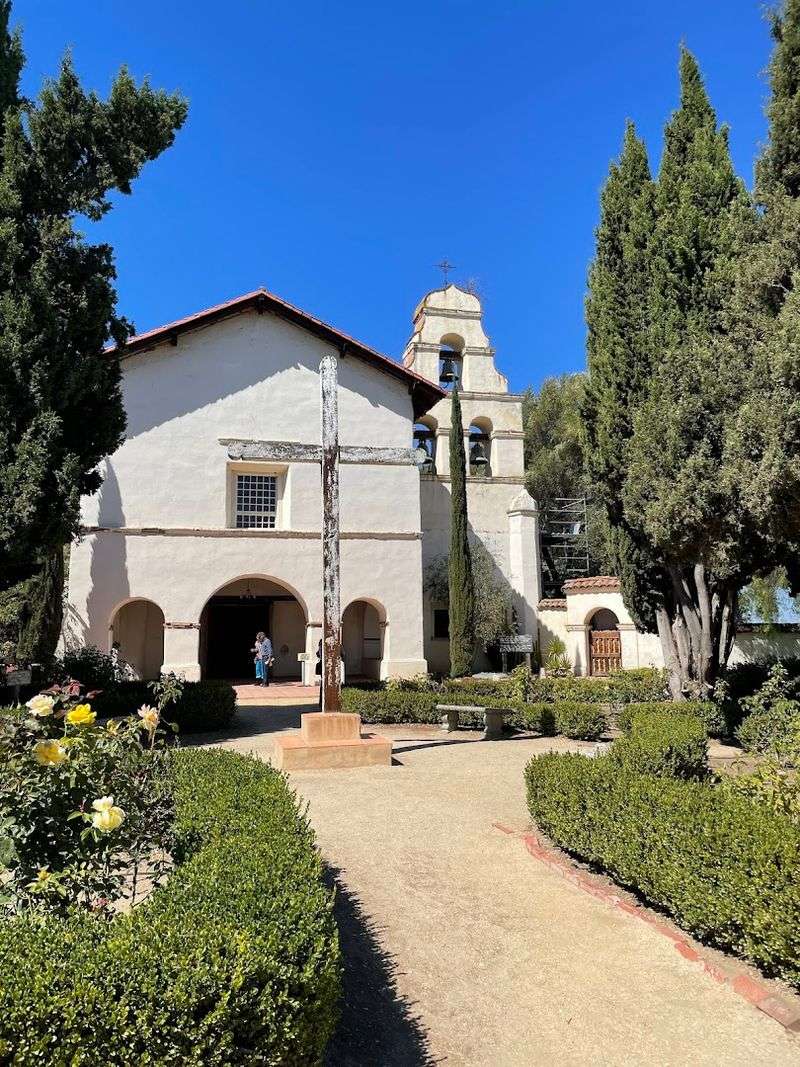
A two-hundred-year-old mission town sitting quietly off the main highway sounds peaceful enough, until you remember what Hitchcock did with it.
Mission San Juan Bautista played a pivotal role in “Vertigo” (1958), one of the most celebrated films ever made. The mission’s bell tower was central to the story, though there is a fascinating footnote: the original tower had been destroyed long before filming began.
Hitchcock had a larger replica built on a Hollywood set and superimposed it onto the real mission for the scene.
Today the mission is a fully functioning historic parish and part of the California Missions system, founded in 1797. The adjacent plaza is one of the best-preserved examples of Spanish colonial town planning in the state, complete with original adobe buildings lining the square.
Visitors can tour the mission church, the old padres’ quarters, and the cemetery. The setting is genuinely beautiful, and the history runs deep well beyond its famous film connection.
2. Fort Point National Historic Site, San Francisco, California
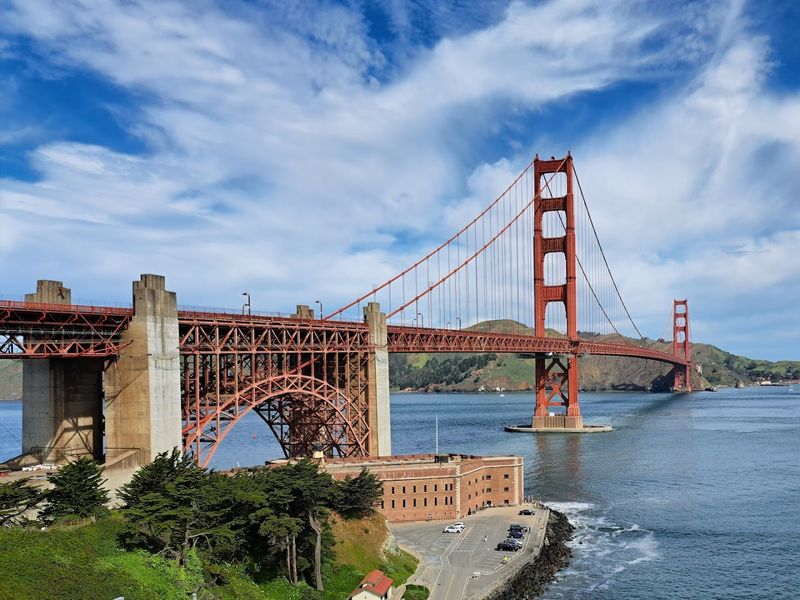
Most people driving across the Golden Gate Bridge have no idea there is a Civil War-era brick fortress directly beneath their feet, and that is exactly the kind of detail Hitchcock would have loved.
Fort Point was built between 1853 and 1861 and is the only brick fortification on the West Coast. Its position directly under the southern anchorage of the Golden Gate Bridge makes for one of the most visually striking architectural contrasts in the country.
The fort appears in “Vertigo” (1958) in a pivotal early scene, and the location still looks remarkably close to how it appeared on screen.
Inside, the fort features four tiers of brick arched casemates originally designed to hold 126 cannons. The National Park Service now manages it as a free-admission historic site, offering ranger-led tours and exhibits on Civil War-era military history.
The rooftop walkway provides dramatic views of the bridge overhead and the bay beyond, which alone makes the visit worth the trip.
3. Palace Of Fine Arts, San Francisco, California
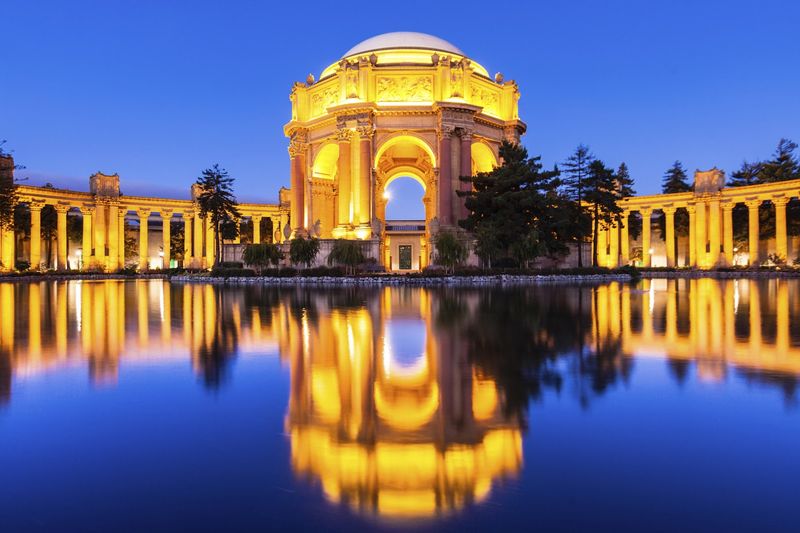
There are not many places in a major American city where you can stand beside a classical rotunda reflected in a lagoon and feel like you have wandered into a European capital, but San Francisco has always played by its own rules.
The Palace of Fine Arts was originally built for the 1915 Panama-Pacific International Exposition and was designed by architect Bernard Maybeck in a Roman-inspired style. Unlike most exposition structures, it was not torn down after the event, largely because the public refused to let it go.
The current structure is a 1960s concrete reconstruction of the original.
The palace appears in “Vertigo” as one of several San Francisco landmarks used to build the film’s haunting portrait of the city. Today it houses the Palace of Fine Arts Theatre, a 1,000-seat performing arts venue that hosts a wide range of events.
The surrounding park and lagoon are free to visit year-round, making it one of the most accessible grand landmarks in the city.
4. Golden Gate Bridge, San Francisco, California
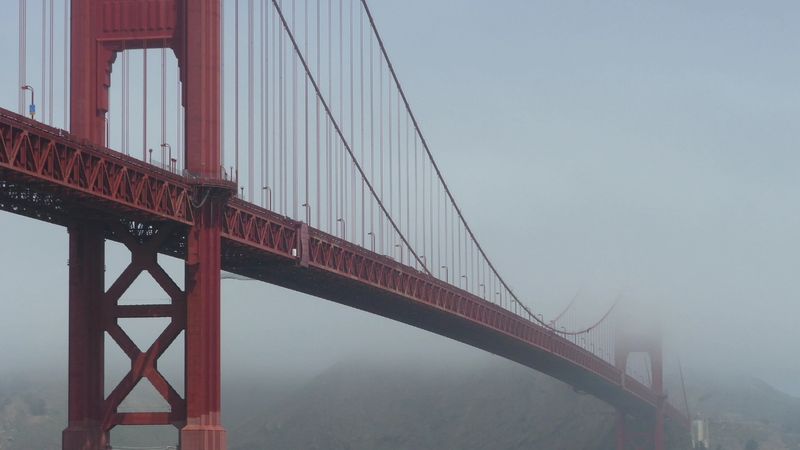
No other bridge in the world has appeared in as many thriller plots, real and fictional, as this one, and there is a reason for that.
The Golden Gate Bridge opened in 1937 and stretches 1.7 miles across the entrance to San Francisco Bay. At the time of its construction, it was the longest and tallest suspension bridge in the world.
Its distinctive International Orange color was chosen partly for visibility in fog, which is a detail that feels almost too perfect for a Hitchcock connection.
The bridge features prominently in “Vertigo,” with key scenes filmed at the Fort Point viewing area beneath its southern tower. Walking across the bridge takes roughly 30 to 45 minutes one way, and the pedestrian path is open daily.
Cyclists have their own designated lane on the western side.
On a clear day the views extend across the bay to the city skyline and out toward the Pacific. On a foggy morning, the towers seem to materialize from nowhere, which is arguably the more cinematic experience.
5. Royal Albert Hall, London, England
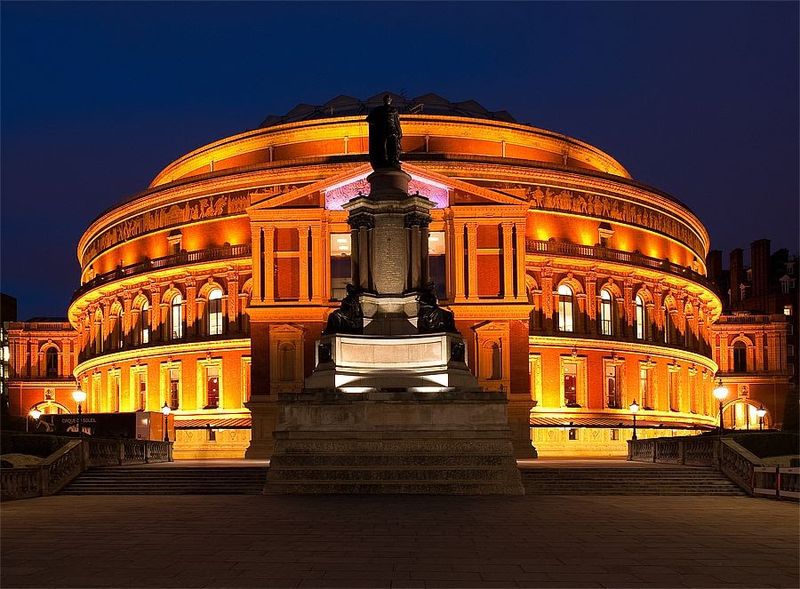
Alfred Hitchcock grew up in London, and his understanding of the city’s grand public spaces shows clearly in “The Man Who Knew Too Much” (1956), where Royal Albert Hall becomes the setting for one of cinema’s most nerve-shredding sequences.
The hall was built in 1871 and named after Prince Albert, the late husband of Queen Victoria. Its circular auditorium holds up to 5,272 seats and hosts more than 390 events per year, ranging from classical concerts to comedy shows and graduation ceremonies.
The building’s distinctive terracotta exterior and famous glass dome make it one of the most recognizable structures in London.
In the film, a concert at the hall builds toward a precisely timed moment of crisis, and Hitchcock uses the real venue’s layout to maximum dramatic effect. Guided tours of the building are available and cover the backstage areas, royal boxes, and the main auditorium.
Booking a seat for an actual performance here is one of those experiences that genuinely lives up to its reputation, cinematic associations included.
6. The British Museum, London, England
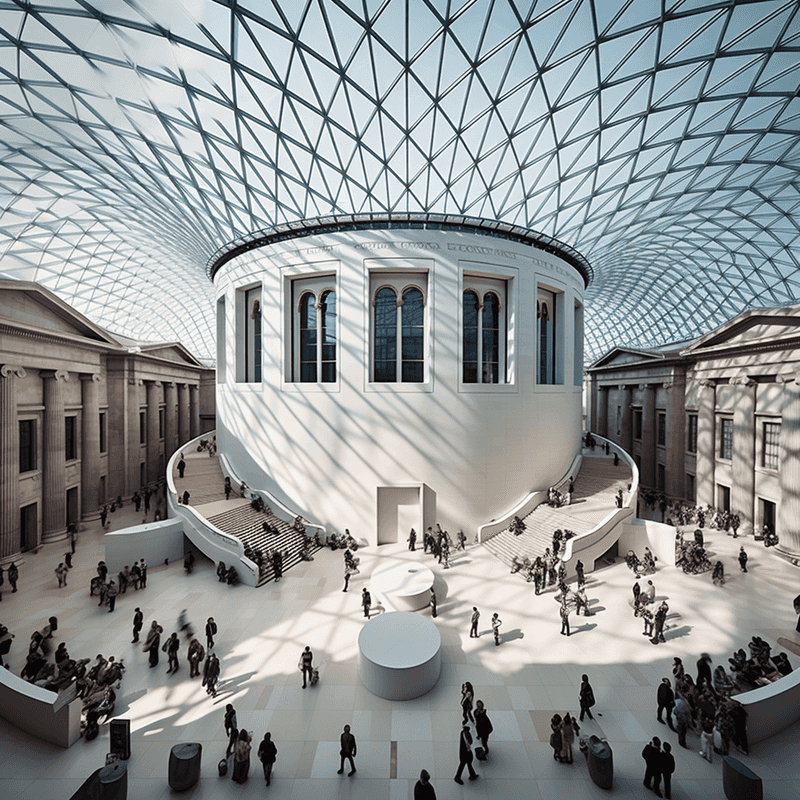
There is something quietly unsettling about a building that holds the collected artifacts of dozens of vanished civilizations, and the British Museum leans into that quality without even trying.
Founded in 1753, the British Museum in Bloomsbury was the world’s first public national museum. Its collection now contains over eight million objects spanning two million years of human history.
The Great Court, covered by a striking glass-and-steel roof designed by Norman Foster and completed in 2000, is one of the largest covered public squares in Europe.
Hitchcock used London’s cultural institutions as backdrops throughout his British career, and the museum’s atmosphere of hushed authority and labyrinthine galleries fits his aesthetic precisely. The Egyptian collection alone, which includes the Rosetta Stone and dozens of ancient mummies, occupies multiple rooms that feel genuinely ancient in the best possible way.
Admission to the permanent collection is free, and the museum is open daily. Arriving early on a weekday gives you the best chance of experiencing the galleries with minimal crowds, which is when the thriller atmosphere is most convincing.
7. Bodega Head, Bodega Bay, California
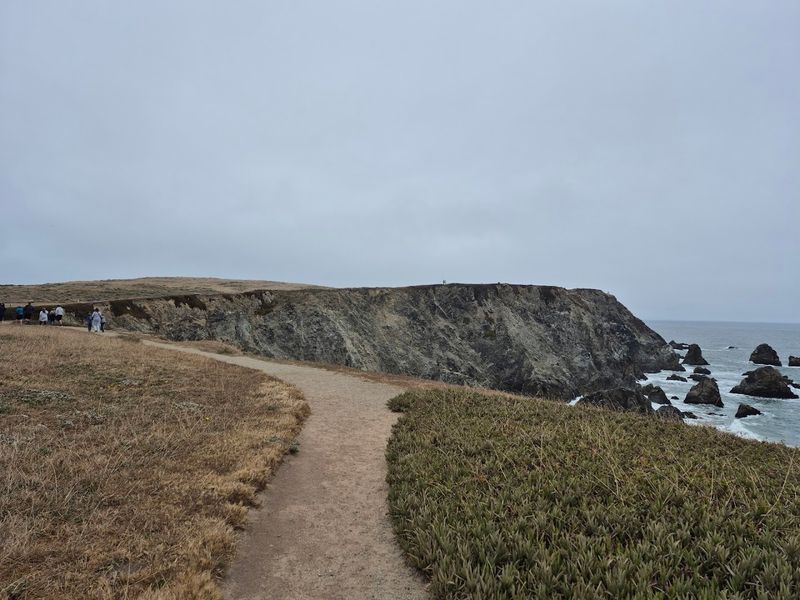
Forget movie sets. The real thing is right here on the Northern California coast, and it has been quietly dramatic since long before any cameras arrived.
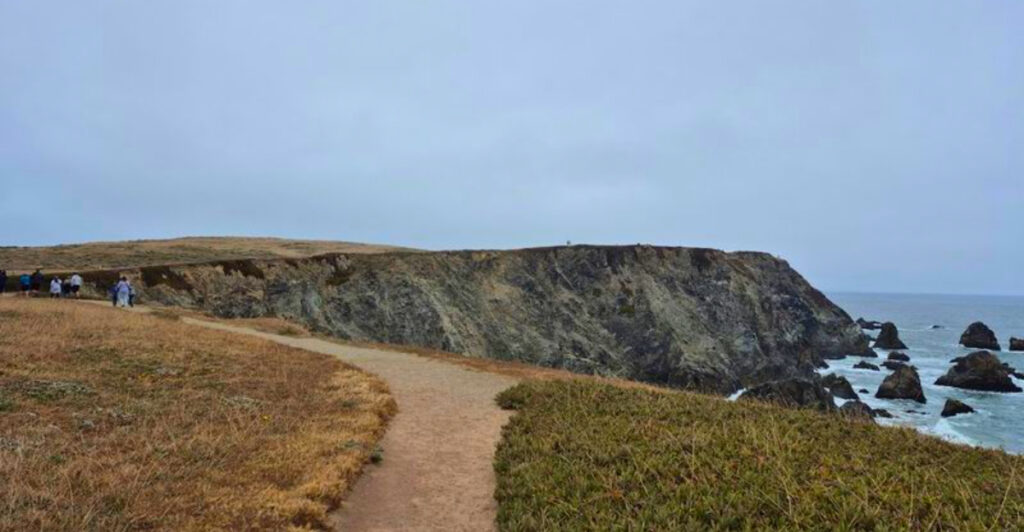
Bodega Head is a rugged peninsula jutting into the Pacific just above Bodega Bay, the same coastal area Alfred Hitchcock chose for “The Birds” in 1963. He reportedly picked the location for its bleak, treeless hills, quiet fishing harbor, and persistent coastal fog, and those qualities have not changed a bit.
The bluffs at Bodega Head offer sweeping views of the Pacific and are a popular spot for whale watching between December and April. The area also sits within the larger Sonoma Coast State Park, which protects miles of wild coastline.
Seabirds, including western gulls and cormorants, nest along the cliffs in significant numbers. Standing at the edge of those windswept bluffs while a flock circles overhead is, to put it mildly, an experience that earns its reputation.
8. Mount Rushmore National Memorial, Keystone, South Dakota
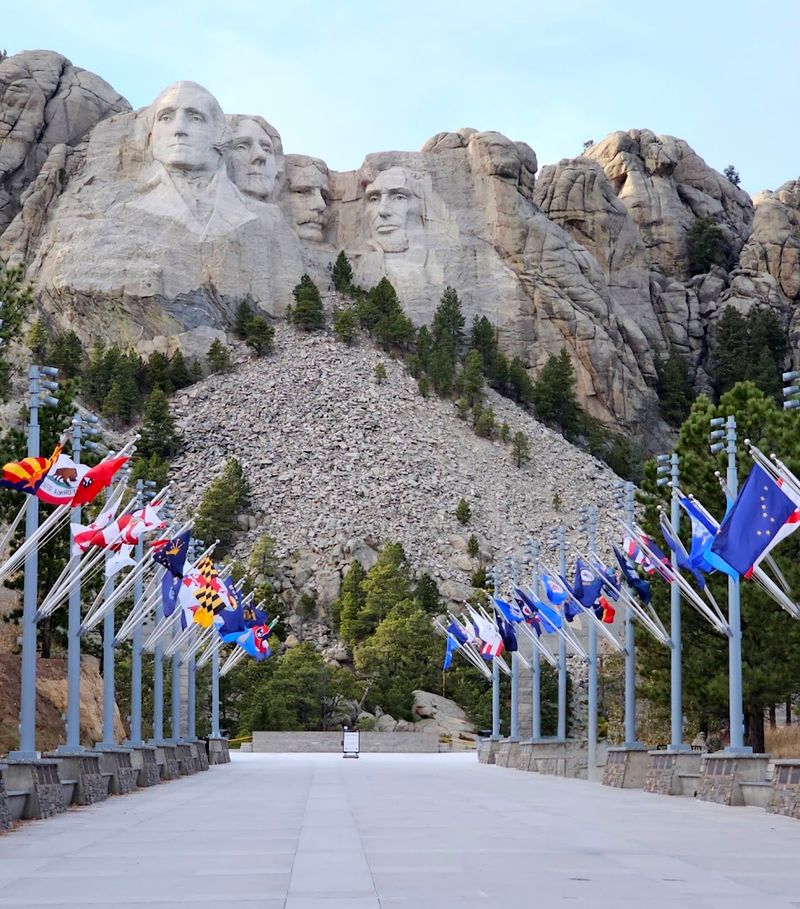
Hitchcock had been dreaming about filming a chase across Mount Rushmore for years before “North by Northwest” finally gave him the excuse in 1959, and the resulting sequence became one of the most iconic in cinema history.
The memorial features the 60-foot carved faces of George Washington, Thomas Jefferson, Theodore Roosevelt, and Abraham Lincoln, sculpted by Gutzon Borglum and his son Lincoln Borglum between 1927 and 1941. Approximately three million visitors come each year, making it one of the most visited national monuments in the United States.
The National Park Service did not allow actual filming on the carved faces, so Hitchcock’s production team built a detailed replica on a Hollywood soundstage for the climactic scenes. The surrounding Black Hills landscape, however, is entirely real and genuinely dramatic.
The Avenue of Flags leading to the viewing terrace features flags from all 50 states and U.S. territories. The memorial is free to visit, though parking fees apply, and the Presidential Trail walking path offers the closest views of the sculpture.
9. Timberline Lodge, Government Camp, Oregon
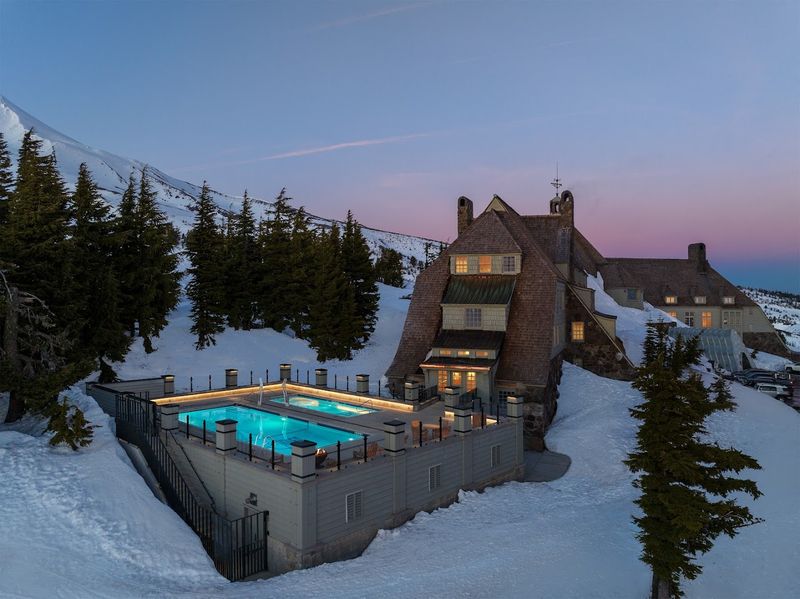
Built during the Great Depression and perched at 6,000 feet on the slopes of Mount Hood, Timberline Lodge is the kind of building that makes you simultaneously want to check in and look over your shoulder.
The lodge was constructed between 1936 and 1937 as a Works Progress Administration project and was dedicated by President Franklin D. Roosevelt in 1937.
It is now a National Historic Landmark and one of the finest examples of Cascadian architecture in the Pacific Northwest, featuring hand-crafted stonework, carved wooden details, and hand-hooked rugs made by WPA artisans.
While the lodge is most famous in film circles for its exterior appearance in “The Shining” (1980), its remote mountain setting and dramatic 1930s architecture make it a natural destination for fans of cinematic suspense in general. Hitchcock’s sensibility was always drawn to grand, isolated structures with histories built into their walls.
The lodge operates year-round as a ski resort and hotel. Room reservations fill up quickly, particularly during winter and holiday weekends, so booking ahead is strongly recommended.
10. Forth Bridge, South Queensferry, Scotland
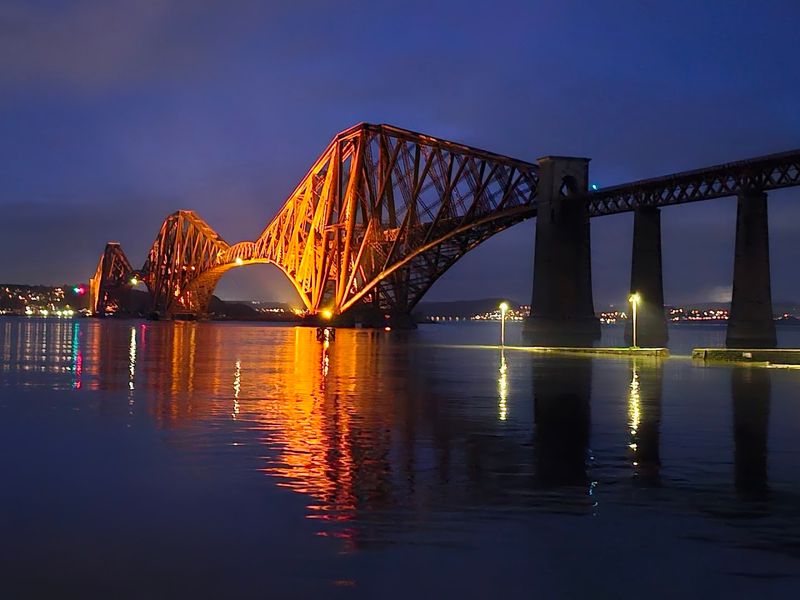
The Forth Bridge is one of those engineering achievements so visually bold that it looks like something a production designer invented rather than something real engineers actually built in 1890.
Completed in 1890 and spanning 1.5 miles across the Firth of Forth near Edinburgh, the Forth Bridge was the world’s first major steel structure and is now a UNESCO World Heritage Site. Its distinctive cantilever design required 54,000 tons of steel and over 6.5 million rivets to complete.
The bridge is still a working railway bridge, carrying trains between Edinburgh and the north of Scotland every day.
The connection to Hitchcock comes through “The 39 Steps” (1935), in which the bridge plays a central role in a gripping chase sequence. The film was based on John Buchan’s 1915 novel and is considered one of Hitchcock’s finest British works.
South Queensferry offers excellent viewing spots along the waterfront, and the nearby Queensferry Museum covers the bridge’s construction history in detail. The town itself is worth a few hours of exploration beyond the famous view.
11. Point Reyes National Seashore, Inverness, California
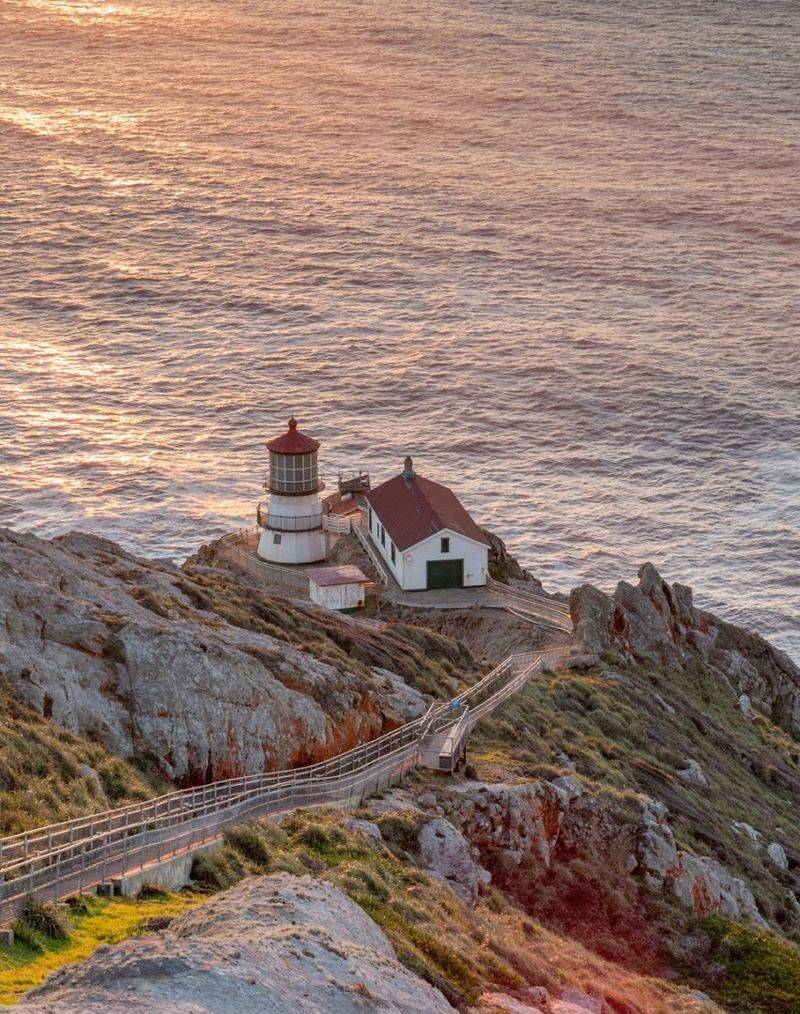
Point Reyes does not need a film crew to feel like the opening scene of a thriller. The geography handles that entirely on its own.
Point Reyes National Seashore covers 71,000 acres of coastline, forests, and pastoral land on a peninsula about 40 miles north of San Francisco. The peninsula sits on the Pacific Plate, separated from the North American Plate by the San Andreas Fault, which runs directly through the park.
During the 1906 San Francisco earthquake, the land at Point Reyes shifted nearly 20 feet in an instant.
The Point Reyes Lighthouse, built in 1870, sits at the tip of the peninsula and is one of the foggiest spots on the entire Pacific Coast, recording fog on roughly 200 days per year. The lighthouse is accessible via a 300-step staircase and is open to visitors on a seasonal schedule.
Wildlife here includes tule elk, harbor seals, and dozens of bird species. The combination of geological drama, persistent coastal fog, and genuine remoteness makes Point Reyes feel like a place where the plot of any good thriller could credibly begin.
12. Hotel Del Coronado, Coronado, California
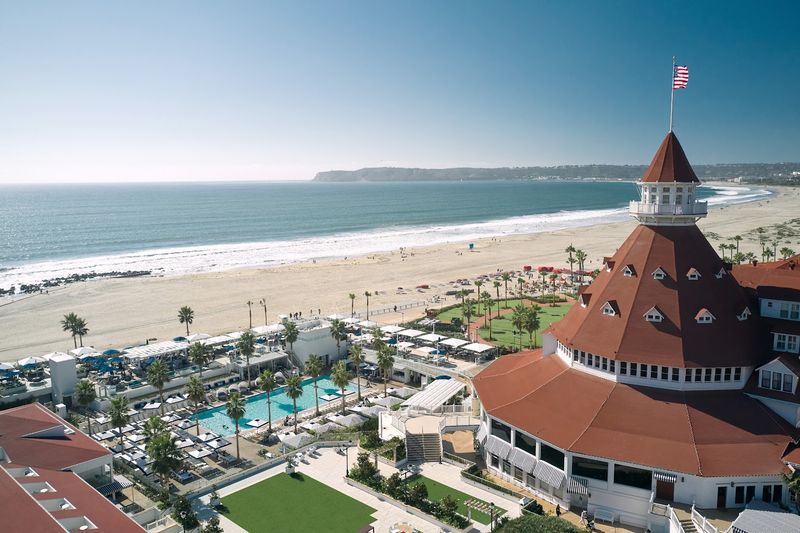
Grand old resort hotels have a way of carrying decades of stories in their architecture, and Hotel del Coronado has been collecting stories since 1888.
The hotel opened on February 19, 1888, and is one of the few surviving examples of an American wooden Victorian beach resort. Its distinctive red turrets, white exterior, and beachfront position on Coronado Island have made it a California landmark for over 130 years.
The building is a National Historic Landmark and has hosted fourteen U.S. presidents over its history.
The hotel’s most famous film appearance is in Billy Wilder’s “Some Like It Hot” (1959), but its Victorian elegance and long resort history place it firmly in the tradition of grand settings that Hitchcock favored for stories of mistaken identity and hidden secrets. The hotel appears in his broader cultural orbit through its era and aesthetic.
Today it operates as a full resort with beach access, multiple dining options, and a spa. History tours of the property are available and cover the building’s architecture, notable guests, and its well-documented collection of unexplained occurrences over the decades.
Share this story