Spread across 210 acres on the shores of Lake Hamilton, this Arkansas garden offers far more than beautiful flowers. Visitors can wander through seasonal displays, woodland trails, lakeside landscapes, waterfalls, sculptures, and a striking glass chapel hidden among the trees.
Each season brings a different experience, from vibrant spring blooms to dazzling holiday lights. With its mix of gardens, nature, and architecture, this beloved destination rewards visitors who take the time to explore beyond the main attractions.
Where to Find This Garden and What to Expect at the Entrance
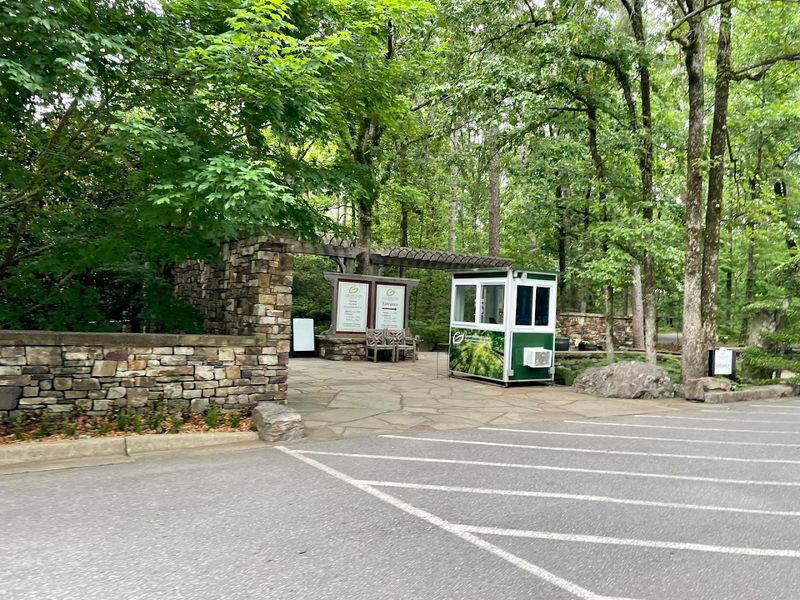
The full address is 550 Arkridge Rd, Hot Springs, AR 71913, and the drive in already sets the tone. The road winds through dense Ouachita Mountain forest before the welcome center appears, and you immediately get the sense that this place takes its setting seriously.
The gardens are open every day of the week from 9 AM to 6 PM, which gives you plenty of time to explore without feeling rushed. Adult admission is $22 when purchased online, and buying tickets in advance is strongly recommended because popular events like Holiday Lights and the Tulip Extravaganza sell out regularly.
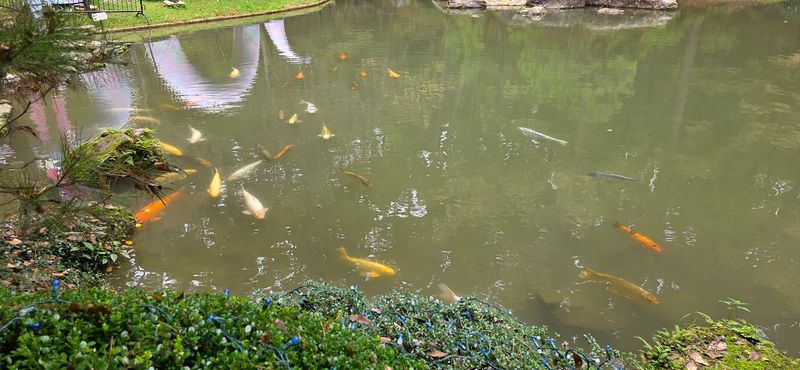
The welcome center is cheerful and well-organized, with friendly staff ready to hand you a map and answer questions. You can also pick up a small bag of koi food here for a modest donation, which comes in handy later at the pond.
Golf cart tours are available for an extra fee and are absolutely worth it, especially if anyone in your group has mobility concerns.
The Jaw-Dropping Scale of This 210-Acre Woodland Landscape
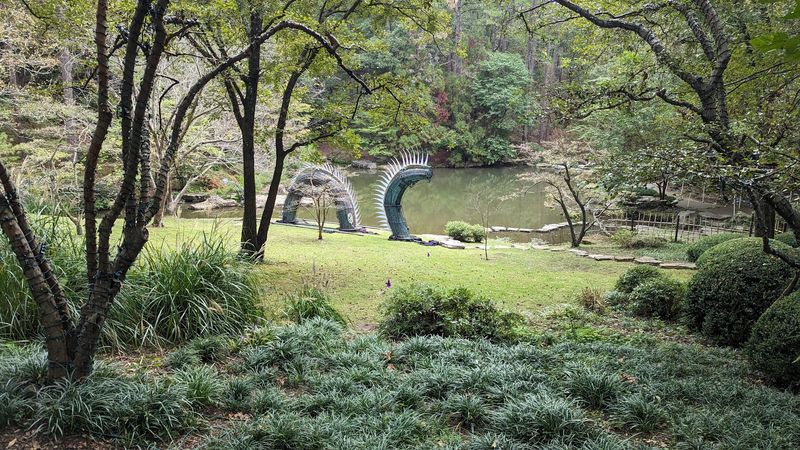
Two hundred and ten acres sounds like a big number on paper, and it feels even bigger once you are actually standing in the middle of it. The gardens sit on a wooded peninsula that stretches 1.25 miles into Lake Hamilton, which means water views appear from multiple angles as you move through the property.
Owned by the University of Arkansas, the gardens blend cultivated beauty with natural Ouachita Mountain forest in a way that feels intentional but never forced. Ash, hickory, oak, and pine trees tower overhead while carefully curated garden beds sit at eye level, creating a layered visual experience that changes with every few steps.
Most visitors spend between two and three hours here, and many still do not see everything. The sheer variety of landscapes packed into one property is genuinely impressive.
From open lawns to dense forest corridors to lakeside terraces, each section of the garden feels like its own world waiting to be explored.
The Wooded Trails That Make Every Walk Feel Like a Discovery
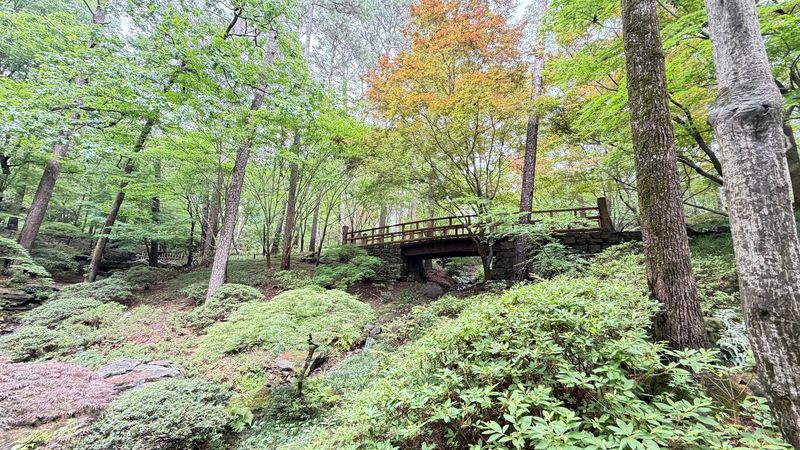
More than three miles of trails crisscross the property, covering everything from flat paved walkways to gravel paths to stone staircases that climb through rocky terrain. The variety keeps things interesting, and no two stretches of trail feel identical.
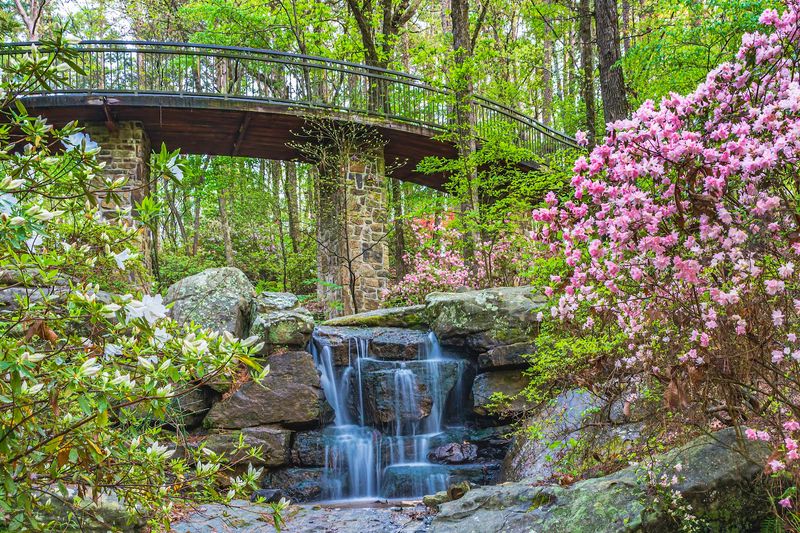
One of the standout features is the Millsap Canopy Bridge, a walkway that sits two full stories above the forest floor. From up there, you look down at cascading water, fern beds, rhododendrons, and hydrangeas in a way that completely reframes how you see the garden below.
The Hixson Family Nature Preserve offers a quieter, more contemplative experience with interpretive signs that explain the local ecosystem as you walk. Many of the main paths are ADA accessible, and the golf cart tours cover areas that would be difficult for some visitors to reach on foot.
Comfortable shoes are a must, and arriving early on weekdays tends to mean fewer crowds and a more peaceful experience overall.
Seasonal Blooms That Transform the Garden All Year Long
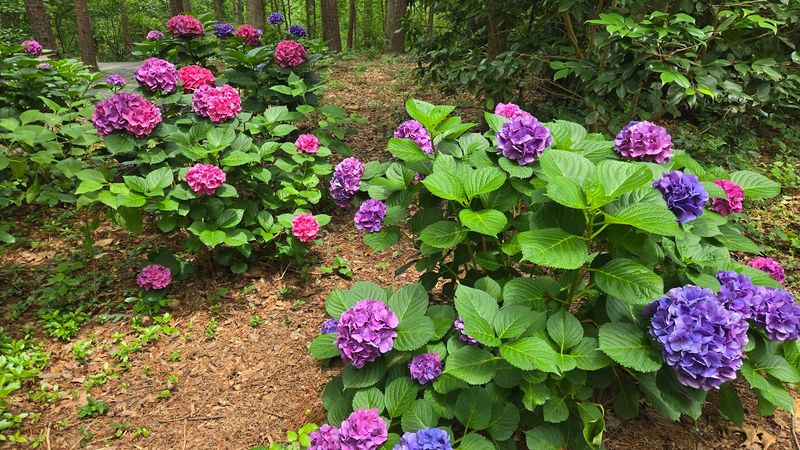
One of the things that keeps people coming back season after season is the fact that the garden never looks the same twice. Each time of year brings a completely different palette, and the transitions between seasons are just as beautiful as the peak moments themselves.
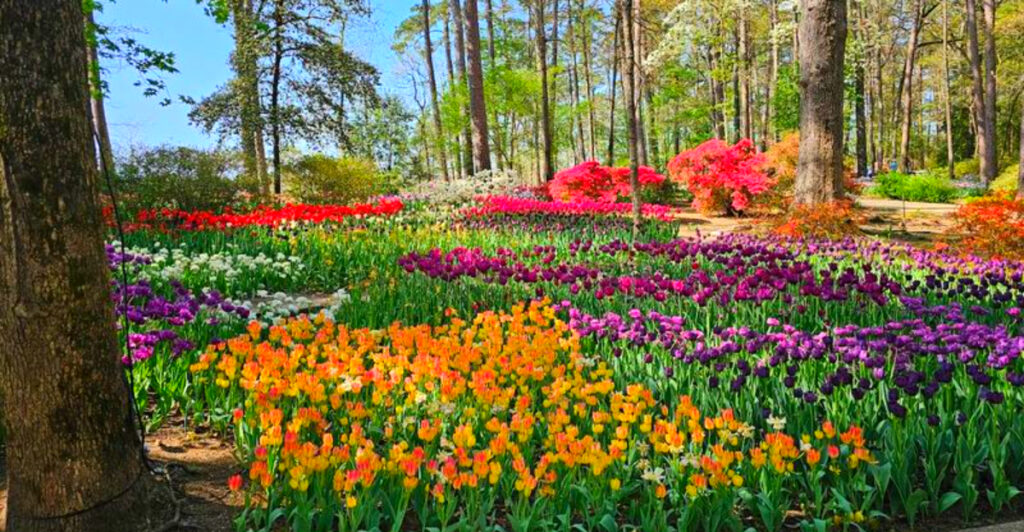
Winter brings Japanese camellias, early daffodils, and winter-flowering bulbs that offer surprising color against bare branches. Spring is the most dramatic season, with thousands of crocuses, hyacinths, and over 150,000 Dutch tulips transforming the landscape into something almost unreal.
Summer settles into lush greenery punctuated by daylilies, hydrangeas, and various perennials. Autumn then delivers rich foliage color across the entire 210-acre property.
The garden holds more than 2,500 different ornamental plant varieties, including over 160 types of azaleas and major collections of camellias and daffodils. No matter which month you visit, something here is always worth stopping to look at twice.
The Famous Tulip Extravaganza That Draws Crowds Every Spring
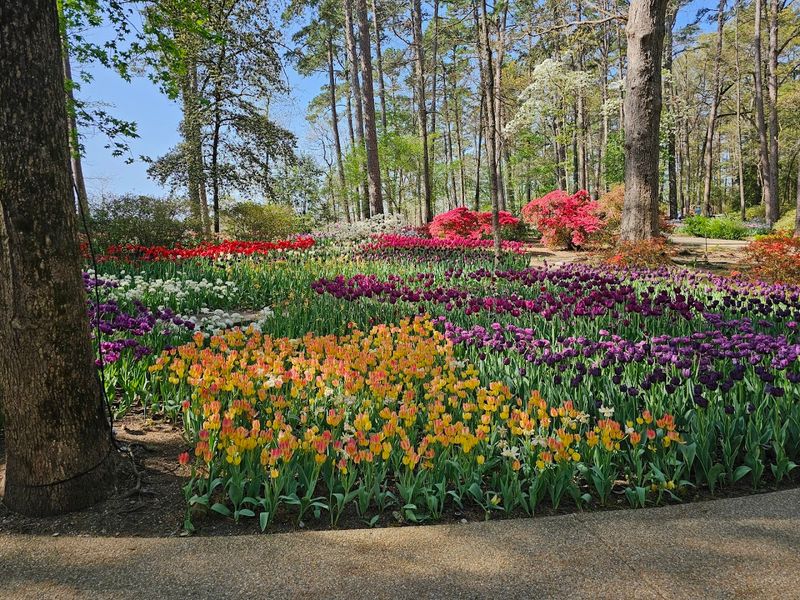
If there is one event at Garvan Woodland Gardens that has taken on a life of its own, it is the Tulip Extravaganza. Running from late February through mid-March, this annual display features over 150,000 Dutch tulips planted across the garden in sweeping, color-coordinated arrangements.
The scale of it is hard to describe without sounding like you are exaggerating. Every color you can imagine is represented, and the blooms are planted densely enough that the effect feels almost theatrical.
Early March is typically the peak window, and the garden draws visitors from across the region during this period.
Tickets sell out for this event, so buying online well in advance is genuinely important and not just a polite suggestion. The tulips are accompanied by early azaleas, daffodils, and emerging dogwood blossoms, which means the entire garden is performing at once.
Spring is when Garvan truly shows off, and the Tulip Extravaganza is the headline act of the whole season.
Anthony Chapel and Its Floor-to-Ceiling Glass Architecture
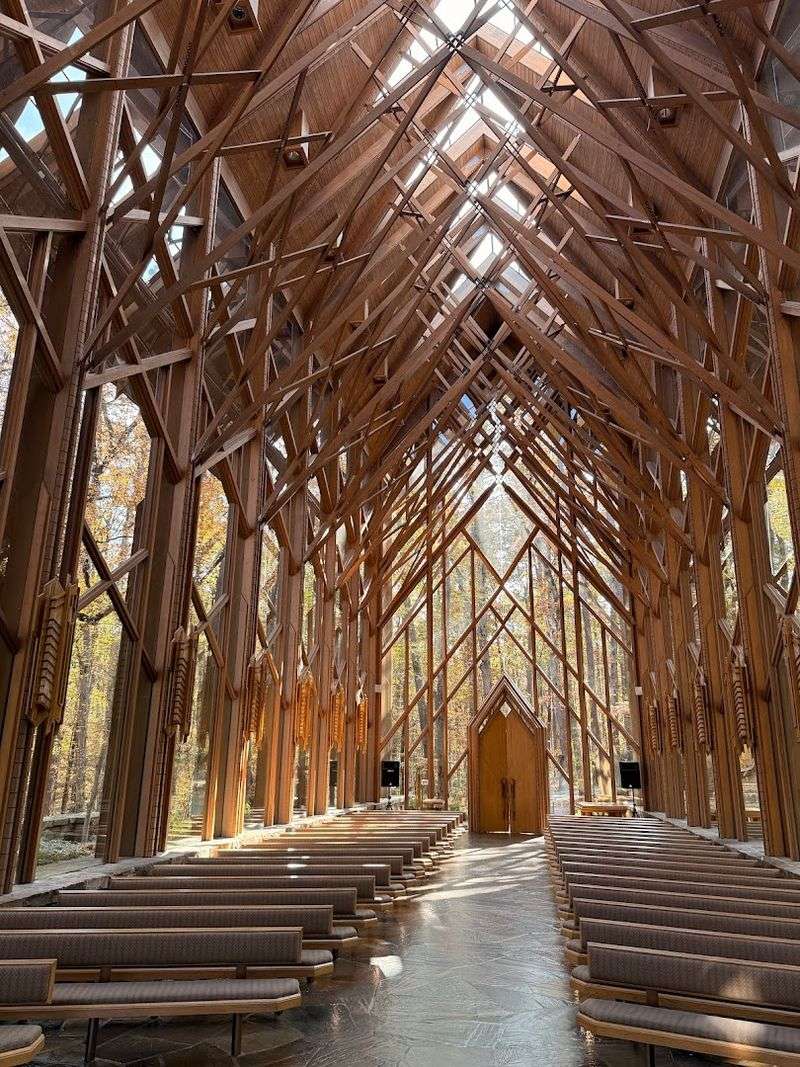
Few buildings anywhere in Arkansas stop people in their tracks quite like Anthony Chapel. The structure features soaring floor-to-ceiling glass walls and dramatic wooden beams that frame the surrounding forest as if the trees outside are part of the interior design.
Natural light floods every corner of the chapel, and the views shift depending on the season. In spring, azaleas and dogwoods press up against the glass.
In winter, bare branches create a stark and equally beautiful frame. The chapel is free to visit when no private event is scheduled, and it is genuinely one of the most architecturally remarkable spaces in the entire state.
Weddings are held here regularly, so weekday visits tend to offer better access. The chapel was designed with a clear reverence for the natural environment surrounding it, and spending even a few quiet minutes inside leaves most visitors with a sense of calm that is hard to shake.
It is the kind of space that earns its reputation easily.
Lakeside Views That Show Up When You Least Expect Them
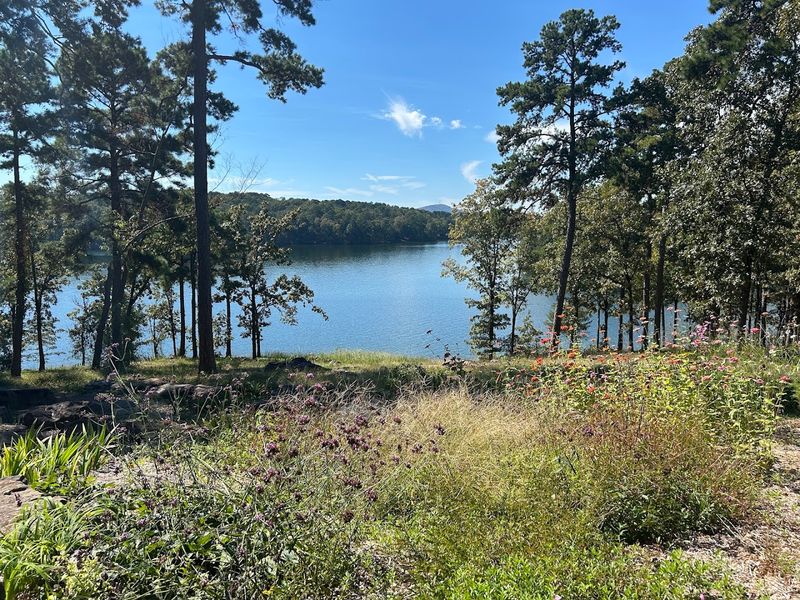
The garden sits on a peninsula surrounded by 4.5 miles of Lake Hamilton shoreline, and the water has a way of appearing suddenly as you round a bend on the trail. One moment you are deep in forest shadow, and the next, a broad stretch of calm lake opens up in front of you.
The Perry Wildflower Overlook is the most dedicated viewpoint on the property, featuring a flagstone terrace that frames the lake beautifully and provides a natural place to pause and take it all in. The Hixson Family Nature Preserve also offers lakeside perspectives that feel quieter and more secluded than the main garden areas.
On still mornings, the lake surface reflects the surrounding tree line in a way that makes the whole scene look almost painted. The combination of forest, formal garden, and open water is genuinely unusual for a botanical garden, and it is one of the main reasons this place feels so different from others.
The lake views alone are worth the admission price.
The Evans Children’s Adventure Garden and Family-Friendly Features
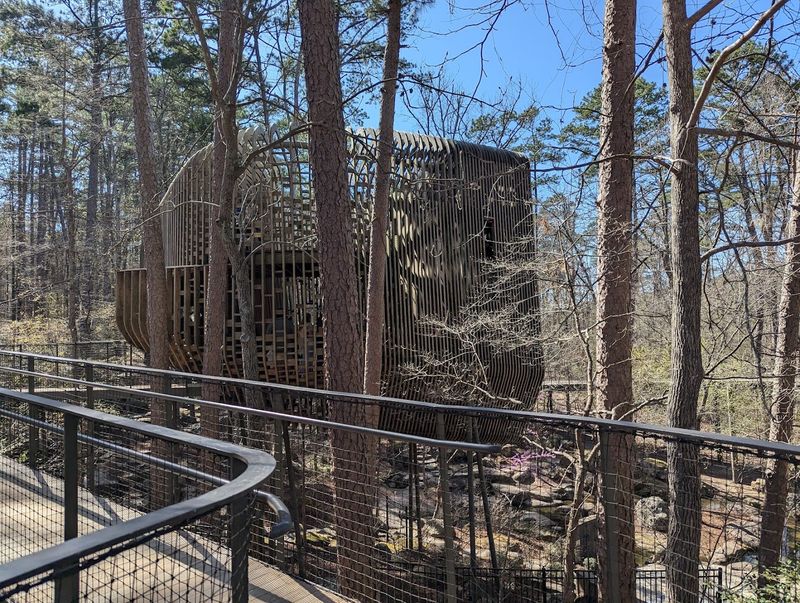
Families with younger visitors will find that the garden has thought carefully about keeping kids engaged throughout the entire visit. The Evans Children’s Adventure Garden is a dedicated space designed specifically for younger explorers, with interactive elements that connect children to the natural world around them.
The Evans Treehouse is a particular favorite across all age groups, not just kids. The structure sits within the tree canopy and has a whimsical, handcrafted quality that makes it feel genuinely magical rather than like a standard playground feature.
Most adults climbing up to the platform find it hard not to smile.
There is also a fairy garden, a model train area featuring the Sugg Model Train display, and a sculpture garden with rock formations that include tunnels, caves, and a waterfall you can actually walk behind. The koi pond near the welcome center is another crowd-pleaser, and kids light up when they get to toss food to the large, colorful fish waiting below.
The Garden of the Pine Wind and Its Asian-Inspired Beauty
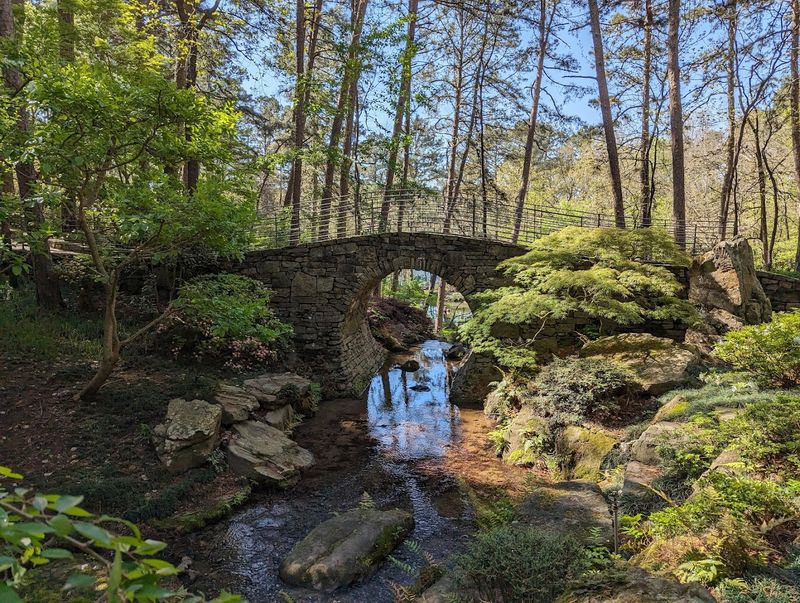
Ranked as one of the finest Asian-inspired gardens in North America, the Garden of the Pine Wind is a quieter corner of the property that rewards visitors who seek it out. The design draws on Japanese garden traditions, using maples, dogwoods, and tree peonies to create a sense of deliberate calm.
The layout emphasizes negative space as much as the plants themselves, and every element feels carefully considered. Stone paths, water features, and layered plantings work together to create a meditative atmosphere that feels distinctly different from the rest of the garden’s more exuberant sections.
Tree peonies bloom here in spring and are genuinely spectacular, with large, ruffled flowers in shades of pink, white, and deep burgundy. The Japanese maples provide some of the garden’s best autumn color, turning brilliant shades of red and orange as the season progresses.
The Garden of the Pine Wind is one of those places where slowing down is not optional but simply what the space asks of you.
The Holiday Lights Display That Transforms the Garden Every Winter
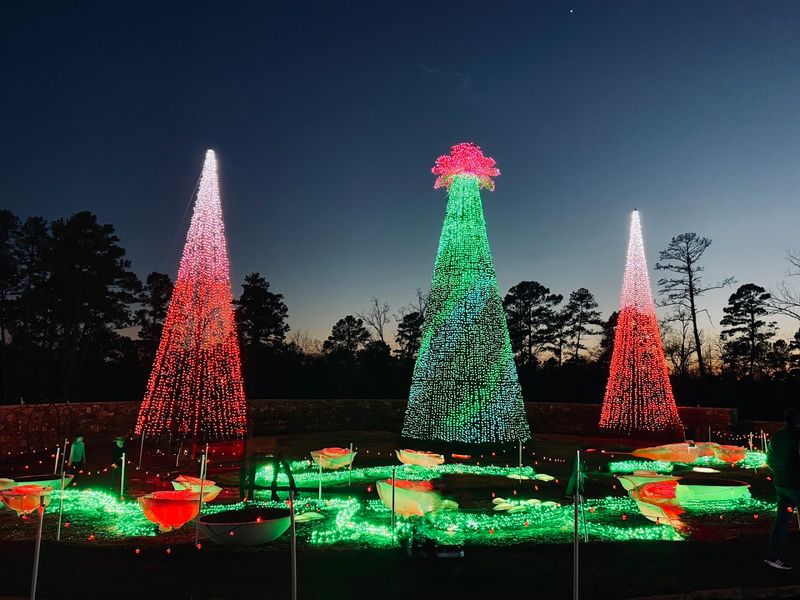
When the sun goes down in December, Garvan Woodland Gardens becomes an entirely different place. The Holiday Lights display covers the entire property in thousands of lights, turning familiar trails and landmarks into glowing nighttime spectacles that draw visitors from across the region.
The way the lights reflect off the waterfalls and ponds is particularly striking, creating shimmering patterns that change as you move through the garden. The main attraction is a giant triple-tree light display synchronized to a compilation of holiday music, and it consistently draws crowds who gather and watch multiple times in a row.
Free hot chocolate is included with admission, which makes the winter evening stroll feel genuinely festive. Tickets sell out frequently, so booking online well in advance is essential.
Arriving early helps avoid traffic backups near the entrance. Anthony Chapel is included in the admission during the Holiday Lights season, and seeing that glass structure lit up against a dark winter sky is an experience that tends to stay with people long after the visit ends.
The Chipmunk Cafe, Koi Pond, and Other Practical Visitor Details
Spending two or three hours exploring 210 acres works up an appetite, and the Chipmunk Cafe is right there when you need a break. The menu includes solid options like a chipotle steak quesadilla that has earned genuine praise, and the prices are reasonable for a destination cafe inside a major attraction.
The koi pond near the welcome center is a simple but deeply satisfying stop. A small donation gets you a bag of fish food, and the koi are large, colorful, and surprisingly enthusiastic about meal time.
It is one of those small details that adds a lot of warmth to the overall visit.
Golf cart tours run throughout the day at an additional cost of around $20 per person, and guides like the ones who have been praised by visitors are knowledgeable, unhurried, and full of stories about specific landmarks. The gift shop stays open even when the cafe is closed, and restrooms throughout the property are consistently clean and well maintained.
Why a Membership Makes More Sense Than a Single Visit
After one visit, a lot of people come back. After two visits, many of them buy a membership.
A two-person annual membership costs $75, which is barely more than three single admissions, and it covers regular entry as well as special events like the Holiday Lights display without any additional fee.
Members also get priority access when general admission tickets sell out, which matters more than it sounds during peak seasons. The garden changes so dramatically from one season to the next that visiting three or four times in a year never feels repetitive.
Spring tulips, summer greenery, autumn foliage, and winter lights are four genuinely distinct experiences on the same 210-acre property.
The University of Arkansas uses the gardens for education and research as well as public programming, which means the quality of the collections and the care put into the grounds reflects an institutional commitment rather than just seasonal upkeep.
Share this story