There is a converted 19th-century gristmill tucked along a rushing river in western Massachusetts that holds around 40,000 used books across two floors, and it has quietly become one of the most talked-about literary destinations in New England. The building itself sits directly above a waterfall on the Sawmill River, and the combination of creaking wooden floors, floor-to-ceiling shelves, and river views out every window makes the whole experience feel genuinely unlike any other bookstore in the region.
This place runs on a motto that is hard to argue with: books you do not need in a place you cannot find. That tagline alone should be enough to get any curious reader into the car and heading toward Montague, Massachusetts.
The Waterfall That Steals the Show
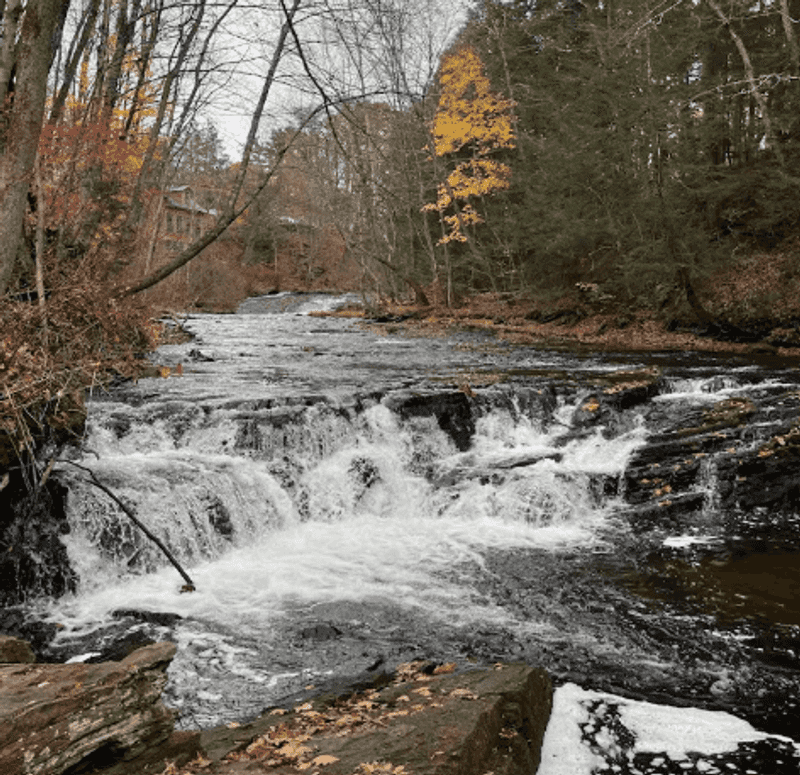
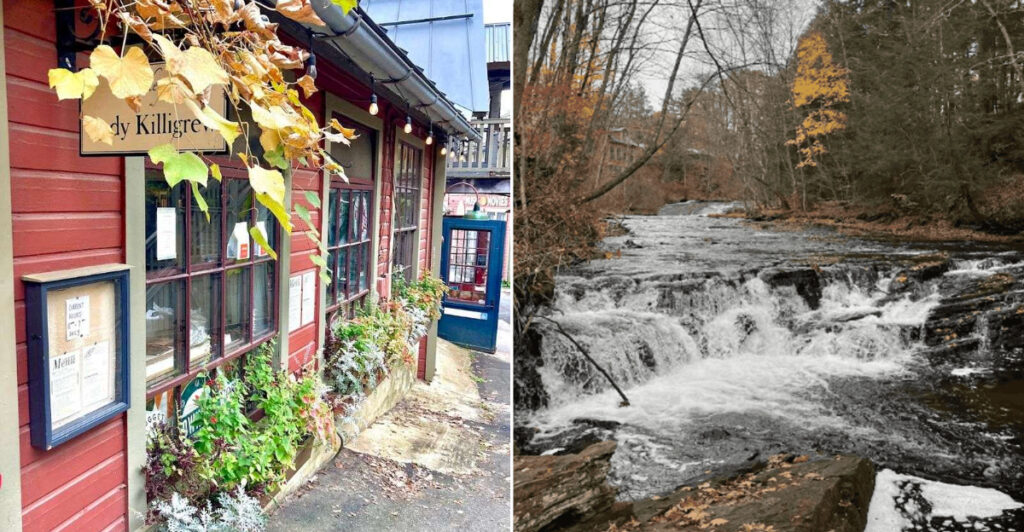
Right below the bookmill, the Sawmill River drops over a small but dramatic waterfall that is visible from multiple points inside and outside the building. The rushing water is one of the defining features of the entire property, and it draws just as much attention as the books themselves.
An outdoor deck extends from the building directly over the river, giving anyone who steps outside a clear view of the falls below. On warmer days, that deck becomes a popular spot to sit and watch the water move, with the surrounding trees and old mill architecture framing the view on all sides.
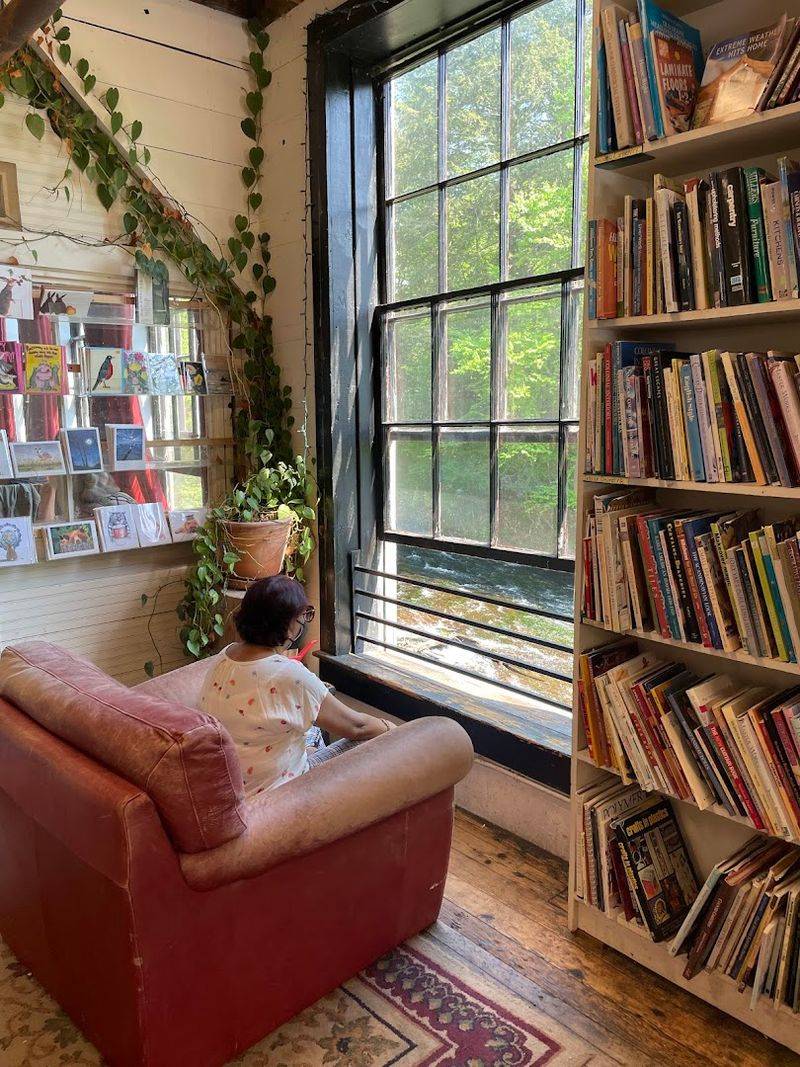
Even from inside the bookstore, large windows face out toward the river, so the waterfall is never far from sight no matter which section of the store a person wanders into. That constant presence of moving water gives the whole visit a calm, unhurried quality that is hard to replicate anywhere else in the region.
40,000 Books and How They Are Organized
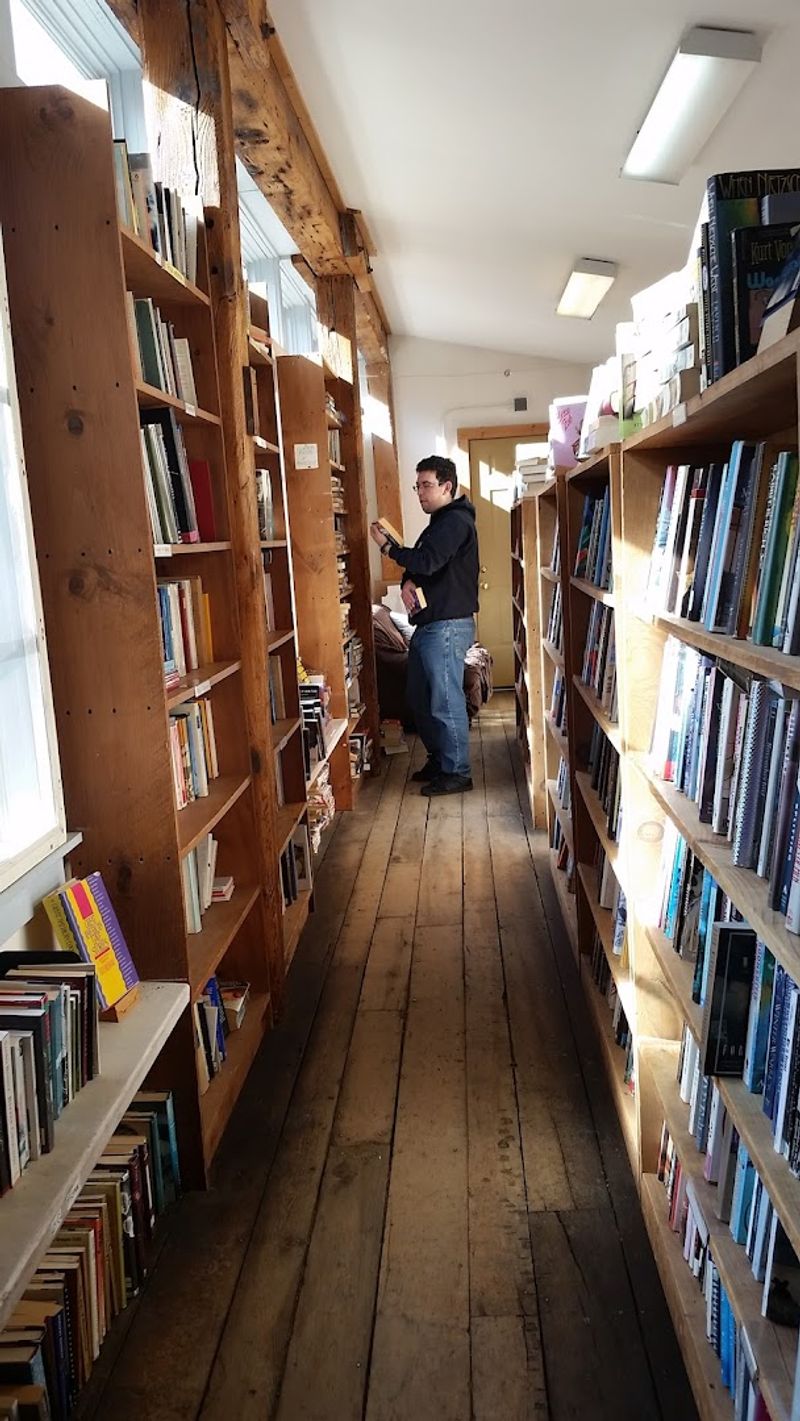
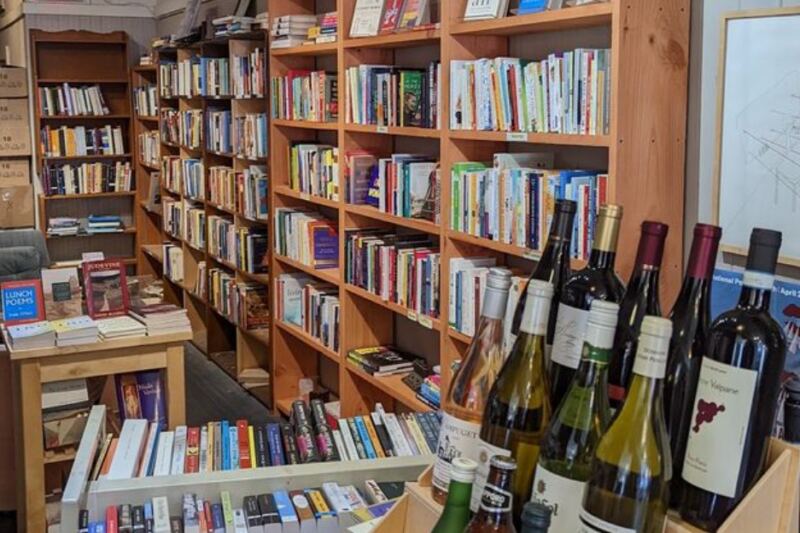
Around 40,000 used books fill the two floors of the Montague Bookmill, covering an enormous range of subjects and genres. The nonfiction collection is particularly strong, with sections dedicated to history, politics, travel, gardening, science, philosophy, and dozens of other topics spread across the main floor.
Fiction titles are organized by author last name, and specialty genres including science fiction, fantasy, thriller, and true crime each have their own dedicated sections. Children’s books occupy their own corner, and while that area tends to be the most lively, it still maintains a workable level of order.
Because the inventory is secondhand and constantly changing, there is no searchable database to check whether a specific title is in stock on any given day. That unpredictability is part of the appeal.
Prices across the collection are notably reasonable, with many hardcovers available for well under the cost of a new book at a chain retailer.
The Charm of a 19th-Century Mill Building
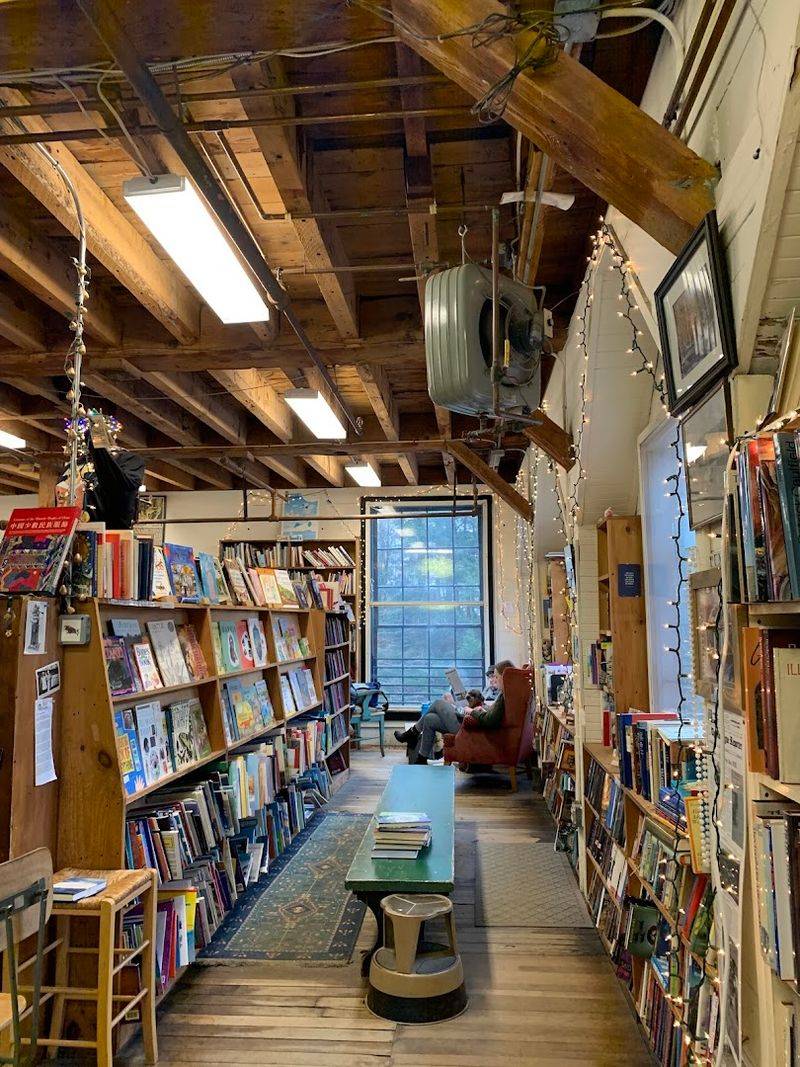
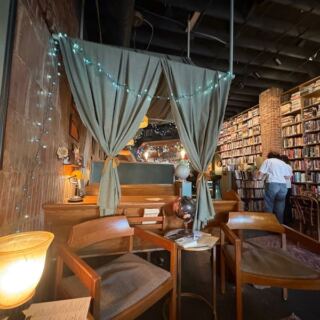
The building itself is a major part of what makes the Montague Bookmill so memorable. Originally built as a working gristmill in the 1800s, the structure still carries the physical character of its industrial past, with heavy wooden beams, wide plank floors, and multi-level interior spaces that follow the original layout of the mill rather than a conventional retail floor plan.
Moving between sections of the bookstore means navigating stairs, narrow corridors, and unexpected room transitions that give the whole place an exploratory quality. Each new area feels slightly different from the last, which keeps the experience from feeling repetitive even after a long visit.
Large windows were added to take advantage of the river views, and those windows now define much of the store’s character. Natural light filters through at different angles depending on the time of day, and the old wood walls and floors absorb that light in a way that gives the interior a warm, lived-in quality that newer buildings rarely achieve.
Cozy Seating That Invites Lingering
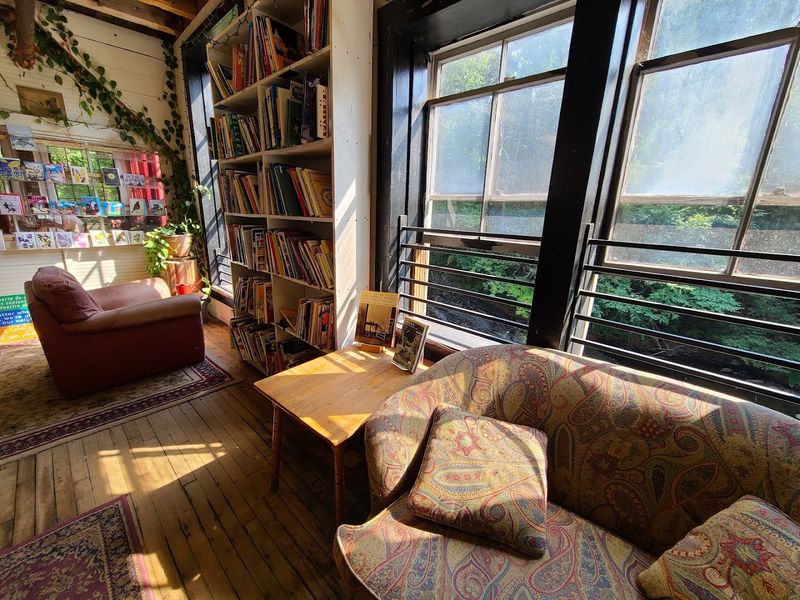
One detail that sets the Montague Bookmill apart from most used bookstores is the generous amount of seating scattered throughout the building. Large wingback armchairs and comfortable sofas are positioned near windows throughout both floors, clearly designed to encourage people to sit down and actually read before deciding whether to buy.
The chairs near the river-facing windows are especially popular, since they combine comfortable seating with a direct view of the water below. On a quiet weekday morning, it is entirely possible to settle into one of those chairs with a book and lose track of time for an hour or more.
That invitation to stay and read rather than simply browse and leave is a deliberate part of the bookmill’s character. The staff does not rush anyone along, and the general atmosphere supports unhurried exploration at whatever pace feels right.
Spending half a day there is not unusual, and the building is well suited to exactly that kind of extended, relaxed visit.
Lady Killigrew Cafe and What It Offers
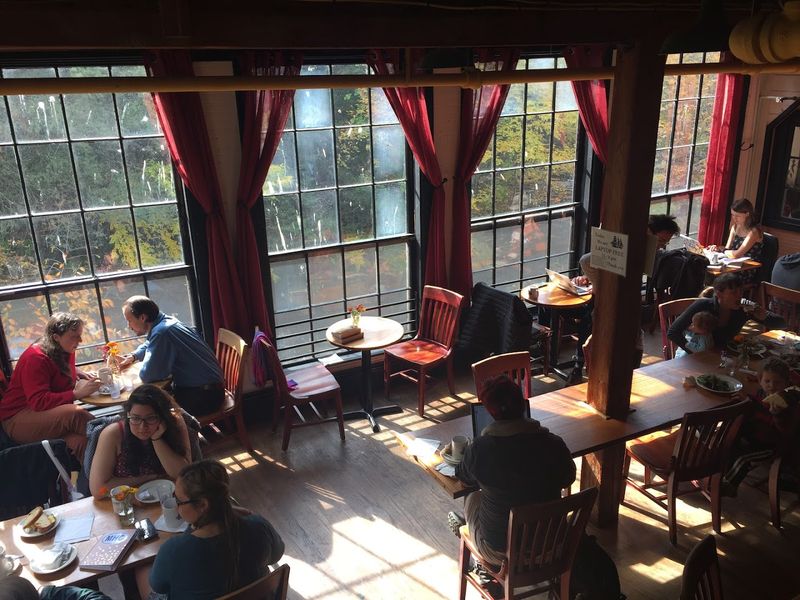
Attached to the bookstore is the Lady Killigrew Cafe, a small cafe that serves coffee, tea, pastries, and a breakfast and lunch menu with vegetarian and vegan options available. The cafe operates within the same building as the bookmill, and its seating area has its own windows facing the river.
The cafe is known for being a worthwhile stop on its own, not just as a convenience for bookstore visitors. Sandwiches are a reliable choice from the menu, and the coffee program covers the basics well.
The cafe opens before the bookstore does, so arriving early and starting with a hot drink before the shelves officially open is a reasonable strategy, especially in summer.
Having a full cafe integrated into a used bookstore is not standard practice, and the Lady Killigrew adds a dimension to the visit that makes the whole trip feel more complete. It turns what could be a quick browse into a proper half-day outing with a natural beginning, middle, and end.
Turn It Up Records Across the Hall
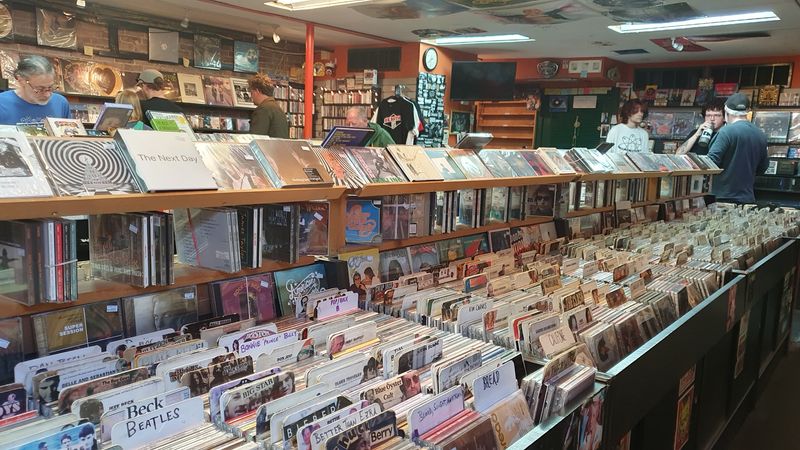
Directly across from the bookstore inside the mill complex is Turn It Up, a music shop that sells vinyl records, CDs, and DVDs. The shop occupies a compact space but carries a solid enough selection to warrant a stop, especially for anyone who enjoys flipping through physical music the same way they enjoy browsing physical books.
Having a record store and a used bookstore sharing the same building is a combination that makes a certain kind of sense. Both depend on the same browsing instinct, the same willingness to slow down and look through things without a specific destination in mind, and both reward patience with unexpected finds.
Turn It Up is small, and the selection may not match what a dedicated record store in a larger city would offer, but as part of a broader visit to the mill complex, it adds another layer of interest. The proximity to the bookstore means switching between the two requires almost no effort at all.
Sawmill River Arts and the Local Creative Community
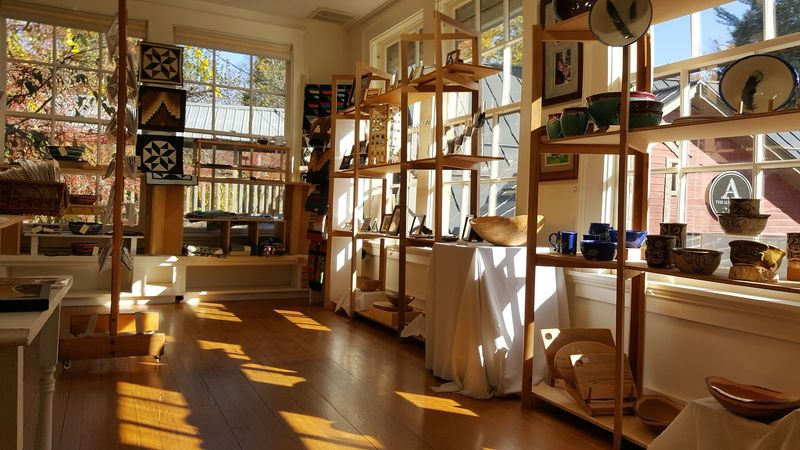
Along the same stretch of road as the bookmill sits Sawmill River Arts, a gallery space that sells and exhibits work by local artists. The gallery operates as part of the broader creative community that has developed around the mill property, and stopping in adds a visual dimension to a visit that is otherwise focused on books and music.
The Pioneer Valley region of western Massachusetts has a long history of supporting working artists, and Sawmill River Arts reflects that tradition directly. The work on display tends to reflect local landscapes, regional themes, and the kind of craft-oriented practice that the area has fostered for generations.
Taken together, the bookmill, the record shop, the cafe, and the art gallery form a small but genuinely cohesive cultural cluster. Each one operates independently, but they benefit from being close together, and the combination gives the whole property an identity that goes well beyond what any single one of them could establish on its own.
The Outdoor Deck Experience
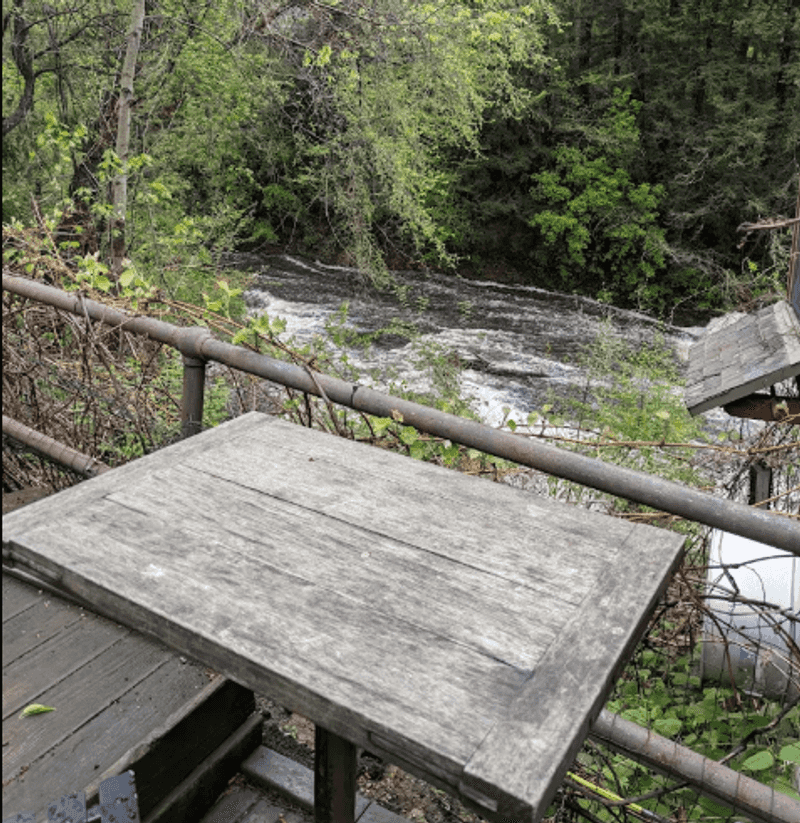
The outdoor deck attached to the Montague Bookmill is one of those spots that earns its reputation without any exaggeration. It extends directly over the Sawmill River, and standing on it puts a person directly above the falling water, with the mill building behind and trees on both banks stretching out in either direction.
During summer months the deck is a natural gathering point, and it becomes the kind of place where people linger far longer than they planned. The combination of the river below, the old mill structure overhead, and the surrounding woodland creates a setting that is genuinely hard to leave in a hurry.
Even in cooler months, the deck offers a clear view of the river and waterfall that is worth stepping outside for, even briefly. It is the kind of feature that turns a bookstore visit into something that feels more like a full experience, the sort of detail that ends up being what people mention first when they describe the place to someone who has never been.
Best Times to Visit and What to Expect
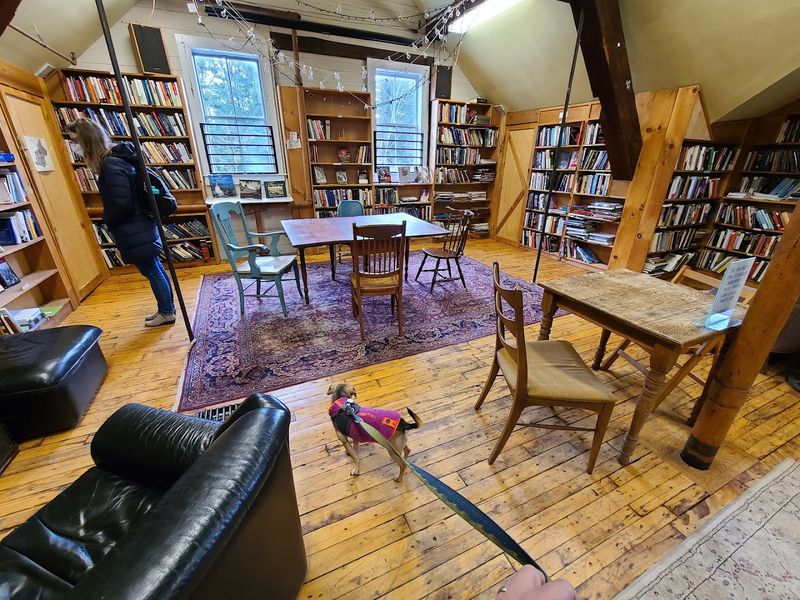
The bookmill is open every day of the week from 10 AM to 6 PM, which makes scheduling a visit straightforward. Summer weekends tend to draw the largest crowds, and the combination of the outdoor deck, the cafe, and the warm weather makes those visits particularly lively.
Arriving closer to opening time on a summer weekend is a practical way to get ahead of the busiest part of the day.
Weekday mornings are notably quieter, and that quieter atmosphere suits the kind of unhurried browsing the bookmill is built for. The building is not air-conditioned, but the shade provided by the surrounding trees and the river below keeps the interior reasonably comfortable even on warm days, particularly when the windows are open.
Parking is free and available in multiple spots around the property, including a lot up the hill, spaces in front of the building, and additional spots behind it. The lot fills up on busy days, but there is generally enough room to accommodate the number of visitors the mill typically attracts.
The Motto That Perfectly Captures the Spirit
Few businesses have a motto that so accurately describes the experience of actually being there. The Montague Bookmill runs on the tagline: books you do not need in a place you cannot find.
Both halves of that statement hold up under scrutiny in a way that is almost unusual for a marketing phrase.
The books part is true because a used bookstore organized by genre rather than demand means the inventory reflects what people have donated and traded over time, not what a purchasing algorithm decided should be stocked. That creates a collection full of titles a person would not go looking for specifically but might become genuinely excited to find.
The place part is equally accurate. The bookmill is not on a main road, is not in a city center, and does not advertise itself aggressively.
Finding it requires a deliberate choice to go there, which means everyone who shows up has made a real effort, and that shared effort gives the whole place a particular energy.
What Makes the Book Selection Genuinely Special
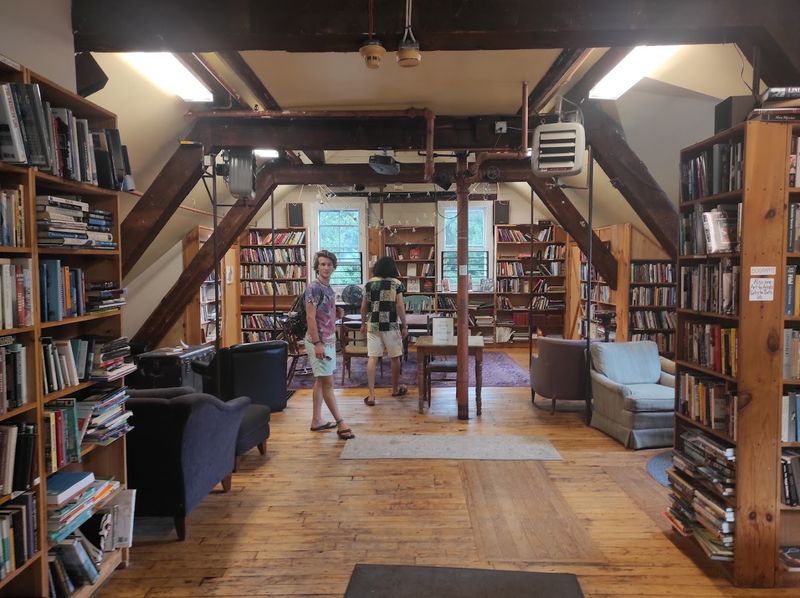
The depth of the nonfiction section at the Montague Bookmill is one of its most consistently noted strengths. History books covering a wide range of countries and periods, political theory, travel writing, gardening guides, science titles, and philosophy texts are all represented in quantities that suggest a community of serious readers has been donating to this collection for a long time.
Fiction titles are sorted by author last name, which makes browsing efficient once a person understands the layout. Genre sections for science fiction, fantasy, thriller, and true crime are separated out, giving dedicated readers of those categories a clear starting point rather than requiring them to scan the entire fiction room.
Prices throughout the store are consistently lower than what a new book would cost at a chain retailer, and many titles are available for just a few dollars. The combination of breadth, organization, and fair pricing makes the bookmill a place where it is genuinely difficult to leave without finding at least one purchase worth making.
Why People Keep Coming Back
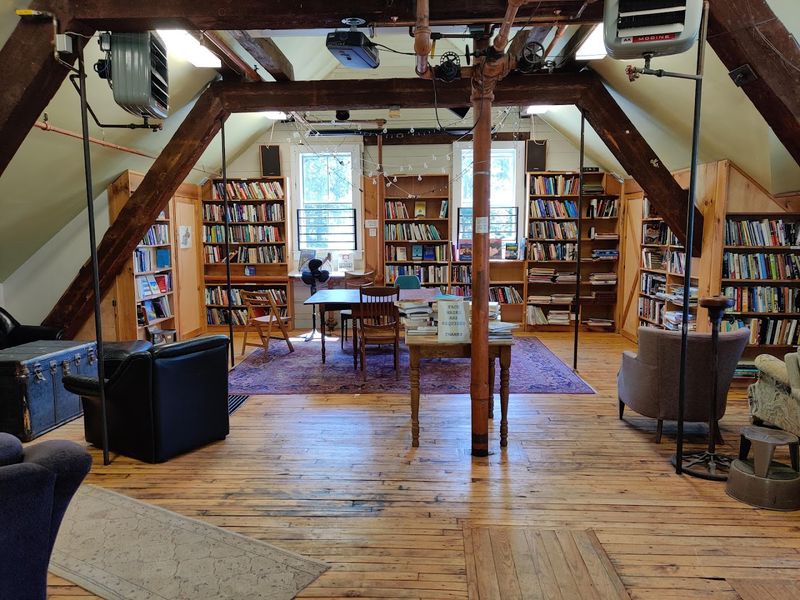
The Montague Bookmill holds a 4.8-star rating across more than 1,200 reviews, which for a used bookstore in a small Massachusetts town is a remarkable level of sustained enthusiasm. The consistency of that response points to something more than just a good book selection or a nice view.
What the bookmill offers is a combination of things that are individually appealing and collectively rare: a large and well-organized used book collection, a cafe with a real menu, a music shop, an art gallery, a historic building, and a waterfall, all within a few steps of each other in a rural setting that requires a deliberate trip to reach.
That effort to get there is part of what makes arriving feel worthwhile. The bookmill has the quality of a place that rewards people who seek it out, and that reward is consistent enough that many who visit once start thinking about the next trip before they have even left the parking lot.
Where Exactly This Mill Sits
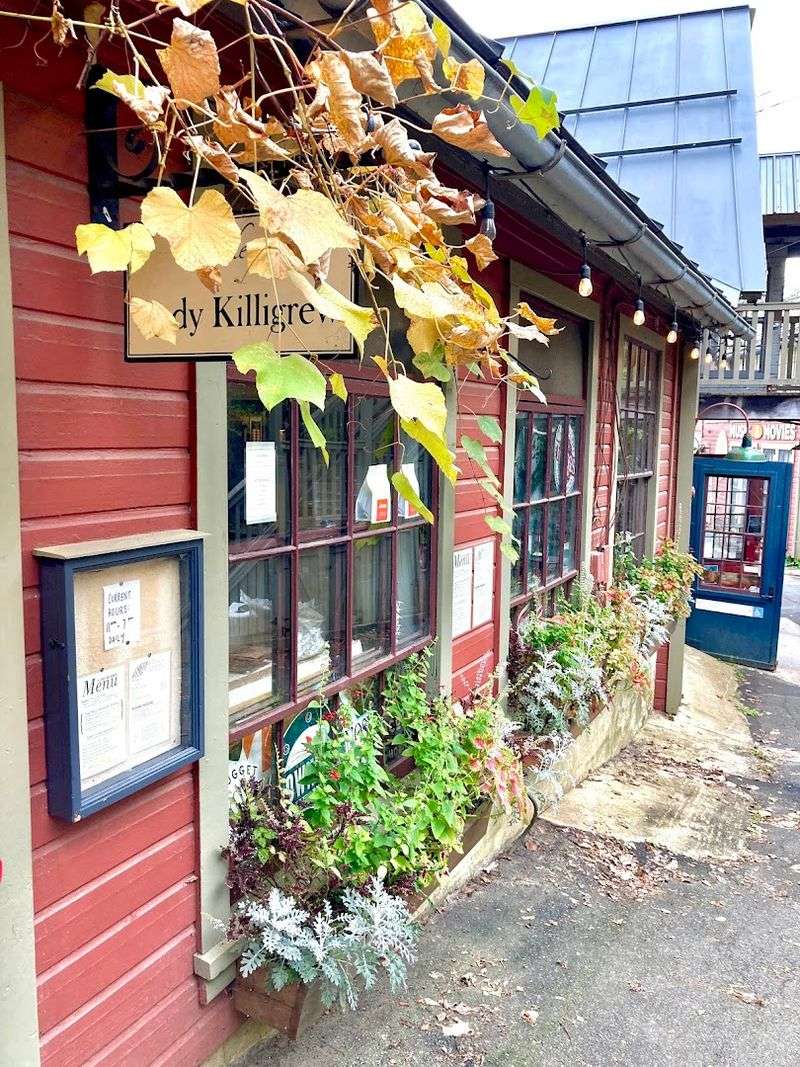
The Montague Bookmill is located at 440 Greenfield Rd, Montague, MA 01351, set inside a genuine 19th-century gristmill that was converted into a used bookstore decades ago. The building sits directly alongside the Sawmill River in the Pioneer Valley region of western Massachusetts, roughly between Greenfield and Amherst.
Getting there requires a bit of a drive down a winding road, which only adds to the sense that something unusual is waiting at the end of the trip. The surrounding landscape is heavily wooded, and the mill building itself blends into the natural setting in a way that makes the first view of it genuinely striking.
Free parking is available in a lot across the street, in front of the building, and behind it, so finding a spot is rarely a problem even on busy weekend days. The bookmill is open seven days a week from 10 AM to 6 PM, making it easy to plan a visit any day of the week.
Share this story