Canada is home to more moose than any other country on Earth, with an estimated population ranging from 500,000 to one million. In some of its most remote regions, spotting a moose is more common than running into another person.
From Newfoundland’s rugged coastlines to the vast wilderness of the Yukon, these places offer a glimpse into a Canada where wildlife still dominates the landscape. Whether you’re a photographer, outdoor enthusiast, or simply fascinated by oversized wildlife, these 15 destinations showcase just how wild – and wonderfully moose-filled – Canada can be.
1. Gros Morne National Park, Newfoundland and Labrador
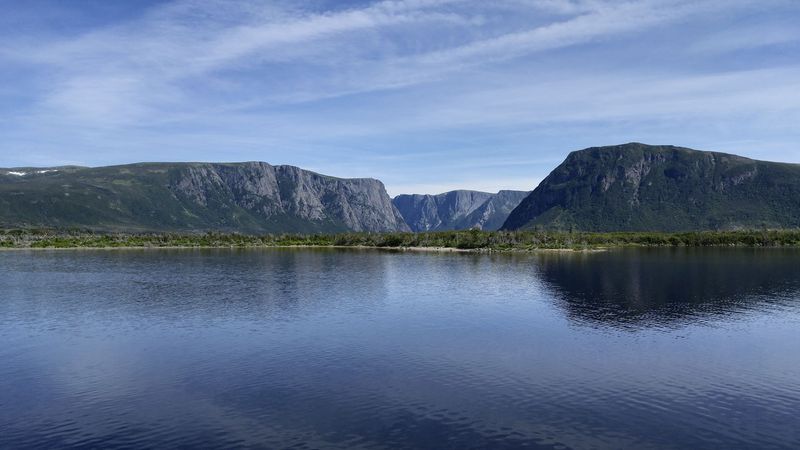
Newfoundland holds the highest moose population density in all of North America, and Gros Morne is one of the clearest examples of why that title sticks.
Moose were actually introduced to the island in the early 1900s, and they adapted so well that they now number between 120,000 and 150,000 across Newfoundland alone.
Inside Gros Morne, they graze near roadsides, wade through ponds, and wander across hiking trails with the casual confidence of animals that know they own the place.
The park covers over 1,800 square kilometers, and its mix of boreal forest, bogs, and wetlands gives moose exactly the kind of varied terrain they prefer.
Park staff regularly remind visitors to keep a safe distance, which tells you everything about how routine these encounters really are. No binoculars required here.
2. Terra Nova National Park, Newfoundland and Labrador
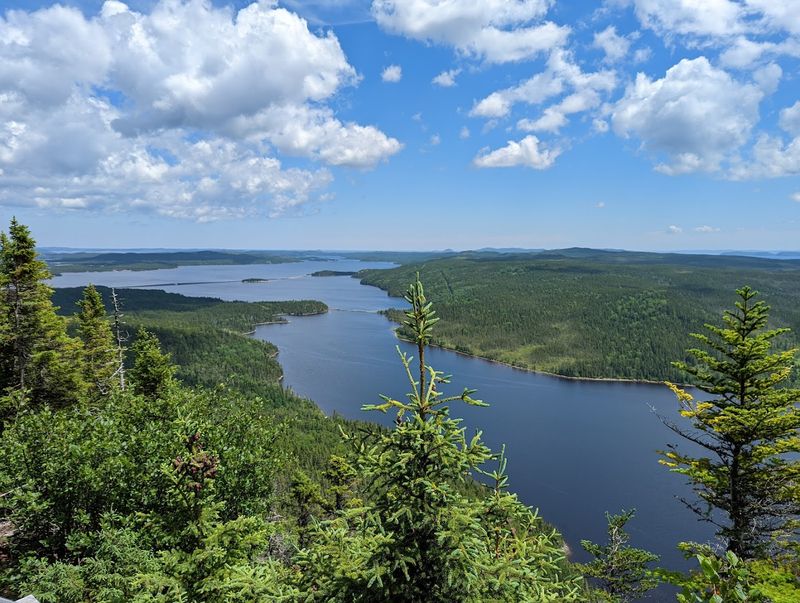
Terra Nova holds a quiet kind of wildness that many travelers overlook in favor of Gros Morne’s dramatic scenery, but the wildlife here is just as impressive.
The park’s sheltered bays, boreal forest, and peat bogs create a habitat that moose find genuinely hard to leave, and the population density inside its boundaries reflects that.
Newfoundland’s overall moose numbers are so high that wildlife managers actually conduct regular population surveys to keep track of the herds moving through protected areas like this one.
Early mornings along the park’s scenic drive frequently reward patient observers with sightings of moose feeding in roadside marshes or crossing open clearings at a slow, deliberate pace.
With a total human population of about 510,000 spread across the entire province, the math on moose-to-people ratios gets very interesting very quickly in places like Terra Nova.
3. Cape Breton Highlands National Park, Nova Scotia
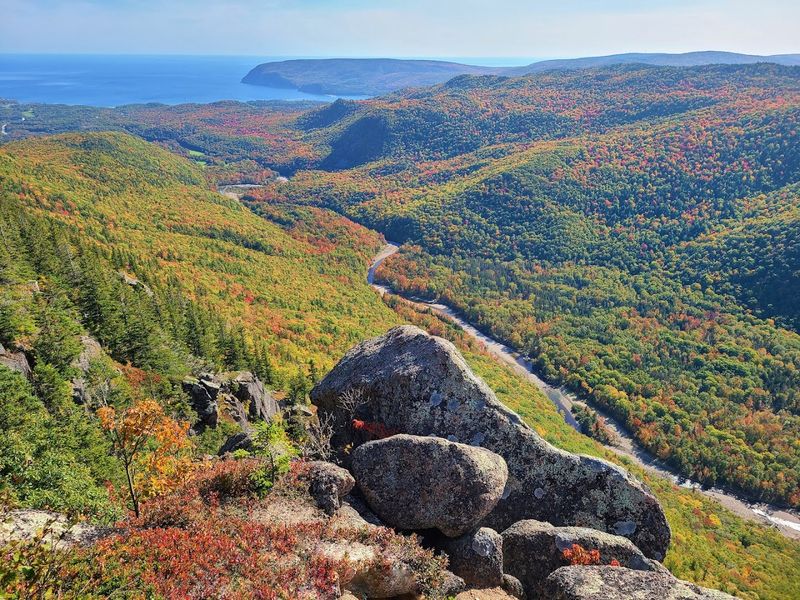
Most visitors arrive at Cape Breton Highlands with cameras aimed at the Cabot Trail’s coastal cliffs, but the park’s interior tells a completely different story.
The highland plateau and its surrounding forests support a moose population that has become one of the park’s most talked-about wildlife features, even if the animals themselves rarely seek attention.
Moose favor the park’s dense alder thickets and wetland edges, where they feed on aquatic plants and low-growing shrubs without much concern for passing hikers.
The park covers about 950 square kilometers, and its combination of upland forest and boggy valleys provides year-round habitat that keeps moose numbers consistently high.
Rangers note that many visitors who arrive hoping to spot a bald eagle or a black bear end up talking most about the moose they encountered on a quiet forest trail. That tends to be the trend here.
4. Algonquin Provincial Park, Ontario
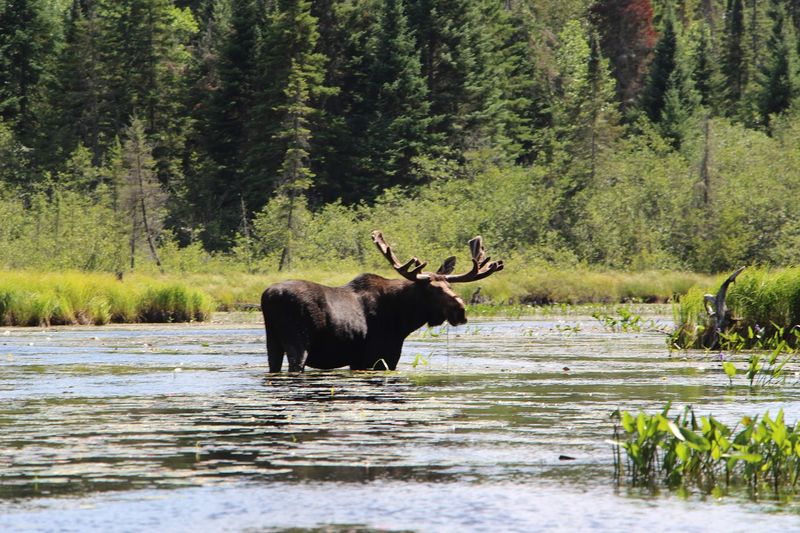
Ontario’s moose population sits around 91,200 animals, and Algonquin Provincial Park holds one of the province’s most reliable concentrations of them.
The park covers roughly 7,600 square kilometers of lakes, rivers, and forest, giving moose an enormous amount of room to roam without ever bumping into a parking lot.
Spring is prime moose-spotting season here, when bulls and cows wade into shallow lakes to feed on aquatic vegetation and are visible from canoes or roadside pullouts along Highway 60.
Algonquin draws around one million visitors per year, but the moose don’t seem to care about that statistic at all. They continue to show up on their own schedule, entirely unbothered by the attention.
Wildlife biologists have been studying Algonquin’s moose population for decades, making it one of the most documented moose habitats in Canada and a genuine benchmark for wildlife research.
5. Chapleau, Ontario
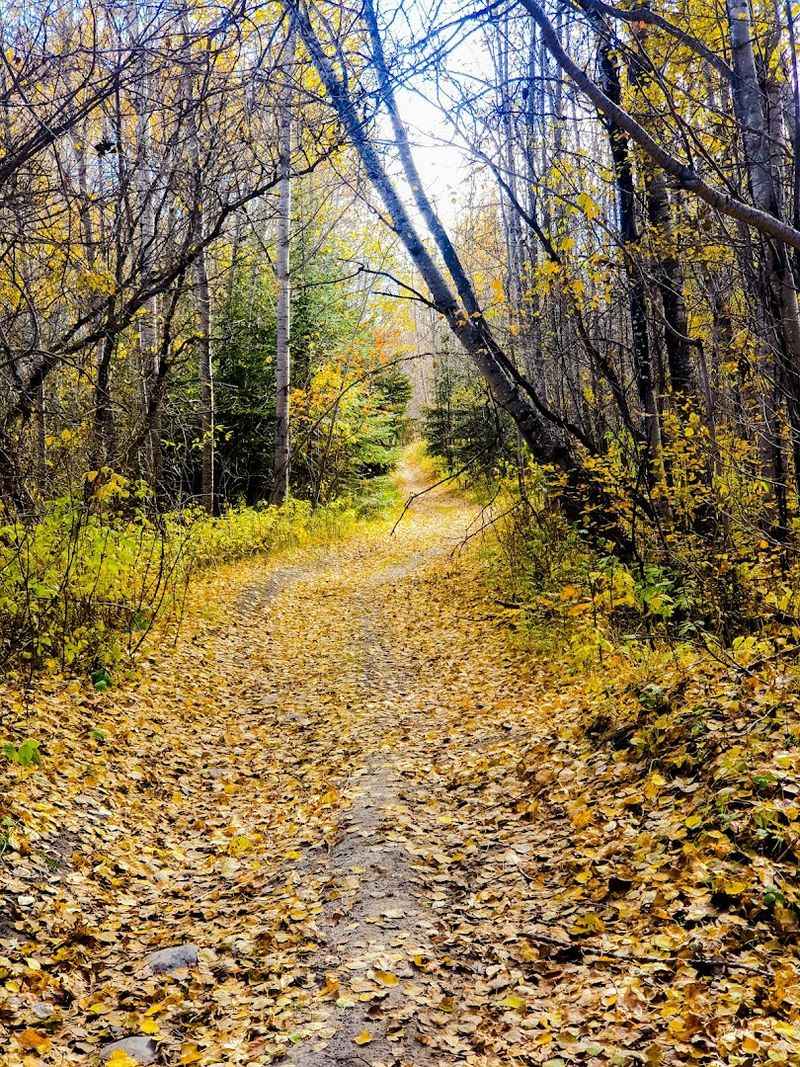
Chapleau sits in the heart of northern Ontario surrounded by one of the largest game reserves in the world, covering over 7,000 square kilometers of unbroken wilderness.
The town itself has a population of roughly 2,200 people, but the forests and wetlands surrounding it support a moose density that makes that number look almost comically small by comparison.
Moose thrive here because the Chapleau Crown Game Preserve prohibits hunting within its boundaries, allowing populations to build up to levels rarely seen in accessible parts of Ontario.
Local outfitters and wilderness guides report regular moose sightings along forest roads, river corridors, and the edges of logging clearings that dot the landscape outside the reserve.
For a town that rarely makes national headlines, Chapleau has a genuine claim to being one of Ontario’s most moose-dense communities. The wildlife around it is the main event.
6. Cochrane, Ontario
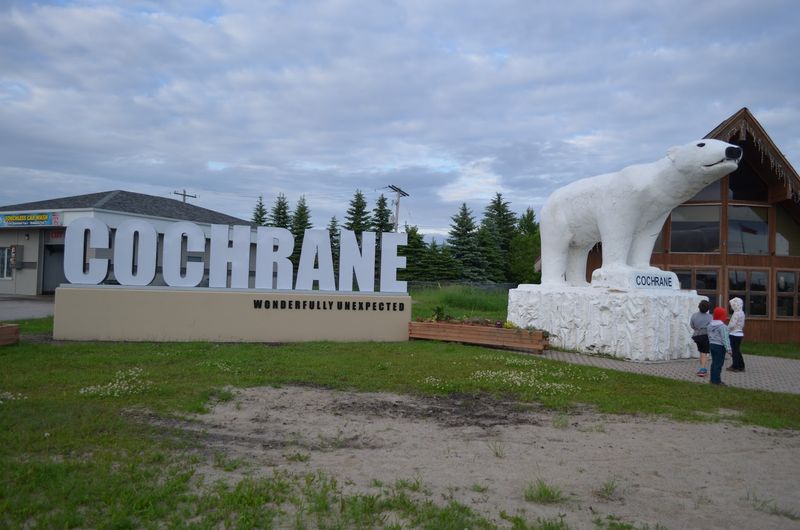
Cochrane sits about 700 kilometers north of Toronto, and the farther north you go in Ontario, the more the landscape starts to feel like it belongs to the animals rather than the people.
The town is home to around 5,400 residents, but the surrounding boreal forest stretches for hundreds of kilometers in every direction and supports a substantial moose population throughout the year.
Highway 11, which runs through Cochrane, is notorious for moose crossings, and local drivers develop a habit of scanning roadsides the same way urban commuters check traffic apps.
The region’s mix of spruce bogs, beaver ponds, and alder thickets provides ideal moose feeding habitat, especially in spring and fall when animals are most active near open areas.
Cochrane also serves as a jumping-off point for wilderness canoe routes and hunting trips where moose encounters are practically written into the itinerary from day one.
7. Wawa, Ontario
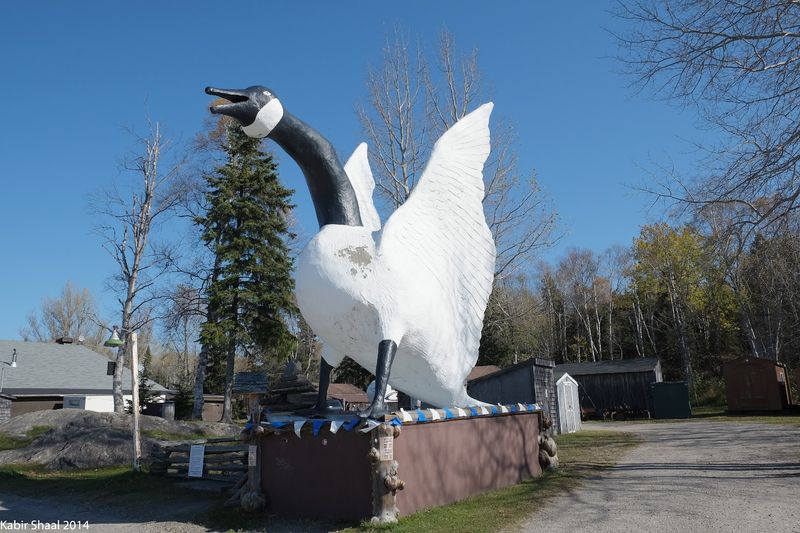
Wawa is famous for a giant Canada goose statue that greets travelers on the Trans-Canada Highway, but ask any local what the real wildlife story is and they will point you toward the moose.
The community has a population of around 2,900 people, while the forests, wetlands, and lake country surrounding it support moose in numbers that consistently impress visiting naturalists and hunters alike.
Lake Superior Provincial Park sits just south of town, and the corridor between the two areas creates a continuous stretch of prime moose habitat that animals move through freely.
Moose-vehicle collisions are a genuine concern on roads around Wawa, which is why warning signs appear frequently along Highway 17 and local driving culture treats the possibility of a moose encounter as a daily reality.
8. Riding Mountain National Park, Manitoba
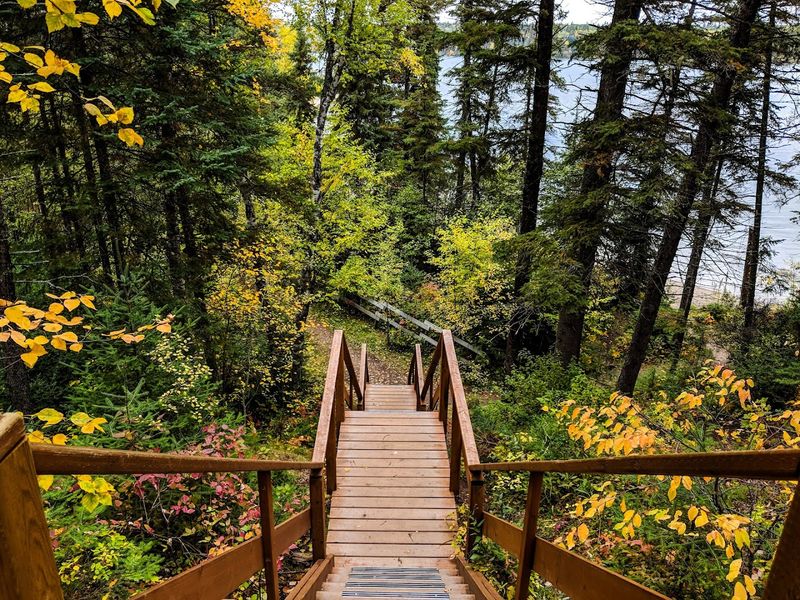
Riding Mountain National Park sits on a plateau above the Manitoba plains, and the change in elevation creates a completely different ecosystem from the farmland surrounding it.
The park’s 2,973 square kilometers include boreal forest, mixed woodland, and wetland habitats that support a diverse wildlife community, with moose being among the most frequently recorded large mammals.
Bison tend to attract the most visitor attention, but moose quietly populate the park’s less-traveled northern and eastern sections where forest cover and wetlands are densest.
The town of Wasagaming, located inside the park, has a permanent population of only a few hundred people, which means the moose-to-human ratio in the park’s interior is genuinely tilted in the animals’ favor.
9. La Ronge, Saskatchewan
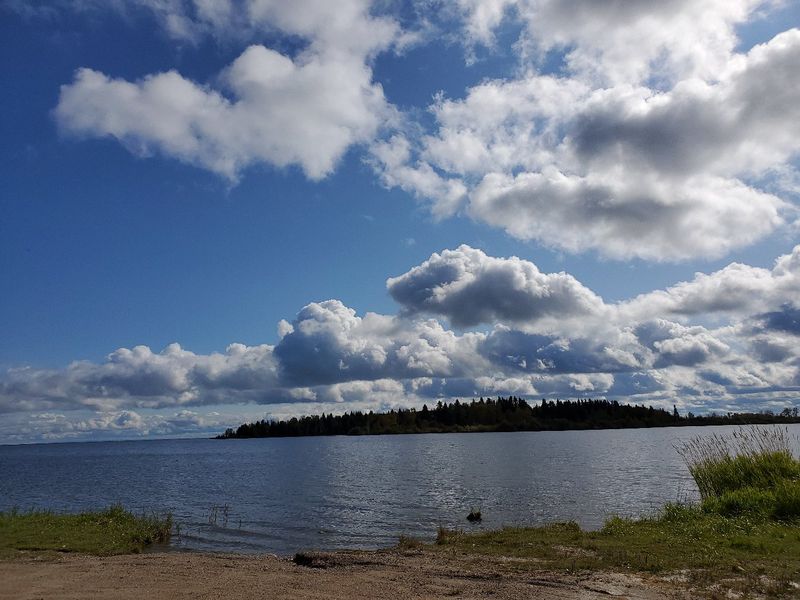
La Ronge sits at the edge of the Canadian Shield in north-central Saskatchewan, where the landscape transitions from agricultural prairie into a vast network of lakes, rivers, and boreal forest.
The community has a population of around 2,700 people, but the wilderness surrounding it extends for enormous distances with almost no other human settlements in between.
Moose are a consistent presence throughout the region, spotted near waterways, along forest access roads, and in the wetland margins that form wherever rivers slow down and spread out across the Shield.
Lac La Ronge Provincial Park, which borders the community, covers over 350,000 hectares and provides protected habitat for moose populations that have remained stable despite hunting pressure in surrounding areas.
10. Prince Albert National Park, Saskatchewan
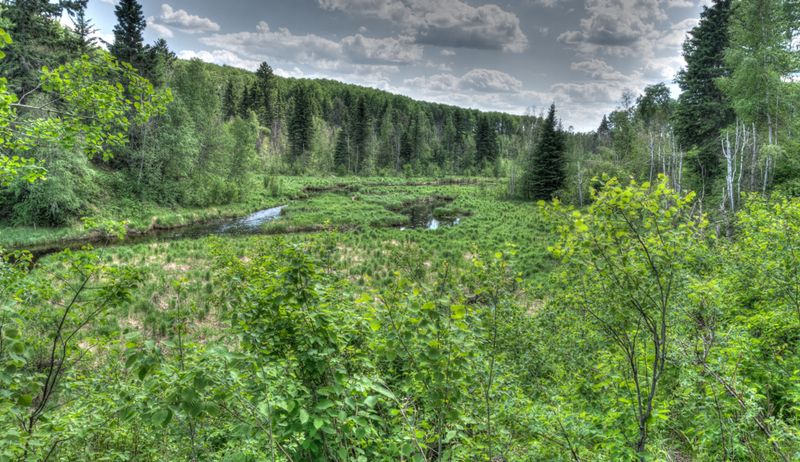
Prince Albert National Park was established in 1927 and covers nearly 3,900 square kilometers of boreal forest, wetlands, and open water in the heart of Saskatchewan.
Moose are one of the park’s signature wildlife species, and their numbers benefit from the protected status of a landscape that includes hundreds of lakes and the kind of dense forest cover they rely on year-round.
The park’s human population is almost entirely confined to the town of Waskesiu, which has a permanent winter population of only a few hundred people, making the moose-to-resident ratio genuinely lopsided.
Early morning canoe trips along the park’s quieter lake routes regularly produce moose sightings, particularly in late spring when cows with newborn calves venture close to water to feed.
11. Dawson City, Yukon
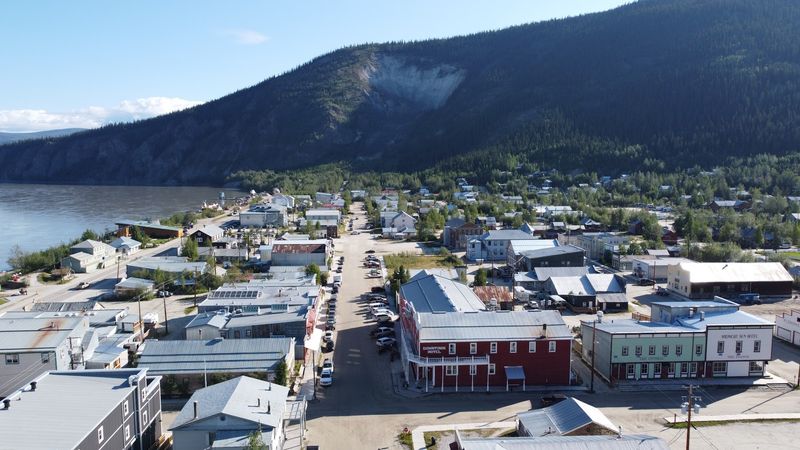
Dawson City became world-famous during the Klondike Gold Rush of the late 1890s, when its population briefly swelled to around 40,000 people chasing fortune in the frozen ground.
Today, roughly 1,400 people call Dawson City home year-round, while the surrounding Yukon wilderness supports moose densities that researchers estimate at 100 to 250 animals per 1,000 square kilometers of suitable habitat.
The forests and river valleys around the Klondike and Yukon Rivers provide exactly the kind of terrain moose prefer, and sightings near the town’s outskirts are a regular occurrence for residents.
Yukon’s total human population sits at around 43,000 people spread across a territory larger than California, which gives wildlife an enormous amount of space to operate without competition.
12. Watson Lake, Yukon
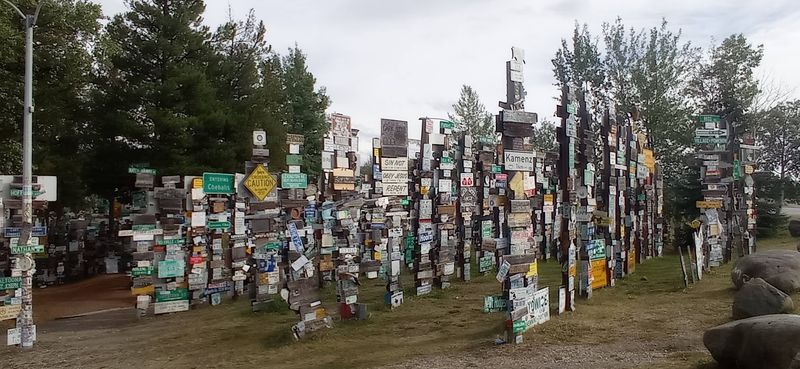
Watson Lake is best known for its Sign Post Forest, a quirky collection of over 100,000 signs that travelers have added since 1942, but the surrounding wilderness makes an equally strong impression.
The community has a population of around 800 people, which puts it well within the range where moose numbers in the surrounding forests can realistically match or exceed the human headcount.
The area sits along the Alaska Highway corridor, where boreal forest, lakes, and wetlands stretch in every direction with minimal development to interrupt the natural landscape.
Moose are frequently spotted along roadsides and near the waterways that run through the Watson Lake area, and locals have long treated these sightings as an ordinary part of daily life rather than a noteworthy event.
13. Kluane National Park And Reserve, Yukon
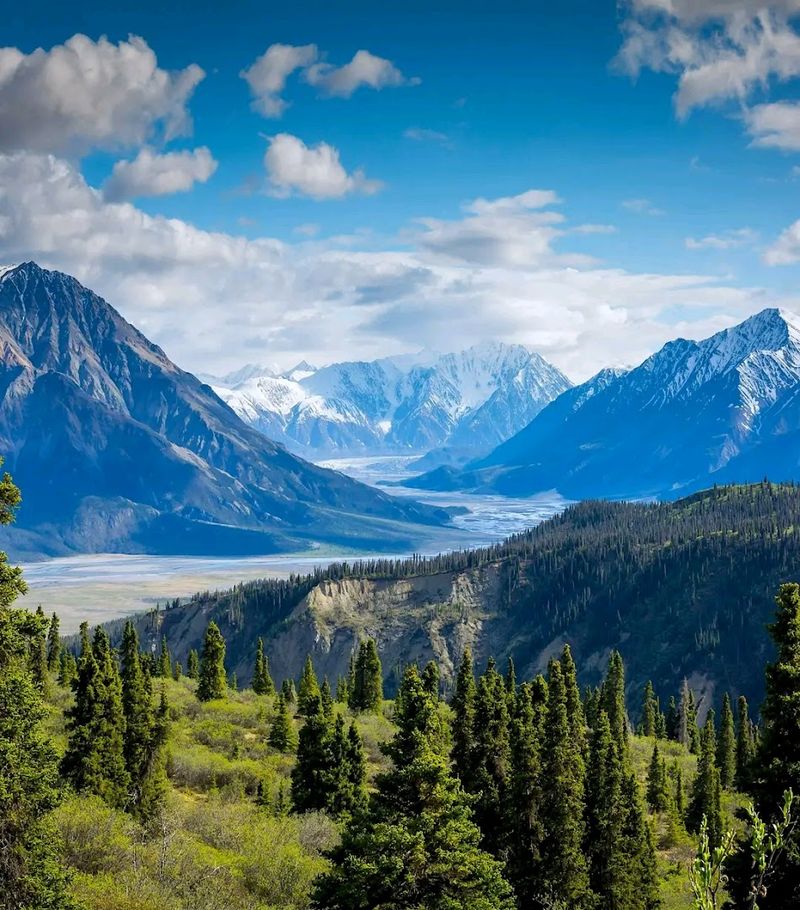
Kluane National Park and Reserve covers over 22,000 square kilometers in the southwestern Yukon, making it one of the largest protected areas in Canada and part of a UNESCO World Heritage Site.
The park is best known for its enormous icefields and towering peaks, but its lower river valleys and forested foothills provide the kind of productive habitat that sustains healthy moose populations year-round.
Moose in Kluane tend to concentrate in valley bottoms where willow, alder, and aquatic plants grow in abundance along rivers and ponds fed by glacial meltwater.
The park has no permanent human residents, and the nearest communities are small enough that wildlife outnumber people across virtually the entire region without any debate.
Visitors who make the effort to explore Kluane’s accessible valleys by foot or canoe frequently encounter moose at close range, a reminder that in this part of the Yukon, humans are very much the guests.
14. Fort Smith, Northwest Territories
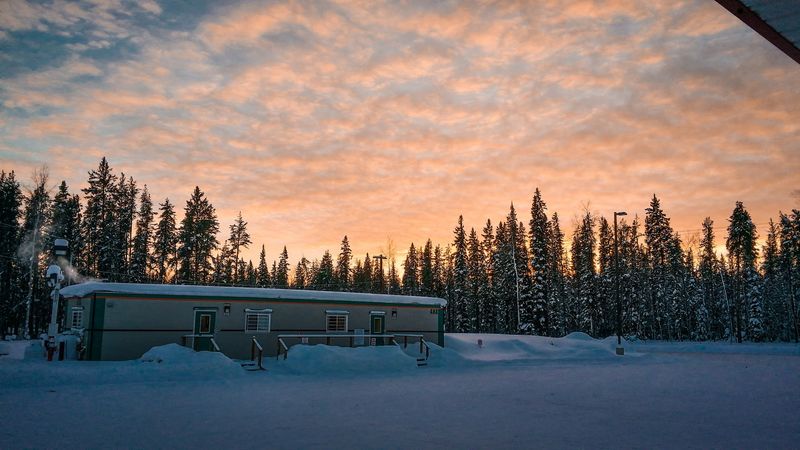
Fort Smith has a population of around 2,500 people and sits directly on the border of Wood Buffalo National Park, the largest national park in Canada at nearly 45,000 square kilometers.
The Northwest Territories as a whole had an estimated moose population of 50,000 animals as of 2013, in a territory where total human population hovers around 45,500 people.
That territory-wide math already puts moose and people at near parity, but in the region around Fort Smith, the balance tips even further toward the wildlife given the sheer scale of protected wilderness nearby.
Moose move freely through the forest corridors and river margins surrounding the community, and residents report sightings within the town limits often enough that it rarely generates much excitement among locals.
15. Happy Valley-Goose Bay, Newfoundland and Labrador
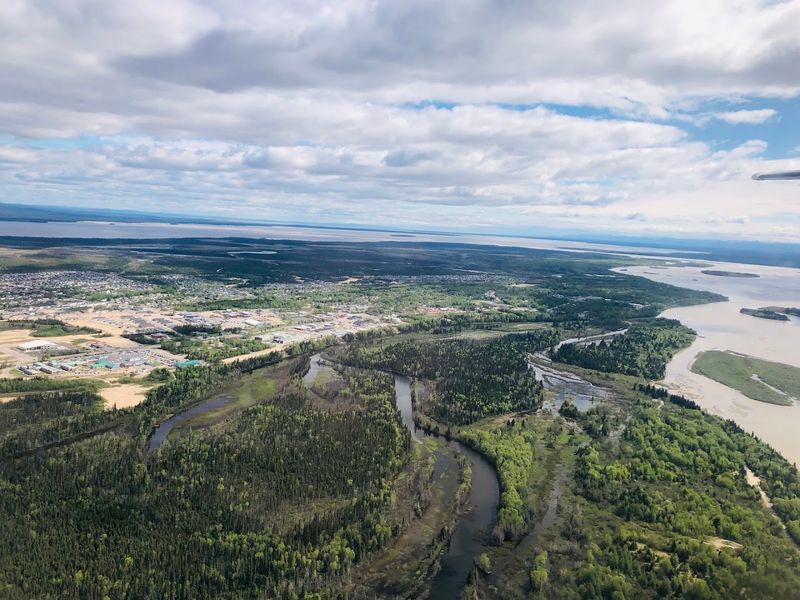
Happy Valley-Goose Bay sits in central Labrador, one of the most sparsely populated regions in all of eastern Canada, where vast boreal forests and river systems stretch for hundreds of kilometers without interruption.
The community has a population of around 7,500 people, but the surrounding Labrador wilderness is so extensive that moose populations in the broader region are considered among the most robust in Atlantic Canada.
Newfoundland and Labrador’s total moose count of 120,000 to 150,000 animals is distributed across the island and the mainland Labrador portion, and the Labrador interior holds a significant share of that total.
Residents of Happy Valley-Goose Bay treat moose sightings near town as a routine occurrence, and local hunters travel relatively short distances to access areas with exceptional moose concentrations.
Share this story