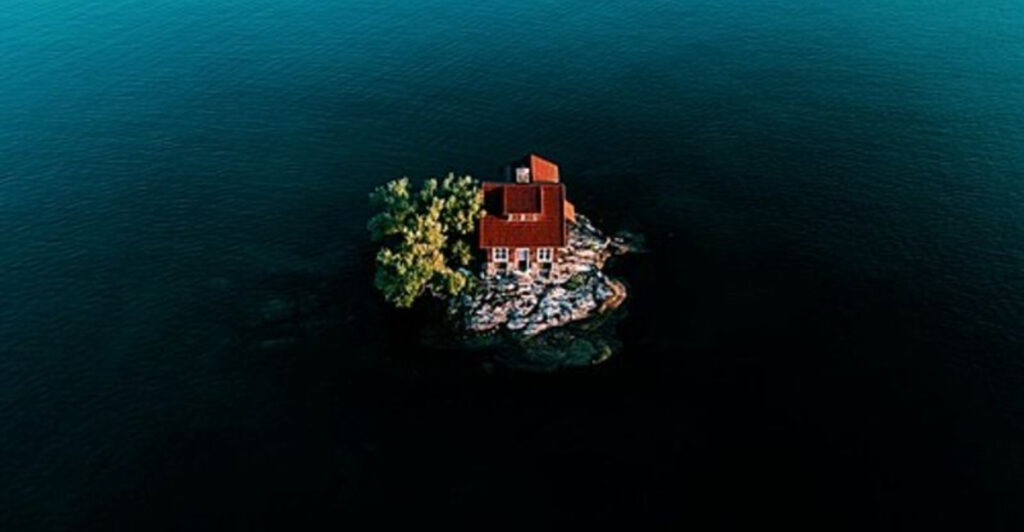
Some houses don’t have neighbors, busy streets, or even a nearby store. Instead, they sit alone on rocky islands, frozen tundra, or towering cliffs, surrounded only by nature.
These remarkable homes remind us that solitude can be both beautiful and extreme. From Iceland to Australia, here are 12 of the world’s loneliest houses that prove humans will live just about anywhere.
1. Elliðaey House (Iceland)
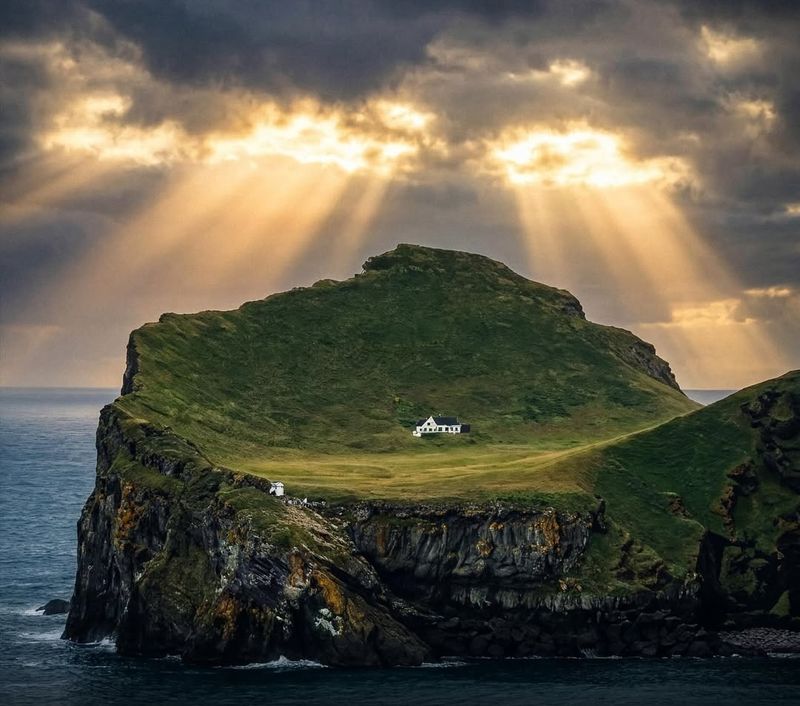
Sitting alone on a small island off Iceland’s southern coast, the Elliðaey House looks like something out of a dream. The island itself is rugged, windy, and largely uninhabited, making it one of the most photogenic lonely places on the planet.
Many people who see photos of this white structure assume some wealthy recluse lives there full-time.
In reality, the building is a simple hunting lodge maintained by the Elliðaey Hunting Association. Members use it occasionally when hunting puffins, a traditional Icelandic practice.
There is no electricity, no running water, and no road leading to the door.
Visitors must arrive by boat, and only when weather permits. Despite its humble purpose, the lodge has become an internet sensation, inspiring millions of people to dream about escaping the chaos of modern life.
Sometimes the loneliest places are the ones that capture our imagination the most.
2. The House on Just Room Enough Island (New York, USA)
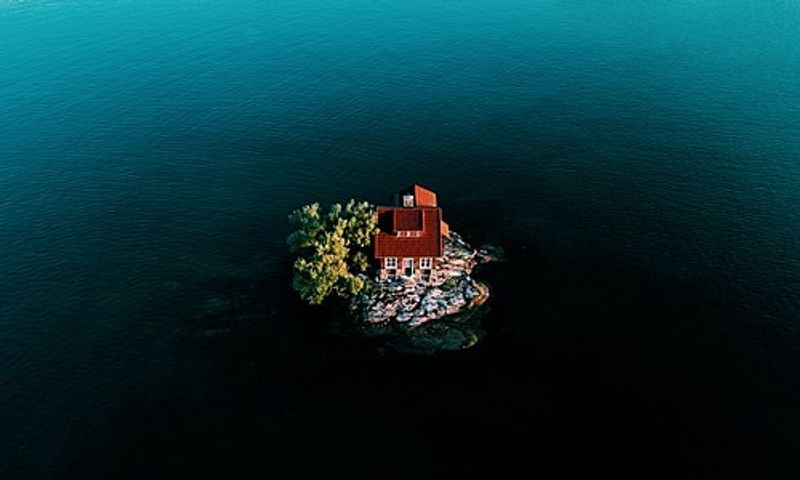
Somewhere in the St. Lawrence River near Alexandria Bay, New York, sits one of the most amusingly cramped pieces of real estate on Earth. The island is so small it has earned the nickname “Just Room Enough Island,” and the name fits perfectly.
A single house, a single tree, and a tiny strip of grass are all that exist on this miniature patch of land.
The Sizeland family purchased the island in the 1950s hoping for a private summer retreat. They certainly got the privacy they wanted, though perhaps more than expected.
At times, passing tour boats stop nearby so passengers can snap photos of the quirky little home.
The house has become a minor tourist attraction simply by existing. It proves that sometimes the boldest real estate decision is also the most unusual one.
Living here means the water is always your front yard, back yard, and everything in between.
3. Katskhi Pillar Hermitage (Georgia)
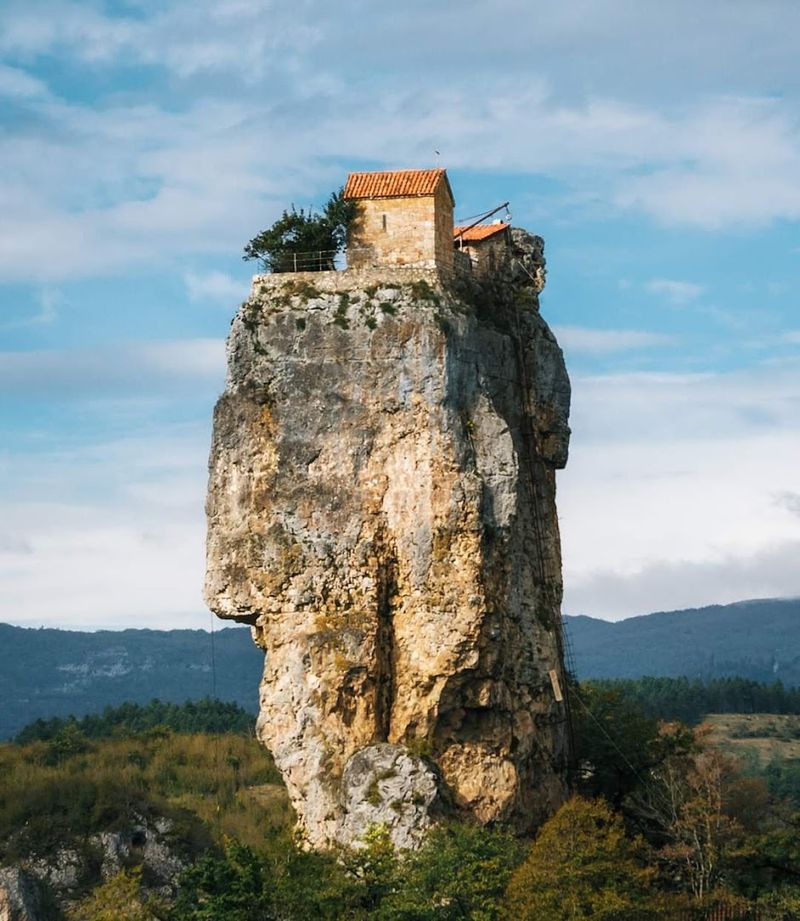
Rising about 130 feet straight out of the ground in western Georgia, the Katskhi Pillar is a natural limestone monolith that looks almost too dramatic to be real. Perched at its very top is a small medieval church and hermitage, built centuries ago by monks who wanted true isolation from the world below.
For a long time, locals considered the pillar unreachable and wrapped it in legend and folklore.
Modern climbers finally scaled the pillar in 1940, rediscovering the ruins of the ancient structure. A monk named Maxime Qavtaradze lived there for years, climbing up and down using a makeshift ladder system.
He reportedly made the climb twice a week well into his older years.
The hermitage is no longer a permanent residence, but it remains one of the most breathtaking examples of deliberate isolation in human history. Few places on Earth feel quite so removed from everyday life.
4. The Drina River House (Serbia)
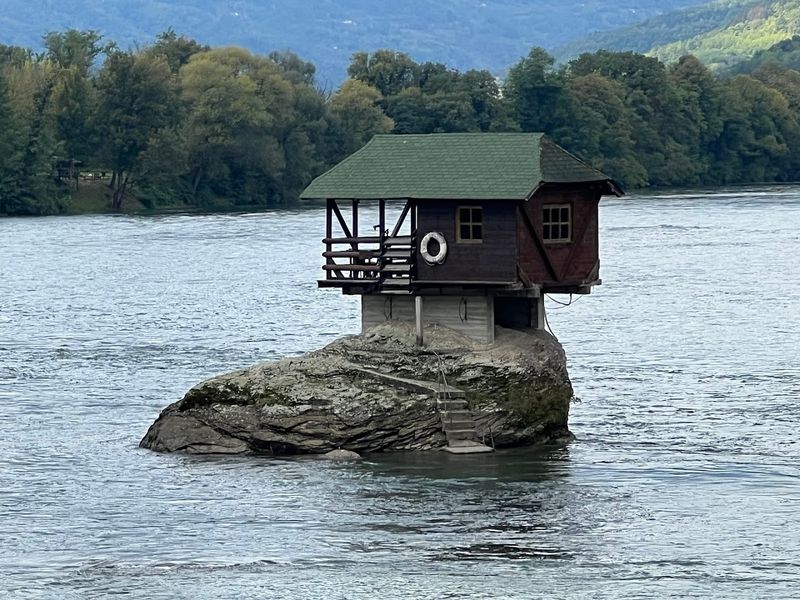
Back in 1968, a group of young swimmers near Bajina Basta, Serbia, decided they needed a place to rest during their river trips. They found a large, flat rock jutting out of the Drina River and started building.
What began as a simple wooden platform eventually became a fully enclosed little cabin, complete with a door, windows, and a small porch.
The structure has been rebuilt and repaired multiple times after floods have swept portions of it away. Each time, the builders returned and started fresh, determined to keep their beloved river house standing.
The cabin holds only a few people at a time and has no permanent residents.
Today, the Drina River House is one of Serbia’s most recognized landmarks, appearing in travel magazines and photography collections worldwide. It’s a heartwarming story about human persistence and the simple desire to carve out a peaceful corner of the world, even in the middle of a river.
5. Buffalo Point Cabin (Canada)
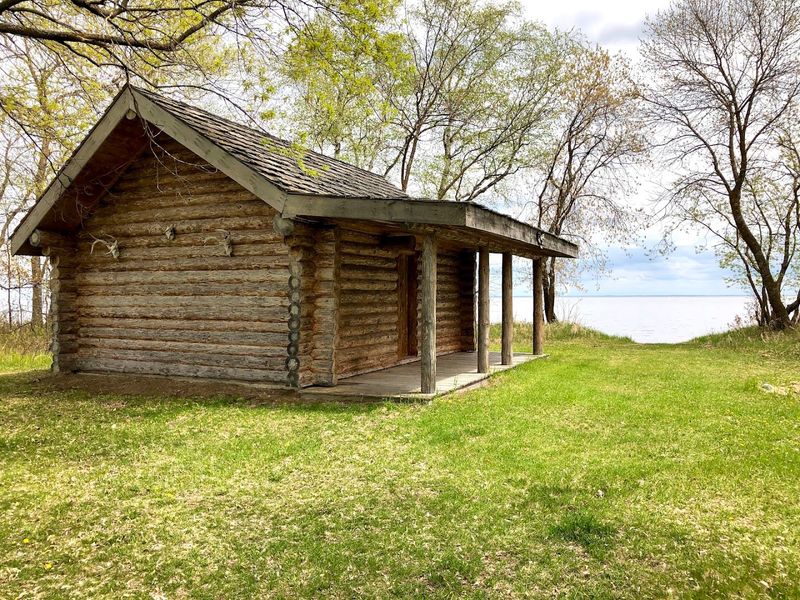
Canada’s wilderness is vast, and few places make that clearer than the remote stretches of British Columbia where isolated cabins like the Buffalo Point Cabin exist. Surrounded by dense old-growth forest and accessible only by boat or floatplane during certain times of year, this cabin offers the kind of quiet that most city dwellers have never experienced.
There are no honking horns, no streetlights, and no Wi-Fi signal to distract you.
Cabins like this one serve important purposes beyond solitude. They provide shelter for hunters, hikers, and wilderness explorers who venture deep into Canada’s backcountry.
Some are maintained by provincial parks, while others are privately owned and handed down through generations of families.
Living in or visiting such a cabin requires real preparation. You need food supplies, weather-appropriate gear, and the ability to handle emergencies without quick access to help.
For those willing to embrace the challenge, the reward is an unmatched sense of freedom and stillness.
6. Monte Cristallo Mountain Hut (Italy)
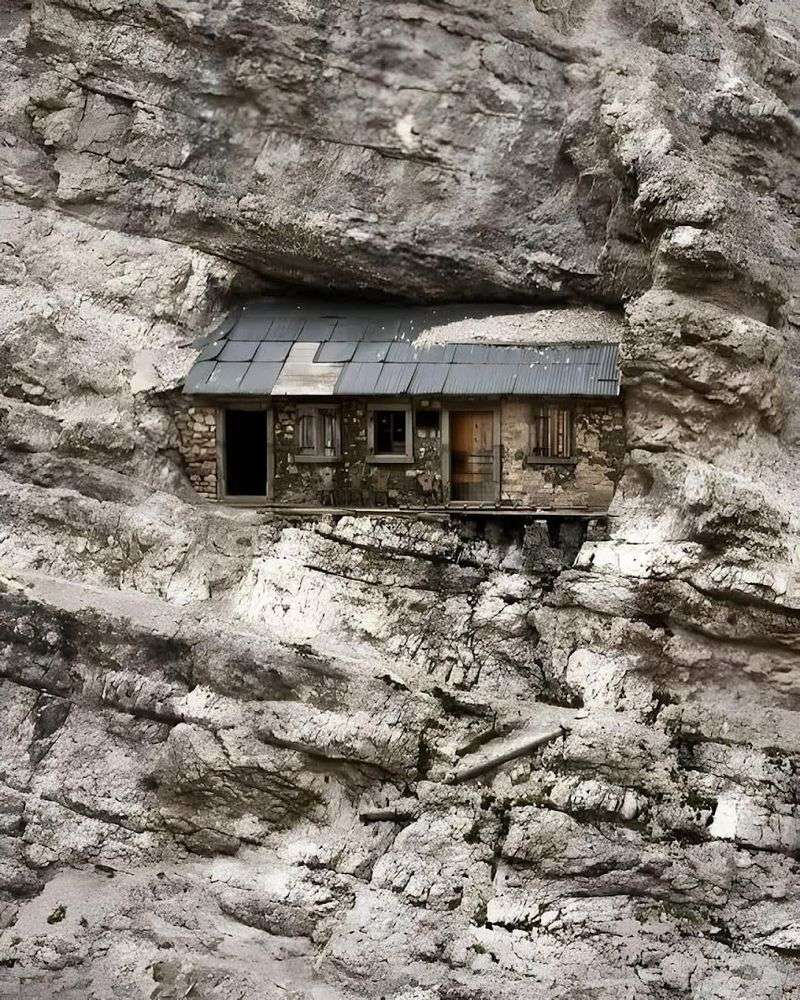
High in the Dolomites of northeastern Italy, the Monte Cristallo massif soars above the surrounding valleys with sharp, pale rock faces that glow orange at sunrise. Clinging to these dramatic heights is a small mountain refuge, a structure designed to give hikers and climbers a place to rest in one of Europe’s most rugged environments.
Getting here requires serious effort, and that’s exactly the point.
Alpine refuges like this one have a long tradition in Italy. They were originally built to support military operations during World War One, when Italian and Austrian troops battled across these very peaks.
Today they serve mountaineers and trekkers who follow the famous Alta Via hiking routes through the Dolomites.
The isolation at this altitude is genuinely striking. Clouds drift past at eye level, and on clear days the view stretches for dozens of miles in every direction.
Few human structures feel quite as small against such an enormous natural backdrop.
7. The Desert House of Namibia
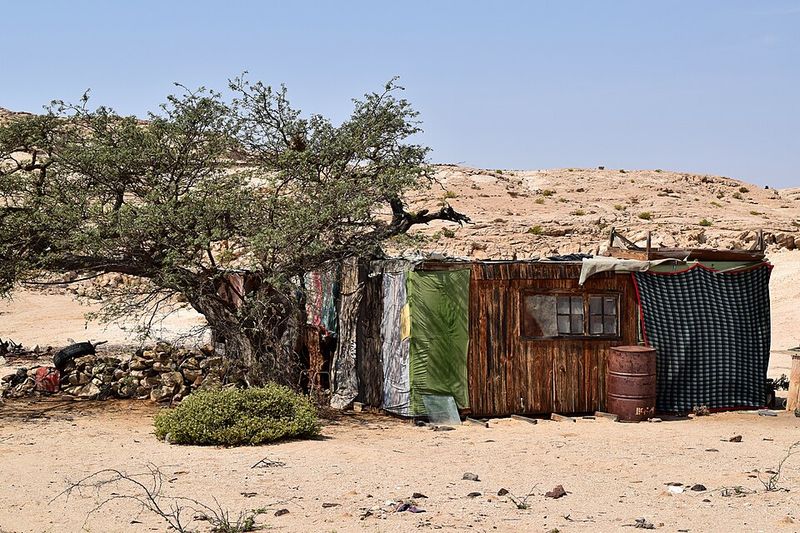
Namibia is one of the least densely populated countries on Earth, and its landscape reflects that in dramatic fashion. The Namib Desert stretches along the country’s Atlantic coast for over a thousand miles, creating an environment of extreme heat, shifting sand dunes, and almost total silence.
Scattered across this terrain are isolated farmhouses and homesteads where families live far from any town or village.
These desert homes are often part of large livestock farms where cattle and goats graze across enormous tracts of dry land. The nearest neighbor might be 50 miles away, and a trip to the grocery store could mean driving on dirt roads for several hours.
Life here demands self-sufficiency and a deep respect for the land.
Despite the harshness, many residents wouldn’t trade this lifestyle for anything. The desert has its own rhythms and rewards, from stunning stargazing skies to the rare beauty of desert rainfall transforming the landscape almost overnight.
8. Skiddaw House (England)
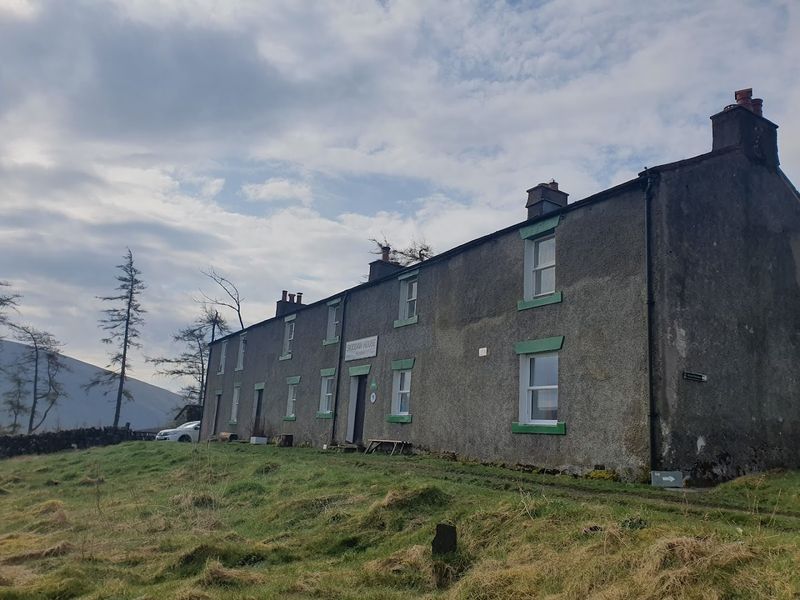
Tucked into the fells above Keswick in England’s Lake District, Skiddaw House has a reputation as one of the most remote dwellings in all of Britain. No road leads directly to it.
Visitors must hike several miles across open moorland, climbing steadily through wind and often rain before the simple stone building comes into view. The isolation is real, not just a marketing description.
The building has served various purposes over the years, including as a shepherd’s bothy and later as a youth hostel. Hikers walking the long-distance Cumbria Way route sometimes stop here for shelter.
The interior is basic, but after miles of hiking through exposed upland terrain, even a plain wooden bunk feels like luxury.
Skiddaw House sits at roughly 1,550 feet above sea level, meaning weather can change rapidly and dramatically. Snowfall is possible even in late spring.
Anyone spending time here learns quickly that nature, not convenience, sets the schedule.
9. The Faroe Islands Cliffside Houses
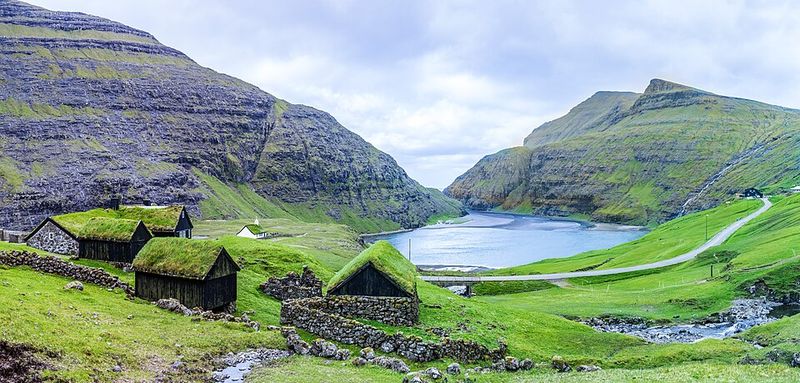
The Faroe Islands sit in the North Atlantic between Norway and Iceland, and they are among the windiest, most weather-battered places where people choose to live permanently. Some of the most striking homes here cling to clifftops above churning ocean waters, separated from the nearest village by steep hiking paths or narrow mountain roads.
The landscape feels ancient and untouched, even when houses are nearby.
Traditional Faroese homes often feature grass-covered rooftops, a clever design that provides natural insulation against the biting Atlantic winds. These turf roofs blend the buildings into the hillside so seamlessly that they can be difficult to spot from a distance.
It’s a building style that has survived for centuries because it simply works.
Living on these cliffs means accepting the ocean as a constant companion. Storms roll in without much warning, and thick fog can reduce visibility to nearly zero.
Yet Faroese communities have thrived here for generations, building a culture as resilient as the landscape itself.
10. Kulusuk Settlement Homes (Greenland)
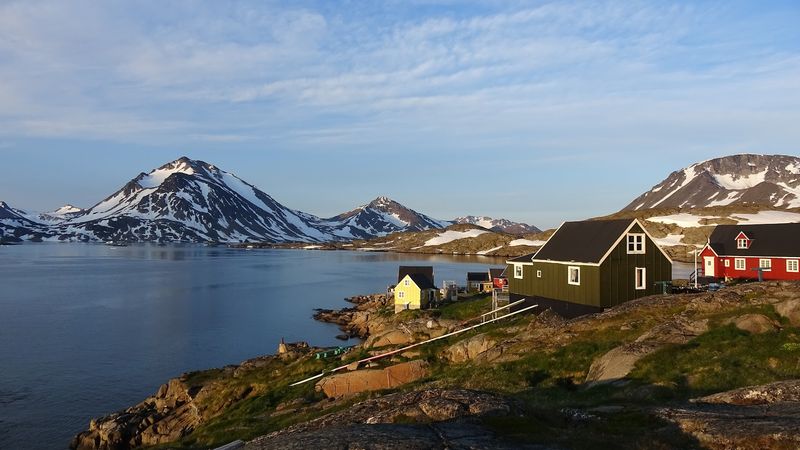
Kulusuk is a small Inuit settlement on the eastern coast of Greenland, home to fewer than 300 people. Colorful wooden houses dot the rocky landscape, standing out vividly against the white snow and grey rock that surround them on all sides.
The nearest large town, Tasiilaq, requires a helicopter ride or a boat journey across frigid Arctic waters to reach.
Residents of Kulusuk live with conditions that most people only read about. Winter temperatures regularly drop well below freezing, and the sun disappears entirely for weeks during the darkest months.
Despite this, the community maintains a strong cultural identity rooted in traditional Greenlandic Inuit practices, including dog sledding and kayaking.
The isolation here isn’t just geographic. It shapes daily life, relationships, and a deep connection to the natural environment.
Greenland’s remote settlements remind the world that human communities can take root in the most extreme corners of the Earth and find ways to genuinely thrive there.
11. The House at Cape Wrath (Scotland)
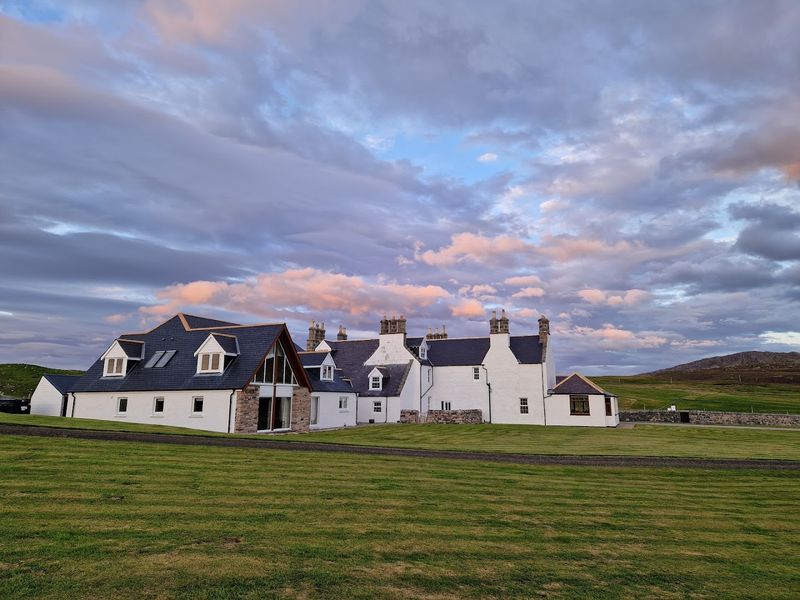
Cape Wrath sits at the very northwestern tip of mainland Britain, and the name is fitting. Fierce Atlantic winds batter the coastline year-round, and reaching the area requires crossing a small ferry and then traveling miles along a rough single-track road.
There is no regular public transport, and mobile phone signals are essentially nonexistent out here.
A small number of isolated dwellings exist near Cape Wrath, used mostly by lighthouse keepers historically and by outdoor adventurers today. The lighthouse at the cape itself, built in 1828, stands as a testament to the dangerous seas that ships once had to navigate around this exposed headland.
Living near it was never considered a comfortable posting.
The raw beauty of the location makes the isolation easier to understand, if not easier to endure. Eagles circle overhead, seals rest on wave-splashed rocks below, and on clear days the view across the Pentland Firth is genuinely breathtaking.
Solitude here comes packaged with some of Scotland’s wildest scenery.
12. The Island House of Lake Hjälmaren (Sweden)
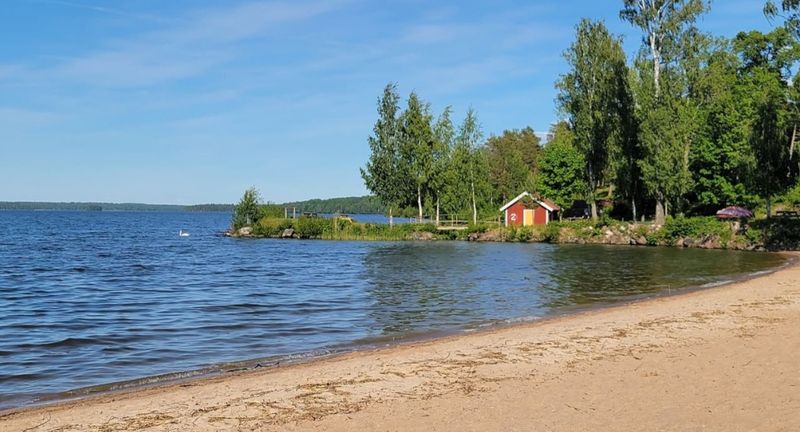
Lake Hjälmaren is Sweden’s fourth largest lake, and scattered across its calm waters are small islands, some barely large enough to support a single building. One of the most charming examples is a tiny red cottage that occupies its own miniature island, surrounded by water on every side with just enough room for the house, a few trees, and a small dock.
It looks like an illustration from a children’s book.
Sweden has a long tradition of summer cottages, called stugor, placed in scenic and often remote locations. Many Swedish families maintain these retreats as places to disconnect from city life during the long, bright summer months.
An island cottage takes this tradition to its logical and most delightful extreme.
Reaching the house requires a short boat ride, which adds to its fairy-tale quality. There are no cars, no foot traffic, and no noise beyond birdsong and the gentle lapping of lake water.
For Swedes who value stillhet, the Swedish word for stillness, this is close to paradise.
Share this story