There is a rock in the North Carolina mountains that throws things back at you. Not metaphorically, but literally.
Lightweight objects tossed from its edge have been known to return, carried upward by powerful wind currents rising from the gorge below. That quirky physical phenomenon is just one reason this spot draws visitors from across the country, and yes, even curious travelers who have made long detours from as far away as Oklahoma just to see it for themselves.
The views are real, the legend is real, and the small mountain village that grew up around this rocky outcrop has a personality all its own. Stick around, because this place has more layers than the Blue Ridge itself.
The Blowing Rock Formation: Address, Location, and the Secret Behind the Name
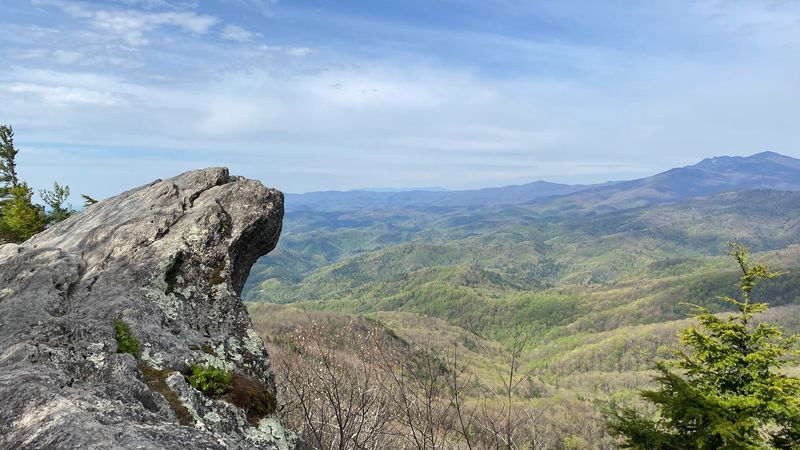
Few natural landmarks earn their names quite so honestly. The Blowing Rock formation sits at an elevation of about 4,000 feet along the Blue Ridge Mountains in Blowing Rock, North Carolina, a small village nestled in Watauga County near milepost 291 of the Blue Ridge Parkway.
The official attraction address is US-321, Blowing Rock, NC 28605.
The secret that makes this rock formation unlike almost anything else in the country is the wind. The Johns River Gorge below creates a powerful upward draft that pushes air back up the cliff face with surprising force.
Lightweight objects tossed over the edge have been documented floating back up to the thrower.
This is not a carnival trick or a tourist gimmick. The updraft is a genuine meteorological feature caused by the shape of the gorge channeling wind upward.
Scientists and curious visitors alike have tested it repeatedly, and it holds up every time.
Travelers have made long road trips from distant states, including Oklahoma, just to witness this firsthand. The Blowing Rock is privately owned and charges a small admission fee, but the view alone justifies every cent spent getting there.
The Legend of the Cherokee Brave and the Chickasaw Maiden
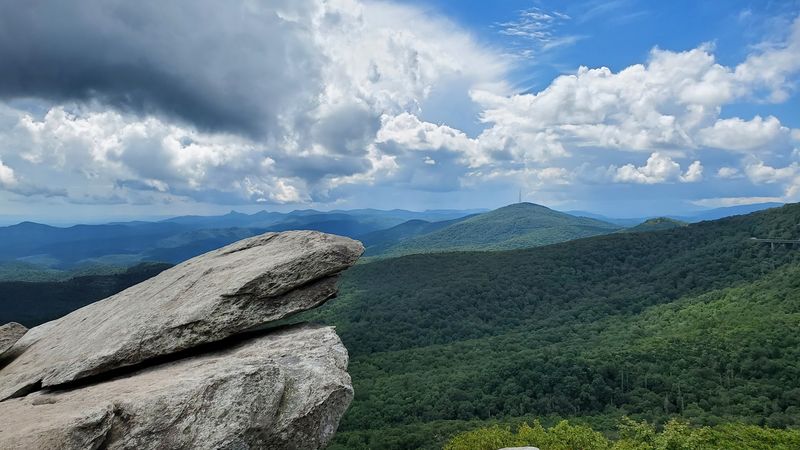
Behind the wind phenomenon, there is a story that generations of locals have passed down, and it gives the rock a romantic weight that science alone cannot explain. According to Cherokee legend, a young brave and a Chickasaw maiden fell deeply in love at this very spot high above the gorge.
When a red sky appeared on the horizon, the brave interpreted it as a signal calling him back to his people in the plains. Torn between duty and love, he leapt from the rock into the gorge below.
The maiden prayed so fervently to the Great Spirit that the wind carried him back up to her arms.
Whether you believe the legend or not, it adds a layer of meaning to the updraft that pure meteorology cannot fully capture. Standing on the rock while the wind pushes against your face, the story suddenly feels less like folklore and more like something that could almost be true.
Visitors from Oklahoma and across the Southeast have shared that the legend is what stays with them longest after the trip, long after the photographs have faded from memory.
The Views That Fill Every Camera Roll
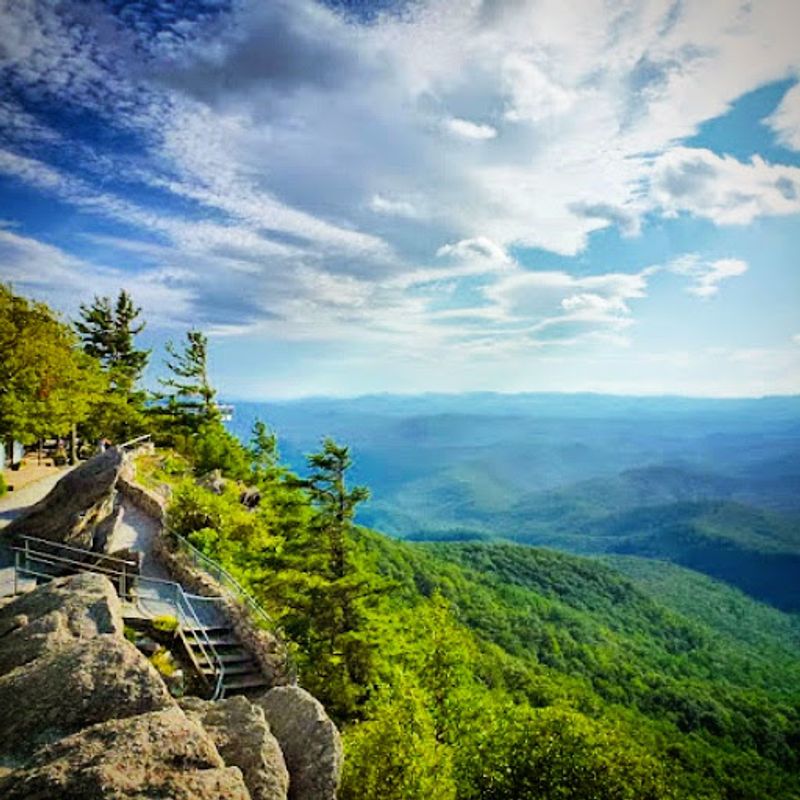
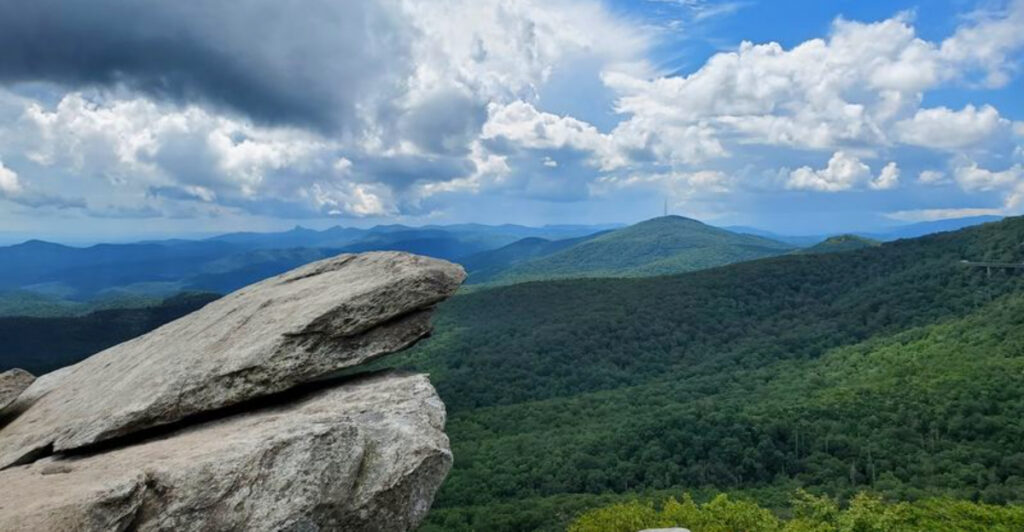
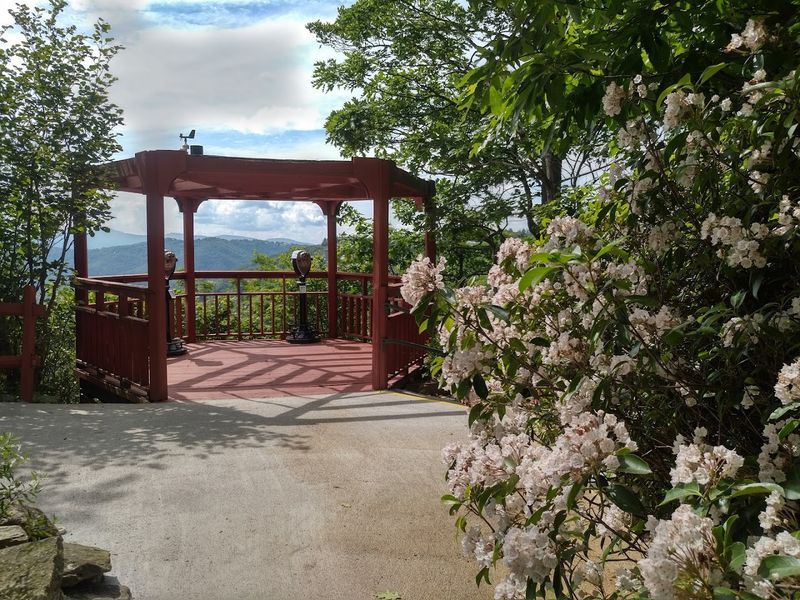
The photography here is almost embarrassingly good. From the observation platform at The Blowing Rock, the view stretches across the Piedmont to the east and sweeps over the layered ridges of the Blue Ridge Mountains in every other direction.
On a clear day, Grandfather Mountain is visible to the north.
The Johns River Gorge drops dramatically below the platform, giving the scene that stomach-dropping depth that makes landscape photos look almost unreal. Morning light hits the ridges with a warm golden quality that photographers specifically plan early arrivals to catch.
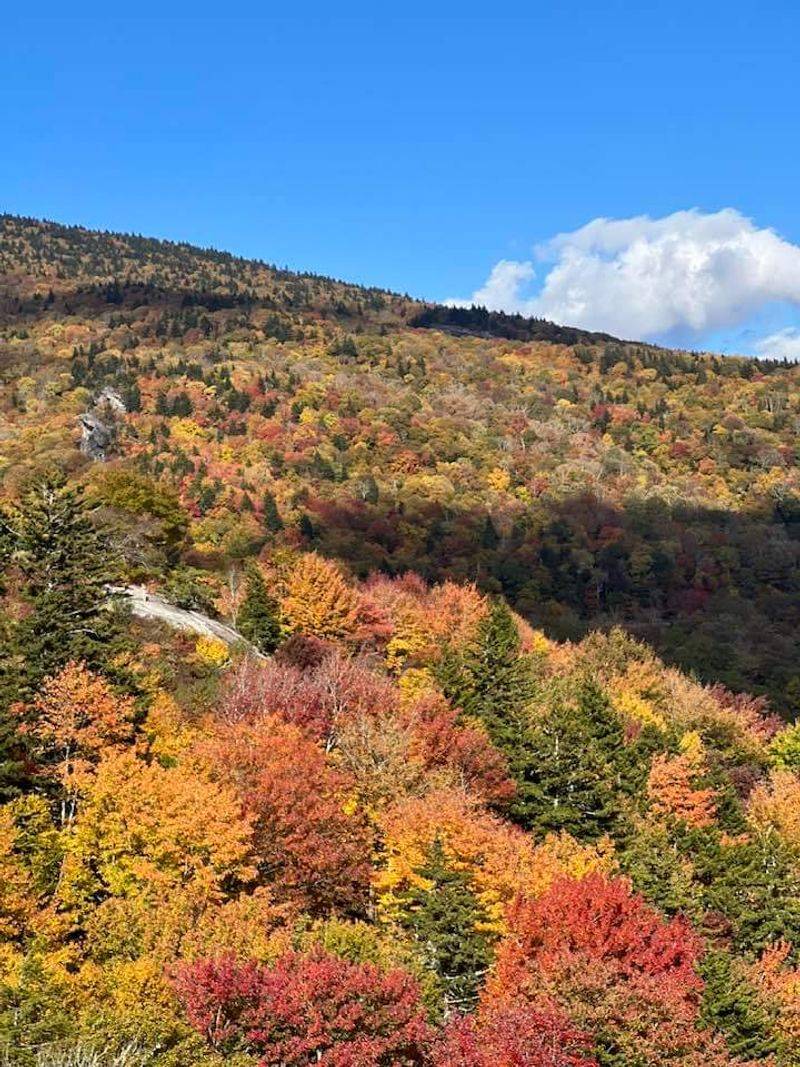
Fall is the most popular season, and for good reason. The hardwood forests covering the gorge and surrounding peaks turn shades of orange, red, and amber that look almost too saturated to be natural.
The color typically peaks in mid to late October.
Even in winter, when the trees are bare, the rock formations and layered ridges take on a stark, sculptural beauty that summer visitors never get to see. Every season offers something genuinely different, which is why so many people return year after year rather than treating it as a one-time stop.
Moses H. Cone Memorial Park: A Country Estate Frozen in 1901
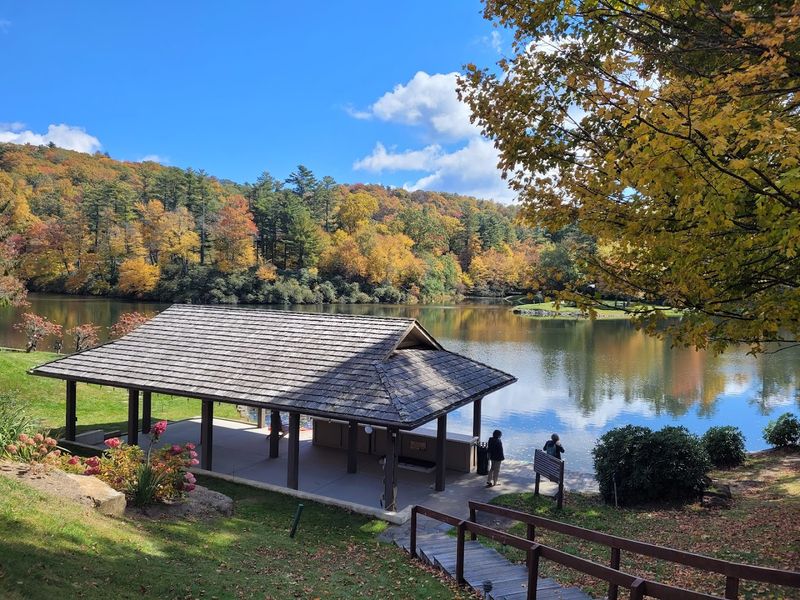
Just a short drive from the main village sits one of the most unexpectedly grand properties along the entire Blue Ridge Parkway. Moses H.
Cone Memorial Park preserves the country estate of textile magnate Moses Cone, who built his summer retreat here in 1901 on a sprawling 3,500-acre property.
The centerpiece is Flat Top Manor, a 23-room Colonial Revival mansion that now houses the Parkway Craft Center, operated by the Southern Highland Craft Guild. Local artisans sell handmade pottery, fiber arts, woodwork, and jewelry inside rooms that still carry the architectural character of the original estate.
The grounds include about 25 miles of carriage roads that wind through apple orchards, meadows, and forested hillsides. Hikers and horseback riders share these trails, and the pace here is deliberately unhurried.
Two lakes on the property offer quiet spots for fishing with a valid North Carolina license.
The combination of preserved history, working craft tradition, and natural beauty makes this park feel like a completely separate experience from the rock formation itself, even though they sit just miles apart on the same parkway corridor.
Blowing Rock Art and History Museum: Where Culture Meets the Mountains
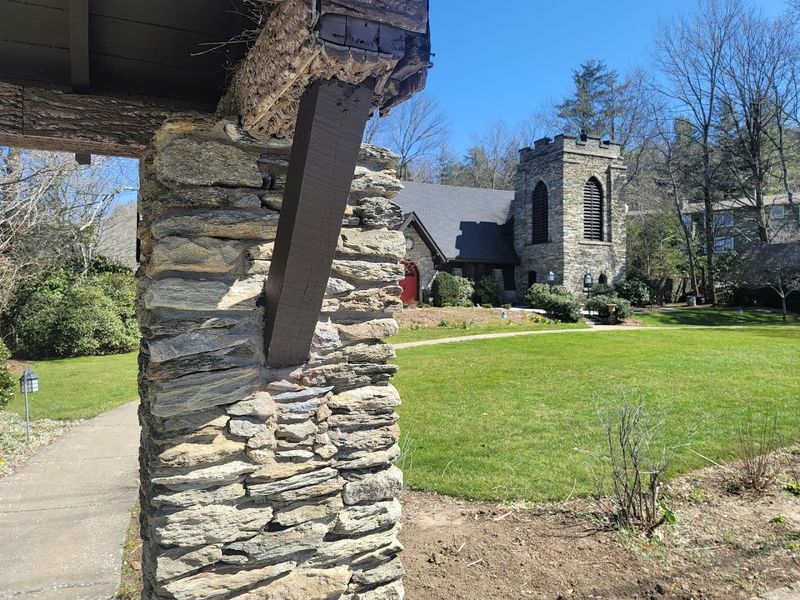
Not every mountain town has a serious art museum, but Blowing Rock is not every mountain town. The Blowing Rock Art and History Museum, known locally as BRAHM, opened in 2011 and quickly became one of the cultural anchors of the region.
The building itself is architecturally thoughtful, designed to complement rather than compete with the surrounding landscape.
Inside, the permanent collection focuses on art and history connected to the North Carolina High Country. Rotating exhibitions bring in work from regional and national artists, keeping the experience fresh for repeat visitors.
The museum also hosts educational programs, lectures, and events throughout the year.
One of the more compelling aspects of BRAHM is how it contextualizes the area’s history, covering everything from Cherokee heritage to the development of the resort culture that shaped Blowing Rock into what it is today. It is the kind of place where a planned 45-minute stop easily turns into two hours.
Admission is reasonable, and the gift shop carries locally made and curated items worth browsing. For visitors who want more than scenery on their trip, BRAHM delivers a genuinely enriching experience that stands on its own merits.
Glen Burney Trail: Waterfalls Hidden Behind Annie Cannon Gardens
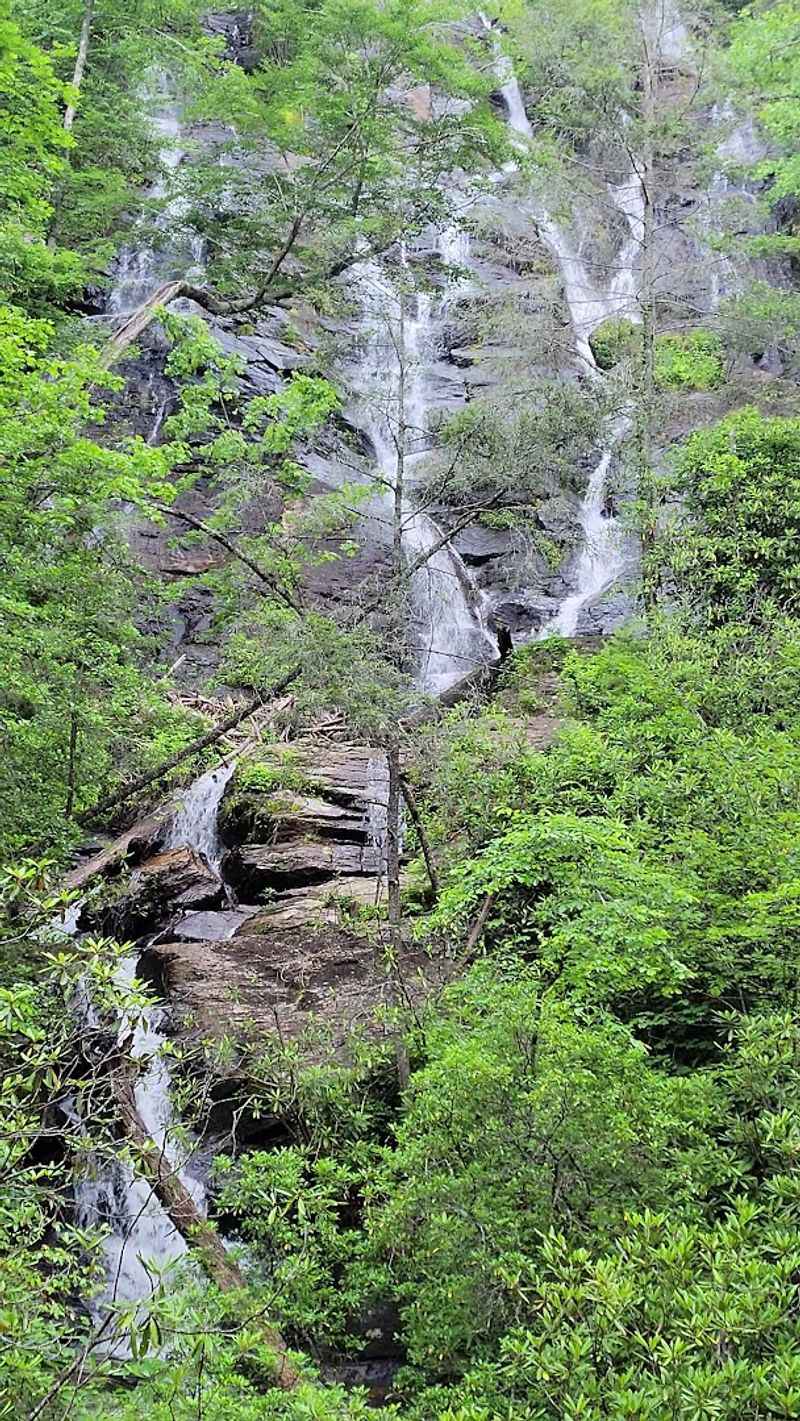
Some of the best things in Blowing Rock require a little effort to find, and the Glen Burney Trail is a perfect example. The trailhead begins at Annie Cannon Gardens, a small but well-maintained public garden in the heart of the village, and then descends into a gorge that most casual visitors never see.
The trail is about 2.5 miles round trip and drops roughly 600 feet in elevation as it winds through rhododendron tunnels and alongside a rushing creek. Two waterfalls reward the effort: Glen Burney Falls and Glen Marie Falls, both of which are genuinely impressive rather than the trickle-over-a-rock variety.
Glen Burney Falls drops about 45 feet into a clear pool, and the surrounding rock walls give it a cathedral-like atmosphere that feels entirely removed from the busy village above. The trail can be slippery after rain, so footwear with grip matters here.
Early morning visits offer the best light for photography and a better chance of having the falls mostly to yourself. The return climb back up to Annie Cannon Gardens is a solid workout, but the payoff is absolutely worth the burn in your legs.
The Village Itself: A Main Street That Actually Delivers
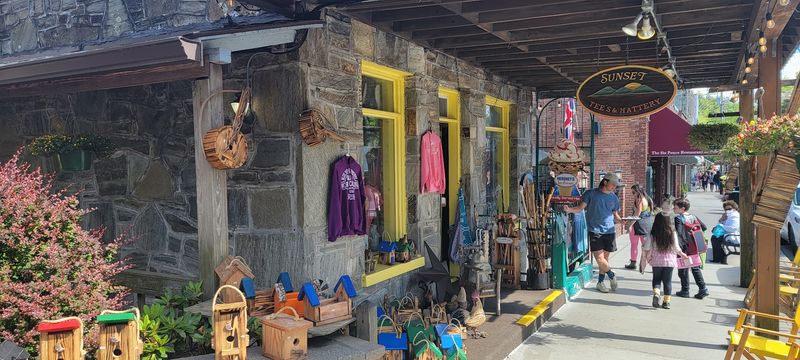
Main Street in Blowing Rock has a quality that is harder to find than it sounds: it is genuinely pleasant without feeling manufactured. The shops are mostly independent, the restaurants skew local, and the scale of everything stays human-sized rather than sprawling into strip mall territory.
The village has been a summer retreat destination since the late 1800s, which means it developed a certain graciousness that stuck. Covered porches, stone facades, and well-tended flower boxes give the streetscape a character that holds up even under scrutiny.
Restaurants range from casual sandwich spots to upscale dining rooms with mountain views, and the food quality tends to be higher than what you might expect from a small tourist town. Local bakeries and coffee shops fill in the gaps for morning visitors who need fuel before heading to the trails.
The village hosts regular events throughout the warmer months, including art shows, seasonal festivals, and outdoor concerts in the town park. Even visitors who came purely for the rock formation tend to linger longer than planned once they realize how much the village itself has to offer beyond a quick photo stop.
The Blue Ridge Parkway Connection: America’s Most Scenic Drive at Your Doorstep
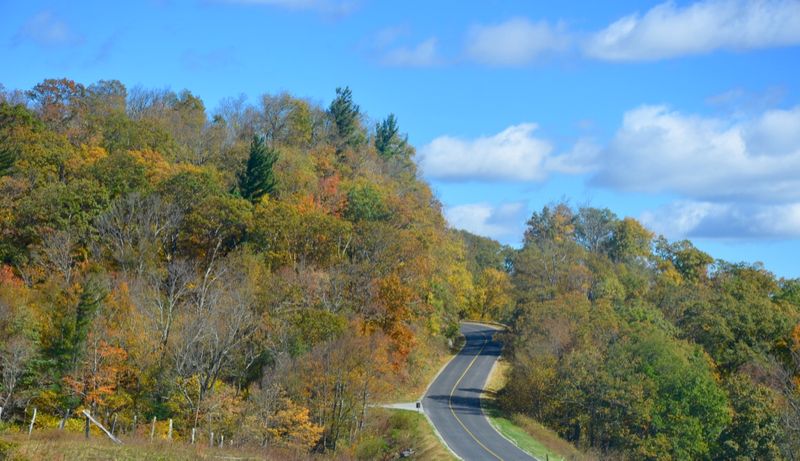
Blowing Rock sits directly along one of the most celebrated scenic drives in the entire country. The Blue Ridge Parkway runs 469 miles from Shenandoah National Park in Virginia all the way to Great Smoky Mountains National Park in North Carolina, and Blowing Rock lands near milepost 291, right in the heart of some of the parkway’s most dramatic terrain.
The parkway itself is free to drive and maintained by the National Park Service. Speed limits are low by design, and the absence of commercial vehicles gives it a calm that interstate highways cannot replicate.
Overlooks appear regularly, each one offering a slightly different angle on the same endlessly varied landscape.
Traveling the parkway through this section in fall is an experience that genuinely earns all the praise it receives. The road curves through tunnels of color, and the ridge-top elevation means the foliage turns earlier here than in the valleys below.
Cyclists also use the parkway regularly, and the Blowing Rock area is a popular base for multiday cycling trips along this corridor. Whether you drive, ride, or simply stop at overlooks, the parkway rewards whatever pace you choose to bring to it.
Best Times to Visit and What to Expect Each Season
Timing a trip to Blowing Rock makes a real difference in what you experience. Summer draws the largest crowds, especially from July through August when families from the hot lowlands of states like Oklahoma and the Carolinas head to the mountains for cooler air.
Temperatures in Blowing Rock average in the low 70s Fahrenheit during summer, which is a significant relief from the heat below.
Fall is the peak season for photography and leaf-peeping, with color typically building through October and reaching its best around mid-month. Expect heavier traffic on weekends and at popular overlooks, but the visual payoff is hard to argue with.
Winter brings snow and ice to the area, which closes some trails but transforms the landscape into something quieter and more austere. The Blowing Rock formation itself stays open when conditions allow, and the bare trees actually open up longer sightlines across the gorge.
Spring is the most underrated season here. Wildflowers bloom along the trails, the rhododendrons put on a show in late May and June, and visitor numbers are lower than summer peak.
For a relaxed visit with good natural color, late May hits a sweet spot that many travelers overlook entirely.
Practical Tips for Getting the Most Out of Your Visit
A few practical details can make the difference between a smooth trip and a frustrating one. Blowing Rock is about 90 miles northwest of Charlotte and roughly 100 miles northeast of Asheville, making it accessible as a day trip from either city or as a standalone destination with an overnight stay.
Parking in the village fills up quickly on summer weekends and peak fall weekends. Arriving before 10 a.m. on those days gives you a much better chance of finding a spot without circling.
Several small lots are scattered around the village, and street parking is available on quieter days.
The Blowing Rock attraction charges a modest admission fee for access to the platform and observation area. The Moses H.
Cone Memorial Park and Blue Ridge Parkway access are free. The Glen Burney Trail is free and accessible from Annie Cannon Gardens without any fee.
Cell service is inconsistent in parts of the area, so downloading offline maps before you arrive is a smart move. Visitors making long drives from distant points, including those coming up from Oklahoma, often find that a two-night stay gives enough time to cover the rock, the trails, the museum, and the parkway without feeling rushed.
Share this story