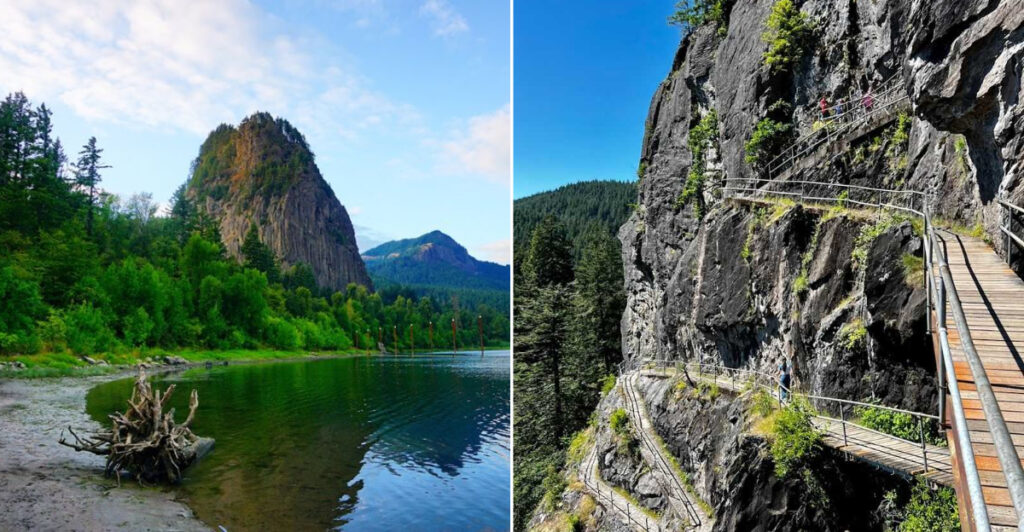
There is a massive rock rising 848 feet straight out of the Columbia River Gorge, and most people driving past on Highway 14 have no idea they can actually climb it. Not just look at it, but walk a hand-built trail of more than 50 switchbacks straight to the top of what geologists confirm is the second-largest monolith in North America.
That rock is the ancient core of a volcano, and it has been sitting in the same spot for roughly 57,000 years. This place wraps an entire outdoor adventure around this geological landmark, offering camping, river access, wildlife watching, and trails that range from a casual riverside stroll to a climb that will test your legs and reward you with some of the most dramatic views in the entire Pacific Northwest.
A Volcano That Time Forgot
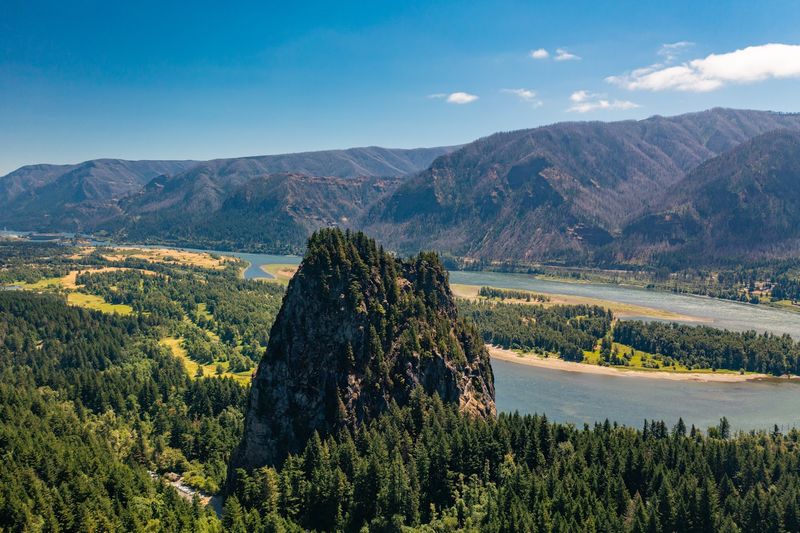
Most hiking destinations do not come with a backstory that stretches back tens of thousands of years, but Beacon Rock is not most destinations. The rock is the solidified lava core of an ancient volcano, left standing after the surrounding softer material eroded away over millennia.
Geologists estimate the formation is approximately 57,000 years old, making it one of the oldest visible volcanic remnants in the Pacific Northwest. The massive Ice Age floods that carved the Columbia River Gorge stripped away everything around it, leaving this towering basalt plug standing alone on the riverbank.
At 848 feet tall, it holds the distinction of being the second-largest monolith in North America, trailing only Gibraltar. That geological history adds a completely different layer to the hike.
Every step up the switchbacks is a step along the outer edge of something that was once deep inside the earth, and that fact alone makes the trail worth every bit of effort.
The Trail That Two Men Built By Hand
The trail climbing Beacon Rock did not appear naturally. Two men named Henry Biddle and Charles Johnson hand-built every inch of it between October 1915 and April 1918, carving switchbacks into the sheer face of the rock using basic tools and remarkable determination.
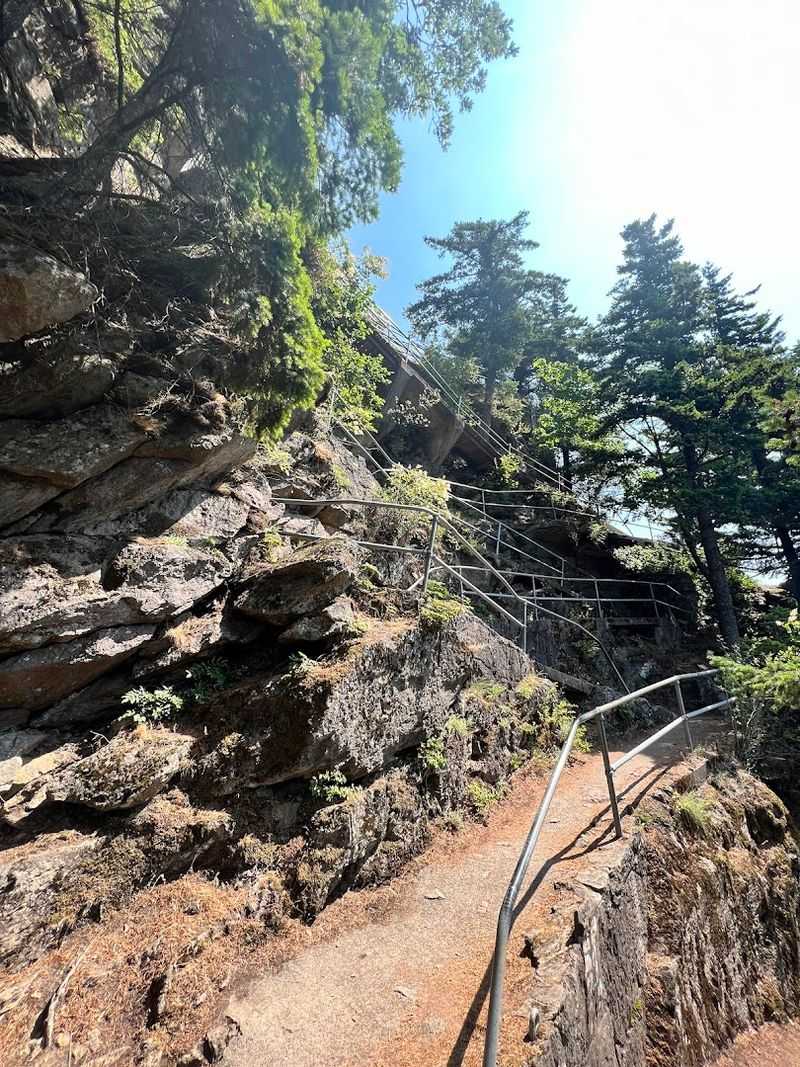
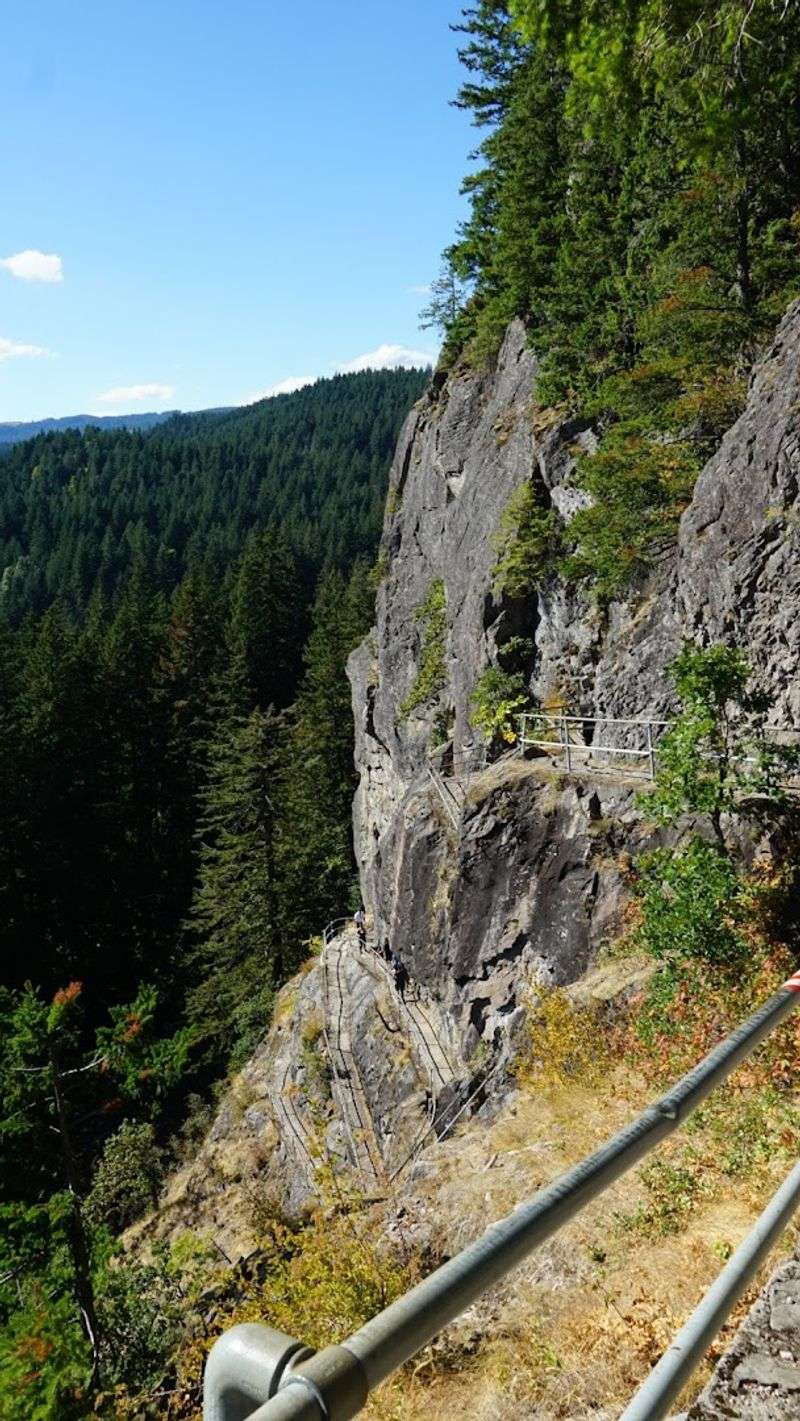
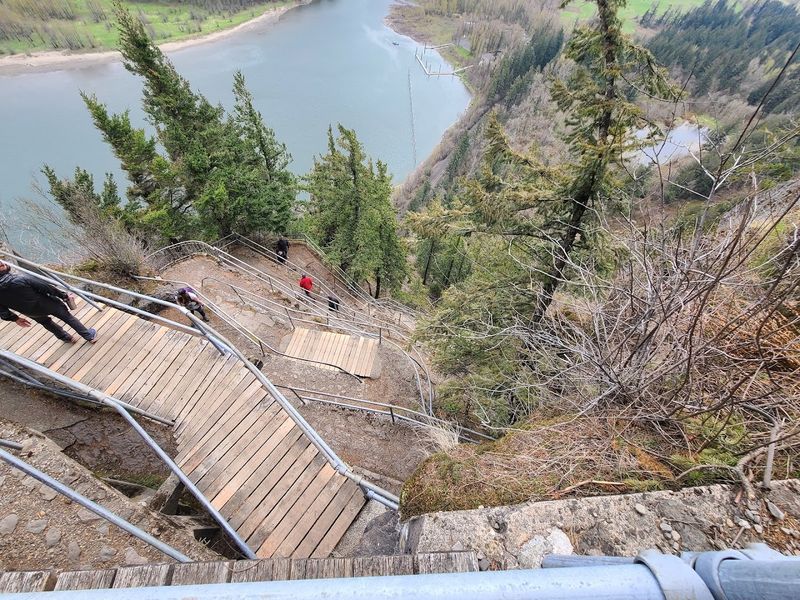
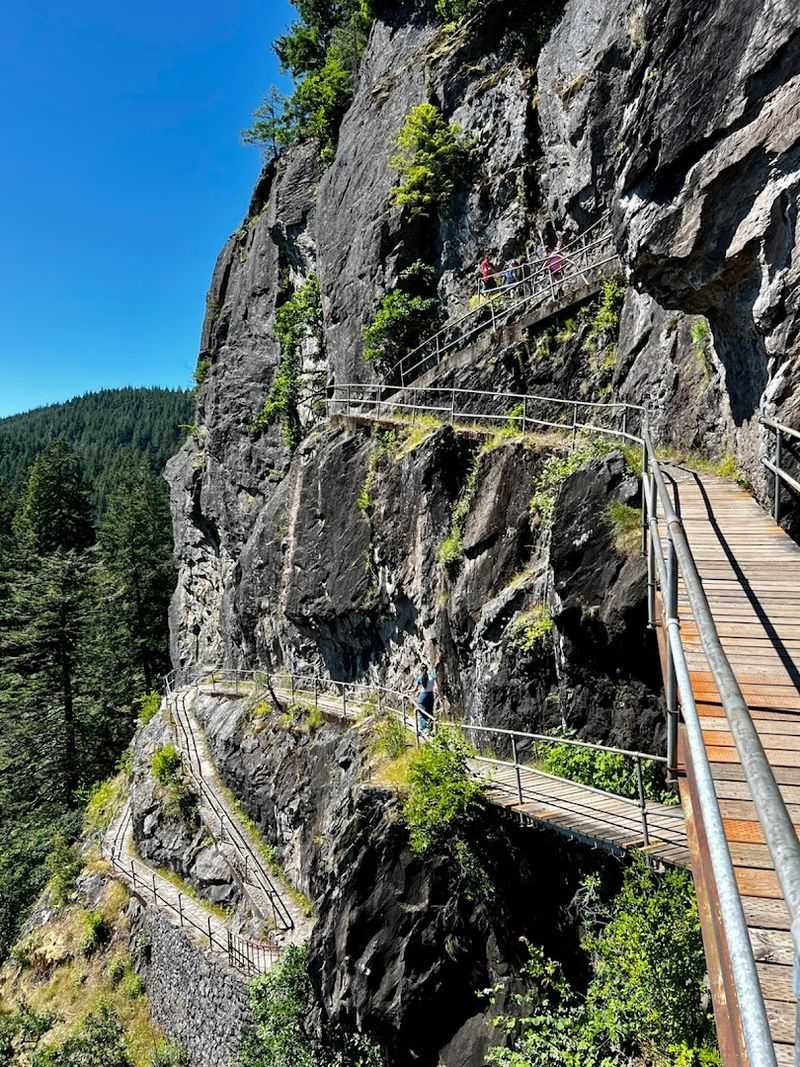
The result is a trail with more than 50 switchbacks, wooden bridges, iron handrails, and narrow pathways that hug the side of the rock at increasingly steep angles. The construction alone is an engineering achievement worth appreciating as you walk it.
The fact that it was completed over a century ago, without modern equipment, makes it even more remarkable.
Biddle purchased the rock in 1915 specifically to build a public trail after the Army Corps of Engineers proposed blasting it apart to use as fill material for a jetty. His intervention saved one of the most distinctive natural landmarks in the Pacific Northwest, and the trail he built still serves thousands of people every single year.
What The Climb Actually Feels Like
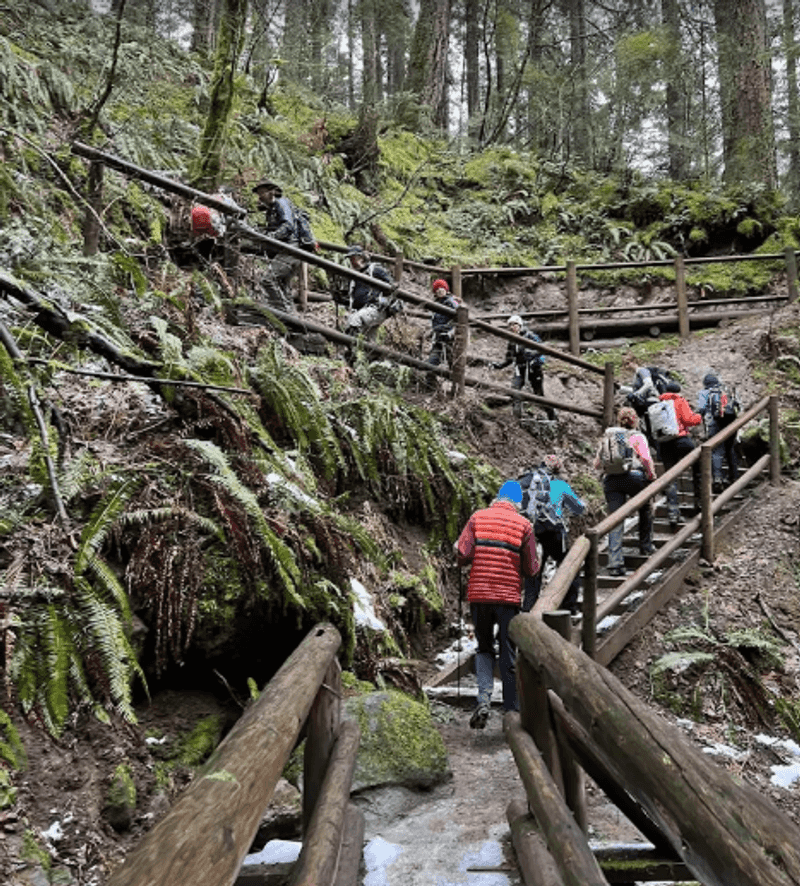
The Beacon Rock trail covers 1.4 miles round trip with over 500 feet of elevation gain, which sounds manageable until the switchbacks start stacking up. The trail begins in the trees near the trailhead and then gradually moves onto the exposed face of the rock, where wooden walkways and metal handrails guide the way upward.
The path is narrow in places, wide enough for one or two people side by side, which means trail etiquette matters. Hikers heading up typically yield to those coming down on the tighter sections.
Boots with good grip are recommended, especially since the surface gets slippery when wet.
The climb takes most people between 30 and 45 minutes going up, with the return trip a bit faster. The trail is rated as moderate, and while people of varying fitness levels complete it regularly, the steepness and uneven surface mean it should not be underestimated.
The handrails are sturdy and continuous throughout the exposed sections, providing reliable support the entire way.
Views That Get Better As You Rise
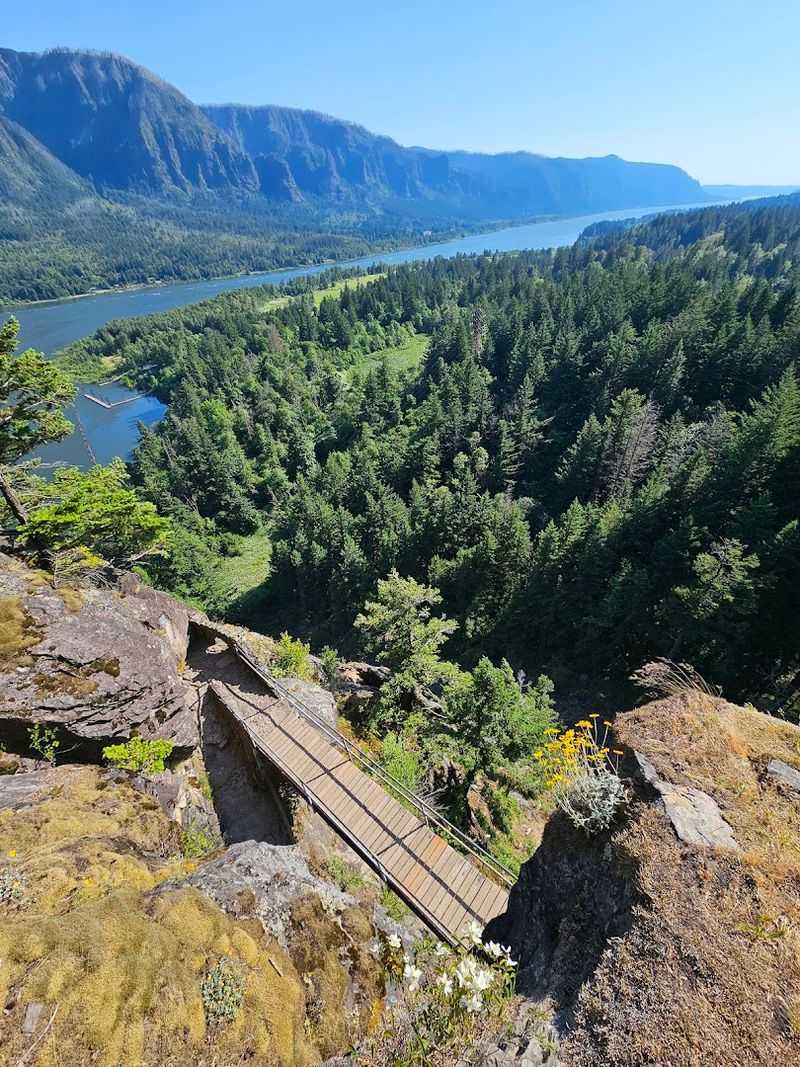
One of the most consistent things people discover on the Beacon Rock trail is that the views improve dramatically as you climb, but they do not necessarily peak at the summit. The best unobstructed perspectives of the Columbia River Gorge tend to appear around the halfway point and slightly beyond, where the trail wraps around the south-facing side of the rock.
From those mid-trail vantage points, the river stretches out in both directions, the valley floor spreads wide below, and the surrounding ridgelines of the Gorge frame the entire picture. The southwest views come first as you ascend, and then the trail shifts to reveal the southeast corridor, where some of the most striking open views are found.
The very top of the rock is a small, flat area that can comfortably hold around ten people at a time. Trees partially block the summit view, which surprises some hikers.
The real payoff, as many who have done the trail multiple times will tell you, happens along the way up rather than at the final step.
Rock Climbing On The Outer Face
Beyond the hiking trail, Beacon Rock draws a dedicated community of technical rock climbers who tackle the sheer outer faces of the monolith. The basalt walls offer a range of climbing routes at different difficulty levels, making it a destination for both experienced climbers and those working their way up through intermediate grades.
The climbing routes are established and well-documented within the climbing community, and the rock’s basalt surface provides solid holds throughout most of the face. Hikers on the switchback trail occasionally catch glimpses of climbers working their way up the vertical sections far below the trail itself.
Permits and park rules apply to climbing activity, so checking in with Washington State Parks guidelines before heading out with gear is the right move. The combination of a hiker-friendly trail and legitimate technical climbing routes on the same formation makes Beacon Rock unusually versatile as a destination, drawing two completely different types of outdoor enthusiasts to the same piece of ancient geology.
The Day Use Area Nobody Talks About
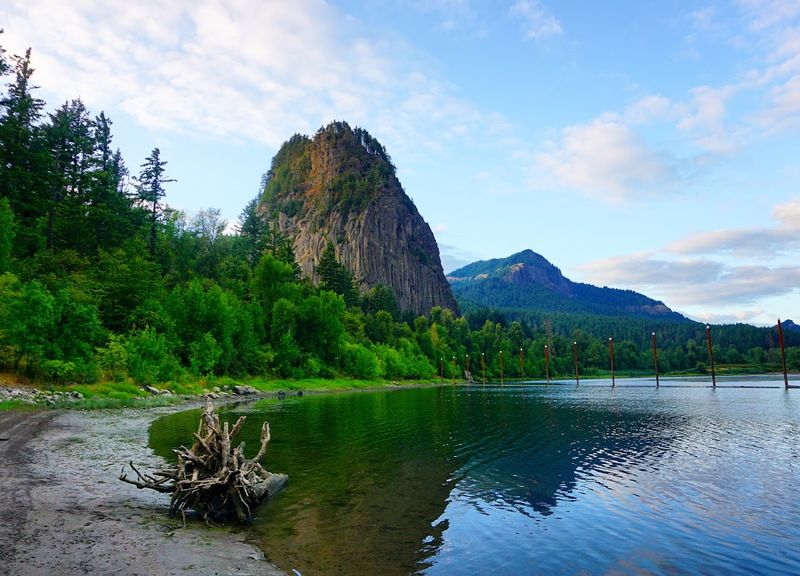
Most people who visit Beacon Rock State Park go straight to the trailhead and miss a significant portion of what the park actually offers. West of the main trailhead pullout, a road leads down into a day use area along the river that operates as a completely separate experience from the rock itself.
The picnic area near the day use bathrooms sits at river level and delivers views of the Columbia River Gorge that rival anything seen from higher elevation. The perspective from that spot, with the gorge walls rising on both sides and the river moving through the center, is the kind of view that stops people mid-step.
There is a boat launch in this area as well, giving kayakers and paddlers direct access to the Columbia. The campground is also situated nearby, small and quiet by most standards, with walking paths connecting the various sections and restrooms at each area.
Eagles and hawks are frequently spotted along this stretch of the river.
Little Beacon Rock And The Alternate Trail
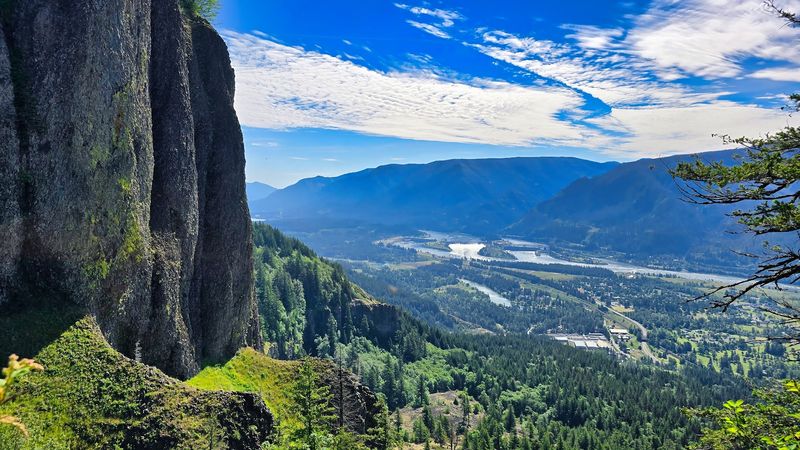
Not everyone knows that a separate trail leads to a formation called Little Beacon Rock, which sits across the road from the main attraction. That trail offers a completely different perspective, allowing hikers to look back at Beacon Rock itself from across the valley rather than from within its switchbacks.
The view of the main rock from that vantage point shows the full scale of the monolith in a way that is impossible to appreciate when standing at its base or climbing its face. Seeing the entire structure from a distance puts its height and steepness into a context that photographs from below rarely capture accurately.
The trail system on the far side of the highway connects into a broader network that extends deeper into the forested hills above the Gorge. These trails are quieter than the main Beacon Rock climb and attract hikers looking for a longer, less crowded outing.
The park map available at the trailhead or on the Washington State Parks website outlines the full network of options.
Practical Tips Before You Go
A Washington State Discover Pass is required for parking at Beacon Rock State Park. The pass costs $35 annually and is valid at all Washington State parks, or a single-day fee of around $10 can be paid at the parking meter in the paved lot.
Passes are available online, at Walmart, Fred Meyer, and various outdoor retailers throughout the state.
Parking fills up quickly on weekends, especially between 10 AM and noon. Arriving before 9 AM on a Saturday or Sunday significantly improves the odds of finding a spot without circling.
Weekday mornings tend to be much quieter, with the trail sometimes nearly empty in the first hour after the 8 AM opening.
The trail is not wheelchair accessible, and the narrow, uneven surface makes sturdy footwear a practical necessity rather than a suggestion. Restrooms are located at the parking lot.
The park closes at 10 PM daily, so late afternoon visits are fine as long as the descent is completed before dusk. There is no entrance gate, so access to the trailhead is direct from the highway.
Why This Park Keeps Drawing People Back
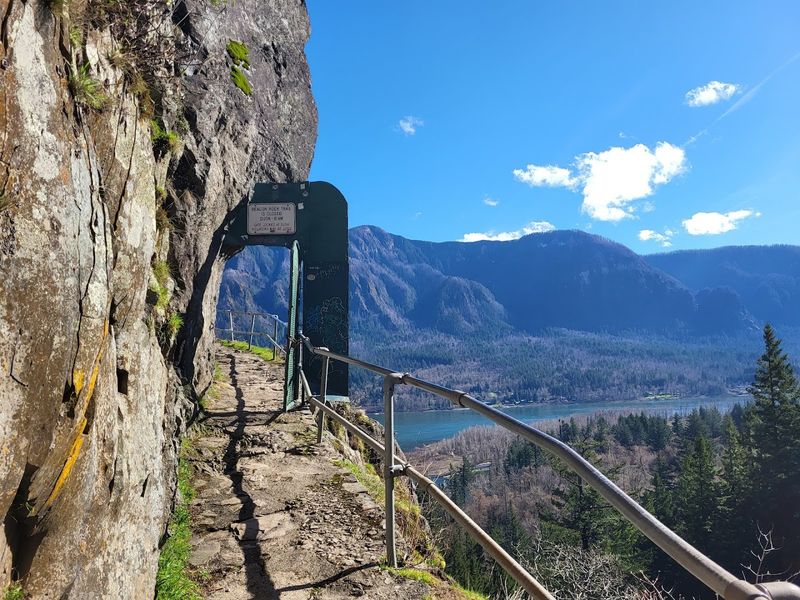
There are parks with longer trails, taller peaks, and more elaborate facilities, but Beacon Rock State Park holds something that is harder to define and easier to feel once you are standing on that narrow trail with the Gorge spreading out below you. The combination of geological history, a hand-built trail over a century old, river access, camping, and wildlife in one compact location is genuinely rare.
The park has been drawing people back year after year, with some hikers returning multiple times each season simply because the experience delivers something consistent and satisfying. The trail does not change, but the light, the weather, and the river below shift with every visit.
For anyone driving the Washington side of the Columbia River Gorge, stopping here is not optional in the way that most roadside parks feel optional. Beacon Rock State Park is the kind of place that earns its reputation one switchback at a time, and the view from halfway up the ancient volcano’s core is proof enough that some things are absolutely worth the climb.
Where The Rock Meets The Road
Beacon Rock State Park sits at 34841 WA-14, Stevenson, WA 98648, right along the Washington side of the Columbia River Gorge National Scenic Area. The park is open daily from 8 AM to 10 PM, making it accessible for both early morning hikers and those who prefer a late afternoon visit.
Getting there is straightforward. Traveling east from Portland on Highway 14, the park appears on the right side of the road.
There are two parking areas near the main trailhead. The first is an unpaved lot with a roofed picnic table, and roughly 600 feet further east sits a paved lot with a parking meter where a Washington State Discover Pass or a $10 day fee is required.
The park covers more ground than most people realize at first glance. Beyond the famous rock itself, the park includes campgrounds, a boat launch, picnic areas, and several miles of additional trails spread across both sides of the highway.
Share this story