A half-mile volcanic cave is the main attraction at this unusual southern Idaho destination, but it is far from the only reason people stop. After exploring the underground lava tube, visitors can browse collections that include dinosaur fossils, African artifacts, Native American history exhibits, wildlife displays, and other unexpected finds gathered from around the world.
Known as Idaho’s Mammoth Cave and Shoshone Bird Museum of Natural History, the attraction combines geology, history, and natural science in a way that is difficult to categorize. One moment you are walking through a volcanic tunnel formed millions of years ago, and the next you are examining museum exhibits or spotting peacocks roaming the grounds.
What makes this place memorable is its unpredictability. Every building seems to reveal something different, turning a simple roadside stop into an experience that can easily fill an entire afternoon.
Here’s why this hidden Idaho attraction continues to surprise travelers who decide to take the exit and see what is waiting beyond the highway.
Finding the Place: Address, Location, and First Impressions
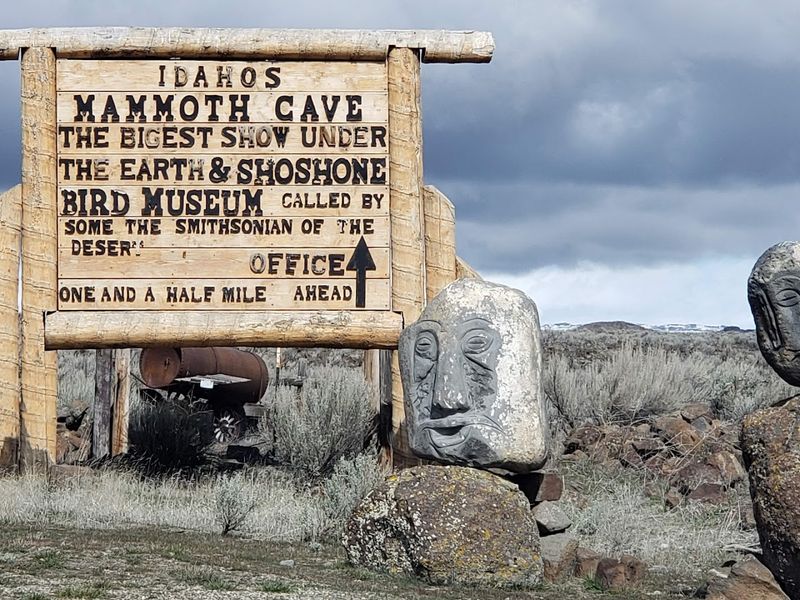
The address is 251 W Thorn Creek St, Shoshone, ID 83352, and the attraction sits about eight miles north of the town of Shoshone, Idaho, roughly 1.5 miles off the main highway down a gravel road.
That gravel stretch might make you question your GPS for a moment, but trust it. When you arrive, the property looks like a working ranch at first glance, with weathered corrals, old farm equipment scattered around, and lava rock structures that blend right into the desert landscape.
The surroundings feel raw and unhurried, which is actually part of the charm. There are no flashy signs screaming for your attention, no carnival atmosphere.
What greets you instead is a peacock strutting across the path like it owns the property, which, honestly, it might. Hours run from 10 AM to 6 PM daily, and you can reach the team at 208-329-5382 before making the trip.
The Vision That Shaped a One-of-a-Kind Attraction
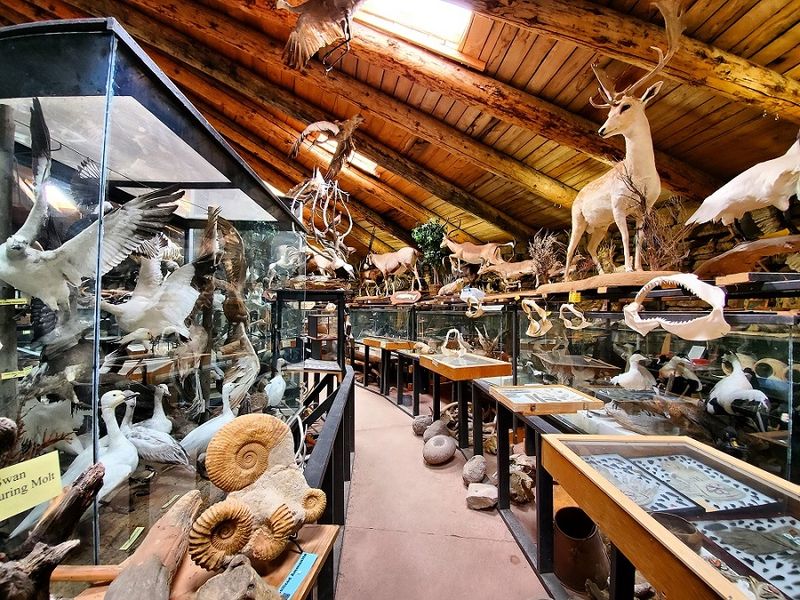
Idaho’s Mammoth Cave and Shoshone Bird Museum of Natural History owes its existence to a long-term vision rooted in curiosity, education, and a deep appreciation for the natural world. What began as the rediscovery of a remarkable cave eventually grew into a destination that combines geology, wildlife, history, and culture under one roof.
The attraction reflects decades of dedication to collecting and preserving fascinating objects from a wide range of disciplines. Visitors can explore displays featuring natural history specimens, fossils, cultural artifacts, geological treasures, and wildlife exhibits, creating an experience that feels part museum, part educational journey, and part family legacy.
Rather than focusing solely on the cave itself, the property was developed as a place where people could learn about the world around them through hands-on exploration and discovery. The collections were assembled with the goal of inspiring curiosity and helping visitors of all ages gain a greater appreciation for nature and history.
Today, that mission continues through generations of family stewardship. The result is an attraction that feels personal, distinctive, and deeply connected to the passion that inspired it, offering an experience far different from the standardized exhibits often found at larger institutions.
A Lava Tube Unlike Any Other: The Geology Behind the Cave
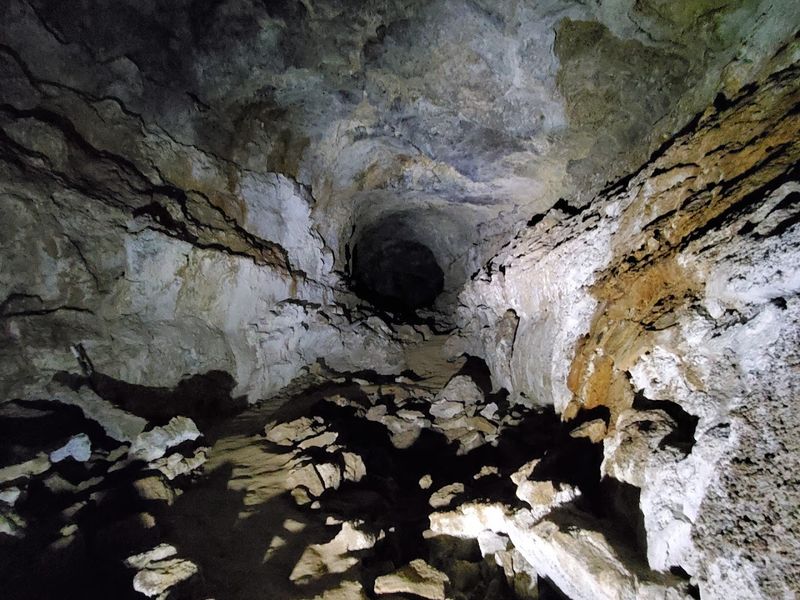
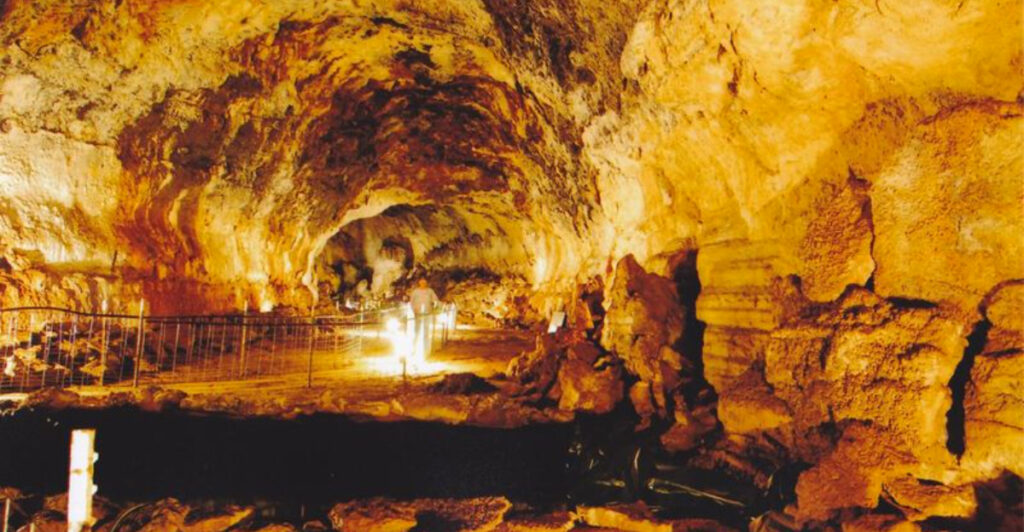
Ancient volcanic activity carved this cave out of the earth long before humans arrived in the region. Molten lava once flowed through underground channels, and when the outer crust cooled and hardened, the still-liquid interior drained away, leaving a hollow tube behind.
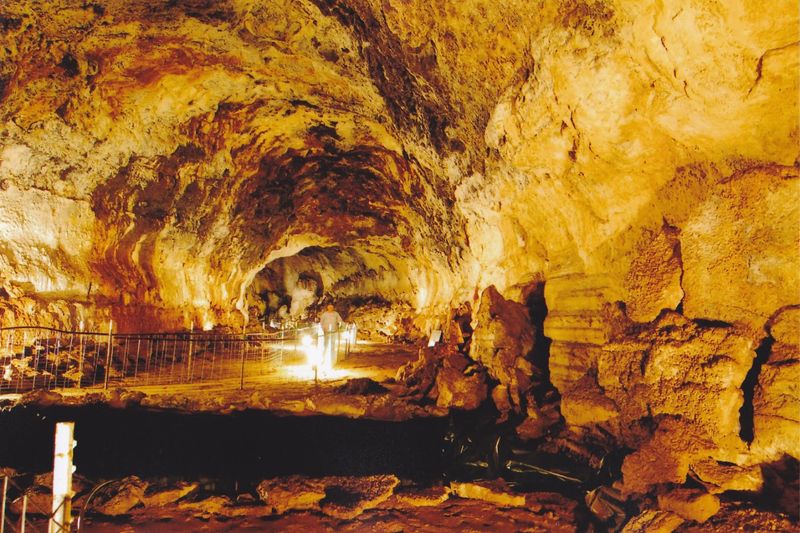
The result is one of the largest volcanic lava tube caves in the world that is open to the public. The walls display frozen flow patterns, rough volcanic textures, and mineral deposits that shift through shades of silver, gold, orange, and red depending on how the lantern light catches them.
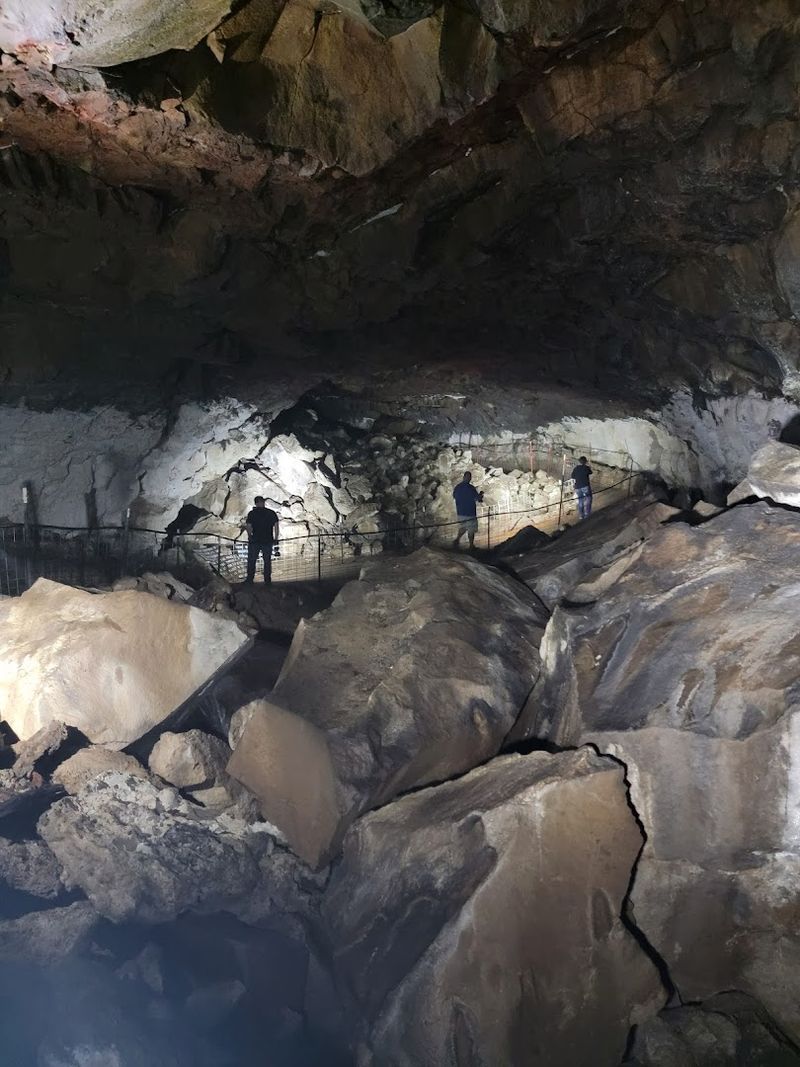
Sections of the ceiling have collapsed over time, creating the accessible passages visitors walk through today. Perhaps the most unexpected feature is the presence of cyanobacteria shimmering on the walls, ancient microorganisms considered among Earth’s earliest life forms.
Seeing something that old up close, without a glass barrier between you and it, is the kind of experience that makes the geology feel genuinely alive rather than just educational.
What the Self-Guided Cave Tour Actually Feels Like
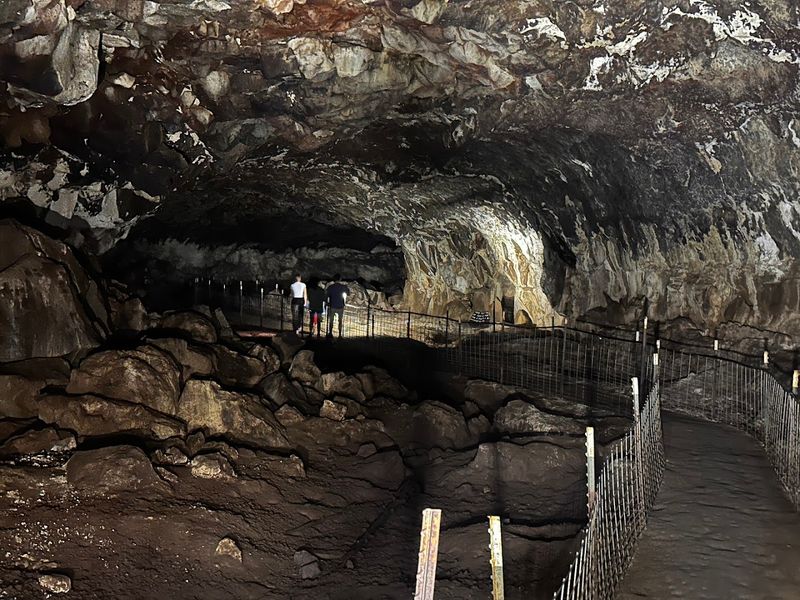
The cave tour covers a quarter mile in and a quarter mile back out, all self-guided and entirely unlit except for the lanterns provided at the front desk. Those lanterns are genuinely bright and do an excellent job illuminating the path ahead.
A fenced trail keeps you on the established route, and railings appear in the steeper or narrower sections. The walk takes roughly eight minutes each way if you move at a steady pace, though most visitors slow down considerably once they start noticing the details on the walls.
The temperature inside stays at a consistent 42 degrees Fahrenheit year-round, which feels refreshing in summer and sharply cold in winter. Bringing a sweatshirt is strongly recommended regardless of the season.
One detail worth pausing for is turning your lantern off briefly and standing in complete darkness. The silence and absolute blackness of an underground lava tube is something that sticks with you long after you climb back into the sunlight.
The bats near the entrance ceiling are an added bonus.
Prehistoric Discoveries Found Beneath the Surface
The cave has given up more than just impressive geology over the years. Excavations inside have uncovered bones from prehistoric animals that once roamed this part of North America, including short-faced bears, ancient camels, and small horses.
These finds place the cave in a broader scientific context that goes well beyond its visual drama. The lava tube essentially acted as a natural trap and preservation chamber, keeping remains in cool, stable conditions for thousands of years.
Some of those paleontological discoveries are displayed in the museum buildings on the property, giving visitors a direct connection between what lies beneath the ground and what ended up behind glass. The combination of walking through the actual cave and then viewing bones pulled from its floor creates a surprisingly coherent story about deep time and the changing landscape of the American West.
It is the kind of layered experience that rewards curious visitors who take the time to read the exhibit labels rather than just pass through quickly.
Native American History and Cold War Secrets Hidden in the Rock
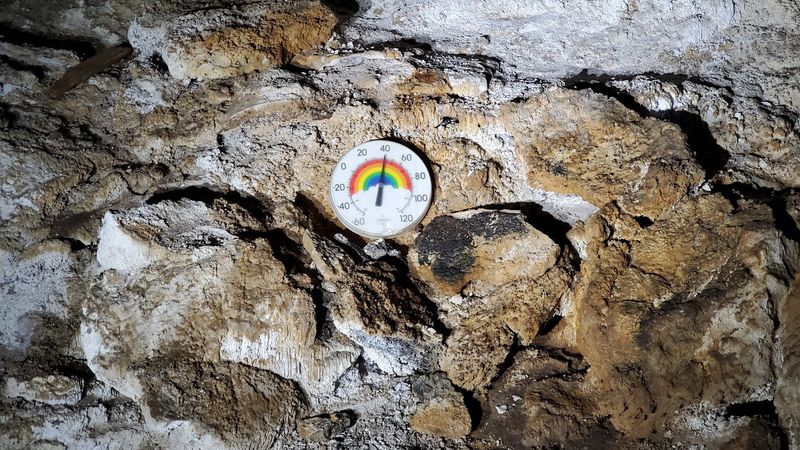
Long before Richard Olsen arrived with a lantern and a vision, the Shoshone and Bannock tribes used this cave for shelter and food storage. The consistent 42-degree temperature made it a reliable natural refrigerator, and its protected interior offered real comfort in a demanding landscape.
That practical history adds a human dimension to the cave that pure geology alone cannot provide. People lived alongside this place, depended on it, and understood its value centuries before it became a tourist attraction.
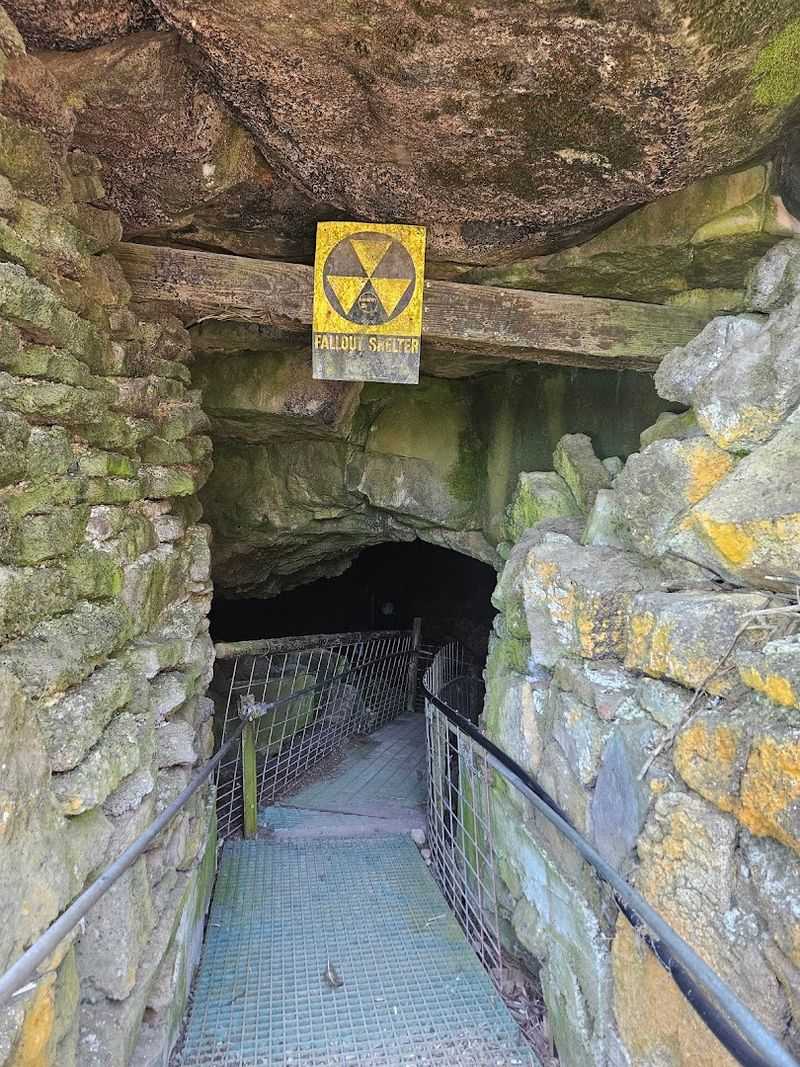
Then came the Cold War, and the cave took on an entirely different role. Federal officials evaluated the lava tube as a civil defense fallout shelter and designated it capable of sheltering up to 8,000 people.
That fact alone stops most visitors mid-step when they read it on the posted signs. A space that once kept dried meat cool for Indigenous families was later mapped as an emergency refuge for thousands of modern Americans, which is the kind of layered history that no single museum exhibit could fully do justice.
The Bird Museum: A Collection That Earns Its Nickname
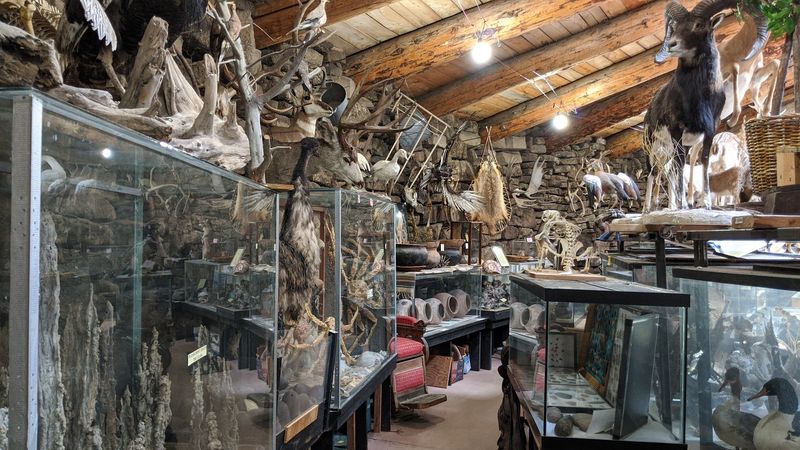
The nickname floating around for this place is the Smithsonian of the Desert, and while that might sound like an overstatement, a walk through the bird museum makes the case convincingly. Birds from every corner of the globe are displayed here, gathered across four generations of the Olsen family’s collecting efforts.
The variety is genuinely staggering. Species from Africa, South America, Asia, and North America share the same walls, and the sheer density of the collection means you can walk through twice and still notice something new the second time around.
The museum building itself is worth examining. The main round structure was constructed over 30 years using natural, uncut lava rock for walls that are four feet thick and ten feet high.
Ponderosa pine and cottonwood trees support the roof, which is made from belting salvaged from a Borax mine. The building is as much a handcrafted artifact as anything inside it, and that craftsmanship gives the whole space a character that purpose-built museums rarely achieve.
Beyond Birds: The Full Scope of the Natural History Collection
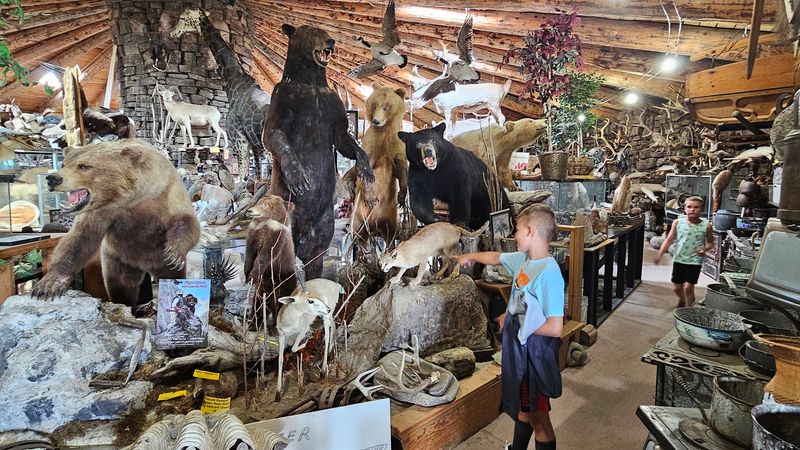
Calling this just a bird museum undersells the full experience by a wide margin. The collection includes butterflies, fish fossils, dinosaur bones, taxidermied animals from every continent, pioneer artifacts, Stone Age tools, American Indian artifacts, and thousands of cultural objects gathered from Africa, South America, and beyond.
There are also rocks, minerals, coral specimens, and gemstones displayed in a way that feels more like exploring someone’s extraordinary personal archive than visiting a polished institution. That rawness is part of what makes it memorable.
Some visitors find the density of the displays a little overwhelming at first. Things are packed closely together, labels vary in detail, and the overall atmosphere leans toward organized abundance rather than minimalist curation.
But for anyone who enjoys the feeling of genuine discovery, that density becomes an asset. Every glance reveals something unexpected, whether it is a biological anomaly, an artifact from a culture rarely represented in mainstream museums, or a fossil that prompts questions you did not think to bring with you.
The giraffe tends to stop people cold.
The Peacocks, Emus, and the Surprisingly Practical Reason They Are There
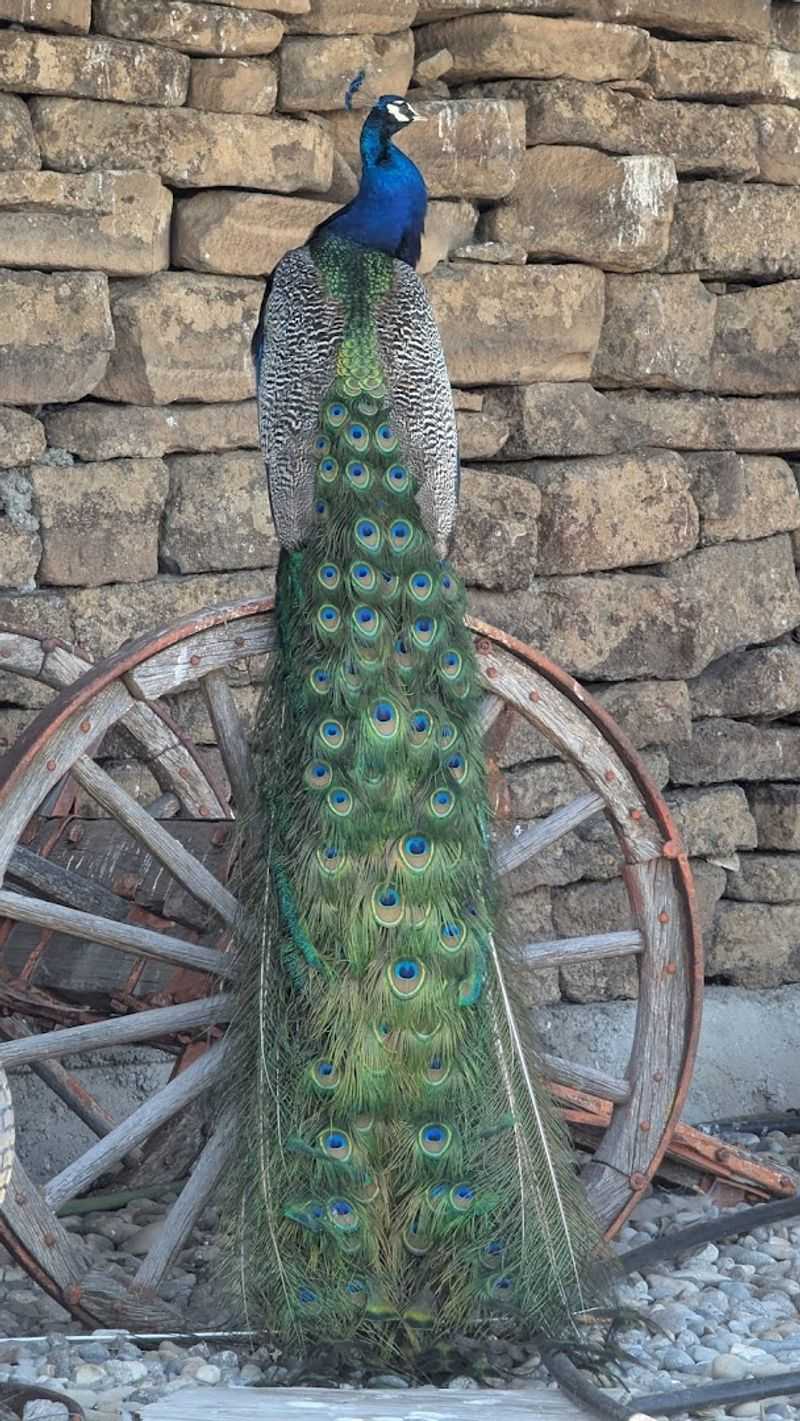
The peacocks are not just a quirky decoration. They serve an actual purpose on the property, acting as natural deterrents for rattlesnakes and ticks.
Those birds patrol the grounds with a confidence that suggests they know exactly how useful they are.
Seeing a peacock fan its tail feathers against a backdrop of Idaho high desert and lava rock buildings is a genuinely unexpected visual. It is the kind of detail that makes this place feel like it operates by its own logic, which it essentially does.
A few emus also share the property, kept in an enclosure near the main buildings. Most visitors who stop in expecting a cave tour leave talking about the birds almost as much as the underground experience.
Kids especially respond to them with real excitement, particularly if the peacocks happen to call out during the visit. Bonus points if you can get one to spread its tail on cue, though the peacocks make no guarantees and follow no schedule but their own.
Practical Tips for Getting the Most Out of Your Visit
A few preparation tips will make the visit noticeably more comfortable. Bring a sweatshirt or light jacket regardless of the outside temperature, because 42 degrees Fahrenheit inside the cave feels genuinely cold after the first few minutes, especially for children.
Leave bags and purses locked in your car before entering the museums. The collection is displayed in close quarters, and the no-bag policy is enforced to protect the artifacts.
Strollers are not practical inside the cave due to the uneven terrain, and the path can present challenges for anyone with significant knee issues.
The road leading to the property is gravel for the final stretch, so motorcycles are not ideal. Following GPS directions rather than the blue signs on the highway will put you on the smoother approach road.
Plan for at least two hours to do both the cave and the museums justice. The admission fee covers lantern rental, so there is no need to bring a flashlight.
The staff is notably friendly and happy to answer questions before you head underground.
Best Time to Visit and What to Expect From the Atmosphere
Summer is the most popular season for a reason. The contrast between the hot Idaho desert sun and the cool cave interior makes the underground portion feel like a genuine reward after the walk across the property.
Visiting the museums first and saving the cave for last is a strategy many visitors recommend for exactly that reason.
Spring and fall offer milder outdoor temperatures but the cave remains consistently cold year-round, so the sweatshirt rule applies in every season. Winter visits are possible during operating hours but the desert setting is at its most dramatic in the warmer months when the landscape feels alive.
The atmosphere overall is relaxed and unhurried. There are no timed entry slots, no crowds rushing you through, and no scripted narration to keep pace with.
The self-guided format means you can spend ten minutes at one exhibit or thirty, depending on what catches your attention. That freedom to wander at your own pace is one of the things visitors mention most fondly when they describe why the place stayed with them.
Share this story