New Hampshire has a way of holding onto its history without letting it gather dust. From the rocky Seacoast to the peaks of the White Mountains, the state is dotted with grand old hotels that have been welcoming travelers for well over a century.
These are not places that simply look old on the outside while feeling like every other modern hotel on the inside. They carry real stories, real architecture, and real personality in every hallway and porch railing.
Some hosted presidents and world leaders. Others were the summer retreats of families who returned year after year for generations.
A few nearly disappeared before passionate locals stepped in to save them. What they all share is that rare quality that no interior designer can manufacture from scratch: genuine character built up over decades of real history.
Whether you are planning a weekend escape or a longer New England adventure, these ten historic hotels offer something that newer properties simply cannot replicate. Read on to find out which ones deserve a spot on your travel list.
Wentworth By The Sea, New Castle, New Hampshire
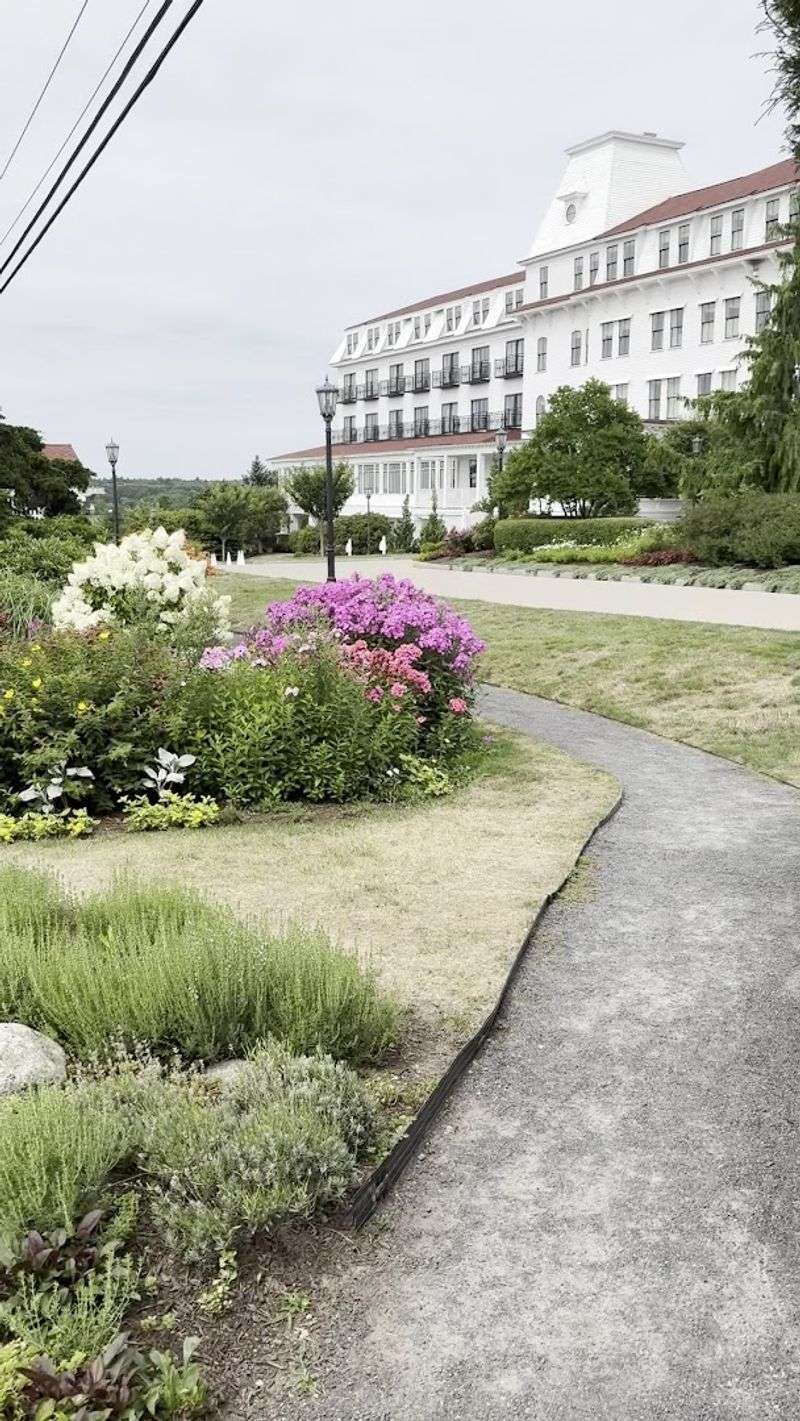
Few hotels in New England can claim they helped end a war, but Wentworth By The Sea is not like most hotels. Back in 1905, President Theodore Roosevelt personally chose this grand Seacoast property as the site for hosting diplomats negotiating the Treaty of Portsmouth, which brought the Russo-Japanese War to a close.
Originally opened in 1874, the hotel’s white towers have long served as a landmark along the New Hampshire coastline. After years of closure and serious deterioration, local preservationists rallied to restore it fully, bringing the cream-paneled lobby and Victorian architecture back to their original grandeur.
One of the most unique features is that guests can actually arrive by sea, thanks to the hotel’s 170-slip marina. That makes Wentworth By The Sea the only grand hotel in New Hampshire where a boat counts as valid transportation.
A rare grandfather clock greets visitors in the lobby, and a stroll through the garden gives a genuine sense of the Victorian era that shaped this remarkable property.
Hanover Inn Dartmouth, Hanover, New Hampshire
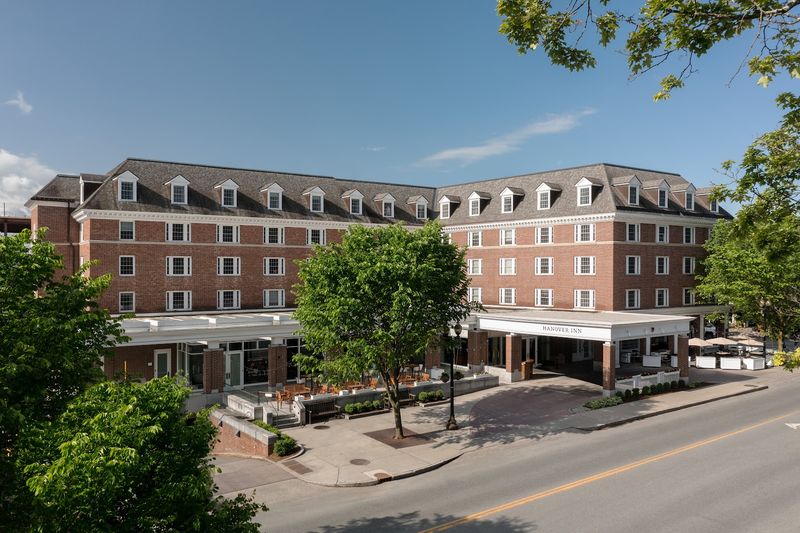
The oldest continuously operating business in New Hampshire is not a general store or a blacksmith shop. It is a hotel.
Hanover Inn traces its roots back to 1780, when it operated as a tavern serving travelers and Dartmouth College students alike.
A proper hotel replaced the original tavern in 1813, and the current building went up in 1889. Dartmouth College renovated it in 1901 and has owned and operated it ever since.
The most recent transformation involved a 43 million dollar renovation that turned it into a polished 108-room boutique hotel complete with a farm-to-table restaurant.
The location directly on the Dartmouth College Green puts guests within easy walking distance of one of New England’s most beautiful and well-preserved college campuses. Hanover itself is a compact, walkable town with independent shops, galleries, and a genuinely lively energy that mixes academic culture with classic New Hampshire charm.
Staying at the Hanover Inn means you are not just booking a room; you are booking a front-row seat to one of the state’s most storied communities.
Eagle Mountain House, Jackson, New Hampshire
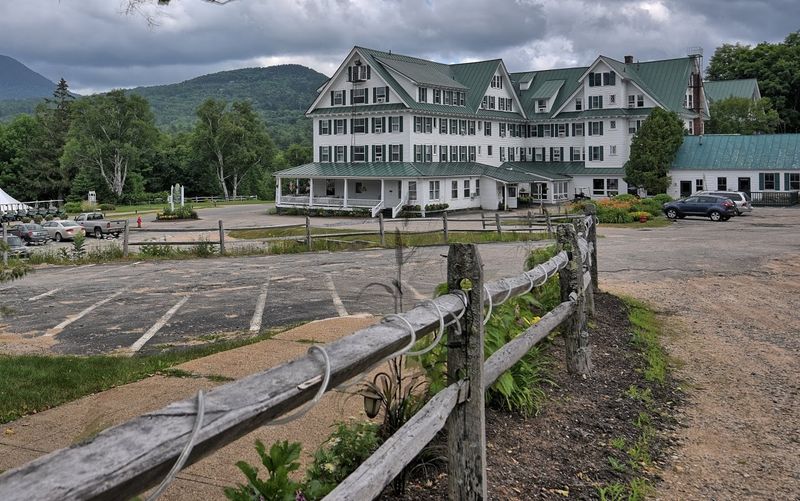
There is something genuinely rare about a nineteenth-century mountain resort that has managed to survive into the twenty-first century with its original character still intact. Eagle Mountain House in Jackson is one of those survivors, and it wears that distinction well.
Perched on the side of a mountain just outside Jackson Village, the hotel greets guests with an impressive porch that frames sweeping views of the surrounding golf course and mountain ridgelines. The vintage lobby and an adjoining library with fireplaces invite guests to slow down and actually use a book for entertainment.
During the grand resort era of the late 1800s, wealthy families from Boston and New York would spend entire summers at properties like this one, and it is easy to see why. The setting in the White Mountains offers access to hiking trails, skiing, covered bridges, and the scenic Kancamagus Highway, all within a short drive.
Eagle Mountain House gives modern travelers a genuine taste of that old-fashioned resort lifestyle without requiring a time machine or a trust fund.
The Wentworth, Jackson, New Hampshire
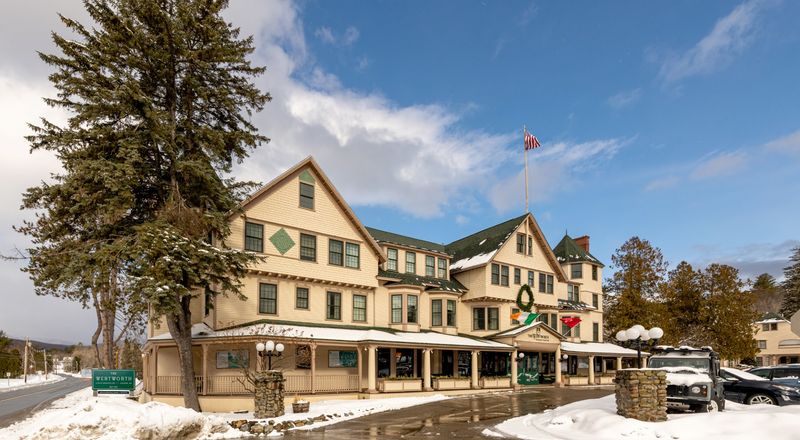
Built in 1869 under the name Wentworth Hall, this Jackson Village inn started as a single building and gradually grew into a charming collection of structures spread across a beautifully landscaped property. Over time, summer cottages in the Arts and Crafts bungalow style were added around the main building, and those cottages have since been carefully restored as guest rooms and suites.
The total room count across the main building and cottages reaches 61, with many units preserving original architectural details such as period mantels, paneled walls, and vintage millwork. Some rooms even include private outdoor hot tubs positioned to take full advantage of the mountain and valley views.
The wraparound porch adorned with seasonal flowers is one of the inn’s most photographed features, and it delivers exactly the kind of peaceful New England scene that postcard photographers dream about. An elegant dining room and a comfortable lounge round out the on-site options.
Jackson Village itself is one of the most picturesque communities in the White Mountains, and The Wentworth sits right at the center of it all.
Thayers Inn, Littleton, New Hampshire
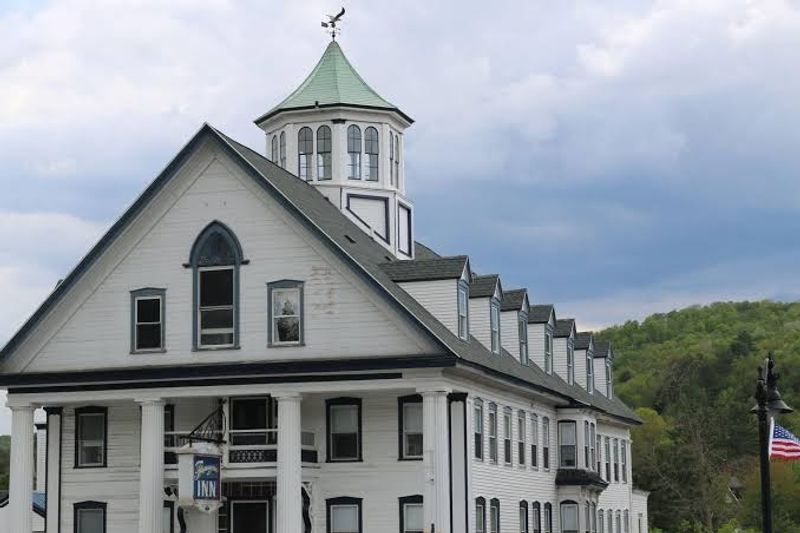
Not every historic hotel needs a mountain backdrop or a waterfront location to earn its place on a must-visit list. Thayers Inn in Littleton has been anchoring Main Street since 1843, and its Greek Revival facade alone is worth a detour through northern New Hampshire.
As one of the oldest continuously operating hotels in the northern part of the state, Thayers has accumulated more than its fair share of stories over nearly two centuries of welcoming guests. The historic interiors give the property a personality that no amount of modern renovation could manufacture, and that authenticity is exactly what draws history-minded travelers here.
The location on Littleton’s Main Street is a genuine advantage, since the town has developed a surprisingly lively downtown for its size, with independent bookshops, restaurants, and galleries within easy walking distance of the hotel’s front door. Littleton is also a convenient base for exploring the White Mountains, the Connecticut River Valley, and the nearby towns of Franconia and Bethlehem.
Thayers Inn offers honest, character-filled lodging without any pretense.
Mountain View Grand Resort & Spa, Whitefield, New Hampshire
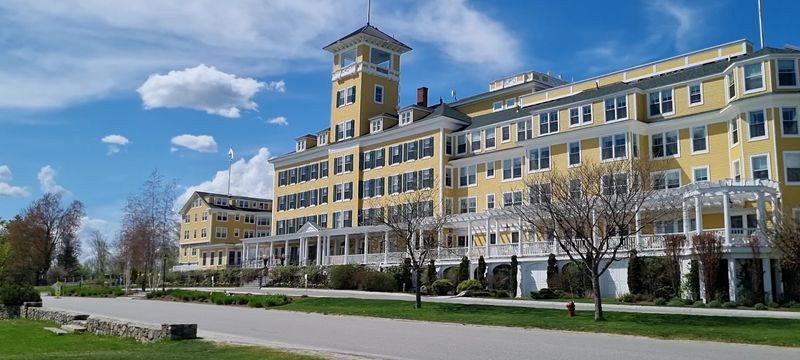
Dating back to 1865, Mountain View Grand Resort in Whitefield is the kind of property that makes you wonder how something this grand ever got built in such a quiet corner of New Hampshire. The answer, of course, is that this part of the state was not always quiet.
During the golden age of mountain resort travel, the White Mountains drew crowds of well-heeled visitors every summer season.
The resort has been carefully renovated while holding onto its historic character throughout. Newly restored public areas, original architectural details, and a spacious porch that tends to fill up on clear days all contribute to a sense of place that feels genuinely rooted in the nineteenth century.
The views of the Presidential Range are among the most spectacular available from any hotel porch in the state.
One particularly appealing feature is the history tour offered to guests who time their stay correctly. That kind of programming reflects a real commitment to the property’s past rather than just using age as a marketing point.
Mountain View Grand is a resort that takes its own history seriously.
Omni Mount Washington Resort, Bretton Woods, New Hampshire
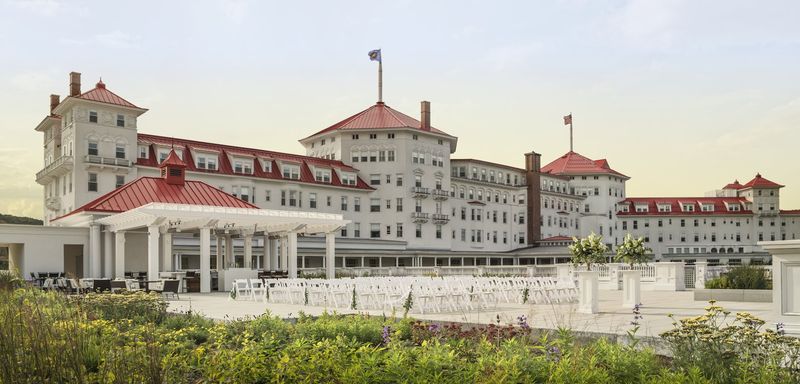
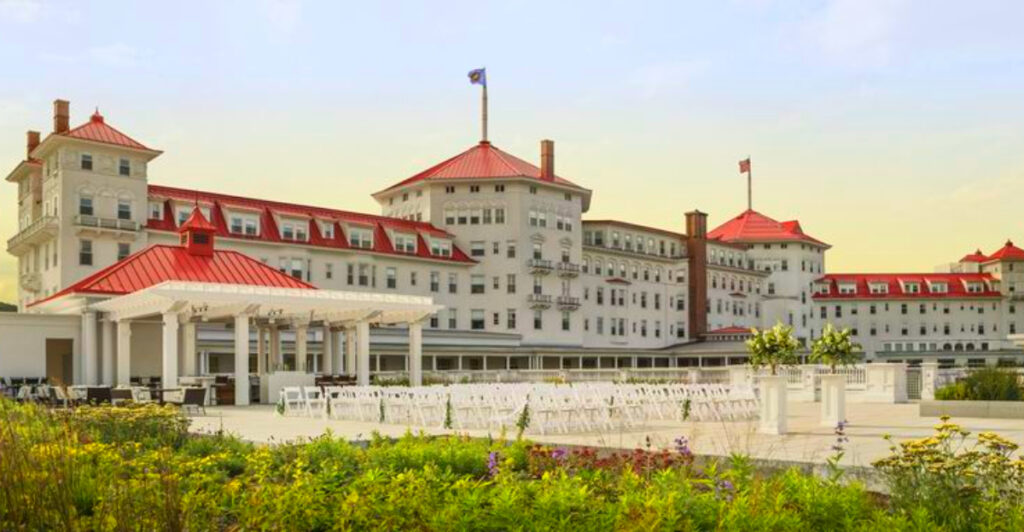
That enormous white building with the red roof sitting at the base of Mount Washington is not a mirage. The Omni Mount Washington Resort opened in 1902, and more than a century later it remains one of the most recognizable landmarks in all of New England.
The guest list over the decades reads like a history textbook. Thomas Edison helped install the original electric lighting.
Presidents and royalty have both passed through the grand lobby, which still features Axminster carpets reproduced from the 1902 originals. In 1944, world leaders gathered here for the Bretton Woods Monetary Conference, which reshaped the global financial system after World War II.
The resort earned National Historic Landmark status, a designation that reflects just how significant this property is beyond its role as a luxury hotel. The wide wraparound verandah was designed for promenading guests in a style reminiscent of transatlantic ocean voyages, and it still functions as one of the best spots in New Hampshire to take in the Presidential Range.
A twenty-first-century spa and intimate lounges round out the experience without disturbing the historic atmosphere.
The Inn At Hancock, Hancock, New Hampshire
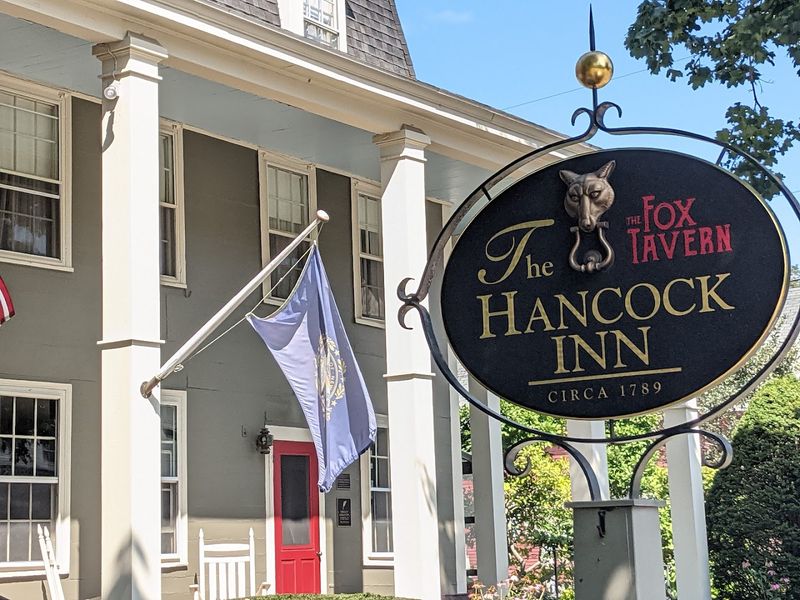
Founded in 1789, The Inn At Hancock carries one of the most impressive founding dates of any lodging property in New Hampshire. That is not a typo.
George Washington was still in his first term as president when this inn first opened its doors to travelers passing through the Monadnock region.
A careful restoration brought the property back to life while preserving the architectural bones and historic atmosphere that make it worth visiting in the first place. Rooms feature antique furnishings and gas fireplaces, and the inn maintains the kind of cozy, traditional character that fits naturally into the surrounding village of Hancock.
Hancock itself is one of those quintessential New Hampshire villages that looks almost too perfectly preserved to be real, with a classic town green, a white-steepled church, and streets lined with historic homes. The Monadnock region draws hikers heading for Mount Monadnock, one of the most climbed mountains in the world, but the area rewards slower-paced visitors just as well.
Pancakes with local maple syrup at breakfast are reportedly a highlight, which is a perfectly reasonable reason to book a room.
The Centennial Hotel, Concord, New Hampshire
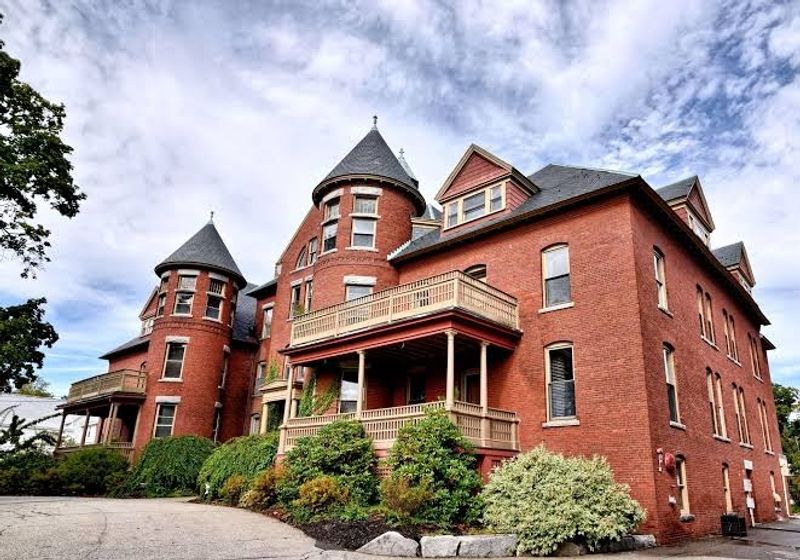
Victorian architecture in a state capital setting gives The Centennial Hotel in Concord a built-in sense of authority that most hotels spend decades trying to manufacture. Built in the late nineteenth century and thoughtfully restored, the property sits close to downtown Concord and delivers the kind of genuine historic character that newer hotels simply cannot replicate.
Rooms are spacious and individually styled, which means you are not going to walk in and feel like you could be in any city in America. The personal, relaxed atmosphere is one of the things guests consistently mention when describing their experience here.
The on-site Granite Restaurant draws culinary inspiration from French, Mediterranean, and Asian traditions, which makes for an interesting dining menu inside a building that looks distinctly Victorian from the outside. That contrast between the historic exterior and the globally influenced kitchen is part of what makes The Centennial Hotel feel current without abandoning its roots.
Concord itself is worth exploring, with the State House, the League of New Hampshire Craftsmen, and a compact downtown all within easy reach of the hotel.
The Exeter Inn, Exeter, New Hampshire
Exeter is one of those New Hampshire towns where history is not just preserved in a museum. It is embedded in the streets, the buildings, and the daily life of the community.
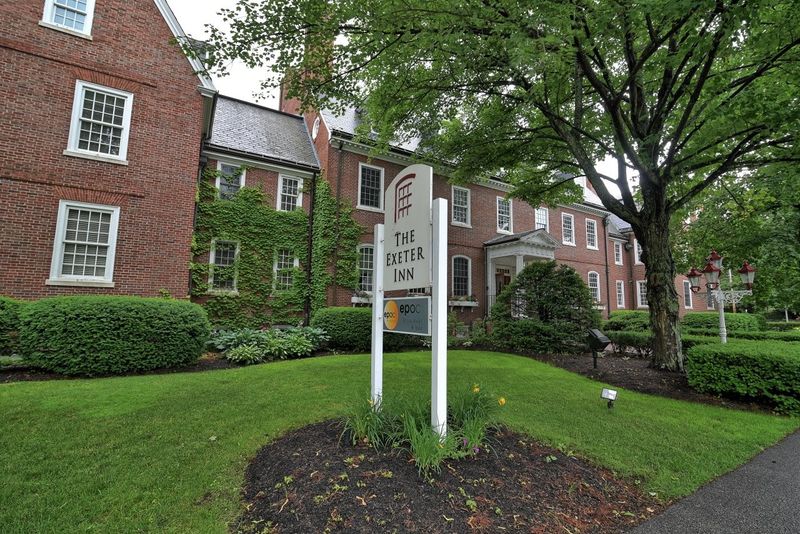
The Exeter Inn has been part of that fabric since 1932, when its Colonial Revival design was built to complement the historic district surrounding it.
The inn’s architecture fits so naturally into Exeter’s tree-lined streets and centuries-old buildings that it is easy to assume the property is older than it actually is. That kind of design intentionality is a mark of respect for the surrounding town, and it has helped the inn age gracefully alongside its historic neighbors.
Exeter itself has a compelling story. It served as the state capital of New Hampshire during the American Revolution and is home to Phillips Exeter Academy, one of the most well-known prep schools in the country.
Staying at The Exeter Inn puts guests within walking distance of all of this history, making it a smart base for anyone who wants to explore the Seacoast region without paying Seacoast waterfront prices. Character and convenience rarely combine this neatly.
Share this story