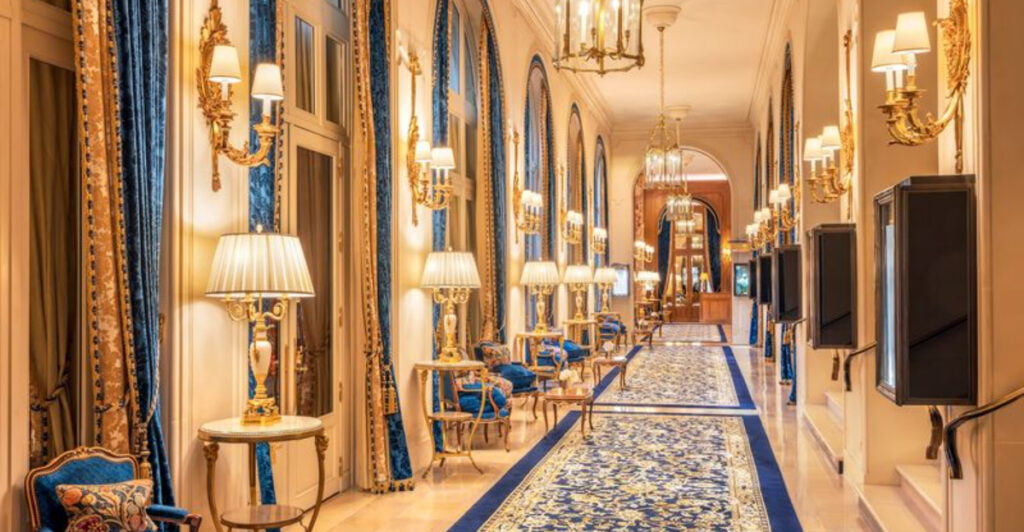
Some hotels are more than just a place to sleep. They are living landmarks where history was made, legends were born, and unforgettable moments unfolded.
From secret underground railways to wartime royal hideouts, these 15 world-famous hotels have witnessed some of the most remarkable events in modern history. Get ready to check in to the stories behind the grandest addresses on earth.
Raffles Hotel — Singapore
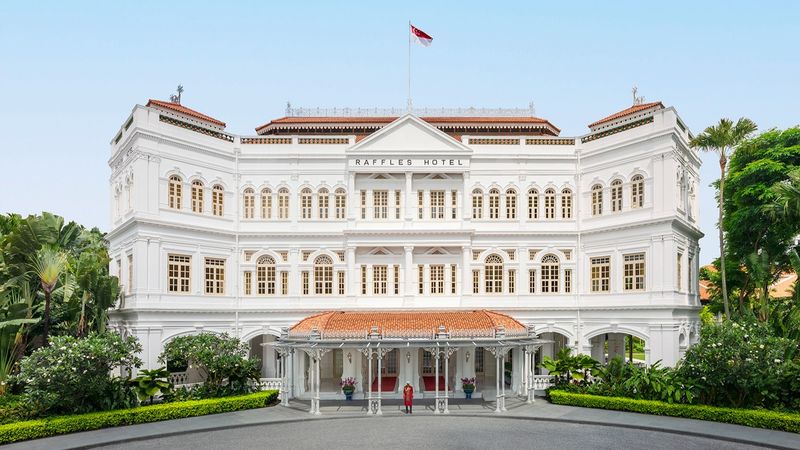
A tiger once prowled beneath the floorboards of one of Asia’s most beloved hotels. Back in 1902, a circus tiger escaped and hid under Raffles Hotel before being shot by staff.
That story alone tells you this place has never been ordinary.
Raffles Hotel opened in 1887 and has been charming guests ever since. It survived economic crises, wartime occupation during World War II, and decades of dramatic change across Singapore.
Through it all, the hotel kept its colonial elegance and legendary reputation intact.
The hotel’s famous Long Bar is where the Singapore Sling cocktail was invented in 1915. Writers like Rudyard Kipling and Somerset Maugham stayed here, soaking in its atmosphere.
Today, Raffles remains one of Asia’s most celebrated landmarks, blending living history with genuine luxury that feels both grand and surprisingly welcoming to anyone who walks through its doors.
The Savoy — London, England
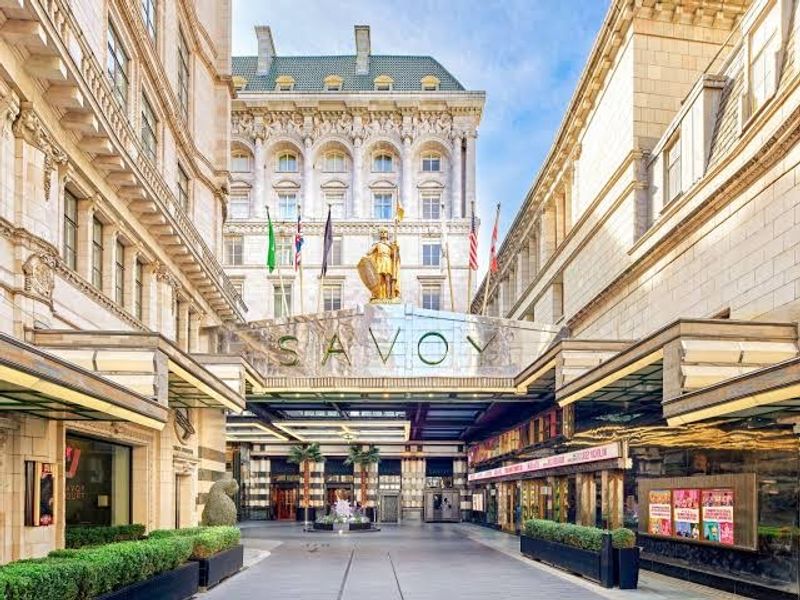
When The Savoy swung open its doors in 1889, it basically rewrote the rulebook on what a hotel could be. It was the first hotel in Britain to offer electric lighting throughout the entire building, electric lifts, and modern indoor plumbing.
Guests were absolutely amazed.
The guest list over the years reads like a who’s who of history. Oscar Wilde, Winston Churchill, Marilyn Monroe, and The Beatles all passed through its famous revolving door.
Claude Monet even painted the Thames from his room window, creating some of his most recognized works.
One of the hotel’s quirkiest traditions involves the forecourt driveway. It is the only street in Britain where traffic drives on the right side, simply to make it easier for guests to exit their cars.
The Savoy has always had a flair for doing things differently, and over a century later, that spirit of originality still runs through every corridor of this legendary London institution.
Waldorf Astoria — New York, New York
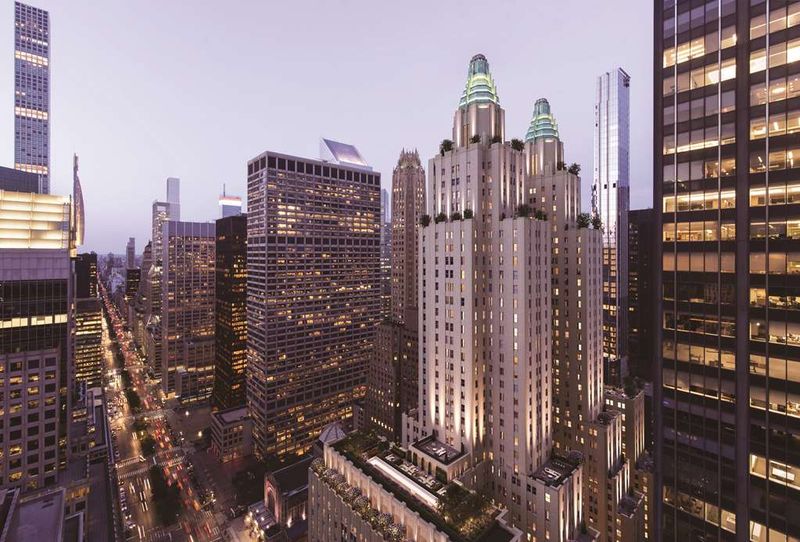
The Waldorf Astoria was born from a genuine family feud, which honestly makes it one of the most dramatically origin stories in hotel history. Two rival Astor cousins built competing hotels side by side on Fifth Avenue in the 1890s before eventually joining them together into one legendary property.
Presidents, world leaders, and celebrities have called it a home away from home for generations. But perhaps the most jaw-dropping secret is the hidden rail spur beneath the hotel.
President Franklin D. Roosevelt reportedly used it to discreetly arrive and depart without the public seeing his wheelchair.
The hotel moved to its current Park Avenue location in 1931 and became an art deco masterpiece that defined New York glamour. It hosted everything from royal visits to top-secret wartime meetings.
The Waldorf has recently undergone a massive restoration project, bringing its original grandeur back to life for a new generation of guests eager to experience one of America’s most storied addresses.
Hotel del Coronado — Coronado, California
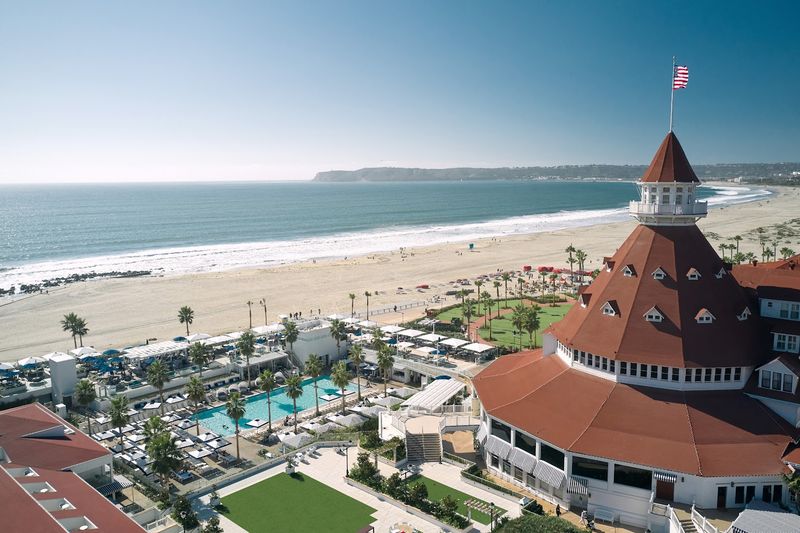
Picture a massive red-roofed Victorian palace rising straight out of a California beach, and you have Hotel del Coronado. When it opened in 1888, it was one of the largest buildings in the United States and among the very first major resorts powered by electricity.
Thomas Edison himself reportedly helped design the electrical system.
Over the decades, it became a magnet for presidents and Hollywood royalty alike. Fourteen U.S. presidents have stayed there.
Marilyn Monroe filmed the classic comedy “Some Like It Hot” on its sun-drenched shores in 1958, cementing the hotel’s place in pop culture forever.
The hotel also carries one of California’s most persistent ghost stories. A young woman named Kate Morgan checked in alone in 1892 and was found dead on the beach days later.
Guests still report strange occurrences in room 3327, the room she stayed in. Whether you believe in ghosts or not, Hotel del Coronado offers a genuinely unforgettable mix of history, beauty, and seaside charm that keeps visitors coming back year after year.
Ritz Paris — Paris, France
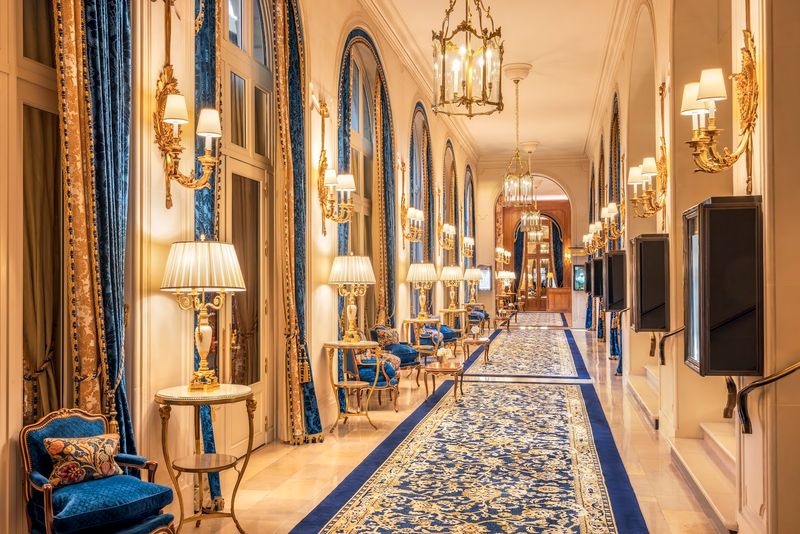
Coco Chanel basically moved in and never left. The legendary fashion designer lived at the Ritz Paris for more than 30 years, turning a hotel suite into her permanent home and making the Ritz an unofficial headquarters for Parisian style.
That alone tells you everything about this hotel’s extraordinary atmosphere.
Since opening in 1898, the Ritz Paris has attracted an astonishing parade of famous guests. Ernest Hemingway claimed he helped “liberate” the hotel bar when Allied forces entered Paris in 1944.
Whether that story is entirely true or not, the Hemingway Bar was named in his honor and remains one of the most celebrated cocktail spots in the world.
Princess Diana dined at the Ritz on the night of her fatal accident in 1997, adding a layer of somber history to the hotel’s glittering story. The hotel closed for four years for a full renovation and reopened in 2016 looking more spectacular than ever.
Behind every gilded mirror and marble corridor at the Ritz Paris lies a story that feels almost too dramatic to believe.
The Beverly Hills Hotel — Beverly Hills, California
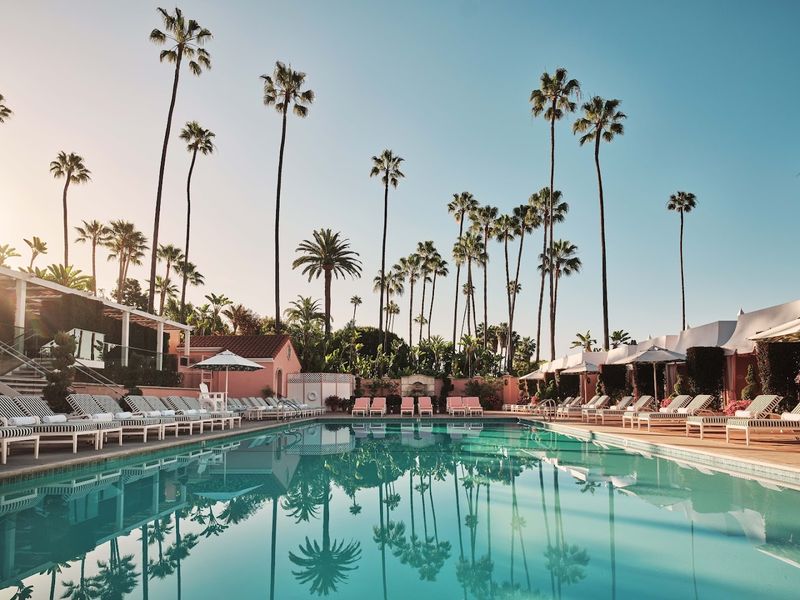
Hot pink and Hollywood glamour have always gone hand in hand at the Beverly Hills Hotel. Known affectionately as the “Pink Palace,” this iconic property opened in 1912, before Beverly Hills was even officially incorporated as a city.
The hotel actually helped put the neighborhood on the map.
Marilyn Monroe reportedly stayed in seven different bungalows at the same time to avoid being tracked by the press. Elizabeth Taylor honeymooned there multiple times across her many marriages.
The Polo Lounge became the unofficial boardroom of Hollywood, where deals were made over lunch and careers were launched or ended over cocktails.
John Lennon and Yoko Ono famously held a “bed-in” at the hotel as a peace protest in 1969. Rock bands, film directors, and global celebrities have all retreated behind the hotel’s lush tropical gardens for privacy and rest.
The Beverly Hills Hotel is not just a place to stay. It is a living scrapbook of entertainment history, where every bungalow seems to hold a secret and every corner of the property whispers a story worth hearing.
Mandarin Oriental Bangkok — Bangkok, Thailand
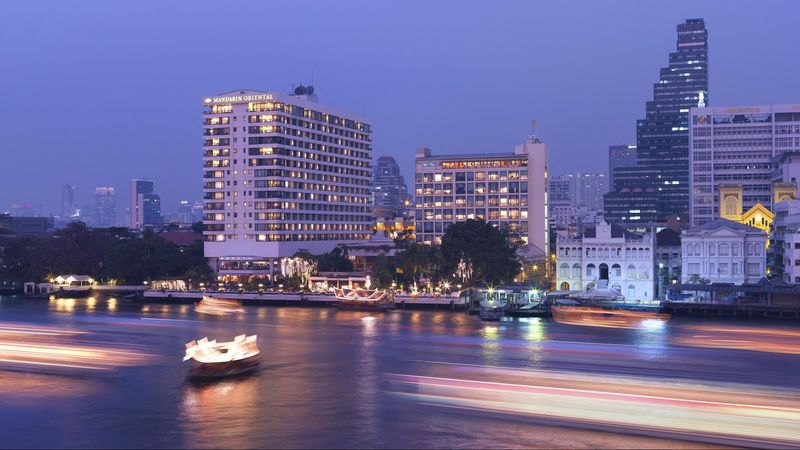
Writers have always known a good thing when they find it. The Mandarin Oriental Bangkok, which dates back to 1876, became one of the world’s great literary retreats, attracting some of the most celebrated authors of the 20th century to its riverside rooms and shaded gardens along the Chao Phraya River.
Joseph Conrad, Somerset Maugham, Graham Greene, and Noel Coward all stayed and worked here. The hotel honors this tradition with its Authors’ Lounge, a beautiful colonial-era space where guests can enjoy afternoon tea surrounded by portraits of the writers who once sat in those very same chairs.
Beyond its literary fame, the Mandarin Oriental Bangkok is recognized as one of the finest hotels in Asia for its impeccable service and elegant atmosphere. Staff-to-guest ratios are extraordinarily high, ensuring every visitor feels genuinely looked after.
The hotel has consistently ranked among the world’s best for decades, earning a devoted following of repeat guests who return not just for the luxury but for the feeling that they have stepped into a place where history, culture, and hospitality blend together in a perfectly balanced way.
Brown’s Hotel — London, England
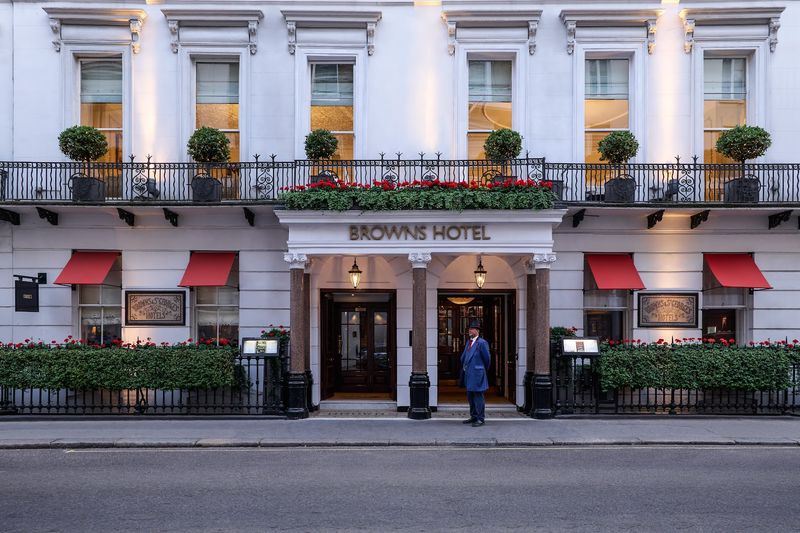
London’s oldest operating hotel has a guest list that reads like a greatest hits of British history. Brown’s Hotel opened in 1837, the same year Queen Victoria ascended to the throne, and the young queen herself became a regular visitor.
That kind of royal stamp of approval tends to stick around for a while.
Alexander Graham Bell reportedly made Britain’s first successful telephone call from inside Brown’s Hotel in 1876, turning a quiet Mayfair drawing room into an unlikely landmark of technological history. Theodore Roosevelt stayed here before his wedding.
Rudyard Kipling wrote parts of “The Jungle Book” within its walls.
Agatha Christie even set scenes from her mystery novels in a hotel widely believed to be inspired by Brown’s. The hotel has a warmth and intimacy that larger luxury hotels sometimes struggle to match.
Its wood-paneled rooms, crackling fireplaces, and unhurried pace feel genuinely old-world in the best possible way. Brown’s proves that you do not need to be the biggest or flashiest hotel in the city to have the richest history and the most loyal, devoted guests returning season after season.
Claridge’s — London, England
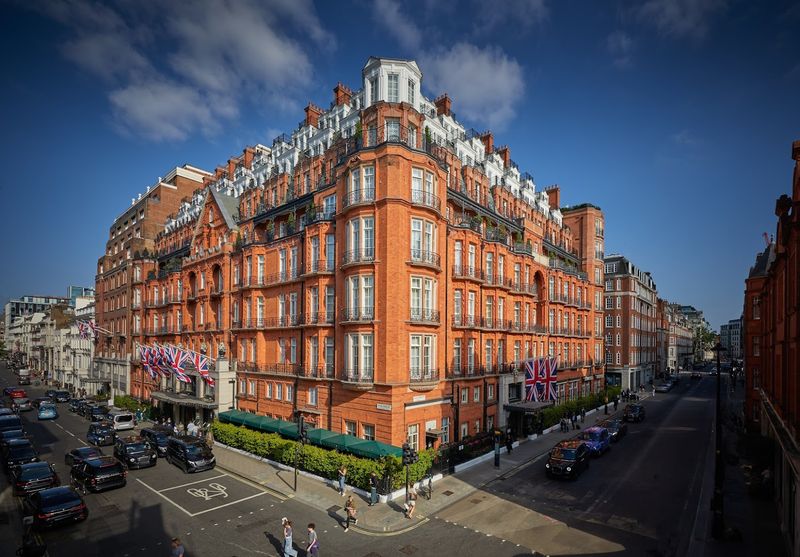
During World War II, Claridge’s became something extraordinary. Entire royal families from across occupied Europe, including the royals of Greece, Yugoslavia, and Norway, took up residence in its suites, turning this Mayfair hotel into an unofficial palace for exiled monarchs.
The British government even declared one suite Norwegian territory so a prince could be born there.
Claridge’s opened in its current form in 1898 and has maintained its position as London’s most regal hotel ever since. Its art deco interiors are so beautifully preserved that stepping inside feels like walking into a perfectly maintained time capsule from the 1930s.
The lobby alone is worth a visit.
Famous guests have included almost every major royal family in Europe, along with celebrities, heads of state, and cultural icons from every decade. The hotel’s Christmas tree, decorated each year by a different top designer, has become a beloved London tradition that draws admirers from across the city.
Claridge’s combines genuine historical weight with a surprisingly lively, modern energy that keeps it feeling relevant and exciting rather than stuffy or overly formal for today’s discerning traveler.
Hotel Nacional de Cuba — Havana, Cuba
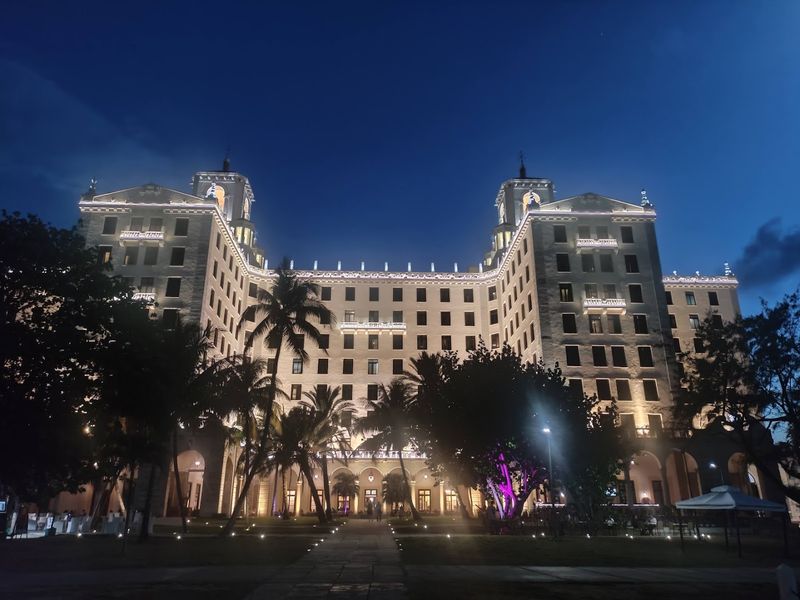
Perched on a rocky cliff above Havana Harbor, Hotel Nacional de Cuba has one of the most commanding locations of any hotel on earth. When it opened in 1930, it immediately attracted an extraordinary mix of guests, from Hollywood celebrities to organized crime bosses who held a famous underworld summit there in 1946.
Frank Sinatra, Ava Gardner, Marlene Dietrich, and Winston Churchill all checked in at various points. During the Cuban Missile Crisis in 1962, the hotel’s clifftop position made it a strategic lookout point, and Soviet anti-aircraft guns were reportedly positioned in its gardens as tensions between the US and USSR reached their terrifying peak.
Today the hotel operates as a national monument and still welcomes visitors who want to feel the weight of Cuban history all around them. The hotel’s breezy terrace bar, with its sweeping ocean views, remains one of the most atmospheric places in the Caribbean to enjoy a mojito at sunset.
Few hotels in the world can claim they have witnessed both mob meetings and Cold War standoffs, making this Havana landmark genuinely one of a kind.
Hotel Adlon Kempinski — Berlin, Germany
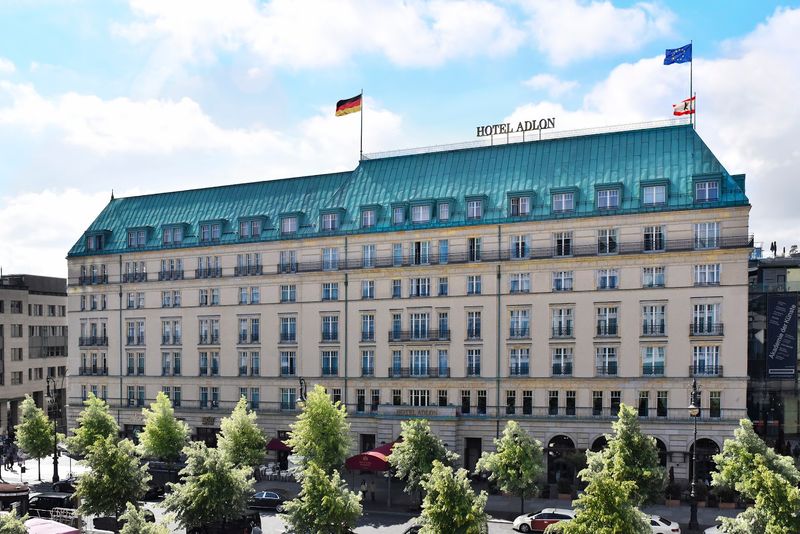
Standing just steps from the Brandenburg Gate, the Hotel Adlon has always been at the center of Berlin’s most dramatic moments. The original Adlon opened in 1907 and quickly became one of Europe’s grandest hotels, hosting Kaiser Wilhelm II, Charlie Chaplin, and Greta Garbo in its gilded rooms during its golden years.
World War II brought devastating destruction. The original hotel was almost entirely burned down in 1945, just days after the war ended in Europe.
For decades, the ruins sat in the divided city, a ghostly reminder of what Berlin had lost. After German reunification, a new Adlon was built on the same legendary spot and opened in 1997.
The rebuilt hotel became famous all over again when Michael Jackson dangled his baby son over a balcony there in 2002, creating one of the most talked-about celebrity moments of that era. Today the Adlon stands as a symbol of Berlin’s resilience and reinvention, blending its turbulent past with a sleek, modern luxury that feels entirely fitting for one of Europe’s most dynamic and endlessly fascinating capital cities.
The Peninsula Hong Kong — Hong Kong
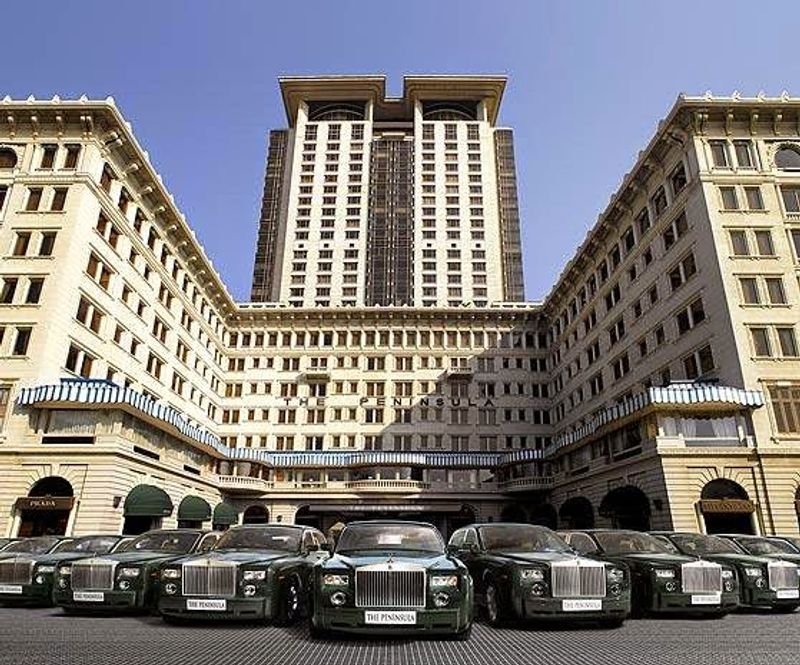
Nicknamed the “Grand Dame of the Far East,” The Peninsula Hong Kong opened in 1928 with ambitions to be the finest hotel east of Suez. It largely succeeded.
Its fleet of Rolls-Royce cars, signature green afternoon teas, and impeccable service quickly established it as the gold standard for Asian luxury hospitality.
The hotel witnessed one of the darkest chapters in Hong Kong’s history when Japanese forces occupied it during World War II and used it as their military headquarters. The formal surrender of British forces was signed in the hotel’s lobby in 1941, a moment that changed the course of the entire region.
After the war, The Peninsula bounced back with remarkable speed and style, becoming a symbol of Hong Kong’s postwar recovery and eventual rise as a global financial hub. The rooftop Felix restaurant, designed by Philippe Starck, became a design landmark in its own right when it opened in 1994.
Generations of guests have sipped tea in the grand lobby while watching the world go by, making The Peninsula not just a hotel but a living institution woven deeply into Hong Kong’s identity.
Hotel Sacher — Vienna, Austria
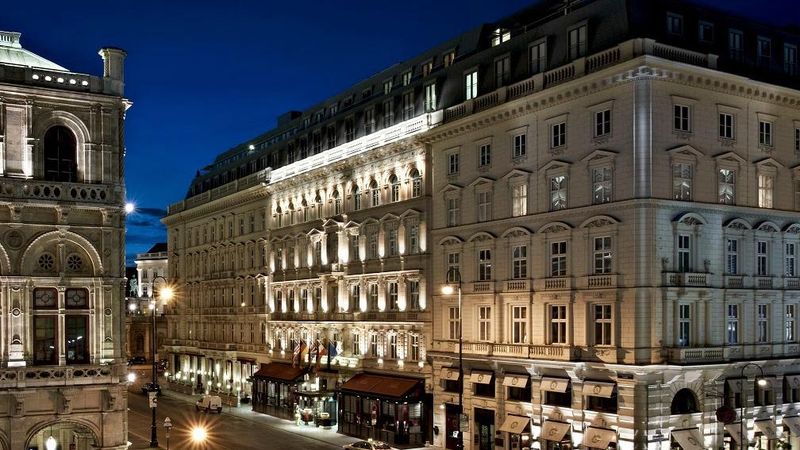
Few hotels can claim a dessert as their founding legacy, but Hotel Sacher is genuinely built on chocolate cake. The hotel was established in 1876 by Eduard Sacher, whose father Franz created the famous Sachertorte for Austrian Chancellor Metternich in 1832.
That chocolate cake recipe became so iconic that a lengthy legal battle was fought over who had the right to call their version the “original.”
Emperors, composers, and diplomats have filled its grand rooms for nearly 150 years. The hotel sits directly opposite the Vienna State Opera, making it the natural gathering spot for music lovers, performers, and cultural figures from around the world.
Gustav Klimt and Sigmund Freud were among the notable Viennese figures known to have frequented its famous Cafe Sacher.
The hotel still produces thousands of Sachertortes each year, shipping them worldwide in elegant wooden boxes that have become one of Vienna’s most prized edible souvenirs. Walking into Hotel Sacher today feels like stepping into a warm, richly decorated world where old European elegance never went out of fashion and the smell of fresh chocolate cake drifting through the corridors is a genuinely delightful bonus.
Fairmont Le Chateau Frontenac — Quebec City, Canada
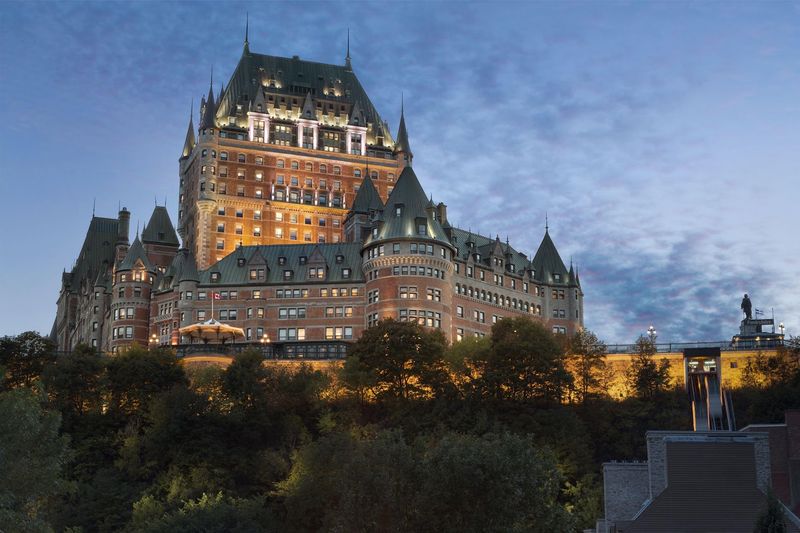
No other hotel dominates a city’s skyline quite like Fairmont Le Chateau Frontenac dominates Quebec City. Rising dramatically from the cliffs of Cap Diamant above the St. Lawrence River, this turreted castle of a hotel has been called the most photographed hotel in the world, and looking at it, that claim is easy to believe.
The hotel opened in 1893 and was designed to look like a French Renaissance chateau, giving Quebec City a skyline that feels more like a European fairy tale than a North American city. During World War II, it hosted two critically important conferences between Winston Churchill and Franklin D.
Roosevelt, where Allied leaders mapped out key military strategies that helped shape the outcome of the entire war.
Beyond its wartime significance, the Chateau Frontenac has welcomed royalty, presidents, and celebrities across more than 130 years of operation. Its location in Old Quebec, a UNESCO World Heritage Site, means guests wake up surrounded by cobblestone streets, fortified city walls, and centuries of French-Canadian history right outside their window.
This hotel is not just a place to stay. It is a destination entirely unto itself.
Raffles London at The OWO — London, England
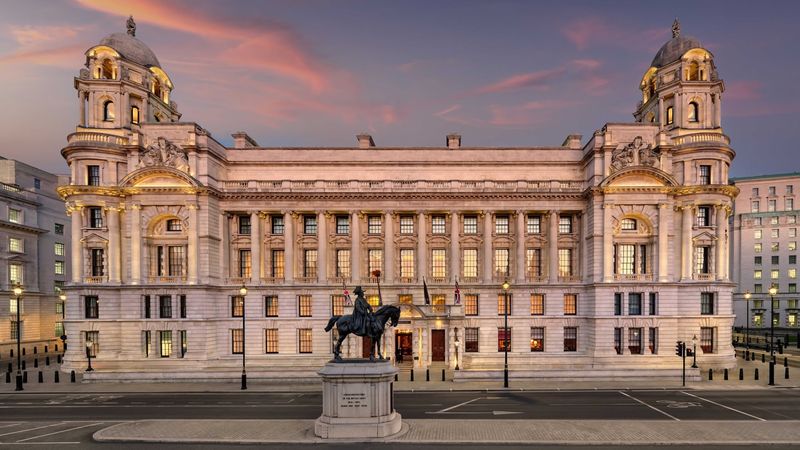
Spy fans, history lovers, and architecture enthusiasts all have excellent reasons to be excited about this one. Raffles London at The OWO occupies the former Old War Office building on Whitehall, a place where Winston Churchill worked during World War II and where the character of James Bond is widely believed to have been partly conceived by author Ian Fleming during his wartime intelligence career.
The building itself opened in 1906 and spent nearly a century as one of Britain’s most secretive government buildings, housing military intelligence and top-level wartime planning. Its long corridors and locked rooms held some of the most classified decisions in British history.
After years of careful restoration, it reopened as a luxury hotel in 2023.
Raffles transformed the historic structure into a stunning property with 120 hotel rooms, 85 private residences, and nine restaurants and bars, including one named after Ian Fleming himself. Guests can sleep in rooms that once housed government secrets and walk corridors that shaped world events.
The OWO is the rarest kind of new hotel opening, one that arrives already carrying over a century of genuinely thrilling history within its walls.
Share this story