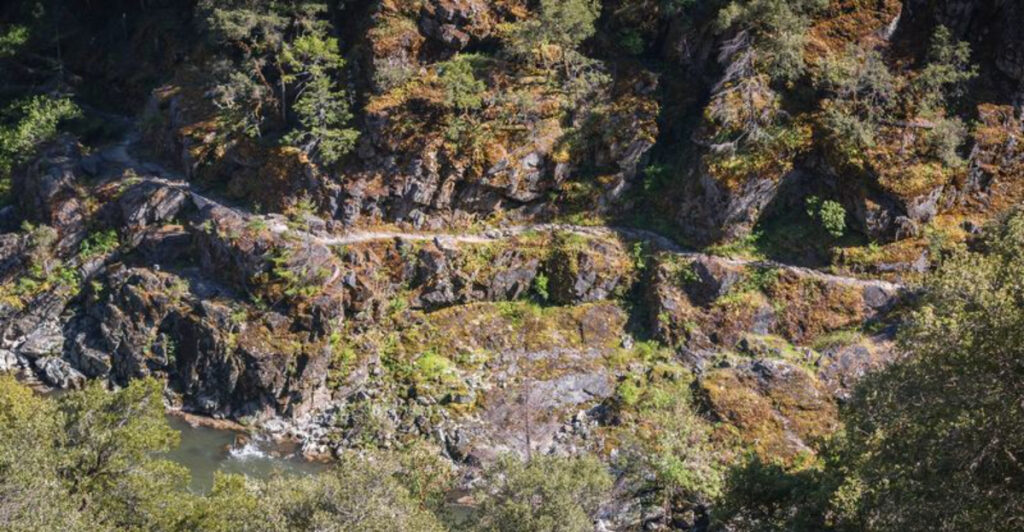
There is a trail in southern Oregon that runs along the edge of a wild river canyon, cuts through old-growth forest, and passes a cannon left behind by gold miners more than a century ago. Most people have never heard of it, which somehow makes it even better.
The Rogue River National Recreation Trail offers 40 miles of rugged, scenic hiking through one of the most dramatic river corridors in the American West. With steep cliffs, roaring rapids, nesting eagles, and that mysterious miner’s tunnel waiting somewhere along the route, this trail earns every step you put into it.
Where the Trail Begins: Location and Access
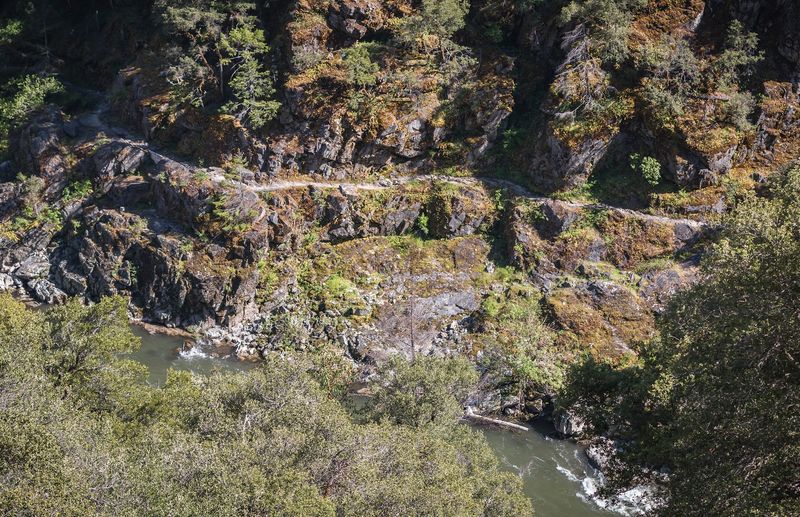
The Rogue River National Recreation Trail starts at Grave Creek, accessible via BLM Road 34-8-1 near Merlin, Oregon 97532, with the trailhead coordinates placing it at roughly MC27+8C on the BLM road system. The phone number for the managing office is +1 541-471-6500, and the official site is blm.gov/visit/rogue-river-national-recreation-trail.
Getting there is half the adventure. The drive winds through rural southern Oregon, past ranches and timber land, before the road narrows and the canyon walls begin to close in around you.
It feels remote because it genuinely is.
The trail runs roughly 40 miles one way, ending near Illahe on the other end of the wild and scenic corridor. Most hikers tackle it over three to five days as a backpacking trip, though day hikers regularly enjoy the first few miles out from the Grave Creek trailhead.
The trail is open 24 hours a day, every day of the year, managed by the Bureau of Land Management. Plan your logistics early, because shuttle services between the two trailheads are limited and require advance coordination.
The Gold Miner’s Tunnel That Changes Everything
Somewhere along the trail, hikers pass through a tunnel that was chiseled by hand out of solid rock by gold miners in the late 1800s. That single detail separates this trail from almost every other hiking route in the Pacific Northwest.
The tunnel was originally dug to allow miners to divert water from the Rogue River into sluice systems used for placer gold mining. When the gold rush faded and the miners moved on, the tunnel stayed, carved permanently into the canyon wall like a signature left in stone.
One reviewer on Google even noted with cheerful brevity that they found gold on the trail, which is entirely plausible given the area’s history.
Passing through the tunnel today feels genuinely eerie in the best way. The walls are rough and close, the light at the far end pulls you forward, and you cannot help but think about the hands that made it.
It is not a tourist attraction with a sign and a gift shop. It is just there, waiting quietly in the rock, exactly where the miners left it more than a hundred years ago.
The Wild and Scenic Rogue River Below
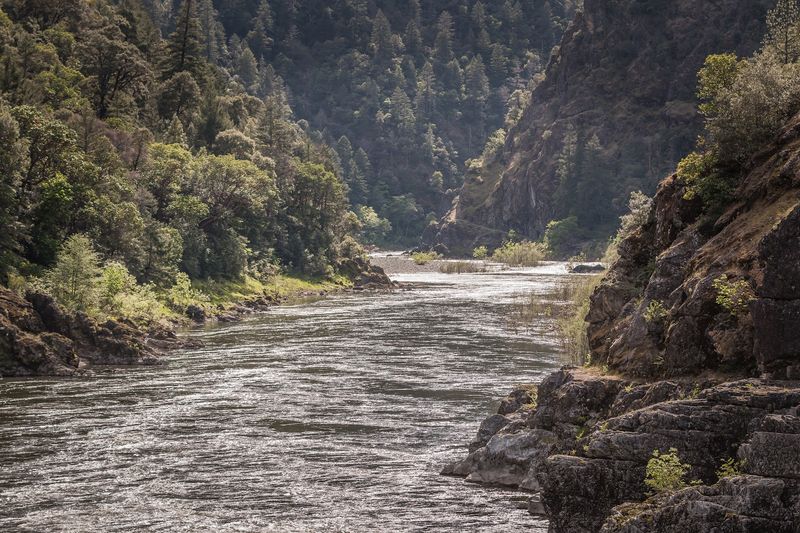
The river itself is the constant companion of every mile on this trail. The Rogue River earned its Wild and Scenic designation in 1968, one of the original rivers protected under the National Wild and Scenic Rivers Act, and the stretch that this trail follows is among the most untouched sections of the entire waterway.
From the trail, you look down at green water churning through boulder fields, dropping into pools, and exploding into white foam around rock formations that have been shaped by thousands of years of current. The river roars loud enough in certain sections that you feel it before you see it around a bend.
Rafters and kayakers float the same corridor, and watching them navigate the rapids from a high vantage point on the trail is unexpectedly entertaining. They look small against the scale of the canyon, which gives you a real sense of just how massive this landscape is.
The river also provides a reliable sound track throughout the hike, a constant low rumble that makes the quieter forest stretches feel even more peaceful by contrast.
Rugged Terrain and Steep Drop-Offs
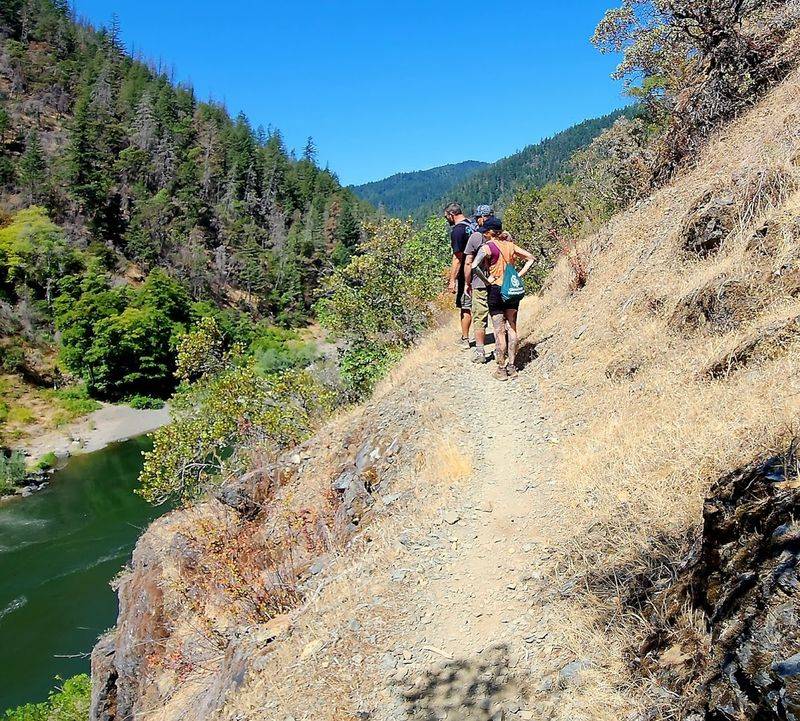
This trail does not pretend to be easy, and that honesty is part of its appeal. The path is narrow, often just wide enough for one person, and it runs along the edge of canyon walls with significant drop-offs on the river side.
Hikers with a sensitivity to heights will feel their pulse quicken on certain exposed sections.
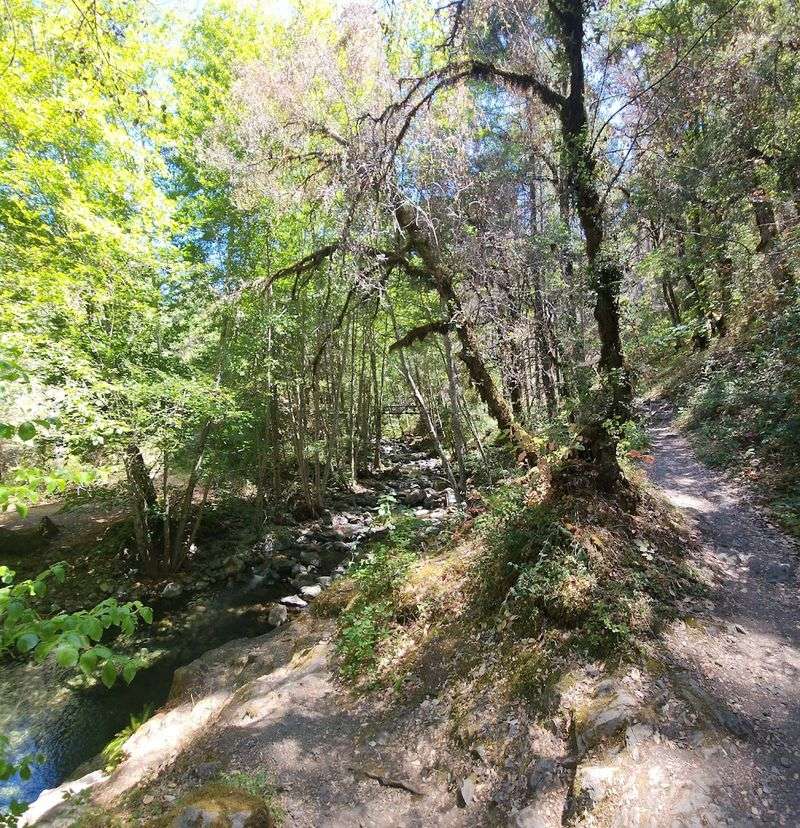
The surface underfoot is uneven and rocky for much of the route, with roots, loose stones, and occasional muddy patches depending on the season. Trekking poles are genuinely useful here, not just a fashion accessory.
The terrain rewards careful footwork and a steady pace rather than speed.
Despite the challenge, the trail is not technical. There is no scrambling or rope work required.
It demands attention and physical fitness, but hikers with reasonable experience will find it very manageable. The reward for every steep climb is usually a viewpoint that stops you cold, a bend in the canyon opening up to a panorama of forested ridges, silver water, and sky that no photograph ever quite captures the way your eyes do in person.
Wildlife Along the Canyon Corridor
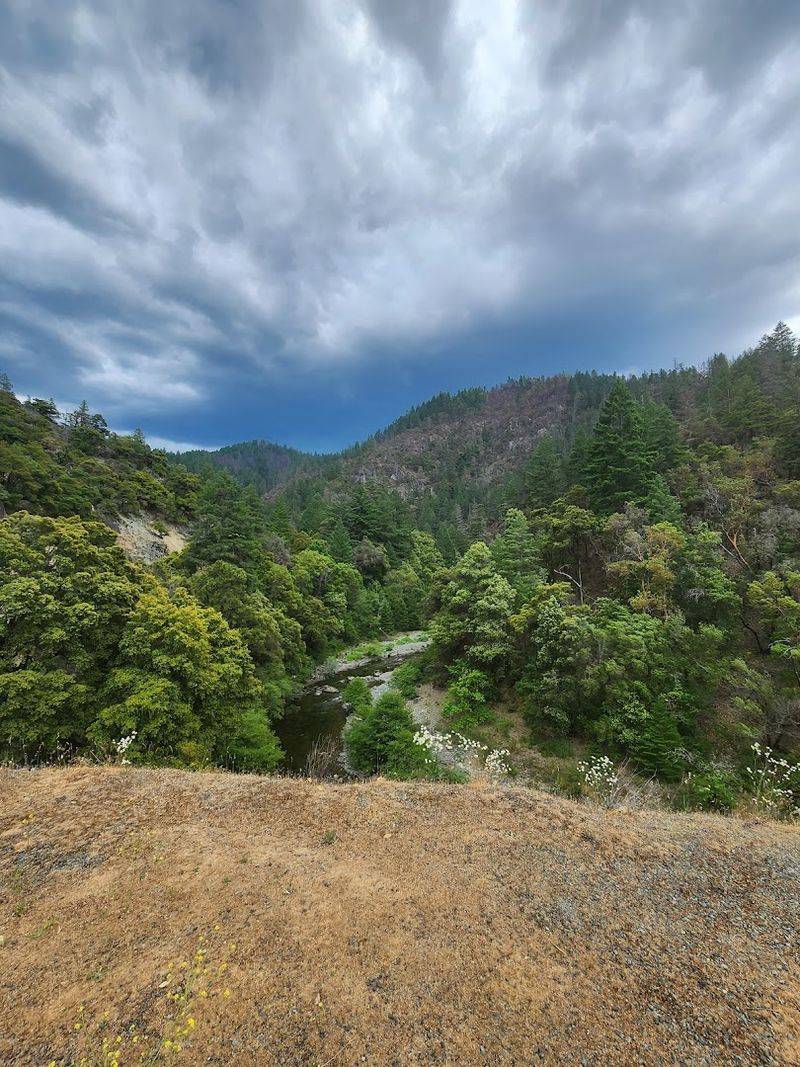
The Rogue River canyon is alive in a way that catches you off guard if you are used to more visited trails. Bald eagles nest along this stretch of river and are frequently spotted riding thermals above the canyon or perched in snags above the water.
Osprey are even more common, diving into the river with a precision that seems almost mechanical.
Black bears live throughout the surrounding forest, and their signs, tracks in mud near creek crossings, overturned logs, and scratched bark, are easy to spot once you know what to look for. Bear canisters or hanging food properly at camp is not optional here.
The wildlife density in this corridor reflects how genuinely undisturbed the landscape remains.
River otters appear occasionally in calmer pools, and the birdlife overall is exceptional. Dippers bob on midstream rocks, herons stand motionless in shallows, and the forest canopy is full of sound during spring mornings.
The canyon functions as a wildlife highway, and hiking it quietly and slowly means seeing far more than hikers who rush through.
Camping Under the Stars in the Backcountry
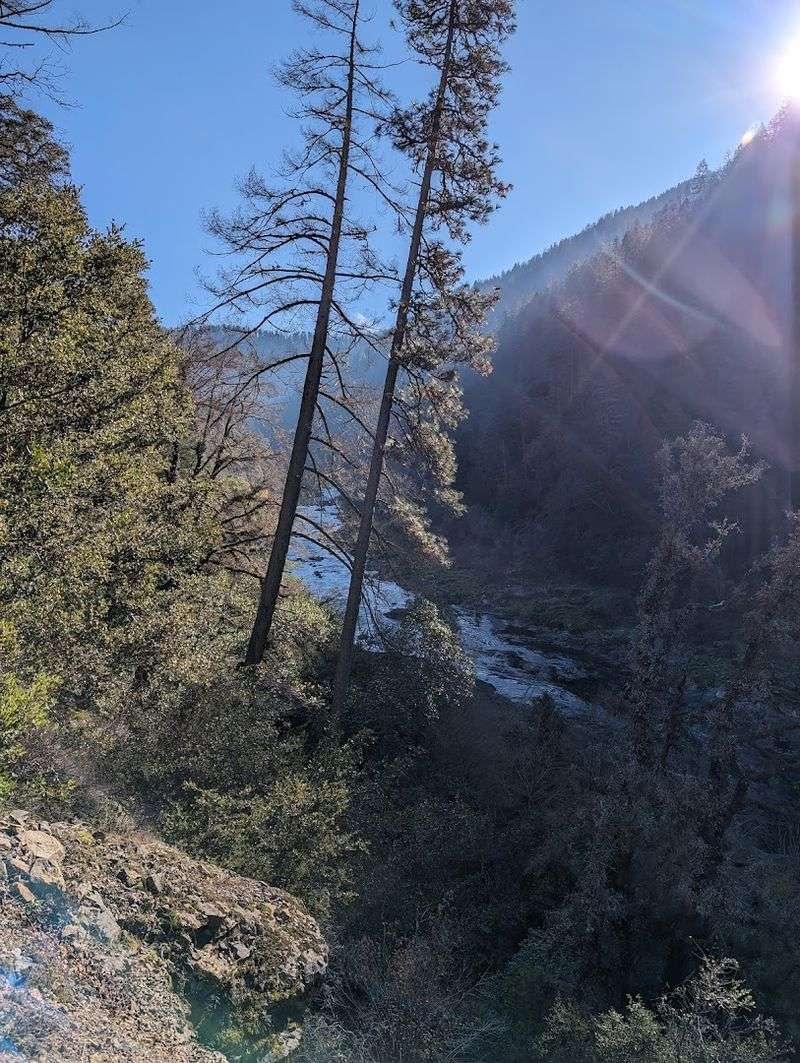
Spending a night or two along this trail transforms the experience entirely. Several established campsites sit near the river at points along the route, and falling asleep to the sound of the Rogue moving through the canyon below is the kind of thing that stays with you long after you have driven home.
Campfire regulations vary by season and zone, so checking current rules with the BLM before your trip is essential. A bear canister is required for overnight trips in this corridor, and Leave No Trace principles are taken seriously by the hiking community that uses this trail.
Water from the river is available throughout the route but must be filtered or treated before drinking.
The night sky in this canyon is extraordinary. The trail runs through a stretch of Oregon with minimal light pollution, and on a clear night the Milky Way is visible from horizon to horizon.
It is the kind of sky that makes you feel like you are looking at something your ancestors saw every night of their lives, which in a way you are.
The History of Gold Mining in This Canyon
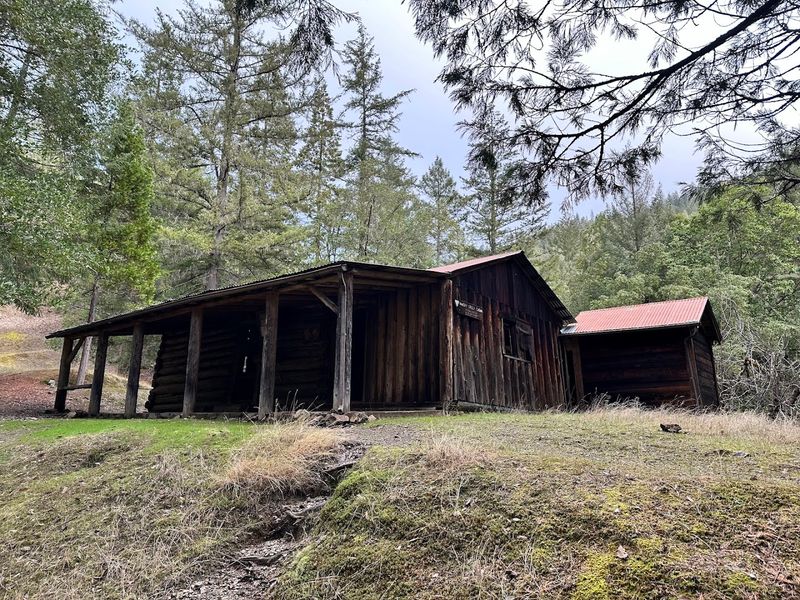
The gold rush that swept through southern Oregon in the 1850s brought thousands of prospectors into the Rogue River canyon, and their impact on the landscape is still visible today. The tunnel is the most dramatic remnant, but old cabin foundations, rusted equipment fragments, and modified creek channels also appear along the route for those paying close attention.
Placer gold mining along the Rogue and its tributaries was productive enough to sustain small communities for decades. The area around Merlin and Grants Pass saw significant economic activity tied to gold extraction, and the canyon trail corridor was a working industrial zone long before it became a recreation destination.
That history adds texture to every mile of the hike.
The gold did not disappear entirely when the miners left. Small amounts of placer gold still exist in the river gravels, and recreational gold panning is permitted in designated areas of the Rogue with a valid Oregon license.
The fact that a hiker casually mentioned finding gold in a recent review suggests the canyon still has a few secrets worth looking for.
Best Time to Visit and Seasonal Conditions
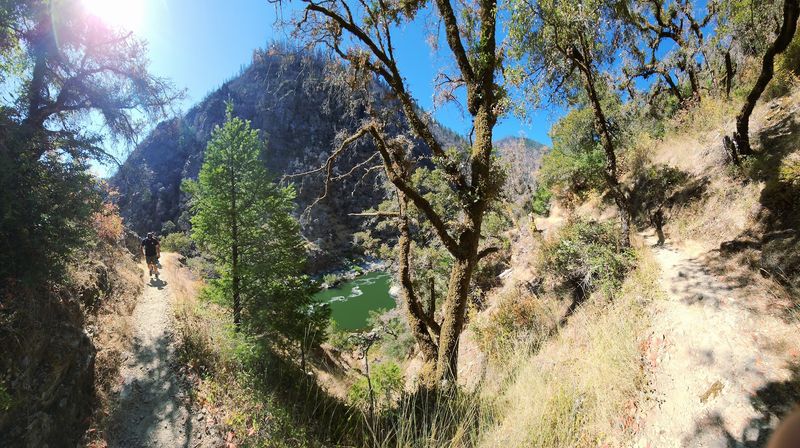
Spring and fall are the sweet spots for hiking the Rogue River National Recreation Trail. Spring brings wildflowers, rushing water from snowmelt, and mild temperatures that make the exposed sections of trail far more comfortable than they would be in July heat.
Fall turns the canyon walls gold and rust as the deciduous trees change, and the cooler air makes longer hiking days easier on the body.
Summer is popular but demands respect. Temperatures in the canyon can climb well above 90 degrees Fahrenheit, and the exposed ridgeline sections offer little shade.
Starting early, carrying more water than you think you need, and planning shorter daily mileage in summer are all practical adjustments that make the season workable.
Winter hiking is possible since the trail is open year-round, but rain, mud, and the occasional snow at higher elevations require waterproof gear and careful footing. River levels also rise significantly in winter, which affects some of the creek crossings along the route.
The canyon takes on a moody, dramatic quality in winter that has its own appeal for hikers who do not mind wet boots.
What to Pack for a Multi-Day Hike
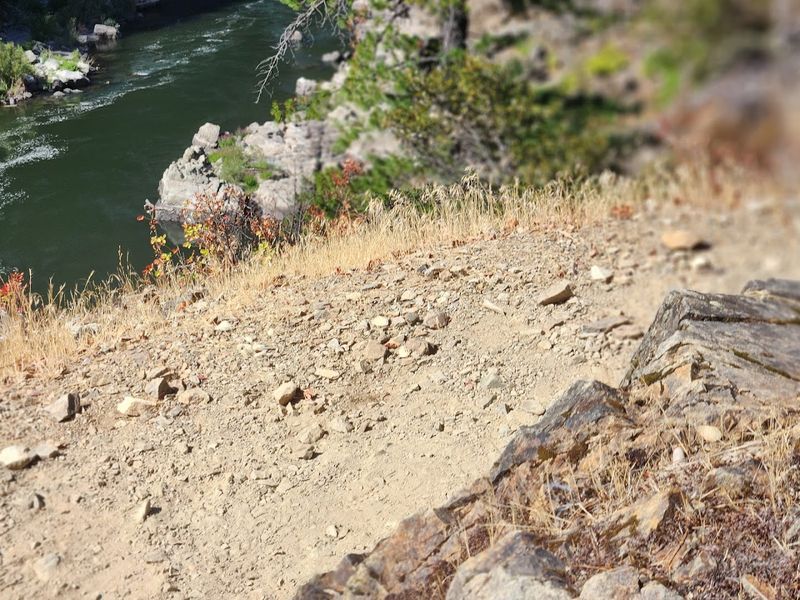
Packing for this trail requires thinking through both the physical demands of the terrain and the remoteness of the corridor. There are no resupply points, no ranger stations along the route, and cell service is essentially nonexistent for most of the 40 miles.
Self-sufficiency is not a preference here, it is a requirement.
A bear canister for all food and scented items is mandatory for overnight trips. A quality water filter is equally non-negotiable given the distance from any road access.
Trekking poles earn their weight on the rocky, uneven surface, especially on descent sections where your knees will thank you by day three.
Navigation tools matter more than on a well-marked suburban trail. A downloaded offline map on your phone plus a paper backup is a sensible combination.
First aid knowledge and a basic kit are worth having. Footwear with solid ankle support and a grippy sole handles the rocky trail surface far better than lightweight trail runners.
Layers for temperature swings between canyon floor and exposed ridgeline sections round out the essentials for a comfortable, safe trip.
Why This Trail Belongs on Every Serious Hiker’s List
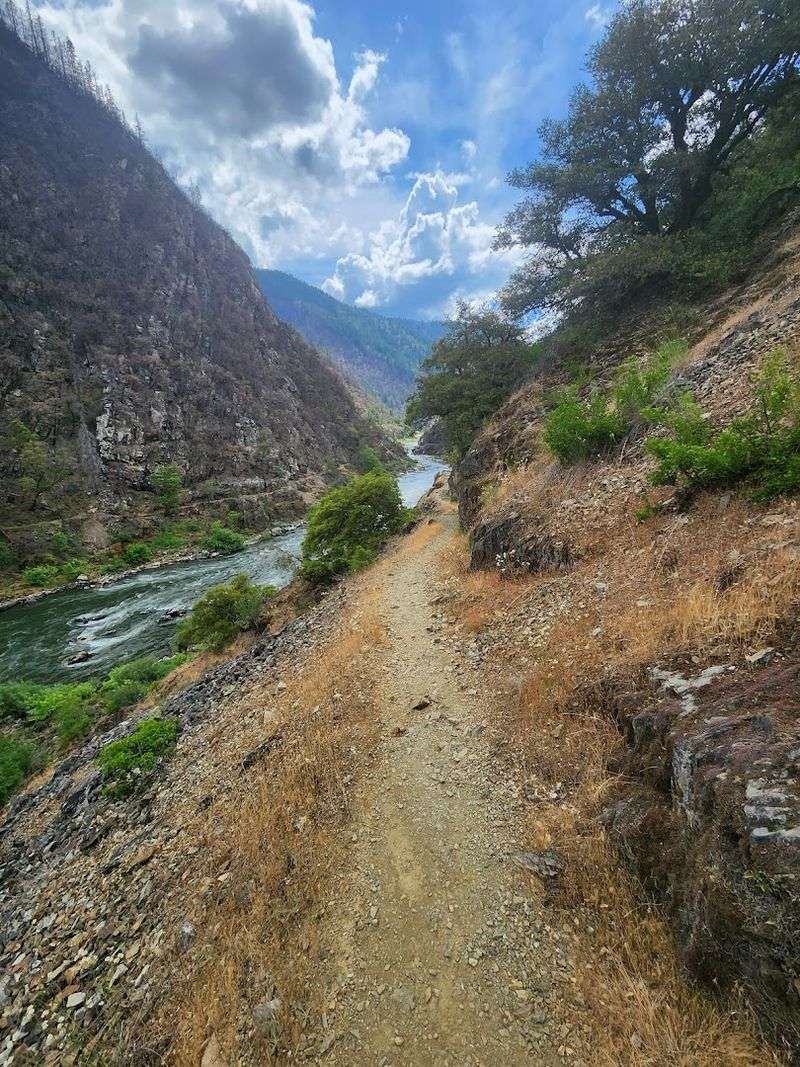
The Rogue River National Recreation Trail earns its 4.9-star rating not through hype but through consistent, honest delivery of exactly what it promises. Rugged terrain, spectacular scenery, genuine solitude, and a connection to history that most trails simply cannot offer all combine into an experience that stays with you.
Trails like this one are rare in the American West. The combination of a Wild and Scenic river corridor, old-growth forest, gold mining history, and that remarkable hand-carved tunnel creates a layered experience that rewards curiosity at every turn.
Hikers who take their time and pay attention to the details around them will leave with stories worth telling.
Southern Oregon does not get the same attention as destinations further north, which works entirely in the favor of anyone willing to make the drive to Merlin. The Rogue River canyon is not trying to compete with anywhere else, and it does not need to.
It is entirely and unapologetically itself, a wild, historic, and beautiful stretch of the American landscape that has been waiting patiently for you to show up and walk its length.
Share this story