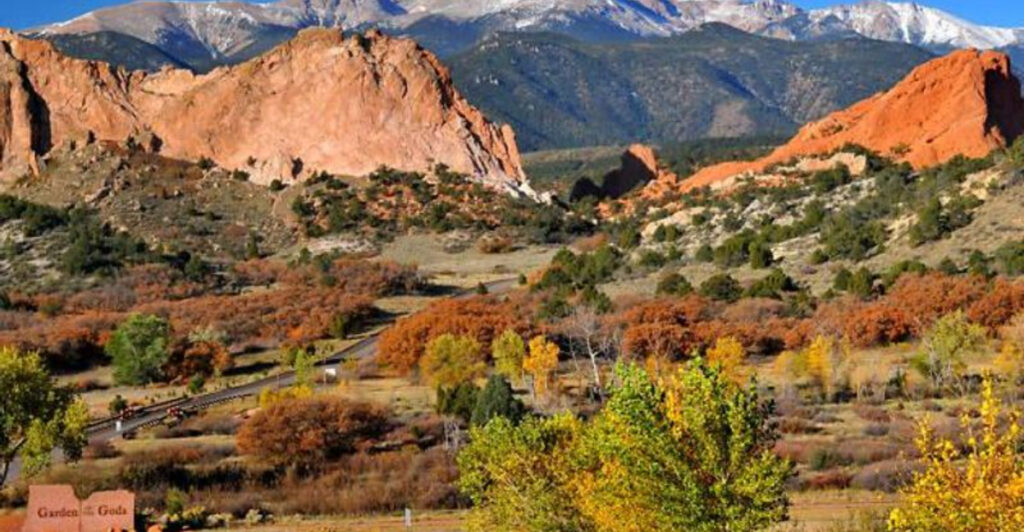
There is a place in Colorado where the ground rises into towering red walls, the sky stretches impossibly wide, and every trail corner feels like a scene from a different planet. The rock formations here have been shaped over 300 million years, and standing among them, you can actually feel the weight of that time.
The whole park is free to visit, open almost every day from early morning to late evening, and yet it still manages to feel like one of the best-kept secrets in the American West. Keep reading, because what this place offers goes far beyond what any photo can capture.
Where Exactly You Will Find This Otherworldly Place
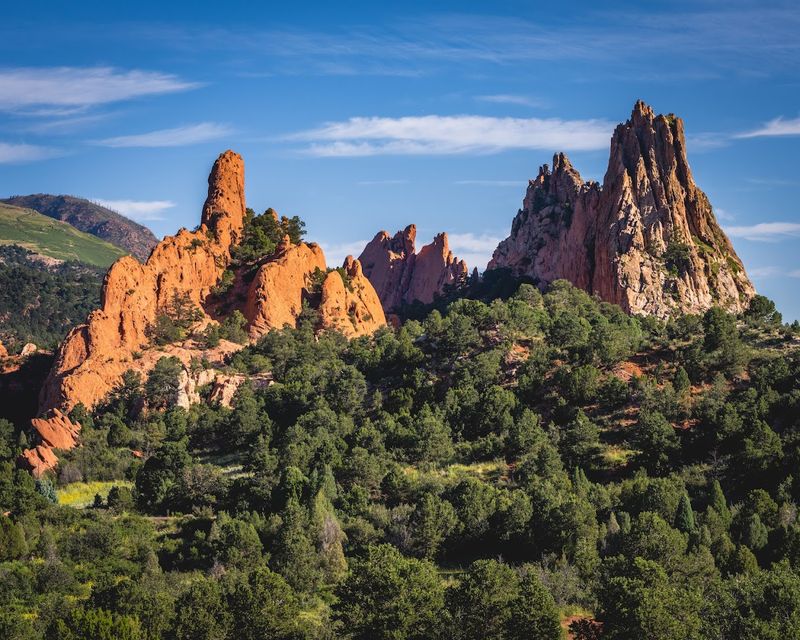
Garden of the Gods sits at Colorado Springs, tucked against the base of the Rocky Mountains in El Paso County, Colorado. The park covers roughly 1,300 acres and is managed as a National Natural Landmark, which means the land is protected and preserved for everyone to enjoy without any entrance fee.
Getting there is straightforward. The park is about 75 miles south of Denver, making it a popular day trip for visitors across the Front Range.
Several main entrances lead you into the heart of the formations, and a paved loop road lets you drive through at your own pace.
Parking lots are scattered throughout, though they fill up quickly on weekends and during peak summer months. Arriving early in the morning or on a weekday gives you the best chance of finding a spot without much wait.
The Geological Story Behind the Red Rocks
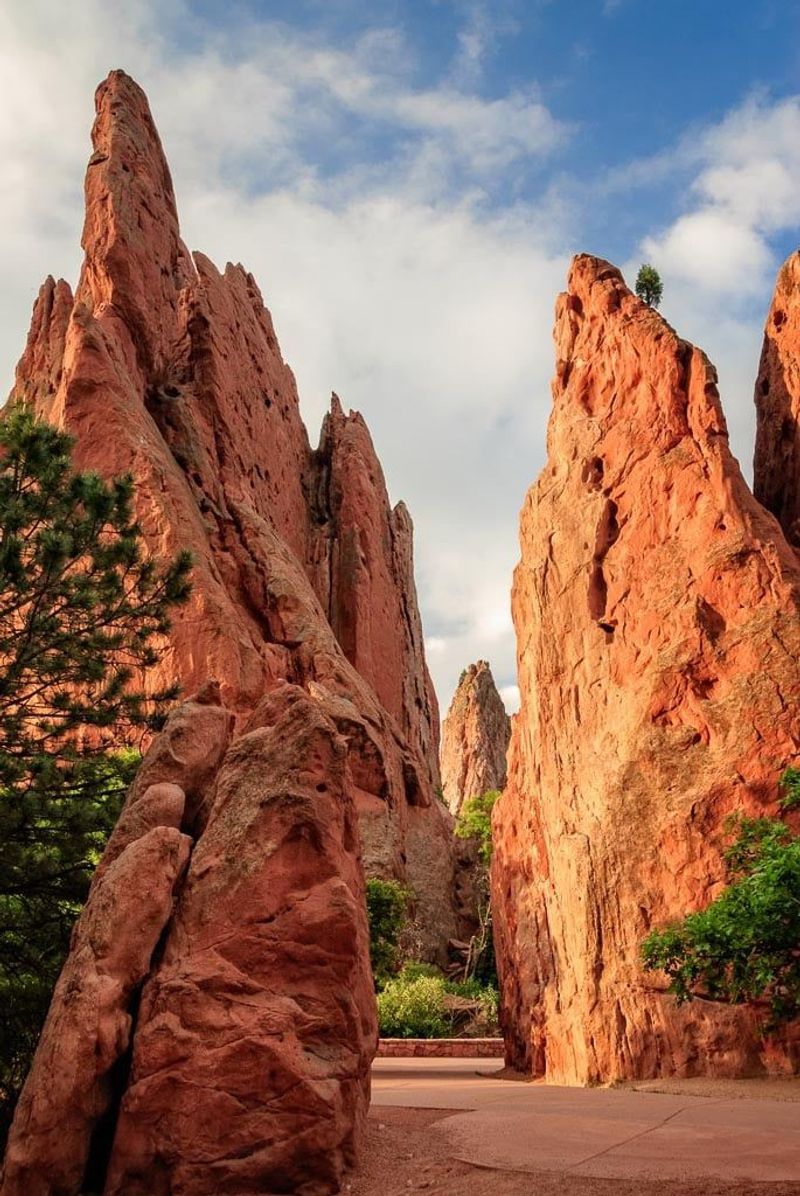
These rocks did not appear overnight. The formations at Garden of the Gods were created through a process that began more than 300 million years ago, when ancient seas, rivers, and shifting tectonic plates slowly deposited layer upon layer of sediment across this region of North America.
Over time, those layers were compressed, tilted, and eventually pushed upward by the same geological forces that built the Rocky Mountains. What once lay flat underground now stands nearly vertical, with some formations reaching heights of 300 feet or more above the valley floor.
The vivid red and orange colors come from iron oxide, essentially the same compound that causes rust, baked into the sandstone over millions of years. Informational signs along the trails explain each formation in plain language, so you do not need a geology degree to understand what you are looking at.
Famous Rock Formations Worth Seeking Out
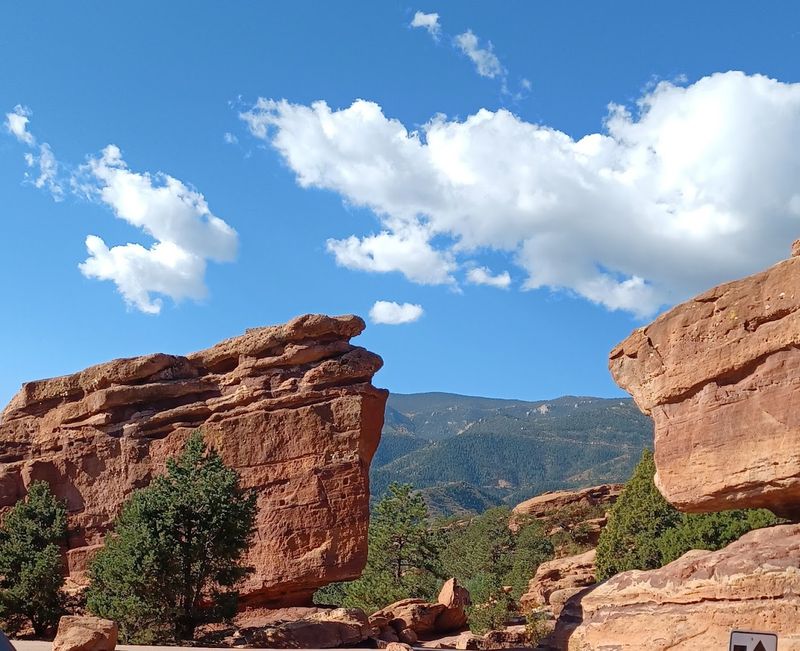
Part of what makes a visit here so entertaining is hunting down the named formations scattered across the park. The Kissing Camels is probably the most photographed, a pair of sandstone humps that, from just the right angle, look like two camels pressing their faces together.
The Tower of Babel rises sharply from the ground like a jagged spire, while the Siamese Twins formation frames a perfect window view of Pikes Peak behind it. Grey Rock, Balanced Rock, and the Three Graces each have their own distinct personality and are easy to find using the park map available at the visitor center.
Spending time looking for each formation turns a simple walk into something closer to a treasure hunt. Children especially love ticking them off a list, and even adults find themselves doubling back to catch a formation from a better angle.
Trail Options for Every Kind of Visitor
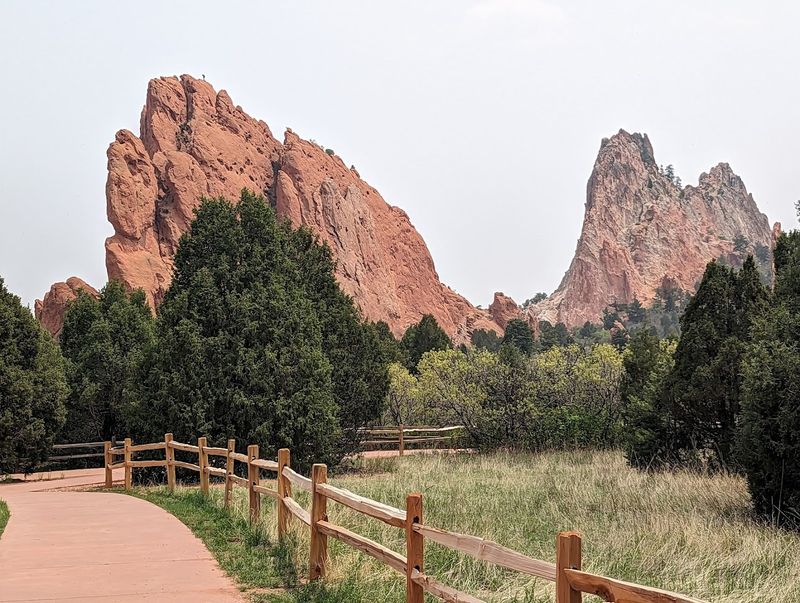
Not every trail here demands serious athletic effort, which is one of the reasons this park works so well for families, older visitors, and people who just want a relaxed stroll with extraordinary scenery. The Central Garden Trail is a 1.5-mile paved loop that takes you directly beneath the tallest formations, and it is suitable for strollers and wheelchairs.
For those who want more of a workout, the Perimeter Trail runs about 11 miles around the outer edge of the park and passes through quieter sections where crowds thin out considerably. Shorter connector trails link the main loop to various viewpoints and overlooks.
Trail difficulty ranges from flat and easy to moderately rugged with some elevation gain. Every trail is clearly marked, and the park provides maps both at the visitor center and through its website, so getting lost is genuinely hard to do.
Rock Climbing at One of Colorado’s Most Scenic Crags
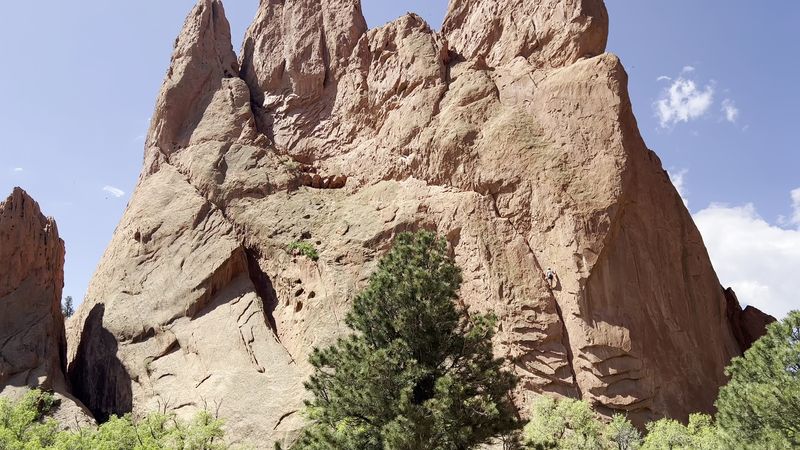
The vertical sandstone walls here have attracted climbers for decades, and Garden of the Gods is considered one of the more visually dramatic climbing destinations in the entire state. Routes range from beginner-friendly slabs to challenging overhangs that will test even experienced climbers.
Climbing is permitted in designated areas of the park, and all climbers are required to register before heading up. The park enforces specific rules about anchor placement and gear use to protect the rock surface, so checking the current regulations on the park website before your visit is a smart move.
Guided climbing tours are available for those who want instruction or simply want to learn the basics in a safe, supervised setting. Even if climbing is not on your agenda, watching skilled climbers move across those massive red faces from the trail below is a spectacle in itself.
The Visitor and Nature Center Experience
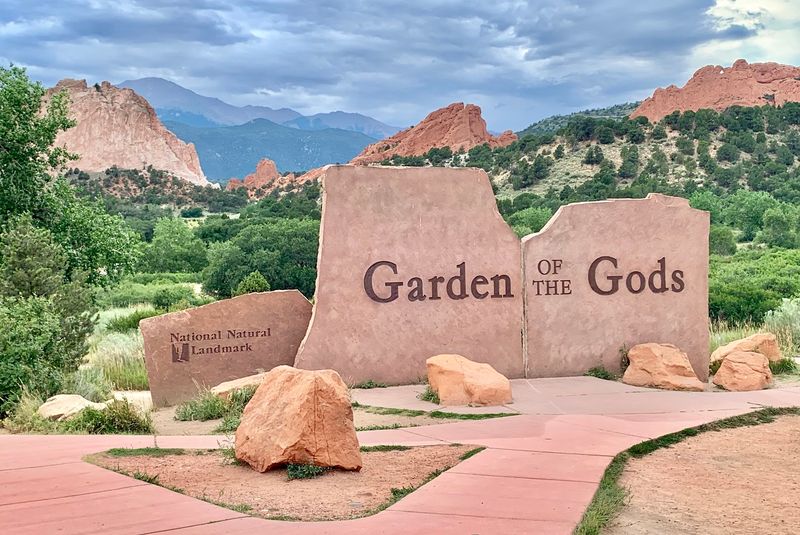
Right at the main entrance, the Visitor and Nature Center is worth at least an hour of your time. The building itself is thoughtfully designed, with floor-to-ceiling windows that frame the rock formations outside like living paintings.
You could honestly sit in the lobby and feel like you are getting a full show.
Inside, exhibits cover the park’s geology, ecology, and human history in an engaging way that works for both kids and adults. A short film about the park plays regularly and costs a small fee, around six dollars, but it provides helpful context that enriches everything you see once you head outside.
The center also has restrooms, a gift shop stocked with locally themed items, and knowledgeable rangers who can answer questions about trails and conditions. Checking in here before exploring the park is one of the best ways to make the most of your visit.
Wildlife You Might Spot Along the Way
The park is home to a surprisingly rich variety of wildlife, and keeping your eyes open while you walk pays off more often than you might expect. Mule deer are frequently spotted near the trails, especially during the early morning and at dusk when they move through the meadows between formations.
Raptors like red-tailed hawks and peregrine falcons are often seen circling above the rock spires, using the thermals that rise off the warm sandstone. Wild turkeys wander through the scrub oak areas, and cottontail rabbits are almost always visible along the lower trails.
Rattlesnakes are native to this area, so staying on marked trails and watching where you step is genuinely important advice. Spotting wildlife here never feels forced or staged, just a natural part of moving through a landscape that has been thriving long before any visitor showed up.
Photography Tips for Getting the Best Shots
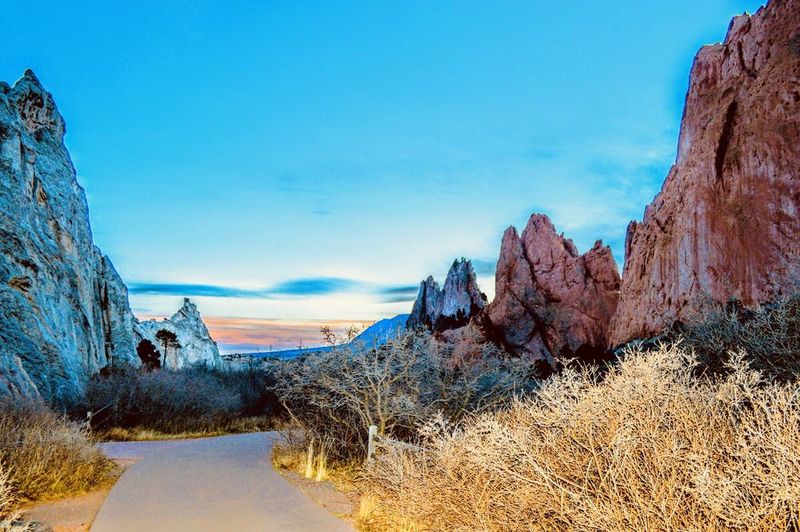
Few places in the country offer the kind of photographic variety that this park delivers in a single visit. The contrast between the red sandstone, the green meadows, and the blue Colorado sky creates color combinations that look almost artificially vivid, even without any editing.
Sunrise and sunset are the golden hours here, literally. The rocks glow in deep shades of orange and crimson when the light hits at a low angle, and the shadows add dramatic depth to every frame.
The Siamese Twins formation is particularly popular at sunset because it frames Pikes Peak through a natural arch.
Midday light tends to flatten colors and increase harsh shadows, so planning your shoot for the first or last two hours of daylight will consistently produce better results. A wide-angle lens helps capture the full scale of the formations, while a telephoto lens pulls in distant details like Pikes Peak or soaring birds.
The View of Pikes Peak That Stops You Cold
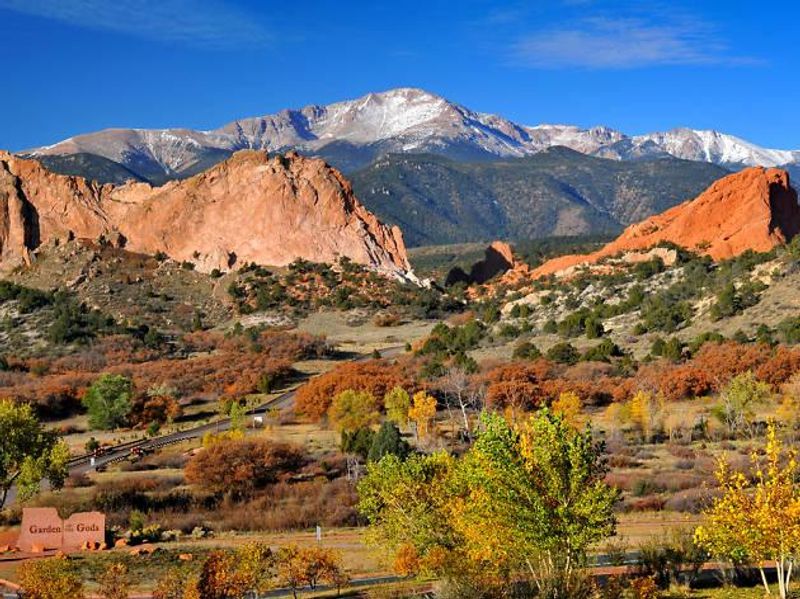
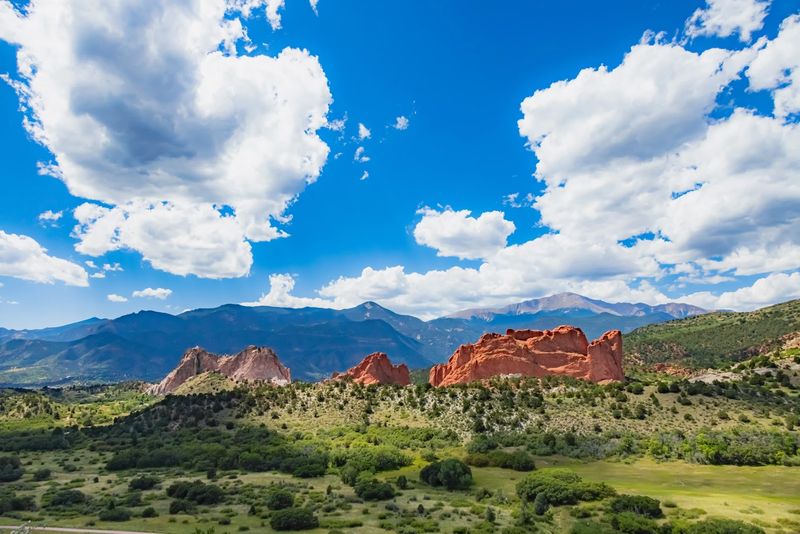
One of the most striking things about this park is that the scenery does not stop at the rock formations. Rising behind them to the west is Pikes Peak, the 14,115-foot summit that defines the Colorado Springs skyline and adds a layer of scale to the landscape that photographs struggle to fully convey.
From High Point overlook near the visitor center, the view stretches across the entire formation field with Pikes Peak dominating the background. On clear days, which are frequent along the Colorado Front Range, the snow-capped summit is visible from almost every trail in the park.
The contrast between the ancient red sandstone in the foreground and the permanent snowfields on the peak creates a visual combination that genuinely stops people mid-step. This is the kind of view that explains why Colorado residents return to this park again and again, even after dozens of visits.
Best Times to Visit and What to Expect Each Season
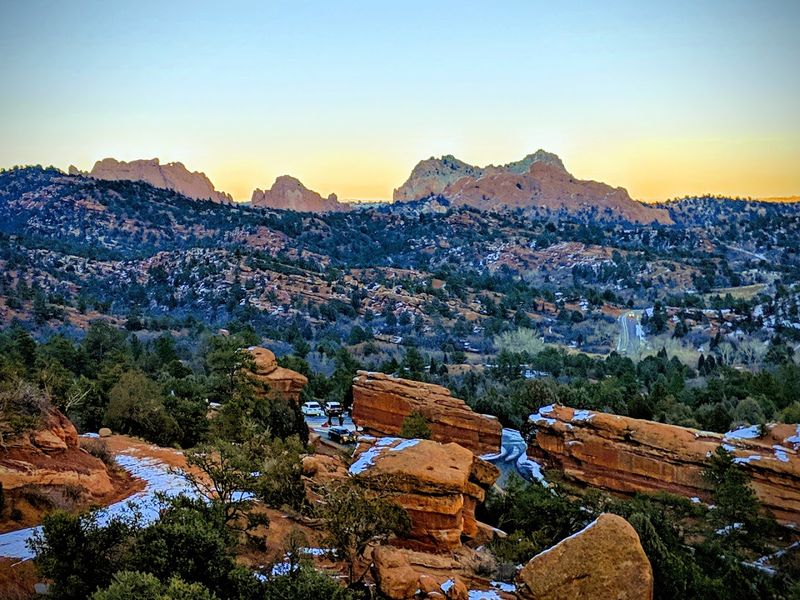
Spring and fall are widely considered the best seasons for visiting, when temperatures are comfortable, crowds are manageable, and the light tends to be softer and more flattering for photography. Wildflowers appear along the trails in late April and May, adding splashes of color to the already vivid landscape.
Summer brings the largest crowds, particularly on weekends and holidays. Arriving before 8 AM gives you a noticeably quieter experience, and the cooler morning air makes hiking more pleasant before the midday sun takes over.
The elevation here sits around 6,400 feet, so the sun feels stronger than it might at sea level.
Winter visits have their own appeal. A light dusting of snow on the red sandstone creates a color contrast that feels almost surreal, and the trails are often nearly empty on weekday mornings.
The park stays open year-round, so no season is truly off-limits.
Practical Tips Before You Head Out
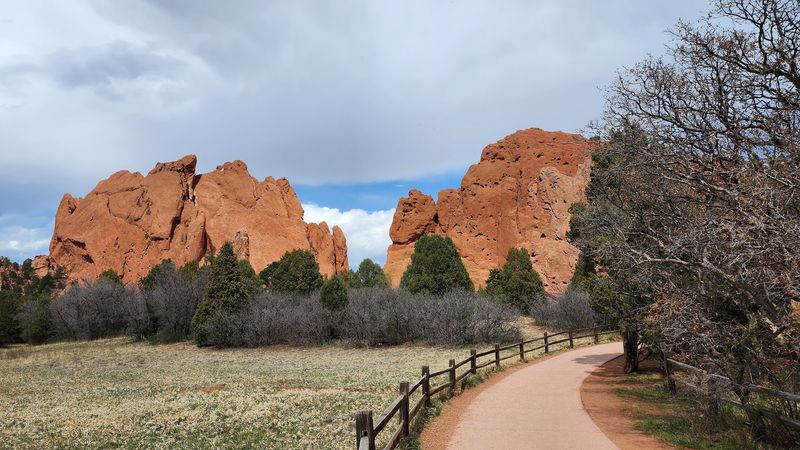
A few simple preparations make a real difference between a comfortable visit and an exhausting one. Water is at the top of that list.
The combination of high elevation, open terrain, and strong sun means dehydration can sneak up on you faster than expected, even on cooler days. Bringing at least one full water bottle per person is the baseline.
Comfortable, closed-toe shoes with decent grip are recommended for any trail beyond the paved loop. Sunscreen and a hat are practical necessities rather than optional accessories, especially between 10 AM and 3 PM when UV exposure is at its peak.
The park is open daily from 5 AM to 10 PM, admission is free, and restrooms are available near the visitor center and at several trailheads. Pets are welcome on leash, and waste bags are provided at several stations throughout the park to keep the trails clean for everyone.
Share this story