Somewhere along a quiet stretch of road in Lincoln, Massachusetts, a field full of plastic rocking horses has quietly become one of the most talked-about roadside curiosities in New England. Nobody planned it.
Nobody is officially in charge of it. And yet, every time someone visits, the horses seem to have rearranged themselves, grown in number, or sprouted handwritten notes and names that were not there before.
That unpredictability is exactly what keeps people coming back. This article takes a close look at Ponyhenge, the story behind it, what makes it worth a detour, and everything a first-time visitor should know before pulling up to that peculiar patch of farmland just outside of Boston.
How This All Got Started
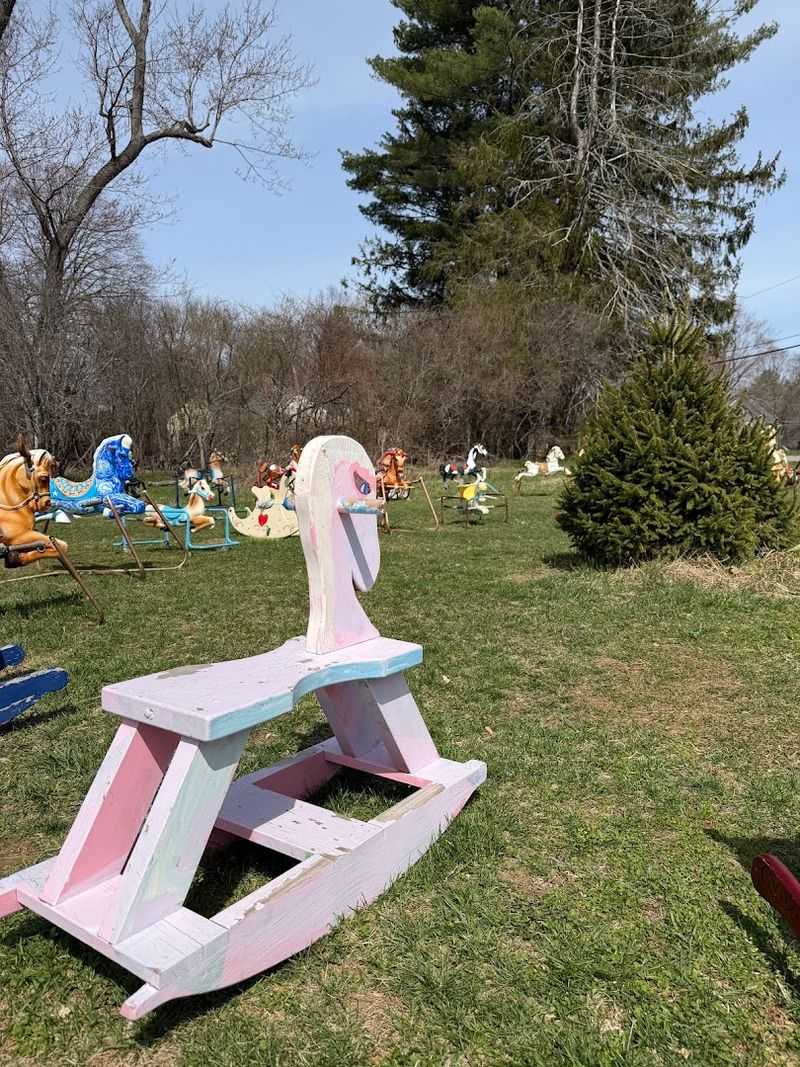
The origin story of Ponyhenge is one of those wonderfully unplanned things that makes local legends so much more interesting than anything officially organized.
The field belongs to a family who lives right next door to the site. When their daughter outgrew her childhood rocking horse, the family placed it out in the field rather than throwing it away.
That single toy horse, sitting alone in a patch of grass, apparently sparked something in the community.
Neighbors, passersby, and eventually people from much farther away started bringing their own old rocking horses to join it. The collection grew without any coordination, any rules, or any central organizer pulling the strings.
The property owner has confirmed that the whole thing took on a life of its own, and that he welcomes the attention and the ongoing additions. What began as one family’s way of clearing out a childhood toy turned into a genuinely organic community art project that nobody technically owns.
Why the Arrangement Is Never the Same Twice
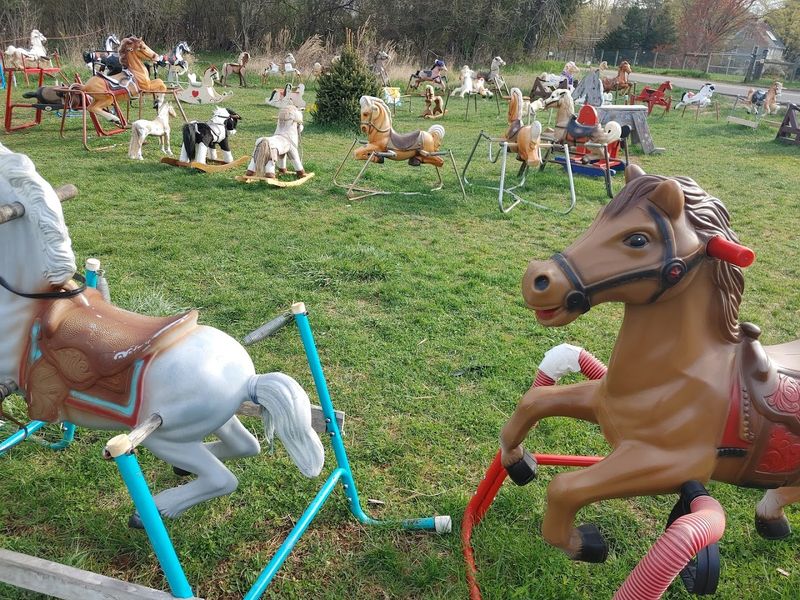
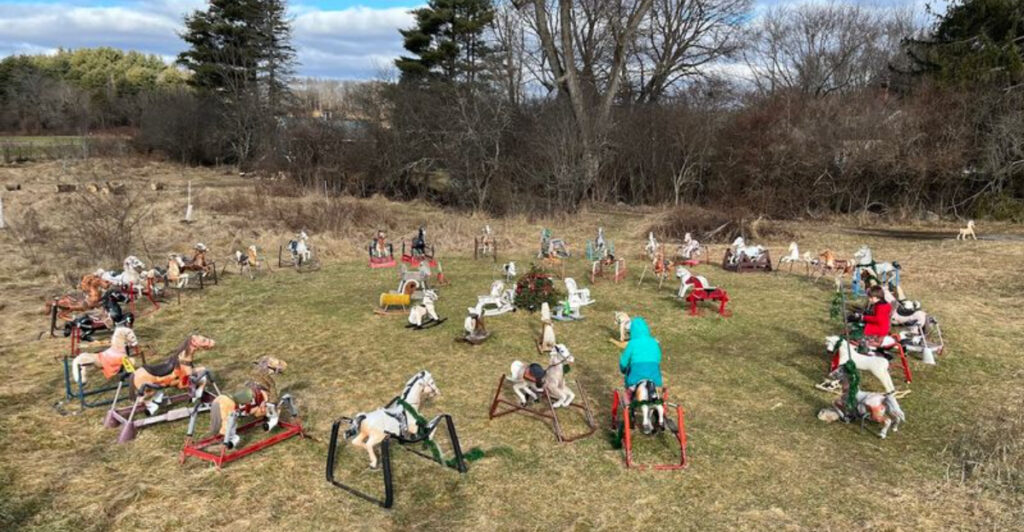
One of the most consistently surprising things about Ponyhenge is that the horses never seem to stay in the same configuration. Return visitors regularly report that the arrangement has shifted, the count has changed, or new horses have appeared since their last trip.
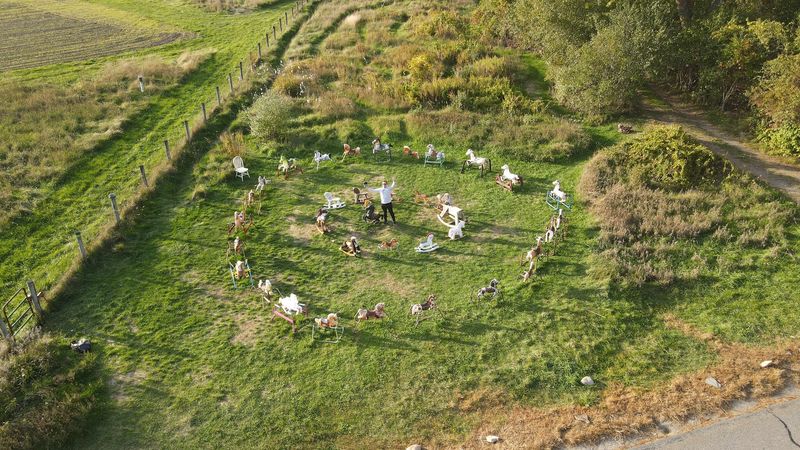
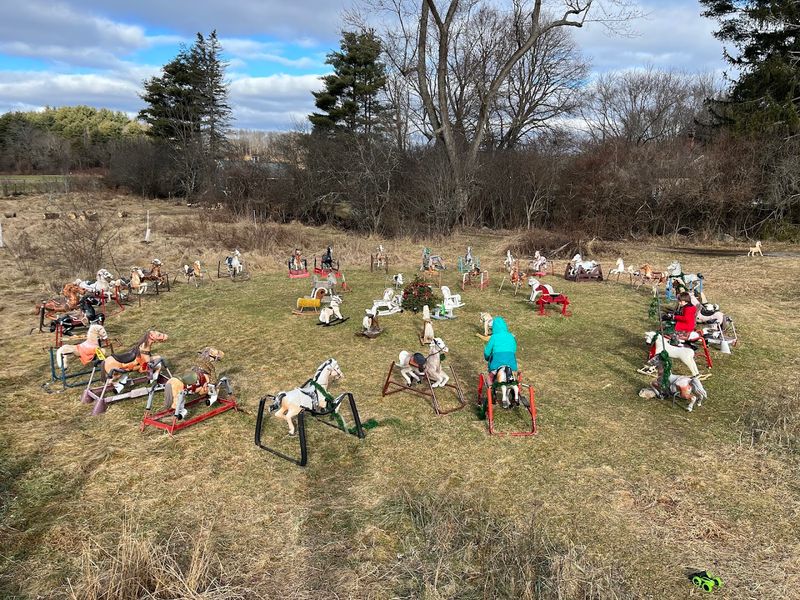
At various times, the horses have been set up in two circles around a small pine tree, sometimes with all of them facing inward and other times arranged nose-to-tail. The number of horses in the collection has ranged from a small handful to around 50 at peak times.
Nobody officially curates the layout. Visitors move the horses, add new ones, and occasionally take old ones away.
That constant state of flux is part of what gives the place its personality.
It also means that no two visits are ever quite the same, which is a genuinely rare quality for any roadside stop. The unpredictability alone gives people a reason to come back more than once.
The Messages Left Behind
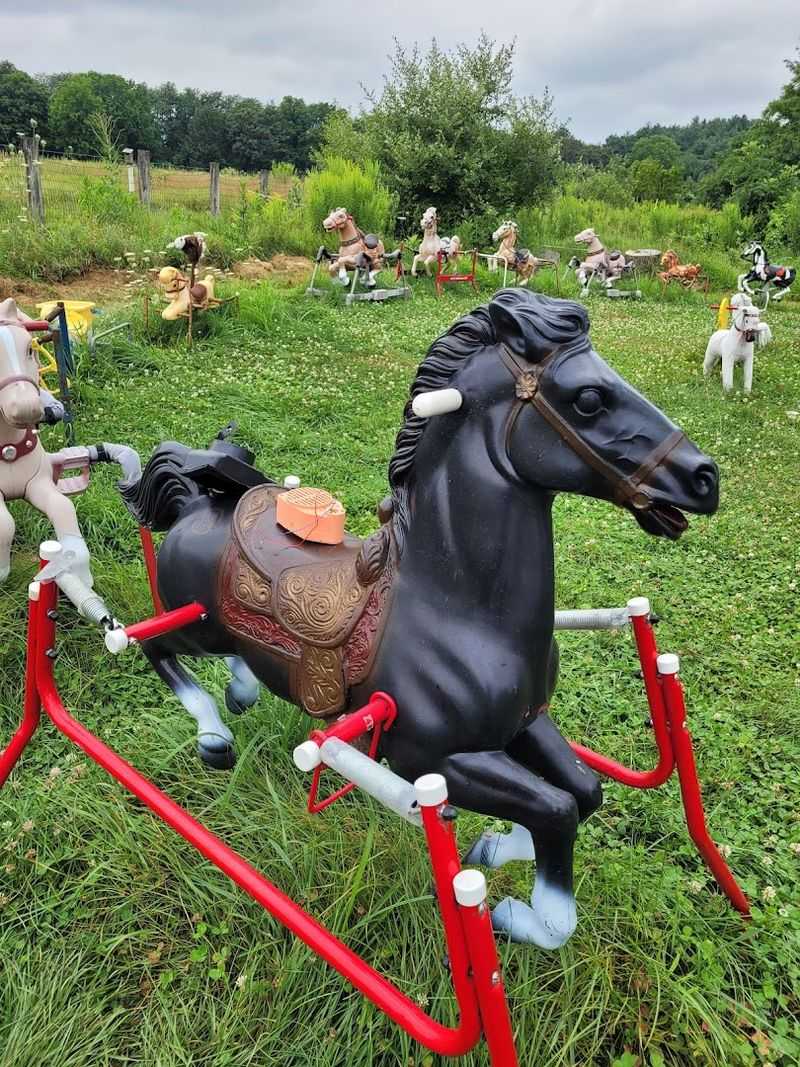
Beyond the visual novelty of the horses themselves, what tends to leave a lasting impression on many visitors are the personal messages written directly on some of the toys.
Names, short notes, and small drawings appear on various horses throughout the collection. Some carry dedications, others have names written in marker, and a few have photographs or small mementos attached to them.
These additions transform what could easily be a purely quirky attraction into something that carries a bit more weight. The horses become a kind of informal community board, a place where people leave traces of themselves without expecting anything in return.
There is no theme or requirement for what gets written. Some messages are funny, some are sweet, and some are clearly personal in ways that a passing stranger might not fully understand.
That combination of playfulness and quiet sincerity is what tends to elevate Ponyhenge above a simple novelty stop and into something that people actually think about after they leave.
What the Surrounding Area Looks Like
The setting around Ponyhenge is a big part of its appeal. Lincoln is not a town that tries to be flashy, and the landscape reflects that.
Farms, fields, and conservation land stretch out in every direction along Old Sudbury Road.
The drive to the site is genuinely pleasant, passing through open countryside that feels distinctly different from the suburban sprawl that covers much of eastern Massachusetts. Stone walls line the edges of fields, and the roads curve gently rather than cutting straight through the land.
Across the street from the horses, a large open field adds to the pastoral setting. Sheep have been known to graze nearby, and their presence adds an unexpected layer of rural charm to the whole experience.
The combination of the quirky horse collection and the genuinely beautiful New England countryside around it makes the stop feel worthwhile even for those who might otherwise shrug at a field full of plastic toys. The location does a lot of the work on its own.
A Trail Worth Adding to the Visit
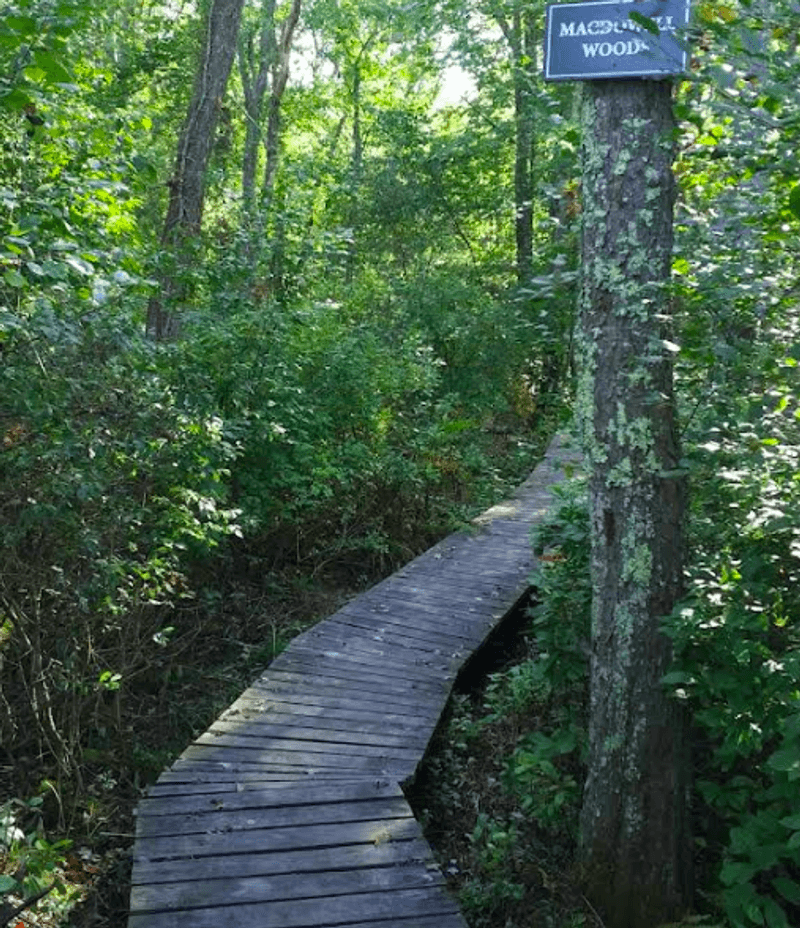
About 100 feet down the road from Ponyhenge, on the opposite side of the street, a woods trail begins that many visitors overlook entirely. That is a shame, because the trail offers a genuinely rewarding extension of the stop.
The path starts by running alongside a field near a turkey farm, then leads into a forested area that includes wetland sections. The variety of terrain along the trail makes it more interesting than a typical flat woodland walk.
The trail is free to use and requires no registration or permits. It is an informal path that fits naturally into the quiet, conservation-minded character of Lincoln as a town.
During warmer months, ticks and mosquitoes are active in the wooded and wetland sections, so applying insect repellent before heading in is a smart move. The trail is best suited for those wearing closed-toe shoes rather than sandals.
Pairing the trail with a stop at Ponyhenge turns a quick roadside curiosity into a half-day outing with real variety.
No Admission, No Rules, No Authority
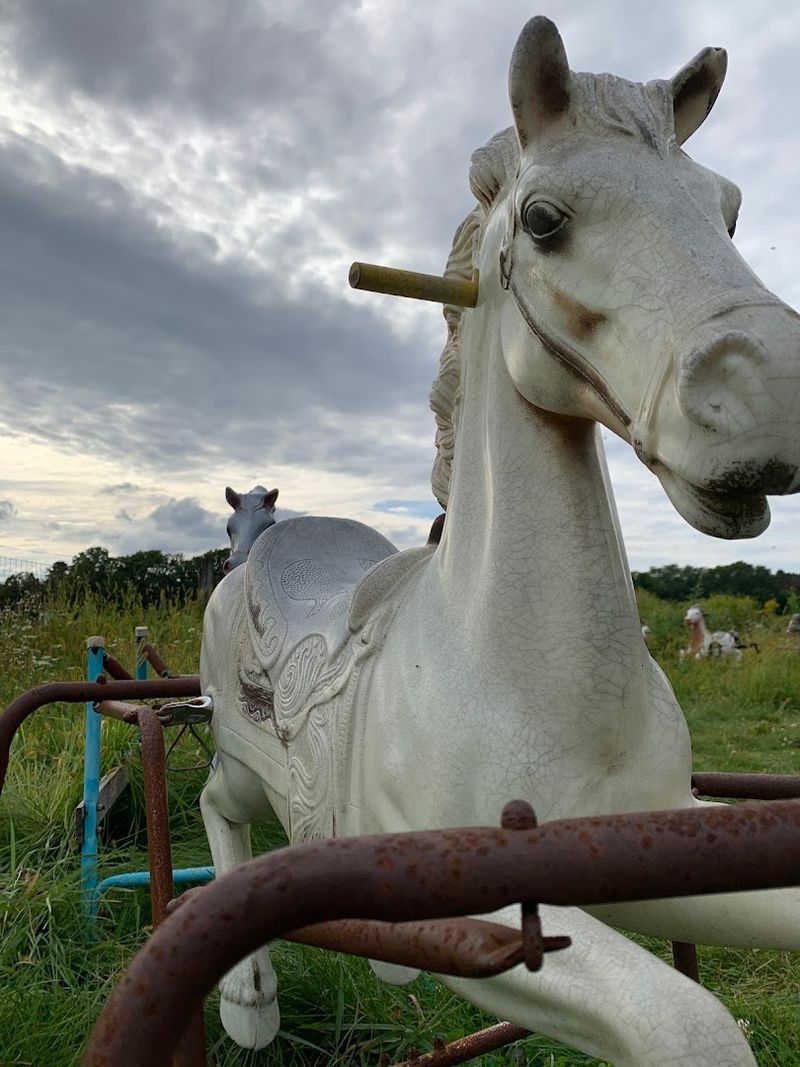
One of the most refreshing things about Ponyhenge is what it lacks. There is no entry fee, no gift shop, no official signage explaining what it is, and nobody standing around to tell visitors what to do.
The field is private property belonging to the neighboring family, but the owner has consistently welcomed the public presence and the ongoing contributions to the collection. That informal arrangement has held for years without any formal structure around it.
Nobody curates the horse placement, nobody approves new additions, and nobody removes the ones that have been there longest. The whole thing operates on a kind of unspoken community trust that is increasingly rare in a world where most attractions come with wristbands and liability waivers.
That absence of official management is also what makes the place feel alive rather than static. Every person who stops by becomes a small part of the ongoing story, whether they add a horse, move one, or simply stand there for a few minutes taking it all in.
Photography Opportunities at the Site
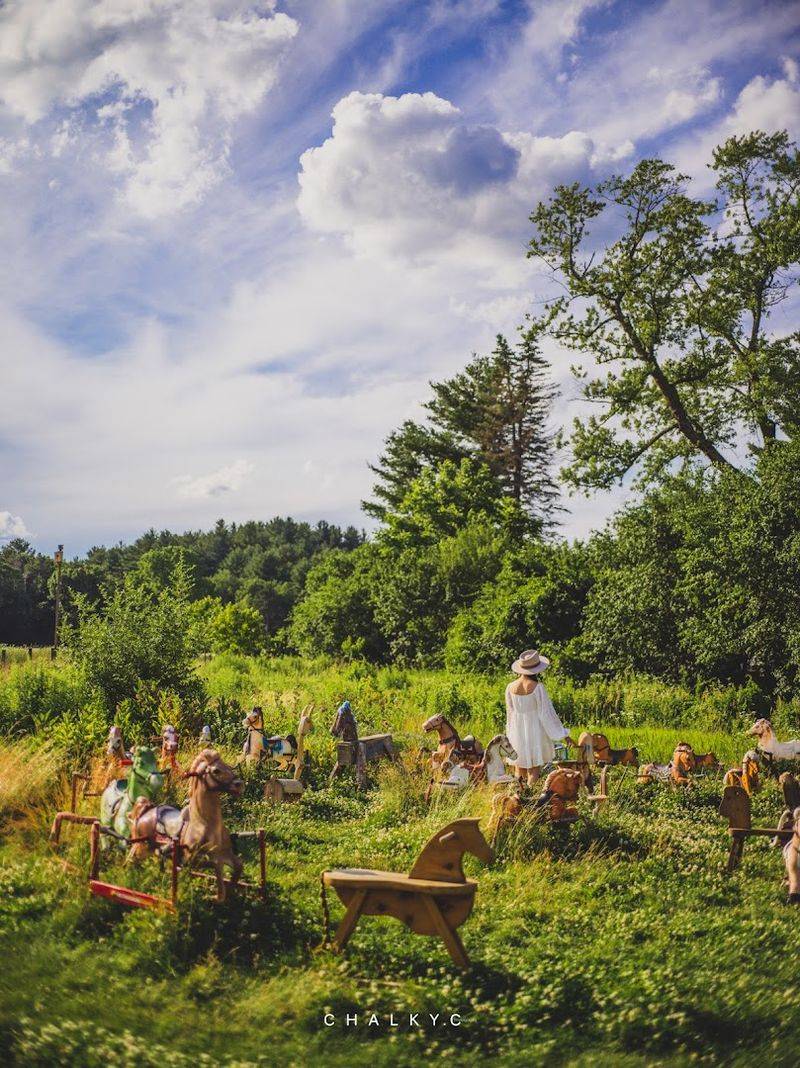
Ponyhenge has developed a quiet reputation as a spot for creative and whimsical photography. The combination of childhood toys arranged in geometric patterns against a natural New England backdrop gives photographers a lot to work with.
The horses come in a range of colors and sizes, and the way they are arranged at any given time creates natural compositional opportunities. Aerial shots taken from above the field show the circular arrangement in a way that ground-level photos cannot fully capture.
The open sky and surrounding farmland provide clean, uncluttered backgrounds that keep the horses as the clear focal point. Early morning and late afternoon light tends to work well given the open field setting.
The site is compact enough that a full set of photos can be captured in a relatively short time. For anyone interested in quirky portrait or conceptual photography, the horses provide a ready-made backdrop that requires no setup and no permission slips.
How Ponyhenge Fits Into Lincoln’s Character
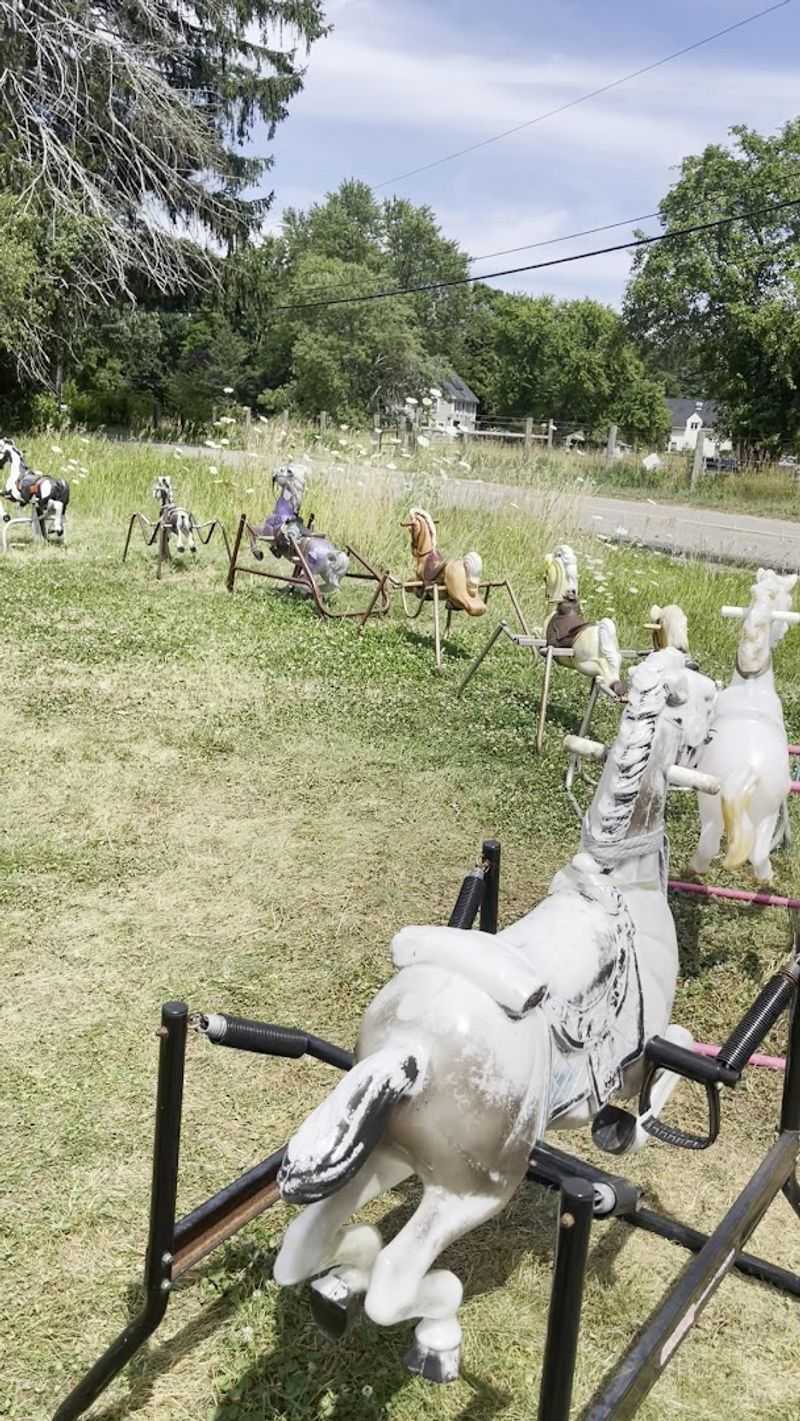
Lincoln is not a town that typically makes headlines, and that is precisely part of its appeal. With a population of just a few thousand, it is one of those Massachusetts communities that has managed to hold onto open land, historic character, and a low-key way of life despite sitting close to a major metropolitan area.
The town has a strong conservation tradition, with large portions of its land protected from development. Farms, forests, and walking trails are woven into the everyday landscape in a way that feels genuinely intentional.
Ponyhenge fits into that character surprisingly well. It is not a commercial venture, not a tourist trap, and not something that was designed to draw crowds.
It simply exists, quietly and persistently, on the edge of a field in a town that tends to let things be.
That alignment between the attraction and its surroundings is part of why the place resonates with so many people who stop by. It feels like a natural product of where it lives.
What First-Time Visitors Typically Experience
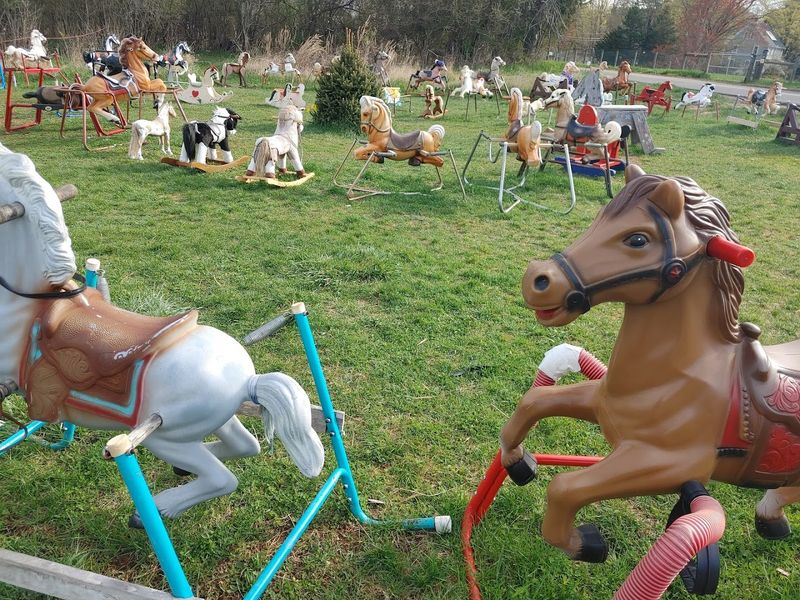
For most first-time visitors, the initial reaction to Ponyhenge is a mix of genuine amusement and mild disbelief. The horses are smaller than many people expect based on photos, which is something worth keeping in mind before arriving.
The collection is made up of children’s plastic rocking horses rather than large-scale sculptures, so the overall footprint of the site is more compact than it might appear in wide-angle shots. That said, the density of the arrangement and the personal touches left by previous visitors make the experience feel richer than a simple count of horses might suggest.
Most people spend between 10 and 20 minutes at the site, which is generally enough to walk around the collection, read the messages on the horses, and take a reasonable number of photos. It is not a destination that requires a long block of time.
The lasting impression tends to come not from the scale of the attraction but from the peculiar warmth of the whole thing, a community quirk that nobody planned and nobody wants to stop.
The Best Time of Year to Visit
Ponyhenge is open every day of the week from 8 AM to 7 PM, which makes it accessible across all four seasons. Each time of year brings a different quality to the experience.
Spring and summer visits come with green fields and active wildlife in the surrounding area, including birds and the sheep grazing across the road. The nearby woods trail is at its most lush during these months, though insects are also most active during that window.
Fall is widely considered the most visually striking time to visit. New England autumn foliage frames the open field with color, and the contrast between the bright plastic horses and the warm tones of the surrounding trees makes for particularly strong photographs.
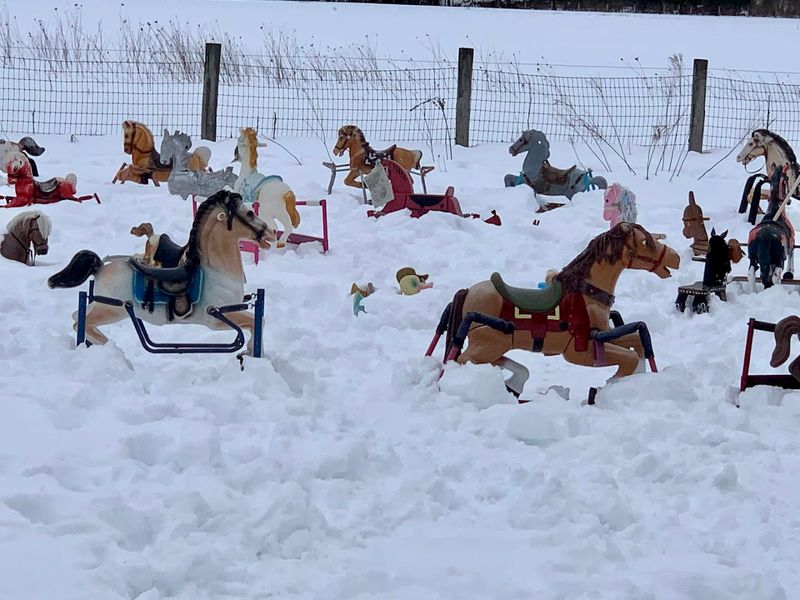
Winter visits have their own appeal. A light dusting of snow on the horses creates an image that is equal parts charming and strange, which fits the personality of the place perfectly.
No single season is wrong for a visit, which is part of what makes the site so reliably worth a detour.
Nearby Attractions Worth Pairing With the Stop
Lincoln offers enough in the surrounding area to make a full half-day or even a full-day outing worthwhile, especially for those coming from Boston or other nearby cities.
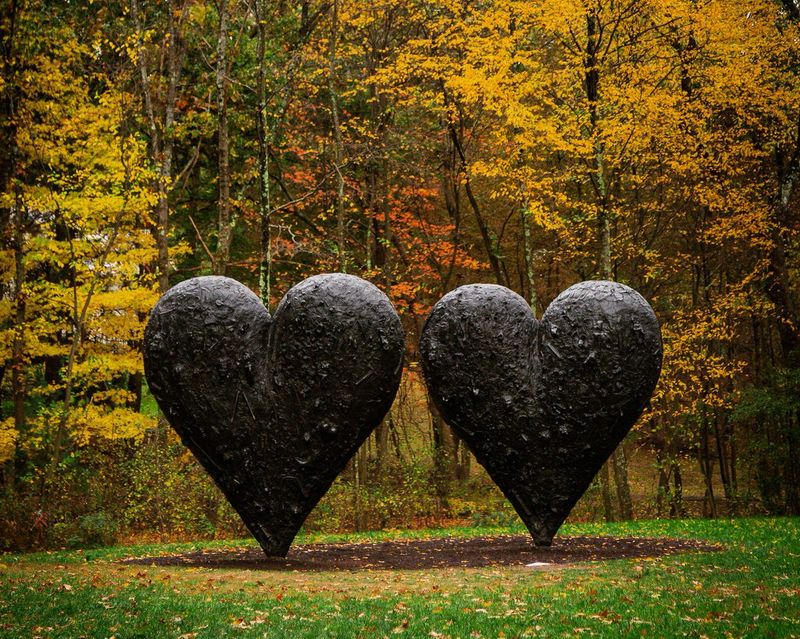
The DeCordova Sculpture Park and Museum is one of the most notable cultural stops in the region and sits within the same town. It features large-scale outdoor sculptures spread across a hillside property, which pairs interestingly with the informal outdoor art of Ponyhenge itself.
Drumlin Farm Wildlife Sanctuary, operated by Mass Audubon, is also located in Lincoln and offers nature programs, walking trails, and a working farm that is particularly popular with families.
The town’s extensive network of conservation trails provides additional options for those who want to extend their time outdoors beyond the short woods trail near Ponyhenge.
Lincoln is also a short drive from Concord, which offers well-known historic sites including Minute Man National Historical Park. Combining two or three of these stops makes the drive from Boston feel genuinely productive rather than a one-trick detour.
Why People Keep Coming Back
Most roadside attractions hold your attention exactly once. Ponyhenge has a different dynamic, and the reason comes down to that one quality that is genuinely hard to manufacture: it changes.
Every visit brings the possibility of a new arrangement, a new set of horses, or a new message written on one of the toys. People who visited years ago and return find a collection that has grown, shifted, and evolved in ways that no single person directed.
That organic quality gives the place a living character that static attractions simply cannot replicate. It is not a monument.
It is not a museum. It is more like an ongoing, slow-moving community project that anyone can contribute to.
The fact that the property owner welcomes this and has never moved to shut it down says something about the kind of community Lincoln is. Ponyhenge is strange, yes, but it is also quietly generous, a small patch of weirdness that belongs to everyone who shows up.
Where Exactly This Roadside Oddity Lives
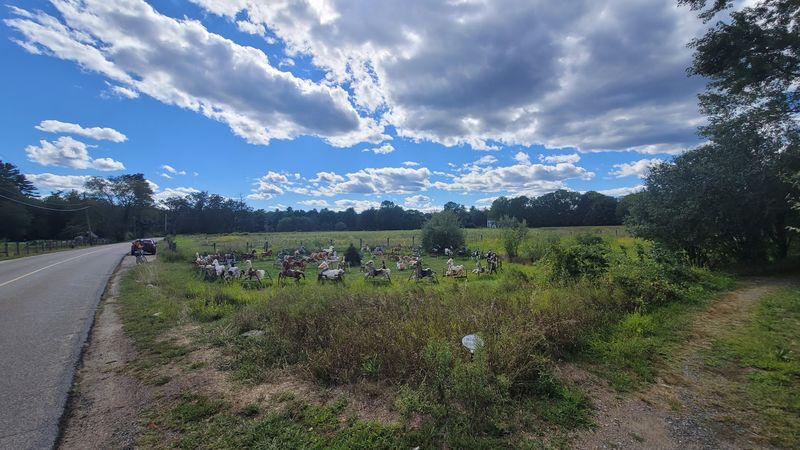
Tucked along a winding stretch of Old Sudbury Road in Lincoln, Massachusetts, Ponyhenge sits at 47 Old Sudbury Rd, Lincoln, MA 01773, right on the edge of a grassy field that borders rolling farmland.
Lincoln is a small, picturesque town in Middlesex County, located about 17 miles west of Boston. The surrounding landscape is dotted with conservation land, old stone walls, and working farms, which makes the sudden appearance of a cluster of plastic rocking horses feel even more unexpected.
The site is open daily from 8 AM to 7 PM, giving visitors a reasonable window to stop by during daylight hours. There are no gates, no fences, and no ticket booths blocking the way.
The road itself is fairly busy for a rural route, so keeping that in mind when planning a stop is worth the effort. The charm of the location is that it feels genuinely accidental, like a secret the town never meant to share.
Share this story