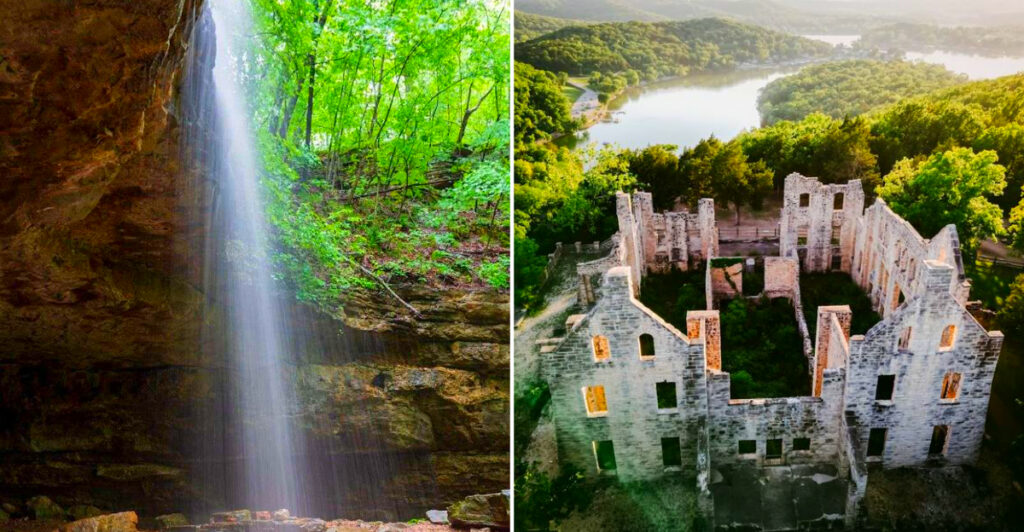
Missouri’s Ozarks are home to a state park unlike any other in the region. Known for its castle ruins overlooking the lake, the park combines striking history with some of the area’s most impressive natural attractions.
Visitors can explore blufftop overlooks, a major spring, caves, a natural bridge, and miles of scenic trails. The variety makes it easy to spend an entire day discovering something new around every corner.
What truly sets the park apart is the combination of dramatic landscapes and the story behind its unfinished stone mansion. Together, they create one of Missouri’s most distinctive outdoor destinations.
Where the Castle Meets the Ozarks
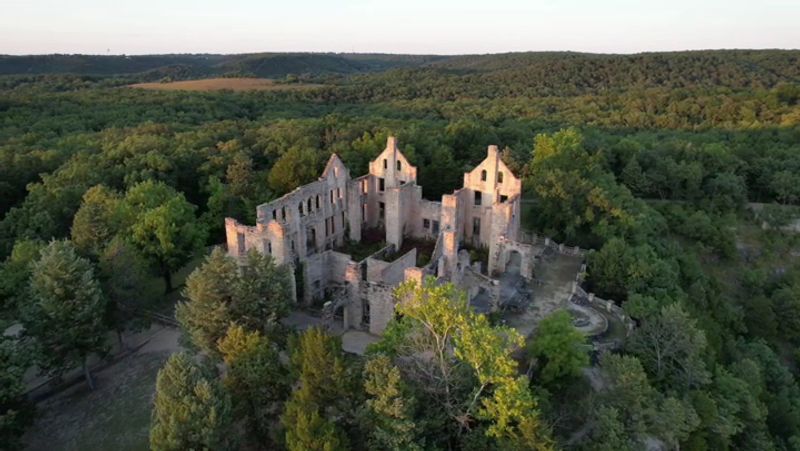
Ha Ha Tonka State Park sits at 1491 Missouri D, Camdenton, MO 65020, right along the Niangua arm of the Lake of the Ozarks in central Missouri. The park covers 3,751 acres of dramatic Ozark terrain, and from the moment you turn off the highway and roll into the parking area, you get the sense that this place is genuinely different from a standard state park.
The water tower of the old estate rises above the tree line almost immediately, giving you a preview of what is waiting just a short walk up the hill. The trail to the castle ruins from the main parking lot is only about 500 feet long and paved at a gentle grade, so it is accessible for nearly everyone in your group.
Rangers at the visitor center are genuinely helpful and can point you toward the best trails based on your fitness level and how much time you have. First-timers are always surprised by how much there is to see in a single afternoon here.
The Unfinished Dream of Robert Snyder
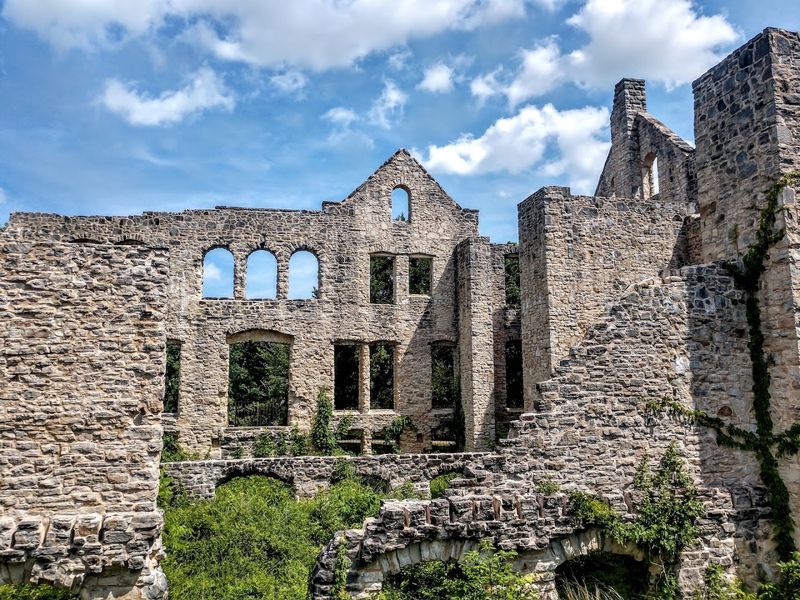
The story behind these ruins is one of the most compelling parts of the whole visit. Kansas City businessman Robert McClure Snyder Sr. purchased more than 5,000 acres here in 1905, dreaming of building a grand private estate modeled after 16th-century European castles.
Construction began almost immediately, but Snyder never got to see it finished. He passed away in a car accident in 1906, making him one of the earliest recorded car accident fatalities in Missouri’s history.
His sons eventually completed the main structure in the early 1920s, and for a time the property operated as a hotel.
Then, in 1942, a fire swept through the building and left behind the dramatic stone skeleton that visitors explore today. Missouri acquired the property in 1978 and opened it as a state park, preserving those haunting walls for generations of curious hikers.
The castle’s story is a reminder that even the grandest plans can take unexpected turns, and sometimes the ruins tell a better story than the finished building ever could.
Walking Through Walls That Have Seen It All
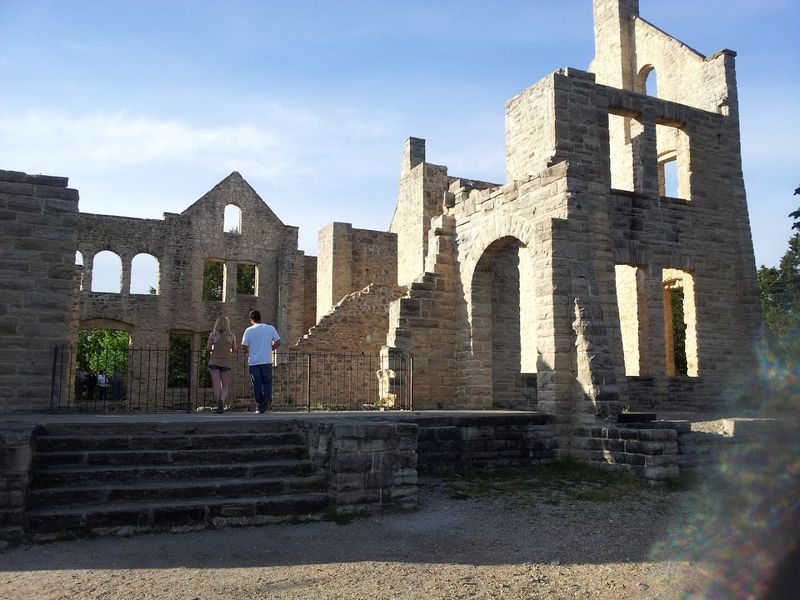
Standing inside the roofless walls of the castle ruins is a genuinely striking experience. The stone archways and window frames are still remarkably intact in many sections, and looking through those empty openings at the blue water of the Lake of the Ozarks far below creates a scene that feels almost cinematic.
Some sections of the ruins are periodically closed off for safety due to ongoing stone stabilization work, so it is worth checking the park’s website before your visit to know exactly what will be accessible. Even with partial closures, there is always plenty to walk through and photograph.
The old water tower stands separately from the main castle walls and is visible from a considerable distance, acting as a landmark that helps you navigate the upper part of the park. Benches are tucked into spots near the overlooks, making this a surprisingly relaxing place to sit and soak in the scenery.
The view from up here is the kind that makes you reach for your camera before you even realize you are doing it.
A Spring That Moves More Water Than You Can Imagine
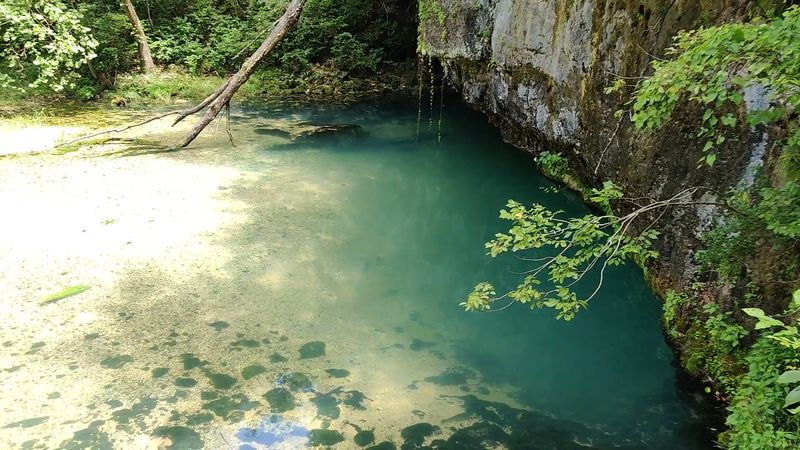
Ha Ha Tonka Spring is Missouri’s 12th largest spring, and the numbers behind it are almost hard to believe. On any given day, it discharges somewhere between 48 and 56 million gallons of water directly into the Lake of the Ozarks, flowing out from beneath a dramatic rock cliff in a rush of clear, cold water.
At its deepest point, the spring takes on a vivid blue color that looks almost tropical, especially on a bright sunny day. The Spring Trail follows a boardwalk right alongside the flowing water, giving you an up-close look at the clarity and force of the current without getting your feet wet.
The name “Ha Ha Tonka” is believed to come from a Native American phrase meaning “big laugh” or “smiling waters,” which feels especially fitting when you see the spring bubbling and rushing toward the lake. The gorge that holds the spring was actually carved out by the collapse of a massive underground cavern long ago, adding yet another layer of geological drama to an already impressive spot.
Karst Country: Caves, Sinkholes, and Hidden Passages
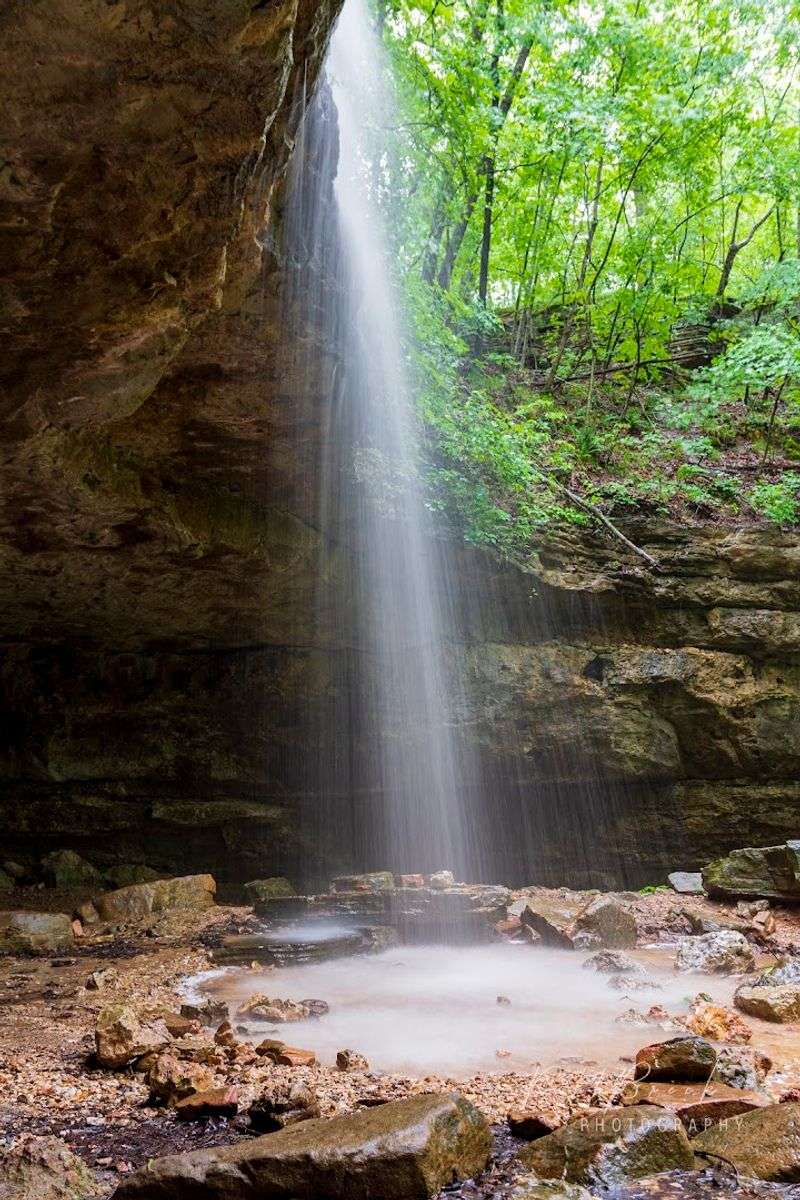
The geology underneath Ha Ha Tonka State Park is what makes this place truly extraordinary. The entire park sits on karst topography, which is a landscape shaped by centuries of water dissolving through limestone rock to create caves, sinkholes, springs, and underground passages.
One of the most dramatic examples is the Colosseum, a massive sinkhole that measures roughly 500 feet long and 300 feet wide. It formed when the roof of a giant underground cavern collapsed, leaving behind a natural theater-like depression ringed by forested walls.
The scale of it stops most hikers in their tracks the first time they see it.
The park also features Island Cave, Counterfeiter’s Cave, and Robber’s Cave, the last two of which reportedly served as hideouts for outlaws back in the 1830s. Exploring these spots adds a layer of adventure to the hike that goes well beyond typical trail walking.
Keep in mind that the karst landscape also means the terrain can be uneven, so solid footwear is a smart choice before you head out.
The Natural Bridge That Earns a Double Take
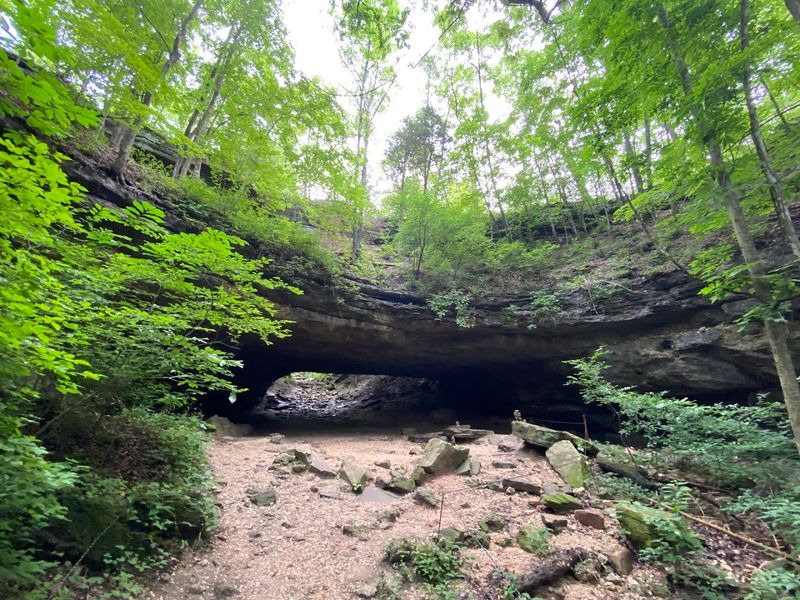
Most visitors come to Ha Ha Tonka for the castle ruins, but the natural bridge is the feature that tends to stop people mid-sentence when they first lay eyes on it. This limestone arch stretches 70 feet wide, spans 60 feet, and rises more than 100 feet above the ground below.
What makes it even more remarkable is its role in the park’s history. The natural bridge actually served as the original entrance pathway to the castle grounds, meaning that guests arriving at the Snyder estate would have walked directly over this ancient geological formation on their way to the front door.
That detail alone is worth pausing to appreciate.
The bridge is accessible from the main trail system and is one of the most photographed spots in the entire park. The scale of it is difficult to capture in a single photo, so most people end up taking several from different angles.
After seeing the bridge, the trail continues toward more overlooks and cave features, so there is always a good reason to keep moving forward on the path.
Views From the Bluffs That Will Rearrange Your Priorities
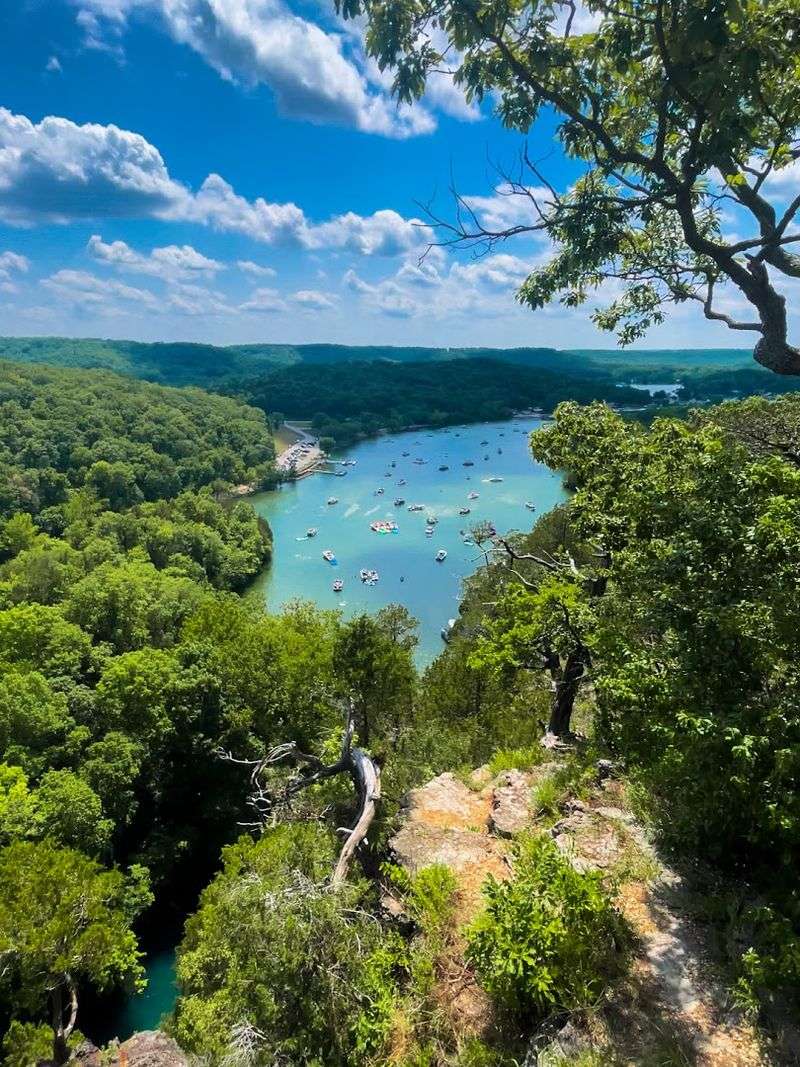
The bluffs at Ha Ha Tonka rise up to 250 feet above the spring and the lake, and the views from the top are the kind that make you forget whatever was stressing you out that morning. The Lake of the Ozarks spreads out below in every direction, its blue surface framed by dense green forest that rolls across the hills as far as you can see.
Deer’s Leap Hill is widely considered one of the best viewpoints in the entire park, offering an elevated perspective that lets you see both the spring gorge below and the broader lake beyond it at the same time. Getting there requires a bit of a climb, but the payoff is immediate and obvious.
The castle ruins sit right on the bluff’s edge, which means you get the dramatic combination of crumbling stone walls in the foreground and a sweeping lake panorama behind them. It is the kind of scene that photographers plan entire road trips around.
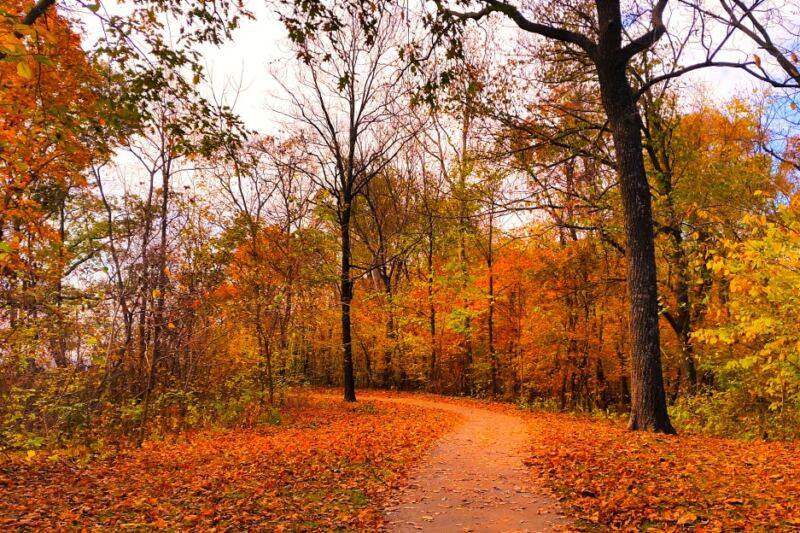
The views shift beautifully with the seasons, and autumn visitors get the added bonus of the Ozark hillsides turning every shade of orange, red, and gold.
Over 15 Miles of Trails With Something for Every Hiker
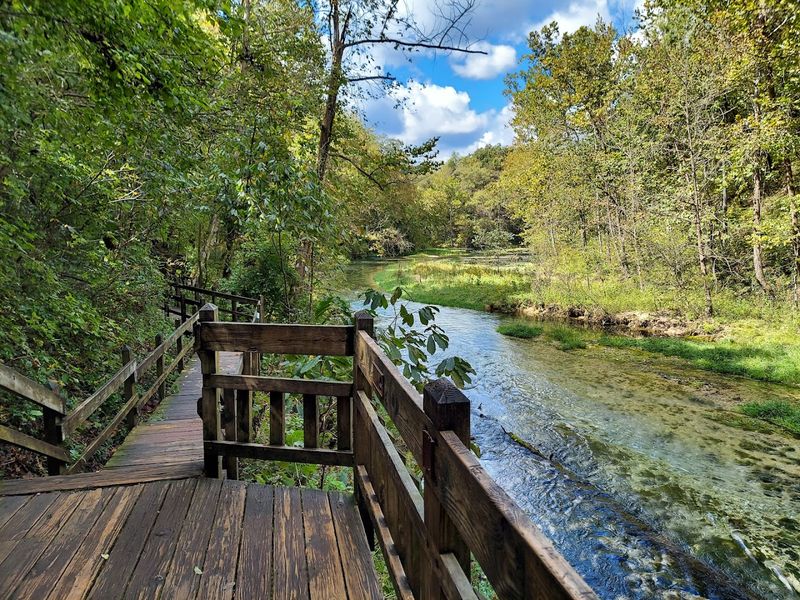
With more than 15 miles of trails crisscrossing the park, Ha Ha Tonka rewards hikers who are willing to go beyond the main castle path and explore some of the quieter corners of the property. Trail difficulty ranges from easy paved walks to more rugged routes with serious inclines and sturdy wooden staircases built into the hillside.
The Castle and Quarry Loop Trail is a popular choice for visitors who want to combine history with scenery, passing both the ruins and the old quarry where stone was cut for the original construction. The Spring Trail, with its boardwalk section along the water, is a must for anyone who wants to see the spring up close without a strenuous climb.
Trail signs throughout the park include distance and estimated hiking time, which takes the guesswork out of planning your route. Much of the trail network is shaded by a forest canopy, which makes summer hiking far more comfortable than you might expect.
Dogs are welcome on the trails as long as they are leashed, so four-legged companions are a common and cheerful sight on the paths.
Accessibility at a Park That Refuses to Leave Anyone Behind
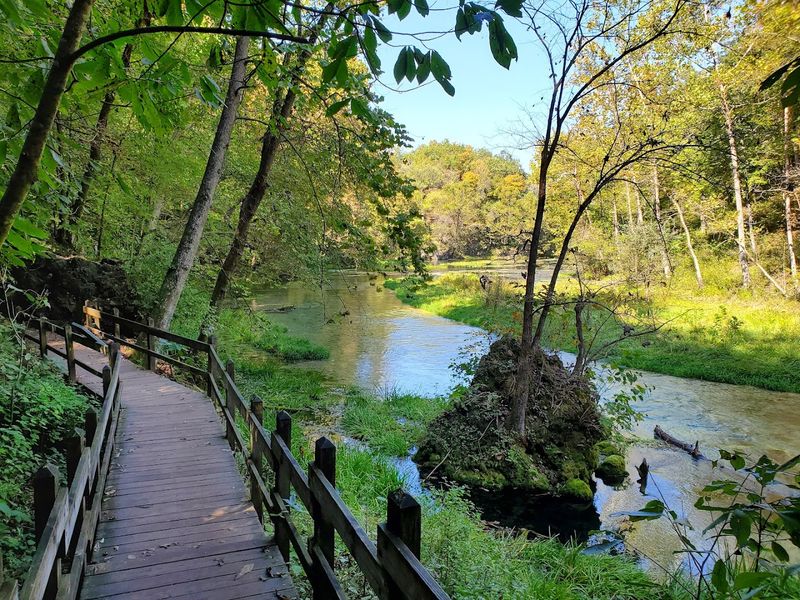
One of the genuinely pleasant surprises at Ha Ha Tonka is how thoughtfully the park has been designed for visitors of varying physical abilities. The main trail to the castle ruins is paved, wide enough for wheelchairs traveling in both directions, and set at a manageable grade of around five percent for most of its 500-foot length.
Handicap-accessible parking is available close to the trailhead, and rest areas with benches are spaced along the route to the ruins, making the climb manageable even for visitors who need to take breaks. The park does not feel like a place that was designed only for seasoned hikers, and that is a real point in its favor.
That said, the more rugged trails involve significant stair sections and uneven terrain, so visitors with mobility concerns should stick to the paved routes and check the park map before heading out. The visitor center staff are excellent at matching trail recommendations to individual needs, and they never make anyone feel like they are asking a silly question.
Accessibility here is treated as a priority, not an afterthought.
The Best Seasons to Make the Trip
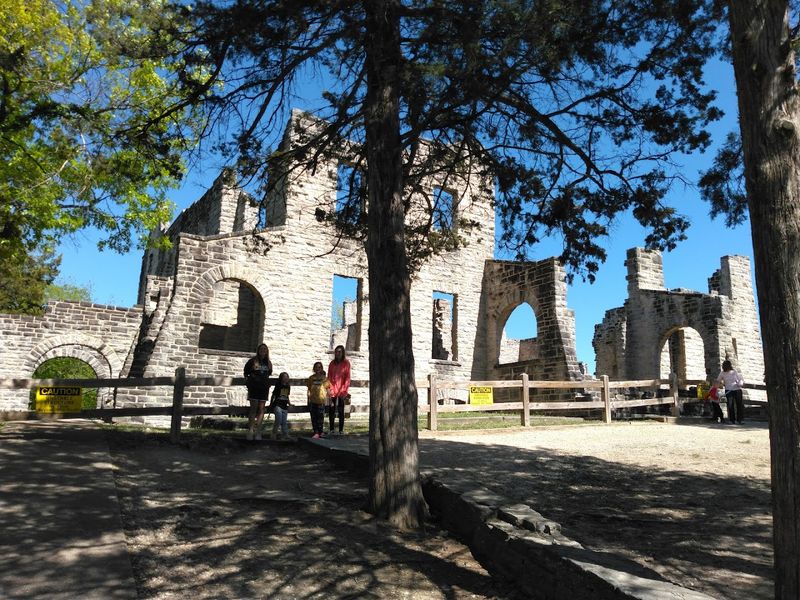
Ha Ha Tonka is genuinely worth visiting in any season, but each time of year delivers a noticeably different experience. Spring brings wildflowers along the trails and a full, rushing spring as winter snowmelt pushes extra water through the karst system, making the flow at the main spring especially impressive.
Summer draws the biggest crowds, particularly on holiday weekends, and parking can get tight even during the off season according to regular visitors. Arriving early in the morning on busy days is the smartest move to secure a spot and beat the heat on the more exposed trail sections near the bluffs.
Autumn is widely regarded as the most visually spectacular time to visit, with the Ozark hillsides turning brilliant shades of orange, red, and gold that frame the castle ruins in a way that feels almost staged. Winter visits are quieter and surprisingly beautiful, with bare trees opening up longer sightlines across the bluffs and occasional frost giving the stone ruins an extra layer of atmosphere.
Each season makes a convincing argument for a return trip.
Planning Your Visit: Practical Tips Before You Go
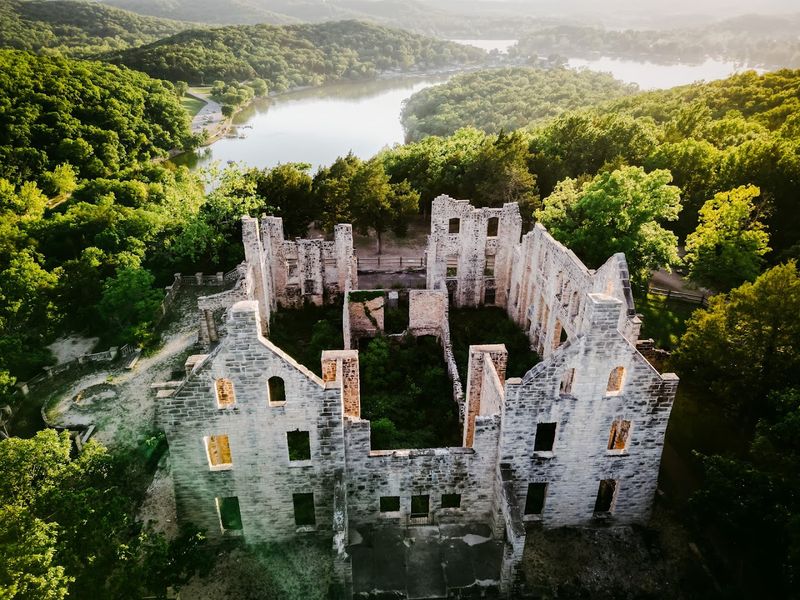
Ha Ha Tonka State Park is free to enter, which makes it one of the best-value outdoor destinations in Missouri by a considerable margin. The park is open year-round, and the visitor center is staffed by knowledgeable rangers who can walk you through trail maps, point out seasonal highlights, and flag any areas that might be temporarily closed for maintenance or safety reasons.
The address is 1491 Missouri D, Camdenton, MO 65020, and the park is easy to reach from the main roads serving the Lake of the Ozarks area. Parking is free but can fill up on summer weekends and holidays, so an early arrival is always the smarter play.
There are no food vendors inside the park, so bringing your own snacks and water is essential, especially if you plan to cover multiple trails in one visit.
Cell service can be spotty in some of the more remote trail sections, so downloading an offline map before you arrive is a practical step worth taking. The park’s website at mostateparks.com has current trail conditions and any active closures posted regularly.
Share this story