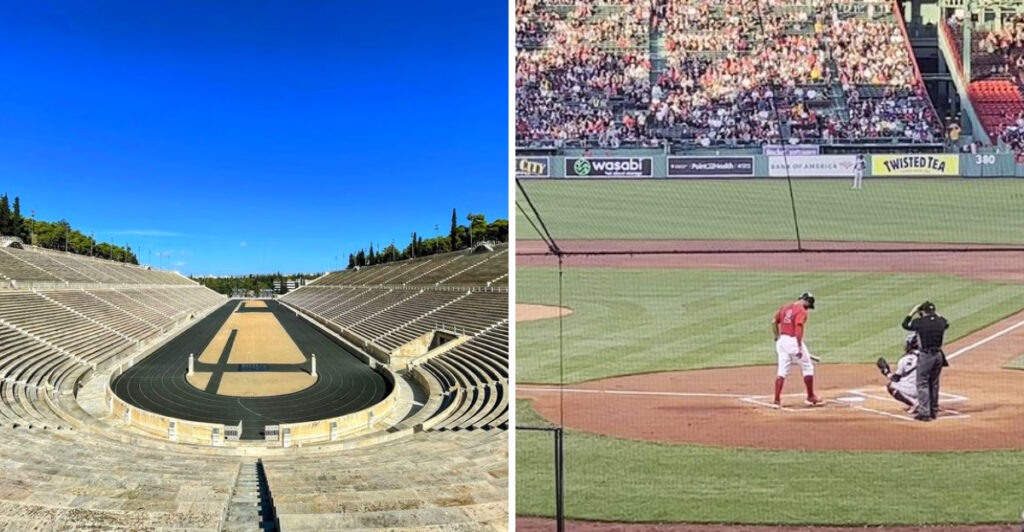
Long before giant video boards and luxury suites became standard, some sporting venues were already making history. These remarkable arenas and stadiums have survived wars, economic upheavals, renovations, and changing generations of fans.
They are living proof that the love of sport runs deeper than any single era or generation. From ancient Athens to modern Boston, these iconic venues prove that great sporting traditions never truly grow old.
Panathenaic Stadium, Athens, Greece
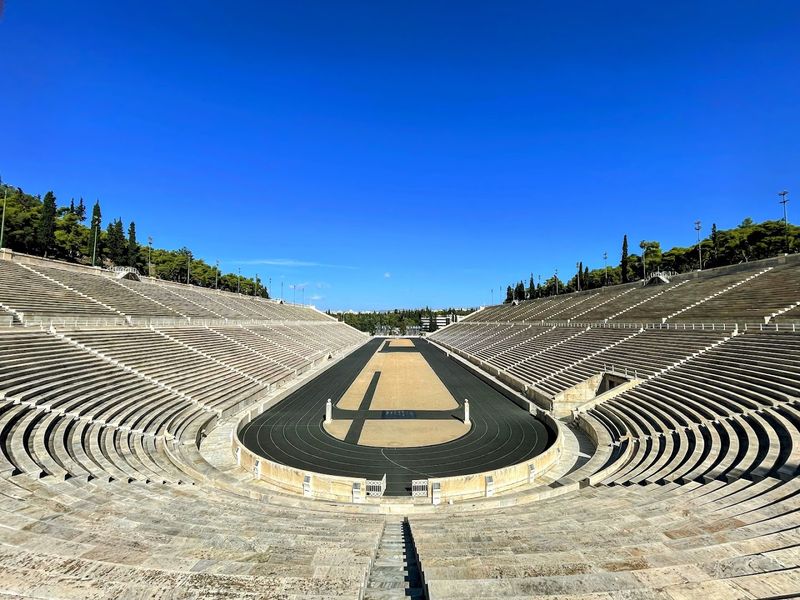
Carved entirely from white marble, the Panathenaic Stadium is one of the most breathtaking sporting venues you will ever lay eyes on. Originally built in the 4th century BC for the Panathenaic Games, it could seat around 50,000 spectators in its ancient heyday.
Standing inside it today feels like stepping directly into a history book.
Roman emperor Herodes Atticus funded a grand marble renovation in 144 AD, giving the stadium much of the gleaming appearance it still holds today. Centuries later, it was restored again to host the very first modern Olympic Games in 1896.
That event marked a turning point in global sports history, and this stadium was right at the center of it.
Visitors can still run a lap on the track, which makes it unlike almost any other ancient monument on Earth. The Olympic flame torch relay traditionally ends its journey here during each Summer Games.
Few places in the world can claim such an unbroken connection between ancient sport and modern athletic tradition.
Bramall Lane, Sheffield, England
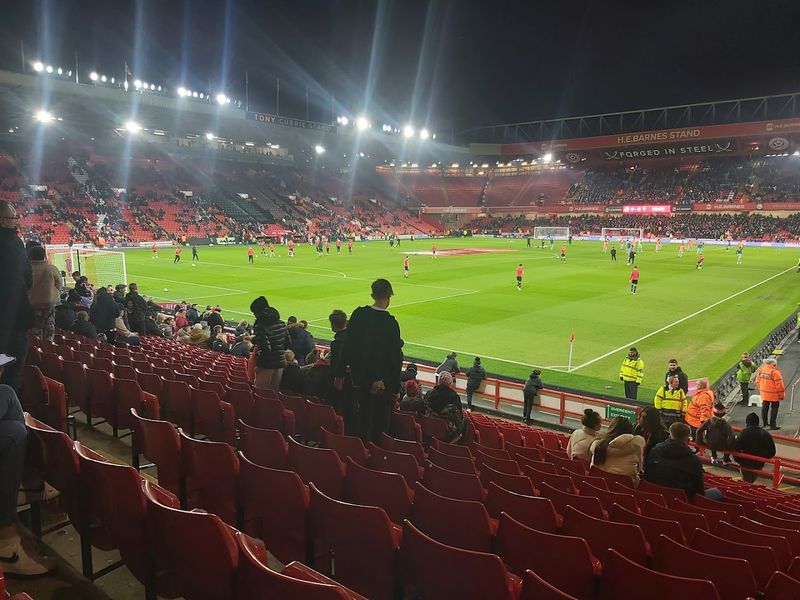
Bramall Lane has been around long enough to have watched football practically grow up from childhood. Opened in 1855, it originally served as a cricket ground, hosting Yorkshire County Cricket Club matches for decades before football took over as the main attraction.
That dual sporting history makes it genuinely one of a kind among the world’s oldest venues.
Sheffield United moved in and made Bramall Lane their permanent home, and the ground has hosted top-flight English football across multiple eras. The stadium even witnessed international matches and FA Cup ties during the 19th century, when the rules of the game were still evolving.
Few grounds have seen football change as dramatically as this one has.
Today, Bramall Lane sits proudly in the Premier League era, having undergone significant modernization while holding on to its heritage. The South Stand pays tribute to the ground’s cricketing past, keeping that history visible for modern fans.
For anyone interested in where English sport truly began, a visit here is about as close to the source as you can get.
Stamford Bridge, London, England
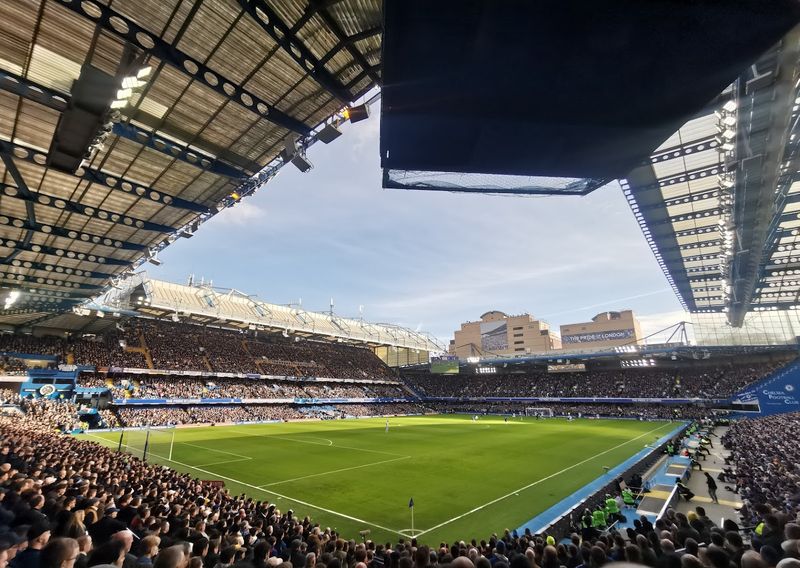
Before Chelsea FC ever kicked a ball, Stamford Bridge was already open for business. The ground launched in 1877 as an athletics stadium, hosting track and field events for the London Athletic Club.
Football only arrived decades later, when Chelsea FC was founded specifically to fill the venue in 1905. That unusual origin story sets Stamford Bridge apart from almost every other major football ground.
Over the years, the stadium grew from a sprawling open-air athletics ground into a compact, modern football arena. It has hosted FA Cup finals, international matches, and countless fierce London derbies.
The atmosphere on big European nights is something Chelsea supporters talk about for years afterward.
Stamford Bridge sits in the upscale Fulham Road neighborhood, surrounded by restaurants and fan culture that has built up over more than a century. Plans for a complete stadium rebuild have been discussed for years, making every current match feel like a potential farewell to the old structure.
Victorian roots meeting modern football ambition is pretty much the Stamford Bridge story in a nutshell.
Anfield, Liverpool, England
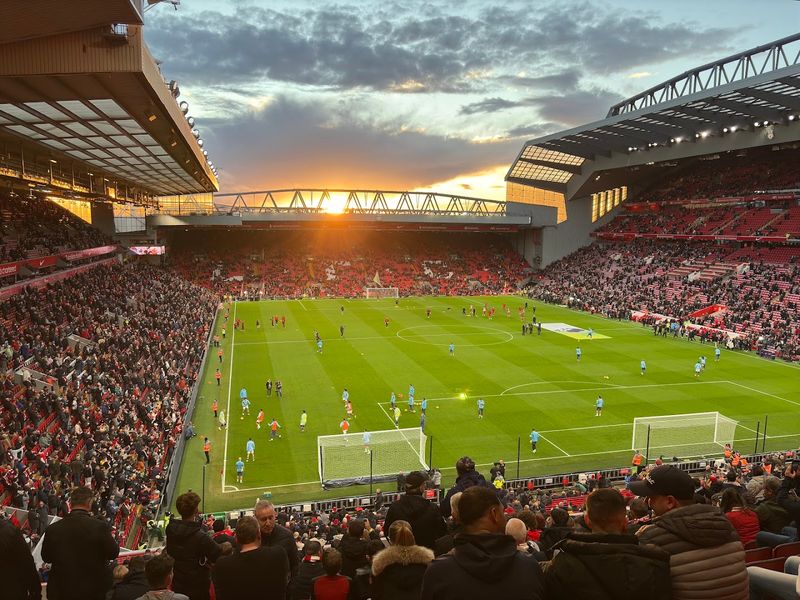
There is a moment before kickoff at Anfield when the crowd starts singing You’ll Never Walk Alone, and the sound is unlike anything else in world football. Opened in 1884, Anfield has been the home of Liverpool FC since 1892 and has grown into one of the sport’s most emotionally powerful venues.
The atmosphere alone has been credited with turning matches in Liverpool’s favor on countless occasions.
The famous Kop stand, originally a simple open terrace, became legendary for its passionate, vocal support. Expanded and eventually converted to seats, the Kop still generates noise that opposing teams genuinely fear.
Several visiting managers have publicly admitted that playing at Anfield is one of football’s most intimidating experiences.
Anfield has witnessed European Cup triumphs, title-winning seasons, and some of the most dramatic comebacks the sport has ever produced. The 2019 Champions League semifinal comeback against Barcelona, overturning a 3-0 deficit, is already considered one of the greatest nights in football history.
More than 140 years after it first opened, Anfield keeps delivering moments that remind fans exactly why they fell in love with the sport.
Goodison Park, Liverpool, England
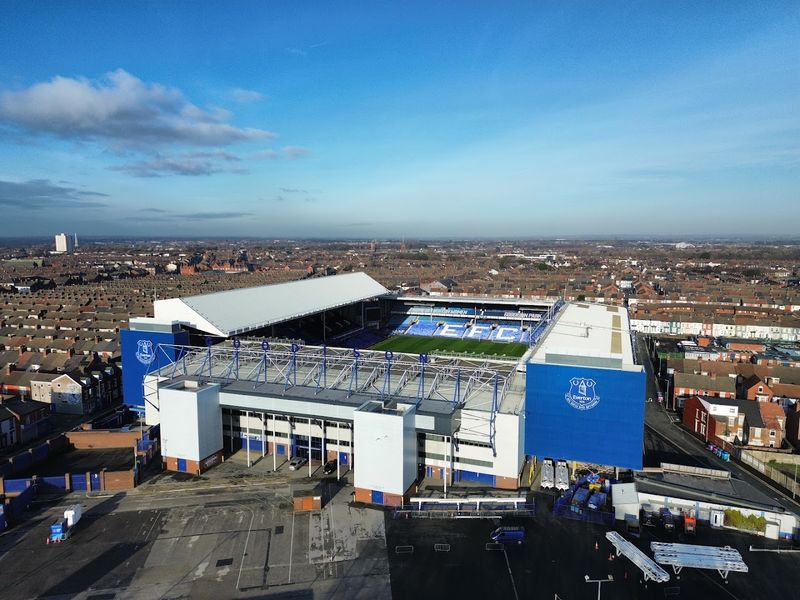
Goodison Park holds a distinction that even many football fans overlook: it was one of the first purpose-built football stadiums in the entire world. Opened in 1892, it was constructed specifically for football from the ground up, rather than adapted from a cricket or athletics venue.
Everton FC moved in immediately and has never left, making this one of the longest unbroken club-stadium relationships in the sport.
The ground hosted the 1966 FIFA World Cup, including some of the tournament’s most memorable group stage matches. Pele’s Brazil side actually suffered a shock defeat here, one of the most talked-about upsets in World Cup history.
That single fact gives Goodison Park a place in global football lore that goes well beyond domestic league matches.
Everton’s planned move to a new stadium at Bramley-Moore Dock means Goodison Park’s days as a match venue are finally numbered. Supporters have mixed feelings about leaving a ground that has housed over 130 years of memories, heartbreak, and celebration.
When the final whistle blows at Goodison for the last time, it will mark the end of a genuinely irreplaceable chapter in football history.
Celtic Park, Glasgow, Scotland
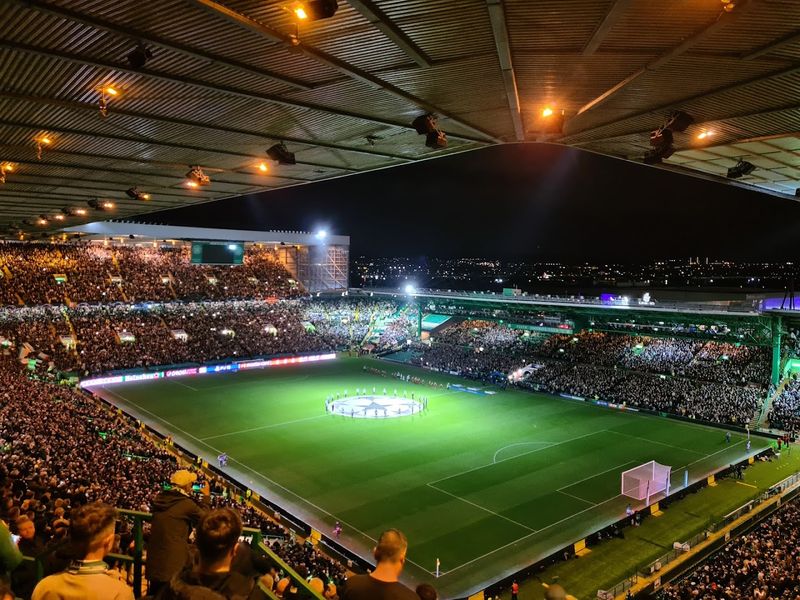
Ask any Celtic supporter what makes their stadium special, and the answer usually involves one word: noise. Celtic Park, also known as Parkhead, has been creating some of Scottish football’s loudest atmospheres since it opened in its current form in 1892.
Capacity crowds singing in unison have made the ground one of Europe’s most recognized football cathedrals.
Celtic FC was founded in 1887 to raise funds for the poor immigrant Irish community in Glasgow’s East End, and that community spirit is still embedded in the club’s identity today. The stadium reflects that history proudly, with banners, murals, and traditions that connect modern matchdays to the club’s working-class roots.
Few football clubs wear their origins as openly or as passionately as Celtic does.
On European nights, Celtic Park reaches a completely different level of intensity. The 1967 European Cup win, when Celtic became the first British club to lift the trophy, remains the proudest moment in the stadium’s history.
That team, nicknamed the Lisbon Lions, was made up entirely of players born within 30 miles of Celtic Park, which says everything you need to know about this club’s relationship with its community.
Ibrox Stadium, Glasgow, Scotland
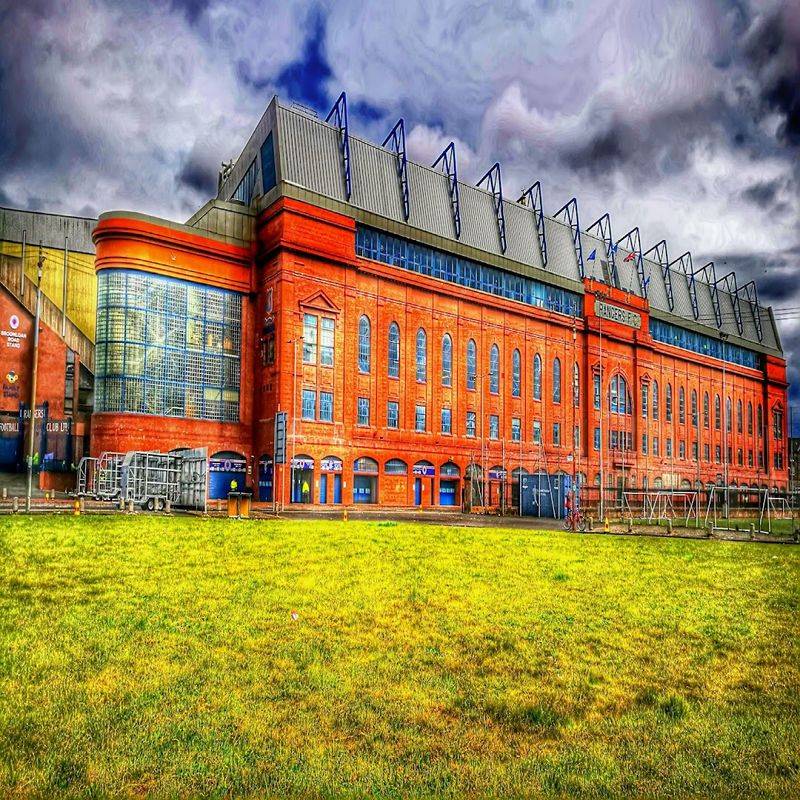
The red-brick facade of Ibrox Stadium looks like it was built to last forever, and honestly, it just about has. Opened in 1899, Ibrox has been the home of Rangers FC for more than 125 years, making it one of the longest-serving club stadiums in world football.
The main stand, designed by famous stadium architect Archibald Leitch, is now a listed building, protected as a piece of architectural heritage.
Ibrox carries some painful history too. The 1971 Ibrox disaster, in which 66 supporters lost their lives in a crush on a stairway, led to major changes in stadium safety regulations across Britain.
That tragedy is remembered solemnly every year, and the stadium has a memorial garden dedicated to those who died. Safety improvements that followed ultimately shaped how football grounds across the country were redesigned.
Rangers have won more Scottish league titles than any other club in the world, and most of those championships were celebrated right here at Ibrox. The stadium holds around 50,000 supporters and still fills up for Old Firm matches against Celtic, which rank among European football’s fiercest rivalries.
History and intensity live side by side at Ibrox.
Lord’s Cricket Ground, London, England
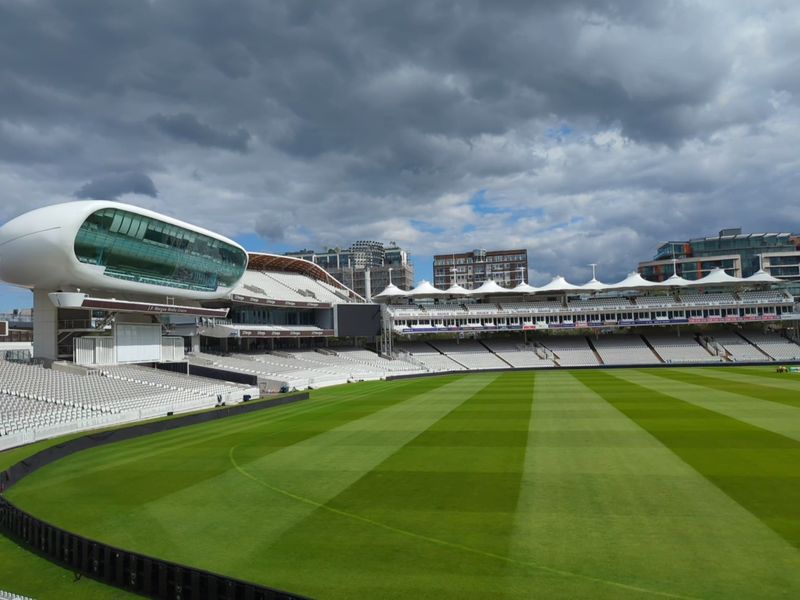
Cricket has a home, and it is a slightly sloped patch of grass in St. John’s Wood, London. Lord’s Cricket Ground has been the spiritual center of the sport since Thomas Lord first laid out the ground in its current location in 1814.
The famous Pavilion, built in 1890, remains one of sport’s most recognizable structures, with its Long Room where players walk through packed members on their way to the field.
The ground has hosted Ashes Test matches, World Cup finals, and countless moments that have defined cricket history. When Australia’s Don Bradman batted here in the 1930s, crowds gathered just to watch him practice.
The Honours Boards inside the dressing rooms list every player who has scored a century or taken five wickets at Lord’s, making them among sport’s most coveted records.
A quirky fact worth knowing: the pitch at Lord’s actually slopes about eight feet from one side to the other, which affects how the ball moves and keeps batters guessing. The MCC, which owns and runs Lord’s, also writes the official Laws of Cricket, giving this ground genuine authority over the entire global sport.
That is a level of influence no other sporting venue on this list can match.
Fenway Park, Boston, Massachusetts
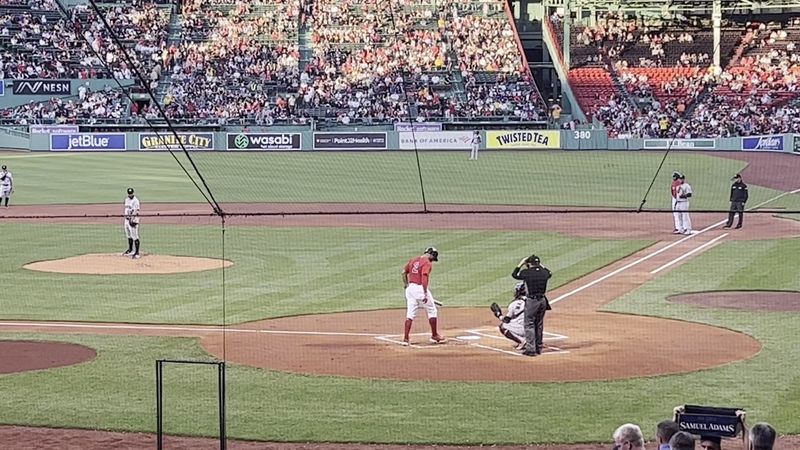
Fenway Park smells like popcorn, old wood, and a century of baseball all mixed together, and that combination is completely irreplaceable. Opened on April 20, 1912, the same week the Titanic sank, Fenway is the oldest Major League Baseball stadium still in active use.
The Boston Red Sox have played here through world wars, championship droughts, and historic comeback victories that fans still argue about at dinner tables.
The Green Monster, Fenway’s towering 37-foot left field wall, is one of the most recognizable features in all of American sports. Originally built to block non-paying spectators from watching games for free, it became an accidental legend.
Balls that would be home runs in any other park die against the Monster, turning ordinary fly balls into doubles and completely reshaping how the game is played here.
Fenway holds just over 37,000 fans, making it one of baseball’s smallest stadiums, yet it consistently sells out. The intimacy is actually part of the appeal: every seat feels close to the action, and the narrow concourses keep the atmosphere buzzing throughout the entire game.
Fenway is not just a ballpark; it is the reason Boston fans believe their city bleeds baseball.
Share this story