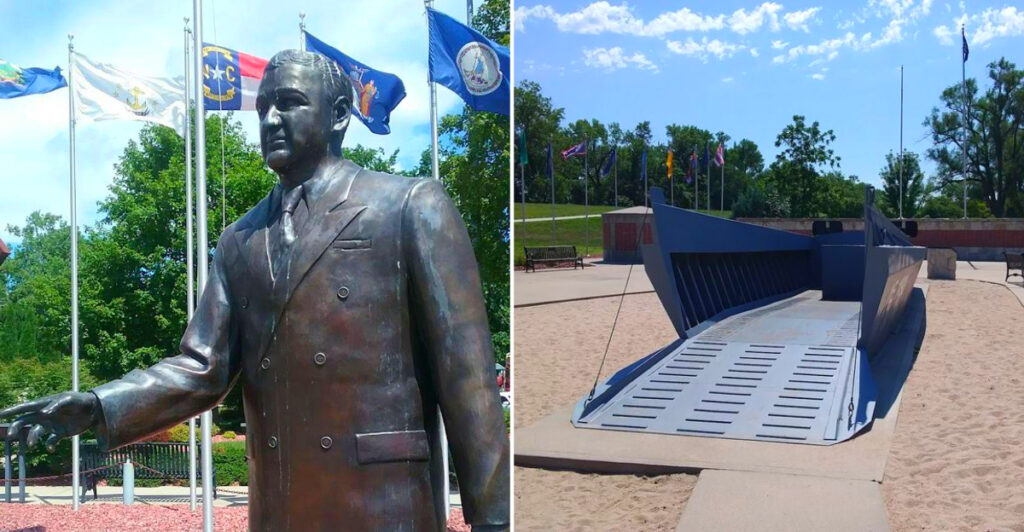
One of Nebraska’s most important historical figures is honored in a place many travelers never think to visit. The Andrew Jackson Higgins National Memorial in Columbus tells the story of the inventor whose landing craft helped Allied forces reach the beaches of World War II and played a critical role in the success of D-Day.
What makes the memorial stand out is the depth of its exhibits. Visitors can see artifacts connected to Higgins’ life and work, explore displays tied to the Normandy invasion, and view meaningful tributes that connect local history to major world events.
More than a city park monument, the memorial offers a closer look at a man whose impact far exceeded his small-town roots. For history enthusiasts and curious travelers alike, it is one of Nebraska’s most surprising and rewarding attractions.
Where the Memorial Actually Sits
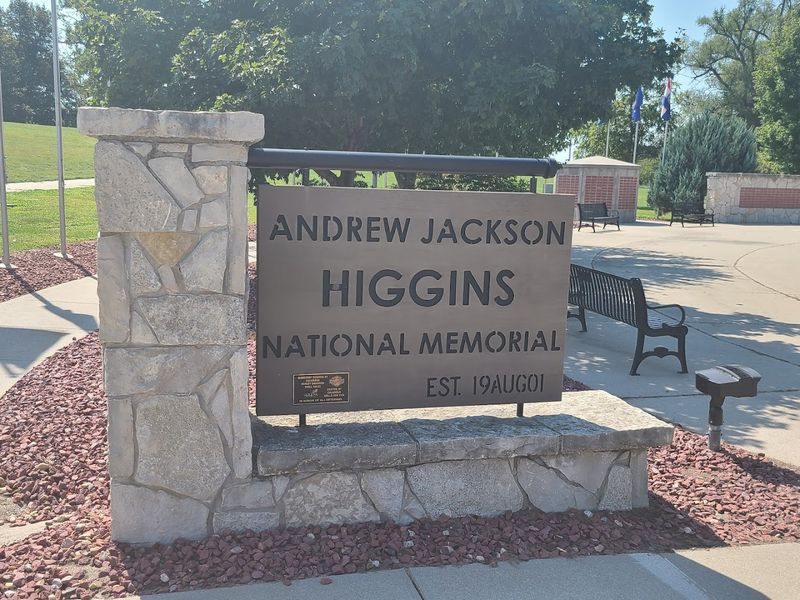
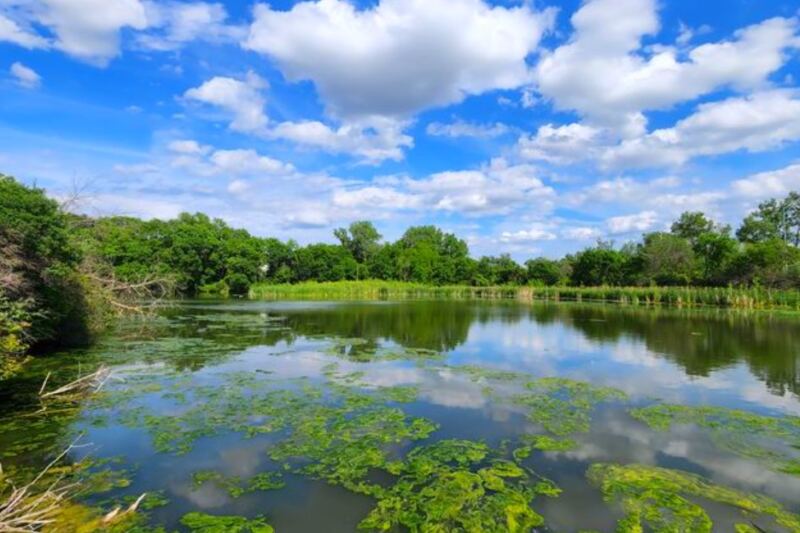
The address is 2001 AJ Higgins Rd, Columbus, NE 68601, and the setting alone is worth the detour. The memorial sits inside Pawnee Park, right along the Loup River, which means the surrounding landscape is lush, shaded, and surprisingly peaceful for a site that carries so much historical weight.
Columbus is a mid-sized city in Platte County, Nebraska, and it is the kind of place where a nationally significant memorial can exist without the usual tourist crowds. That actually works in your favor, because you can take your time, read every plaque, and absorb the atmosphere without feeling rushed or elbowed by strangers.
The park itself has walking trails, picnic areas, and river access, so families can easily turn a history visit into a full afternoon outing. The memorial grounds are open most days from 8 AM to 10 PM, which gives you plenty of daylight to explore every corner of this remarkable outdoor space.
The Man Behind the Boats
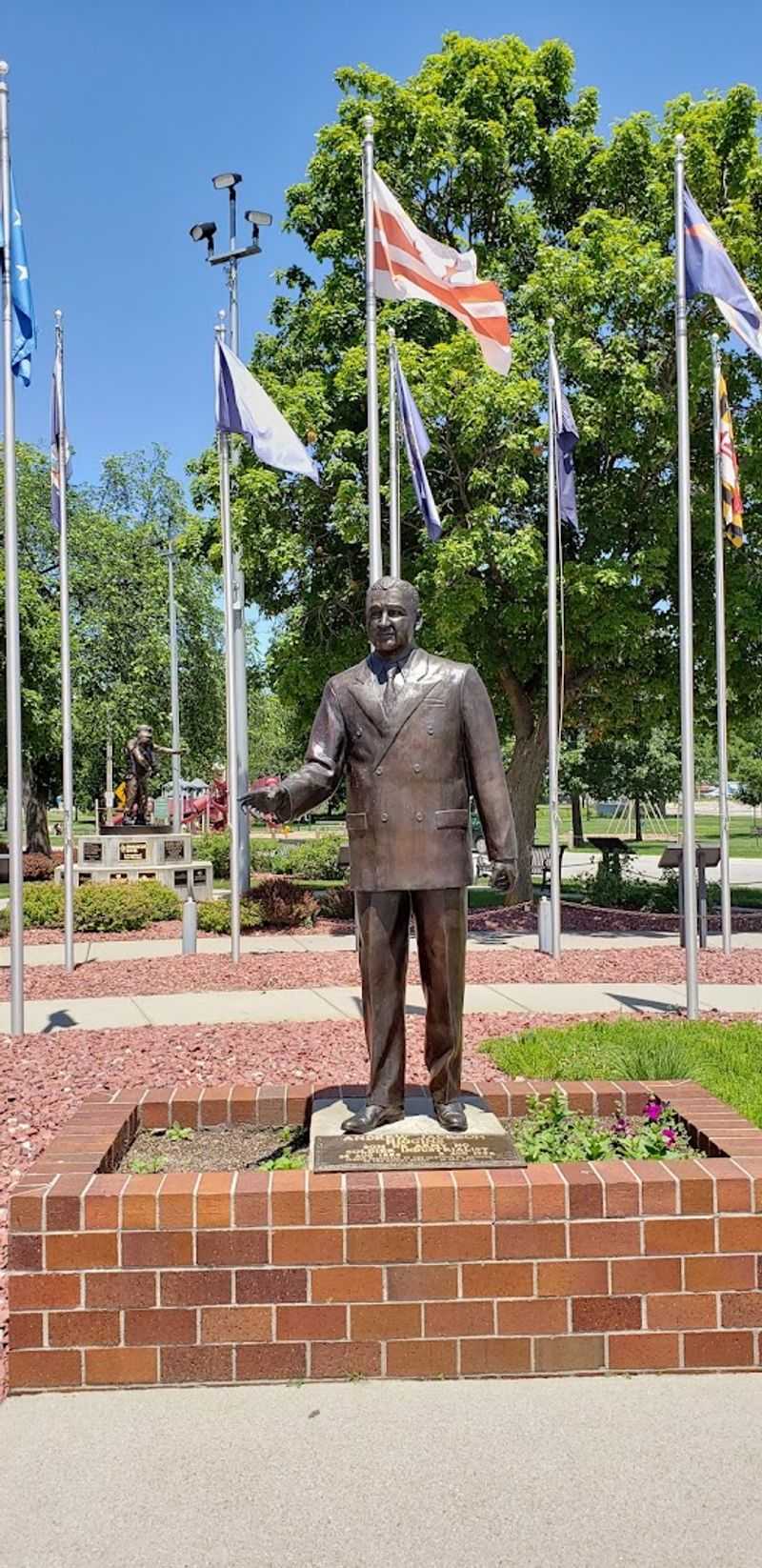
Born in Columbus, Nebraska, on August 28, 1886, Andrew Jackson Higgins grew up far from any ocean, which makes his eventual mastery of boat design all the more fascinating. He moved to Louisiana in 1906 and began building vessels for the lumber and oil industries, learning how to navigate the shallow, unpredictable waters of the Gulf Coast bayous.
His early boat, called the Eureka, was fast, nimble, and could operate in extremely shallow water without getting stuck. Those qualities caught the attention of the U.S. military, which was searching for a reliable way to land troops on open beaches during wartime operations.
Higgins was not just an engineer; he was also a relentless advocate for his own designs, famously challenging Navy bureaucrats who resisted his ideas. His persistence paid off in ways that changed history, and the memorial in his hometown makes sure that story is told with the detail and respect it deserves.
And his workforce practices were just as forward-thinking as his engineering, as you will discover further along.
The Boat That Changed Everything
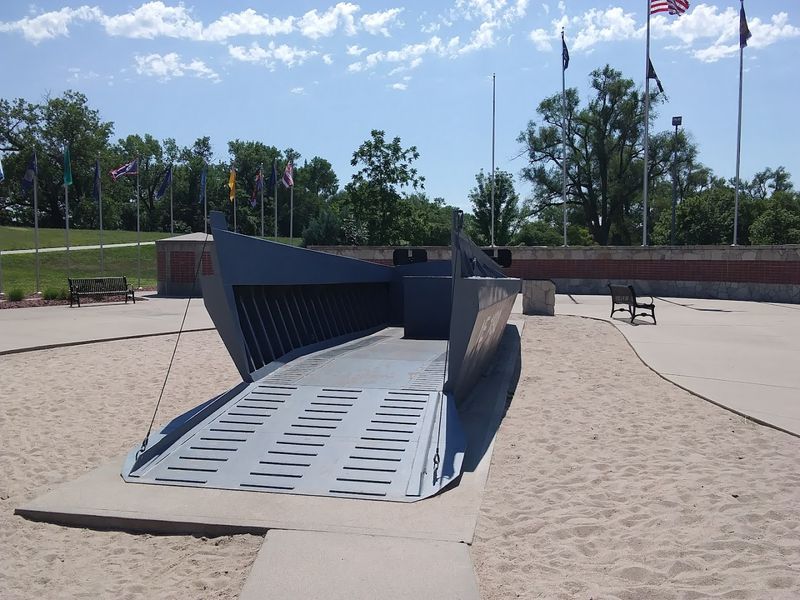
The centerpiece of the entire memorial is a full-size steel replica of the Landing Craft, Vehicle, Personnel, better known as the LCVP or simply the Higgins Boat. It sits in a bed of sand as if it has just reached the shoreline, with its front ramp lowered and life-size bronze soldiers frozen mid-stride as they charge forward.
The design detail on the replica is genuinely impressive. The steel hull captures the utilitarian look of the original craft, and the bronze figures carry rifles and gear that reflect authentic wartime equipment.
Standing next to it, you get a real sense of the scale and the courage it took to ride one of these vessels toward a defended beach.
The LCVP was revolutionary because of that front-loading ramp, which allowed troops and vehicles to exit directly onto the shore without needing a dock or pier. Higgins Industries produced more than 20,000 of these craft during the war, and nine out of ten vessels used by the U.S.
Navy by 1943 were designed by Higgins. The sand surrounding the display holds a secret that makes it even more powerful, and that story is coming up next.
Sand From the Beaches of D-Day
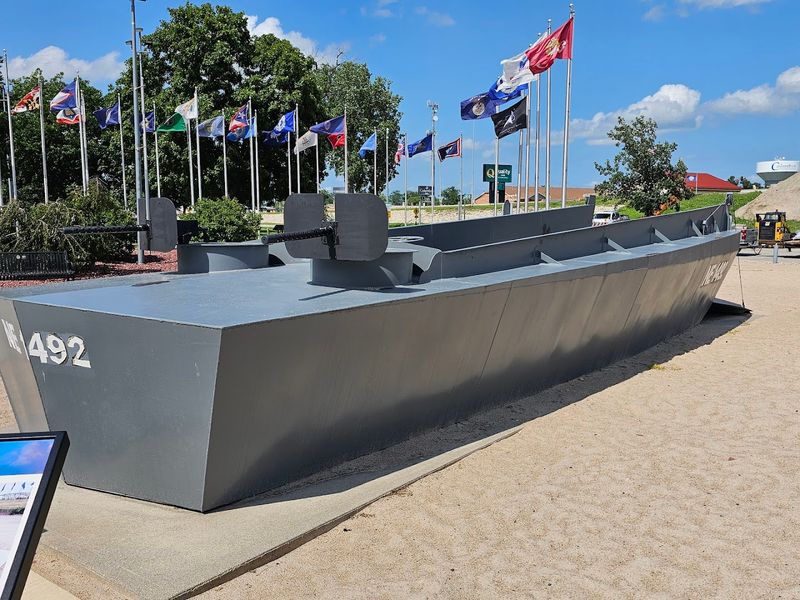
The sand beneath the Higgins Boat replica is not just decorative filler. It contains actual sand samples collected from the D-Day beaches in Normandy, France, where Allied forces landed on June 6, 1944.
That small detail transforms the display from a simple sculpture into something that carries genuine physical connection to those historic events.
The Memorial Walk extends the theme further. Shaped to represent the Earth, it features brass stars embedded in the walkway, each one associated with the landing zones where Higgins Boats delivered soldiers onto French soil.
The curved path invites visitors to walk slowly and read, which is exactly the right pace for absorbing this kind of history.
There is also a direct link to the Utah Beach Museum in Sainte-Marie-du-Mont, France, because the Columbus memorial replicates a similar display found there. That international connection gives the Nebraska site a weight that goes well beyond a typical hometown tribute.
The flags surrounding the memorial add another layer of meaning that is worth a few minutes of your attention on its own.
Flags From All Fifty States and Beyond
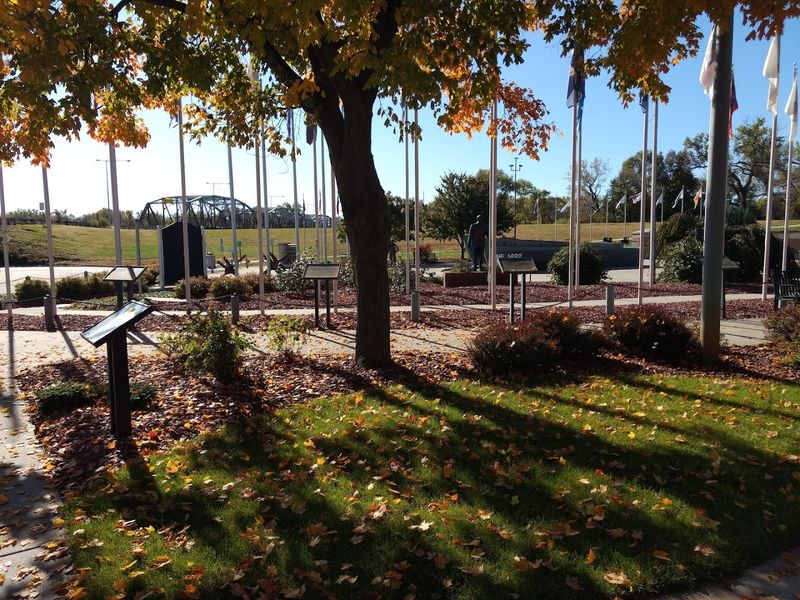
Ringing the memorial grounds is a striking display of flags representing all fifty U.S. states, and the collection does not stop there. Territorial flags are also included, each one accompanied by an information board that explains its history and significance.
It is the kind of detail that rewards curious visitors who take the time to read rather than just glance.
The flag display gives the site a ceremonial quality that feels appropriate for the gravity of what it commemorates. On a breezy day, the flags snap and flutter in a way that adds genuine visual energy to the space, turning a quiet park corner into something that feels alive and purposeful.
History buffs will especially appreciate the territorial flags, since most memorials stick to the standard fifty-state lineup and leave it at that. The decision to go further reflects the same inclusive spirit that Higgins himself demonstrated in his own workforce, a connection that becomes clearer the more time you spend reading the panels.
Speaking of that workforce, it deserves its own spotlight entirely.
A Workforce That Was Ahead of Its Time
While Higgins was revolutionizing amphibious warfare, he was also running one of the most progressive workplaces in 1940s America. His company, Higgins Industries in New Orleans, employed women, African Americans, elderly workers, and people with disabilities at a time when most factories refused to hire them at all.
Even more remarkable, he insisted on equal pay regardless of gender or race. That policy was practically unheard of in the early 1940s, and it put Higgins at direct odds with prevailing social attitudes across much of the country.
His approach was not just morally ahead of its time; it was also practical, because he needed every skilled hand he could find to meet the military’s staggering production demands.
By 1943, Higgins Industries had produced more than 20,000 watercraft and was designing nine out of every ten vessels used by the U.S. Navy.
The memorial in Columbus acknowledges this side of his legacy alongside his engineering achievements, giving visitors a fuller portrait of the man than a simple boat display ever could on its own.
Bronze Soldiers Across Three Wars
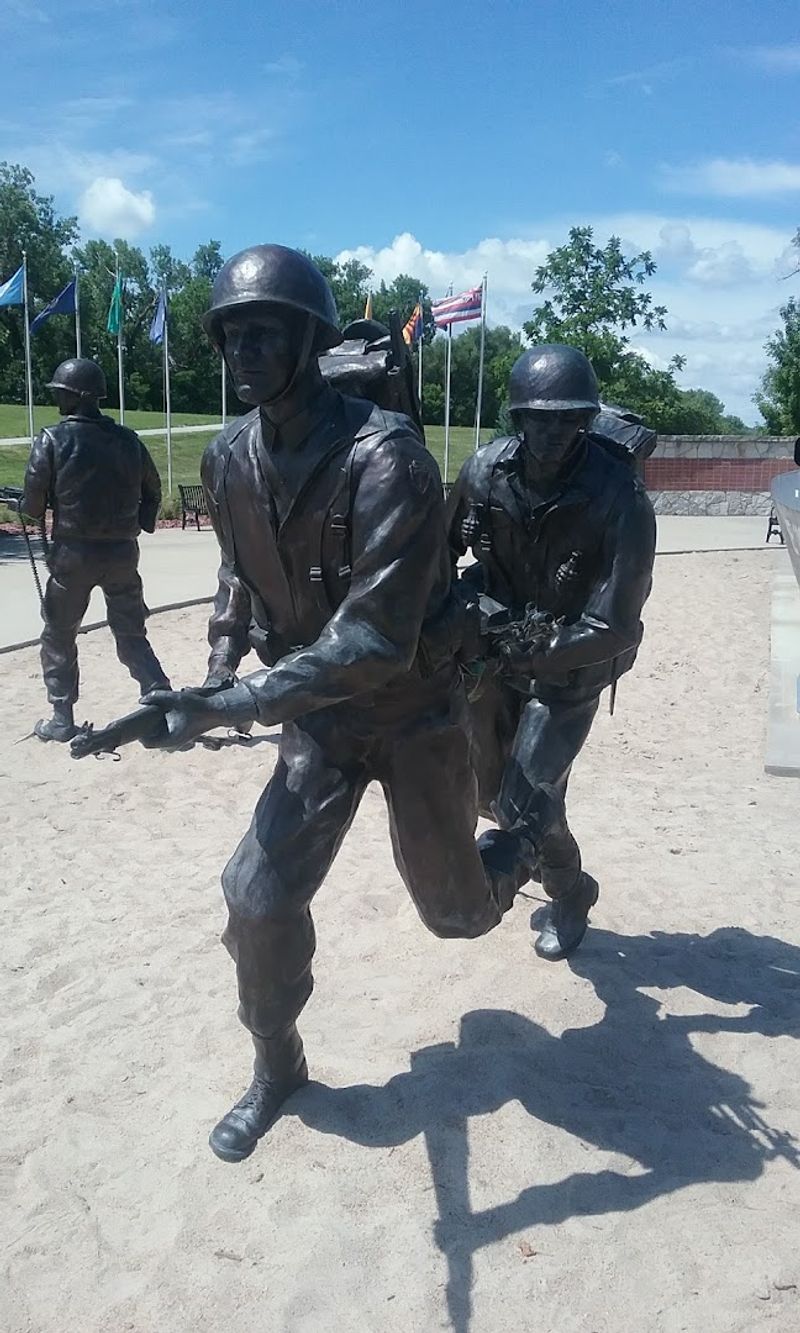
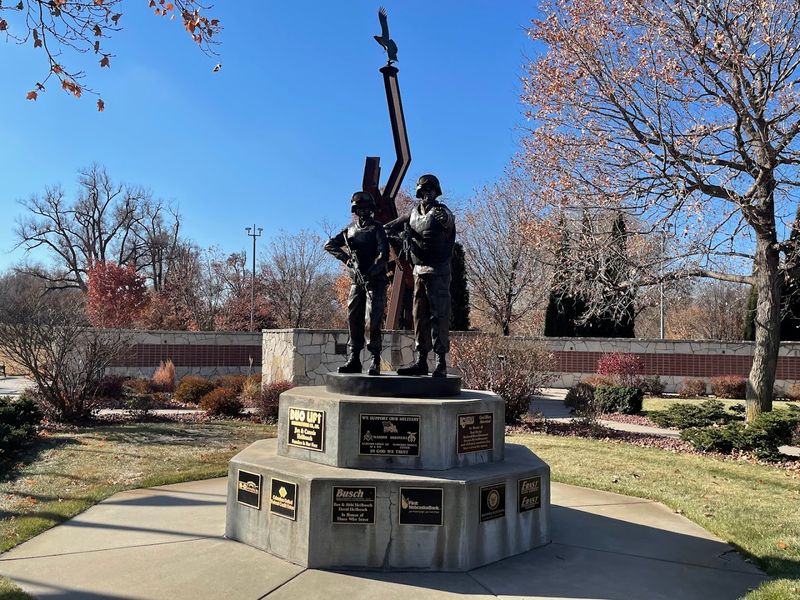
The memorial does not limit its tribute to World War II alone. Bronze sculptures depicting soldiers from the Korean War and the Vietnam War also stand on the grounds, reflecting the fact that Higgins Boats continued to serve U.S. forces well beyond the beaches of Normandy.
The design choice is a smart one, because it prevents the site from feeling frozen in a single historical moment.
Each bronze figure is rendered with careful attention to uniform and equipment details, giving them an authenticity that casual observers and military history fans alike will notice. The figures are life-size, which means standing next to them produces a surprisingly visceral sense of scale and presence.
The sculptures are positioned so that visitors naturally move between them as they walk the grounds, creating an informal tour that covers decades of American military history in a compact outdoor space. The 9/11 tribute element nearby connects that historical arc to the modern era in a way that genuinely catches you off guard the first time you notice it, so keep your eyes open as you round the next corner.
The Veteran Brick Memorial Wall
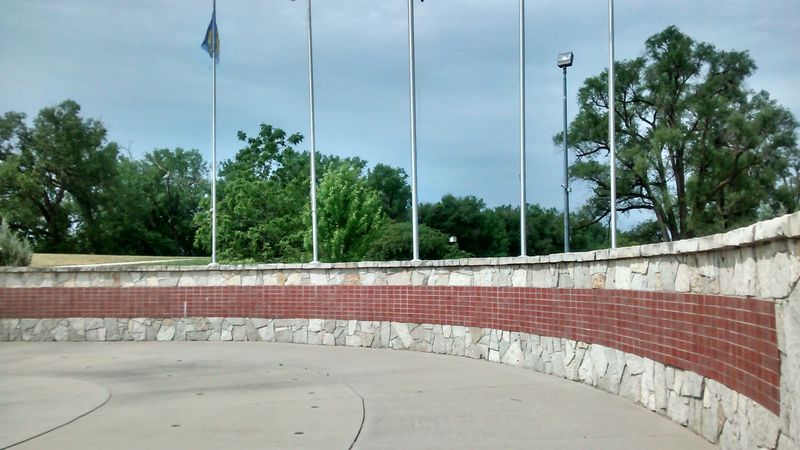
Along the memorial grounds, a brick wall honors local veterans through individually engraved tribute bricks. Each brick carries a name, a branch of service, or other personal details submitted by families and community members who wanted their loved ones remembered in a permanent and public way.
For veterans visiting the site, this wall carries a particular emotional resonance. The names are not famous generals or decorated officers from history books; they are ordinary people from Nebraska communities who served and came home, or did not.
That ordinariness is exactly what makes the wall so affecting.
The brick memorial also reinforces the community-driven character of the entire site. This is not a federally funded monument built by distant officials; it grew out of local pride, school projects, and grassroots fundraising, which gives every engraved name a different kind of meaning than you might find at a larger national site.
The story of how students helped build this memorial is one you will not want to skip over, and it comes up in the next section.
The Student Project That Became a National Memorial
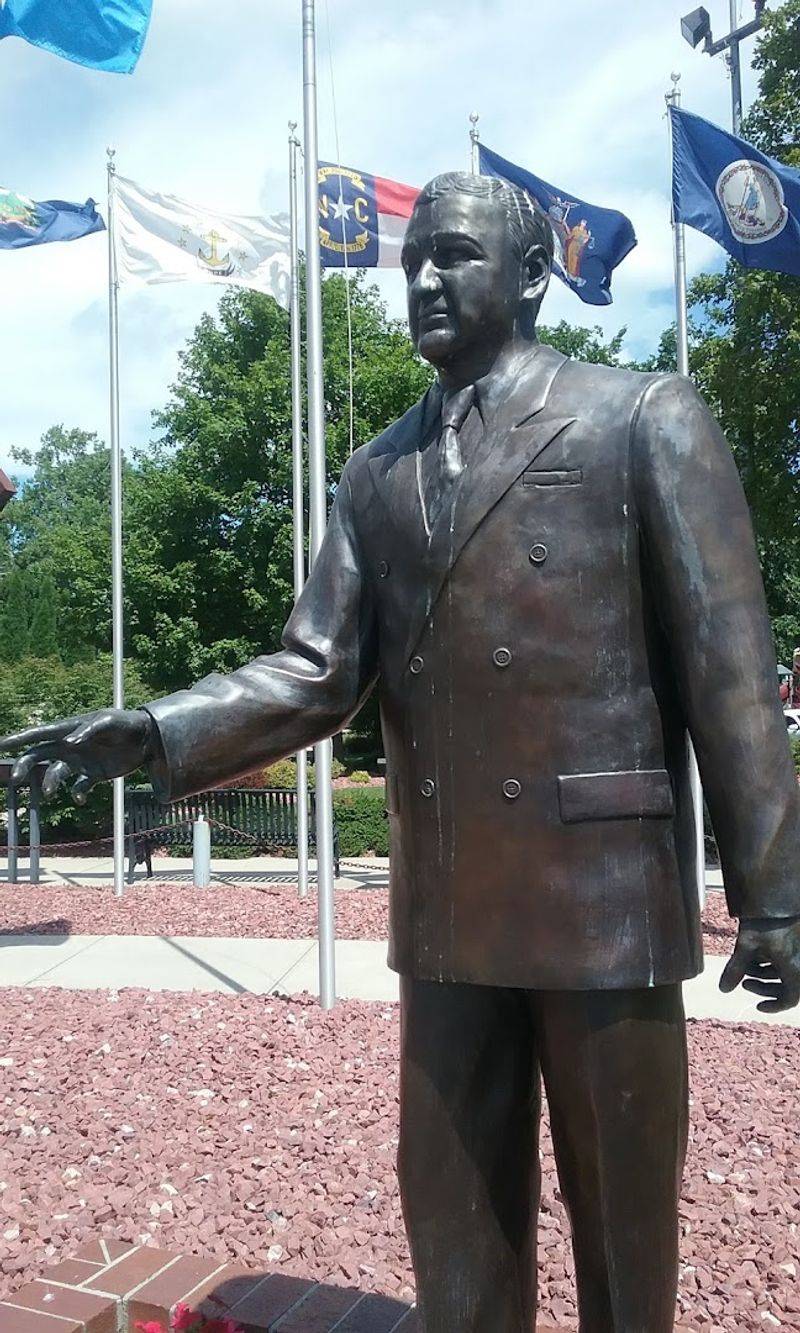
The origin story of this memorial is one of the most charming parts of the whole experience. The idea did not come from a government commission or a wealthy donor; it came from a social studies research project at Columbus High School, where students and their teacher began exploring the legacy of their town’s most overlooked native son.
That classroom project grew into a community campaign, which eventually produced the full memorial dedicated in 2001. The fact that young students sparked the effort adds a genuinely inspiring dimension to the site, and several of those original participants have returned as adults to visit what their work helped create.
The memorial foundation continues to develop the site, and the connection to local education remains part of its identity. Visiting with children or teenagers takes on extra meaning when you explain that kids their age essentially launched the whole project.
It is a powerful reminder that curiosity and a good research question can have consequences far bigger than a grade on a report card, which is a lesson worth carrying well beyond the park gates.
What It Feels Like to Stand Inside the Boat
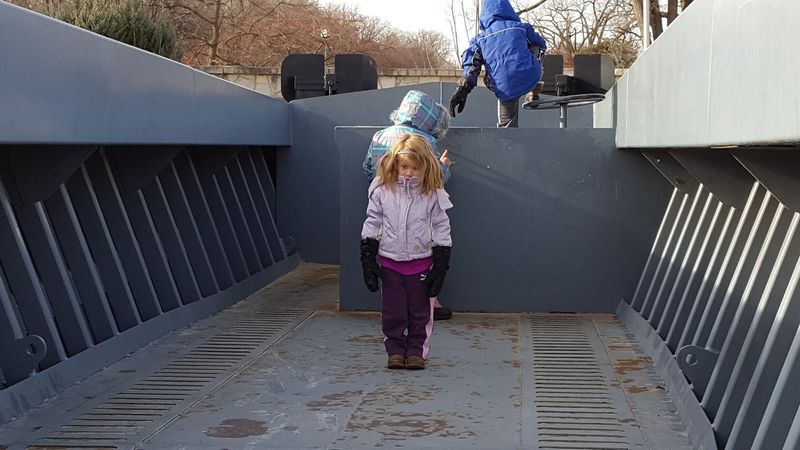
You can actually climb aboard the Higgins Boat replica and sit in the driver’s seat, which immediately turns an outdoor history lesson into something far more interactive. The interior is spare and utilitarian, which is historically accurate; these vessels were built for function, not comfort, and every inch of space was designed around getting soldiers onto a beach as fast as possible.
From inside the boat, looking out through the lowered ramp at the bronze soldiers frozen in their forward charge, the scene clicks into place in a way that reading about it never quite achieves. The narrow hull and the low sides give you a real sense of how exposed the men riding these craft actually were.
Families with kids find this feature especially engaging, because children can physically interact with history rather than just read about it from behind a velvet rope. The open-access design of the memorial reflects a broader philosophy of making history approachable, and it is one of the reasons this small Nebraska park earns such consistently enthusiastic feedback from visitors of all ages.
Planning Your Visit to the Memorial
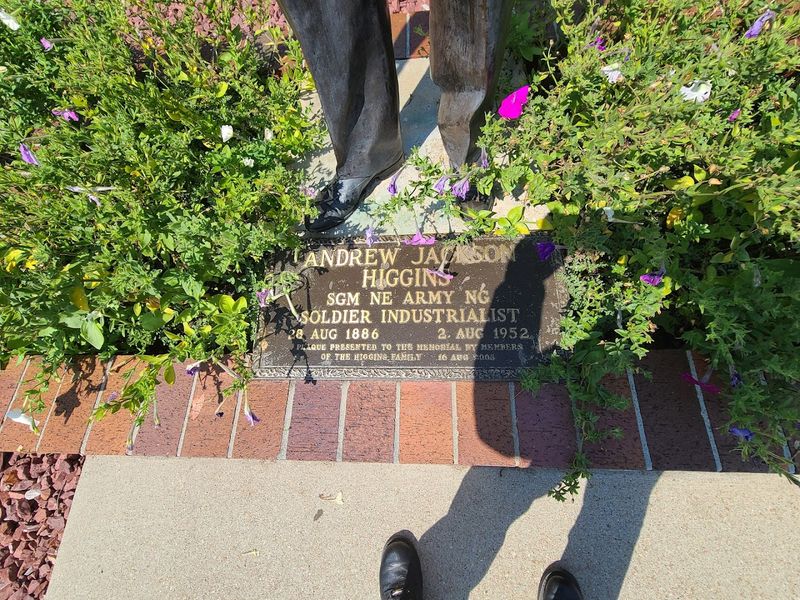
The memorial is open most days from 8 AM to 10 PM, which gives visitors a generous window that works for both morning history walks and early evening strolls. The phone number for the memorial foundation is 402-639-1720, and the official website at andrewjacksonhigginsmemorialfoundation.org has additional information about the site and its ongoing development.
Admission is free, and the outdoor format means there is no strict schedule to follow. You can spend thirty minutes or two hours depending on how deeply you want to engage with the plaques, sculptures, and informational boards scattered throughout the grounds.
Bringing a water bottle and comfortable shoes is genuinely useful advice, because the walkways cover more ground than the site looks like it does from the entrance.
The surrounding Pawnee Park adds real value to the visit, with shaded picnic areas, walking trails along the Loup River, and a playground that keeps younger visitors happy while adults finish reading the historical panels. Columbus itself is easily accessible from Interstate 81, making the memorial a natural and rewarding stop for anyone crossing central Nebraska.
Share this story