Some places are more than just buildings — they are where history happens. The FIFA World Cup has gifted the world with breathtaking moments, and the stadiums that hosted them have become legendary in their own right.
From South America to Europe to the Middle East, these arenas witnessed goals, tears, celebrations, and heartbreaks that fans will never forget. Get ready to tour ten of the most iconic football venues on the planet.
Estadio Azteca — Mexico City, Mexico
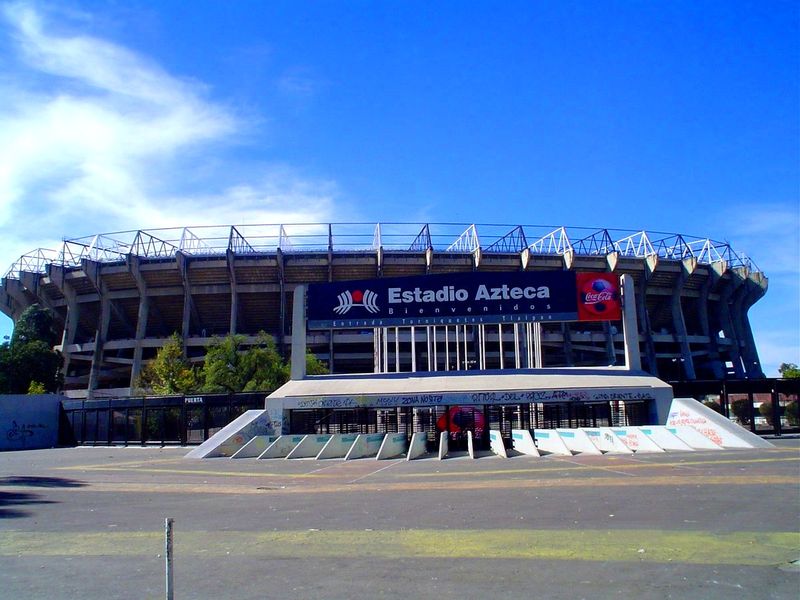
Estadio Azteca does not just hold World Cup memories — it practically invented them. Opened in 1966, this colossal venue in Mexico City has welcomed more World Cup matches than any other stadium on Earth.
The numbers alone are staggering: capacity over 87,000, two World Cup finals hosted, and a supporting role in some of the most talked-about moments in football history.
In 1970, Pelé lifted his third World Cup trophy here, cementing his place as the greatest player of his era. But 1986 brought something even wilder.
Diego Maradona scored two goals against England in the quarterfinals that were so different from each other, they almost belonged to separate sports. One was cheeky and controversial, punched in with his hand.
The other was a 60-meter solo run that left five defenders looking completely lost.
Mexican fans, known for their electric atmosphere and thunderous chants, have made Azteca feel like a place where the impossible becomes routine. Walking into this stadium feels like stepping into a living museum.
No other venue on the planet carries this much World Cup weight, and football fans worldwide agree it deserves the top spot on any list like this.
Maracanã Stadium — Rio de Janeiro, Brazil
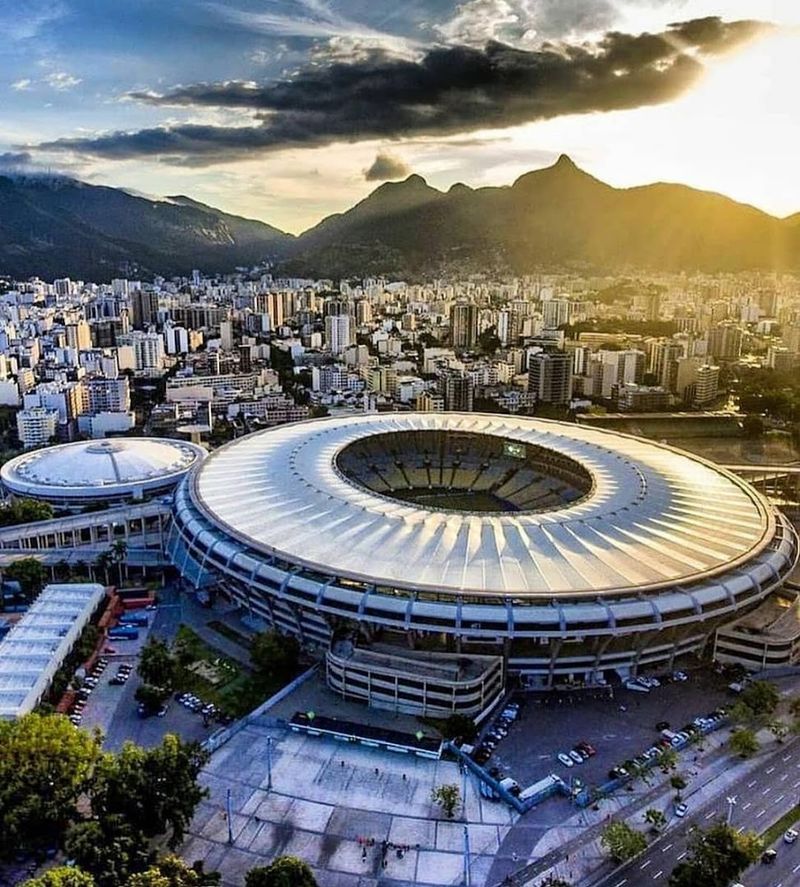
Imagine nearly 200,000 people packed into one stadium, all expecting their team to win — and then watching them lose. That was the gut-wrenching scene at the Maracanã in 1950, when Uruguay pulled off one of football’s greatest upsets against Brazil in the deciding match of the World Cup.
The silence that fell over Rio de Janeiro that day became known simply as the Maracanazo.
Brazil built the Maracanã specifically for the 1950 World Cup, and it quickly became the heartbeat of South American football. For decades, it held the record as the largest football stadium ever constructed.
Its circular design and roaring atmosphere made it a cathedral for the sport. Players who performed there often described the noise as something physically overwhelming.
The stadium got a second World Cup chapter in 2014, hosting the final between Germany and Argentina. Germany won 1-0, adding a bittersweet new memory to a venue already overflowing with emotion.
Renovated for the modern era but still carrying its old soul, the Maracanã remains one of the most visited football destinations in the world. Any fan who makes the trip to Rio puts this stadium at the very top of their list.
Wembley Stadium — London, England
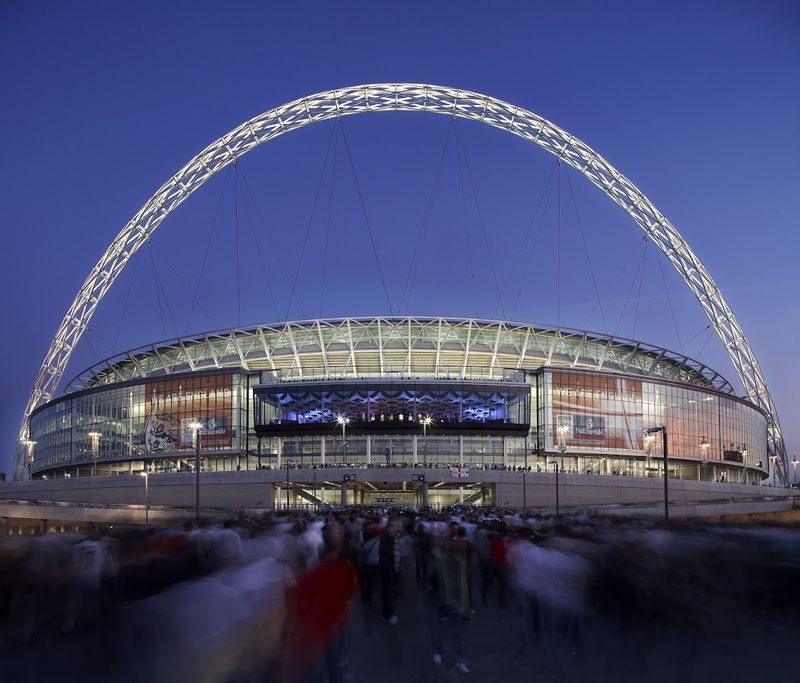
Ask any English football fan about July 30, 1966, and watch their face light up immediately. That was the day England beat West Germany 4-2 at Wembley Stadium to claim their one and only World Cup title.
Geoff Hurst scored three goals that afternoon, becoming the only player ever to score a hat trick in a World Cup final. One of those goals sparked a debate that has genuinely never ended.
Hurst’s second goal bounced off the crossbar and hit the ground. The referee ruled it had crossed the line.
Germany disagreed then, and honestly, Germans still disagree now. That single moment turned a football match into a philosophical argument about physics, fairness, and national pride.
Not bad for one afternoon’s work.
The original Wembley, with its famous twin towers, was demolished in 2003 and replaced by a spectacular new stadium topped with a signature arch. The new venue has hosted Champions League finals and major international matches, continuing a tradition of big-game football.
But nothing in Wembley’s long history quite matches the roar of that 1966 crowd as England lifted the Jules Rimet Trophy for the first and only time. Every seat in that old stadium holds a piece of that story.
Rose Bowl — Pasadena, California
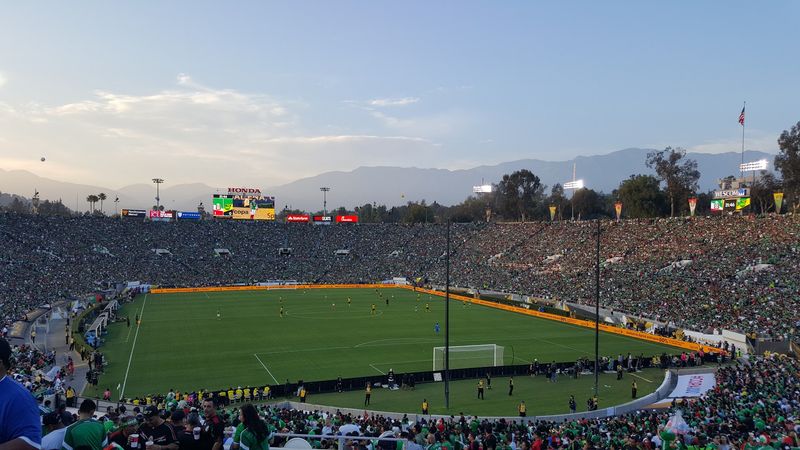
Football coming to America in 1994 felt like a bold experiment, and the Rose Bowl in Pasadena made sure it looked like a roaring success. Nestled against the San Gabriel Mountains, this gorgeous stadium hosted nine matches during the 1994 World Cup, including the final between Brazil and Italy.
The setting was cinematic. The match itself, however, was a different story.
After 120 goalless minutes — yes, zero goals in a World Cup final — the match went to a penalty shootout for the very first time in World Cup history. The tension was almost unbearable.
Brazil converted their kicks coolly. Italy’s Roberto Baggio, one of the best players in the world at the time, stepped up last and sent his penalty sailing over the bar.
His head dropped instantly, and that image became one of the most iconic photographs in sports history.
Brazil won their fourth World Cup title, but the enduring memory belongs to Baggio’s miss and the crowd of over 94,000 holding their breath. The Rose Bowl had already hosted Super Bowls and Olympic events, but that summer afternoon in 1994 gave it a football story worth telling forever.
Pasadena was never quite the same after the World Cup came to town.
Soccer City (FNB Stadium) — Johannesburg, South Africa
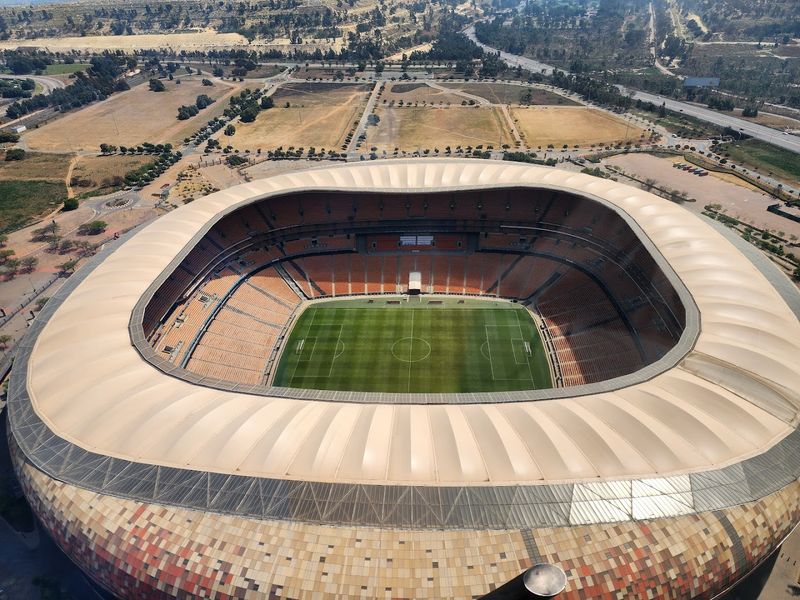
Shaped like a traditional African calabash gourd, FNB Stadium in Johannesburg does not just look different from every other stadium in the world — it tells a story before you even walk inside. When South Africa hosted the 2010 World Cup, it became the first African nation to do so, and Soccer City was the crown jewel of that historic tournament.
The whole continent was watching.
The vuvuzelas were deafening. That distinctive buzzing sound became the unofficial soundtrack of the entire 2010 tournament, and it was loudest right here at Soccer City.
Some fans loved it. Some broadcasters absolutely did not.
Either way, it became a defining symbol of South Africa’s passionate football culture and the joy the country felt hosting the world’s biggest sporting event.
Spain faced the Netherlands in the final, and after a tense, physical match that went to extra time, Andres Iniesta drove a low shot into the net in the 116th minute. Spain had never won a World Cup before that moment.
The stadium erupted in a way that felt almost spiritual. Soccer City had given football its first African World Cup final, its first Spanish champion, and a night that everyone present will carry with them for the rest of their lives.
Stade de France — Saint-Denis, France
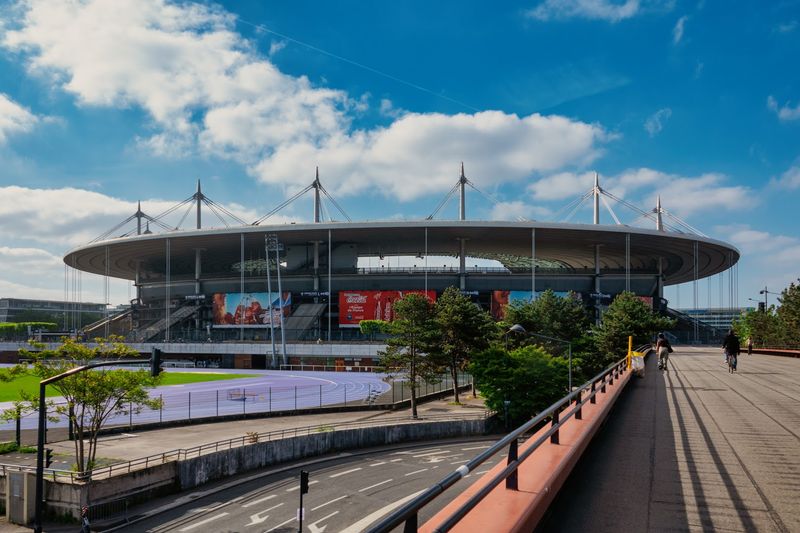
Built in just 26 months and opened in 1998, Stade de France had barely broken in its seats before it hosted the most important night in French football history. France versus Brazil.
World Cup final. Home soil.
The pressure was almost impossible to describe, yet France handled it with a performance that left the entire country speechless with joy.
Zinedine Zidane, France’s Algerian-born midfield maestro, headed in two goals before halftime. Emmanuel Petit added a third late on.
Brazil, led by a strangely subdued Ronaldo who had reportedly suffered a seizure the day before the match, never really showed up. France won 3-0, and the Eiffel Tower lit up in celebration while millions of fans poured into the streets of Paris.
Zidane became a national hero overnight. His bald head and those two powerful headers became symbols of a multicultural France unified by sport.
The Stade de France, with its capacity of around 81,000 and its striking elliptical roof, became a monument to that magical summer. It still hosts major rugby and football matches today, but nothing has quite matched the electricity of that July night in 1998 when France told the whole world it had arrived.
Lusail Stadium — Lusail, Qatar
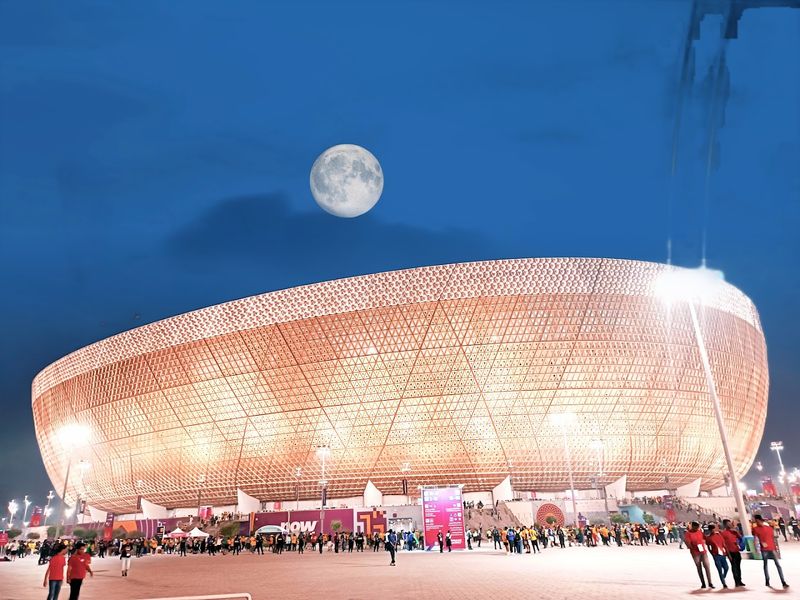
The 2022 World Cup final was not just a football match. It was 90 minutes of total madness followed by extra time that somehow got even crazier, all played inside the breathtaking Lusail Stadium north of Doha.
Argentina and France served up a game so packed with drama, so full of swings and reversals, that even seasoned football journalists ran out of superlatives before the final whistle.
Argentina led 2-0 with ten minutes left. France then scored twice in 97 seconds to level it at 2-2.
Extra time brought more goals. A penalty shootout finally separated the teams.
Lionel Messi, playing in what was almost certainly his last World Cup, finally got his hands on the one trophy that had always eluded him. The sight of Messi lifting the golden trophy under the Qatar night sky became one of sport’s most shared images ever.
Kylian Mbappe scored a hat trick in a losing effort, which almost never happens in a World Cup final. Lusail Stadium, designed to echo the patterns of traditional Islamic lanterns, gave this extraordinary match a setting worthy of its drama.
Built to hold 89,000 fans, it delivered the most-watched final in World Cup history. Qatar’s gamble on hosting football’s biggest event produced an unforgettable night.
Estadio Centenario — Montevideo, Uruguay
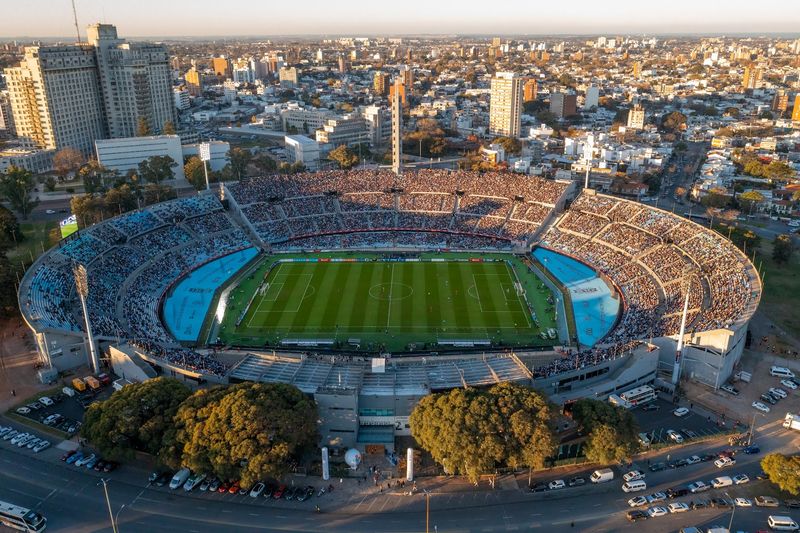
Every story has a beginning, and for the World Cup, that beginning happened at Estadio Centenario in Montevideo, Uruguay, on July 30, 1930. This was the very first World Cup final ever played, and Uruguay, as hosts and defending Olympic champions, faced neighboring rivals Argentina in front of a passionate crowd of nearly 93,000 people.
The tension between the two nations was already legendary before a ball was kicked.
Uruguay fell behind 2-1 at halftime and then turned the match completely around, scoring three second-half goals to win 4-2. The country erupted.
The government declared a national holiday the following day. Argentina, just across the Rio de la Plata river, went into a quiet national mourning.
The rivalry between these two countries has never fully cooled down since.
The stadium was built specifically for the tournament in just eight months, which was an extraordinary construction feat for its time. Its distinctive tower, called the Torre de los Homenajes, still stands today as a tribute to football’s founding moment.
Estadio Centenario is now a FIFA World Heritage Site, recognized as the birthplace of World Cup football. Visiting it feels less like attending a sporting event and more like standing at the very origin point of something enormous.
Olympiastadion — Berlin, Germany
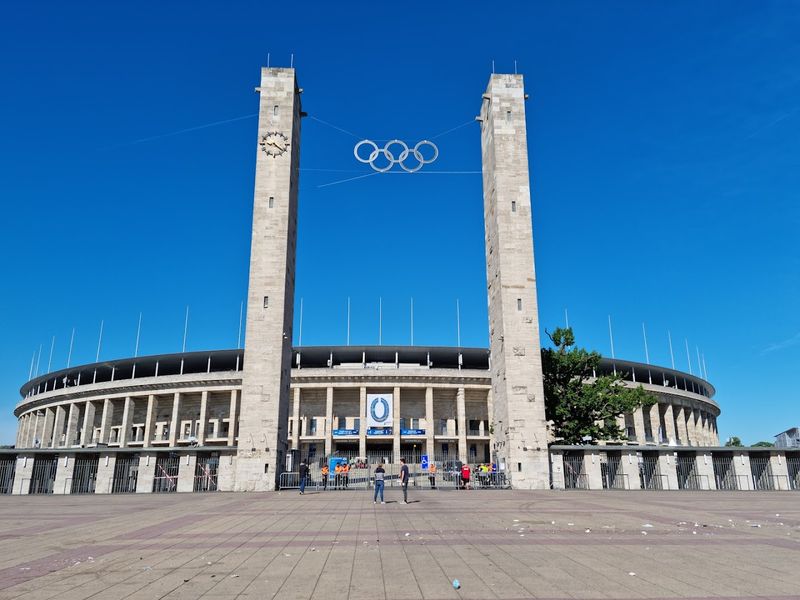
Originally built for the 1936 Berlin Olympics, the Olympiastadion carries more history than most buildings in Europe could ever claim. By the time the 2006 World Cup final arrived, the stadium had been modernized with a sweeping roof canopy, but its grand stone architecture still whispered of a very different era.
Germany’s hosting of the tournament was nicknamed the Summer Fairy Tale, and Berlin delivered the most dramatic final chapter imaginable.
Italy faced France in what should have been a tight tactical contest. For long stretches, it was.
Then Zinedine Zidane, in the final game of his entire career, did something nobody expected. After a verbal exchange with Italian defender Marco Materazzi, Zidane turned around and headbutted him square in the chest.
Red card. Zidane walked off.
The stadium fell into stunned silence before erupting into noise again.
Italy won on penalties, claiming their fourth World Cup title. But the enduring image from Berlin that night was Zidane walking past the World Cup trophy on his way to the locker room, never looking at it.
A brilliant career ended in the strangest, most controversial way possible. The Olympiastadion gave football one of its most discussed and debated final-night moments, and Berlin has never forgotten it.
Luzhniki Stadium — Moscow, Russia
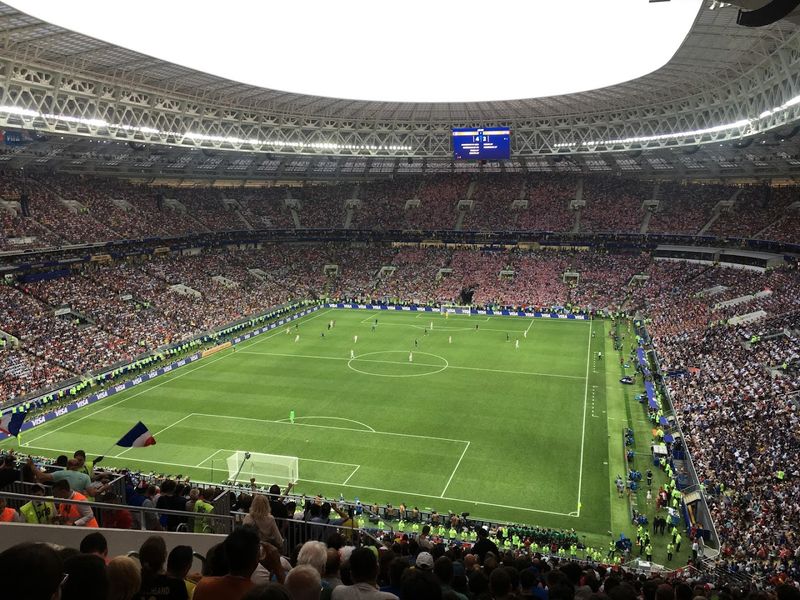
Russia hosting the World Cup in 2018 raised plenty of eyebrows, but Luzhniki Stadium in Moscow made sure the football itself silenced most of the critics. The 2018 final between France and Croatia turned into one of the most entertaining championship matches in decades, featuring six goals, an own goal, a penalty, and a goalkeeping howler that Croatia fans are still trying to forget.
France took a 4-2 lead and held on comfortably, giving Les Bleus their second World Cup title exactly 20 years after their 1998 triumph. Kylian Mbappe, just 19 years old at the time, scored to become only the second teenager ever to score in a World Cup final, after Pelé in 1958.
France’s blend of youthful energy and tactical discipline was something special to watch.
Luzhniki, Russia’s largest stadium with a capacity of 81,000, had originally been built in 1956 during the Soviet era and was completely rebuilt for the tournament. Its location along the Moscow River gives it a dramatic setting, especially when illuminated at night.
The 2018 final drew a global television audience in the hundreds of millions, making Luzhniki one of the most-watched sporting venues in recent memory. Moscow delivered a final worthy of football’s grandest stage.
Share this story