 Unearth The Voyage
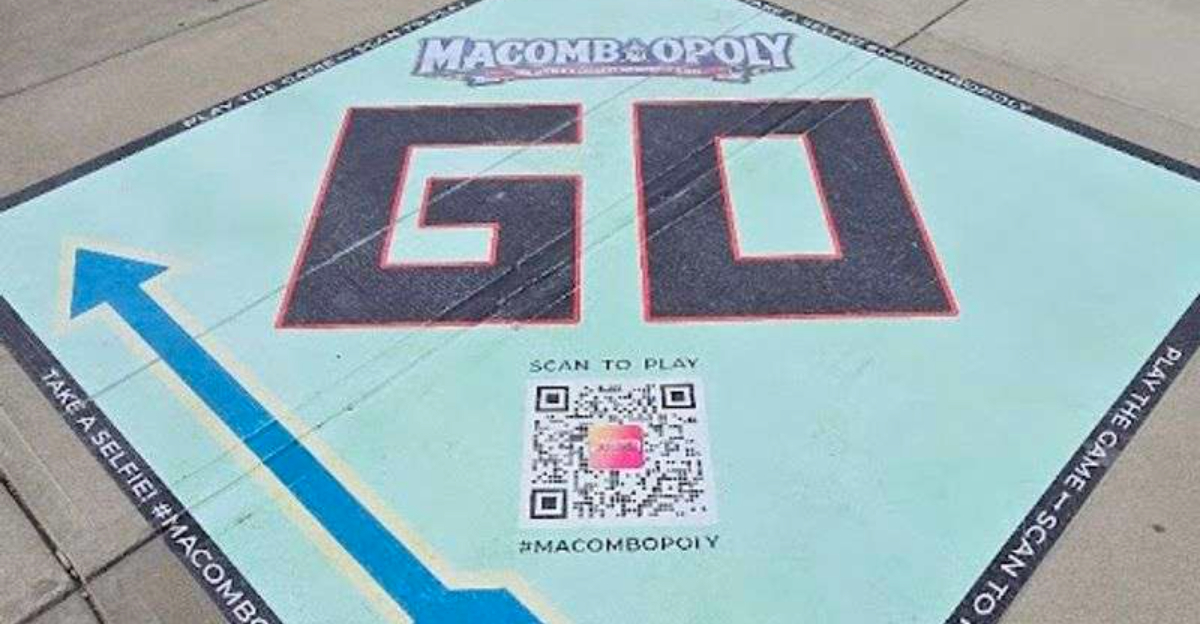
Most people have played Monopoly at least once, but very few know the game’s real origin story. A small city in western Illinois holds a secret that changes everything you thought you knew about that iconic board.
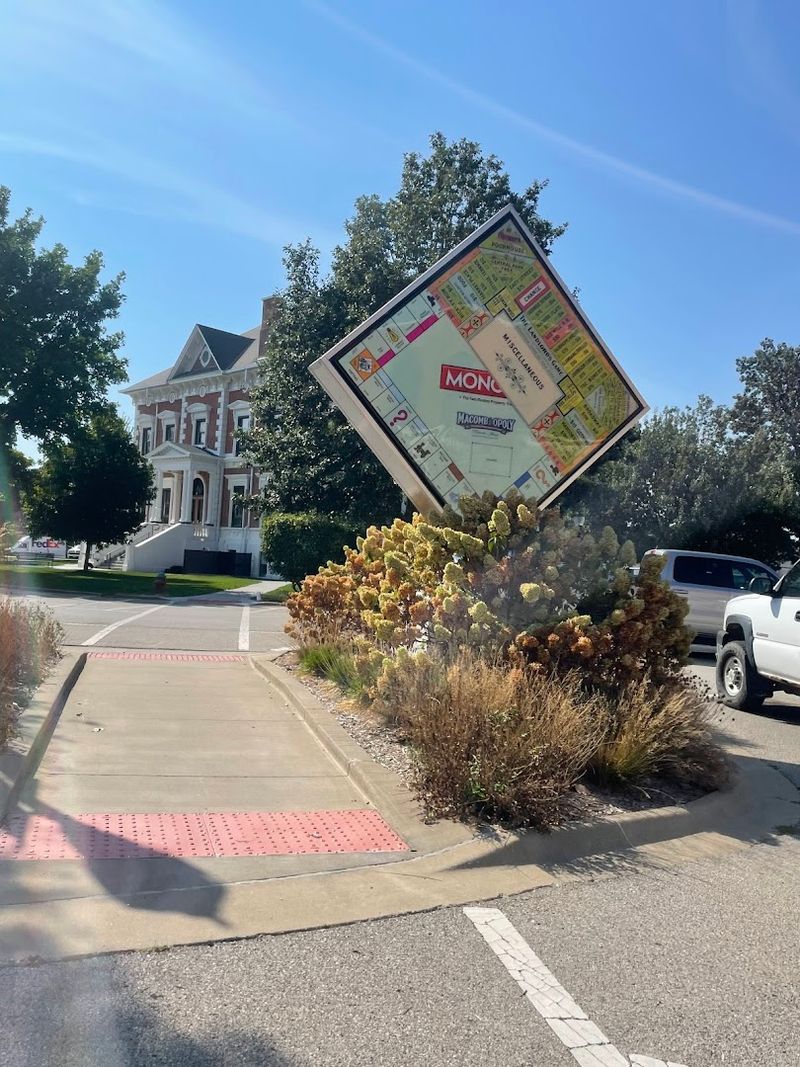
The town of Macomb is home to Macombopoly, a one-of-a-kind outdoor attraction built right on the historic courthouse square, and it celebrates the woman who actually invented the game long before anyone else got the credit. This is a road trip stop that blends local history, interactive fun, and a little bit of justice for a forgotten genius, all in one surprisingly entertaining outdoor experience.
The Address and Setting of Macombopoly
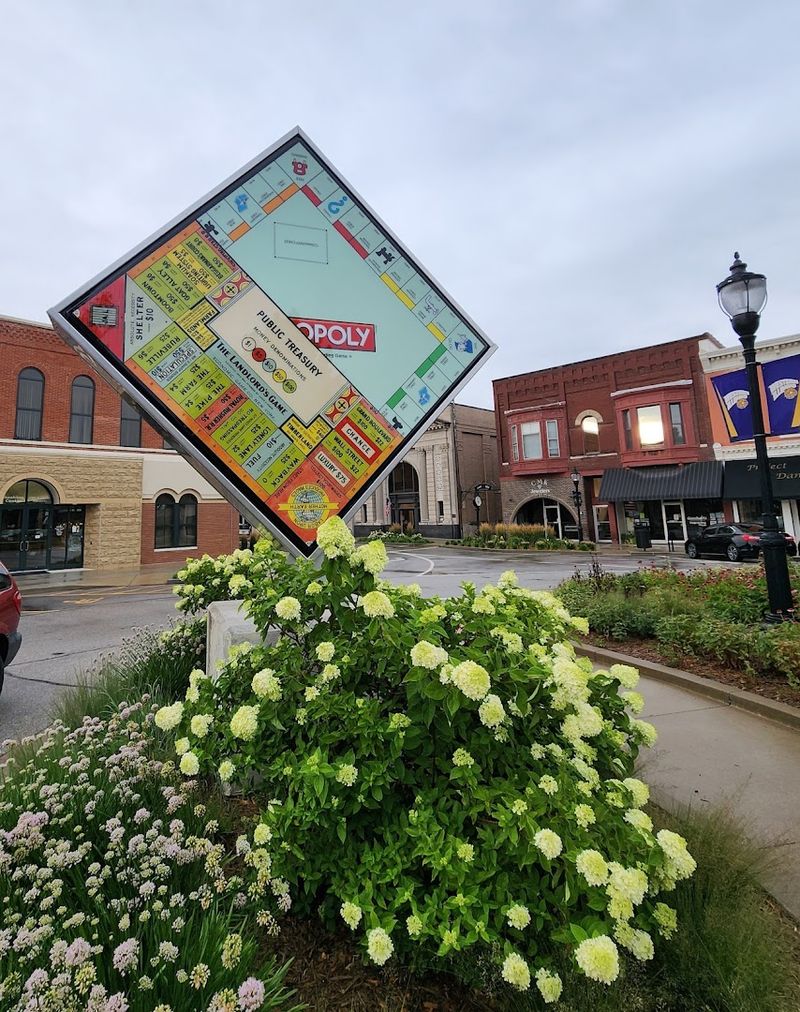
Right at the heart of Macomb, Illinois, sits one of the most unexpected and genuinely fun outdoor attractions in the entire Midwest. Macombopoly is set on the Historic Courthouse Square at 120 E Calhoun St, Macomb, IL 61455, and the location alone gives the whole experience a storybook kind of charm.
The courthouse square is the kind of classic small-town centerpiece that feels frozen in a good way. Red brick buildings line the perimeter, and the old McDonough County Courthouse anchors the whole scene with real architectural weight.
The Monopoly game pieces and elements are spread across all four corners of the square, so visiting actually means taking a pleasant walk around the block.
The attraction is free to visit, which makes it an easy and budget-friendly stop whether you are passing through on a road trip or making a specific detour. Macomb sits right off major highway routes in western Illinois, roughly halfway between the Quad Cities and Springfield, making it a natural midpoint for travelers.
The square also has nearby restaurants and cafes, so you can easily turn a quick stop into a full afternoon outing.
The True Origin Story of Monopoly
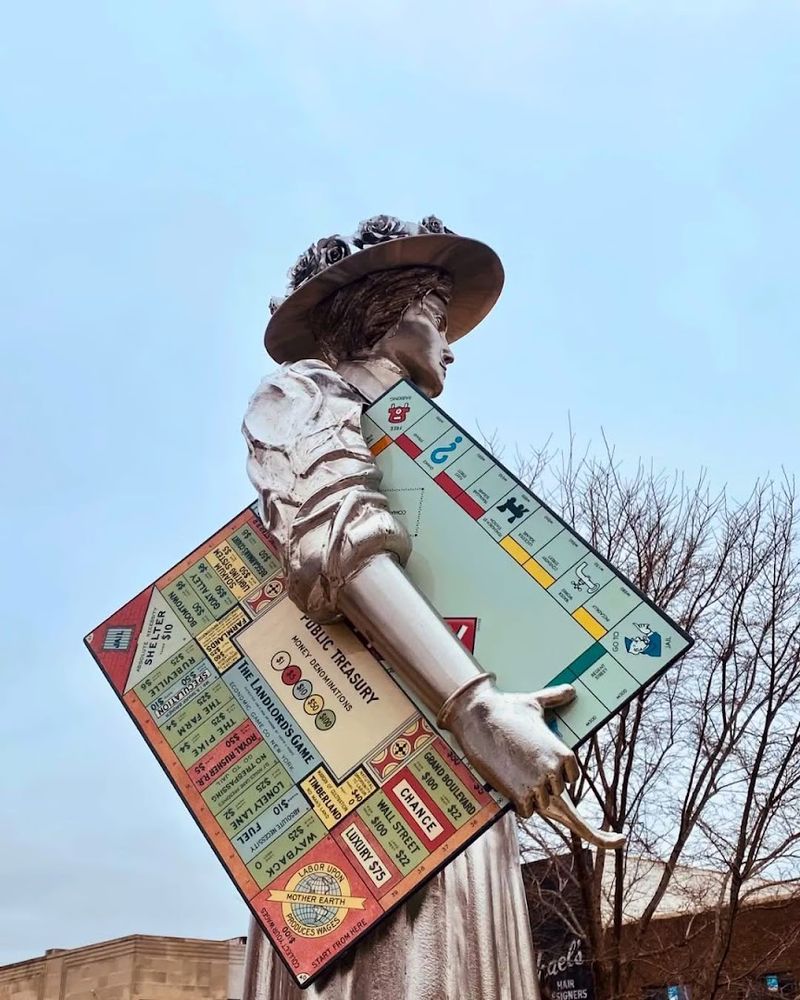
Before Charles Darrow ever claimed credit for Monopoly, a woman named Elizabeth “Lizzie” Magie Phillips was already playing a version of it in her living room. Magie, a resident of Macomb, Illinois, designed The Landlord’s Game in 1903 and received a patent for it in 1904, making her the true inventor of the concept behind the world’s best-selling board game.
Her goal was never to get rich. Magie created the game as a teaching tool to explain the economic theories of Henry George, who believed that governments should be funded entirely through real estate taxation.
The game was meant to show players how landlords grow wealthy while renters struggle, a sharp and pointed message wrapped inside a fun activity.
Decades later, Charles Darrow adapted the game, renamed the properties, and sold it to Parker Brothers in 1935 while claiming he invented it himself. That deal made him a millionaire.
Magie never earned a cent from Monopoly. Macombopoly exists partly to correct that historical oversight and give Lizzie Magie the recognition she always deserved, right in the town where her brilliant idea first took shape.
What Makes This the World’s Largest Monopoly Game
Macombopoly holds the title of the world’s largest Monopoly-styled board of its kind, and that claim is not just marketing fluff. The game is laid out across the actual city blocks surrounding the Historic Courthouse Square, turning the streets and sidewalks of downtown Macomb into a life-size playing surface.
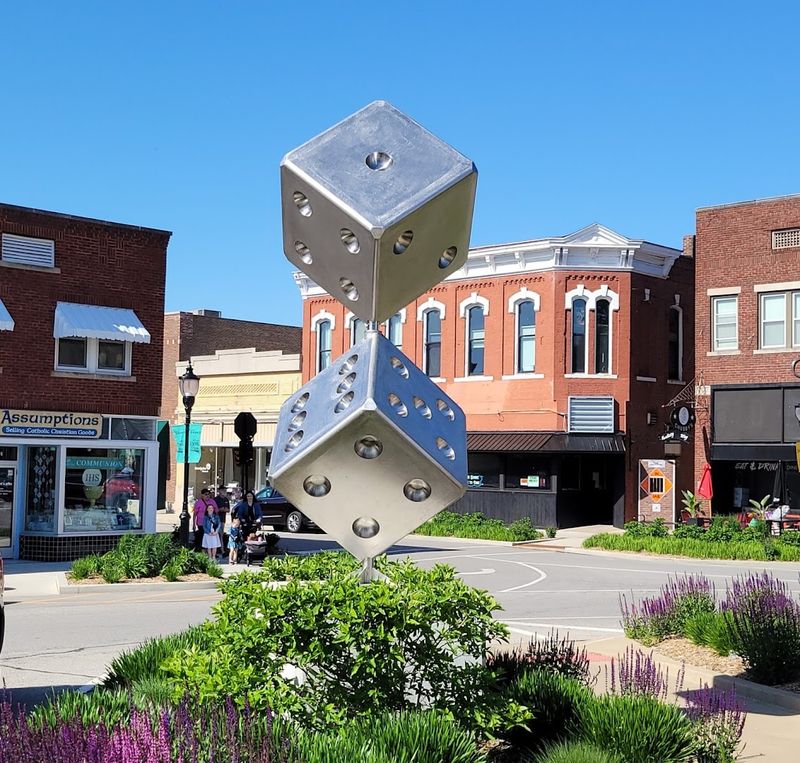
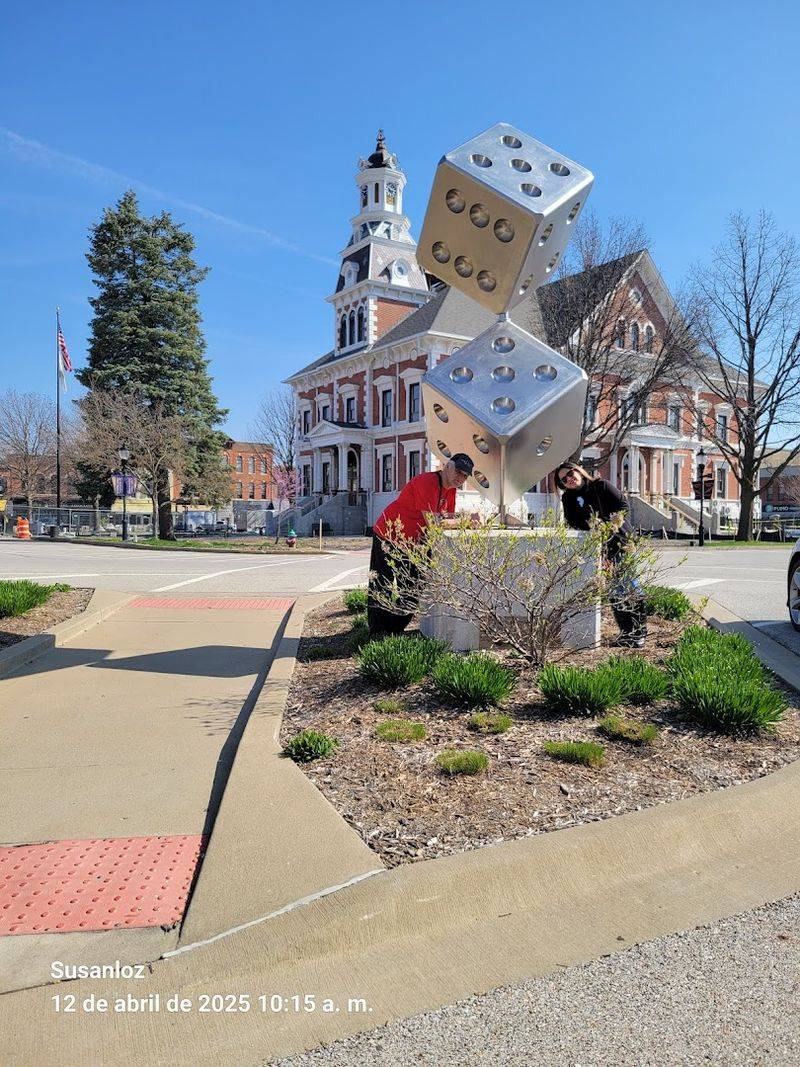
The oversized game pieces are placed at real locations around the square, and each one connects to an actual spot in town. The dice are a particular crowd favorite because they are built to spin when you try to move them, which adds a tactile and playful element that photos simply cannot capture.
The scale of everything feels genuinely impressive when you are standing next to it.
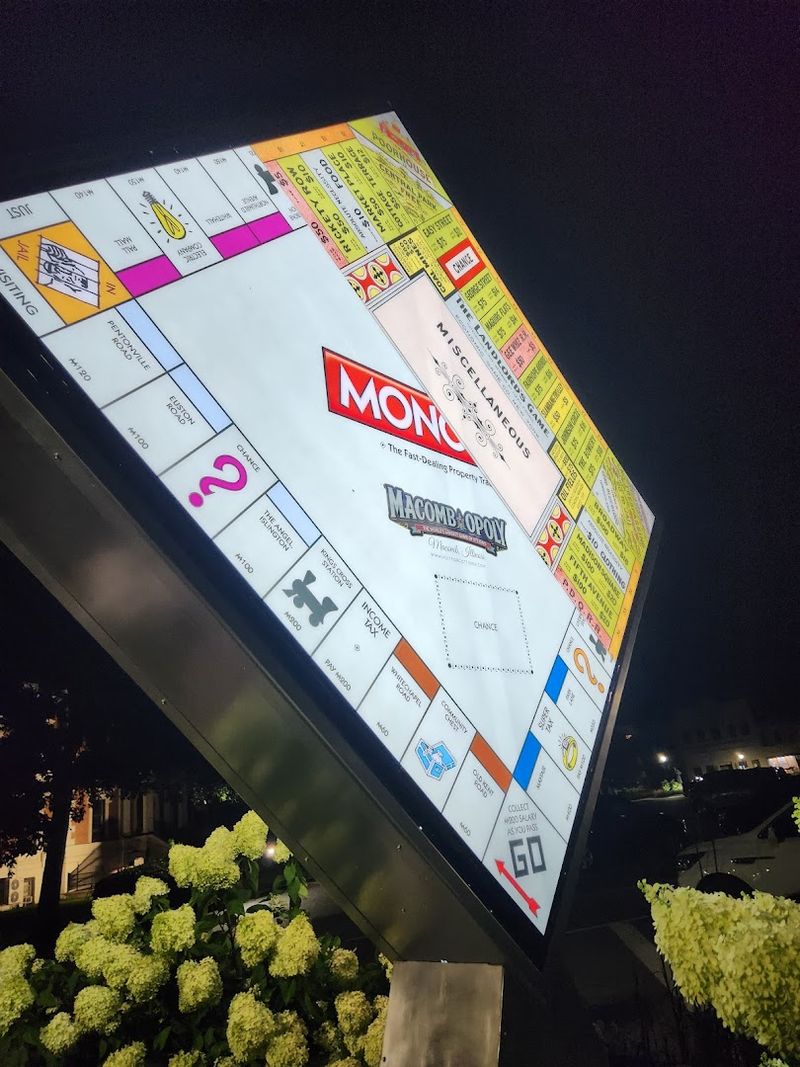
What really separates this from other novelty attractions is the way it blends gameplay with local history. The property spaces are not Atlantic City street names.
They reflect real places and facts about Macomb itself, giving the game a layer of local identity that makes it feel personal rather than generic. The whole layout rewards curious walkers who take the time to read each piece and connect the dots between the game and the town’s real story.
How to Play Macombopoly
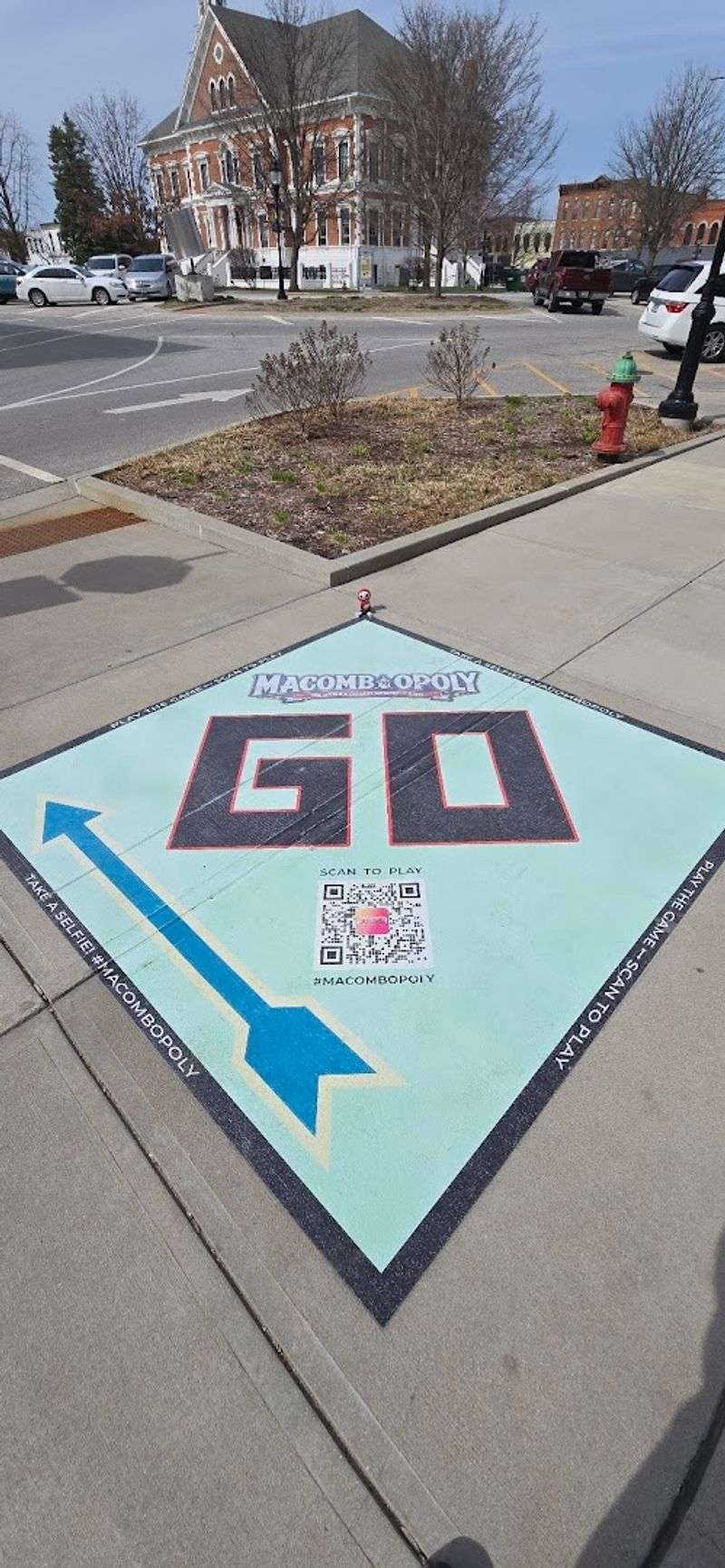
Playing Macombopoly is a little different from sitting down at a kitchen table with the classic box set. The game is designed for the outdoors, and you will need a smartphone to fully participate, since the interactive elements are accessed through your phone as you move from space to space around the square.
The setup is straightforward. You start at the designated point on the square, roll the physical oversized dice, and then move the corresponding number of spaces along the sidewalk.
Each space has a marker or piece that corresponds to a game element, and your phone helps you track the game, read property details, and engage with the local history woven into each stop.
The whole experience takes a couple of hours if you play a full game, though plenty of visitors also enjoy a more casual stroll just to see the pieces and read the historical information. Families with kids tend to get especially excited about the giant dice and the life-size tokens.
There is no fee to play, no reservation needed, and no time limit, so the pace is entirely up to you. It is the kind of activity that feels low-pressure but ends up being surprisingly absorbing.
The Sculptures and Game Tokens on the Square
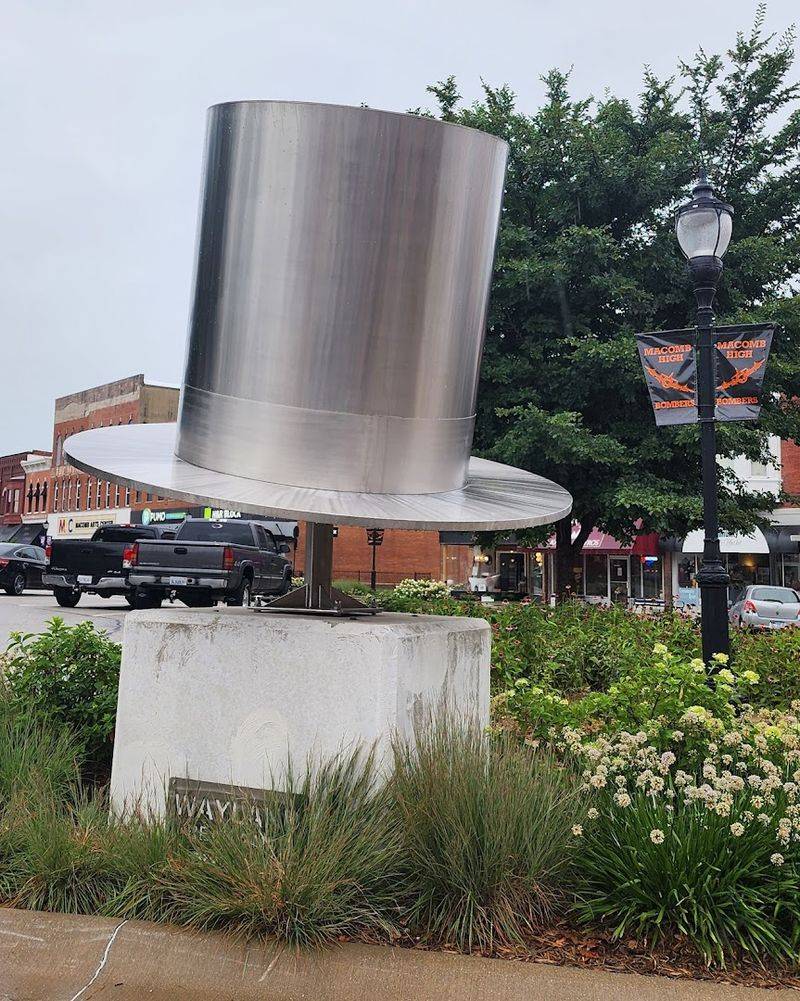
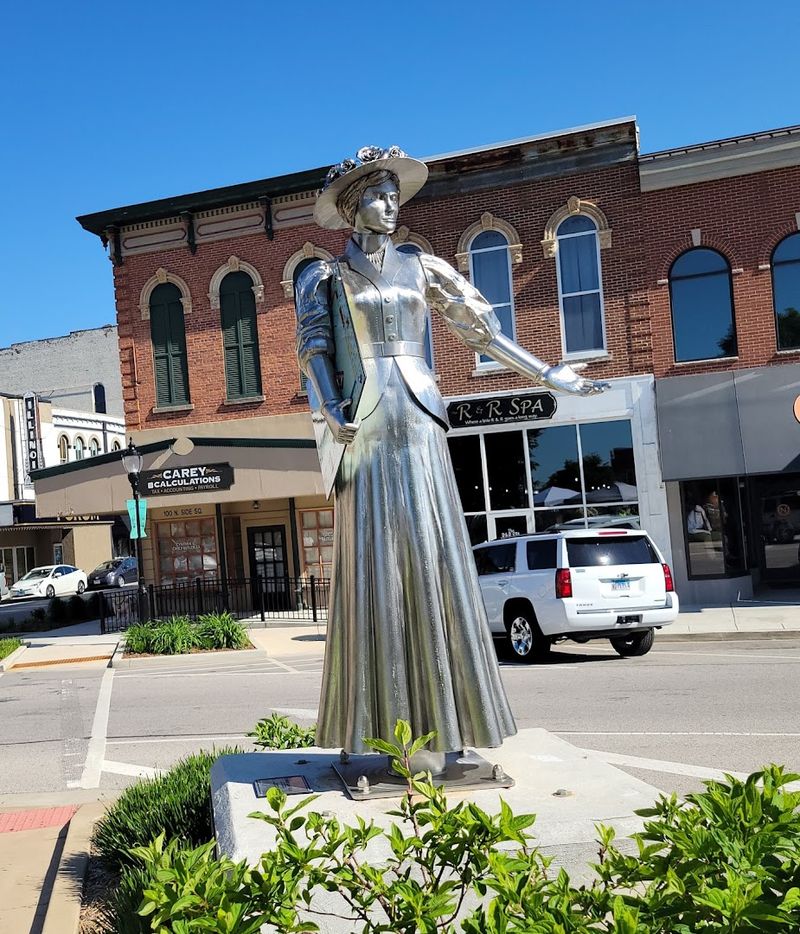
One of the most visually striking parts of Macombopoly is the collection of sculptures and oversized game tokens placed around the courthouse square. These are not small decorations tucked into a corner.
They are bold, well-crafted pieces that stand out against the backdrop of Macomb’s historic downtown architecture and invite you to stop and look closely.
The tokens reference the classic Monopoly playing pieces that generations of players have recognized, and seeing them at human scale adds a surreal and playful quality to the whole visit. The craftsmanship is detailed enough that even people who are not big Monopoly fans find them worth photographing.
Several visitors have noted that the pieces look even better in person than in the pictures shared online.
The sculptures are also free to view at any time, with no app or phone required just to admire them. That makes Macombopoly accessible to anyone passing through, regardless of whether they want to play the full game.
For families traveling with younger children, the statues alone provide plenty of entertainment and photo opportunities. The entire installation feels thoughtfully designed, like public art that also tells a story rather than just filling space on a sidewalk.
The Connection to Macomb’s Local History
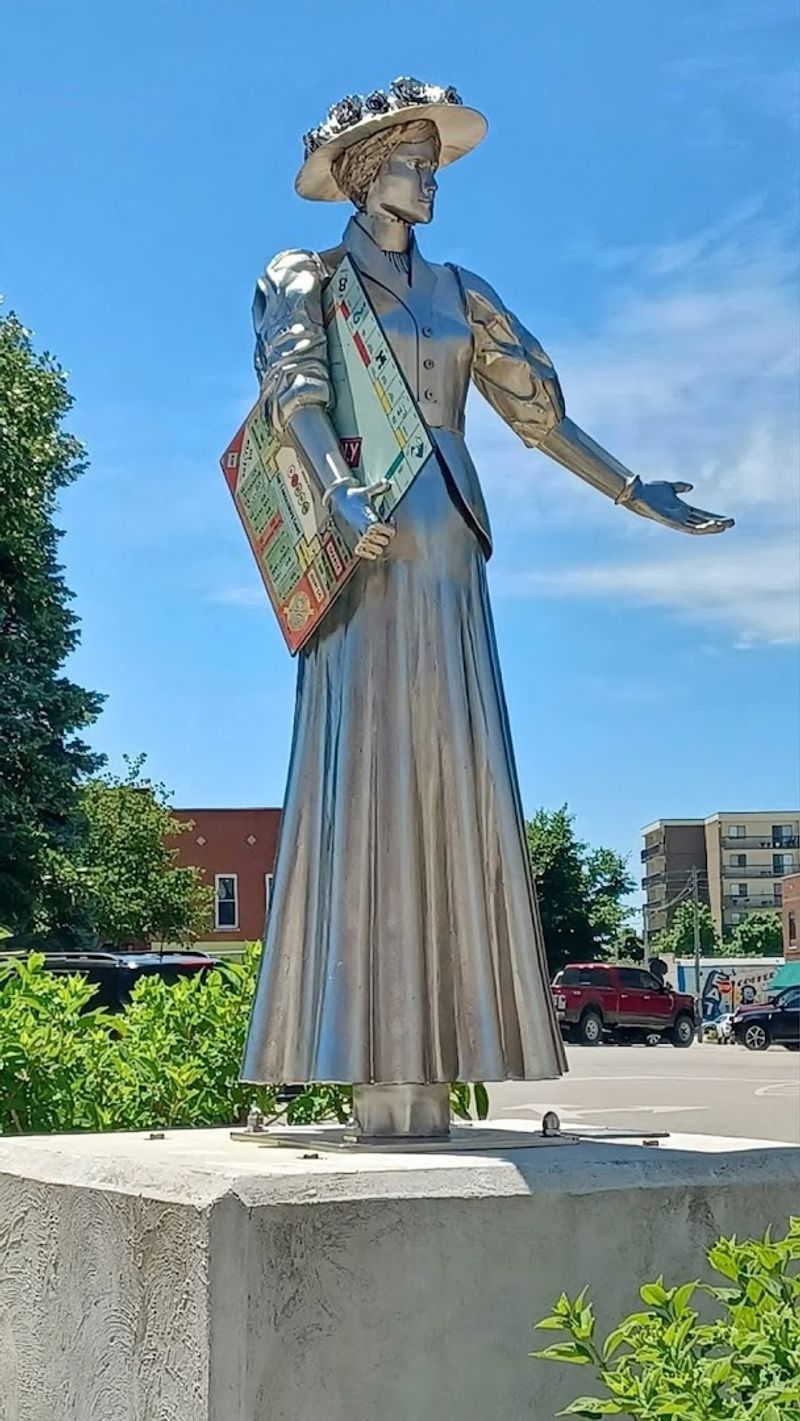
Macomb is not a town that typically makes national headlines, but the story behind Macombopoly gives it a historical footnote that deserves far more attention than it has received. The city in McDonough County, western Illinois, was home to Lizzie Magie Phillips at a time when her ideas about economics and social reform were considered radical and forward-thinking.
The Landlord’s Game that she designed in 1903 was not just a pastime. It was an argument, a visual and interactive way to explain why she believed unchecked real estate wealth was harmful to ordinary people.
That kind of intellectual ambition coming from a woman in the early 1900s was remarkable, and Macomb is rightly proud of that legacy.
The Macombopoly installation was designed to honor both the classic game and its true roots, incorporating local Macomb facts and landmarks into the property spaces rather than generic street names. This decision transforms the attraction from a novelty into something with genuine educational value.
Visitors leave knowing more about both Monopoly’s complicated history and the specific character of Macomb itself, which is a rare combination for a free outdoor attraction in a small Midwestern city.
Best Time to Visit and What to Expect
Macombopoly is an outdoor attraction, which means the experience is shaped significantly by the weather. Spring and early fall are the most comfortable seasons to visit, when temperatures in western Illinois are mild enough for a leisurely walk around the square without the summer heat or winter chill making things unpleasant.
Summer visits are absolutely doable and popular, especially for families on road trips, but plan to go in the morning or late afternoon to avoid the hottest part of the day. The courthouse square has some shade, but it is not a heavily canopied environment, so sun protection is worth considering during July and August.
Winter visits are technically possible since the sculptures stay up year-round, but the interactive game elements are much more enjoyable when the weather cooperates.
The attraction has no set hours since it occupies public sidewalks around a working courthouse square, so it is accessible at any time of day. Weekend mornings tend to be quiet and relaxed, while weekend afternoons can bring more foot traffic from locals and visitors alike.
Either way, the experience rarely feels crowded, which is part of what makes it a pleasant and unhurried stop on any Illinois road trip itinerary.
The Road Trip Appeal of Macombopoly
There is something deeply satisfying about a road trip stop that you almost skipped but ended up loving. Macombopoly fits that description almost perfectly.
It sits right off major routes in central-western Illinois, making it a genuinely convenient detour rather than a significant backtrack for anyone driving across the state.
Macomb is roughly equidistant from the Quad Cities to the north and Springfield to the southeast, and it is also within a reasonable drive from Peoria. That central positioning means Macombopoly works as a midpoint break on several common Illinois driving routes, and the free admission makes the stop a no-risk addition to any itinerary.
Road trippers especially appreciate attractions that offer something genuinely different from the standard highway rest stop or chain restaurant break. Macombopoly delivers on that front with its combination of outdoor activity, local history, and visual novelty.
You can spend as little as twenty minutes walking around to see the sculptures, or stretch it into a two-hour game session with the full interactive experience. Either way, you arrive back at your car having actually learned something and gotten a bit of fresh air, which is a better outcome than most highway stops can offer.
Dining and Exploring Around the Square
The courthouse square in Macomb is not just a backdrop for the game. It is a functioning downtown area with real places to eat and spend time, which makes combining a Macombopoly visit with a meal or a browse around town an easy and enjoyable plan.
Several restaurants and cafes are within walking distance of the game pieces, so you can grab a bite before or after your walk around the square without needing to move your car. The variety of options covers casual lunch spots and coffee stops, which suits the relaxed pace of a mid-trip visit.
Macomb also has the energy of a small college town, since Western Illinois University is located there, which adds a bit of life to the downtown area even on quieter days.
The surrounding blocks have some local shops and businesses worth a brief look if you have extra time. The whole downtown has a lived-in, authentic feel that is different from polished tourist districts.
It is the kind of place where locals actually go about their day, and that normalcy makes the Macombopoly installation feel even more interesting by contrast. A giant Monopoly game tucked into a working small-town square is exactly the kind of detail that makes Midwest travel genuinely worthwhile.
Why Macombopoly Deserves More Recognition
Attractions like Macombopoly tend to fly under the radar because they do not fit neatly into any single category. It is not a museum, not a theme park, not a monument in the traditional sense.
It is something harder to label, a living piece of public art that doubles as a history lesson and a playable game, all set in a real working town square.
That combination of elements is genuinely rare. Most free outdoor attractions offer one of those things.
Macombopoly offers all three simultaneously, and it does so with a level of craftsmanship and intentionality that reflects real civic pride. The installation was clearly built to last and to be used, not just photographed once and forgotten.
The story behind it also matters in a way that resonates beyond Macomb. Lizzie Magie’s tale is one of an innovator whose credit was taken, and the town’s decision to honor her with this installation is a meaningful act of historical correction.
Visiting Macombopoly is a way of participating in that recognition, even briefly. For a free stop on a Tuesday afternoon in western Illinois, that is a surprisingly powerful thing to be part of, and it is exactly why this attraction deserves a spot on far more travel lists than it currently occupies.



