Deep beneath a quiet Wisconsin hillside, a hidden world had been waiting for millions of years with no one knowing it was there. Then, on August 4, 1939, a routine quarry blast cracked open the earth and revealed one of the most remarkable natural caves in the entire Midwest.
The blast used 1,600 pounds of explosives, and what workers found inside stopped everyone in their tracks. This cave has been welcoming curious explorers ever since.
From dramatic rock formations that took thousands of years to grow, to guided tours that bring geology to life, this underground attraction is unlike anything else in the region. Whether you are planning a family outing or just looking for something genuinely different to do in Wisconsin, this cave delivers a one-of-a-kind experience that is hard to forget.
How A Quarry Blast Changed Everything
On August 4, 1939, workers at the Brigham Farm quarry in Blue Mounds, Wisconsin, set off a routine blast using 1,600 pounds of explosives to break apart limestone.
Nobody expected what came next. When the dust cleared, a hole in the rock revealed a dark, hollow chamber that had never seen daylight before.
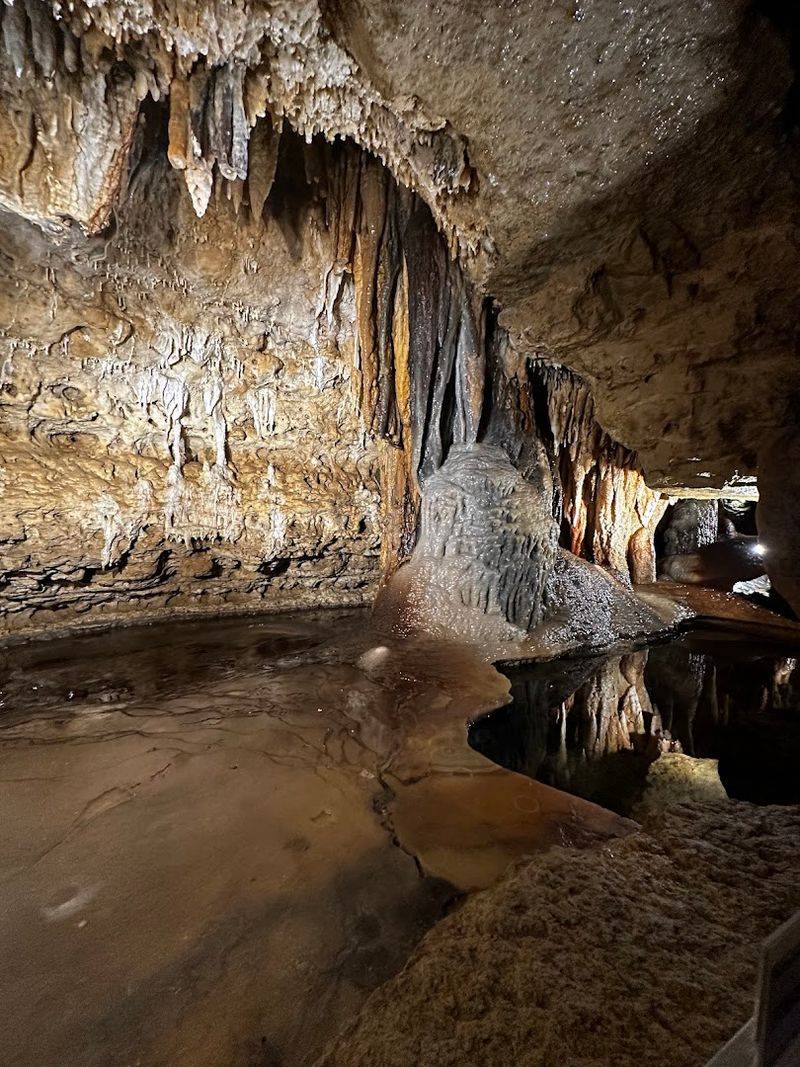
The quarry workers had accidentally punched through the ceiling of a cave that had been forming underground for millions of years.
The discovery was reported immediately, and geologists arrived quickly to assess what had been found. It became clear that this was no ordinary crack in the rock.
The cave stretched far beyond the initial opening, filled with formations that had grown undisturbed for an extraordinary length of time.
Within months, the site was developed for public tours, and Cave of the Mounds officially opened to the public in May 1940, just one year after that unexpected blast changed everything.
The Geology Behind The Formations
The formations inside Cave of the Mounds did not appear overnight. They are the result of a process that began roughly 400 million years ago when the region was covered by a shallow inland sea.
Over time, layers of limestone built up from the remains of marine organisms. Much later, slightly acidic groundwater began seeping through cracks in that limestone, slowly dissolving the rock and carving out hollow spaces underground.
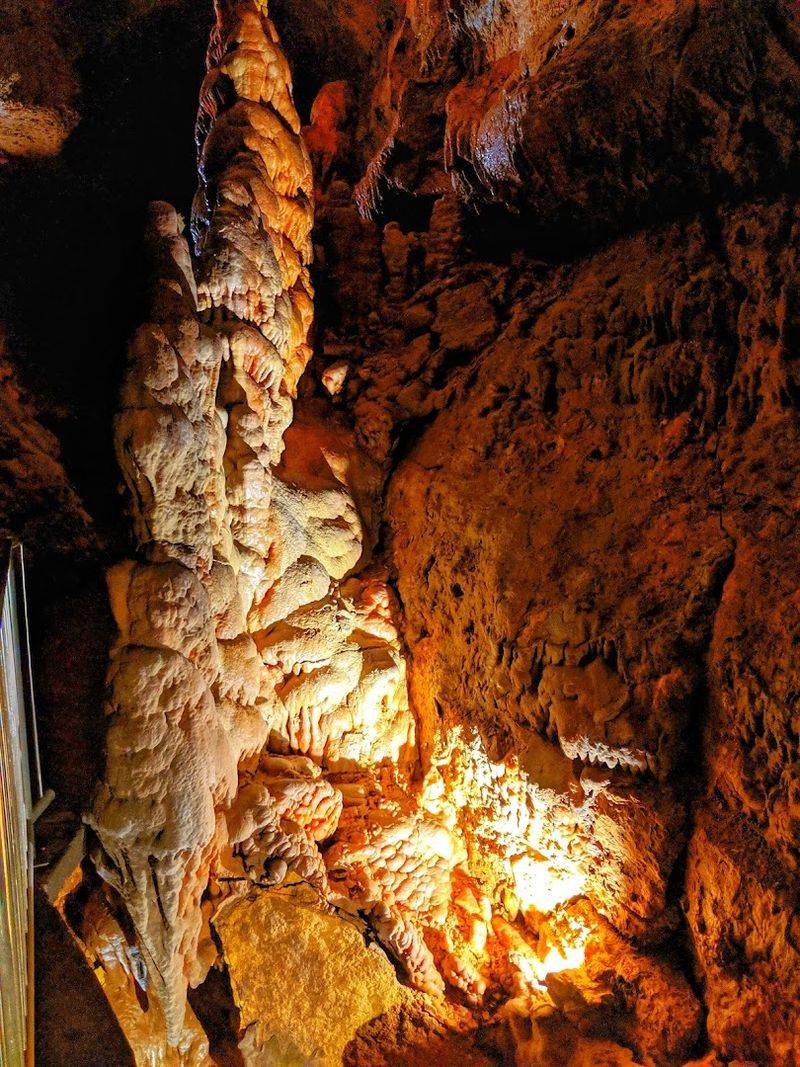
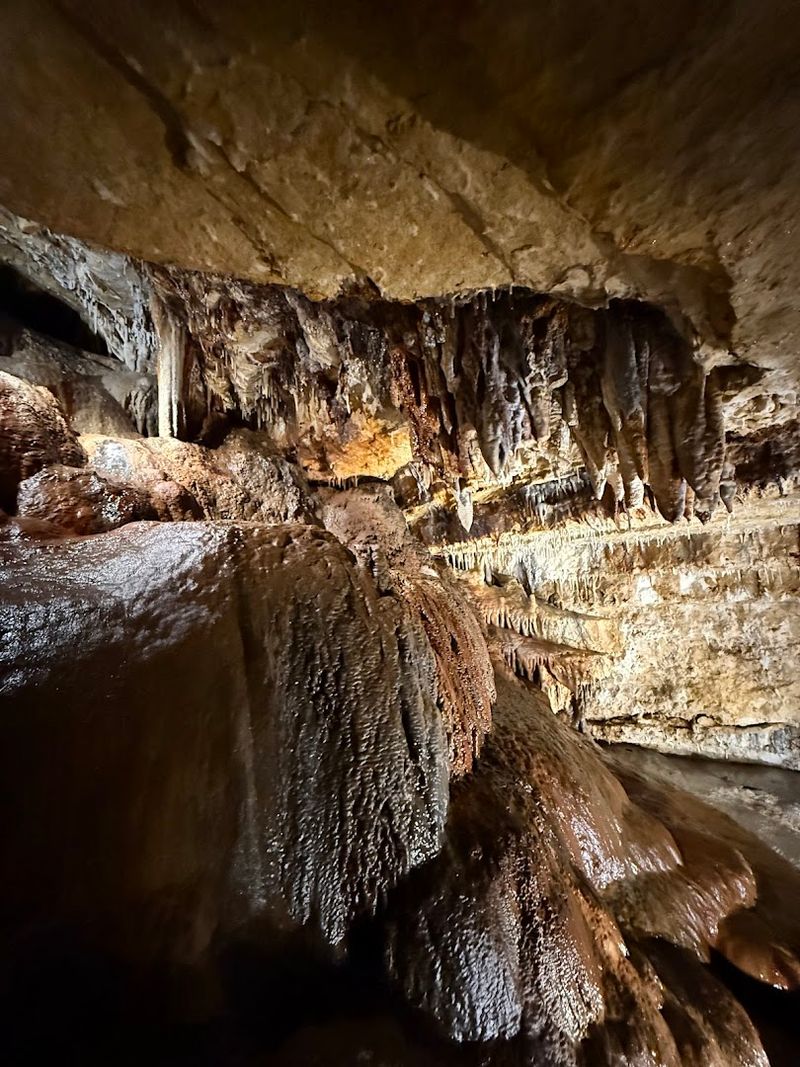
As water dripped through the ceiling of those hollow spaces, it deposited minerals one tiny layer at a time. Stalactites grew downward from the ceiling.
Stalagmites pushed upward from the floor. Where the two eventually met, they formed columns.
The cave holds an impressive variety of these formations, including rare and delicate types that are not commonly found in other Midwestern caves. The entire collection reflects hundreds of thousands of years of slow, patient geological work happening just beneath the surface of an ordinary Wisconsin farm.
What The Guided Tour Actually Looks Like
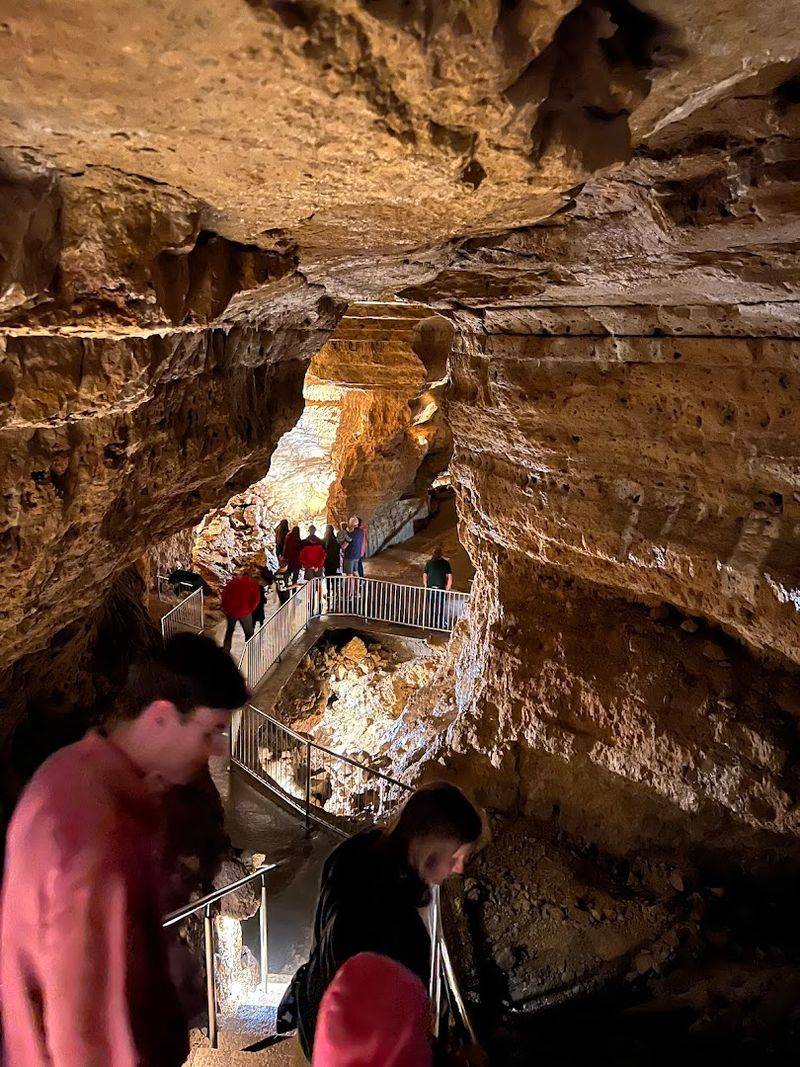
Every visit to Cave of the Mounds runs through a structured guided tour, and that format works well for keeping the experience focused and informative.
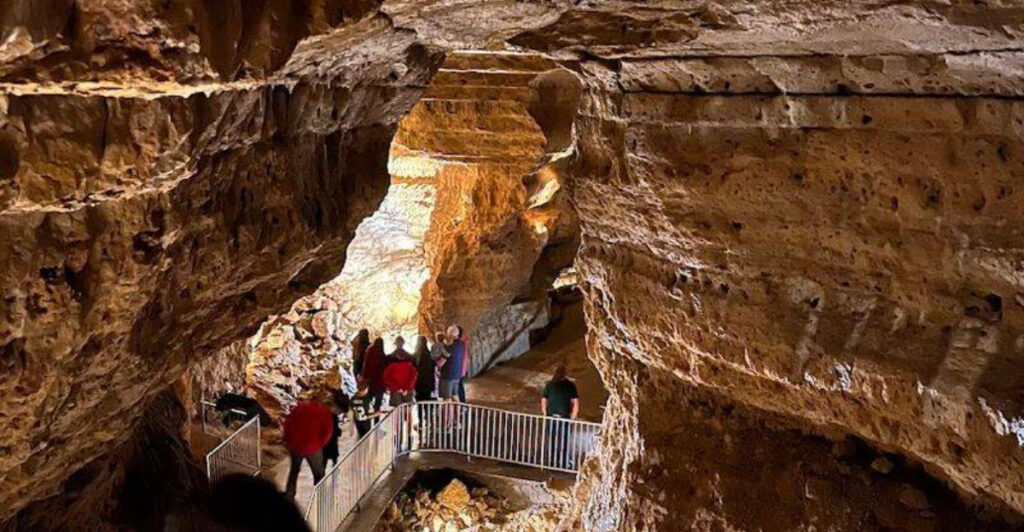
Tours last approximately one hour and cover roughly one mile of paved pathways through the cave. The paths wind through multiple chambers, each one offering a different set of formations and geological features to observe.
Guides are trained to explain the science behind what guests are seeing, covering topics like how formations grow, how the cave was mapped after discovery, and what makes certain features unusual compared to other caves. Groups tend to stay manageable in size, and smaller groups often get extra time for questions.
At one point on the tour, the lights are turned off completely, giving guests a moment of total underground darkness. There are also spots where guides point out bioluminescent features in the rock.
The tour begins and ends at the gift shop, which serves as the main visitor hub for the whole property.
The Constant Temperature That Makes It Special
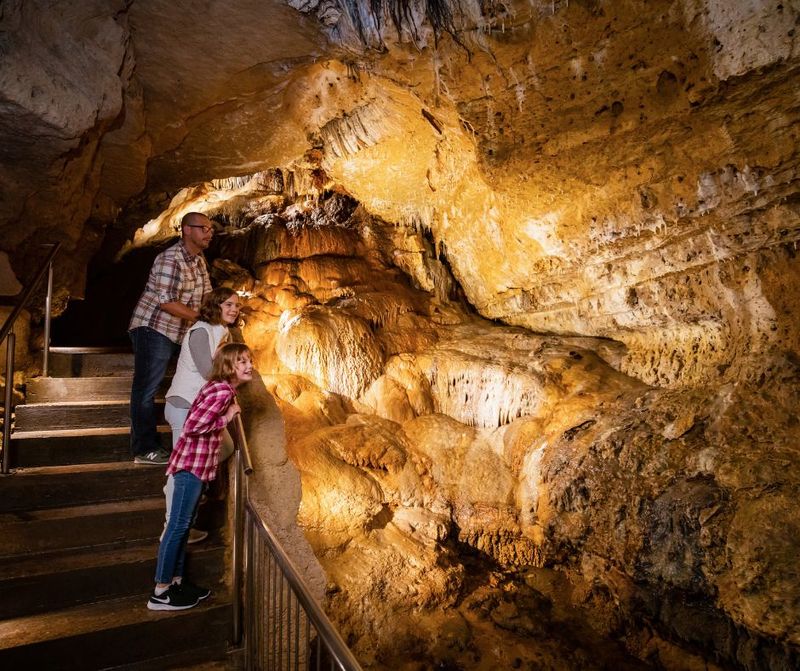
One of the most practical and interesting facts about Cave of the Mounds is that its internal temperature stays at a steady 50 degrees Fahrenheit year-round, no matter what the weather is doing above ground.
That consistency is a direct result of the cave being completely insulated by the surrounding bedrock. The earth above acts as a natural buffer, keeping heat out in summer and cold out in winter.
For summer visitors, stepping into the cave feels noticeably cool after a warm Wisconsin afternoon. For winter visitors, 50 degrees actually feels quite comfortable compared to the frigid air outside.
Either way, a light jacket or an extra layer is a smart thing to pack before heading underground.
The cave is also described as drippy in places, which is a natural result of groundwater still seeping through the limestone above. Comfortable shoes that you do not mind getting a little sandy or damp are a much better choice than your best footwear for this particular outing.
The Blacklight Tour Experience
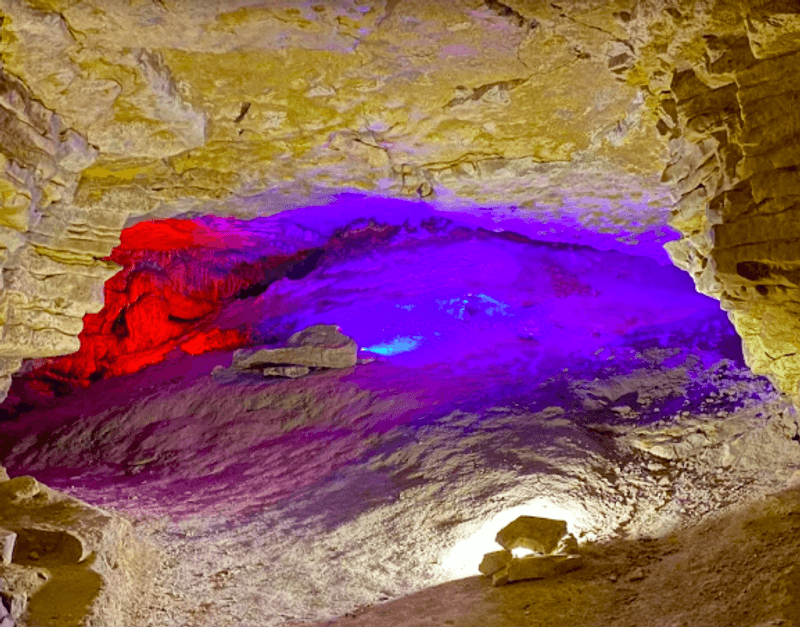
Beyond the standard guided tour, Cave of the Mounds offers a blacklight rental option that gives the underground experience a completely different character.
For $12, guests can rent a UV flashlight and use it during the tour to illuminate certain minerals in the cave walls. Under ultraviolet light, some of those minerals glow in unexpected colors that are completely invisible under normal lighting conditions.
The blacklight tour works best when experienced alongside the regular tour first. Going through with standard lighting gives guests a clear look at the formations and a chance to take photographs before the UV portion changes the whole visual atmosphere of the cave.
For families with children, the blacklight rental adds an interactive layer that tends to keep younger guests engaged throughout the full hour. The key tip is to keep the flashlight aimed at the walls rather than at other people, which helps everyone get the most out of the experience without unnecessary distractions along the way.
A Cave With No Creepy Crawlers
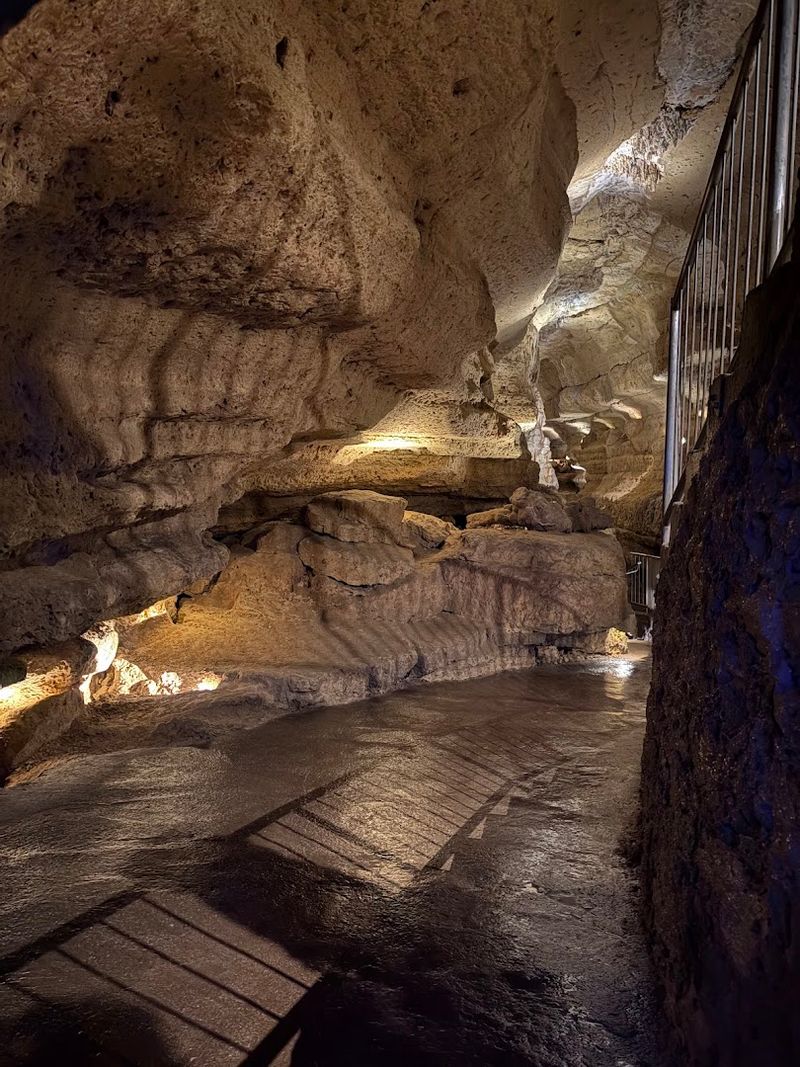
For anyone who pictures caves as dark, bat-filled tunnels with spiders lurking in every corner, Cave of the Mounds offers a reassuring surprise: there are no living creatures inside the cave.
The combination of the cave’s consistent temperature, its sealed environment, and the way it was developed after discovery means that it does not support the kind of wildlife typically associated with natural caves. No bats, no spiders, and no other cave-dwelling animals call this place home.
That fact makes Cave of the Mounds particularly accessible for guests who might feel nervous about traditional cave environments. The paved pathways, installed lighting, and the absence of wildlife all contribute to a comfortable underground experience that works well across a very wide range of ages.
The cave has also earned recognition as a National Natural Landmark, a designation that reflects both its geological significance and the care that has gone into preserving it. That commitment to preservation is visible throughout every section of the tour route.
The Gift Shop That Deserves Its Own Visit
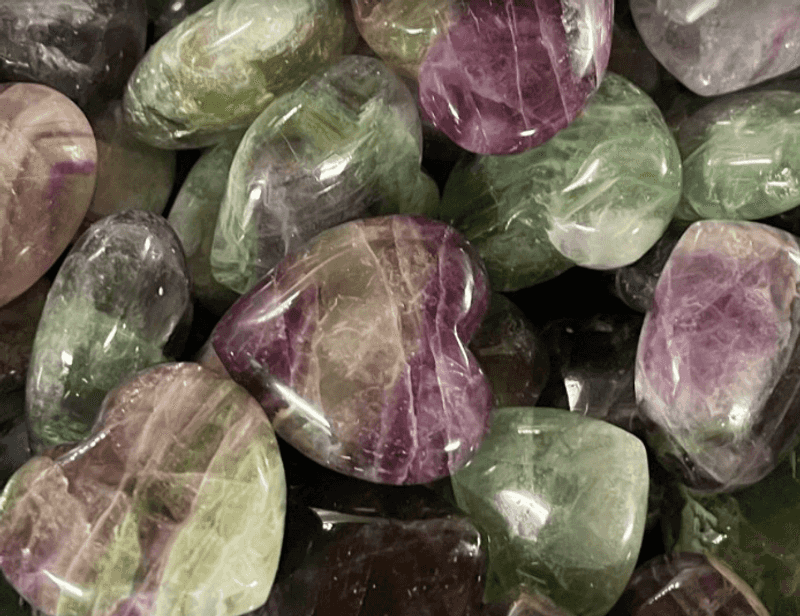
The gift shop at Cave of the Mounds is not an afterthought tacked onto the end of a tour. It is a genuinely well-stocked destination that tends to hold guests’ attention for far longer than expected.
The selection leans heavily into geology and natural science, with mineral specimens, fossils, crystals, and rock collections available at a range of price points. One of the most popular activities in the shop is the geode cracking station, where guests can select a geode and crack it open themselves to reveal the crystal interior inside.
That hands-on element gives the shopping experience a participatory quality that goes beyond simply browsing shelves. Kids especially tend to get excited about choosing and opening their own geode, since the result is always a small surprise.
The shop also carries nature-themed toys, educational books, and a solid range of souvenirs connected to the cave itself. Most tours begin and end here, so guests naturally pass through both before and after heading underground.
Holiday Lights Inside The Cave
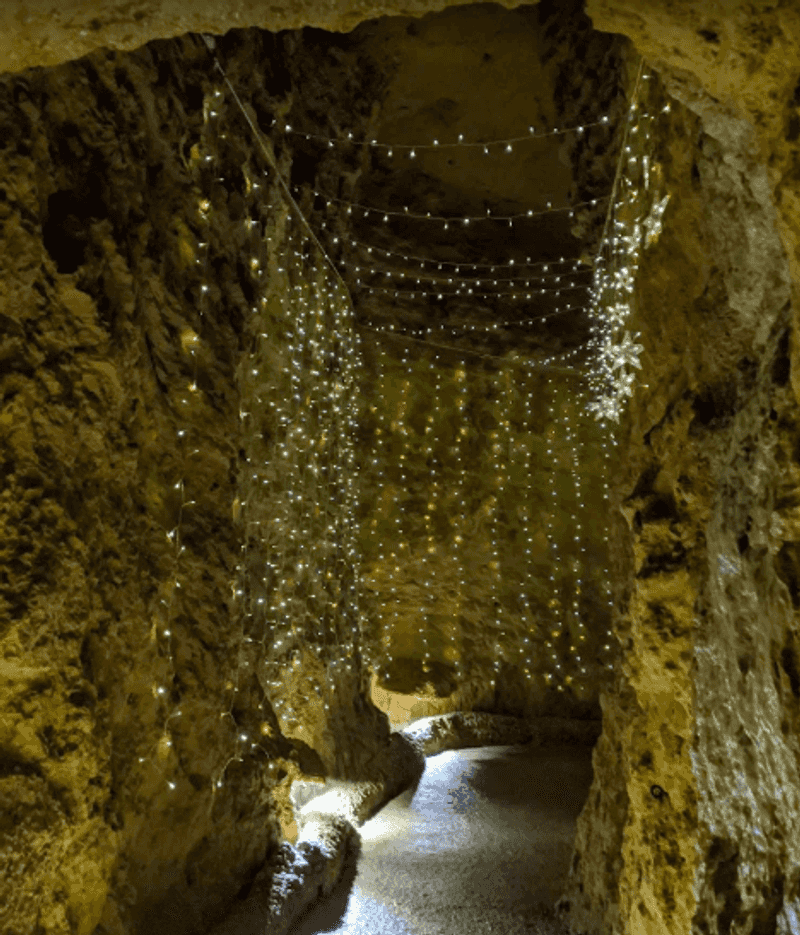
During the holiday season, Cave of the Mounds transforms its underground environment with a special display called Cave of Lights, in which the cave is decorated with a reported ton and a half of holiday lights.
The lighting installation runs through the cave’s natural passages and around its formations, creating an atmosphere that is completely different from the standard tour experience. The combination of natural rock formations and warm colored lights produces a visual effect that has become one of the most talked-about seasonal events in the region.
The holiday display draws repeat visitors who have already done the standard tour and want to see the cave in a completely different context. Families with young children find the decorated version especially engaging, and the festive atmosphere extends to the gift shop as well.
Tickets for the holiday season tours tend to sell out faster than usual, so booking in advance is even more important during November and December than it is during the regular summer season.
What Makes It A National Natural Landmark
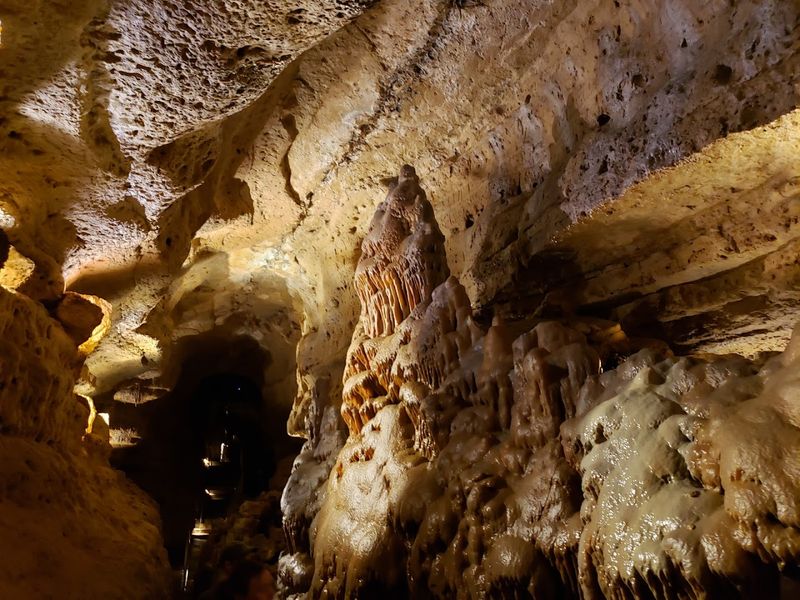
Cave of the Mounds received its National Natural Landmark designation from the National Park Service in 1988, a recognition that places it among the most geologically significant natural sites in the entire United States.
That designation is not handed out casually. To qualify, a site must contain natural features that are outstanding examples of geological or ecological processes, or that represent rare or exceptional natural characteristics.
Cave of the Mounds met those criteria based on the quality, variety, and preservation of its underground formations.
The cave contains an unusually wide range of speleothem types, which is the scientific term for cave formations. Beyond the standard stalactites and stalagmites, the cave holds more delicate and uncommon structures that are found in far fewer locations across the country.
Maintaining that landmark status requires ongoing care and strict management of how the cave is used. The paved pathways, controlled lighting, and no-touch policy for formations all exist to protect the geological record that earned the cave its national recognition in the first place.
Tips For Planning Your Visit
A few practical details can make the difference between a smooth visit and an avoidable headache at Cave of the Mounds.
Buying tickets online in advance is consistently the most useful piece of advice for this attraction. Tours fill up, especially on summer weekends and during the holiday season, and arriving without a ticket can mean a long wait or missing the tour entirely.
The cave opens daily at 9 AM, and arriving early for the first tour of the day tends to mean smaller group sizes and a more relaxed pace.
Backpacks are not allowed inside the cave, so leaving large bags in the car before the tour starts is the cleanest approach. A light jacket is worth bringing regardless of the season outside, since 50 degrees underground can feel cool after a while.
Comfortable shoes with good grip are the right call, and guests who are sensitive to tight spaces should know that there is at least one narrow passage on the route, though alternate paths are available upon request.
A Place That Works For Every Age
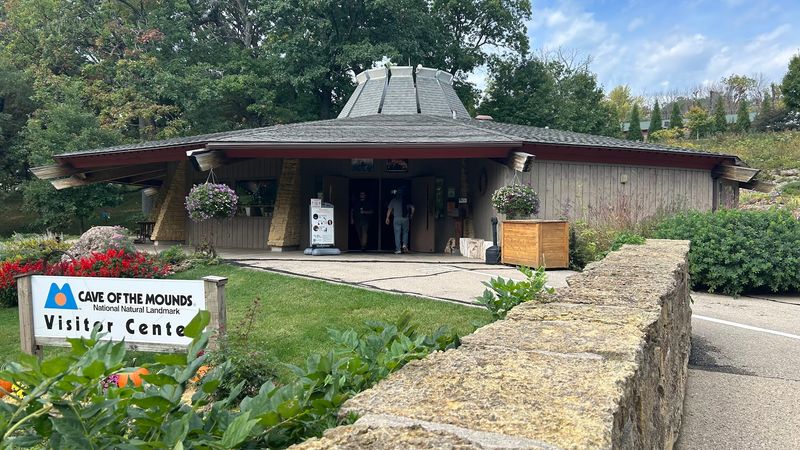
One of the most consistent things noted about Cave of the Mounds is how well the experience translates across completely different age groups.
There is no minimum age requirement for the tour, and families have brought infants along without issue. The paved pathways make the route manageable for older guests or anyone with limited mobility, though the tour does involve stairs and some sloped sections that are worth knowing about in advance.
For school-age children, the combination of the guided tour, the blacklight rental, the gem mining area, and the gift shop creates a multi-hour experience that holds attention far better than a single-activity outing. The educational content woven into the tour also gives it genuine value beyond simple entertainment.
Adults visiting without children tend to find the geological detail of the tour more absorbing than expected. The guides are trained to match their explanations to the audience in front of them, which keeps the experience from feeling either too simplified or too technical for any particular group.
Why This Cave Keeps Bringing People Back
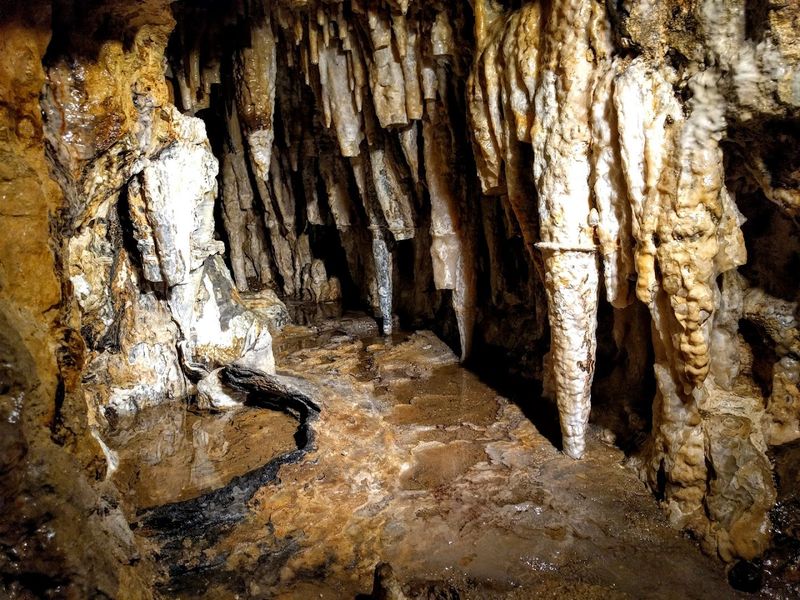
There is something about Cave of the Mounds that turns first-time visitors into repeat visitors at an unusually high rate. Multiple guests have done the tour four or more times over the years and describe it as consistently worth the trip each time.
Part of that staying power comes from the seasonal programming that keeps the experience fresh. The holiday light display, the blacklight tours, and the Halloween events mean that the cave is genuinely different depending on when you visit.
The other part is simply the cave itself. The formations are the result of processes that no human hand shaped or arranged, and that fact gives the whole underground environment a quality that is hard to manufacture elsewhere.
Cave of the Mounds sits in a part of Wisconsin that rewards slow, curious travel. The surrounding area offers hiking, state parks, and small-town character that pairs naturally with a cave visit.
Once you make the trip out to Blue Mounds, it tends to feel like the kind of place worth returning to.
Where Exactly You Can Find This Cave
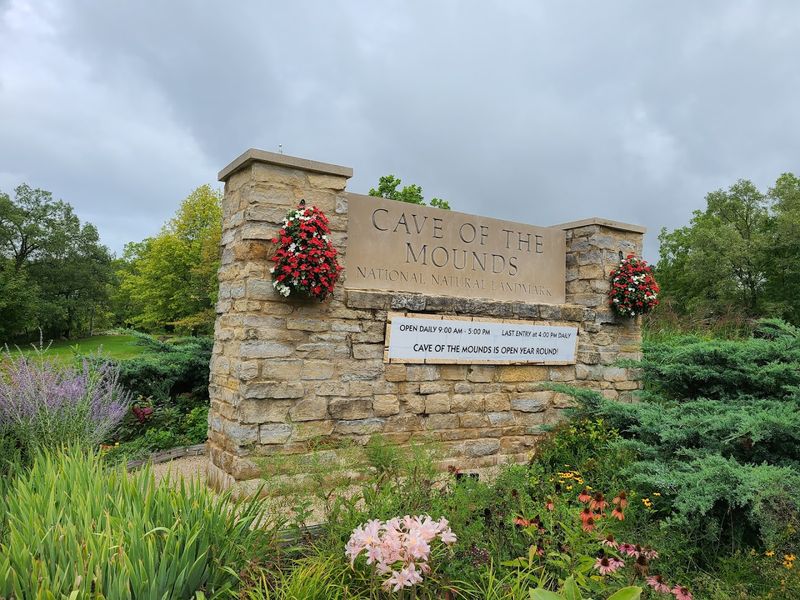
Cave of the Mounds sits at 2975 Cave of the Mounds Road in Blue Mounds, Wisconsin 53517, tucked into the rolling hills of Dane County in the southwestern part of the state.
Blue Mounds itself is a small community, but its location makes it surprisingly easy to reach. The cave is about 25 miles west of Madison, making it a very manageable day trip from the state capital or from many other parts of southern Wisconsin.
The surrounding landscape features open farmland and forested ridges, and the property sits near Blue Mound State Park, giving the whole area a naturally scenic character that feels far removed from city life.
The cave is open daily from 9 AM to 7 PM, which gives families and solo travelers plenty of flexibility when planning a visit. Buying tickets in advance is a smart move, especially on busy summer weekends when tour groups fill up quickly.
Share this story