Arkansas has only one official state arboretum, and it is located in the heart of El Dorado. Spanning just over a dozen acres, this compact green space showcases native plants, mature trees, and walking trails that highlight the region’s natural landscape.
What makes the arboretum worth visiting is how much it offers in a relatively small area. Visitors can explore butterfly gardens, learn about local plant species through interpretive displays, and enjoy peaceful paths that feel far removed from the surrounding city.
Part educational center and part nature retreat, the arboretum provides a closer look at Arkansas’s native ecosystems without requiring a long drive into the wilderness. Its unique designation and thoughtful design make it one of the state’s most overlooked outdoor attractions.
Arkansas’s Only City State Park
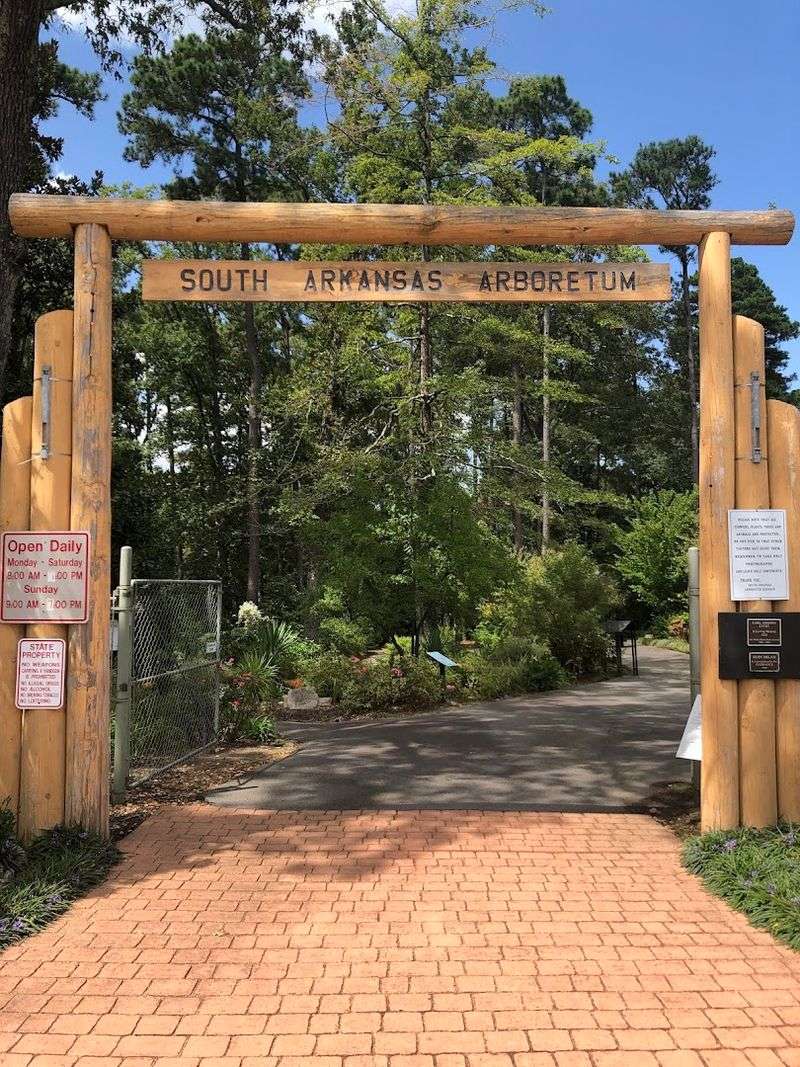
Most state parks in Arkansas are tucked away in rural landscapes, far from traffic lights and city noise. The South Arkansas Arboretum at 1506 Mt Holly Rd, El Dorado, AR 71731 breaks that pattern entirely, holding the rare distinction of being Arkansas’s Only Natural State Park Located Within a City.
That fact alone made me want to visit. The arboretum sits in Union County and is managed by South Arkansas Community College (SouthArk) in partnership with Arkansas State Parks, which gives it an educational character that most parks simply do not have.
The combination of academic oversight and state park status means the place is taken seriously. It is maintained with purpose, not just mowed and left to chance. Contact South Arkansas Community College or visit arkansasstateparks.com for current hours and information before your trip.
The Story Behind the Trees
Every great green space has an origin story, and this one starts with a biology teacher named James Riley who clearly loved Arkansas flora more than the average person.
Back in 1964, Riley secured federal grants to acquire the land and fund the early development of what would become the South Arkansas Arboretum. His work brought in perimeter fencing, walking trails, wooden bridges, and two small dams that created the ponds still visible on the property today.
What he built was not just a garden. It was a living classroom designed to preserve the native plants of the West Gulf Coastal Plain for future generations to study and enjoy.
That founding mission has shaped everything about the arboretum, from the species planted to the interpretive signs installed along the paths. It is the kind of legacy that quietly keeps on giving, one trail walk at a time.
Over Two Miles of Shaded Paved Trails
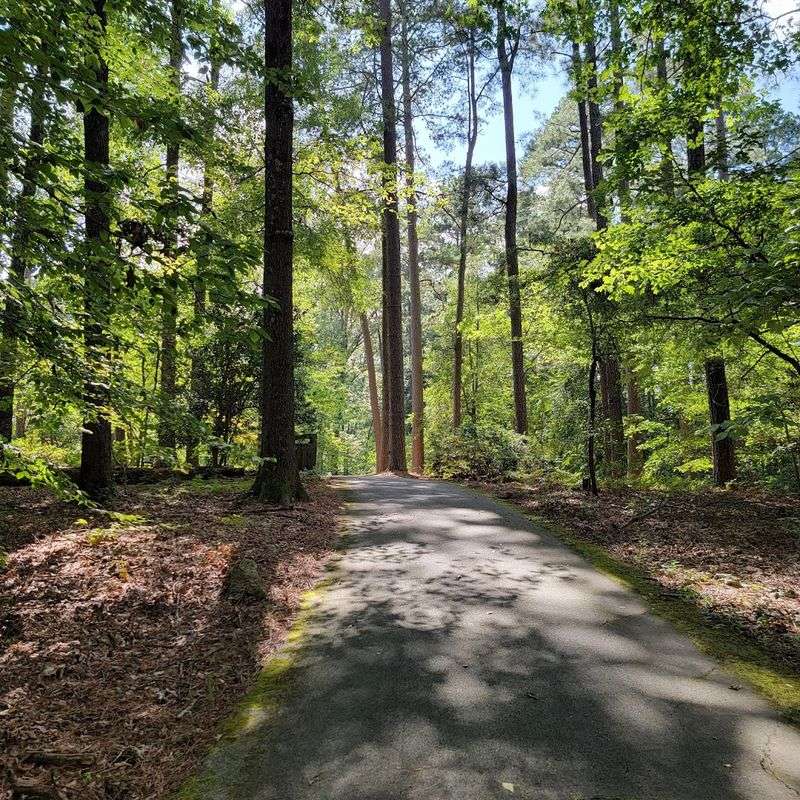
Two miles of paved, shaded trails sounds modest until you are actually walking them and realizing how many different directions they go. The paths meander through the property in a way that rewards wandering rather than rushing.
There are two posted trail loops, one roughly 0.8 miles and another about 0.2 miles, but the way they connect and branch means you can easily cover more ground than you planned. The canopy overhead is dense enough to keep things cool even on warm afternoons, which is a genuine comfort in southern Arkansas summers.
Benches are placed at regular intervals along the routes, so there is no pressure to power through without stopping. The trails pass through three distinct zones of the arboretum, each with its own character and plant life.
That variety keeps the walk interesting from start to finish, and honestly makes it hard to feel like you have seen everything after just one visit.
Three Zones That Tell Three Different Stories
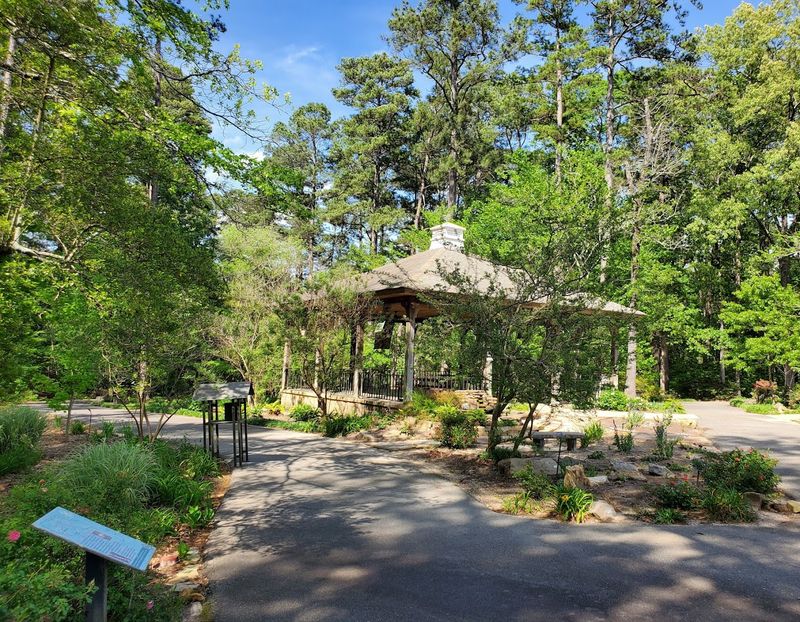
The arboretum is not one uniform landscape. It is divided into three purposefully different sections that each offer a completely different feel as you move through them.
The Active Use area near the entrance is the most tended, with flower beds, a pavilion, and landscaping that feels welcoming and approachable. The Transitional Zone bridges the gap between the manicured and the wild, giving visitors a gradual shift in atmosphere as native shrubs and trees become more prominent.
The Natural Area at the far end is dedicated to preservation, where the plant life is left to grow as it would without much human interference. That progression from maintained to wild is one of the most thoughtful design choices in the park.
By the time you reach the Natural Area, the city around you feels genuinely distant, even though you are still well within El Dorado’s boundaries. The contrast between zones is subtle but surprisingly effective.
Native Trees Worth Stopping to Read About
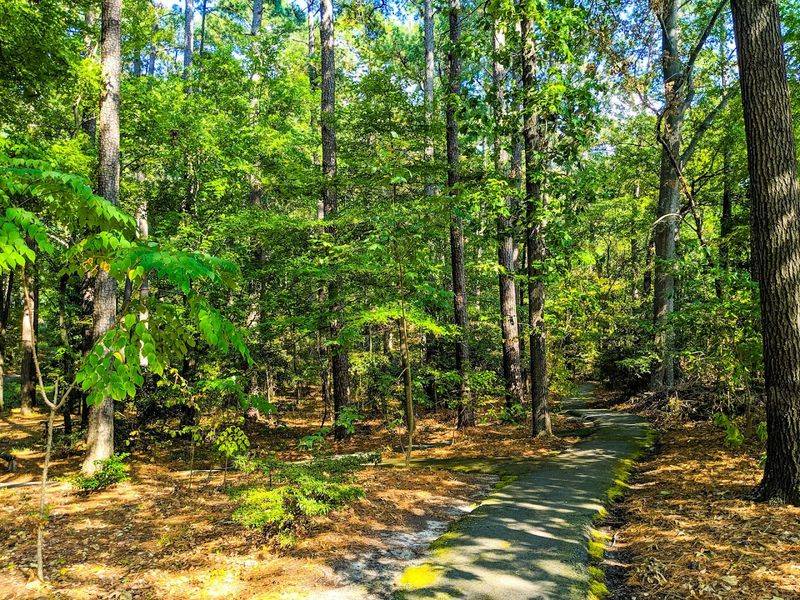
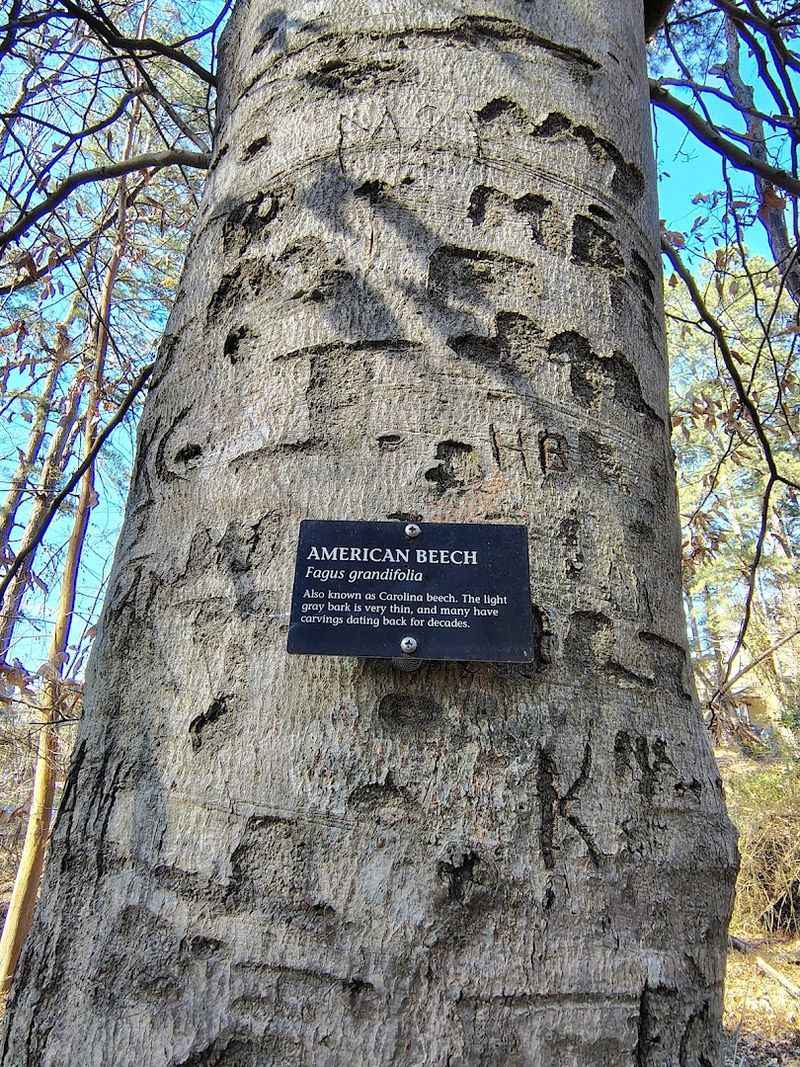
The tree collection here is genuinely impressive for a 12-acre space. The arboretum features shortleaf and loblolly pines, southern and sweet bay magnolias, black gum, white ash, American sycamore, Carolina beech, American holly, black cherry, sugar maple, and multiple oak varieties including water, post, southern red, white, and overcup oaks.
Each species has a story attached to it, and the interpretive signs placed along the trails do a solid job of connecting visitors to that information without making it feel like a lecture. I found myself stopping at nearly every sign, which is not something I expected to do.
The variety of hardwoods especially stands out. Seeing that many different oak species in one location gives you a real appreciation for how rich the forest ecosystems of the West Gulf Coastal Plain actually are.
The trees are not just decoration here; they are the whole point of the visit.
Wildflowers That Bloom From Spring Through Fall
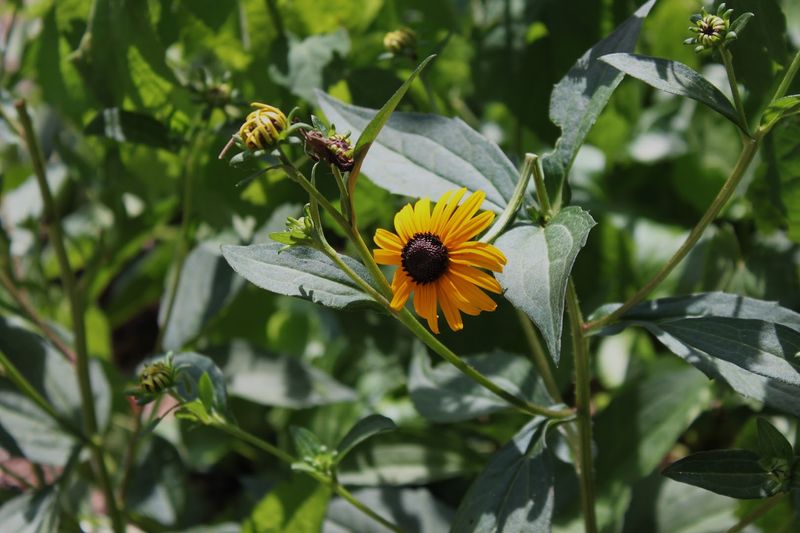
Wildflowers at the arboretum are not a one-season event. Blooms appear from spring through fall, giving the trails a rotating cast of color depending on when you visit.
Spring is widely considered the best time to see the arboretum at its most vibrant, with fresh growth and full blooms making the whole place feel alive in a way that later months cannot quite replicate. That said, summer and early fall visits still offer plenty to see for those who pay attention to smaller details along the path.
The flower beds near the entrance are well-maintained and usually the most colorful part of the property, but wildflowers also appear in quieter corners throughout the trails. Visitors who take their time and look beyond the obvious spots are often rewarded with small clusters of blooms tucked between roots and rocks.
The arboretum rewards the curious, not just the casual stroller.
The Butterfly Garden Worth Seeking Out
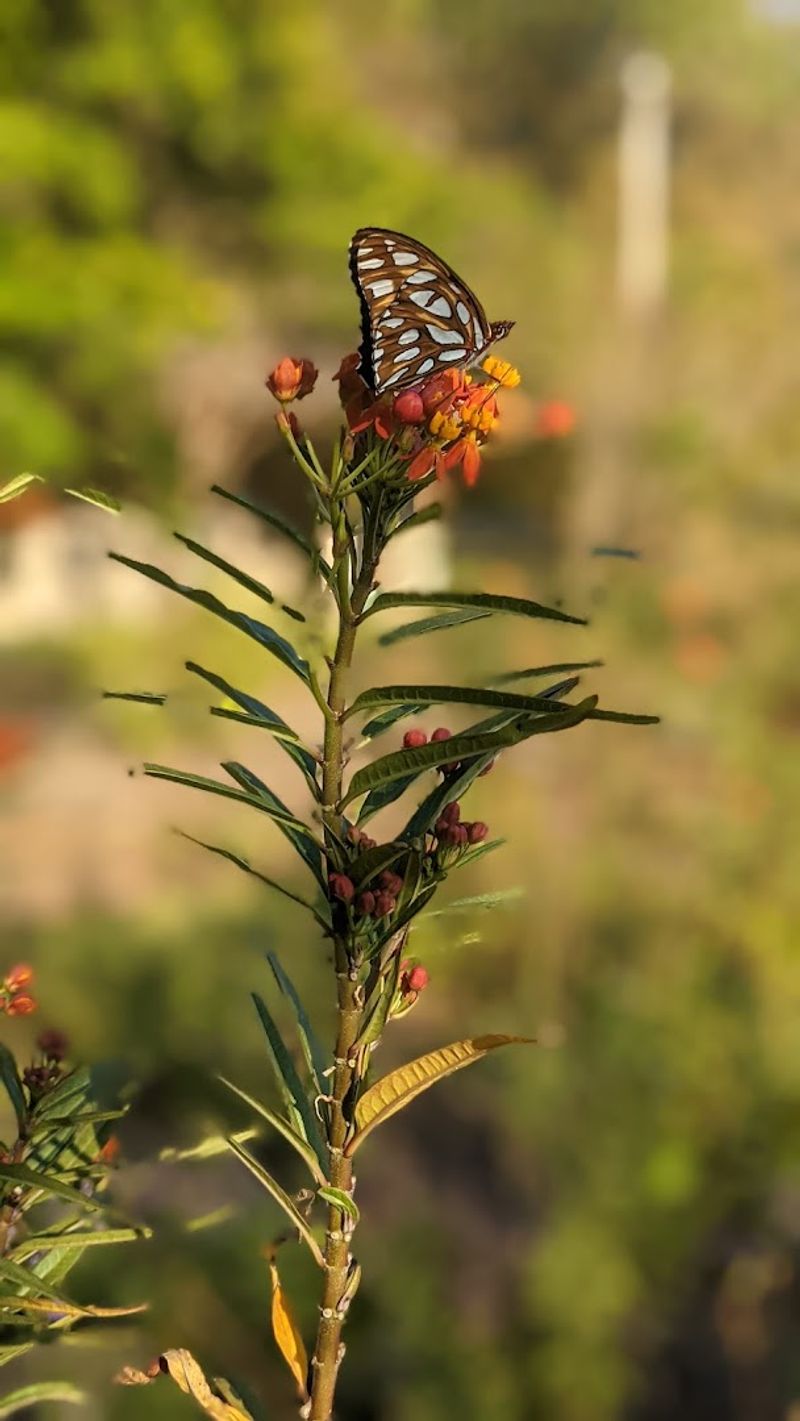
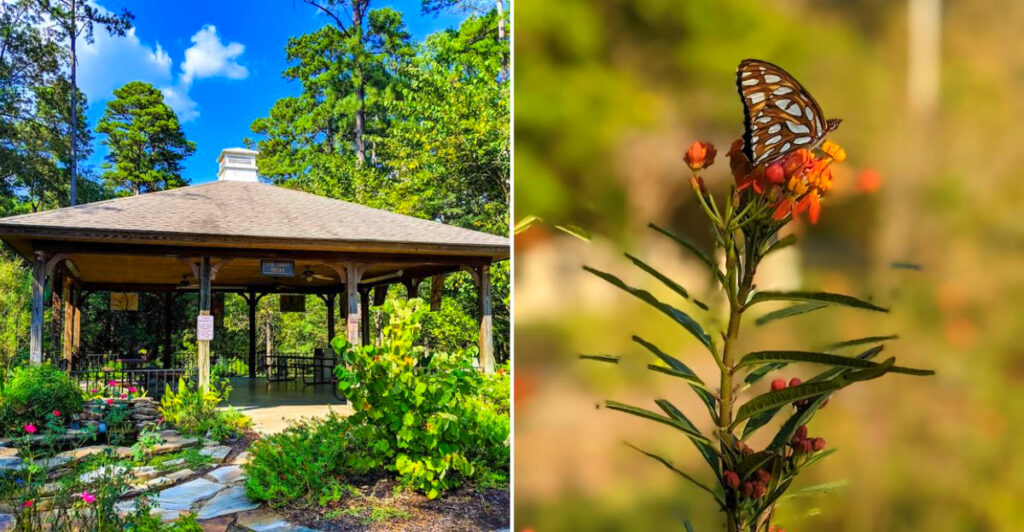
Tucked within the arboretum is a dedicated butterfly garden that uses native wildflowers specifically chosen to attract local butterfly species. It is a small but carefully considered feature that adds real charm to the visit.
On a warm day with the right blooms in season, the garden draws a steady stream of butterflies that are genuinely fun to watch. Bees are also frequent visitors, which is actually a good ecological sign and something that regular visitors have noted with appreciation.
The garden is not always buzzing with activity depending on the season, but when conditions are right, it is one of the most lively spots in the entire arboretum.
Beyond butterflies, the area around the garden occasionally attracts hummingbirds, making it worth lingering near for a few extra minutes. The combination of native plants, pollinators, and good light makes this corner of the park feel especially rewarding, particularly for anyone who enjoys wildlife photography on a casual level.
Exotic Blooms Mixed Into the Native Landscape
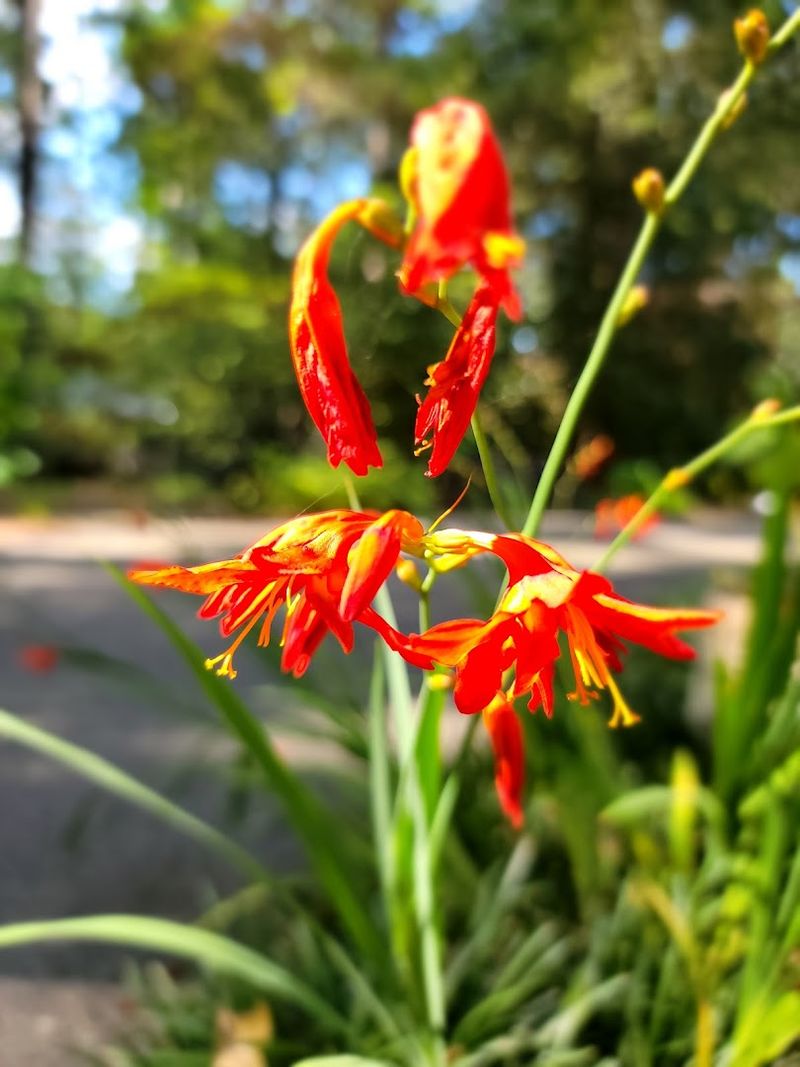
While the arboretum’s core mission is preserving native flora, it does make a few deliberate exceptions that are worth knowing about before your visit. Flowering azaleas and camellias have been incorporated into the landscape specifically to add visual appeal and give visitors a reason to linger near the entrance area.
These exotic species create a burst of color that native plants alone do not always provide, especially earlier in spring when the azaleas tend to peak. The camellias add a touch of elegance that feels a little unexpected in what is otherwise a naturalistic setting.
The mix of native and non-native plants is a pragmatic choice that works well in practice. The arboretum does not pretend to be a strict wilderness preserve; it is a place designed to educate and delight, and the flowering shrubs near the entrance do exactly that.
They set a welcoming tone that pulls visitors deeper into the trails behind them.
Ponds, Bridges, and Petrified Wood
The two small ponds created by dams built during the arboretum’s founding add a genuinely peaceful quality to the landscape. Water has a way of slowing people down, and the ponds do exactly that, offering a natural pause point along the trails where you can just stand and look for a while.
Wooden bridges cross over low areas of the property, adding a storybook quality to the walk. One bridge has reportedly been affected by heavy rains in the past, so it is worth checking trail conditions before visiting if recent weather has been rough.
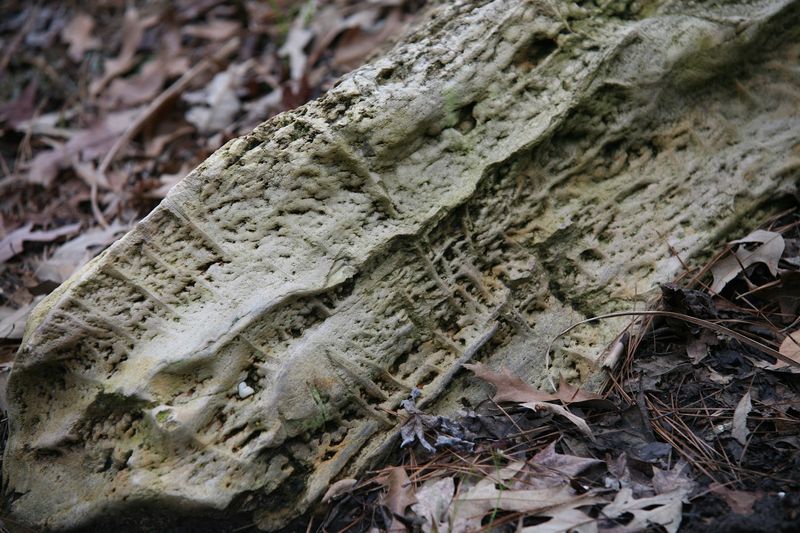
Chunks of petrified wood are scattered around the grounds, which is a detail that catches most first-time visitors completely off guard. Finding a piece of ancient wood turned to stone sitting quietly next to a flower bed is exactly the kind of unexpected discovery that makes a place memorable.
The arboretum has more of these small surprises than you might expect from a city park.
Facilities That Make the Visit Easy
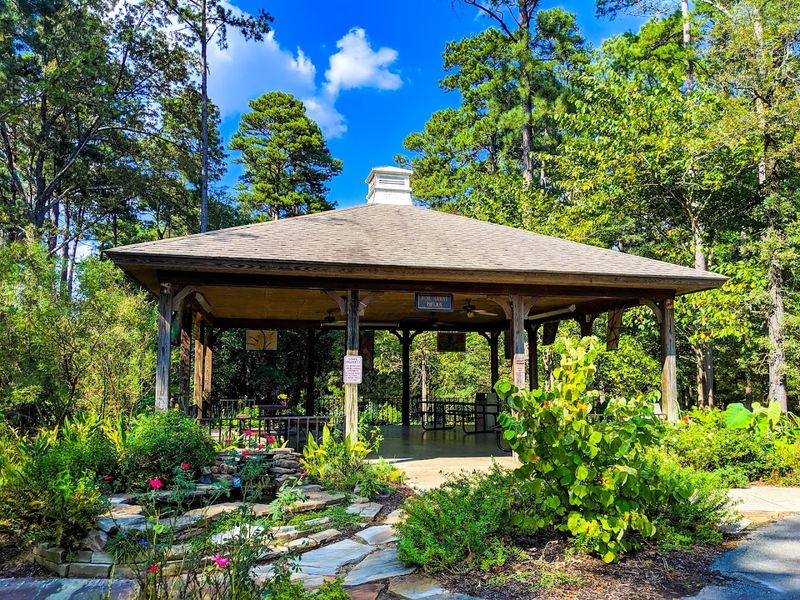
Practical details matter when you are planning an outdoor visit, and the South Arkansas Arboretum handles the basics well. The park includes a pavilion, clean restrooms, and a parking area, which are the three things that make a visit comfortable for families, seniors, and anyone who is not looking to rough it.
The pavilion is surrounded by landscaping and flower beds, making it a genuinely pleasant spot for a picnic rather than just a functional shelter. Multiple visitors have noted that the restrooms are kept clean, which is a detail that sounds small until you are actually there and grateful for it.
Benches are distributed throughout the trail system, giving walkers plenty of places to rest without having to turn back. The overall setup is thoughtful and visitor-friendly without feeling overly developed or commercial.
It is a park that respects your time and your comfort, which makes the whole experience feel more relaxed from the moment you park the car.
Arkansas State Park Passport Stamp Stop
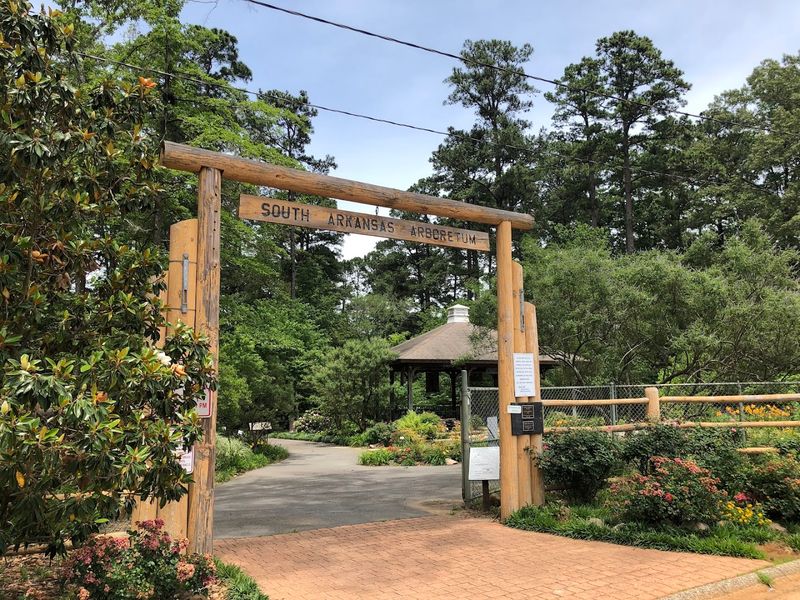
Arkansas has a passport program for its state parks, and the South Arkansas Arboretum is one of the stops on that list. Collecting the stamp here is a small but satisfying ritual, especially for anyone working their way through the state’s park system.
One practical tip worth passing along: bring your own crayon or pencil. The stamp is located just inside the gate on the left, and the ink pad is not always reliable.
A crayon or soft pencil rubbing works perfectly and gives you a clean impression in your passport book.
The passport program is a clever way to encourage people to visit parks they might otherwise overlook, and it works. The arboretum is the kind of stop that might not make every travel bucket list on its own, but once you are there, it tends to leave a stronger impression than expected.
The stamp is just a bonus reason to make the trip.
Best Times to Visit and What to Expect
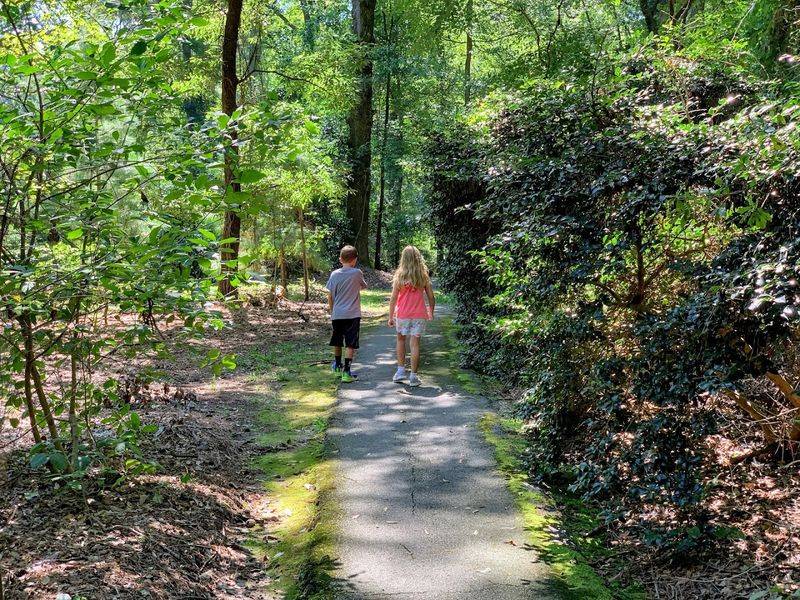
Spring is the clear favorite season for a visit, with full blooms, fresh green growth, and active wildlife making the arboretum feel at its most alive. The trails are also at their most photogenic between March and May, when azaleas and native wildflowers overlap in color.
Summer visits are perfectly fine but come prepared for heat and humidity, which is just a fact of life in southern Arkansas. The shaded canopy helps considerably, but mornings are always a smarter choice than midday in July or August.
The arboretum is open Monday through Saturday from 8 a.m. and Sundays from 9 a.m., closing at 7 p.m. during Daylight Saving Time and at 5 p.m. otherwise. It is closed on state holidays.
The trails are mostly flat with one slightly hilly section, so visitors with mobility concerns should plan accordingly. Dogs are welcome on leash, and the park draws a calm, friendly crowd that makes every visit feel unhurried and genuinely restorative.
Share this story