Some places on Earth still belong entirely to nature, where towering trees block out the sky and creatures you have never seen roam freely through the undergrowth. These jungle destinations are not just travel spots but living, breathing worlds that have existed for millions of years.
From South America to Southeast Asia and deep into Africa, these forests remind us just how wild and powerful our planet truly is.
Amazon Rainforest, Brazil
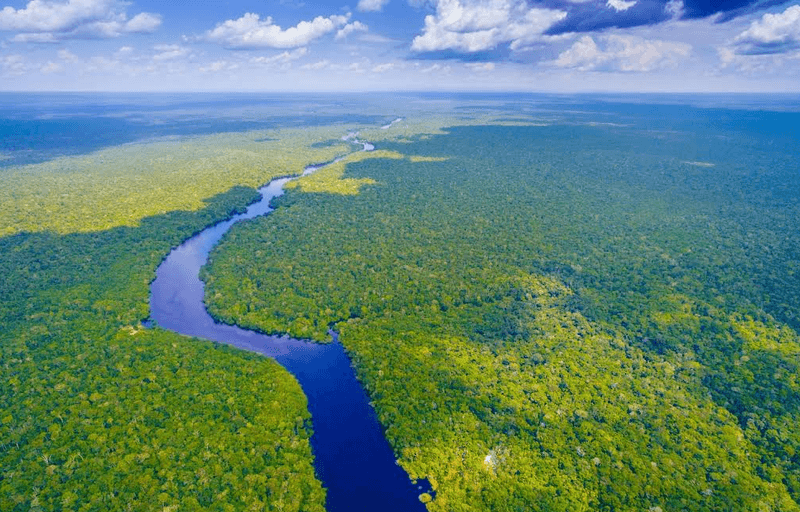
Covering more than five million square kilometers, the Amazon Rainforest is so massive that it creates its own weather. Scientists estimate it houses around ten percent of all species on Earth, many of which have never been formally studied or even discovered.
Riverboats are the best way to explore the deeper reaches of this wilderness, where pink river dolphins surface beside your vessel and macaws paint the sky in brilliant color. Remote jungle lodges offer overnight stays that put you right in the heart of the action, with night walks revealing caimans, giant spiders, and glowing fungi along the forest floor.
Jaguars stalk the undergrowth here, though spotting one is considered extraordinary luck. The Amazon is not just a destination but a living planet of its own, and no photograph or documentary truly prepares you for standing beneath its ancient canopy for the first time.
Borneo Rainforest, Malaysia and Indonesia
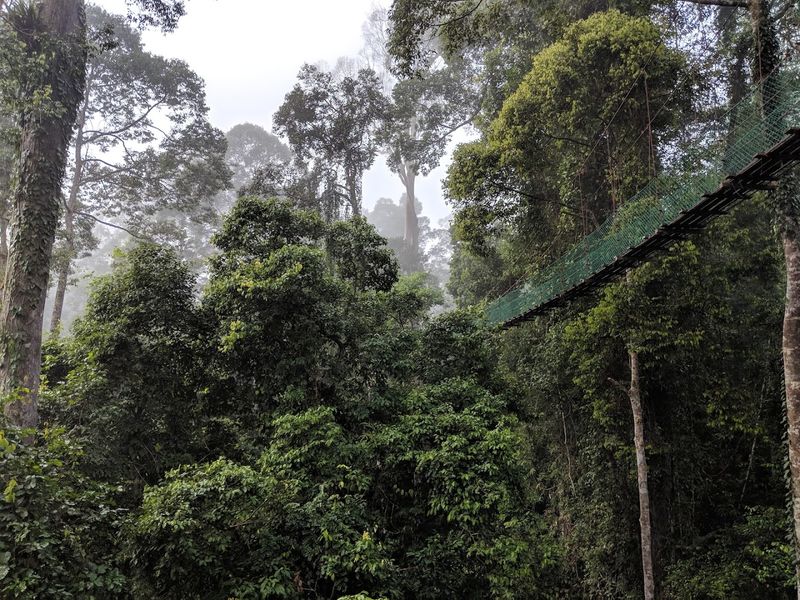
Borneo’s rainforest is roughly 140 million years old, making it one of the oldest ecosystems on the entire planet. That staggering age means life here has had an almost unimaginable amount of time to evolve into strange, spectacular, and wonderfully weird forms.
Orangutans are the undisputed stars of Borneo, swinging through the canopy with a calm intelligence that feels almost uncomfortably familiar. Pygmy elephants wade through rivers while clouded leopards, among the rarest big cats on Earth, slip silently between the trees at dusk.
The Kinabatangan River is one of the best wildlife corridors in all of Asia, and a slow boat ride along its banks rarely disappoints.
Travelers who make the effort to visit Borneo consistently describe it as a place that changes them. The sheer density of life, from the pitcher plants on the forest floor to the hornbills overhead, creates an experience that feels genuinely other-worldly and completely unforgettable.
Yasuni National Park, Ecuador
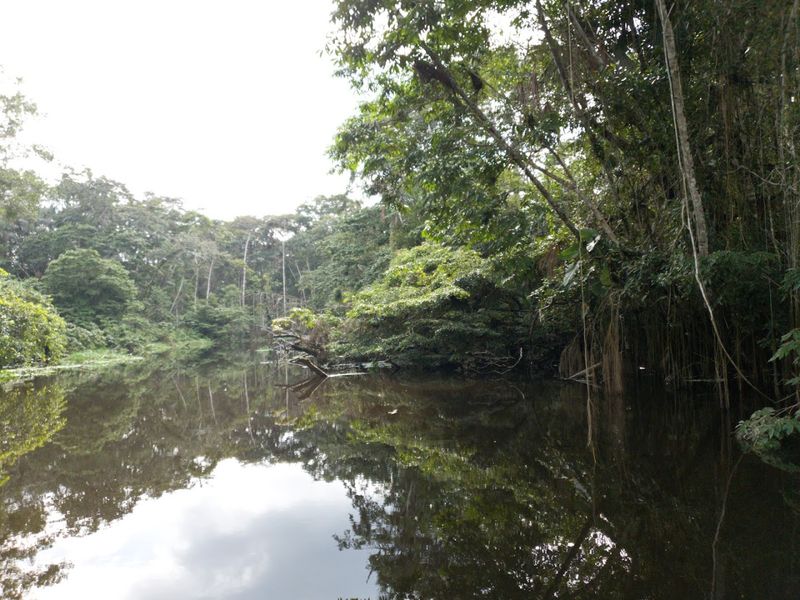
Scientists have counted more tree species in a single hectare of Yasuni than exist in all of North America combined. That single fact tells you everything you need to know about why this corner of Ecuador is considered one of the most biologically rich places on the entire planet.
Yasuni sits at the intersection of the Amazon Basin, the Andes foothills, and the equatorial line, a geographic sweet spot that has allowed life to pile up here in astonishing quantities. Giant otters play in oxbow lakes while troops of spider monkeys crash noisily through the upper canopy.
Rare harpy eagles circle overhead, and the forest floor buzzes with insects that have never been named.
Getting here requires genuine commitment, typically involving flights, boat rides, and long jungle walks, but that effort is exactly what keeps Yasuni wild. Parts of the park are protected as indigenous territory, where communities have lived in voluntary isolation for generations, adding a profound human dimension to an already extraordinary natural landscape.
Manu National Park, Peru
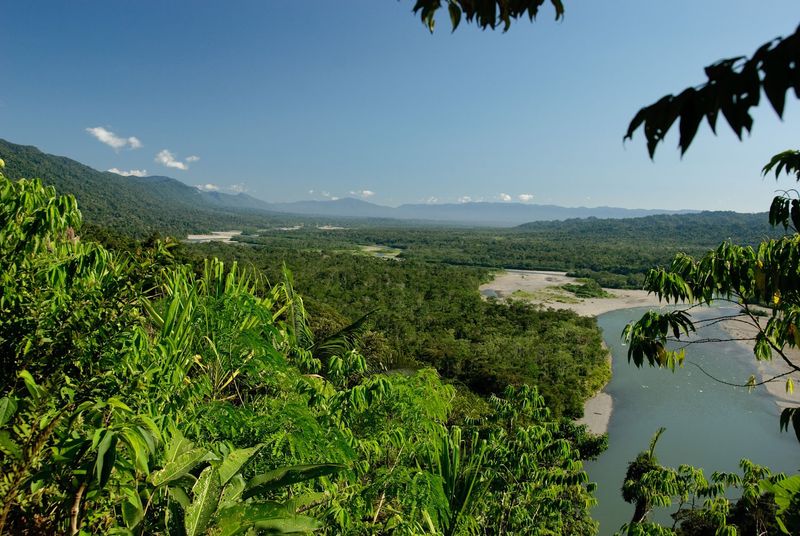
Manu National Park covers nearly two million hectares of Peru’s Amazon Basin, sweeping from high Andean cloud forest all the way down to steamy lowland jungle. That dramatic range of altitude means the biodiversity here is layered, stacked, and almost impossibly varied.
Cloud forests at the upper elevations drip with moss and shelter spectacled bears, while the lowland zones are home to giant river otters, tapirs, and the occasional jaguar prowling the riverbanks at dawn. Over a thousand bird species have been recorded in Manu, a number that sends serious birdwatchers into a state of barely contained excitement.
Macaw clay licks are among the park’s greatest spectacles, drawing hundreds of brilliantly colored parrots to mineral-rich riverbanks each morning.
Access to Manu is deliberately limited to protect its ecosystems, so visitor numbers stay low and the experience stays genuinely wild. Staying in a research lodge deep inside the park, listening to the forest come alive at night, ranks among the most memorable experiences South America has to offer any nature-minded traveler.
Congo Basin, Central Africa
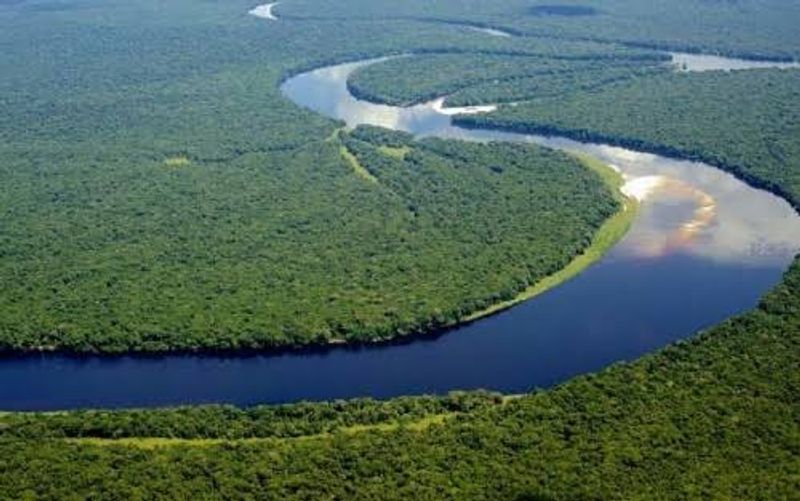
The Congo Basin is the second-largest tropical rainforest on Earth, and it functions as the lungs of an entire continent. Stretching across six countries in Central Africa, this forest absorbs carbon, produces rainfall, and shelters an almost incomprehensible variety of life.
Western lowland gorillas move through the undergrowth in family groups, and forest elephants use ancient trail networks that have been worn into the earth over thousands of years. Bonobos, our closest relatives alongside chimpanzees, live here in communities with complex social structures that researchers are still working to fully understand.
The Congo River itself, one of the deepest rivers in the world, carves through the forest like a liquid highway connecting remote wilderness areas.
Travel in the Congo Basin is genuinely challenging, with limited infrastructure and remote access routes that require serious planning. However, that difficulty is precisely why so much of this forest remains intact.
For travelers willing to accept the challenge, the Congo Basin offers encounters with African wildlife and wilderness that feel completely raw, unfiltered, and unlike anywhere else on the continent.
Bwindi Impenetrable Forest, Uganda
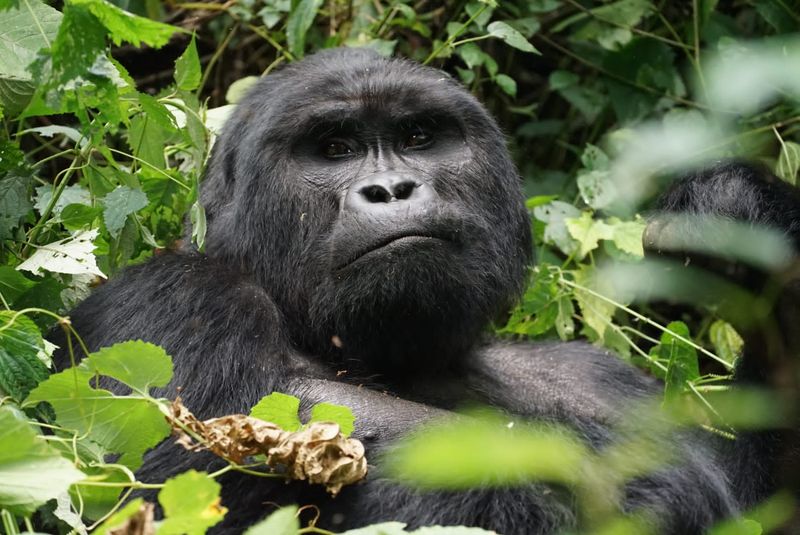
The name Bwindi Impenetrable Forest is not poetic license but a genuine warning. This dense, steep, mist-soaked jungle in southwestern Uganda is the kind of place where visibility drops to a few meters and the ground shifts constantly beneath your boots.
Nearly half of the world’s remaining mountain gorillas live here, and trekking through the forest to find a family group is one of the most emotionally powerful wildlife experiences available anywhere on Earth. Permits are limited and prices are deliberately high to fund conservation, which means encounters feel exclusive, carefully managed, and deeply respectful of the animals involved.
Sitting quietly while a silverback gorilla moves within arm’s reach is the sort of moment that rewires something fundamental in your brain.
Beyond gorillas, Bwindi shelters over 350 bird species and hundreds of butterfly varieties in its tangled vegetation. The forest itself feels ancient and alive in a way that is difficult to describe, as though every root and vine is watching you pass through.
Uganda is increasingly recognized as one of Africa’s finest wildlife destinations, and Bwindi is the undeniable crown jewel of that reputation.
Nyungwe Forest, Rwanda
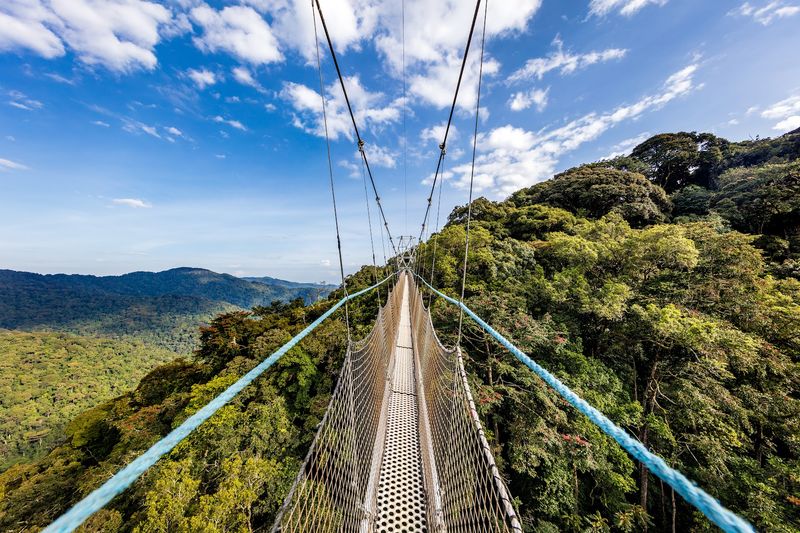
Nyungwe is one of Africa’s oldest and least-disturbed rainforests, estimated to be around two million years old, which means it survived the ice ages that wiped out forests across much of the continent. That survival story helps explain why its biodiversity is so extraordinary.
Chimpanzees are the headline attraction here, but the massive troops of black-and-white colobus monkeys crashing through the canopy in groups of several hundred animals are equally jaw-dropping. Over 300 bird species have been recorded in Nyungwe, including 29 that are found nowhere else in East Africa, making it a serious destination for dedicated birdwatchers.
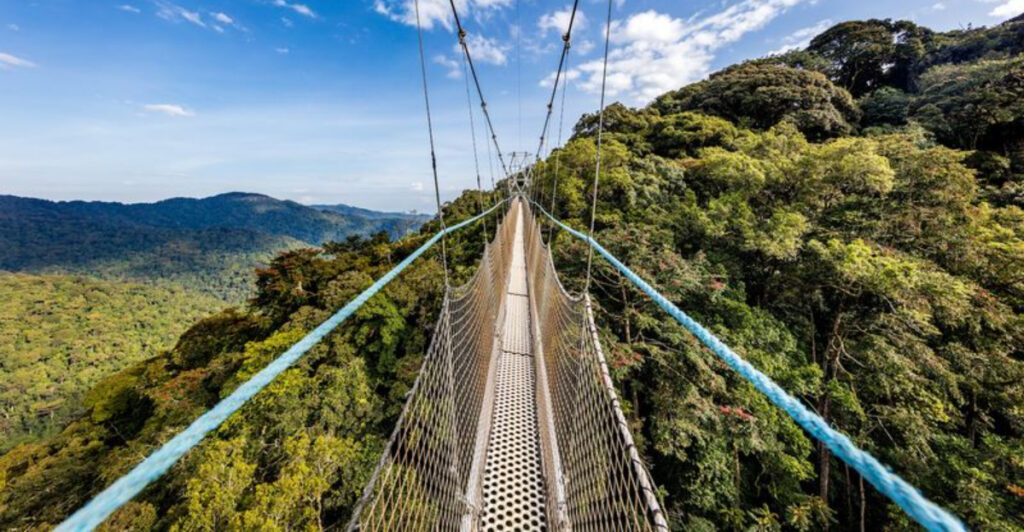
A canopy walkway suspended high above the forest floor offers a bird’s-eye perspective that genuinely earns the word breathtaking.
Rwanda’s commitment to conservation has transformed Nyungwe into one of the best-managed wilderness areas in Africa. The forest sits in the country’s southwest, draped across rolling mountains that catch clouds and mist throughout the year.
Visiting feels like stepping into a world that operates on its own ancient schedule, completely indifferent to the modern rush happening just beyond its borders.
Taman Negara, Malaysia
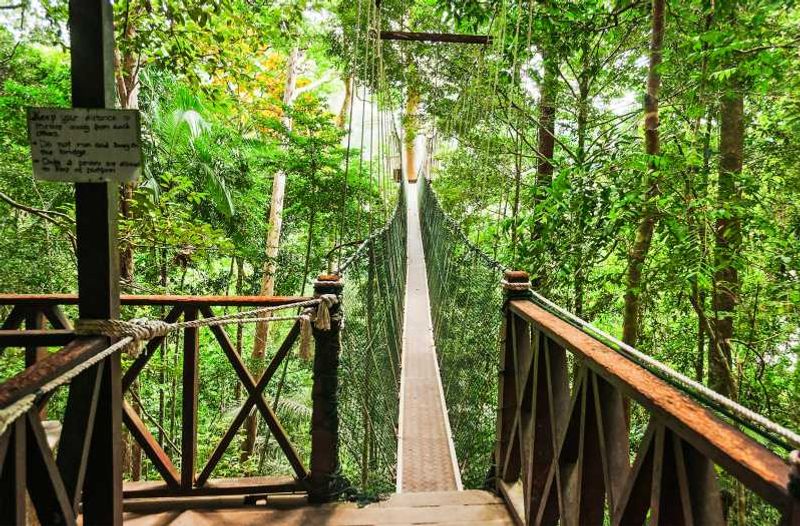
At an estimated 130 million years old, Taman Negara is one of the oldest surviving rainforests on the planet, predating the dinosaurs’ extinction and outlasting ice ages, continental shifts, and everything else the planet has thrown at it. That kind of staying power deserves serious respect.
The famous canopy walkway stretches 510 meters through the treetops, offering views down into a forest so thick and layered that the ground below feels like another world entirely. Tapirs, Malayan tigers, and sun bears move through the undergrowth, though sightings of the larger mammals require patience and a measure of luck.
Night hikes are particularly rewarding, revealing a completely different cast of characters including flying squirrels, civets, and enormous stick insects clinging to bark in the torchlight.
River journeys by boat into the park’s interior bring travelers past limestone outcrops and through increasingly remote forest. Indigenous Batek communities have called Taman Negara home for thousands of years and offer guided experiences that connect visitors to the forest in ways that standard tourist trails simply cannot replicate.
This is Malaysia at its most genuinely wild.
Khao Sok National Park, Thailand
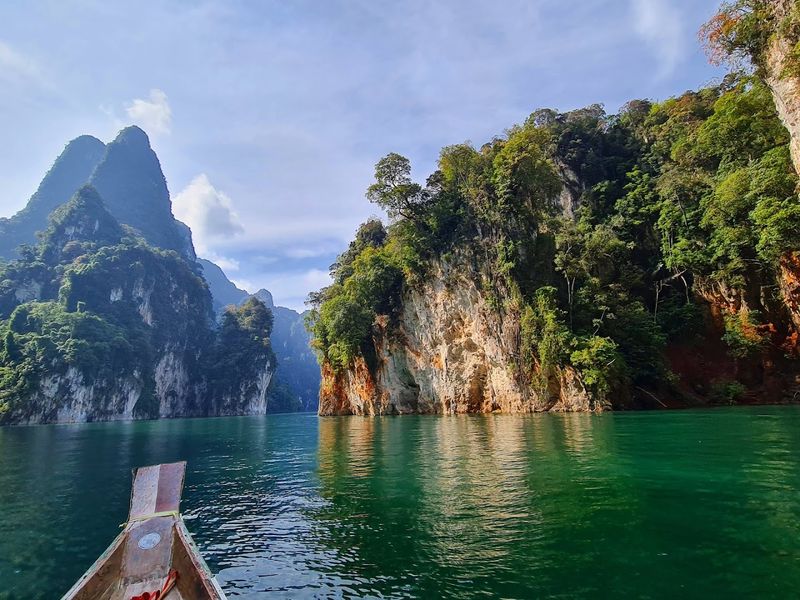
Khao Sok is older than the Amazon, which surprises most visitors who associate ancient rainforests primarily with South America. This park in southern Thailand has been growing continuously for around 160 million years, and the landscape it has produced is genuinely cinematic.
Massive limestone cliffs erupt from the jungle canopy like something from a fantasy novel, draped in hanging vines and home to colonies of bats that pour from cave entrances at dusk like living smoke. The artificial Cheow Lan Lake sits at the park’s heart, its emerald water reflecting cliff faces that rise hundreds of meters straight up from the surface.
Floating bungalows on the lake allow visitors to fall asleep to the sounds of gibbons calling across the water in the early morning darkness.
Gaurs, the world’s largest wild cattle, roam the park alongside leopards, elephants, and the elusive Malayan tapir. Khao Sok receives enormous rainfall, which keeps the forest perpetually lush and dripping.
For travelers passing through Thailand who assume they have already seen the country’s best landscapes, Khao Sok reliably delivers a very pleasant and very dramatic surprise.
Daintree Rainforest, Queensland, Australia
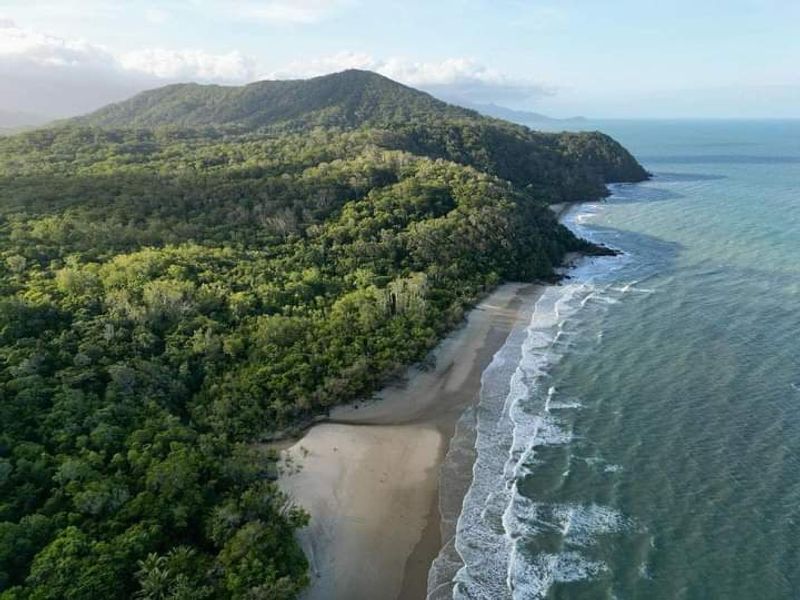
Somewhere in far north Queensland, the rainforest walks straight down to the beach and dips its toes in the Coral Sea. The Daintree is the only place on Earth where two UNESCO World Heritage sites, the rainforest and the Great Barrier Reef, exist side by side and practically touch.
At roughly 135 million years old, the Daintree is considered one of the oldest surviving tropical rainforests on the planet, housing plants and animals that represent evolutionary lineages stretching back to when Australia was still part of the ancient supercontinent Gondwana. Cassowaries, the large and impressively territorial flightless birds, patrol the forest floor here with an air of absolute authority.
Boyd’s forest dragons, tree kangaroos, and platypuses round out a wildlife list that feels almost too eclectic to be real.
The Mossman Gorge section of the park offers swimming in crystal-clear rainforest streams, while guided night walks reveal a forest that transforms completely after dark. Aboriginal Kuku Yalanji people have cared for this land for thousands of years, and their guided cultural experiences add essential depth to any visit.
The Daintree rewards slow, attentive travelers most generously.
Papua New Guinea’s Jungles
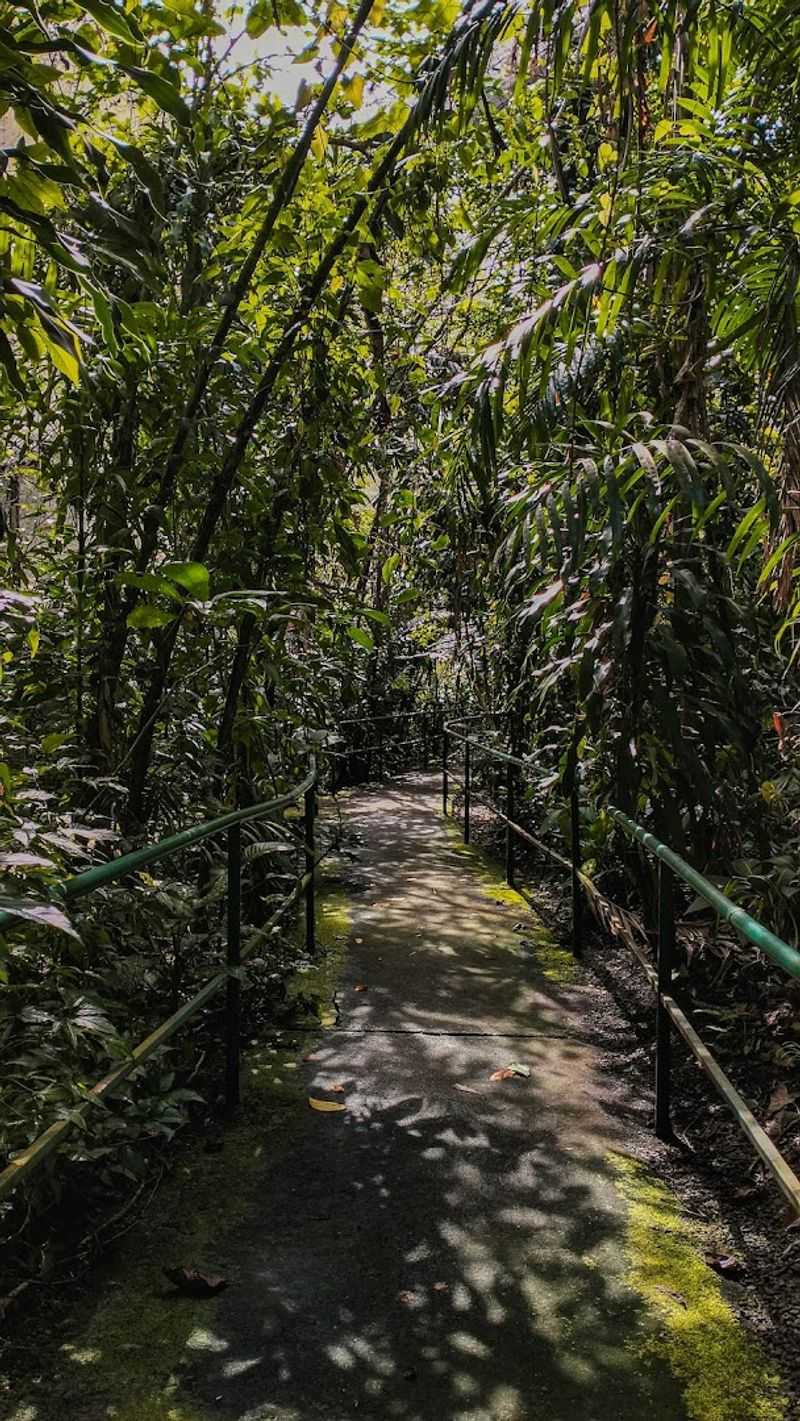
Papua New Guinea is one of the least explored countries on Earth, and its jungles are a major reason why. Rugged mountain ranges, limited road networks, and hundreds of distinct indigenous languages have kept vast stretches of forest almost completely isolated from the outside world.
Birds-of-paradise perform their extraordinary courtship dances in these forests, displaying plumage so extravagant that early European explorers assumed the birds must have fallen from paradise itself. Tree kangaroos, which evolution apparently decided should ignore gravity, bound through the canopy of highland forests.
Over 800 languages are spoken across the country, meaning the human cultural diversity here rivals the biological diversity of the forest itself.
Conservation in Papua New Guinea is largely community-led, with local villages controlling access to their traditional lands. This creates a travel experience that is deeply personal and genuinely different from conventional ecotourism.
Visitors who make the considerable effort to reach remote jungle areas often describe the experience as humbling, transformative, and completely unlike anything else in the world. Papua New Guinea does not make travel easy, but it rewards determination with scenes that feel completely untouched by the modern world.
Lacandon Jungle, Chiapas, Mexico
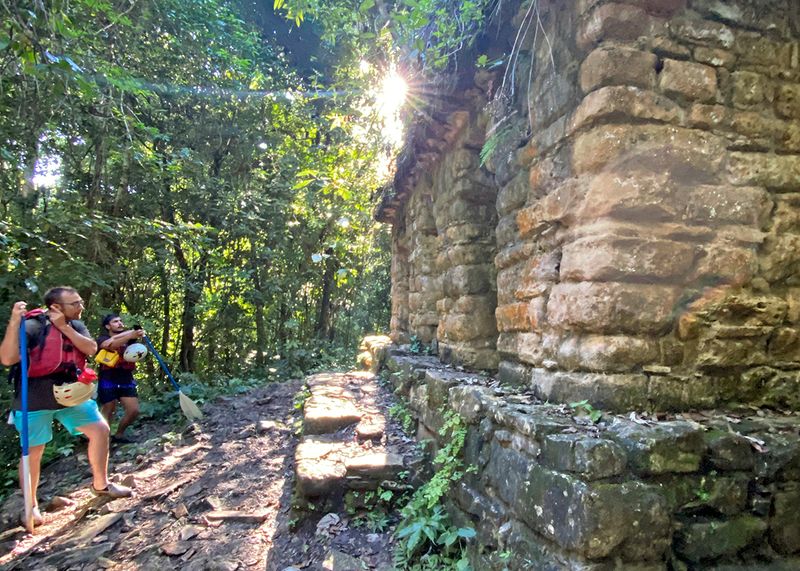
Hidden beneath the canopy of southern Mexico’s largest remaining rainforest, ancient Maya cities crumble slowly back into the jungle that swallowed them centuries ago. The Lacandon Jungle in Chiapas is one of those rare places where human history and raw wilderness have become genuinely inseparable.
Bonampak and Yaxchilan are two of the most atmospheric archaeological sites in all of Mexico, accessible only by river or jungle trail, with howler monkeys providing a thunderous soundtrack from the treetops above. Scarlet macaws nest in the ruins, and tapirs wander the forest trails at dawn as though the temples belong to them now, which in many ways they do.
The Lacandon Maya people still live within the forest, maintaining traditions and ecological knowledge that stretch back thousands of years.
Montes Azules Biosphere Reserve protects the most intact section of the jungle, where jaguars, pumas, and margays still hold territory. The forest here receives heavy rainfall throughout the year, keeping the vegetation lush, dramatic, and perpetually green.
For travelers who want archaeology and wilderness in a single destination, the Lacandon Jungle delivers both with remarkable generosity.
Choco-Darien Forest, Colombia and Panama
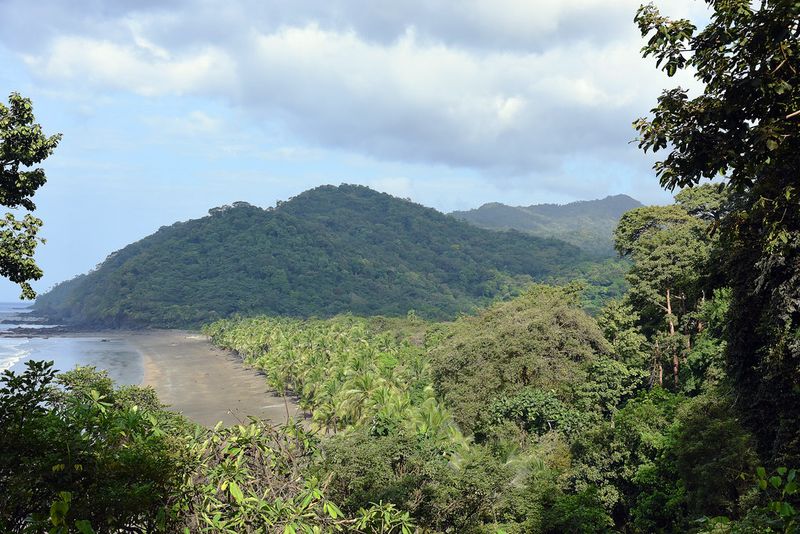
Few places on Earth receive as much rain as the Choco-Darien region, where some areas record over 10,000 millimeters of rainfall per year. That relentless moisture feeds a forest so dense and so alive that it practically vibrates with biological energy.
Poison dart frogs in colors that seem too vivid to be real hop across the forest floor here, advertising their toxicity with a boldness that only an apex predator could afford to ignore. Harpy eagles, the largest and most powerful raptors in the Americas, hunt sloths and monkeys through the upper canopy with terrifying efficiency.
The region also shelters remarkable Afro-Colombian and indigenous communities whose knowledge of the forest’s medicinal and ecological properties represents an irreplaceable cultural heritage.
The Darien Gap, the famous roadless stretch connecting Colombia and Panama, has protected much of this forest simply by making human access extremely difficult. Conservation organizations are working alongside local communities to ensure that protection continues even as development pressure increases.
Travelers with serious wilderness credentials and a high tolerance for humidity and challenge will find the Choco-Darien among the most rewarding jungle experiences available anywhere in the Western Hemisphere.
Maya Forest, Belize, Guatemala, and Mexico
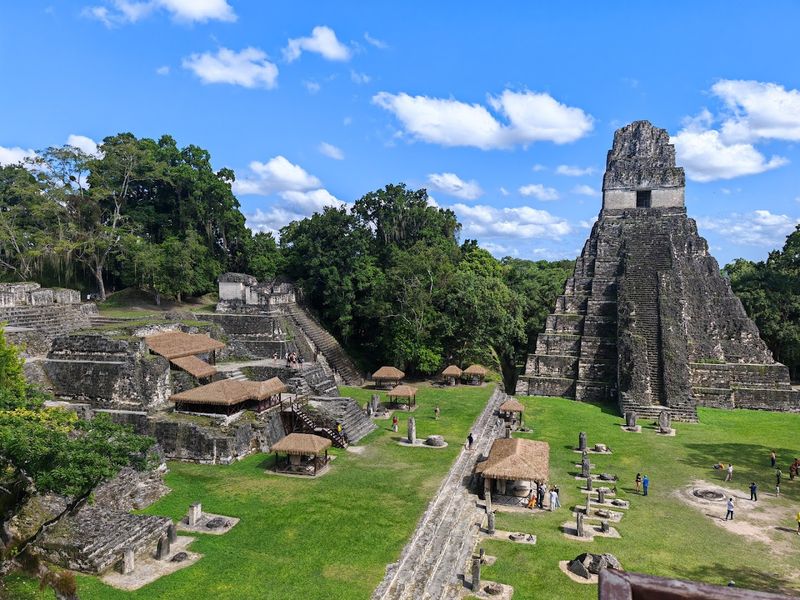
Stretching across three countries and covering roughly four million hectares, the Maya Forest is the second-largest tropical rainforest in the Americas. It also happens to contain the greatest concentration of ancient Maya archaeological sites anywhere on the planet, making it a destination that history lovers and nature enthusiasts can genuinely share.
Jaguars, pumas, and Baird’s tapirs roam this transboundary forest, moving across borders that the animals themselves are completely unaware of. Howler monkeys greet each dawn with a sound somewhere between a roar and a freight train, audible from several kilometers away through the trees.
Tikal in Guatemala rises dramatically above the jungle canopy, its temple tops visible for miles, while Belize’s Rio Bravo Conservation Area protects vast tracts of forest with remarkably few visitors.
Community-based conservation programs across all three countries have given local villages economic incentives to protect rather than clear the forest. Birdwatchers will find the Maya Forest particularly rewarding, with toucans, trogons, and the resplendent quetzal all recorded in the region.
This is a living landscape that rewards exploration at every level, from the forest floor all the way to the ancient stone temples breaking through the canopy above.
Kaieteur National Park, Guyana
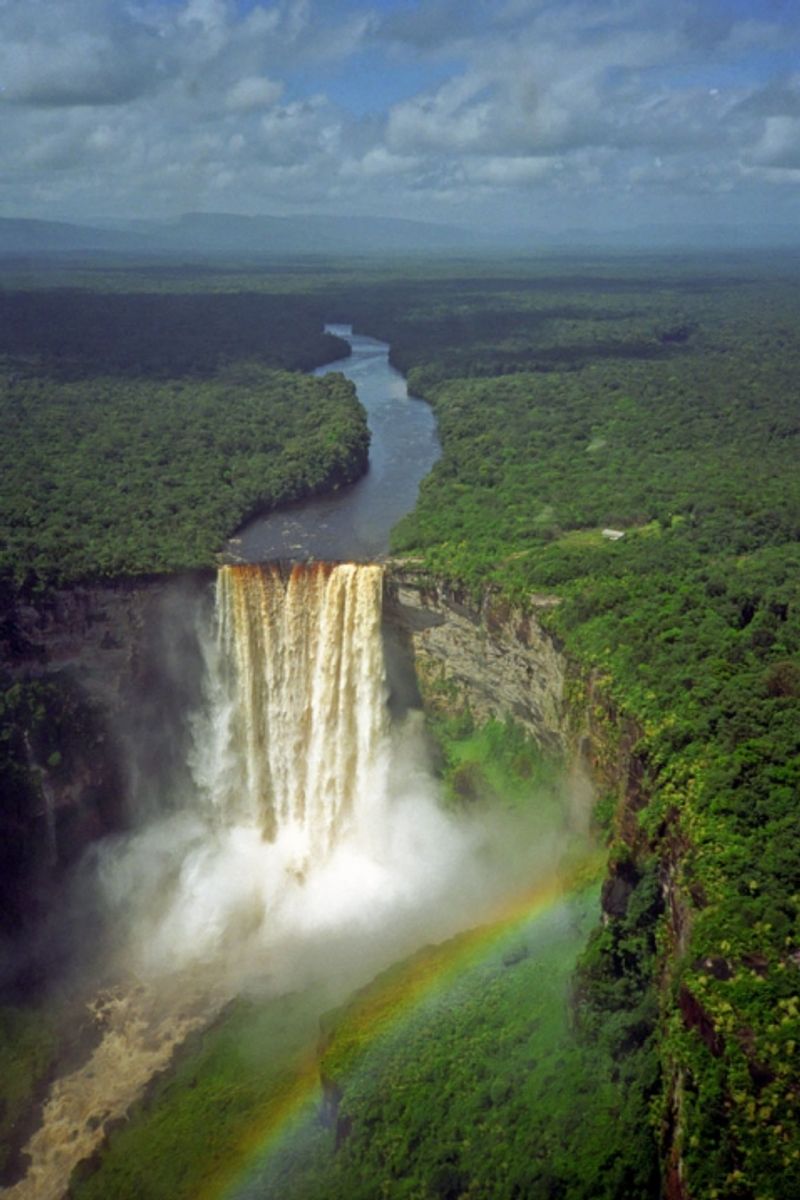
Kaieteur Falls drops 226 meters in a single unbroken plunge, making it roughly four times the height of Niagara Falls, yet a fraction of the tourists. Guyana’s determination to keep visitor numbers low has turned Kaieteur National Park into one of South America’s most gloriously unspoiled wilderness areas.
The falls themselves are spectacular enough, but the surrounding forest is the real story. Guianan cock-of-the-rock birds perform flamboyant courtship displays on rocky outcrops, golden rocket frogs breed exclusively in the water pooled inside giant bromeliad plants, and giant anteaters shuffle through the undergrowth with their improbably long snouts.
The park sits on the ancient Guiana Shield, one of the oldest geological formations on Earth, giving the landscape a raw, primordial quality that feels genuinely different from other South American rainforests.
Most visitors arrive by small propeller plane from Georgetown, landing on a grass airstrip carved from the forest, which sets the adventurous tone perfectly. Guyana as a whole receives fewer tourists than almost any country in South America, and the government has made sustainable, low-volume ecotourism a national priority.
For travelers who want a truly remote rainforest experience, Kaieteur delivers everything the Amazon promises with considerably fewer crowds.
Share this story