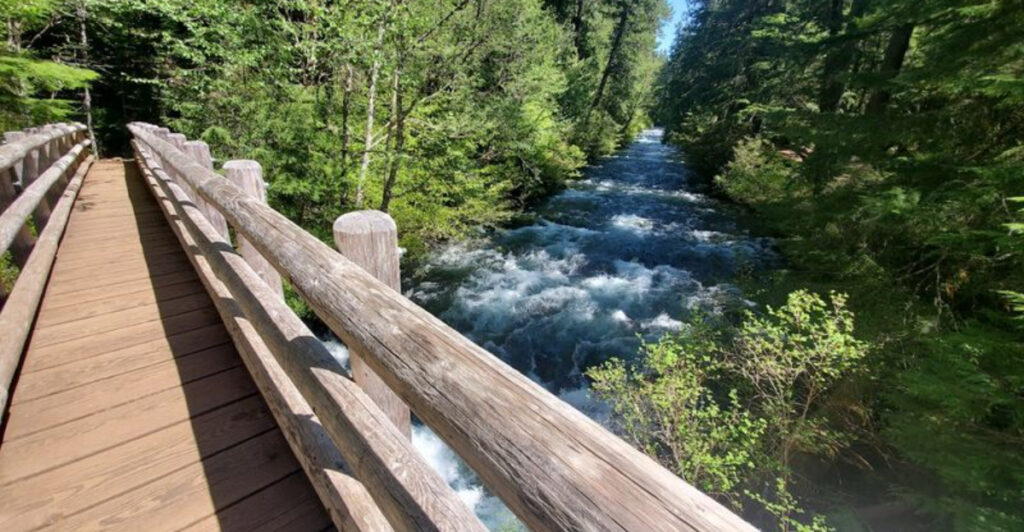
There is a trail in Oregon where the river runs so clear and cold that the water glows a surreal shade of blue, and people drive hours just to see it with their own eyes. The McKenzie River Trail stretches 26 miles through ancient Douglas firs, past roaring waterfalls, over lava rock fields, and alongside one of the most photographed natural pools in the Pacific Northwest.
Hikers, mountain bikers, and nature lovers keep coming back season after season, and it is easy to understand why. This trail offers something rare: a place where the landscape genuinely earns every bit of the hype surrounding it.
Where the Trail Begins: Location and Access
The official address for the McKenzie River Trail area is 56621 McKenzie Hwy, McKenzie Bridge, OR 97413, nestled in the Willamette National Forest in western Oregon, roughly an hour east of Eugene. The trail runs along the McKenzie River and can be accessed from multiple entry points along Highway 126, which makes planning your visit both flexible and occasionally confusing.
One honest heads-up: navigation apps do not always point you to the right trailhead. Several visitors have noted that the lower trail starts about a mile east of where Google Maps suggests, near the ranger station two miles east of Jennie B.
Harris Wayside. That ranger station is genuinely the best starting point for first-timers, since staff there can give you updated trail conditions and parking tips.
Parking is limited at the most popular access points, especially near the waterfalls and the Blue Pool trailhead. Arriving early on weekends is not just a suggestion here, it is practically a survival strategy.
The trail is open 24 hours a day, seven days a week, and the ranger station can be reached at (541) 822-6272.
The Legendary Tamolitch Blue Pool
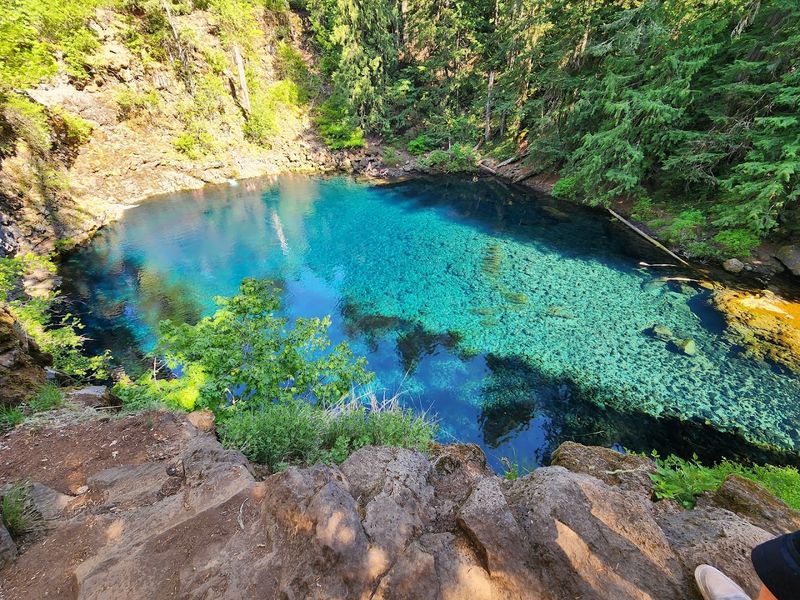
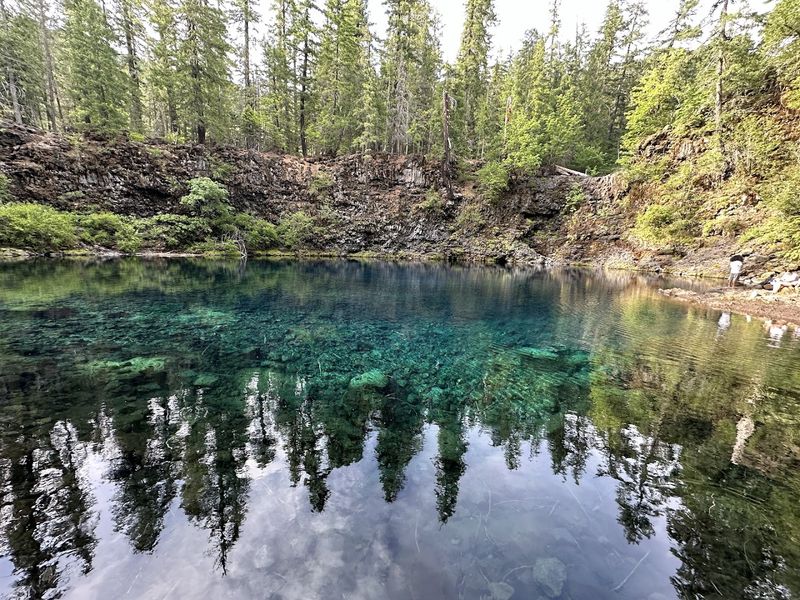
No feature on this trail gets more attention than the Tamolitch Blue Pool, and rightfully so. Fed by underground springs that push cold water up through porous lava rock, the pool sits in a natural bowl where the McKenzie River essentially disappears underground and then resurfaces in a burst of brilliant turquoise.
The color is not a filter or an exaggeration; it genuinely looks that electric in person.
The hike to reach it runs about 4.5 miles round-trip from the Ice Cap Creek trailhead, and the final descent to the pool is steep and rocky. Trekking poles are a smart addition to your pack if you have them.
The trail winds through old-growth forest before opening up to the dramatic lava field surrounding the pool.
Water temperatures at the pool hover around 34 to 38 degrees Fahrenheit even in summer, so swimming is possible but extremely cold. Many visitors are content to simply sit at the edge and stare at the color, which is honestly a reasonable life choice.
The pool is most reliably full in spring and early summer when snowmelt keeps the water level high.
Sahalie and Koosah Falls: A Two-for-One Waterfall Loop
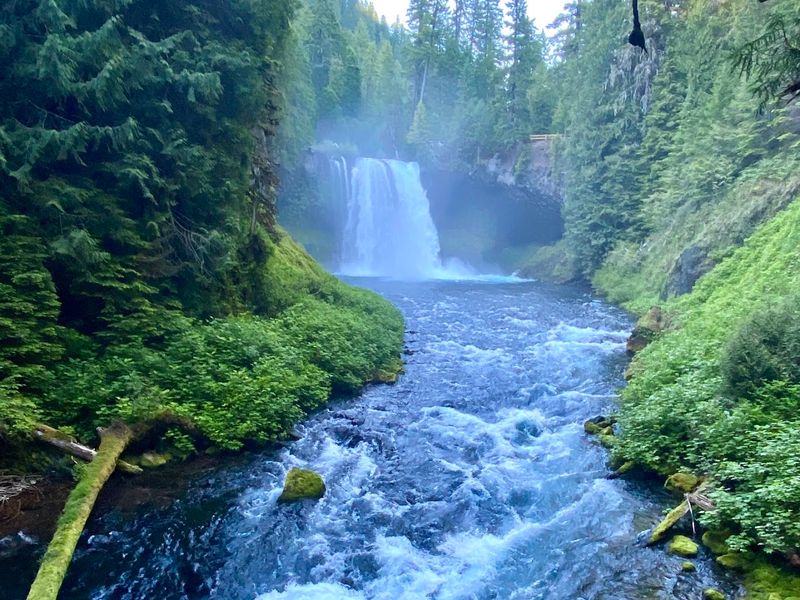
About two miles apart and connected by a well-marked loop trail, Sahalie and Koosah Falls are two of the most dramatic waterfalls in Oregon. Sahalie drops roughly 100 feet over a basalt cliff in a wide, thundering curtain of white water, while Koosah, just downstream, crashes through a narrower channel with equal force.
The mist from both falls keeps the surrounding forest perpetually damp and green.
The loop connecting them is approximately 2.5 miles and takes most visitors around two to three hours at a comfortable pace. The trail offers multiple viewpoints for each waterfall, so you get different perspectives as you circle around.
Snow can linger on parts of this loop through April, so waterproof footwear is worth considering for early spring visits.
If you search for parking or directions, looking up “Sahalie Falls” or “Koosah Falls” directly tends to produce better navigation results than searching for the McKenzie River Trail as a whole. The falls are dog-friendly and kid-friendly, with wide, well-marked paths near the viewpoints.
Watching the water pound the basalt below while standing on the observation platforms is one of those moments that stays with you long after the drive home.
26 Miles of Singletrack: The Full Trail Experience
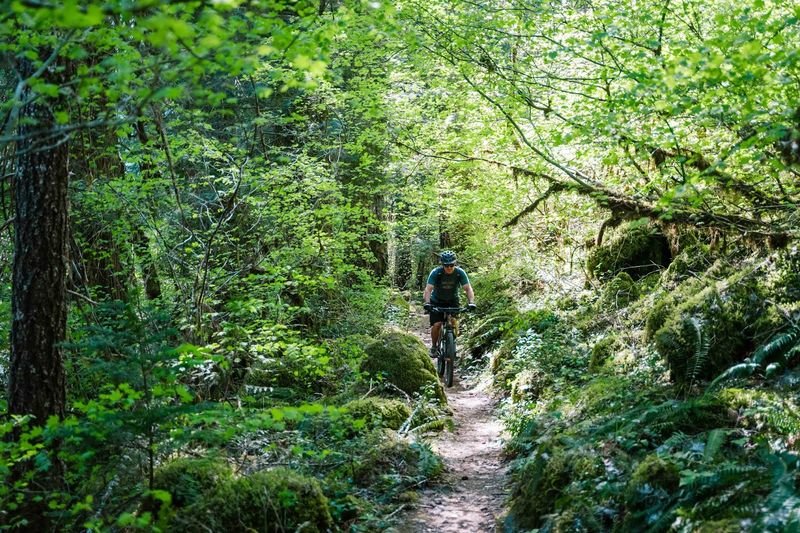
The full McKenzie River Trail covers 26 miles of singletrack that flows through old-growth Douglas fir forest, crosses lava fields, skirts the edges of clear mountain lakes, and follows the river through some genuinely wild terrain. Most people tackle sections rather than the whole thing, but riders and hikers who complete the entire route consistently describe it as one of the best full-day adventures in the Pacific Northwest.
The trail is divided roughly into an upper and lower half. The upper section, closer to Clear Lake, is considered more scenic and technically demanding, with cliff sections and tighter forest corridors.
The lower half flows more smoothly and is better suited to newer mountain bikers, though it still has enough rock and root to keep things interesting.
A full ride of all 26 miles takes experienced riders around six hours including stops, and the trail gains and loses elevation in ways that will test your legs by mile 20. Bring more water than you think you need, pack snacks, and let someone know your planned route before heading out.
The reward at the end of a full traverse is the kind of tired that feels genuinely earned.
Clear Lake: The Eerily Beautiful Starting Point
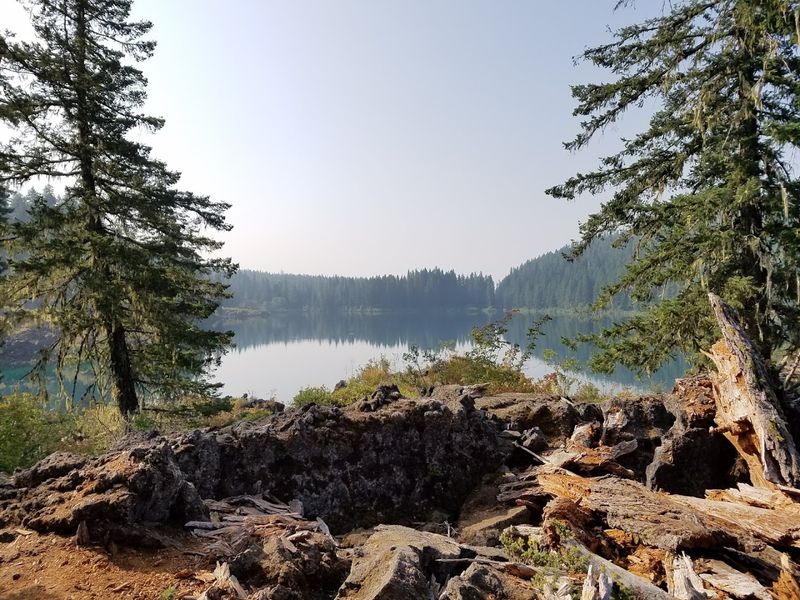
Clear Lake sits at the northern end of the McKenzie River Trail and serves as one of the most striking entry points to the route. Formed roughly 3,000 years ago when a lava flow dammed the river, the lake is fed entirely by cold springs and is so clear that you can see ancient submerged trees still standing upright on the lake floor, preserved by the cold water for millennia.
That is not a ghost story; it is actual geology.
The lake has a small resort with rowboat rentals, which gives you the chance to paddle over the submerged forest and peer down at trees that were alive during the Bronze Age. The surrounding trail section from Clear Lake to the McKenzie General Store is one of the most scenic stretches of the entire route, with minimal crowds outside of the Blue Pool area.
Fishing is popular here, and the lake supports a healthy population of rainbow trout. Picnic tables and basic facilities are available near the boat launch.
Early morning on a calm day, when the surface is completely still and the reflection of the surrounding firs fills the water, Clear Lake earns its name in the most literal and spectacular way possible.
Lava Fields and Geological Drama Along the Route
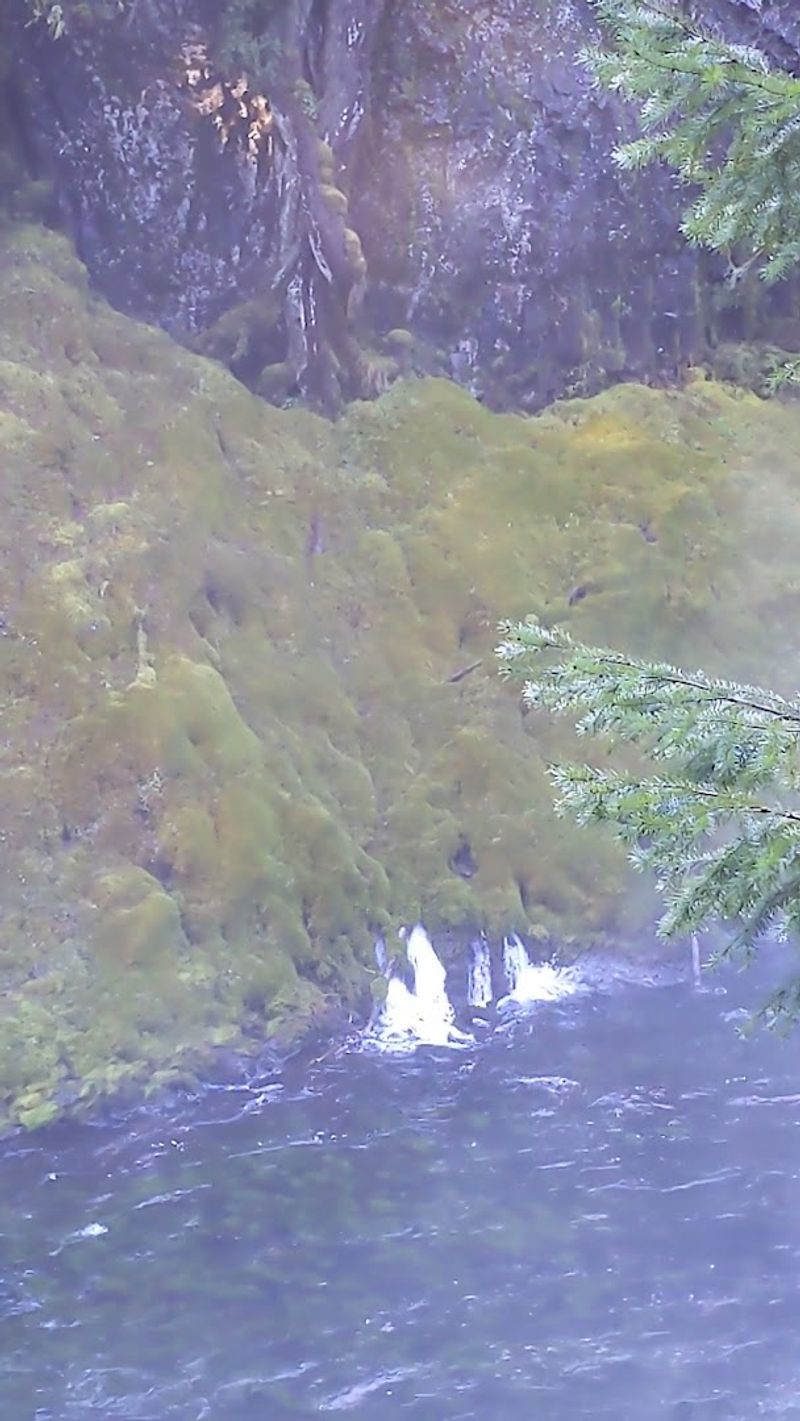
One of the more unexpected features of the McKenzie River Trail is how much volcanic geology shapes the landscape. The trail passes through sections of ancient lava fields where the dark, jagged basalt contrasts sharply with the bright green moss and forest that has slowly reclaimed the rock over thousands of years.
The Big Spring section, where underground water pushes up through the porous lava to feed the McKenzie River, is a fascinating example of how the geology here is still actively influencing the landscape.
The lava rock sections are the most technically demanding parts of the trail for both hikers and bikers. Footing can be unpredictable, and the rock surface is uneven enough that paying attention to each step matters more than it does on a standard dirt trail.
Trekking poles and sturdy footwear make a real difference on these stretches.
For mountain bikers, the upper section of the trail near the lava fields is rated intermediate to advanced. Riders who prefer to skip the most technical lava sections can start at the Blue Pool trailhead and still access miles of fast, flowing singletrack through the forest.
The lava fields are a reminder that this whole valley was shaped by fire long before it was shaped by water.
Wildlife, Forest, and the Atmosphere of the Trail
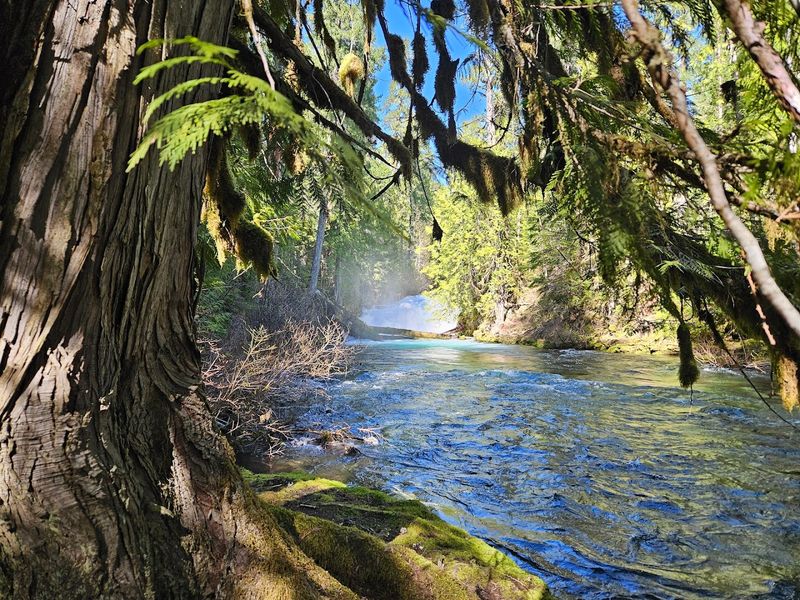
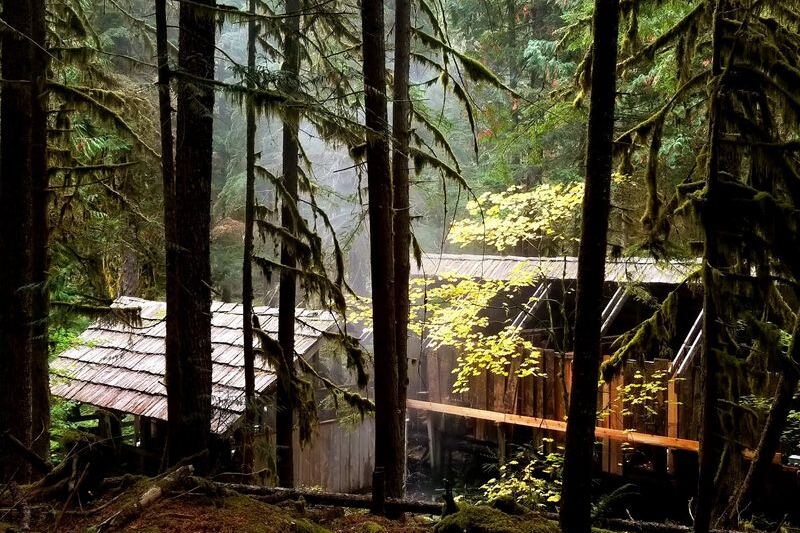
The forest along the McKenzie River Trail is the kind of place that makes you genuinely quiet without meaning to. Towering Douglas firs create a canopy that filters sunlight into soft, shifting patterns on the trail below, and the understory is thick with ferns, mosses, and wildflowers depending on the season.
The trees are impressive, though they are not the coastal redwood giants some visitors might expect; these are inland old-growth conifers with their own particular grandeur.
Wildlife sightings are common enough to keep your eyes moving. Deer are frequently spotted near the river edges, and the trail sees its share of squirrels, osprey, and the occasional black bear at dawn or dusk.
The river itself supports native fish populations, and the sound of the current is a near-constant companion along most of the route.
On a quiet weekday evening, it is entirely possible to walk for two hours and encounter fewer than five other people on the trail. The forest absorbs sound in a way that makes the whole experience feel more private than the trail’s popularity might suggest.
Furry four-legged hiking companions are welcome on the trail, making it a favorite for dog owners who want a proper adventure rather than a neighborhood stroll.
Mountain Biking: Skills, Sections, and What to Expect
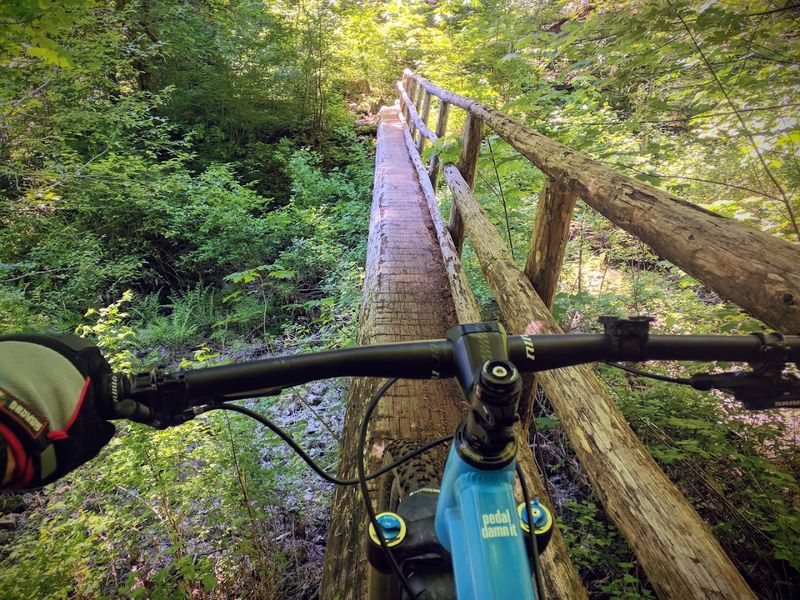
The McKenzie River Trail has a reputation in the mountain biking community that goes well beyond Oregon’s borders. Riders travel from across the country specifically for this trail, and the combination of flowing forest singletrack, technical lava rock sections, and river views makes it easy to see why the reputation holds up.
The trail is not beginner territory, but it is accessible to intermediate riders who are comfortable with roots, rocks, and occasional exposure.
The lower half of the trail, roughly from the Paradise Campground area to Deer Creek, is rated beginner to intermediate and flows smoothly enough that newer riders can build confidence while still enjoying spectacular scenery. A 15-mile round-trip on this section is a solid day out for riders still building their technical skills.
The upper half, from Clear Lake down toward the Blue Pool area, is where the trail earns its more serious reputation. Cliff sections, tight switchbacks, and extended lava rock riding require genuine bike-handling skills and focused attention.
There is also a bike offshoot near the Blue Pool that allows riders to bypass the crowded foot-traffic area around the pool while still staying on the trail. The McKenzie River Trail rewards riders who respect it with one of the most memorable rides in the American West.
Best Seasons and Timing Your Visit
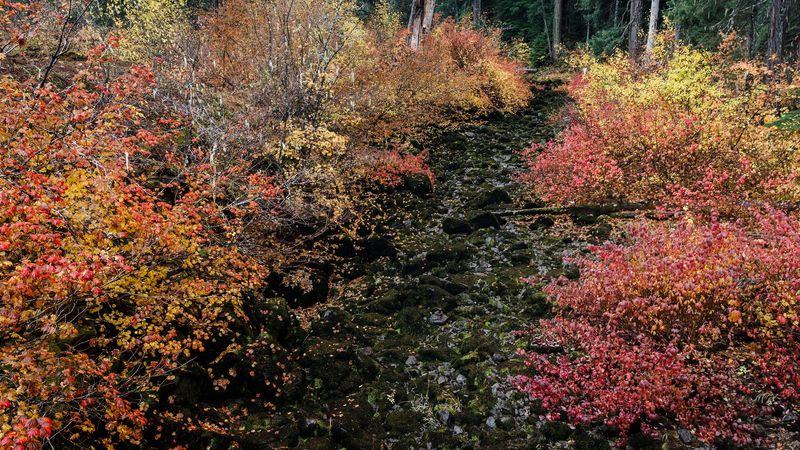
Every season brings something different to the McKenzie River Trail, and choosing when to visit depends entirely on what you want to experience. Spring is when the waterfalls run at their most powerful and the Blue Pool is typically at its fullest, fed by snowmelt from the surrounding mountains.
The forest is intensely green from April onward, though snow can still cover portions of the upper trail through late April.
Summer is the busiest season, particularly around the Blue Pool and waterfall sections. Arriving before 9 a.m. on weekends is genuinely necessary if you want a parking spot without circling for 30 minutes.
The long daylight hours make summer ideal for longer rides and full-trail traverses.
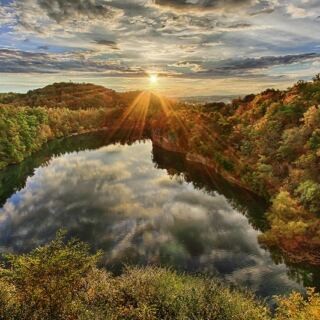
Autumn is arguably the most underrated time to visit. The color change in early October turns the forest into something out of a landscape painting, with gold and amber tones layered through the firs and alders along the river corridor.
Crowds thin significantly after Labor Day, and the cooler temperatures make long hikes far more comfortable. Winter closes some access points and makes certain sections icy, but hardy visitors who check conditions in advance can still access parts of the lower trail year-round.
Practical Tips for a Smooth Visit
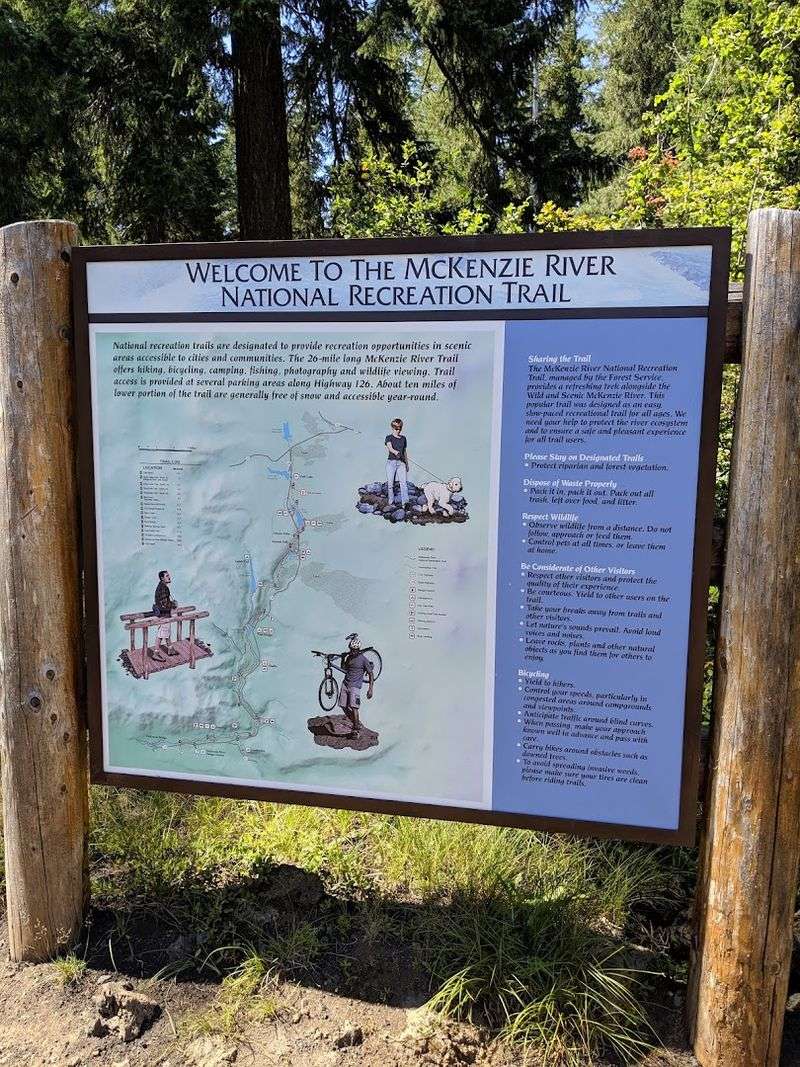
A few practical details can make the difference between a smooth trip and a frustrating one on the McKenzie River Trail. Navigation is the first challenge; as multiple visitors have noted, online maps and GPS apps frequently direct you to the wrong trailhead or incorrect starting points.
Searching specifically for “Sahalie Falls,” “Koosah Falls,” or “Tamolitch Blue Pool” when navigating tends to produce more accurate results than searching for the trail name alone.
Parking fills fast at all the major access points, particularly on summer weekends. The Blue Pool trailhead, the Sahalie Falls area, and the Clear Lake resort parking lot are all consistently full by mid-morning on Saturdays and Sundays.
A Northwest Forest Pass or America the Beautiful pass is required for parking at most trailheads, so bring yours or plan to purchase a day pass.
Trail conditions can include snow through April on upper sections, and the rock and root surfaces throughout the trail create genuine trip hazards that deserve your full attention. Wearing sturdy footwear with ankle support is a smart call regardless of which section you plan to hike.
Carry more water than you expect to need, pack out everything you bring in, and the trail will treat you well in return.
Waterfalls, Bridges, and the Small Details That Stick
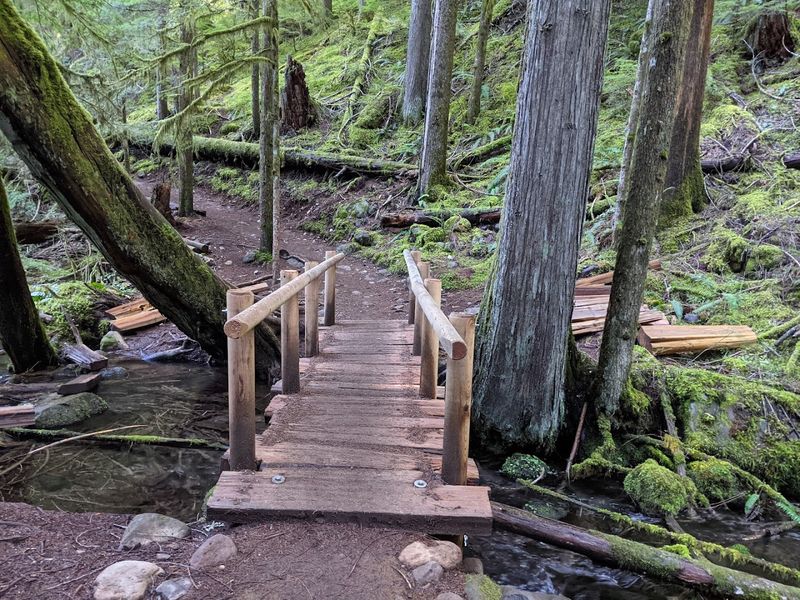
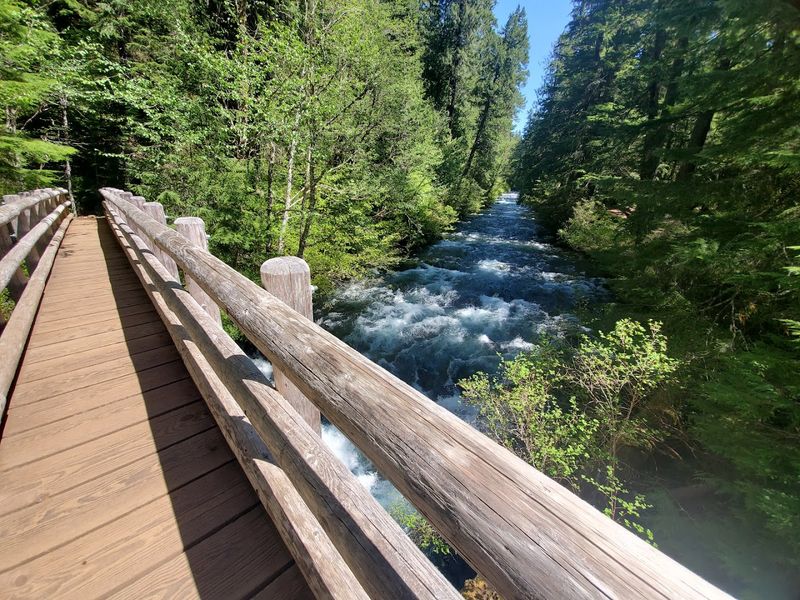
One of the quiet pleasures of the McKenzie River Trail is how many small, unexpected details reward careful attention. The trail crosses numerous creek channels via a series of charming wooden and log bridges that feel genuinely handcrafted against the wild landscape.
Each bridge offers its own river view, and the sound of water rushing below becomes a kind of rhythm that carries you from one section to the next.
Beyond the headline waterfalls at Sahalie and Koosah, the trail passes several smaller cascades and rapids that do not make it onto most trail maps but are worth pausing to appreciate. In autumn, the combination of moving water, golden foliage, and filtered forest light produces the kind of scene that makes people stop mid-stride and just look for a while.
There is also a kayak, canoe, and paddleboard launch point along the lower trail section, which adds a water-based dimension to the experience that most visitors do not expect. Watching rafters navigate the McKenzie River from the trail bank is a surprisingly entertaining way to take a break mid-hike.
The trail has a way of offering one more interesting thing just when you think you have seen the highlights, which is probably why so many people come back to explore a different section each visit.
Why the McKenzie River Trail Keeps Drawing People Back
Some trails get popular because of one standout feature, and then the reality does not quite match the anticipation. The McKenzie River Trail is the opposite of that experience.
The Blue Pool is real and genuinely stunning, but it turns out to be just one chapter in a 26-mile story that also includes ancient lava fields, old-growth forest, powerful waterfalls, a lake with a submerged prehistoric forest, and miles of river that look different at every bend.
The trail holds a 4.7-star rating from over 200 reviews, which is a strong signal, but the more telling detail is how many visitors mention planning a return trip before they have even finished their first one. That kind of loyalty is earned, not marketed.
Whether you come for a two-hour waterfall loop, a full-day mountain bike traverse, a quiet evening walk along the river, or a pilgrimage to the Blue Pool, the McKenzie River Trail delivers a complete outdoor experience in a single corridor of Oregon wilderness. The trail is open every day of the year, the forest is always doing something interesting, and the river never stops moving.
That combination has a way of making the drive back feel shorter than the drive out.
Share this story